KSA Household Appliances Market Outlook to 2030

Region:Middle East

Author(s):Shubham

Product Code:KROD5685

Published On

November 2024

Total pages

82

About the Report

KSA Household Appliances Market Overview
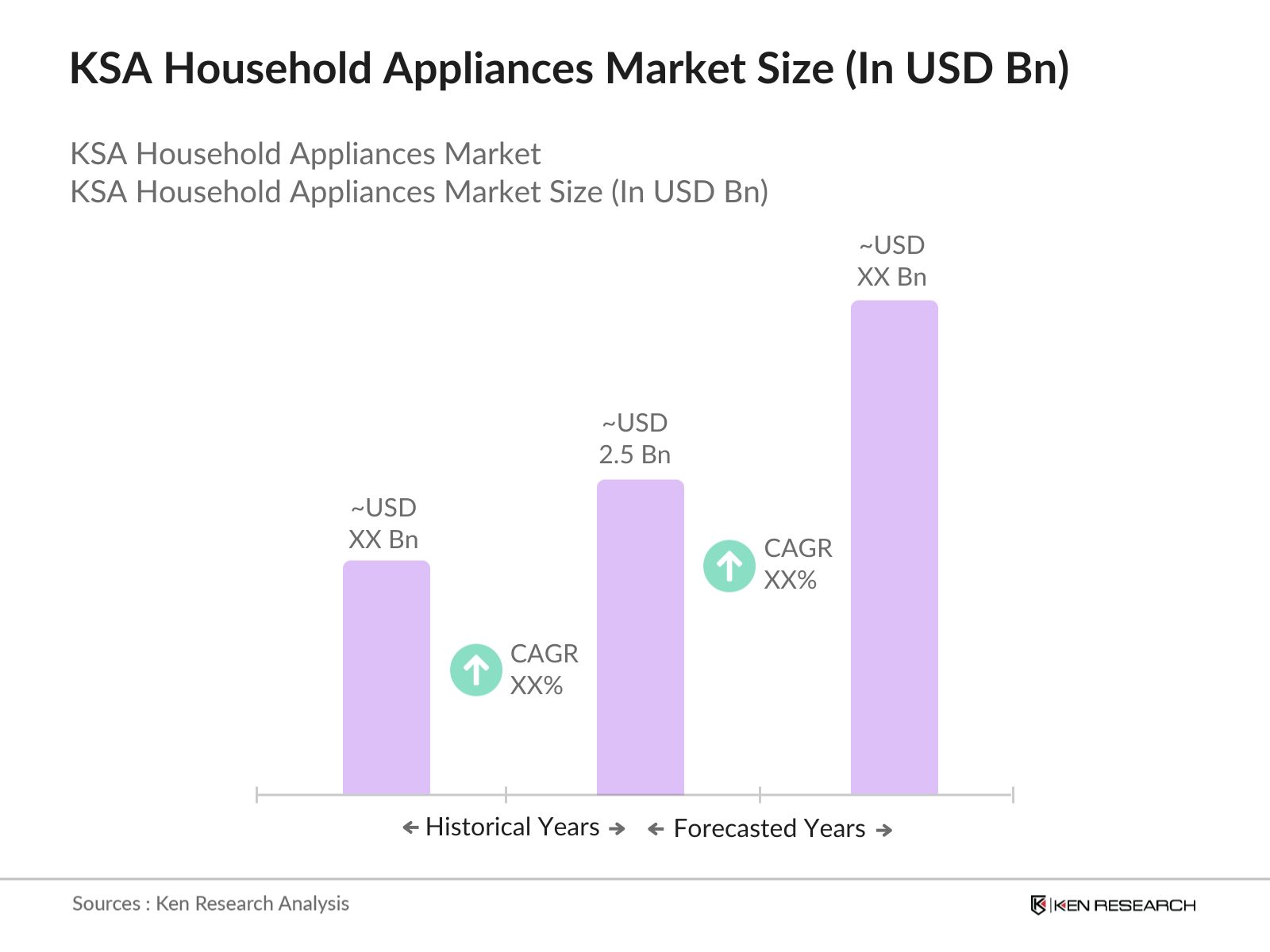
  • The KSA household appliances market is valued at USD 2.5 billion, driven by the Kingdom's growing urban population, rising disposable incomes, and an increasing inclination towards energy-efficient and technologically advanced home appliances. The Vision 2030 initiative supports modernization, spurring demand for smart appliances across the public and private sectors. Additionally, the market is supported by a favorable economic climate, consumer preference for high-performance appliances, and the expanding influence of e-commerce.

market overviews

  • Riyadh, Jeddah, and Dammam are the dominant cities in the KSA household appliances market, owing to their high population density and concentration of urban infrastructure. Riyadh, as the capital and primary economic hub, leads in demand, followed closely by Jeddah and Dammam, where high household incomes and a growing retail network drive appliance sales. These cities shape the market dynamics, with a significant share of residential and commercial appliance purchases concentrated in these urban centers.
  • SASOs guidelines mandate stringent quality and safety requirements for all household appliances sold in Saudi Arabia. Since 2022, appliances must undergo SASO certification, which verifies adherence to national safety and performance standards. This regulatory framework not only ensures product quality but also prevents the influx of substandard imports, reinforcing consumer trust in local and foreign brands alike.

KSA Household Appliances Market Segmentation
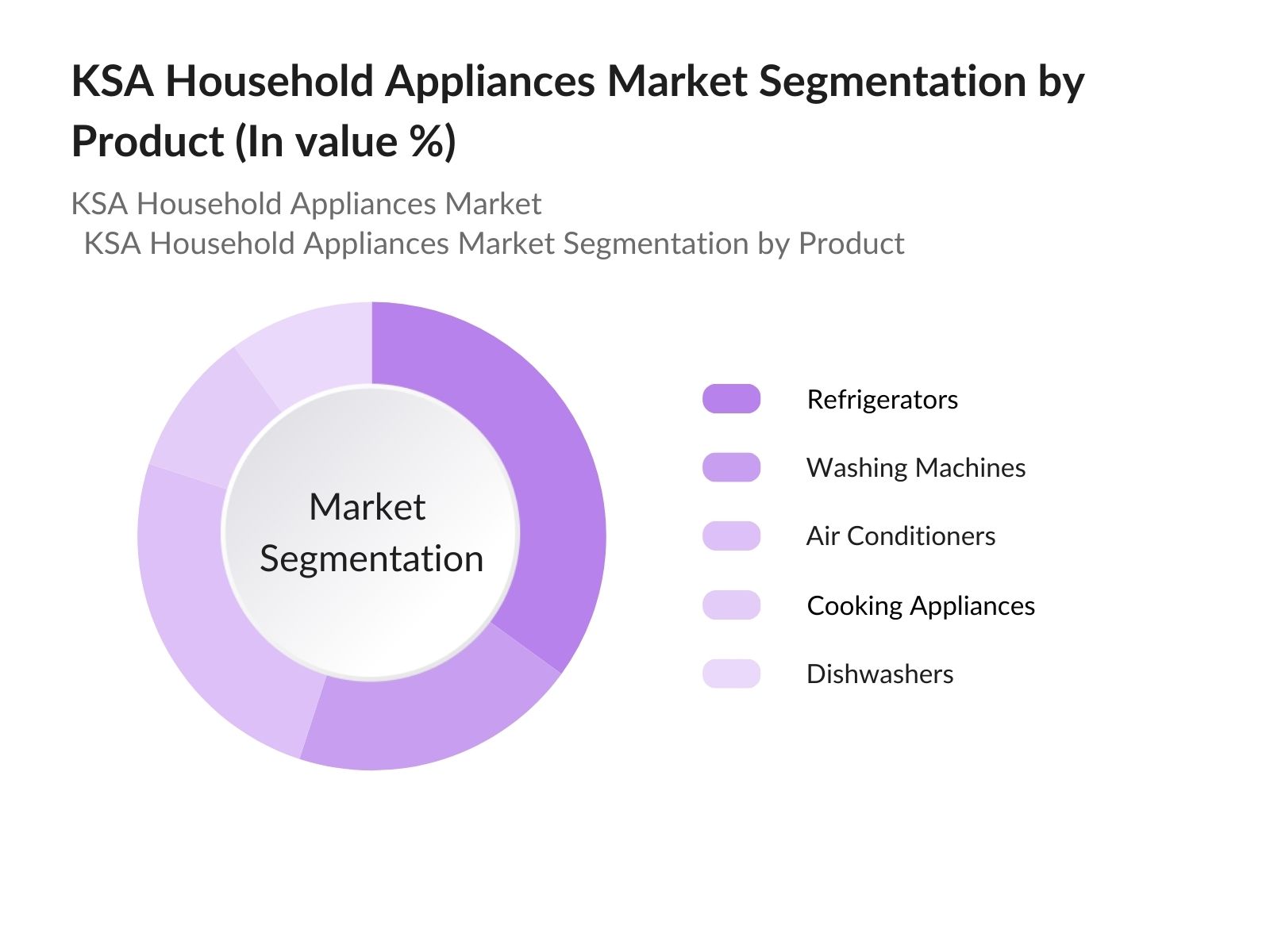
  • By Product Type: The market is segmented by product type into refrigerators, washing machines, air conditioners, cooking appliances, and dishwashers. Recently, refrigerators have been dominant in this segment due to Saudi Arabia's hot climate, necessitating effective food preservation methods. Major brands like Samsung and LG have introduced advanced cooling technologies tailored to meet local needs, reinforcing refrigerators as the leading segment in household appliances. market overviews
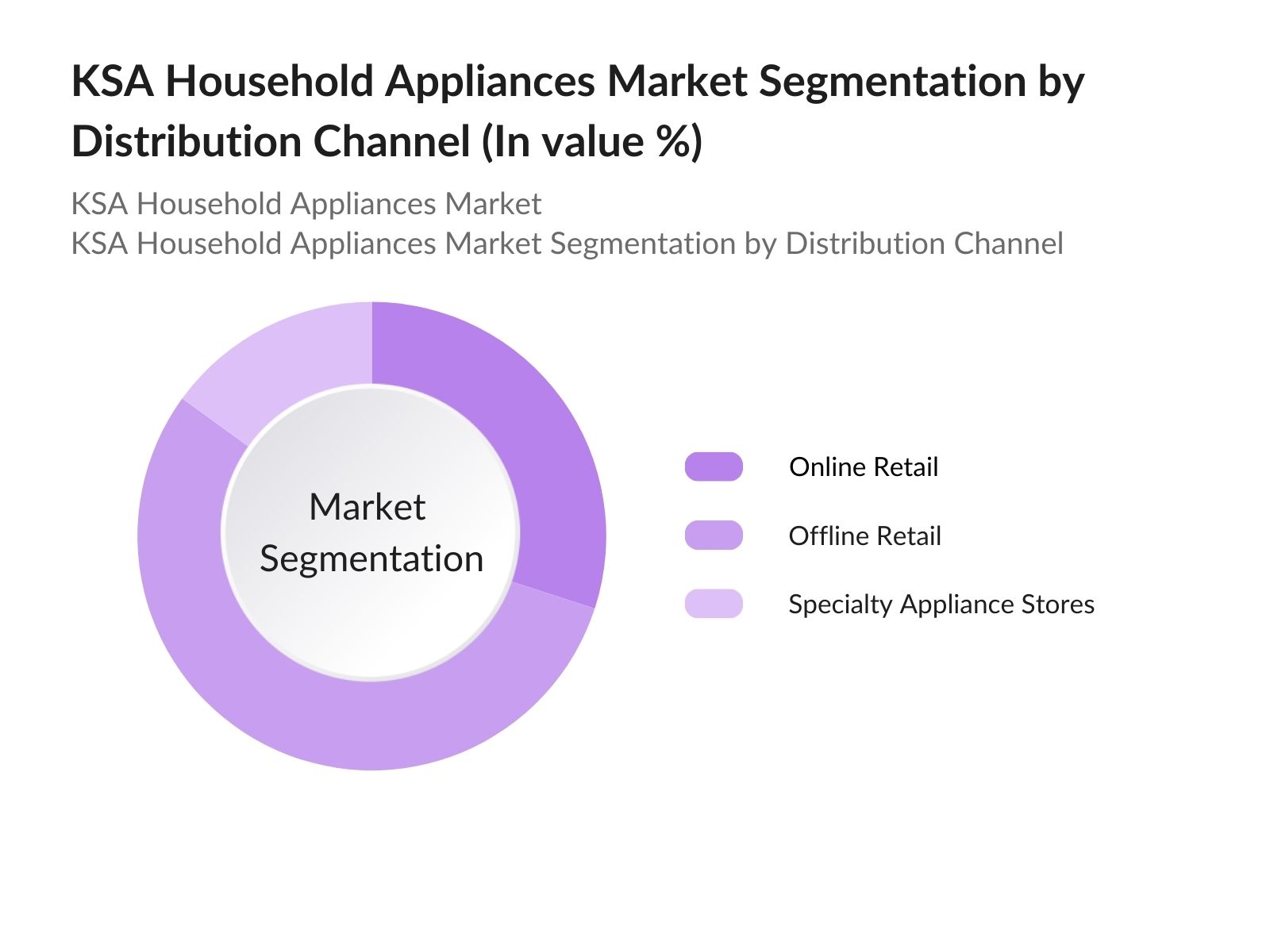
  • By Distribution Channel: The market is further segmented by distribution channels, including online retail, offline retail, and specialty appliance stores. Offline retail dominates, as consumers prefer viewing appliances firsthand and validating product quality through direct engagement. Large appliance showrooms in major cities bolster offline retail, especially for higher-end appliances where in-store assistance plays a vital role in purchasing decisions. market overviews

KSA Household Appliances Market Competitive Landscape

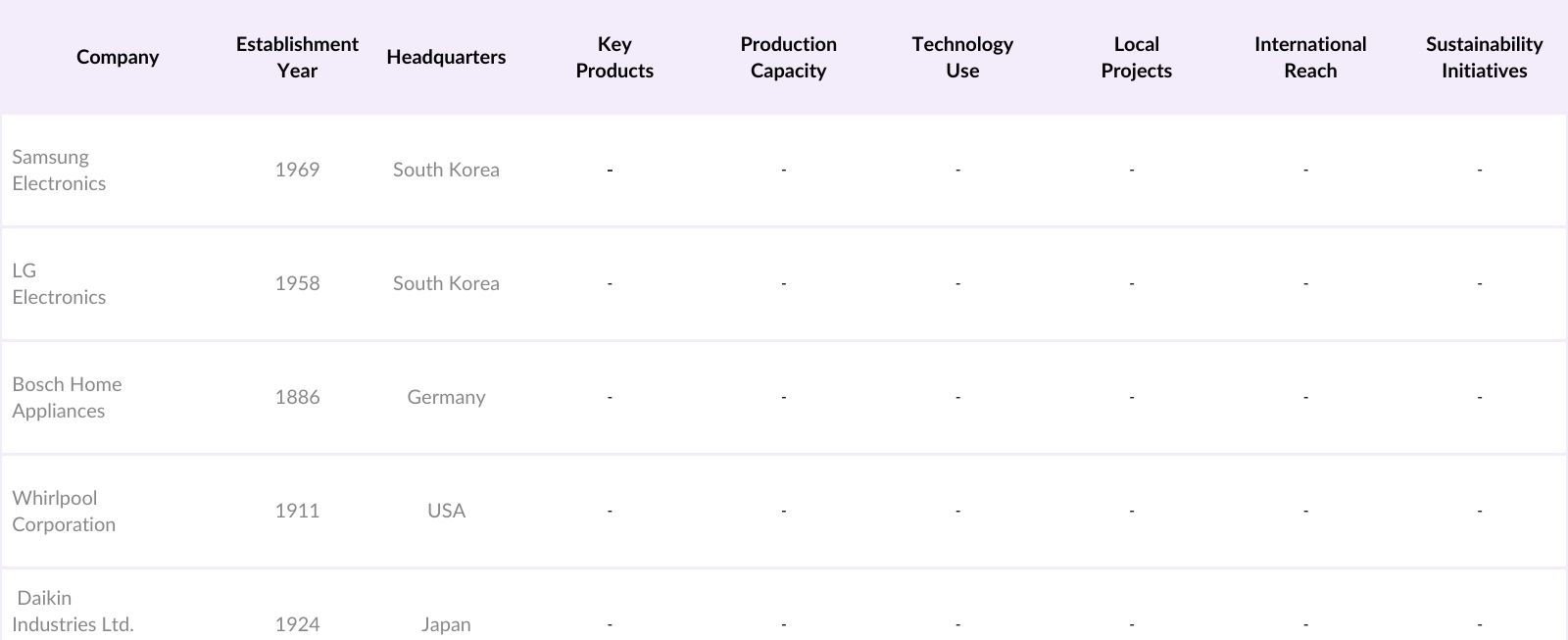
The KSA household appliances market is competitive, with major players including Samsung, LG, Bosch, Whirlpool, and Daikin. International companies lead with innovations and strong distribution networks, while local manufacturers are expanding by offering cost-effective options suited to local demand patterns. The market includes a mix of global giants and emerging local firms, reflecting a diverse competitive landscape. market overviews


KSA Household Appliances Market Industry Analysis

Growth Drivers

  • Rising Disposable Incomes: Household purchasing power in Saudi Arabia has shown substantial growth due to higher wages and employment rates, with average monthly earnings reaching USD 2,730 in 2023. This income surge has influenced spending on home improvements and appliances, particularly among young Saudi families who account for nearly 50% of the population. The increased disposable income is positively impacting demand for mid to high-end household appliances, making appliances a key segment in consumer spending growth trends.
  • Economic Diversification (Vision 2030 Impact): Saudi Arabia's Vision 2030 initiative is steering significant growth across various sectors, including household appliances. With a focus on reducing reliance on oil, the Kingdom has prioritized domestic industries, with investments over USD 3.2 billion allocated to non-oil sectors since 2022. This transformation aims to create a prosperous local market for consumer goods, including household appliances, by fostering domestic manufacturing and encouraging foreign direct investment. As of 2024, 37% of Saudi Arabias non-oil revenue is generated from the manufacturing sector, positioning household appliances as a potential growth segment under Vision 2030 reforms.
  • Urbanization and Infrastructure Development: Saudi Arabias urban population continues to grow, with about 31.77 million classified as urban, reaching 82% in 2024, fueled by extensive urban development in cities like Riyadh and Jeddah. Urban expansion is leading to an increase in modern residential complexes equipped with standard household appliances, which has heightened demand for compact, efficient products tailored to city living. The shift in population distribution has also supported retail growth in urban areas, fostering local distribution channels for household appliances.

Market Challenges

  • High Import Dependency: The Saudi Arabian household appliances market is significantly reliant on imported goods, primarily sourced from regions like China and Turkey. This dependence exposes the market to external factors, such as currency fluctuations and disruptions in the global supply chain, which have been further exacerbated by recent geopolitical events. Additionally, the imposition of import tariffs on household appliances contributes to increased retail prices, ultimately affecting the range of choices available to consumers.
  • Energy Efficiency Regulations Compliance: Meeting Saudi Arabias energy efficiency standards, set by the Saudi Standards, Metrology, and Quality Organization (SASO), presents challenges for appliance manufacturers. The SASO guidelines, recently updated to establish rigorous energy efficiency requirements for products such as air conditioners, create significant compliance obligations, especially for smaller international brands. Non-compliant models are subject to import restrictions or penalties, impacting manufacturers' market access and imposing additional compliance costs.

KSA Household Appliances Market Future Outlook

The KSA household appliances market is projected to grow steadily through 2028, driven by technological advancements, increased disposable incomes, and continued urbanization. Government support for energy-efficient appliances and sustainable living is expected to enhance demand for innovative products, while local production capabilities are likely to expand under Vision 2030 initiatives. The market will increasingly focus on smart appliances and sustainability, aligning with the broader goals of eco-friendly development in Saudi Arabia.

Future Market Opportunities

  • Shift Towards Smart Home Integration: Smart home adoption in Saudi Arabia is growing rapidly, with a significant portion of new urban homes now integrating advanced technologies. This shift toward automation and IoT-enabled devices fosters a favorable environment for smart household appliances, including innovations like voice-controlled washing machines and smart refrigerators. The increasing interest in convenience and energy-efficient solutions reflects consumer demand for appliances that align with modern lifestyles, positioning smart appliances as a prominent growth area in the Saudi household market.
  • Local Manufacturing Initiatives: The Saudi governments emphasis on boosting local manufacturing is creating new opportunities for household appliance production within the Kingdom. Current initiatives are designed to enhance domestic production capabilities, with a targeted increase in capacity focused on larger appliances, such as refrigerators and washing machines. Supported by incentives like reduced import taxes on essential raw materials and assembly equipment, these efforts aim to establish Saudi-based production lines, further aligning with the broader objectives of Vision 2030.

Scope of the Report

By Product Type

Refrigerators, Washing Machines

Air Conditioners

Cooking Appliances

Dishwashers

By Energy Efficiency

Energy Star Rated

Non-Energy Star Rated

By Distribution Channel

Online Retail

Offline Retail

Specialty Appliance Stores

By Technology

Smart/Connected Appliances

Conventional Appliances

By Region

Central

Western

Eastern

Southern

Products


Key Target Audience

  • Investors and Venture Capitalist Firms

  • Banks and Financial Institutions

  • Government and Regulatory Bodies (Saudi Standards, Metrology, and Quality Organization - SASO)

  • Household Appliance Manufacturers

  • E-commerce Retailers

  • Local Distributors and Retail Chains

  • Technological Solution Providers

  • Energy Efficiency and Conservation Agencies (Saudi Energy Efficiency Center - SEEC)

Companies

Players Mentioned in the Report

  • Samsung Electronics

  • LG Electronics

  • Bosch Home Appliances

  • Whirlpool Corporation

  • Daikin Industries Ltd.

  • Panasonic Corporation

  • Electrolux AB

  • Midea Group

  • Hitachi Ltd.

  • Haier Electronics Group

  • TCL Corporation

  • Zamil Air Conditioners

  • Beko

  • Hisense Co., Ltd.

  • Arcelik A.S.

Table of Contents

1. KSA Household Appliances Market Overview

1.1 Definition and Scope
1.2 Market Taxonomy
1.3 Market Growth Rate
1.4 Market Segmentation Overview

2. KSA Household Appliances Market Size (In USD Mn)

2.1 Historical Market Size
2.2 Year-On-Year Growth Analysis
2.3 Key Market Developments and Milestones

3. KSA Household Appliances Market Analysis

3.1 Growth Drivers
3.1.1 Economic Diversification (Vision 2030 Impact)
3.1.2 Rise in Disposable Income
3.1.3 Technological Advancements in Appliance Efficiency
3.1.4 Increasing Urbanization

3.2 Market Challenges
3.2.1 High Import Dependency
3.2.2 Energy Efficiency Regulations Compliance
3.2.3 Price Sensitivity Among Consumers

3.3 Opportunities
3.3.1 Shift Towards Smart Home Integration
3.3.2 Local Manufacturing Initiatives
3.3.3 Growth in E-Commerce Channels

3.4 Trends
3.4.1 Demand for Sustainable and Eco-Friendly Appliances
3.4.2 Expansion of Premium Appliance Segment
3.4.3 Rising Adoption of IoT in Household Appliances

3.5 Government Regulations
3.5.1 Saudi Standards, Metrology, and Quality Organization (SASO) Guidelines
3.5.2 Energy Efficiency Labeling Requirements
3.5.3 Import Tariffs and Trade Regulations

3.6 SWOT Analysis
3.7 Stakeholder Ecosystem
3.8 Porters Five Forces Analysis
3.9 Competitive Ecosystem

4. KSA Household Appliances Market Segmentation
4.1 By Product Type (In Value %)
4.1.1 Refrigerators
4.1.2 Washing Machines
4.1.3 Air Conditioners
4.1.4 Cooking Appliances
4.1.5 Dishwashers

4.2 By Energy Efficiency (In Value %)
4.2.1 Energy Star Rated
4.2.2 Non-Energy Star Rated

4.3 By Distribution Channel (In Value %)
4.3.1 Online Retail
4.3.2 Offline Retail
4.3.3 Specialty Appliance Stores

4.4 By Technology (In Value %)
4.4.1 Smart/Connected Appliances
4.4.2 Conventional Appliances

4.5 By Region (In Value %)
4.5.1 Central Region
4.5.2 Western Region
4.5.3 Eastern Region
4.5.4 Southern Region

5. KSA Household Appliances Market Competitive Analysis

5.1 Detailed Profiles of Major Companies
5.1.1 Samsung Electronics
5.1.2 LG Electronics
5.1.3 Panasonic Corporation
5.1.4 Whirlpool Corporation
5.1.5 Bosch Home Appliances
5.1.6 Electrolux AB
5.1.7 Haier Electronics Group
5.1.8 Hitachi Ltd.
5.1.9 Daikin Industries Ltd.
5.1.10 Midea Group
5.1.11 TCL Corporation
5.1.12 Arcelik A.S.
5.1.13 Beko
5.1.14 Hisense Co., Ltd.
5.1.15 Zamil Air Conditioners

5.2 Cross-Comparison Parameters (Revenue, Market Position, Product Portfolio Breadth, Innovation Capacity, Market Share in KSA, Brand Recognition, Local Manufacturing Presence, Customer Satisfaction Index)
5.3 Market Share Analysis
5.4 Strategic Initiatives
5.5 Mergers and Acquisitions
5.6 Investment Analysis
5.7 Venture Capital Funding
5.8 Government Grants
5.9 Private Equity Investments

6. KSA Household Appliances Market Regulatory Framework

6.1 Appliance Safety Standards
6.2 Compliance with Energy Efficiency Standards
6.3 SASO Certification Requirements

7. KSA Household Appliances Future Market Size (In USD Mn)

7.1 Future Market Size Projections
7.2 Key Factors Driving Future Market Growth

8. KSA Household Appliances Future Market Segmentation

8.1 By Product Type (In Value %)
8.2 By Energy Efficiency (In Value %)
8.3 By Distribution Channel (In Value %)
8.4 By Technology (In Value %)
8.5 By Region (In Value %)

9. KSA Household Appliances Market Analysts Recommendations

9.1 TAM/SAM/SOM Analysis
9.2 Customer Cohort Analysis
9.3 Marketing Initiatives
9.4 White Space Opportunity Analysis

Disclaimer Contact Us

Research Methodology

Step 1: Identification of Key Variables


The initial phase involves mapping all significant stakeholders in the KSA Household Appliances Market. This step utilizes both proprietary and secondary data sources to gather accurate industry data, which helps in identifying and defining variables affecting market dynamics.

Step 2: Market Analysis and Construction


This phase includes compiling and assessing historical data on market penetration and analyzing the retail ecosystem, which involves estimating market share across different appliance types and distribution channels.

Step 3: Hypothesis Validation and Expert Consultation


Key market assumptions are developed and validated through expert interviews, especially with local appliance retailers and manufacturers. These insights allow for a refined understanding of market trends and competitive positions.

Step 4: Research Synthesis and Final Output


The final step integrates direct insights from household appliance brands and distributors to ensure accurate segment-specific data, allowing for a comprehensive analysis and forecast.


Frequently Asked Questions

01. How big is the KSA Household Appliances Market?

The KSA Household Appliances Market is valued at USD 2.5 billion, driven by high consumer demand in urban areas, coupled with favorable government policies for energy-efficient products.

02. What are the challenges in the KSA Household Appliances Market?

Key challenges in the KSA Household Appliances Market include high import dependency, compliance with stringent energy efficiency standards, and price sensitivity among consumers.

03. Who are the major players in the KSA Household Appliances Market?

Leading players in the KSA Household Appliances Market include Samsung Electronics, LG Electronics, Bosch, Whirlpool Corporation, and Daikin Industries Ltd., recognized for their innovation and distribution strength within the KSA market.

04. What drives the growth of the KSA Household Appliances Market?

Growth drivers in the KSA Household Appliances Market include rising disposable incomes, technological advancements, and government incentives supporting energy-efficient appliances in the Kingdom.


Why Buy From Us?

RRR
Refine Robust Result (RRR) Framework

What makes us stand out is that our consultants follows Robust, Refine and Result (RRR) methodology. i.e. Robust for clear definitions, approaches and sanity checking, Refine for differentiating respondents facts and opinions and Result for presenting data with story

Our Reach Is Unmatched

We have set a benchmark in the industry by offering our clients with syndicated and customized market research reports featuring coverage of entire market as well as meticulous research and analyst insights.

Research
Shifting the Research Paradigm

While we don't replace traditional research, we flip the method upside down. Our dual approach of Top Bottom & Bottom Top ensures quality deliverable by not just verifying company fundamentals but also looking at the sector and macroeconomic factors.

Insite
More Insights-Better Decisions

With one step in the future, our research team constantly tries to show you the bigger picture. We help with some of the tough questions you may encounter along the way: How is the industry positioned? Best marketing channel? KPI's of competitors? By aligning every element, we help maximize success.

Trust
Transparency and Trust

Our report gives you instant access to the answers and sources that other companies might choose to hide. We elaborate each steps of research methodology we have used and showcase you the sample size to earn your trust.

support
Round the Clock Support

If you need any support, we are here! We pride ourselves on universe strength, data quality, and quick, friendly, and professional service.

Why Client Choose Us?

400000+ Reports in repository
150+ Consulting project a year
100+ Analysts
8000+ Client Queries in 2022