
KSA HR Tech Market Outlook to 2030
Region:Saudi Arabia
Author(s):Vijay Kumar
Product Code:KROD5851
Region:Saudi Arabia
Author(s):Vijay Kumar
Product Code:KROD5851
November 2024
90
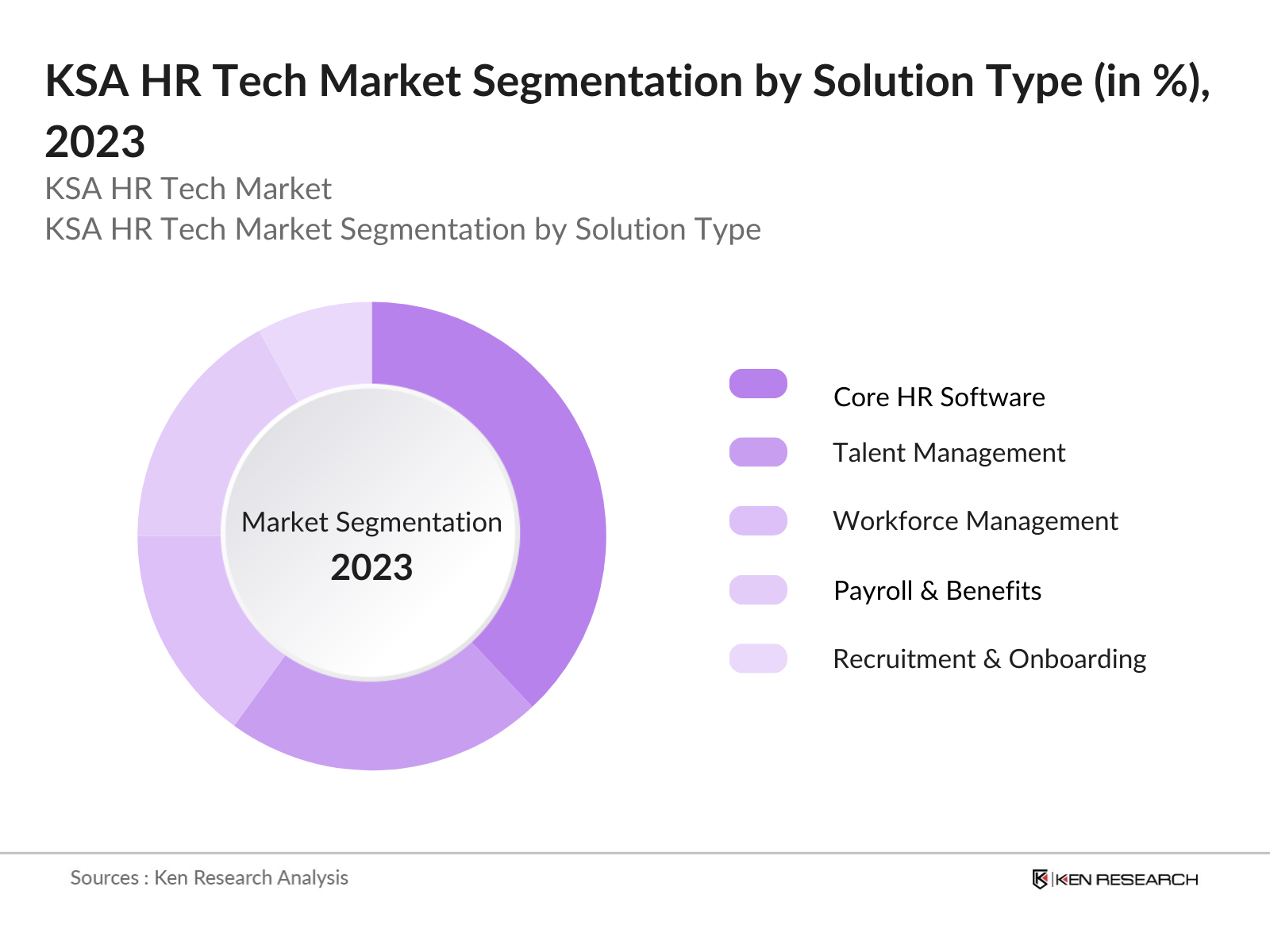
By Solution Type: The market is segmented by solution type into core HR software, talent management, workforce management, payroll & benefits management, and recruitment & onboarding solutions. Among these, core HR software holds a dominant share due to the fundamental need for organizations to manage essential HR operations like employee data, attendance tracking, and payroll processing.
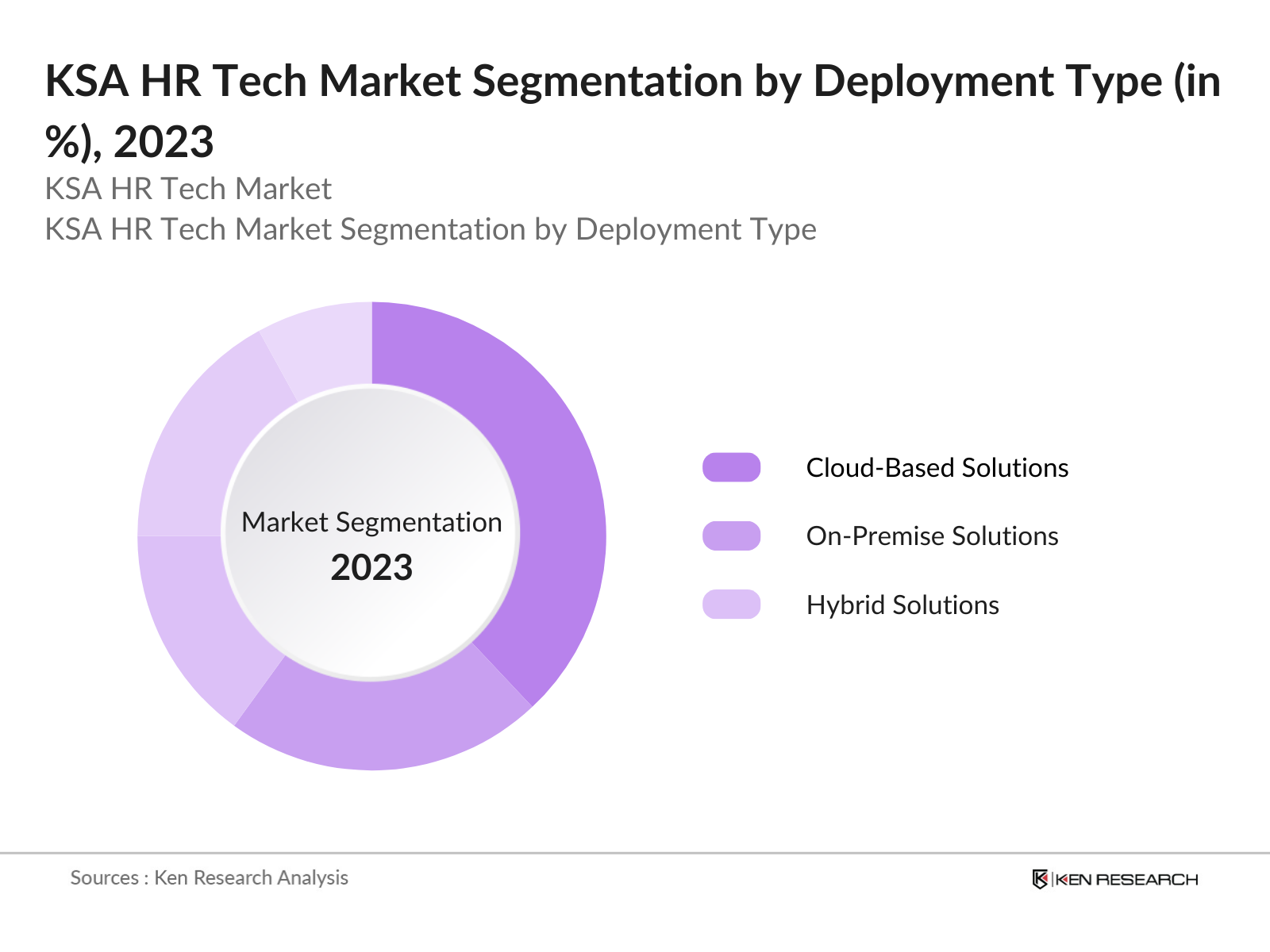
By Deployment Type: The market is segmented by deployment type into cloud-based solutions, on-premise solutions, and hybrid solutions. Cloud-based solutions dominate this category with a significant market share as companies in KSA increasingly opt for scalable and flexible software that does not require large upfront capital investments. The cloud's cost-effectiveness, seamless updates, and ease of integration with other enterprise systems are driving its popularity.
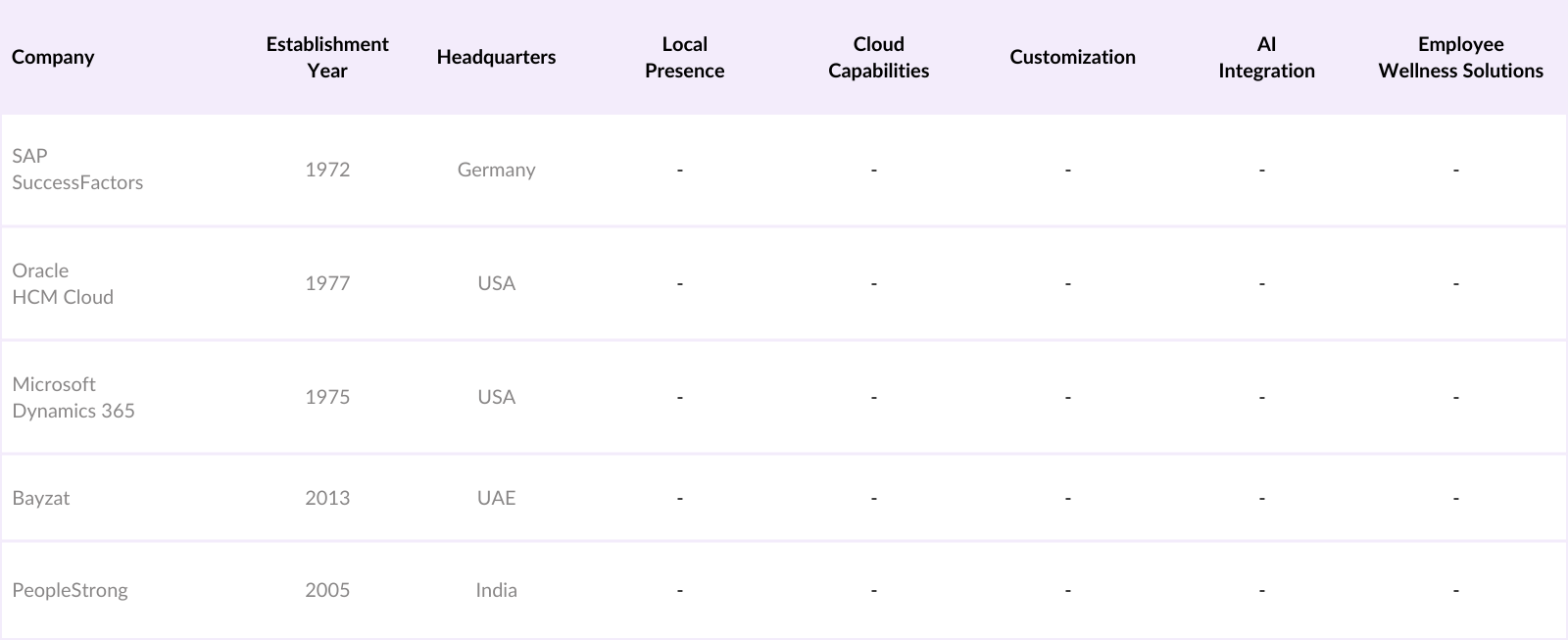
The KSA HR Tech market is dominated by a mixture of local and global players, with a focus on providing customized solutions to meet the specific needs of businesses within the Kingdom. Companies like Oracle, SAP, and Microsoft hold significant market shares, driven by their robust product portfolios and cloud infrastructure. Meanwhile, local players are gaining traction by offering solutions that cater specifically to the regulations and requirements unique to KSA, such as Nitaqat compliance.
Over the next five years, the KSA HR Tech market is expected to experience rapid growth, driven by the increasing adoption of AI-driven HR solutions, cloud-based infrastructure, and government support for digital transformation. Companies are likely to invest in more sophisticated HR platforms that enhance employee experience, improve decision-making through data analytics, and ensure compliance with evolving labor laws.
|
By Solution Type |
Core HR Software Talent Management Workforce Management Payroll & Benefits Management Recruitment & Onboarding Solutions |
|
By Deployment Type |
Cloud-Based Solutions On-Premise Solutions Hybrid Solutions |
|
By Organization Size |
Small & Medium Enterprises (SMEs) Large Enterprises |
|
By End-User Industry |
Banking, Financial Services & Insurance (BFSI) Retail & E-Commerce Healthcare & Life Sciences IT & Telecom Manufacturing |
|
By Region |
Central Region Eastern Region Western Region Northern Region |
1.1. Definition and Scope
1.2. Market Taxonomy
1.3. Market Growth Rate (Industry Adoption Rate, Workforce Digitalization)
1.4. Market Segmentation Overview
2.1. Historical Market Size
2.2. Year-On-Year Growth Analysis
2.3. Key Market Developments and Milestones (Digital Transformation in KSA, Vision 2030 Initiatives)
3.1. Growth Drivers
3.1.1. Government Initiatives for Digitalization (Vision 2030, National Transformation Program)
3.1.2. Increasing Demand for Cloud-Based HR Solutions
3.1.3. Talent Management and Workforce Optimization
3.1.4. Rising Adoption of AI & Automation in HR Processes
3.2. Market Challenges
3.2.1. Data Security and Privacy Concerns (GDPR-like Regulations)
3.2.2. Integration with Legacy Systems
3.2.3. Shortage of Skilled Professionals in HR Tech
3.3. Opportunities
3.3.1. Adoption of Cloud HR Solutions by SMEs
3.3.2. AI and Predictive Analytics in Recruitment
3.3.3. Employee Experience Platforms (EX)
3.4. Trends
3.4.1. Rise of Remote Work and HR Automation Tools
3.4.2. Integration of HR Tech with Payroll and Financial Systems
3.4.3. Growth in Employee Wellness and Engagement Platforms
3.5. Government Regulation
3.5.1. National Data Privacy Laws
3.5.2. Labor Law Reforms Impacting HR Tech
3.5.3. Compliance with Saudization and Nitaqat Programs
3.6. SWOT Analysis
3.7. Stake Ecosystem (HR Tech Providers, Consulting Firms, End-Users)
3.8. Porters Five Forces
3.9. Competition Ecosystem (HR Tech Platforms, Local and International Players)
4.1. By Solution Type (In Value %)
4.1.1. Core HR Software
4.1.2. Talent Management
4.1.3. Workforce Management
4.1.4. Payroll & Benefits Management
4.1.5. Recruitment & Onboarding Solutions
4.2. By Deployment Type (In Value %)
4.2.1. Cloud-Based Solutions
4.2.2. On-Premise Solutions
4.2.3. Hybrid Solutions
4.3. By Organization Size (In Value %)
4.3.1. Small & Medium Enterprises (SMEs)
4.3.2. Large Enterprises
4.4. By End-User Industry (In Value %)
4.4.1. Banking, Financial Services & Insurance (BFSI)
4.4.2. Retail & E-Commerce
4.4.3. Healthcare & Life Sciences
4.4.4. IT & Telecom
4.4.5. Manufacturing
4.5. By Region (In Value %)
4.5.1. Central Region
4.5.2. Eastern Region
4.5.3. Western Region
4.5.4. Northern Region
5.1. Detailed Profiles of Major Companies
5.1.1. SAP SuccessFactors
5.1.2. Oracle HCM Cloud
5.1.3. Workday
5.1.4. ADP Workforce Now
5.1.5. BambooHR
5.1.6. Zenefits
5.1.7. Microsoft Dynamics 365
5.1.8. Ramco Systems
5.1.9. Cezanne HR
5.1.10. Bayzat
5.1.11. Al-Bashiq HR Software
5.1.12. Odoo HR
5.1.13. SAGE HR
5.1.14. Beehive HRMS
5.1.15. PeopleStrong
5.2. Cross Comparison Parameters (No. of Employees, Headquarters, Inception Year, Revenue, Local Presence, SaaS Capabilities, Customization, AI & Analytics Integration)
5.3. Market Share Analysis
5.4. Strategic Initiatives
5.5. Mergers and Acquisitions
5.6. Investment Analysis
5.7. Venture Capital Funding
5.8. Government Grants
5.9. Private Equity Investments
6.1. Data Security Regulations (National Cybersecurity Authority)
6.2. Compliance Requirements (Labor Law, Nitaqat)
6.3. Certification Processes (ISO 27001 for HR Tech Solutions)
7.1. Future Market Size Projections
7.2. Key Factors Driving Future Market Growth (AI Adoption, Workforce Optimization Tools)
8.1. By Solution Type (In Value %)
8.2. By Deployment Type (In Value %)
8.3. By Organization Size (In Value %)
8.4. By End-User Industry (In Value %)
8.5. By Region (In Value %)
9.1. TAM/SAM/SOM Analysis
9.2. Customer Cohort Analysis (HR Departments, Decision-Makers)
9.3. Marketing Initiatives (Local Customization, SaaS Offerings)
9.4. White Space Opportunity Analysis
The first step involved creating a comprehensive ecosystem map that includes all stakeholders within the KSA HR Tech market. This phase was supported by thorough desk research, leveraging secondary and proprietary databases to gather industry data. The focus was on identifying key variables such as adoption rates, regulatory requirements, and technological advancements.
The second phase involved collecting historical data on the KSA HR Tech market. This included assessing the market penetration of various HR solutions, the ratio of cloud-based versus on-premise solutions, and the revenue generated by these segments. The quality of these services was also evaluated to ensure accurate estimates.
Market hypotheses were developed and validated through CATI interviews with industry experts. These discussions provided valuable insights from companies operating in the HR tech space, adding depth to the research findings and helping to verify the data collected.
In the final phase, we engaged with multiple HR software vendors to gather detailed insights into product segments, sales performance, and end-user preferences. This helped verify and complement the statistics derived from the research, ensuring an accurate and validated analysis of the KSA HR Tech market.
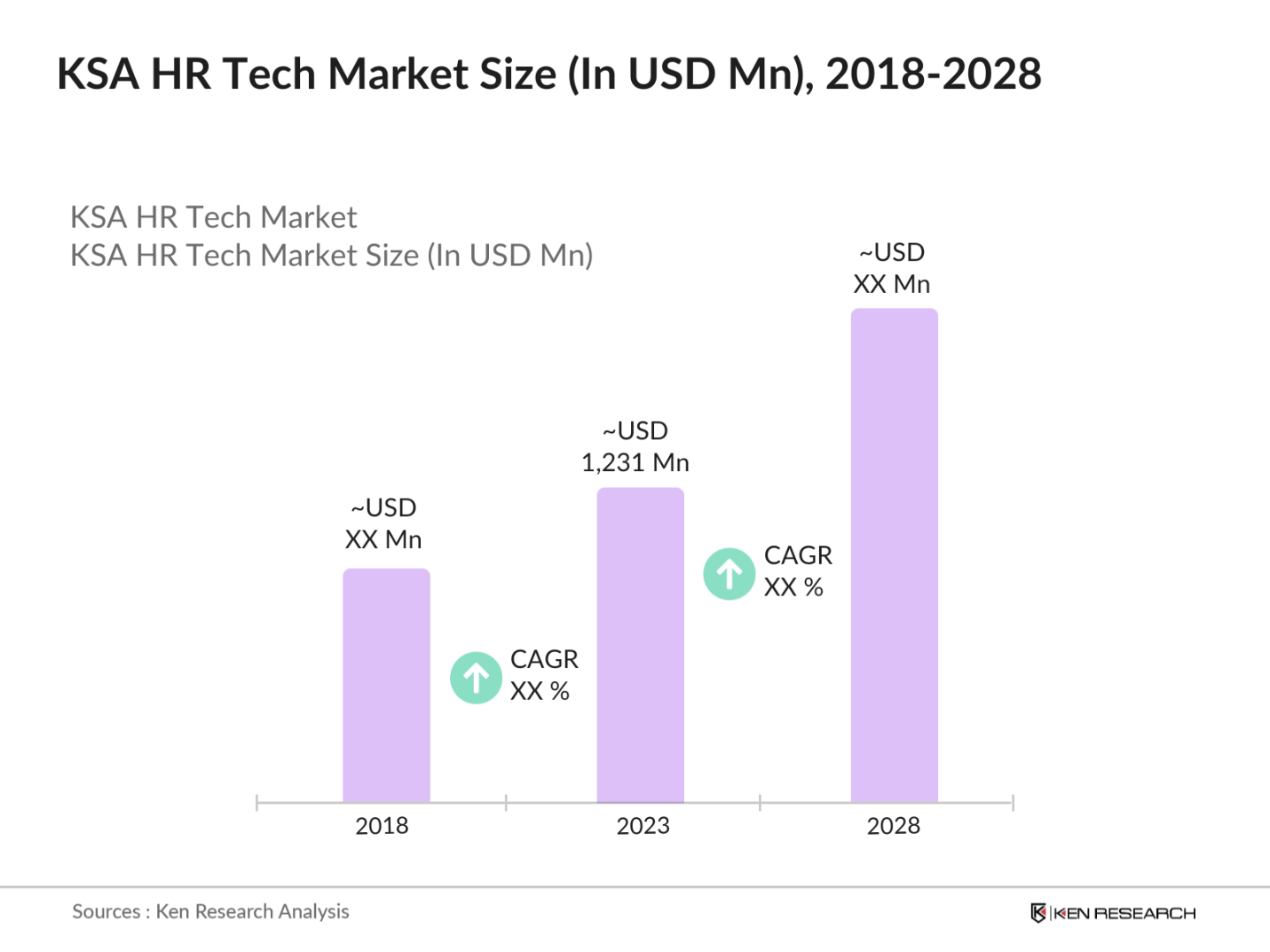
The KSA HR Tech market is valued at USD 1,231 million, based on a five-year historical analysis. This market is primarily driven by the Kingdom's push for digital transformation under Vision 2030, which aims to enhance productivity and workforce management across industries.
Key challenges include data security concerns, regulatory compliance with local labor laws, and the integration of new HR solutions with legacy systems, particularly in more traditional industries.
Key players include SAP SuccessFactors, Oracle HCM Cloud, Microsoft Dynamics 365, Bayzat, and PeopleStrong, which dominate due to their strong cloud capabilities and local market presence.
The market is driven by the governments Vision 2030 initiatives, increasing adoption of AI and cloud-based solutions, and the need for companies to streamline workforce management and improve employee engagement.

What makes us stand out is that our consultants follows Robust, Refine and Result (RRR) methodology. i.e. Robust for clear definitions, approaches and sanity checking, Refine for differentiating respondents facts and opinions and Result for presenting data with story

We have set a benchmark in the industry by offering our clients with syndicated and customized market research reports featuring coverage of entire market as well as meticulous research and analyst insights.

While we don't replace traditional research, we flip the method upside down. Our dual approach of Top Bottom & Bottom Top ensures quality deliverable by not just verifying company fundamentals but also looking at the sector and macroeconomic factors.

With one step in the future, our research team constantly tries to show you the bigger picture. We help with some of the tough questions you may encounter along the way: How is the industry positioned? Best marketing channel? KPI's of competitors? By aligning every element, we help maximize success.

Our report gives you instant access to the answers and sources that other companies might choose to hide. We elaborate each steps of research methodology we have used and showcase you the sample size to earn your trust.

If you need any support, we are here! We pride ourselves on universe strength, data quality, and quick, friendly, and professional service.