
KSA Hydroponic Market Outlook 2030
Region:Saudi Arabia
Author(s):Shivani Mehra
Product Code:KROD4122
Region:Saudi Arabia
Author(s):Shivani Mehra
Product Code:KROD4122
November 2024
87
 KSA Hydroponic Market Competitive Landscape
The KSA hydroponic market is dominated by both local and international players who have established a strong presence through strategic investments and partnerships with the government. Companies such as Green Planet Farms and Saudi Agricultural Development Company have spearheaded the development of large-scale hydroponic systems across the region, contributing to the growth and consolidation of the market.
|
Company Name |
Established Year |
Headquarters |
Hydroponic Acreage |
No. of Hydroponic Units |
Energy Efficiency (kWh) |
Water Usage (m3) |
Technological Adoption |
Government Collaborations |
Yield Output (Kg/m2) |
|
Saudi Agricultural Development Co. |
1978 |
Riyadh |
- | - | - | - | - | - | - |
|
Green Planet Farms |
2005 |
Jeddah |
- | - | - | - | - | - | - |
|
Oasis Hydroponic Technologies |
2010 |
Mecca |
- | - | - | - | - | - | - |
|
Desert Hydroponics |
2013 |
Al-Khobar |
- | - | - | - | - | - | - |
|
Arabian Agri-Tech Solutions |
2009 |
Riyadh |
- | - | - | - | - | - | - |
Market Growth Drivers
Market Challenges
The KSA hydroponic market is poised for significant growth driven by advancements in hydroponic technology, government incentives, and the rising demand for sustainable food production. With increasing urbanization and limited arable land, hydroponic systems provide a viable solution for meeting food security goals in the kingdom.
Market Opportunities:
|
By Hydroponic System |
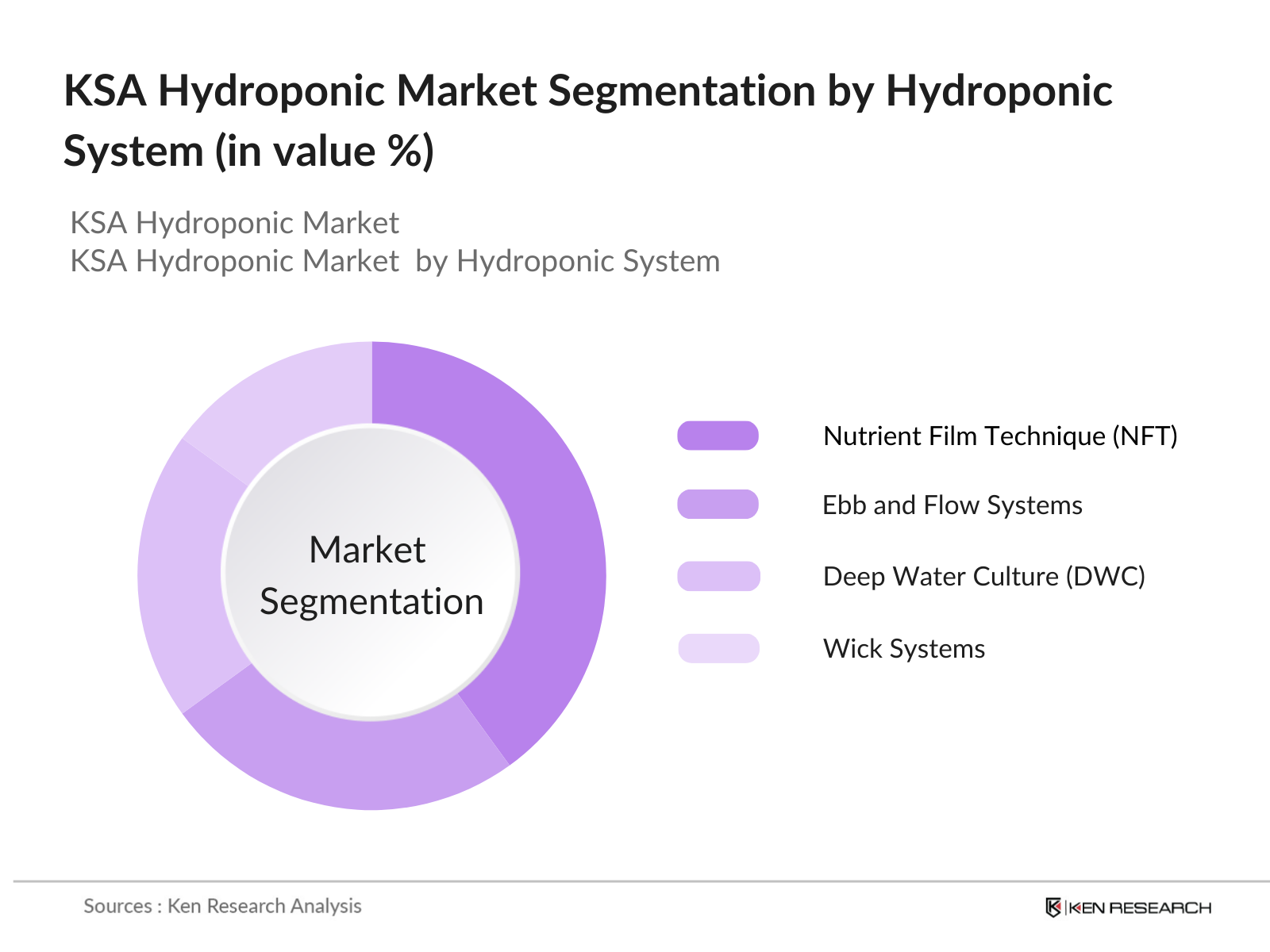
Wick Systems Deep Water Culture (DWC) Nutrient Film Technique (NFT) Ebb and Flow Systems |
|
By Crop Type |
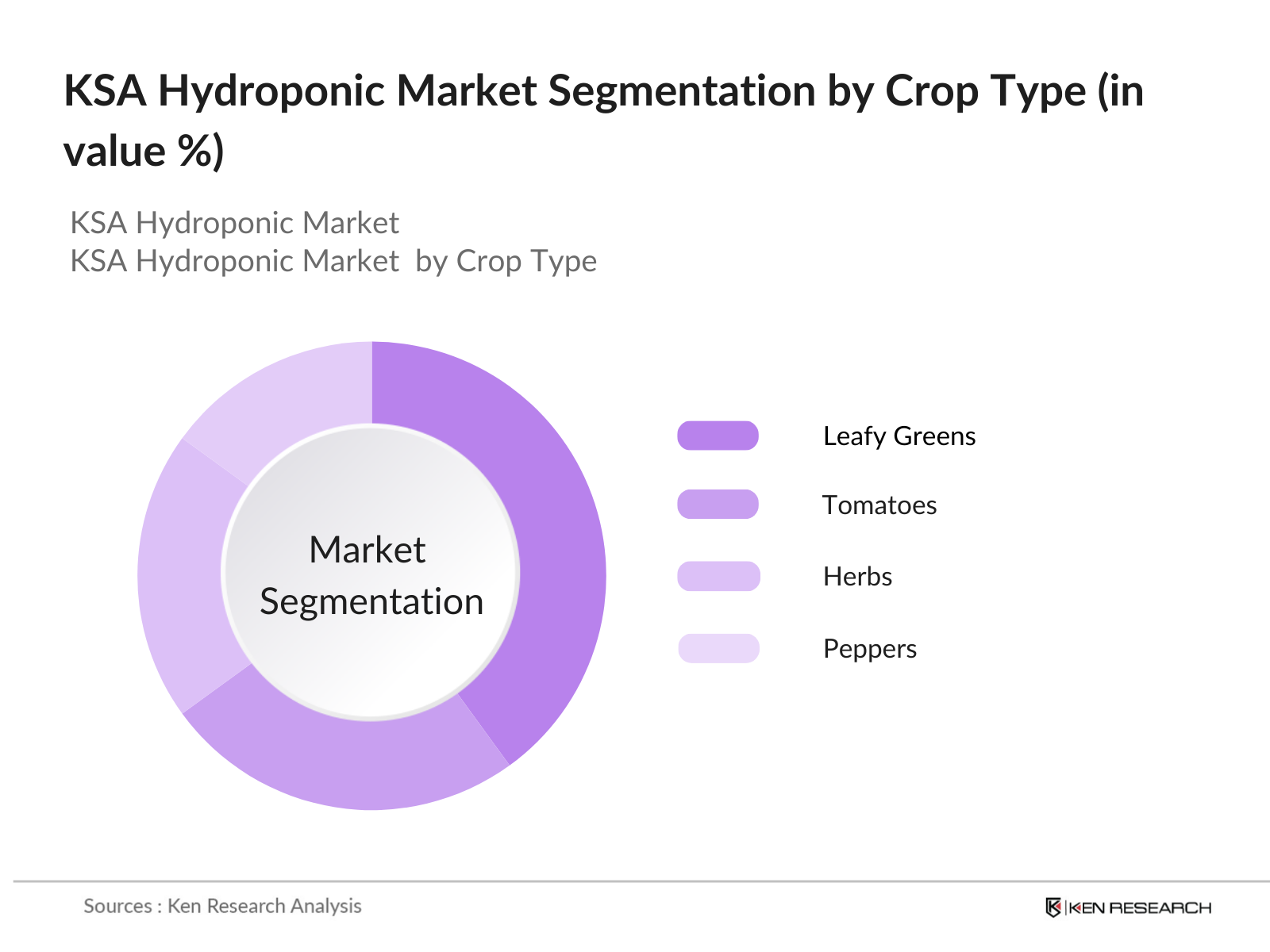
Leafy Greens Herbs Tomatoes Peppers |
|
By Equipment Type |
Hydroponic Tanks Pumps & Irrigation Systems Grow Lights Control Systems |
|
By End-User |
Commercial Farms Research and Educational Institutions Urban Farming Projects Residential/Backyard Users |
|
By Region |
North-East Midwest West Coast Southern States |
1.1. Definition and Scope
1.2. Market Taxonomy (Nutrient Delivery Systems, Growth Media, Hydroponic Setup Types)
1.3. Market Growth Rate (Adoption in Arid Climates, Water Conservation Needs)
1.4. Market Segmentation Overview
2.1. Historical Market Size (Focus on Hydroponic Adoption by Major Agribusinesses)
2.2. Year-On-Year Growth Analysis (Government Subsidies, Technological Innovation)
2.3. Key Market Developments and Milestones (Saudi Vision 2030, Agri-Tech Investment Programs)
3.1. Growth Drivers
3.1.1. Water Efficiency Requirements
3.1.2. Rising Food Security Concerns
3.1.3. Favorable Government Policies (Subsidies, Infrastructure Investments)
3.1.4. Investment in Agri-Tech (Hydroponic Tech Partnerships)
3.2. Market Challenges
3.2.1. High Initial Setup Costs
3.2.2. Limited Local Expertise in Hydroponics
3.2.3. Supply Chain Dependencies (Nutrient and Growth Media Imports)
3.3. Opportunities
3.3.1. Expansion of Commercial Greenhouses
3.3.2. Vertical Farming Initiatives
3.3.3. Private Sector Participation in Food Production
3.4. Trends
3.4.1. IoT Integration in Hydroponic Systems
3.4.2. Urban Hydroponic Farming Initiatives
3.4.3. Sustainable Agriculture Practices (Use of Solar Energy in Hydroponics)
3.5. Government Regulations
3.5.1. Saudi Vision 2030 Initiatives
3.5.2. Food Security Policies
3.5.3. Water Conservation Mandates
3.5.4. Public-Private Partnerships (Hydroponic Farming Projects)
3.6. SWOT Analysis
3.7. Stake Ecosystem
3.8. Porters Five Forces Analysis
3.9. Competition Ecosystem
4.1. By Type of Hydroponic System (In Value %)
4.1.1. Wick Systems
4.1.2. Deep Water Culture (DWC)
4.1.3. Nutrient Film Technique (NFT)
4.1.4. Ebb and Flow Systems
4.2. By Crop Type (In Value %)
4.2.1. Leafy Greens
4.2.2. Herbs
4.2.3. Tomatoes
4.2.4. Peppers
4.3. By Equipment Type (In Value %)
4.3.1. Hydroponic Tanks
4.3.2. Pumps & Irrigation Systems
4.3.3. Grow Lights
4.3.4. Control Systems (Automation, Monitoring)
4.4. By End-User (In Value %)
4.4.1. Commercial Farms
4.4.2. Research and Educational Institutions
4.4.3. Urban Farming Projects
4.4.4. Residential/Backyard Users
4.5. By Region (In Value %)
4.5.1. Riyadh
4.5.2. Jeddah
4.5.3. Al-Khobar
4.5.4. Mecca
5.1 Detailed Profiles of Major Companies
5.1.1. Saudi Agricultural Development Company
5.1.2. Green Planet Farms
5.1.3. Desert Hydroponics
5.1.4. Arabian Agri-Tech Solutions
5.1.5. National Aquaponics Company
5.1.6. Oasis Hydroponic Technologies
5.1.7. Greentech Arabia
5.1.8. Saudi Greenhouse Co.
5.1.9. Agrisera
5.1.10. Global Hydroponic Supplies
5.1.11. King Saud Agricultural Ventures
5.1.12. AgroTech Global KSA
5.1.13. Middle East Hydroponic Innovations
5.1.14. SmartGrow KSA
5.1.15. Saudi Green Farming Initiative
5.2 Cross Comparison Parameters (Hydroponic Acreage, No. of Hydroponic Units, Energy Efficiency, Water Usage, Technological Adoption, Government Collaborations, Yield Output, Export Volume)
5.3. Market Share Analysis
5.4. Strategic Initiatives
5.5. Mergers and Acquisitions
5.6. Investment Analysis
5.7. Venture Capital Funding
5.8. Government Grants
5.9. Private Equity Investments
6.1. Agricultural Regulations for Water Usage
6.2. Compliance with Sustainable Farming Standards
6.3. Nutrient and Growth Media Regulations
6.4. Certification for Organic Produce (KSA Standards)
7.1. Future Market Size Projections (Driven by Government Investments)
7.2. Key Factors Driving Future Market Growth (Technological Innovations, Consumer Demand for Organic Produce)
8.1. By Type of Hydroponic System (In Value %)
8.2. By Crop Type (In Value %)
8.3. By Equipment Type (In Value %)
8.4. By End-User (In Value %)
8.5. By Region (In Value %)
9.1. TAM/SAM/SOM Analysis
9.2. Customer Cohort Analysis
9.3. Marketing Initiatives (Targeting Arid Regions, Sustainability-Focused Marketing)
9.4. White Space Opportunity Analysis (Advanced Nutrient Systems, Vertical Farming)
In the initial stage, we mapped the ecosystem of the KSA hydroponic market by identifying all major stakeholders, including equipment manufacturers, commercial farms, and regulatory bodies. Through extensive secondary research, proprietary databases were leveraged to extract comprehensive industry insights, allowing us to identify key variables driving the market.
This step involved compiling historical data on hydroponic system adoption, evaluating market penetration rates, and determining the financial health of key market players. We analyzed data on the number of hydroponic farms in KSA, irrigation techniques, and the corresponding revenue to construct a reliable market model.
To validate the hypotheses formed during desk research, consultations were conducted with industry experts, including representatives from major hydroponic farms and agribusinesses. These interviews provided invaluable insights into operational and strategic challenges, refining our market data.
The final phase synthesized data from hydroponic suppliers and farmers to corroborate market estimates and trends. This allowed us to produce a comprehensive, data-backed report that accurately represents the dynamics of the KSA hydroponic market.
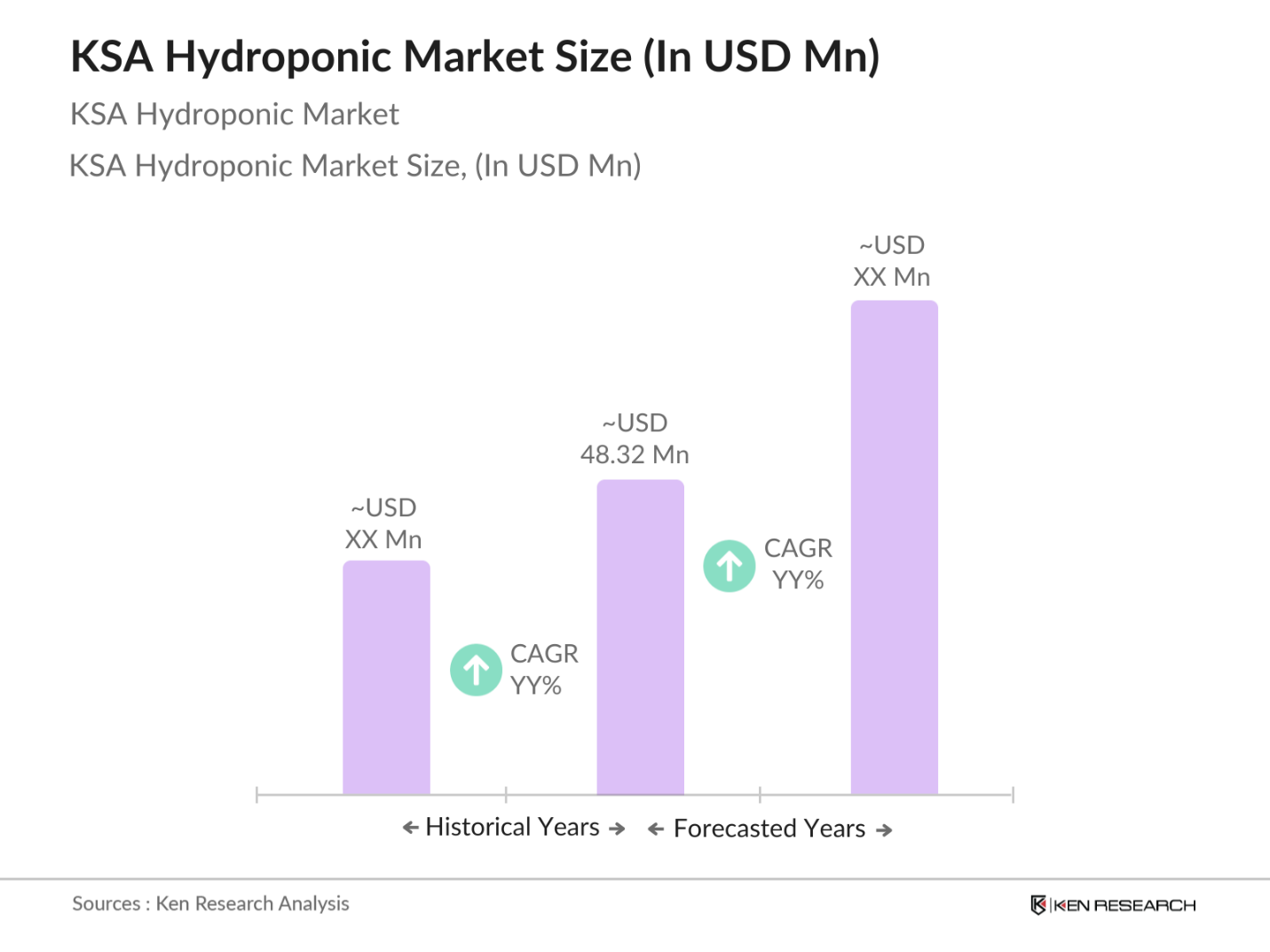
The KSA hydroponic market is valued at USD 48.32 million, driven by the need for sustainable agriculture and water-efficient farming techniques, especially in arid regions of the kingdom.
Challenges include the high initial setup costs for hydroponic systems, limited local expertise in hydroponic farming, and dependence on imported nutrients and growth media.
Key players in the market include Saudi Agricultural Development Company, Green Planet Farms, and Oasis Hydroponic Technologies, which have established themselves through strong partnerships and technological innovation.
The market is driven by factors such as government support, the growing demand for food security, and the efficiency of hydroponic systems in conserving water.

What makes us stand out is that our consultants follows Robust, Refine and Result (RRR) methodology. i.e. Robust for clear definitions, approaches and sanity checking, Refine for differentiating respondents facts and opinions and Result for presenting data with story

We have set a benchmark in the industry by offering our clients with syndicated and customized market research reports featuring coverage of entire market as well as meticulous research and analyst insights.

While we don't replace traditional research, we flip the method upside down. Our dual approach of Top Bottom & Bottom Top ensures quality deliverable by not just verifying company fundamentals but also looking at the sector and macroeconomic factors.

With one step in the future, our research team constantly tries to show you the bigger picture. We help with some of the tough questions you may encounter along the way: How is the industry positioned? Best marketing channel? KPI's of competitors? By aligning every element, we help maximize success.

Our report gives you instant access to the answers and sources that other companies might choose to hide. We elaborate each steps of research methodology we have used and showcase you the sample size to earn your trust.

If you need any support, we are here! We pride ourselves on universe strength, data quality, and quick, friendly, and professional service.