
KSA ICT Market Outlook to 2030
Region:Saudi Arabia
Author(s):Sanjeev
Product Code:KROD3840
Region:Saudi Arabia
Author(s):Sanjeev
Product Code:KROD3840
October 2024
94
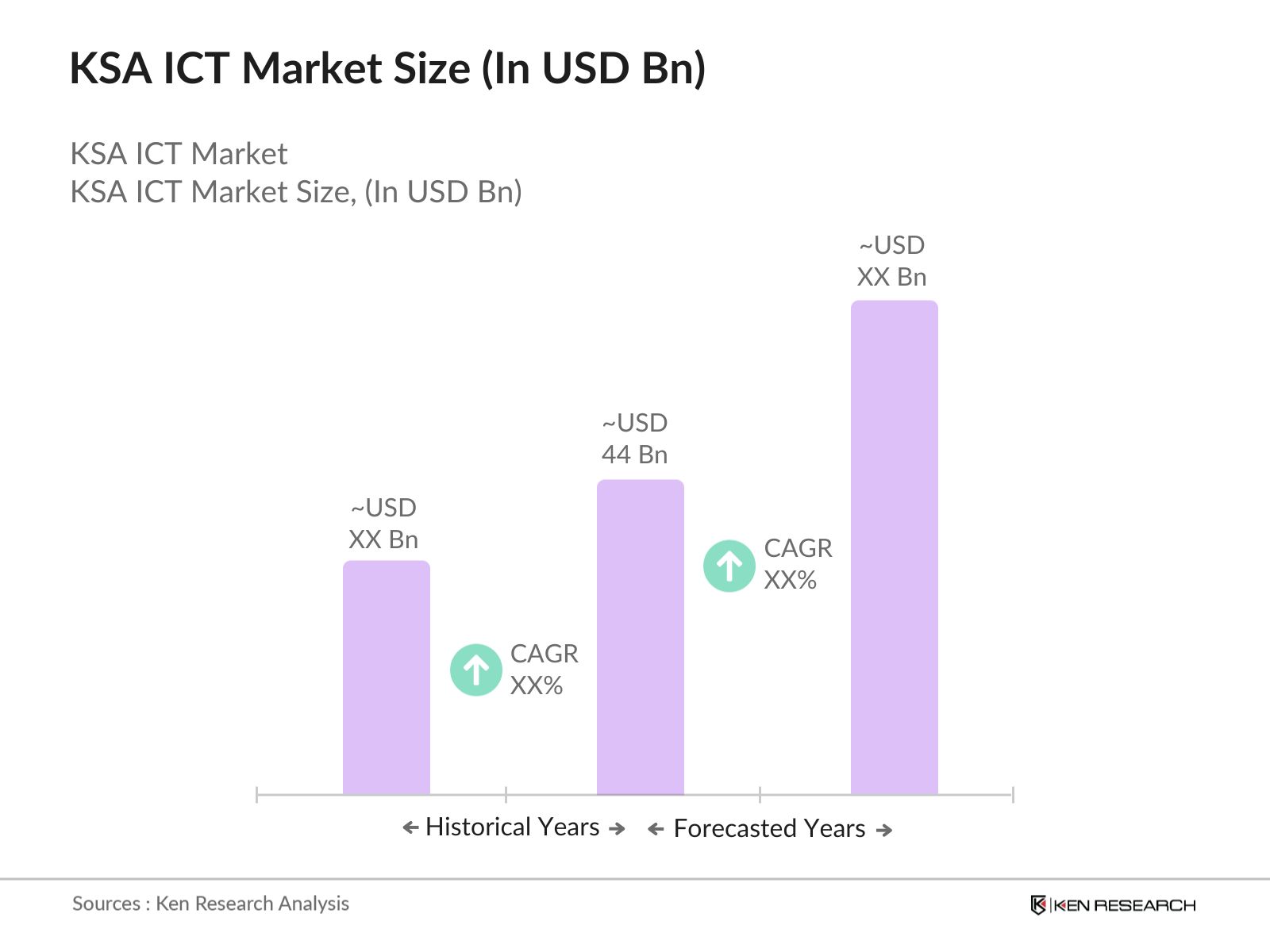
KSA ICT Market Segmentation
By Component: The market is segmented by component into hardware, software, and services. The services segment holds the dominant market share due to the growing demand for managed services, cloud solutions, and cybersecurity services. Government projects, especially in the public and smart city sectors, rely heavily on these services for implementation and management, driving their continued dominance.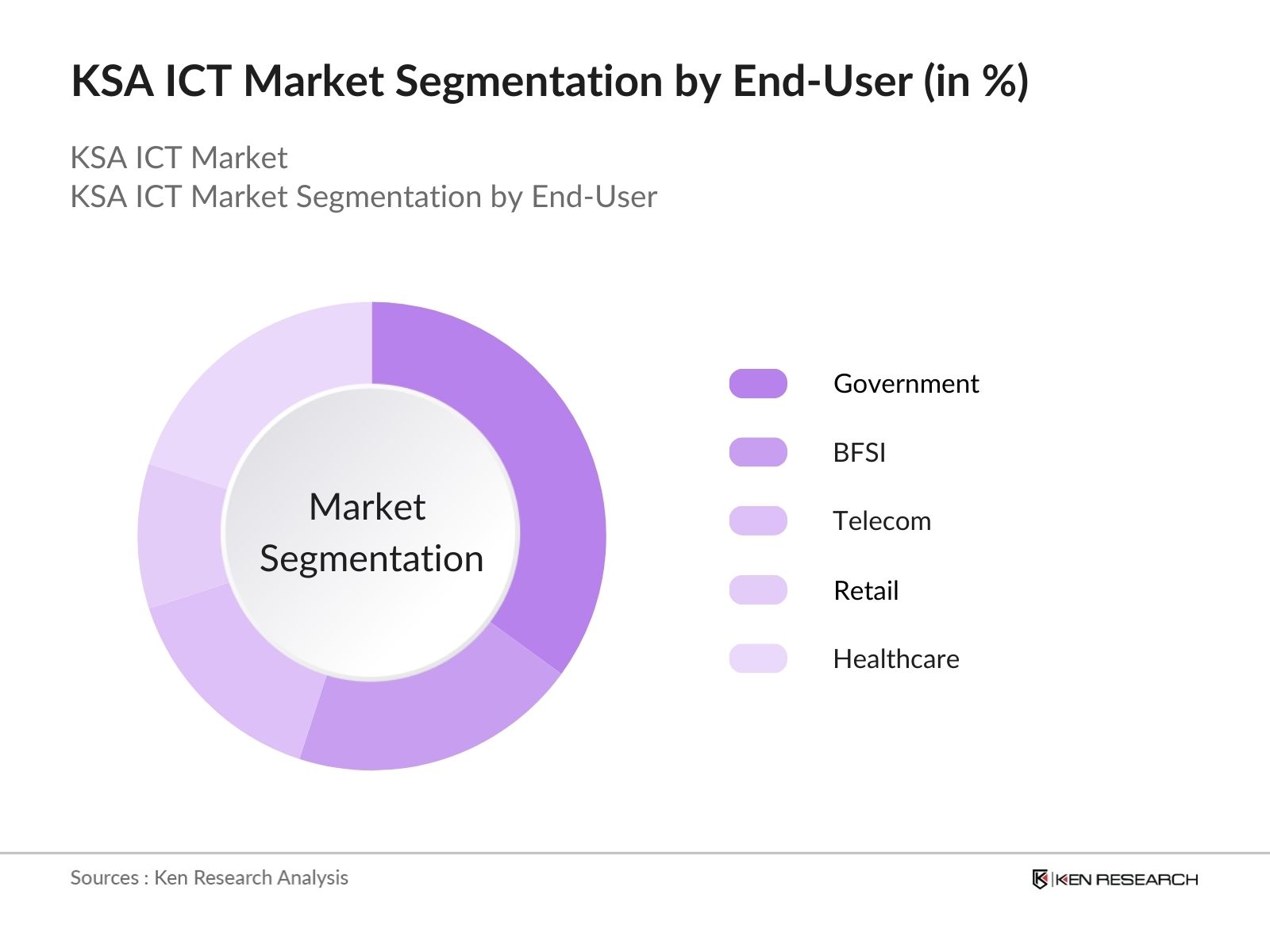
By End-User: The market is segmented by end-user into government, BFSI, telecom, healthcare, and retail. The government sector dominates the market, fueled by investments in e-government services, smart cities, and digital transformation under Vision 2030. The governments focus on building a digital infrastructure to support the economy drives the need for advanced ICT solutions in this segment.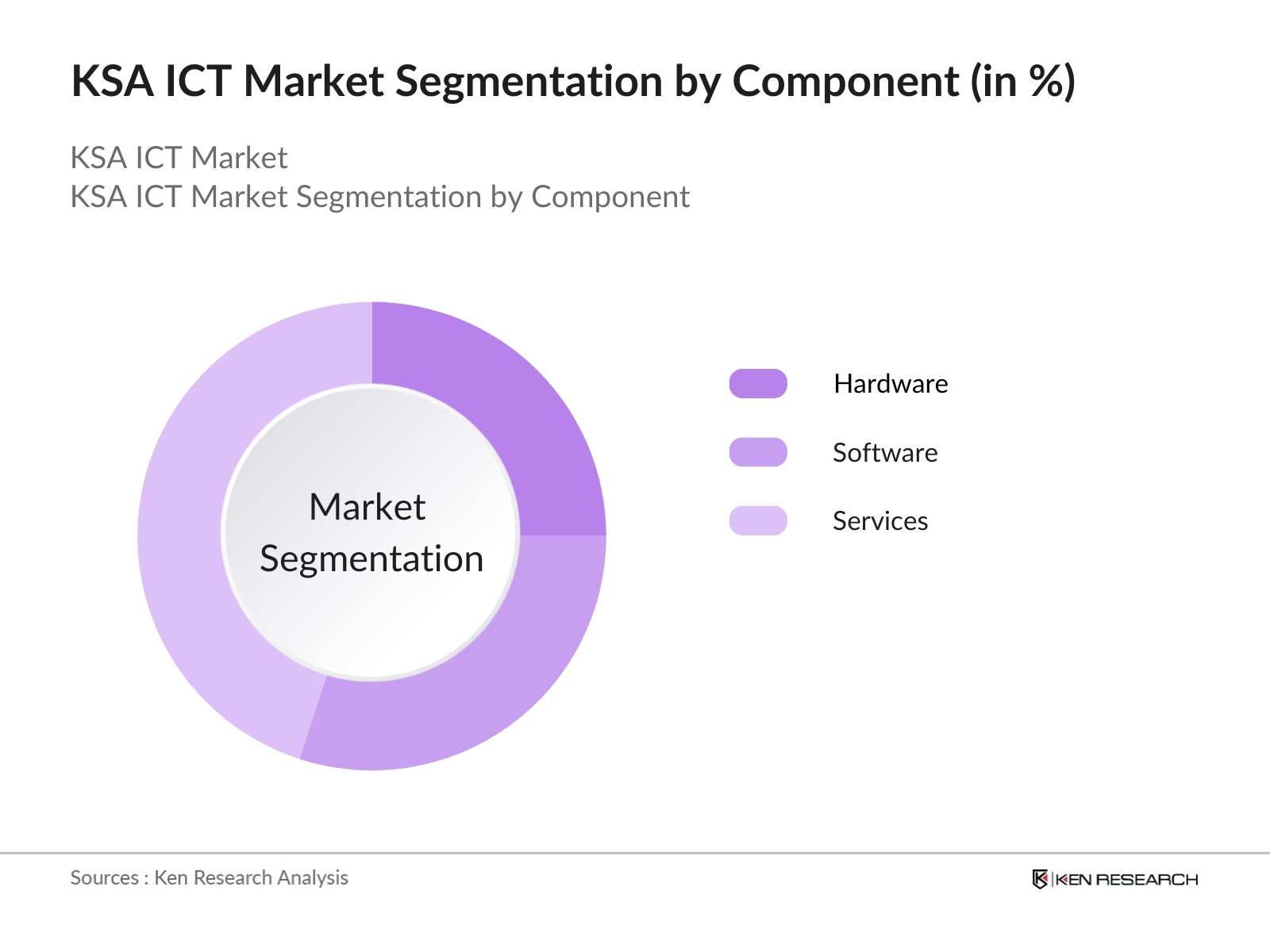
KSA ICT Competitive Landscape
The KSA ICT market is highly competitive, with key players focusing on expanding their service portfolios and investing in cutting-edge technologies like AI, cloud computing, and cybersecurity. Leading companies such as Saudi Telecom Company (STC) and Mobily are at the forefront, benefiting from their established market presence and government contracts. International players like Microsoft and Cisco are also investing heavily in the region to expand their footprint.
Competitive Landscape Table
|
Company Name |
Establishment Year |
Headquarters |
Revenue (USD Bn) |
No. of Employees |
Product Portfolio |
Market Segment Focus |
Strategic Partnerships |
|
STC (Saudi Telecom Co.) |
1998 |
Riyadh, KSA |
|||||
|
Mobily (Etihad Etisalat) |
2004 |
Riyadh, KSA |
|||||
|
Zain KSA |
2008 |
Riyadh, KSA |
|||||
|
Microsoft Corporation |
1975 |
Redmond, USA |
|||||
|
Cisco Systems Inc. |
1984 |
San Jose, USA |
KSA ICT Industry Analysis
Growth Drivers:
KSA ICT Market Challenges
High Initial Investment in ICT Infrastructure: The development of ICT infrastructure in KSA requires significant initial investments, posing a challenge for smaller enterprises to participate in the digital transformation. This cost burden affects the pace of private sector innovation due to high capital expenditure requirements. Despite ongoing government efforts, securing adequate infrastructure financing remains a challenge for many companies.
Lack of Local Skilled Workforce: KSAs ICT sector faces a shortage of local talent in advanced digital skills such as AI, cloud computing, and cybersecurity. While the government is making efforts to upskill local talent, the gap between the demand and supply of skilled workers continues to present a challenge for sustainable growth in the ICT sector.
KSA ICT Market Future Outlook
Over the next five years, the KSA ICT market is poised for remarkable growth, driven by the rapid adoption of digital services, the expansion of cloud and AI technologies, and the nationwide rollout of 5G networks. With continued government support under Vision 2030, KSA is expected to become a regional leader in ICT, with strong demand across sectors such as healthcare, retail, and education.
Market Opportunities
|
By Component |
Hardware Software Services |
|
By Deployment Model |
On-Premise Cloud-based Hybrid |
|
By End-User |
Government BFSI Telecom Retail Healthcare |
|
By Technology |
5G Cloud IoT AI Blockchain |
|
By Region |
North East West South |
STC (Saudi Telecom Company)
1.1. Definition and Scope
1.2. Market Taxonomy
1.3. Market Growth Rate
1.4. Market Segmentation Overview
2.1. Historical Market Size
2.2. Year-on-Year Growth Analysis
2.3. Key Market Developments and Milestones
3.1. Growth Drivers (Urbanization, Digital Transformation, Cloud Adoption)
3.1.1. Expansion of 5G Networks
3.1.2. Digital Government Initiatives (Vision 2030)
3.1.3. Increase in Demand for E-Commerce
3.1.4. Technological Advancements in AI and IoT
3.2. Market Challenges (Infrastructure, Investment Costs, Cybersecurity)
3.2.1. High Initial Investment in ICT Infrastructure
3.2.2. Lack of Local Skilled Workforce
3.2.3. Regulatory and Compliance Hurdles
3.3. Opportunities (Cloud Computing, Data Centers, AI Integration)
3.3.1. Expansion of Cloud and Edge Computing Services
3.3.2. Growing Demand for Data Center Infrastructure
3.3.3. Adoption of AI, Big Data, and Analytics in Business Sectors
3.4. Trends (Digital Economy, AI & Automation)
3.4.1. Rise of Smart City Projects
3.4.2. Increased Use of Artificial Intelligence in Various Sectors
3.4.3. Growth of Fintech and Digital Payment Solutions
3.4.4. IoT Integration Across Industries (Healthcare, Retail, Logistics)
3.5. Government Regulation (Digital Transformation Policies, Data Privacy Laws)
3.5.1. Vision 2030 Digital Infrastructure Initiatives
3.5.2. Cybersecurity Framework Regulations
3.5.3. Data Localization and Privacy Regulations
3.5.4. Taxation on Digital Platforms and E-Commerce
3.6. SWOT Analysis
3.7. Stakeholder Ecosystem
3.8. Porters Five Forces
3.9. Competition Ecosystem
4.1. By Component (In Value %)
4.1.1. Hardware
4.1.2. Software
4.1.3. Services
4.2. By Deployment Model (In Value %)
4.2.1. On-Premise
4.2.2. Cloud-based
4.2.3. Hybrid
4.3. By End-User (In Value %)
4.3.1. Government
4.3.2. Banking, Financial Services, and Insurance (BFSI)
4.3.3. Telecom
4.3.4. Retail
4.3.5. Healthcare
4.4. By Technology (In Value %)
4.4.1. 5G Network Infrastructure
4.4.2. Cloud Computing
4.4.3. Internet of Things (IoT)
4.4.4. Artificial Intelligence (AI)
4.4.5. Blockchain
4.5. By Region (In Value %)
4.5.1. East
4.5.2. West
4.5.3. North
4.5.4. South
5.1. Detailed Profiles of Major Companies
5.1.1. STC (Saudi Telecom Company)
5.1.2. Mobily (Etihad Etisalat)
5.1.3. Zain KSA
5.1.4. Cisco Systems Inc.
5.1.5. Huawei Technologies Co. Ltd.
5.1.6. Oracle Corporation
5.1.7. Microsoft Corporation
5.1.8. IBM Corporation
5.1.9. SAP SE
5.1.10. Ericsson AB
5.1.11. Amazon Web Services (AWS)
5.1.12. Google Cloud
5.1.13. Dell Technologies
5.1.14. Hewlett Packard Enterprise (HPE)
5.1.15. Accenture
5.2. Cross Comparison Parameters (Headquarters, Revenue, No. of Employees, Service Portfolio, Inception Year, Market Share, Key Clientele, Strategic Initiatives)
5.3. Market Share Analysis
5.4. Strategic Initiatives (Partnerships, Joint Ventures, Investments)
5.5. Mergers & Acquisitions
5.6. Investment Analysis
5.7. Venture Capital and Private Equity Investments
5.8. Government Grants and Funding
6.1. Data Protection Laws
6.2. Telecom Licensing Regulations
6.3. Compliance Requirements for ICT Companies
6.4. Spectrum Allocation and Management Policies
7.1. Future Market Size Projections
7.2. Key Factors Driving Future Market Growth
8.1. By Component (In Value %)
8.2. By Deployment Model (In Value %)
8.3. By End-User (In Value %)
8.4. By Technology (In Value %)
8.5. By Region (In Value %)
9.1. TAM/SAM/SOM Analysis
9.2. Customer Cohort Analysis
9.3. Market Entry Strategies
9.4. White Space Opportunity Analysis
Disclaimer Contact UsThis initial phase involves mapping the KSA ICT market's key stakeholders and variables such as service providers, regulatory bodies, and end-users. Extensive desk research utilizing secondary and proprietary databases is conducted to gather relevant industry-level data and identify market dynamics.
Historical data is analyzed to understand market trends and segment performance. This includes assessing the penetration of telecom, cloud computing, and AI in the country and evaluating the contribution of different regions and sectors to the market's revenue.
Market assumptions are validated through interviews with industry experts and consultations with key players in the KSA ICT ecosystem. These insights help refine the data and provide a comprehensive view of the market.
Finally, the data is synthesized into a cohesive report, ensuring all insights from primary and secondary sources are incorporated. The findings are cross-validated to ensure a reliable and accurate portrayal of the KSA ICT market.

What makes us stand out is that our consultants follows Robust, Refine and Result (RRR) methodology. i.e. Robust for clear definitions, approaches and sanity checking, Refine for differentiating respondents facts and opinions and Result for presenting data with story

We have set a benchmark in the industry by offering our clients with syndicated and customized market research reports featuring coverage of entire market as well as meticulous research and analyst insights.

While we don't replace traditional research, we flip the method upside down. Our dual approach of Top Bottom & Bottom Top ensures quality deliverable by not just verifying company fundamentals but also looking at the sector and macroeconomic factors.

With one step in the future, our research team constantly tries to show you the bigger picture. We help with some of the tough questions you may encounter along the way: How is the industry positioned? Best marketing channel? KPI's of competitors? By aligning every element, we help maximize success.

Our report gives you instant access to the answers and sources that other companies might choose to hide. We elaborate each steps of research methodology we have used and showcase you the sample size to earn your trust.

If you need any support, we are here! We pride ourselves on universe strength, data quality, and quick, friendly, and professional service.