
KSA Interior Design Market Outlook to 2030
Region:Saudi Arabia
Author(s):Samanyu
Product Code:KROD4877
Region:Saudi Arabia
Author(s):Samanyu
Product Code:KROD4877
October 2024
82
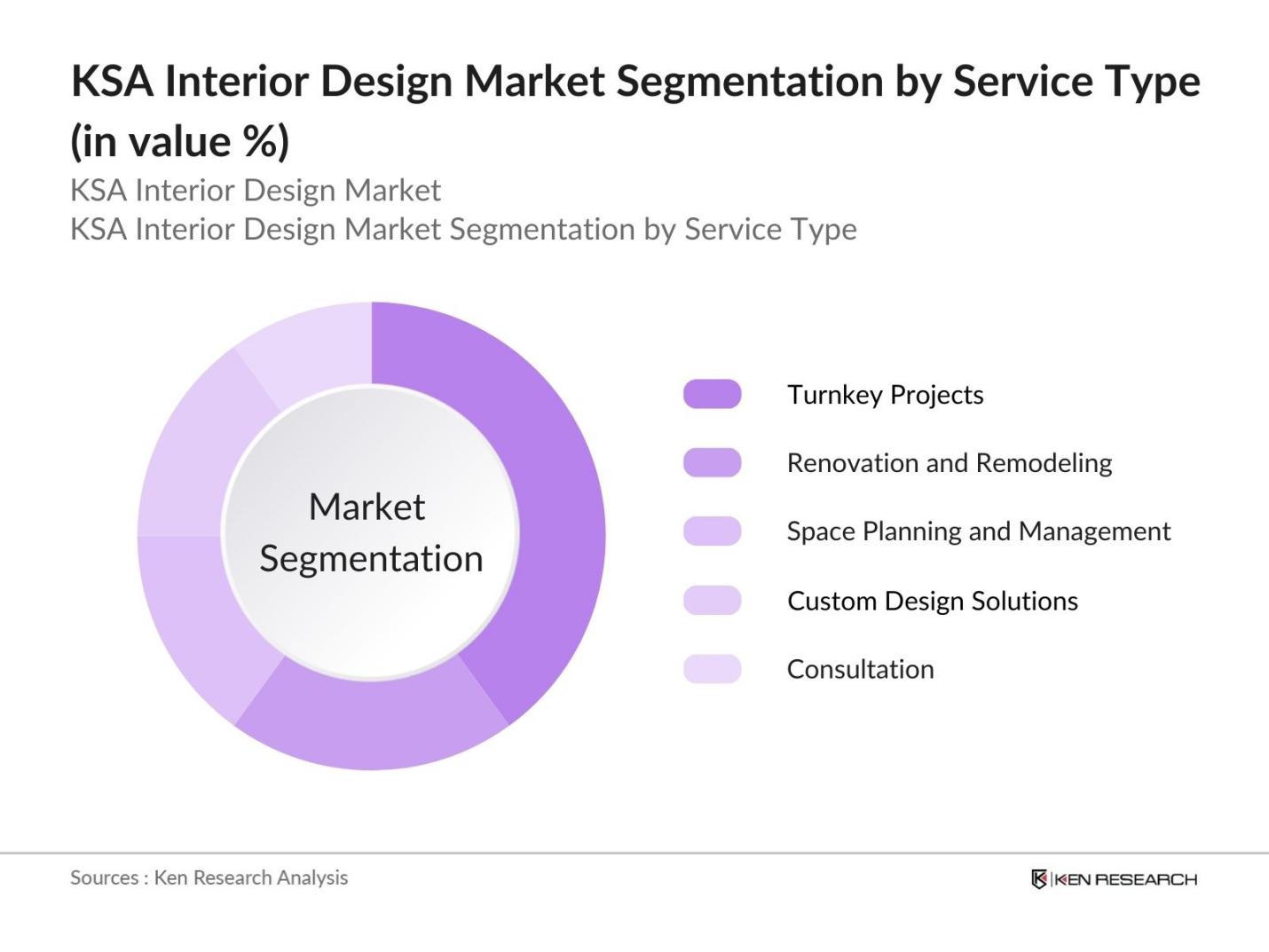
By Service Type: The market is also segmented by service type into Consultation, Custom Design Solutions, Turnkey Projects, Renovation and Remodeling, and Space Planning and Management. Among these, turnkey projects dominate the market. The rising demand for hassle-free, all-inclusive design services where design firms manage projects from conception to completionhas positioned this segment as the market leader. Consumers, particularly those in the residential and hospitality sectors, prefer turnkey solutions due to their convenience and comprehensive nature. Additionally, many luxury developments prefer the efficiency and consistency provided by turnkey service providers.
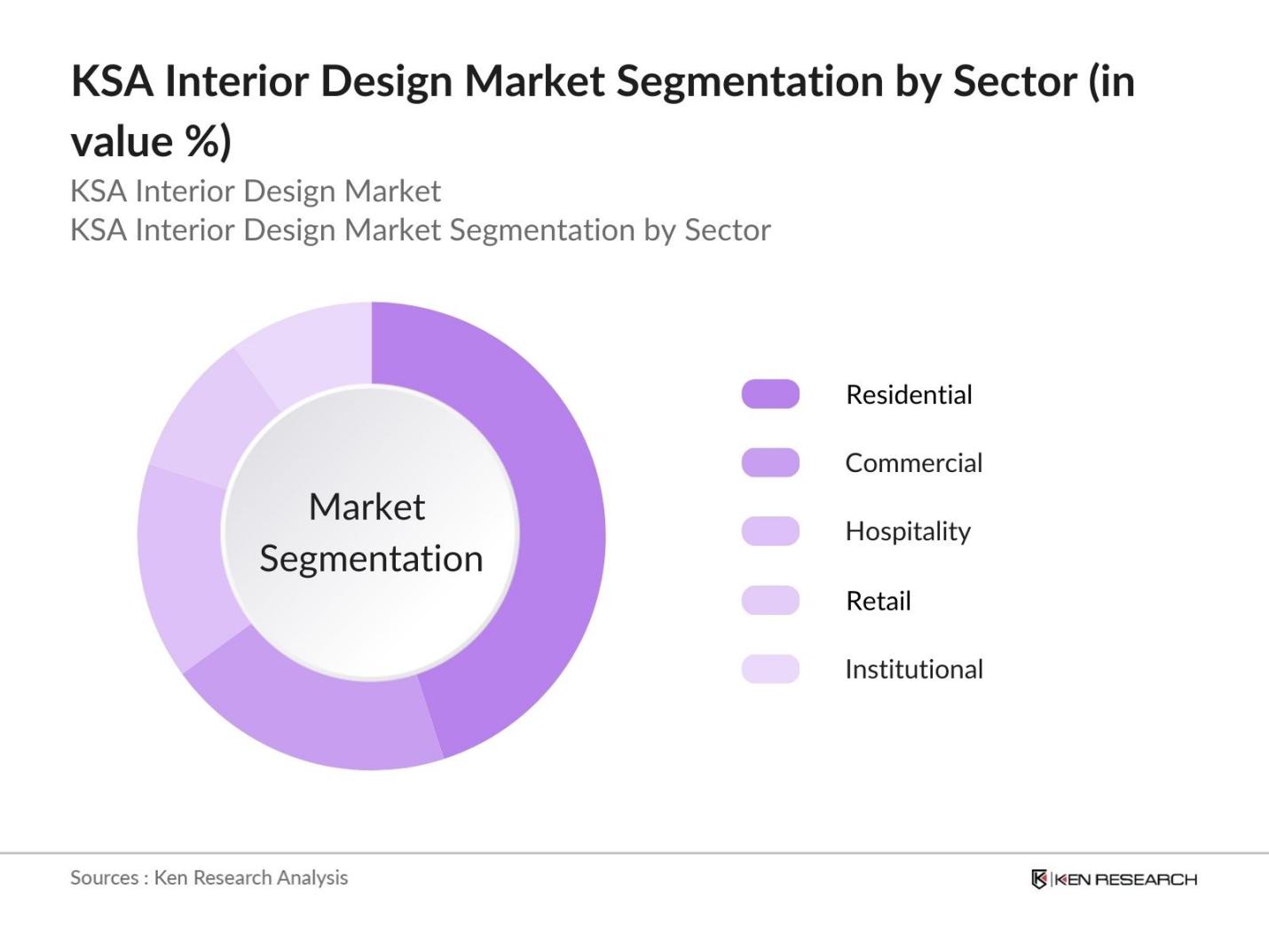
By Sector: The market is segmented by sector into Residential, Commercial, Hospitality, Retail, and Institutional. Recently, the residential sector has seen growth, driven by increasing demand for personalized and luxury interior solutions. The influx of high-income professionals and the launch of government housing initiatives have expanded this sector. Additionally, urbanization and lifestyle changes have boosted the adoption of premium interior design, particularly in high-end real estate projects across Riyadh and Jeddah. The demand for custom furniture and design solutions for villas and high-rise apartments contributes to the sectors dominance.
The KSA interior design market is dominated by both local and international players, who bring unique value propositions to the market. Leading companies provide a wide range of services, from turnkey solutions to bespoke luxury designs. The competition is marked by players focusing on sustainability, customization, and technological integration in their services. Companies offering eco-friendly and technologically advanced solutions, such as smart homes, are gaining market traction.
|
Company Name |
Establishment Year |
Headquarters |
Revenue (2023) |
Employees |
Service Type |
R&D Investment |
Key Clients |
Partnerships |
|
Depa Group |
1976 |
Dubai, UAE |
||||||
|
HBA (Hirsch Bedner Associates) |
1965 |
Los Angeles, USA |
||||||
|
Dar Al-Handasah |
1956 |
Beirut, Lebanon |
||||||
|
Gensler |
1965 |
San Francisco, USA |
||||||
|
Perkins+Will |
1935 |
Chicago, USA |
Over the next five years, the KSA interior design market is projected to witness growth, driven by the countrys Vision 2030 objectives, which emphasize modernization, infrastructure development, and tourism expansion. The rising demand for custom and luxury interiors, combined with growing consumer awareness of sustainability, will shape market trends. Smart home integration and technology-driven designs will also play a critical role in meeting the needs of a tech-savvy customer base. Furthermore, government projects like Neom and The Red Sea Project will create new opportunities for design firms across residential, commercial, and hospitality sectors.
|
By Service Type |
Consultation Custom Design Turnkey Projects Renovation Space Planning |
|
By Sector |
Residential Commercial Hospitality Retail Institutional |
|
By Material Type |
Wood Glass Metals Textiles Sustainable Materials |
|
By Style |
Traditional Contemporary Minimalist Industrial Eclectic |
|
By Region |
Riyadh Jeddah Eastern Province Makkah Madinah |
1.1. Definition and Scope (Residential, Commercial, Retail, Hospitality, Institutional)
1.2. Market Taxonomy (Design Categories, Services Offered, Materials Used)
1.3. Market Dynamics (Growth Drivers, Restraints, Opportunities, Key Trends)
1.4. Market Segmentation Overview (Detailed market structure by sectors and services)
2.1. Historical Market Size (Past performance analysis)
2.2. Year-on-Year Growth (Growth trends across sectors and regions)
2.3. Key Developments and Milestones (Notable projects and collaborations)
3.1. Growth Drivers
3.1.1. Urbanization and Economic Development
3.1.2. Real Estate and Construction Growth
3.1.3. Government Initiatives (Vision 2030, Residential Programs)
3.1.4. Increasing Disposable Income and Lifestyle Changes
3.2. Restraints
3.2.1. High Competition Among Firms
3.2.2. Regulatory Hurdles in Design Compliance
3.2.3. Lack of Skilled Local Workforce
3.3. Opportunities
3.3.1. Rising Demand for Sustainable Designs
3.3.2. Growth in Smart Homes and IOT Integration
3.3.3. Untapped Luxury and Customization Segments
3.4. Trends
3.4.1. Incorporation of Local Aesthetic in Modern Designs
3.4.2. Increased Use of Sustainable and Eco-friendly Materials
3.4.3. Shift Towards Minimalist and Functional Interior Designs
3.5. Government Regulations
3.5.1. Design Standards for Residential and Commercial Projects
3.5.2. Green Building Codes and Certifications
3.5.3. Regulations for Public Spaces and Hospitality Design
3.5.4. Zoning and Space Utilization Laws
3.6. SWOT Analysis (Strengths, Weaknesses, Opportunities, Threats)
3.7. Stakeholder Ecosystem (Designers, Architects, Contractors, Material Suppliers)
3.8. Porters Five Forces Analysis
3.9. Competitive Landscape
4.1. By Sector (In Value %)
4.1.1. Residential Interior Design
4.1.2. Commercial Interior Design
4.1.3. Hospitality Interior Design
4.1.4. Retail Interior Design
4.1.5. Institutional Interior Design
4.2. By Service Type (In Value %)
4.2.1. Consultation
4.2.2. Custom Design Solutions
4.2.3. Turnkey Projects
4.2.4. Renovation and Remodeling
4.2.5. Space Planning and Management
4.3. By Material Type (In Value %)
4.3.1. Wood and Timber
4.3.2. Glass and Ceramics
4.3.3. Metals and Alloys
4.3.4. Textiles and Fabrics
4.3.5. Sustainable and Recycled Materials
4.4. By Style (In Value %)
4.4.1. Traditional
4.4.2. Contemporary
4.4.3. Minimalist
4.4.4. Industrial
4.4.5. Eclectic
4.5. By Region (In Value %)
4.5.1. Riyadh
4.5.2. Jeddah
4.5.3. Eastern Province
4.5.4. Makkah
4.5.5. Madinah
5.1. Detailed Profiles of Major Companies
5.1.1. Depa Group
5.1.2. HBA (Hirsch Bedner Associates)
5.1.3. Gensler
5.1.4. Perkins+Will
5.1.5. Foster + Partners
5.1.6. Dar Al-Handasah
5.1.7. IHG Design Studio
5.1.8. KEO International Consultants
5.1.9. Designlab Experience
5.1.10. Omniplan
5.1.11. Wilson Associates
5.1.12. Zaha Hadid Architects
5.1.13. P&T Architects & Engineers
5.1.14. SWA Group
5.1.15. Studio McGee
5.2. Cross Comparison Parameters (Design Style Expertise, Project Portfolio, Local Presence, Awards and Recognition, Sustainability Initiatives, Client Base, Pricing, Customization Capabilities)
5.3. Market Share Analysis
5.4. Strategic Initiatives
5.5. Mergers and Acquisitions
5.6. Investment Analysis
5.7. Key Partnerships and Collaborations
5.8. Innovation and Technological Integration
5.9. Government Incentives and Support
6.1. Building and Construction Laws
6.2. Certification and Compliance Requirements
6.3. Guidelines for Sustainable and Green Buildings
6.4. Licensing and Professional Standards for Designers
7.1. Future Market Size Projections
7.2. Key Factors Driving Future Market Growth
8.1. By Sector (In Value %)
8.2. By Service Type (In Value %)
8.3. By Material Type (In Value %)
8.4. By Style (In Value %)
8.5. By Region (In Value %)
9.1. TAM/SAM/SOM Analysis
9.2. Market Penetration Strategies
9.3. Design Innovation Roadmap
9.4. Sustainable Design Opportunities
Disclaimer Contact UsThis step involves mapping out the key stakeholders in the KSA Interior Design Market. Extensive desk research is conducted using credible secondary and proprietary sources to identify the critical variables driving market dynamics. These variables include consumer preferences, technological advancements, and government regulations.
In this phase, historical data regarding the market is gathered and analyzed. This includes a detailed assessment of service penetration rates, revenue generation across different sectors (residential, commercial, etc.), and the impact of government initiatives on market growth.
Through structured interviews with industry experts, the initial findings are validated. These consultations provide first-hand insights into operational challenges, market opportunities, and evolving consumer demands, adding depth to the market analysis.
The final phase involves synthesizing all gathered data into a coherent analysis. Direct engagement with interior design firms ensures that market statistics are accurate and aligned with industry realities. The final output offers a detailed, validated analysis of the KSA Interior Design Market.
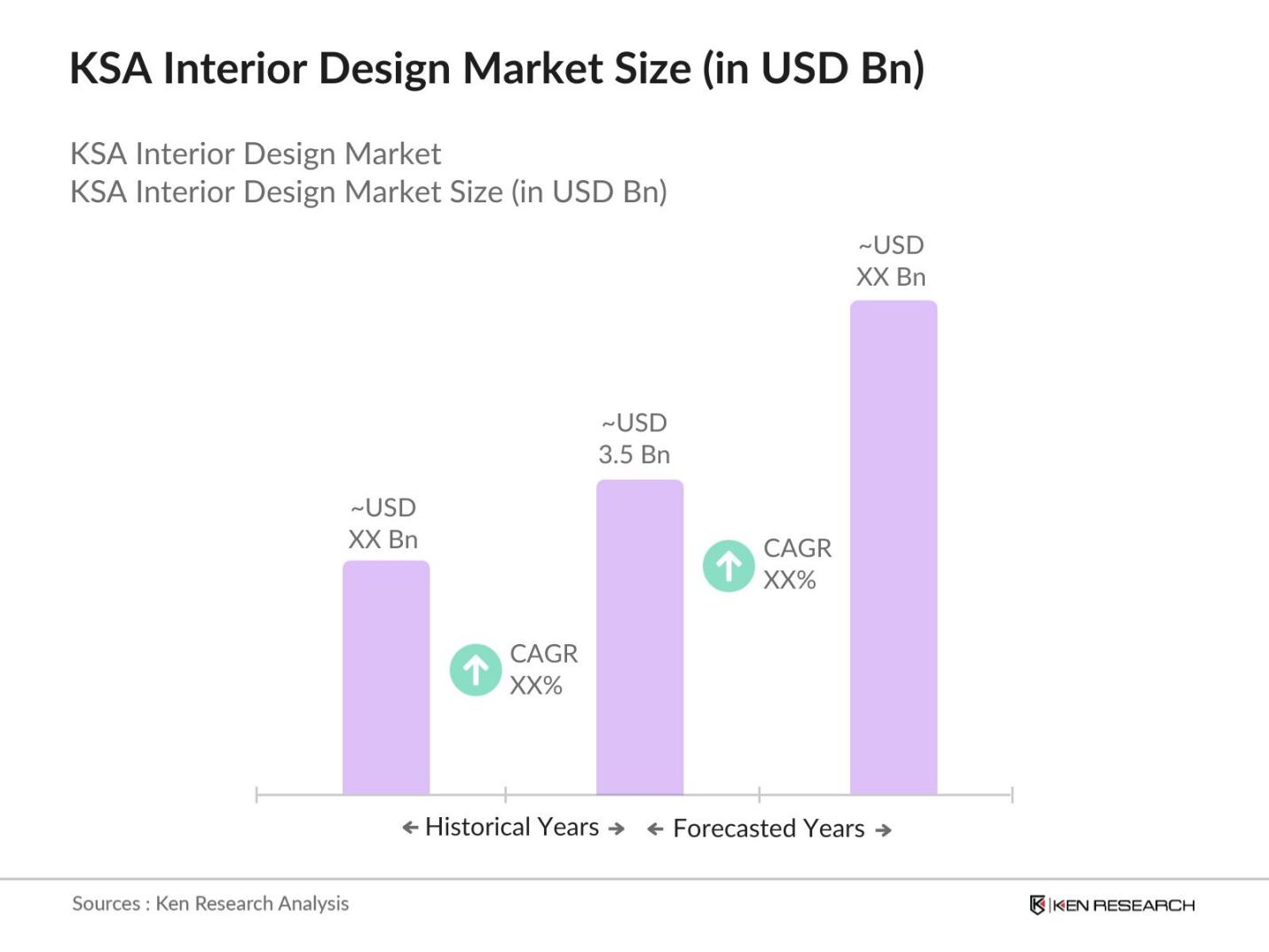
The KSA interior design market is valued at USD 3.5 Bn, primarily driven by urbanization, government infrastructure investments, and the growing demand for luxury interior solutions.
Challenges in KSA interior design market include high competition, stringent regulatory requirements, and the lack of skilled local talent. Additionally, fluctuating raw material costs and sustainability demands can add to project costs.
Key players in the KSA interior design market include Depa Group, HBA (Hirsch Bedner Associates), Gensler, Perkins+Will, and Dar Al-Handasah, each excelling in various segments of the market such as residential, commercial, and hospitality designs.
The KSA interior design market is driven by government infrastructure projects under Vision 2030, a growing real estate sector, rising disposable incomes, and increasing demand for custom and luxury designs.

What makes us stand out is that our consultants follows Robust, Refine and Result (RRR) methodology. i.e. Robust for clear definitions, approaches and sanity checking, Refine for differentiating respondents facts and opinions and Result for presenting data with story

We have set a benchmark in the industry by offering our clients with syndicated and customized market research reports featuring coverage of entire market as well as meticulous research and analyst insights.

While we don't replace traditional research, we flip the method upside down. Our dual approach of Top Bottom & Bottom Top ensures quality deliverable by not just verifying company fundamentals but also looking at the sector and macroeconomic factors.

With one step in the future, our research team constantly tries to show you the bigger picture. We help with some of the tough questions you may encounter along the way: How is the industry positioned? Best marketing channel? KPI's of competitors? By aligning every element, we help maximize success.

Our report gives you instant access to the answers and sources that other companies might choose to hide. We elaborate each steps of research methodology we have used and showcase you the sample size to earn your trust.

If you need any support, we are here! We pride ourselves on universe strength, data quality, and quick, friendly, and professional service.