
KSA Iron and Steel Market Outlook to 2030
Region:Middle East
Author(s):Shambhavi Awasthi
Product Code:KROD6209
December 2024
88
About the Report
KSA Iron and Steel Market Overview
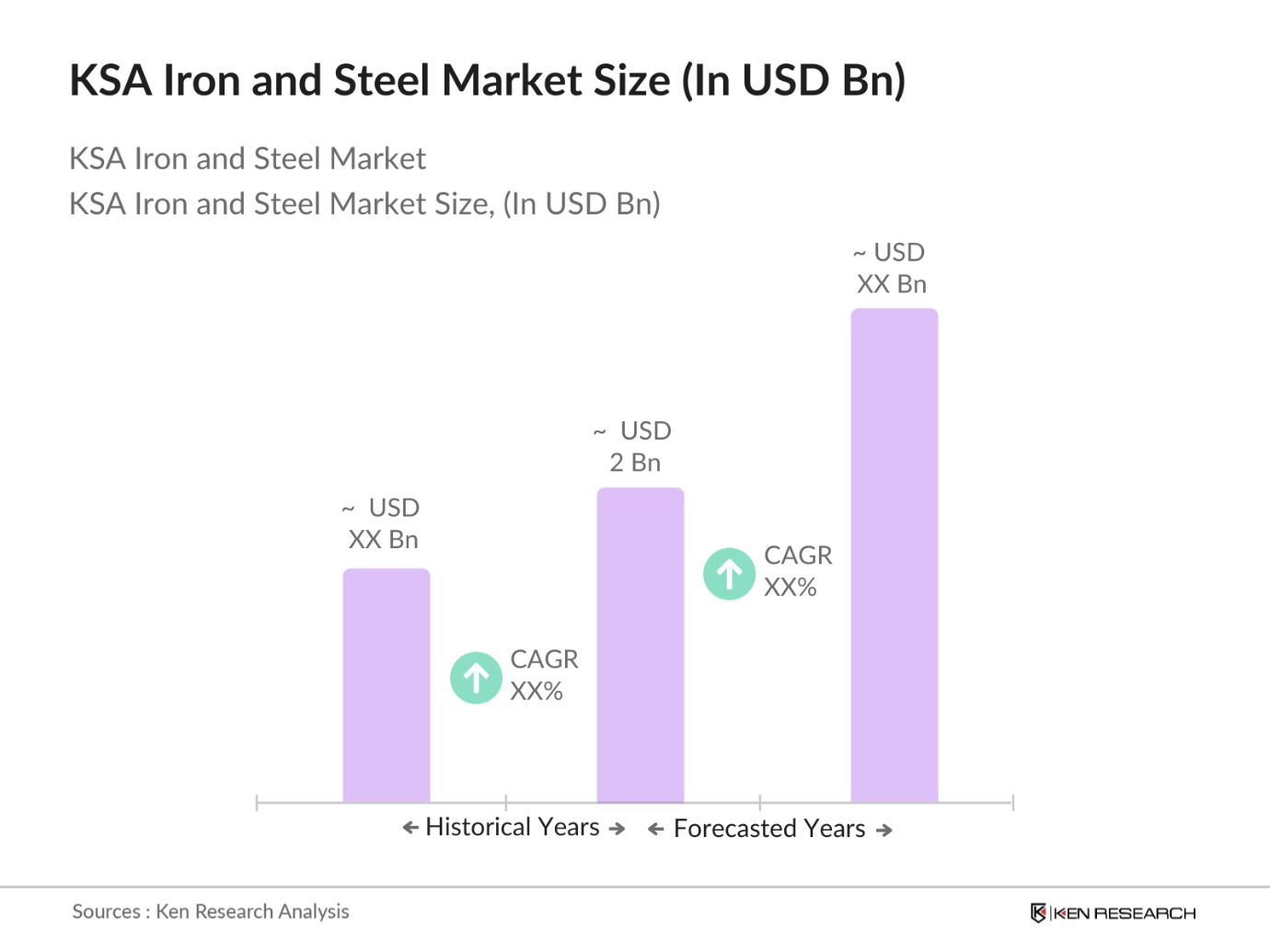
- The KSA iron and steel market experienced significant growth in 2023, reaching a market size of USD 2 billion. This growth is primarily driven by large-scale infrastructure projects, such as the NEOM city project, and the expansion of the industrial sector. The construction of new residential, commercial, and industrial buildings has significantly increased the demand for steel products.
- The key players in the KSA iron and steel market include Saudi Iron and Steel Company (Hadeed), Al-Ittefaq Steel Products Company, Rajhi Steel, Zamil Steel Holding Company, and Al Yamamah Steel Industries Co. These companies dominate the market due to their extensive production capacities, strategic partnerships, and strong distribution networks. For instance, Hadeed, a subsidiary of SABIC, remains a leading player due to its advanced technological capabilities and wide range of steel products.
- In May 2023, Saudi Aramco, China's Baoshan Iron & Steel Co. (Baosteel), and the Public Investment Fund (PIF) signed an agreement to establish an integrated steel plate manufacturing complex in Ras al-Khair Industrial City. This facility is expected to produce up to 1.5 million tons of steel plates annually, with operations commencing by 2026. The project aims to reduce CO emissions by up to 60% compared to traditional blast furnaces
- Riyadh, Jeddah, and Dammam dominate the KSA iron and steel market due to their large industrial bases and strategic locations. Riyadh, the capital, is a hub for construction activities and infrastructure development. Jeddah, as the main port city, facilitates the import and export of steel products.
KSA Iron and Steel Market Segmentation
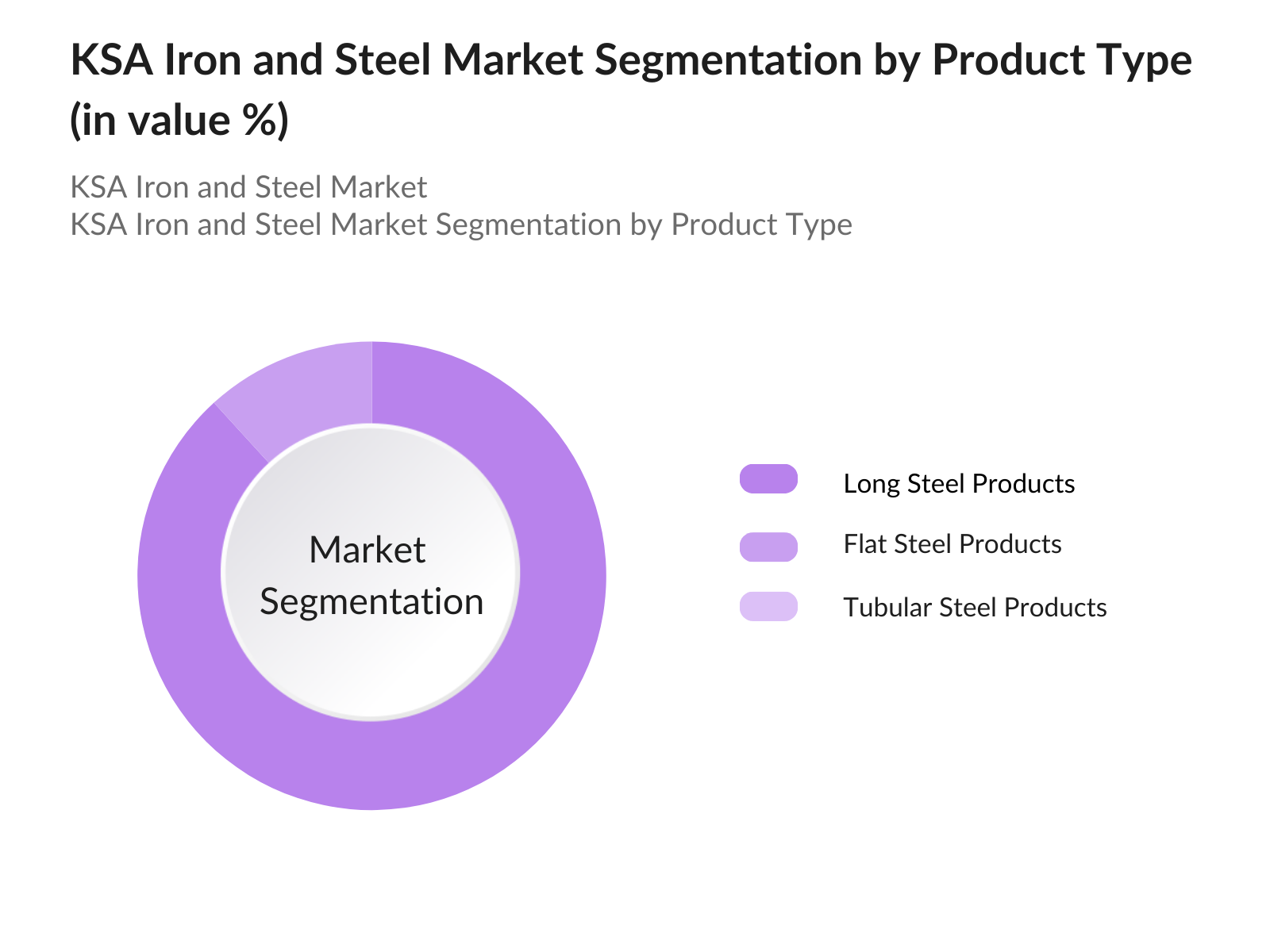
- By Product Type: The KSA iron and steel market is segmented by product type into long steel products, flat steel products, and tubular steel products. In 2023, long steel products, including rebar and structural steel, dominated the market due to their extensive use in construction and infrastructure projects. The ongoing development of mega-projects like NEOM and the Red Sea Project significantly drives the demand for these products. These projects require substantial quantities of long steel products, making this segment the largest in the market.
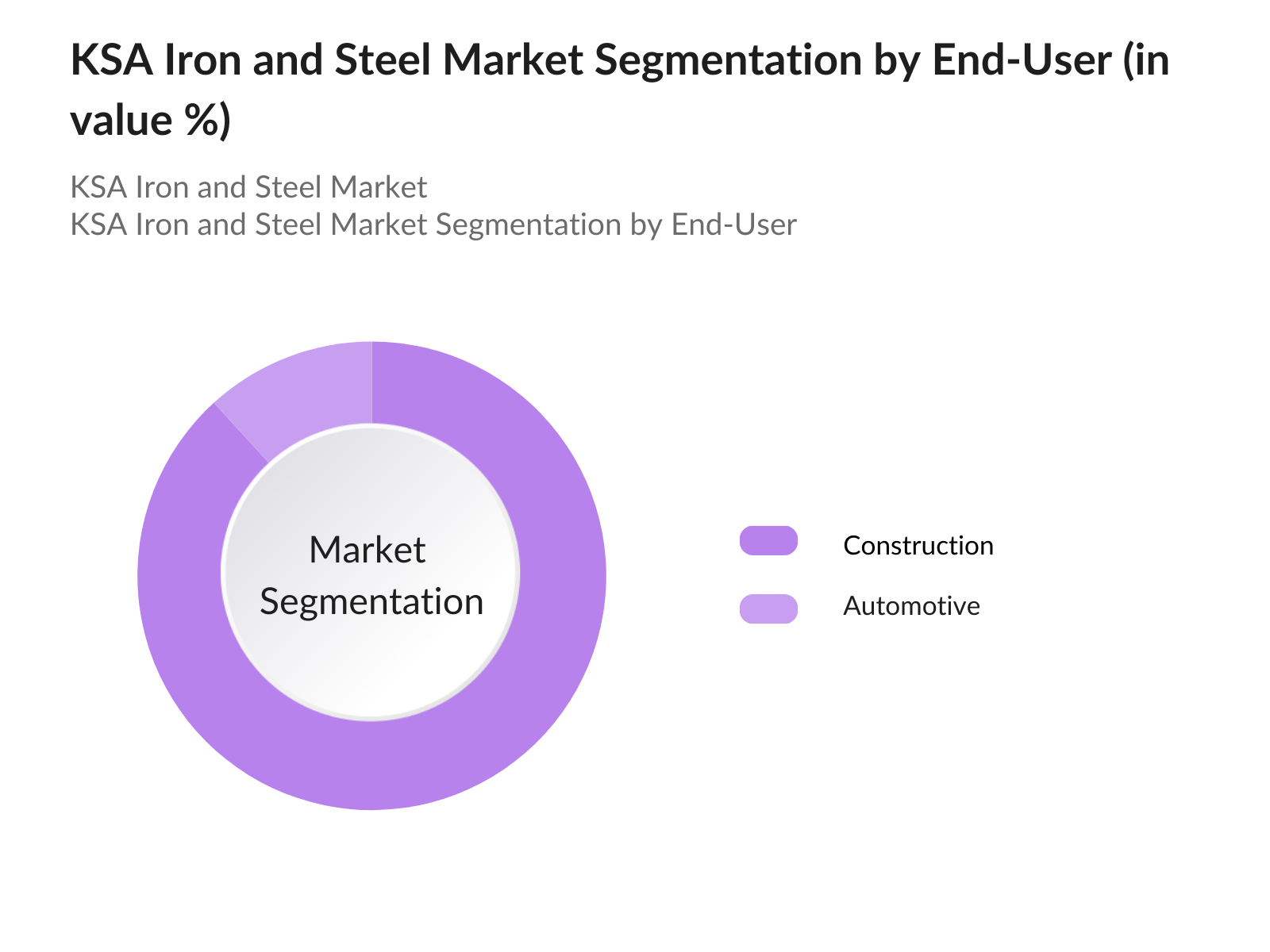
- By End-User: The market is segmented by end-user into construction, automotive, and oil & gas. The construction industry held the largest market share in the KSA iron and steel market. The rapid urbanization and development of infrastructure projects like NEOM and Qiddiya have significantly increased the demand for construction steel products. These projects require large quantities of structural steel, rebar, and other long steel products.
- By Region: The market is segmented by region into Asia, North America, Europe, and South America. Asia dominates the regional segment of the KSA iron and steel market, driven by the high demand from construction and manufacturing industries in countries like China and India. The regions rapid industrialization and infrastructure development contribute to its significant market share.
KSA Iron and Steel Market Competitive Landscape
|
Company |
Establishment Year |
Headquarters |
|
Saudi Iron and Steel Company (Hadeed) |
1979 |
Jubail, Saudi Arabia |
|
Al-Ittefaq Steel Products Company |
1989 |
Dammam, Saudi Arabia |
|
Rajhi Steel |
1984 |
Riyadh, Saudi Arabia |
|
Zamil Steel Holding Company |
1977 |
Dammam, Saudi Arabia |
|
Al Yamamah Steel Industries Co. |
1989 |
Riyadh, Saudi Arabia |
- Saudi Iron and Steel Company (Hadeed): In 2023, SABIC selling its Hadeed iron and steel business to the Public Investment Fund (PIF) for $3.33 billion in 2024The project includes the installation of energy-efficient furnaces and advanced automation systems. Upon completion in 2025, the upgraded plant will increase Hadeeds production capacity by 25%, enabling it to meet the growing domestic demand for high-quality steel products.
- Al Yamamah Steel Industries Co.: Al Yamamah Steel Industries Co. invested $100 million in a new galvanizing line in 2023, aiming to enhance its product offerings for the automotive and construction sectors. The new line will have a production capacity of 500,000 tonnes per year and will be operational by mid-2024. This development is expected to strengthen the companys position in the domestic and regional markets.
KSA Iron and Steel Market Analysis
KSA Iron and Steel Market Growth Drivers
- Vision 2030 Infrastructure Projects: The KSA iron and steel market is significantly driven by the Saudi Vision 2030 initiative, which emphasizes economic diversification and infrastructure development. Projects such as the NEOM mega-city, Red Sea Project, and Riyadh Metro are major contributors to the rising demand for steel. NEOM project alone is expected to generate a demand for 5 million tonnes of steel over the next few years as it includes the construction of residential, commercial, and industrial zones.
- Industrial Sector Expansion: The expansion of the industrial sector in Saudi Arabia is another critical driver for the iron and steel market. The country aims to boost its manufacturing capabilities as part of its economic diversification strategy. By 2024, Saudi Arabia plans to establish 40 new industrial zones, which will require substantial quantities of steel for construction and machinery manufacturing.
- Renewable Energy Projects: Saudi Arabias commitment to renewable energy projects is also propelling the growth of the iron and steel market. The country has set an ambitious target to generate 50% of its energy from renewable sources by 2030. This includes the development of solar and wind farms, which require significant amounts of steel for infrastructure. For instance, the Dumat Al Jandal wind farm, with a capacity of 400 MW, utilized approximately 80,000 tonnes of steel during its construction.
KSA Iron and Steel Market Challenges
- High Production Costs: One of the significant challenges facing the KSA iron and steel market is the high production costs. The costs of raw materials such as iron ore and scrap metal have been volatile, affecting the profitability of steel manufacturers. Additionally, the energy-intensive nature of steel production leads to high electricity and fuel costs.
- Competition from Imports: The KSA iron and steel market faces stiff competition from cheaper imports, primarily from China and Turkey. These countries offer steel at lower prices due to their economies of scale and lower production costs. In 2023, Saudi Arabia imported approximately 2 million tonnes of steel, accounting for 20% of its total consumption. This poses a challenge for local manufacturers striving to maintain market share.
KSA Iron and Steel Market Government Initiatives
- Local Content Development: To support the local iron and steel industry, the Saudi government has launched initiatives aimed at increasing local content in various sectors. The Local Content and Government Procurement Authority (LCGPA) mandates a minimum local content requirement for public sector projects, encouraging the use of domestically produced steel. This initiative aims to boost local production and reduce dependence on imports.
- Subsidies and Incentives: The Saudi government provides subsidies and incentives to support the iron and steel industry. These include subsidies for energy costs, tax exemptions, and grants for research and development. In 2023, the government allocated $500 million in subsidies to steel manufacturers to offset rising production costs and encourage technological advancements.
KSA Iron and Steel Future Market Outlook
The KSA iron and steel market is driven by infrastructure projects under Vision 2030, technological advancements, and sustainability initiatives, ensuring continued growth and reduced environmental impact.
Future Market Trends
- Increased Infrastructure Spending: Over the next five years, the KSA iron and steel market will be driven by increased infrastructure spending as part of the Vision 2030 initiative. Major projects, such as the construction of the NEOM city and various industrial zones, will continue to drive steel demand. The governments commitment to developing smart cities and expanding transportation networks will further boost the market.
- Technological Advancements: The adoption of advanced manufacturing technologies will shape the future of the KSA iron and steel market. Companies will increasingly invest in automation, AI, and IoT to improve production efficiency and reduce costs. By 2028, it is expected that 70% of steel production facilities in Saudi Arabia will be equipped with smart manufacturing technologies, enhancing their competitiveness in the global market.
Scope of the Report
|
By Product Type |
Long Steel Products Flat Steel Products Tubular Steel Products |
|
By End User |
Construction Automotive |
|
By Region |
North South East West |
Products
Key Target Audience Organizations:
Construction Companies
Infrastructure Developers
Automotive Manufacturers
Industrial Machinery Manufacturers
Renewable Energy Project Developers
Mining Companies
Steel Distributors and Traders
Logistic and Transportation Firms
Engineering and Design Firms
Investors and Venture Capitalist Firms
Government and Regulatory Bodies (Ministry of Industry and Mineral Resources, SASO, SIDF etc.)
Time Period Captured in the Report:
Historical Period: 2018-2023
Base Year: 2023
Forecast Period: 2023-2028
Companies
Players Mentioned in the Report:
Saudi Iron and Steel Company (Hadeed)
Al-Ittefaq Steel Products Company
Rajhi Steel
Zamil Steel Holding Company
Al Yamamah Steel Industries Co.
Al Tuwaijri Industrial Group
Al Qaryan Group
Arabian Pipes Company
Universal Metal Coating Company (Unicoil)
Al-Rashed Steel Products Company
National Metal Manufacturing & Casting Co. (Maadaniyah)
Pan Gulf Holding
United Gulf Steel Mill Co. Ltd.
Eastern Province Steel Co.
Saudi Steel Pipe Company
Table of Contents
1. KSA Iron and Steel Market Overview
1.1 Definition and Scope
1.2 Market Taxonomy
1.3 Market Growth Rate
1.4 Market Segmentation Overview
2. KSA Iron and Steel Market Size (In USD Billion)
2.1 Historical Market Size
2.2 Year-On-Year Growth Analysis
2.3 Key Market Developments and Milestones
3. KSA Iron and Steel Market Analysis
3.1 Growth Drivers
3.1.1 Infrastructure Development Initiatives
3.1.2 Industrialization and Diversification Efforts
3.1.3 Government Policies and Vision 2030
3.1.4 Urbanization and Population Growth
3.2 Market Challenges
3.2.1 Volatility in Raw Material Prices
3.2.2 Competition from Imported Steel
3.2.3 Environmental Regulations and Compliance
3.3 Opportunities
3.3.1 Technological Advancements in Production
3.3.2 Expansion into Renewable Energy Projects
3.3.3 Strategic Partnerships and Joint Ventures
3.4 Trends
3.4.1 Adoption of Sustainable Manufacturing Practices
3.4.2 Integration of Digital Technologies in Operations
3.4.3 Shift Towards High-Value Steel Products
3.5 Government Regulations
3.5.1 Import Tariffs and Trade Policies
3.5.2 Environmental Standards and Emission Norms
3.5.3 Incentives for Local Manufacturing
3.6 SWOT Analysis
3.7 Stakeholder Ecosystem
3.8 Porters Five Forces Analysis
3.9 Competitive Landscape
4. KSA Iron and Steel Market Segmentation
4.1 By Product Type (In Value %)
4.1.1 Flat Steel Products
4.1.2 Long Steel Products
4.1.3 Tubular Steel Products
4.1.4 Stainless Steel
4.1.5 Alloy Steel
4.2 By Application (In Value %)
4.2.1 Construction and Building
4.2.2 Automotive and Transportation
4.2.3 Oil and Gas Industry
4.2.4 Manufacturing and Machinery
4.2.5 Electrical Appliances
4.3 By Production Process (In Value %)
4.3.1 Basic Oxygen Furnace (BOF)
4.3.2 Electric Arc Furnace (EAF)
4.3.3 Open Hearth Furnace
4.3.4 Others
4.4 By End-User Industry (In Value %)
4.4.1 Residential Construction
4.4.2 Commercial Construction
4.4.3 Industrial Construction
4.4.4 Infrastructure Projects
4.4.5 Energy Sector
4.5 By Region (In Value %)
4.5.1 Central Region
4.5.2 Western Region
4.5.3 Eastern Region
4.5.4 Northern Region
4.5.5 Southern Region
5. KSA Iron and Steel Market Competitive Analysis
5.1 Detailed Profiles of Major Companies
5.1.1 Saudi Iron and Steel Company (Hadeed)
5.1.2 Al Ittefaq Steel Products Company (ISPC)
5.1.3 Rajhi Steel
5.1.4 Zamil Steel Holding Company
5.1.5 Al Yamamah Steel Industries
5.1.6 Al-Tuwairqi Group
5.1.7 Al-Lujain Holding Corporation
5.1.8 National Committee for Steel Industry
5.1.9 United Gulf Steel Mill Company
5.1.10 Al Watania Steel
5.1.11 Pan Gulf Steel
5.1.12 Arabian Pipes Company
5.1.13 Al Jazeera Steel Products Company
5.1.14 Sabic Steel
5.1.15 Solb Steel Company
5.2 Cross Comparison Parameters (Production Capacity, Market Share, Revenue, Product Portfolio, Technological Capabilities, Geographic Presence, Strategic Initiatives, Sustainability Practices)
5.3 Market Share Analysis
5.4 Strategic Initiatives
5.5 Mergers and Acquisitions
5.6 Investment Analysis
5.7 Venture Capital Funding
5.8 Government Grants
5.9 Private Equity Investments
6. KSA Iron and Steel Market Regulatory Framework
6.1 Environmental Standards
6.2 Compliance Requirements
6.3 Certification Processes
7. KSA Iron and Steel Future Market Size (In USD Billion)
7.1 Future Market Size Projections
7.2 Key Factors Driving Future Market Growth
8. KSA Iron and Steel Future Market Segmentation
8.1 By Product Type (In Value %)
8.2 By Application (In Value %)
8.3 By Production Process (In Value %)
8.4 By End-User Industry (In Value %)
8.5 By Region (In Value %)
9. KSA Iron and Steel Market Analysts Recommendations
9.1 Total Addressable Market (TAM), Serviceable Available Market (SAM), Serviceable Obtainable Market (SOM) Analysis
9.2 Customer Cohort Analysis
9.3 Marketing Initiatives
9.4 White Space Opportunity Analysis
Disclaimer Contact UsResearch Methodology
Step 01 Identifying Key Variables:
Ecosystem creation for all the major entities and referring to multiple secondary and proprietary databases to perform desk research around market to collate industry level information.
Step 02 Market Building:
Collating statistics on KSA Iron and Steel Market over the years, penetration of marketplaces and service providers ratio to compute revenue generated for KSA Iron and Steel Market. We will also review service quality statistics to understand revenue generated which can ensure accuracy behind the data points shared.
Step 03 Validating and Finalizing:
Building market hypothesis and conducting CATIs with industry experts belonging to different companies to validate statistics and seek operational and financial information from company representatives.
Step 04 Research Output:
Our team will approach multiple iron and steel companies and understand nature of product segments and sales, consumer preference and other parameters, which will support us validate statistics derived through bottom to top approach.
Frequently Asked Questions
01. How big is the KSA Iron and Steel Market?
The KSA iron and steel market was valued at USD 2 billion in 2023, driven by large-scale infrastructure projects, industrial sector expansion, and the Vision 2030 initiative aimed at economic diversification.
02. What are the challenges in the KSA Iron and Steel Market?
Challenges in KSA Iron and Steel Market include high production costs due to volatile raw material prices and energy expenses, competition from cheaper imports, primarily from China and Turkey, and stringent environmental regulations that require substantial investments in cleaner technologies.
03. Who are the major players in the KSA Iron and Steel Market?
Key players in the KSA Iron and Steel market include Saudi Iron and Steel Company (Hadeed), Al-Ittefaq Steel Products Company, Rajhi Steel, Zamil Steel Holding Company, and Al Yamamah Steel Industries Co. These companies dominate due to their advanced technological capabilities, extensive production capacities, and strong distribution networks.
04. What are the growth drivers of the KSA Iron and Steel Market?
The KSA Iron and Steel Market is driven by the Vision 2030 initiative, which emphasizes infrastructure development, the expansion of the industrial sector with new industrial zones, and investments in renewable energy projects such as solar and wind farms that require significant amounts of steel.
Why Buy From Us?

What makes us stand out is that our consultants follows Robust, Refine and Result (RRR) methodology. i.e. Robust for clear definitions, approaches and sanity checking, Refine for differentiating respondents facts and opinions and Result for presenting data with story

We have set a benchmark in the industry by offering our clients with syndicated and customized market research reports featuring coverage of entire market as well as meticulous research and analyst insights.

While we don't replace traditional research, we flip the method upside down. Our dual approach of Top Bottom & Bottom Top ensures quality deliverable by not just verifying company fundamentals but also looking at the sector and macroeconomic factors.

With one step in the future, our research team constantly tries to show you the bigger picture. We help with some of the tough questions you may encounter along the way: How is the industry positioned? Best marketing channel? KPI's of competitors? By aligning every element, we help maximize success.

Our report gives you instant access to the answers and sources that other companies might choose to hide. We elaborate each steps of research methodology we have used and showcase you the sample size to earn your trust.

If you need any support, we are here! We pride ourselves on universe strength, data quality, and quick, friendly, and professional service.