
KSA Landscaping Market Outlook to 2030
Region:Middle East
Author(s):Meenakshi Bisht
Product Code:KROD8267
December 2024
89
About the Report
KSA Landscaping Market Overview
- The KSA Landscaping Market is valued at USD 3 billion, based on a five-year historical analysis. This market is driven primarily by the country's ambitious urbanization projects, including the Vision 2030 initiative, which has led to the development of green spaces, parks, and sustainable urban planning. Significant investments in real estate and hospitality have also propelled demand for landscaping services, especially in high-profile developments like NEOM and the Red Sea Project, contributing to the market's growth trajectory.
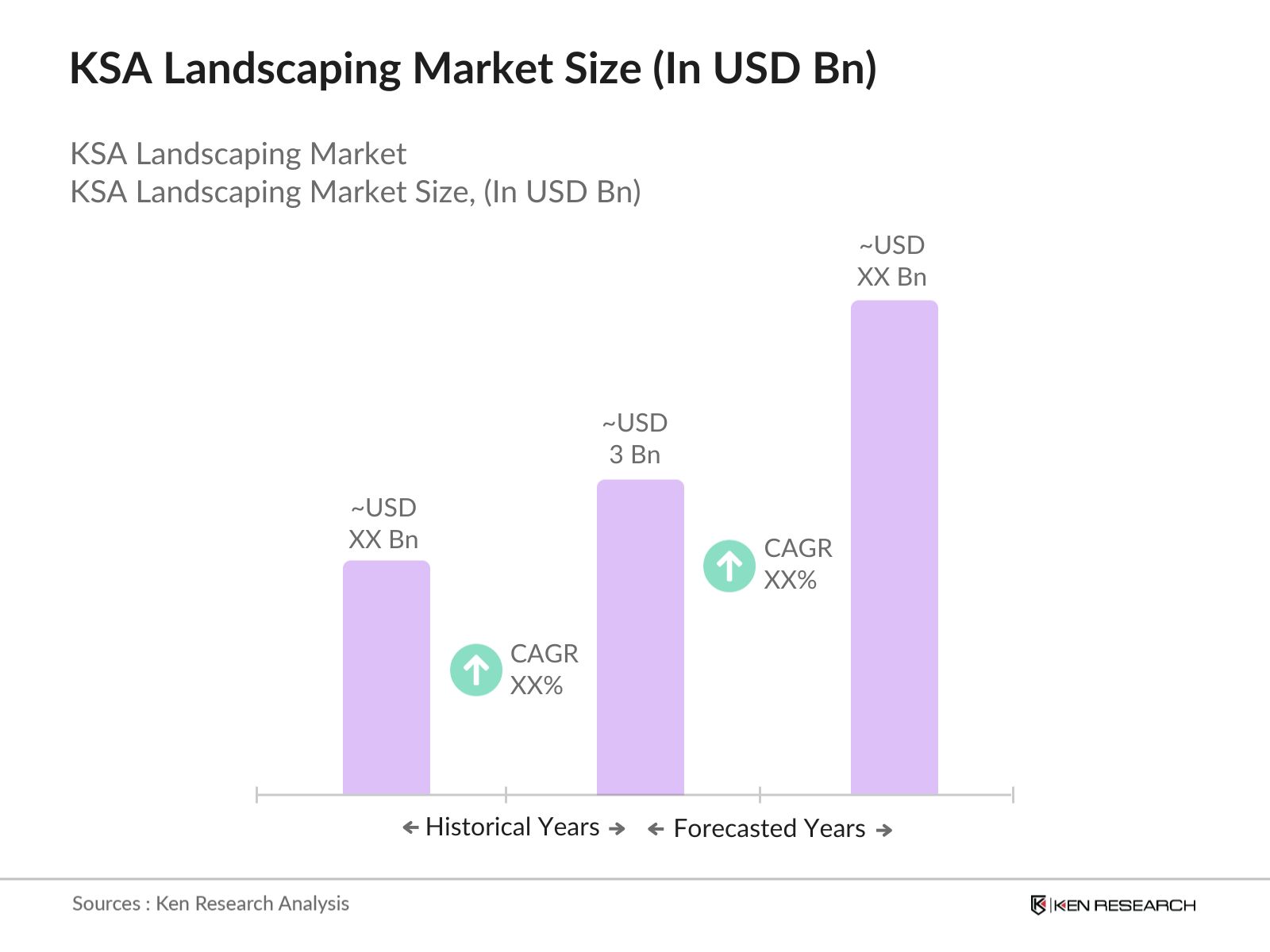
- Riyadh and Jeddah are dominant in the KSA landscaping market due to their status as major urban centers and hubs for large-scale commercial and residential developments. Riyadh's growth stems from being the capital and a key focus of government infrastructure projects, while Jeddah benefits from its strategic coastal location, attracting investments in tourism and leisure facilities. These cities have a concentrated demand for landscaping services due to ongoing urban expansion and redevelopment.
- To operate in the Saudi landscaping market, contractors must adhere to specific licensing and compliance requirements. In 2023, the Ministry of Municipal and Rural Affairs introduced mandatory certifications for landscaping contractors, focusing on sustainable practices and water-efficient landscaping methods. Additionally, large-scale projects require special permits to ensure compliance with urban planning and environmental standards. This regulatory framework is designed to uphold quality and environmental responsibility in landscaping services, contributing to the Kingdoms sustainable urban development agenda.
KSA Landscaping Market Segmentation
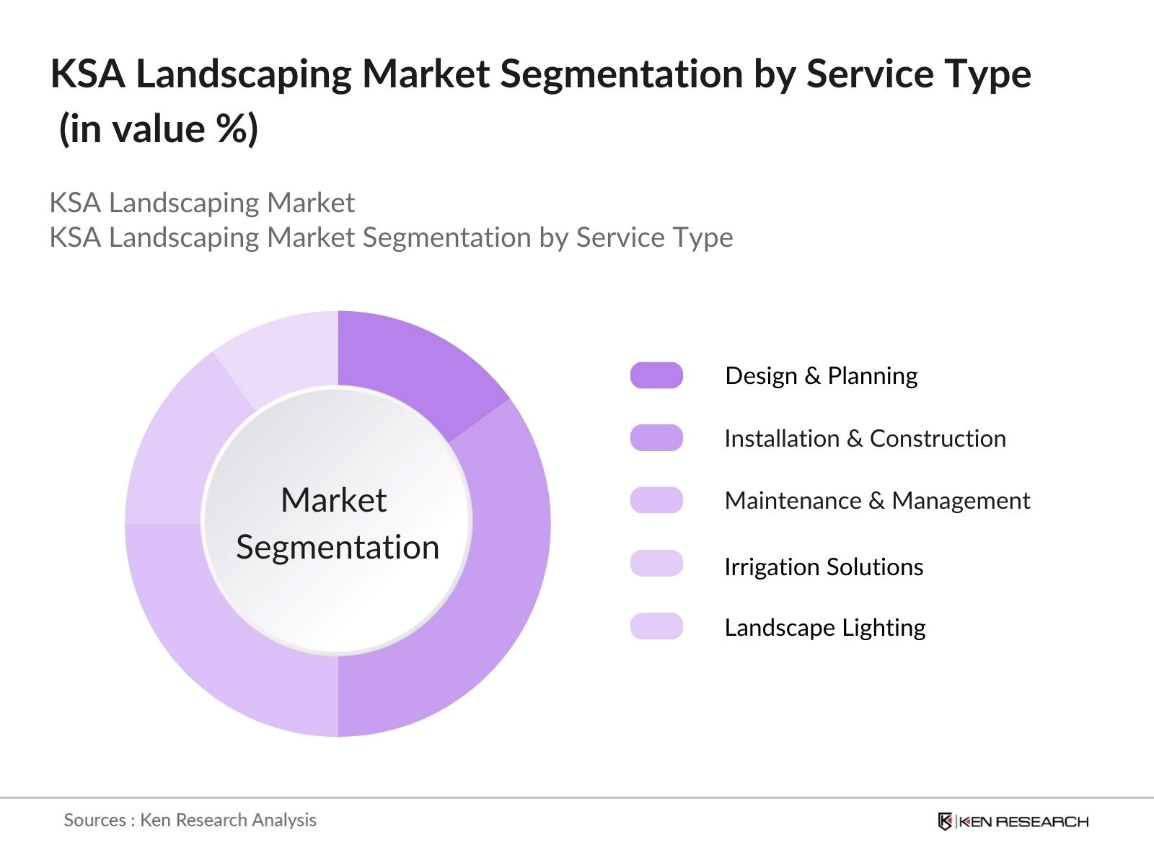
By Service Type: The KSA Landscaping market is segmented by service type into design & planning, installation & construction, maintenance & management, irrigation solutions, and landscape lighting. Among these, installation & construction services hold a dominant share due to the high demand for new landscape projects driven by real estate expansion and public space developments. These services are essential in the initial phases of green space projects, parks, and luxury resorts, making them a critical segment of the landscaping industry.
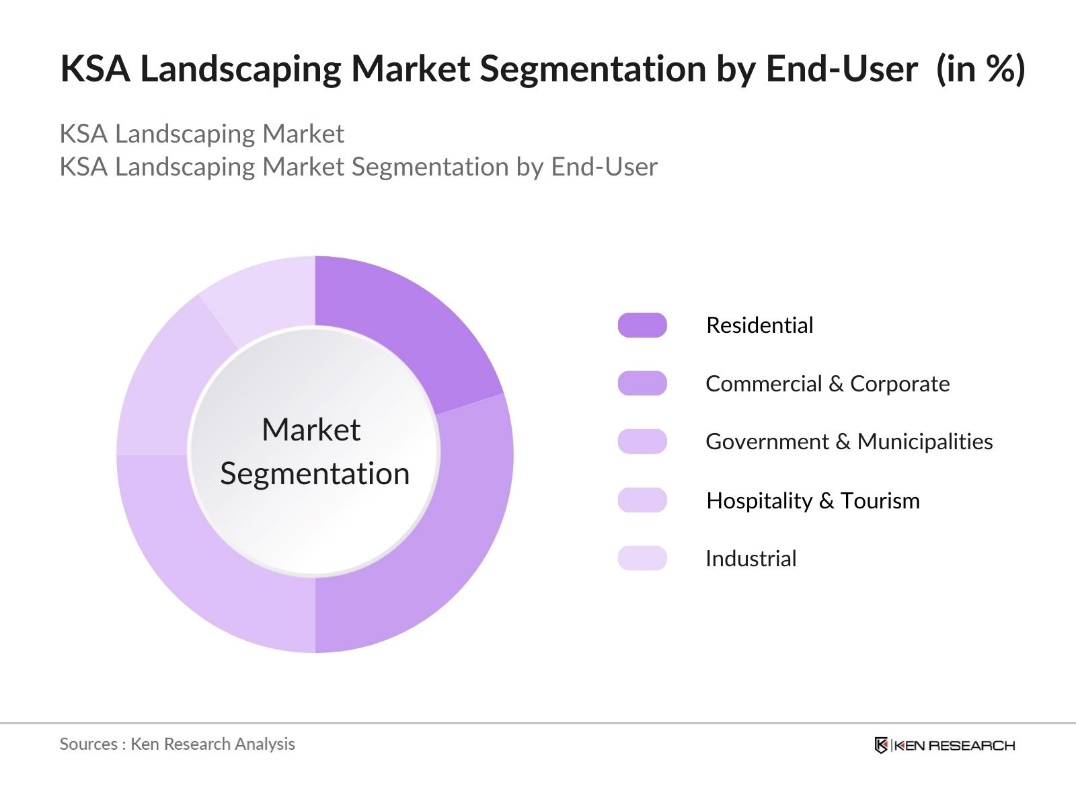
By End-User: The KSA Landscaping market segmented by end-users into residential, commercial & corporate, government & municipalities, hospitality & tourism, and industrial. The commercial & corporate segment is leading due to the continuous development of business centers, office complexes, and mixed-use developments. The need for aesthetically appealing and functional landscapes around these spaces to enhance customer and employee experience has made this segment a key driver of the landscaping market.
KSA Landscaping Market Competitive Landscape
The KSA Landscaping market is characterized by a competitive landscape dominated by both local and international companies. Major players include prominent firms that have established strong partnerships with governmental projects, leveraging their expertise to secure significant contracts. Their ability to provide customized solutions and maintain long-term maintenance contracts has reinforced their market positions.
|
Company |
Established |
Headquarters |
Annual Revenue (SAR Mn) |
No. of Employees |
Key Projects |
Service Specialization |
Certification |
Key Clients |
Regional Presence |
|
Desert Group |
1988 |
Riyadh |
|||||||
|
Saudi Landscaping Company |
2002 |
Jeddah |
|||||||
|
Nakheel Landscapes |
1997 |
Al Khobar |
|||||||
|
Al Fares Landscaping |
2005 |
Dammam |
|||||||
|
Oasis Landscaping |
2010 |
Riyadh |
KSA Landscaping Industry Analysis
Growth Drivers
- Urban Development Initiatives (Vision 2030, Urban Expansion): Saudi Arabia's Vision 2030 has significantly boosted urban development across the country, focusing on expanding metropolitan regions like Riyadh, Jeddah, and NEOM. The initial ambitious target set by the Saudi government aimed for Riyadh's population to reach between 15 million and 20 million by 2030, up from 7.5 million at present, the demand for urban greenery and landscaping services has risen.
- Tourism Growth (Hospitality Sector, Recreational Spaces): Tourism is indeed a crucial component of Saudi Arabia's Vision 2030, with the Kingdom successfully welcoming over 100 million visitors in 2023, achieving this target seven years ahead of schedule. This growth drives landscaping projects for resorts, hotels, and cultural destinations like AlUla and Diriyah Gate. These projects include developing gardens, parks, and waterfronts, essential to enhancing visitor experience.
- Environmental Sustainability Efforts (Green Spaces, Water Conservation): The Saudi Green Initiative emphasizes expanding green spaces and rehabilitating degraded land to enhance urban environments. It promotes water-efficient practices like drip irrigation to conserve water in landscaping projects. This aligns with the Kingdom's goal to restore natural habitats, driving demand for professional landscaping services focused on sustainability. The initiative aims to create eco-friendly urban spaces, supporting the transformation of Saudi cities into greener environments.
Market Challenges
- High Cost of Landscaping Services (Labor, Raw Materials): Landscaping services in Saudi Arabia face high costs due to the need for skilled labor, such as horticulturists and irrigation specialists. Additionally, importing advanced materials like synthetic turf and irrigation systems adds to the expense. The reliance on imported goods, often from international markets, further increases costs due to shipping and tariffs, making landscaping projects more expensive and less accessible, especially for mid-sized developments.
- Water Scarcity (Irrigation Constraints, Desalination Dependency): Water scarcity is a critical challenge for landscaping in Saudi Arabia, where limited agricultural land necessitates reliance on alternative water sources. Dependence on desalination plants makes irrigation more expensive, requiring the use of efficient water-saving methods like xeriscaping and drip irrigation. Regional water use regulations encourage these practices, but the costs associated with ensuring adequate water supply remain a significant hurdle for landscaping projects.
KSA Landscaping Market Future Outlook
Over the next five years, the KSA Landscaping market is anticipated to experience steady growth driven by continuous urban development and the focus on creating sustainable and livable urban spaces. The government's emphasis on environmental sustainability, including initiatives like increasing the number of green spaces in urban areas, will continue to fuel demand. Furthermore, investments in tourism-related infrastructure, including luxury resorts and recreational facilities, will sustain demand for high-quality landscaping services.
Market Opportunities
- Technological Integration (Smart Irrigation, AI-based Design): The integration of smart irrigation systems and AI-based design solutions presents significant opportunities for the landscaping industry in Saudi Arabia. Smart irrigation optimizes water use, making landscaping more efficient and sustainable, especially in large-scale urban projects. AI-driven design tools enhance precision in plant selection and layout, improving space management. These technologies help streamline the planning process, making landscaping projects more adaptable to environmental needs and reducing overall resource consumption.
- Public-Private Partnerships (PPP Projects in Green Spaces): Public-private partnerships (PPP) play a pivotal role in the development of green spaces in Saudi Arabia. These collaborations between the government and private landscaping firms facilitate the creation of parks, gardens, and other urban green areas. The PPP model allows for shared resources and expertise, improving the quality and scale of projects. By involving private companies in public initiatives, the development of sustainable and well-maintained green spaces is achieved more efficiently, benefiting urban areas.
Scope of the Report
|
By Service Type |
Design & Planning Installation & Construction Maintenance & Management Irrigation Solutions Landscape Lighting |
|
By End-User |
Residential Commercial & Corporate Government & Municipalities Hospitality & Tourism Industrial |
|
By Technology |
Smart Irrigation Systems Drone Landscaping 3D Landscape Design Software Autonomous Mowers Artificial Intelligence in Landscaping |
|
By Material Type |
Turf & Artificial Grass Stone & Hardscaping Materials Soil & Mulch Water Features Plants & Trees |
|
By Region |
Riyadh Region Eastern Province Makkah Region Madinah Region Asir Region |
Products
Key Target Audience
Urban Planning and Design Firms
Golf Course Developers and Management Firms
Architectural Design Firms
Construction Companies
Investors and Venture Capitalist Firms
Government and Regulatory Bodies (Saudi Standards, Metrology, and Quality Organization)
Banks and Financial Institutions
Companies
Players Mentioned in the Report
Desert Group
Saudi Landscaping Company
Nakheel Landscapes
Al Fares Landscaping
Oasis Landscaping
Green Touch Landscaping
Bawani International
Alhabdan Group
Al-Dhowayan Landscaping
Gardenia Landscaping Services
Table of Contents
1. KSA Landscaping Market Overview
1.1. Definition and Scope
1.2. Market Taxonomy
1.3. Market Growth Rate (CAGR, Growth Trends)
1.4. Market Segmentation Overview
2. KSA Landscaping Market Size (In SAR Mn)
2.1. Historical Market Size
2.2. Year-On-Year Growth Analysis
2.3. Key Market Developments and Milestones (Infrastructure Developments, Key Projects)
3. KSA Landscaping Market Analysis
3.1. Growth Drivers
3.1.1. Urban Development Initiatives (Vision 2030, Urban Expansion)
3.1.2. Tourism Growth (Hospitality Sector, Recreational Spaces)
3.1.3. Environmental Sustainability Efforts (Green Spaces, Water Conservation)
3.1.4. Residential and Commercial Real Estate Growth (New Housing Developments)
3.2. Market Challenges
3.2.1. High Cost of Landscaping Services (Labor, Raw Materials)
3.2.2. Water Scarcity (Irrigation Constraints, Desalination Dependency)
3.2.3. Regulatory Constraints (Permit Regulations, Environmental Compliance)
3.3. Opportunities
3.3.1. Technological Integration (Smart Irrigation, AI-based Design)
3.3.2. Public-Private Partnerships (PPP Projects in Green Spaces)
3.3.3. Growing Interest in Sustainable Landscaping (Xeriscaping, Native Plant Adoption)
3.4. Trends
3.4.1. Use of Native Plants (Water Efficiency, Climate Adaptability)
3.4.2. Rise of Vertical Gardens and Green Walls (Space Optimization)
3.4.3. Eco-Friendly Landscaping Materials (Recycled Products, Organic Fertilizers)
3.5. Government Regulation
3.5.1. Landscaping Standards (Green Building Regulations, KSA Standards)
3.5.2. Environmental Protection Policies (Water Use, Tree Protection)
3.5.3. Licensing and Compliance Requirements (Contractor Certification, Permits)
3.5.4. Public Space Development Initiatives (Parks, Walkways, and Open Spaces)
3.6. SWOT Analysis
3.7. Stakeholder Ecosystem
3.8. Porters Five Forces Analysis
3.9. Competitive Landscape Analysis
4. KSA Landscaping Market Segmentation
4.1. By Service Type (In Value %)
4.1.1. Design & Planning
4.1.2. Installation & Construction
4.1.3. Maintenance & Management
4.1.4. Irrigation Solutions
4.1.5. Landscape Lighting
4.2. By End-User (In Value %)
4.2.1. Residential
4.2.2. Commercial & Corporate
4.2.3. Government & Municipalities
4.2.4. Hospitality & Tourism
4.2.5. Industrial
4.3. By Technology (In Value %)
4.3.1. Smart Irrigation Systems
4.3.2. Drone Landscaping
4.3.3. 3D Landscape Design Software
4.3.4. Autonomous Mowers
4.3.5. Artificial Intelligence in Landscaping
4.4. By Material Type (In Value %)
4.4.1. Turf & Artificial Grass
4.4.2. Stone & Hardscaping Materials
4.4.3. Soil & Mulch
4.4.4. Water Features (Fountains, Ponds)
4.4.5. Plants & Trees
4.5. By Region (In Value %)
4.5.1. Riyadh Region
4.5.2. Eastern Province
4.5.3. Makkah Region
4.5.4. Madinah Region
4.5.5. Asir Region
5. KSA Landscaping Market Competitive Analysis
5.1. Detailed Profiles of Major Companies
5.1.1. Desert Group
5.1.2. Saudi Landscaping Company
5.1.3. Nakheel Landscapes
5.1.4. Gulf Landscaping Company
5.1.5. Al Fares Landscaping
5.1.6. Oasis Landscaping
5.1.7. Gardenia Landscaping Services
5.1.8. Green Touch Landscaping
5.1.9. Al Sorayai Group
5.1.10. Bawani International
5.1.11. Al Akaria
5.1.12. Universal Gardens
5.1.13. Alhabdan Group
5.1.14. Tarfeeh Gardens
5.1.15. Al-Dhowayan Landscaping
5.2. Cross Comparison Parameters (Revenue, Service Range, Market Presence, Certifications, Major Projects, Employee Strength, Customer Base, Regional Footprint)
5.3. Market Share Analysis
5.4. Strategic Initiatives
5.5. Mergers And Acquisitions
5.6. Investment Analysis
5.7. Joint Ventures & Partnerships
5.8. Innovation & Product Launch Analysis
6. KSA Landscaping Market Regulatory Framework
6.1. Landscaping Code of Practice
6.2. Water Usage and Irrigation Regulations
6.3. Certification and Training Standards (LEED, ISO)
6.4. Environmental Impact Assessment (EIA) Requirements
7. KSA Landscaping Future Market Size (In SAR Mn)
7.1. Future Market Size Projections
7.2. Key Factors Driving Future Market Growth
7.3. Impact of Upcoming Projects (Mega Projects, NEOM City, Red Sea Development)
8. KSA Landscaping Future Market Segmentation
8.1. By Service Type (In Value %)
8.2. By End-User (In Value %)
8.3. By Technology (In Value %)
8.4. By Material Type (In Value %)
8.5. By Region (In Value %)
9. KSA Landscaping Market Analysts Recommendations
9.1. TAM/SAM/SOM Analysis
9.2. Consumer Behavior Analysis (Spending Patterns, Preferences)
9.3. Strategic Market Positioning
9.4. Market Penetration Strategy
Disclaimer Contact UsResearch Methodology
Step 1: Identification of Key Variables
The initial phase involves constructing an ecosystem map encompassing all major stakeholders within the KSA Landscaping Market. This step is underpinned by extensive desk research, utilizing a combination of secondary and proprietary databases to gather comprehensive industry-level information. The primary objective is to identify and define the critical variables that influence market dynamics.
Step 2: Market Analysis and Construction
In this phase, we will compile and analyze historical data pertaining to the KSA Landscaping Market. This includes assessing market penetration, the ratio of marketplaces to service providers, and the resultant revenue generation. Furthermore, an evaluation of service quality statistics will be conducted to ensure the reliability and accuracy of the revenue estimates.
Step 3: Hypothesis Validation and Expert Consultation
Market hypotheses will be developed and subsequently validated through computer-assisted telephone interviews (CATIs) with industry experts representing a diverse array of companies. These consultations will provide valuable operational and financial insights directly from industry practitioners, which will be instrumental in refining and corroborating the market data.
Step 4: Research Synthesis and Final Output
The final phase involves direct engagement with multiple landscaping service providers to acquire detailed insights into service segments, project performance, client preferences, and other pertinent factors. This interaction will serve to verify and complement the statistics derived from the bottom-up approach, thereby ensuring a comprehensive, accurate, and validated analysis of the KSA Landscaping market.
Frequently Asked Questions
01 How big is the KSA Landscaping Market?
The KSA Landscaping Market is valued at USD 3 billion, driven by rapid urbanization and large-scale real estate projects, including NEOM and other Vision 2030 initiatives.
02 What are the challenges in the KSA Landscaping Market?
Challenges in KSA Landscaping Market include high operational costs, water scarcity for irrigation, and regulatory complexities in acquiring landscaping project permits, making it a capital-intensive industry.
03 Who are the major players in the KSA Landscaping Market?
Major players in the KSA Landscaping Market include Desert Group, Saudi Landscaping Company, Nakheel Landscapes, Al Fares Landscaping, and Oasis Landscaping, known for their expertise in large-scale projects.
04 What drives the KSA Landscaping Market?
Key drivers in KSA Landscaping Market include urban expansion under Vision 2030, investments in green spaces, and the growing emphasis on sustainable and aesthetically appealing landscapes in residential and commercial projects.
Why Buy From Us?

What makes us stand out is that our consultants follows Robust, Refine and Result (RRR) methodology. i.e. Robust for clear definitions, approaches and sanity checking, Refine for differentiating respondents facts and opinions and Result for presenting data with story

We have set a benchmark in the industry by offering our clients with syndicated and customized market research reports featuring coverage of entire market as well as meticulous research and analyst insights.

While we don't replace traditional research, we flip the method upside down. Our dual approach of Top Bottom & Bottom Top ensures quality deliverable by not just verifying company fundamentals but also looking at the sector and macroeconomic factors.

With one step in the future, our research team constantly tries to show you the bigger picture. We help with some of the tough questions you may encounter along the way: How is the industry positioned? Best marketing channel? KPI's of competitors? By aligning every element, we help maximize success.

Our report gives you instant access to the answers and sources that other companies might choose to hide. We elaborate each steps of research methodology we have used and showcase you the sample size to earn your trust.

If you need any support, we are here! We pride ourselves on universe strength, data quality, and quick, friendly, and professional service.