
KSA Meat Substitutes Market Outlook to 2030
Region:Saudi Arabia
Author(s):Shambhavi Awasthi
Product Code:KROD9550
Region:Saudi Arabia
Author(s):Shambhavi Awasthi
Product Code:KROD9550
December 2024
82

The KSA Meat Substitutes Market is consolidated among a few major players, both local and international, who dominate due to brand recognition, quality, and distribution networks. Key players include well-known brands in the global meat substitutes market, which have tailored their offerings to align with local dietary requirements and preferences.
|
Company |
Year Established |
Headquarters |
Product Line Focus |
Market Presence (Cities) |
Local Partnerships |
Innovation in R&D |
Certifications |
Halal Compliance |
|
Beyond Meat |
2009 |
El Segundo, USA |
~ |
~ |
~ |
~ |
~ |
~ |
|
Impossible Foods |
2011 |
Redwood City, USA |
~ |
~ |
~ |
~ |
~ |
~ |
|
Al Islami Foods |
1981 |
Dubai, UAE |
~ |
~ |
~ |
~ |
~ |
~ |
|
Veggie Foods |
2010 |
Riyadh, KSA |
~ |
~ |
~ |
~ |
~ |
~ |
|
Green Evolve |
2016 |
Jeddah, KSA |
~ |
~ |
~ |
~ |
~ |
~ |
Over the next five years, the KSA Meat Substitutes Market is anticipated to experience substantial growth, driven by an increasing shift toward healthier lifestyles and sustainable eating habits. Growing awareness about environmental impacts, coupled with innovative product development by global and local brands, is expected to further expand market penetration. Government initiatives supporting food security and diversification of dietary sources will also contribute to the growth of the market. Additionally, advancements in production technologies are likely to reduce costs, making meat substitutes more affordable to a broader demographic in KSA.
|
Segment |
Sub-segment |
|---|---|
|
By Product Type |
Tofu and Soy Products |
|
Seitan |
|
|
Legume-Based Products |
|
|
Mycelium-Based Products |
|
|
By Source |
Plant-Based |
|
Lab-Grown |
|
|
By Distribution Channel |
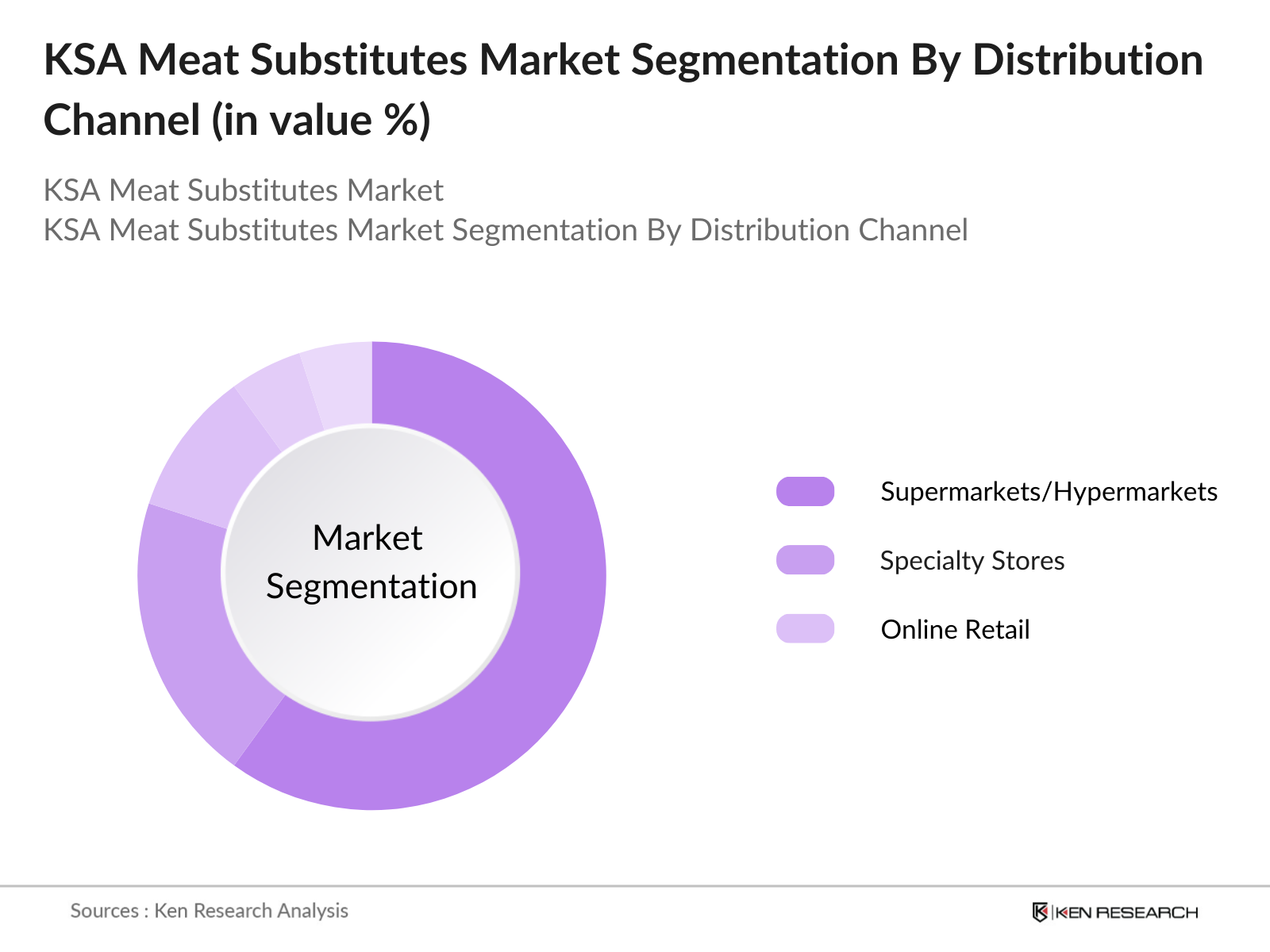
Supermarkets and Hypermarkets |
|
Health Food Stores |
|
|
Online Retail |
|
|
By Region |
Riyadh |
|
Jeddah |
|
|
Dammam |
|
|
Other Regions |
|
|
By Consumer Type |
Vegetarians |
|
Flexitarians |
|
|
Meat Lovers |
1.1. Definition and Scope
1.2. Market Taxonomy
1.3. Market Growth Rate
1.4. Market Segmentation Overview
2.1. Historical Market Size
2.2. Year-On-Year Growth Analysis
2.3. Key Market Developments and Milestones
3.1. Growth Drivers
3.1.1. Changing Dietary Preferences
3.1.2. Health Consciousness
3.1.3. Rising Vegetarian and Vegan Population
3.1.4. Government Initiatives for Sustainable Food Sources
3.2. Market Challenges
3.2.1. Taste and Texture Limitations
3.2.2. High Production Costs
3.2.3. Limited Awareness of Plant-Based Options
3.3. Opportunities
3.3.1. Innovations in Food Technology
3.3.2. Increasing Distribution Channels
3.3.3. Expansion of Retail Formats
3.4. Trends
3.4.1. Emergence of Hybrid Meat Products
3.4.2. Growth of E-Commerce for Meat Substitutes
3.4.3. Social Media Influence on Food Choices
3.5. Government Regulation
3.5.1. Food Safety Standards
3.5.2. Labeling and Nutritional Information Requirements
3.5.3. Subsidies for Plant-Based Product Development
3.6. SWOT Analysis
3.7. Stakeholder Ecosystem
3.8. Porters Five Forces
3.9. Competition Ecosystem
4.1. By Product Type (In Value %)
4.1.1. Tofu and Soy Products
4.1.2. Seitan
4.1.3. Legume-Based Products
4.1.4. Mycelium-Based Products
4.2. By Source (In Value %)
4.2.1. Plant-Based
4.2.2. Lab-Grown
4.3. By Distribution Channel (In Value %)
4.3.1. Supermarkets and Hypermarkets
4.3.2. Health Food Stores
4.3.3. Online Retail
4.4. By Region (In Value %)
4.4.1. Riyadh
4.4.2. Jeddah
4.4.3. Dammam
4.4.4. Other Regions
4.5. By Consumer Type (In Value %)
4.5.1. Vegetarians
4.5.2. Flexitarians
4.5.3. Meat Lovers
5.1 Detailed Profiles of Major Companies
5.1.1. Beyond Meat
5.1.2. Impossible Foods
5.1.3. Tofurky
5.1.4. Quorn Foods
5.1.5. Gardein
5.1.6. MorningStar Farms
5.1.7. Field Roast
5.1.8. Lightlife
5.1.9. Oatly
5.1.10. A&W Food Services
5.1.11. Mosa Meat
5.1.12. Eat Just
5.1.13. Meati Foods
5.1.14. Hungry Planet
5.1.15. Perfect Day
5.2 Cross Comparison Parameters (Market Share, Product Range, Geographical Reach, Sustainability Practices, Pricing Strategies, Innovation Rate, Brand Recognition, Customer Loyalty)
5.3. Market Share Analysis
5.4. Strategic Initiatives
5.5. Mergers and Acquisitions
5.6. Investment Analysis
5.7. Venture Capital Funding
5.8. Government Grants
5.9. Private Equity Investments
6.1. Food Safety Standards
6.2. Compliance Requirements
6.3. Certification Processes
7.1. Future Market Size Projections
7.2. Key Factors Driving Future Market Growth
8.1. By Product Type (In Value %)
8.2. By Source (In Value %)
8.3. By Distribution Channel (In Value %)
8.4. By Region (In Value %)
8.5. By Consumer Type (In Value %)
9.1. TAM/SAM/SOM Analysis
9.2. Customer Cohort Analysis
9.3. Marketing Initiatives
9.4. White Space Opportunity Analysis
Disclaimer Contact UsThis initial phase included mapping the key stakeholders in the KSA Meat Substitutes Market, utilizing extensive desk research and secondary databases. The aim was to establish a foundation of variables that influence market trends, such as consumer preferences, distribution channels, and demographic data.
Historical data on the KSA Meat Substitutes Market was compiled and analyzed, focusing on revenue generation, consumer demographics, and regional distribution. This data informed the market size, segmentation, and trends, ensuring accuracy in projected growth rates and market value.
Market hypotheses were validated through consultations with industry experts via telephone and online surveys, gaining insights into consumer trends, distribution channels, and emerging market dynamics. These discussions helped refine data accuracy and relevance.
The final phase involved synthesizing all gathered data, including direct interactions with meat substitute manufacturers and distributors. These interactions helped verify statistics and added depth to the qualitative aspects of the report, supporting a comprehensive analysis of the KSA Meat Substitutes Market.
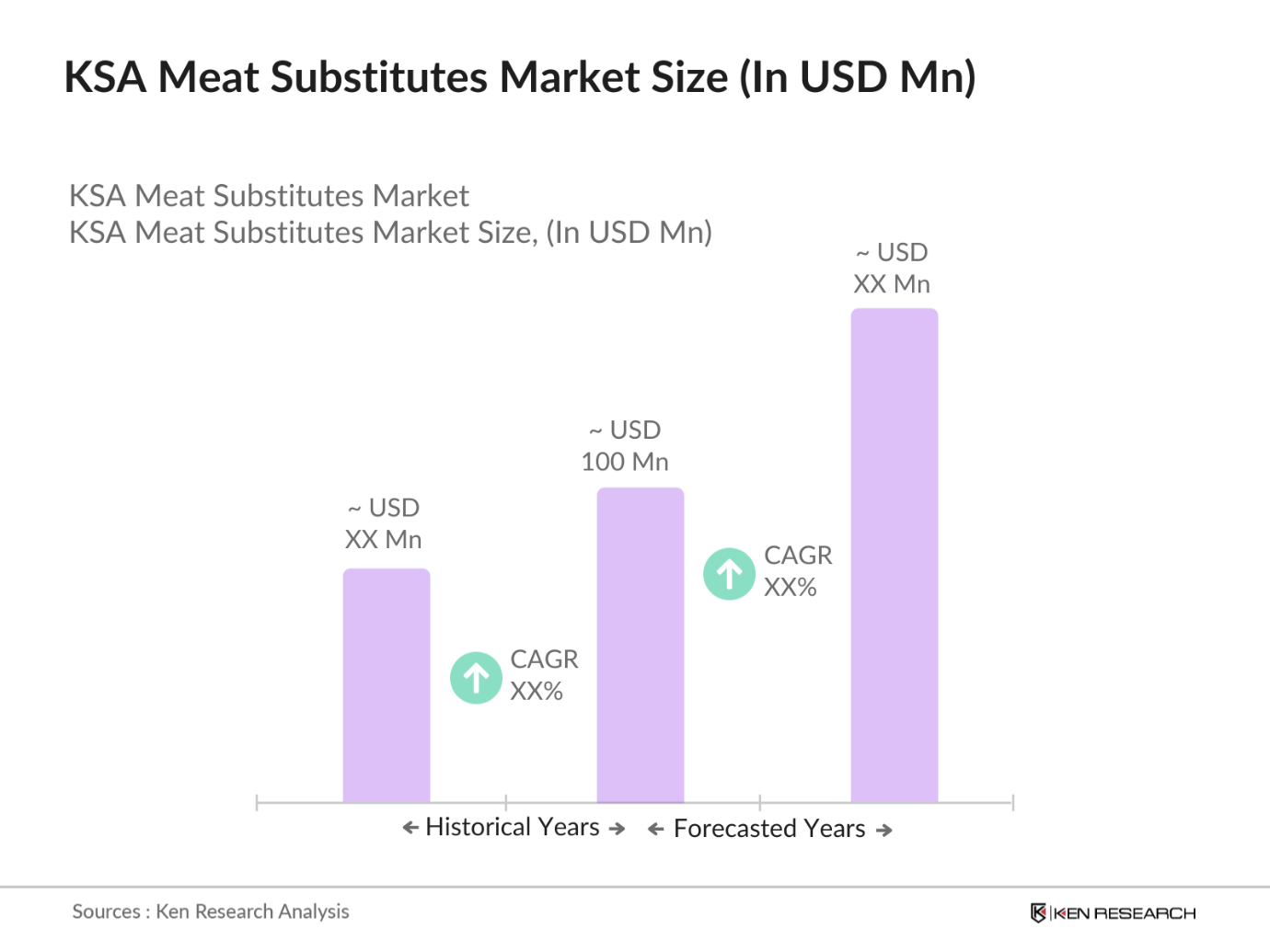
The KSA Meat Substitutes Market reached a valuation of approximately USD 100 million, driven by increased awareness of health benefits and sustainability.
Key challenges include cultural preferences for traditional meat, high prices of meat substitutes, and limited consumer awareness, which affects broader adoption.
Major players include Beyond Meat, Impossible Foods, Al Islami Foods, Green Evolve, and Veggie Foods, owing to their strong distribution networks and brand recognition.
Growth is propelled by increasing health consciousness, environmental awareness, and government support for dietary diversification.

What makes us stand out is that our consultants follows Robust, Refine and Result (RRR) methodology. i.e. Robust for clear definitions, approaches and sanity checking, Refine for differentiating respondents facts and opinions and Result for presenting data with story

We have set a benchmark in the industry by offering our clients with syndicated and customized market research reports featuring coverage of entire market as well as meticulous research and analyst insights.

While we don't replace traditional research, we flip the method upside down. Our dual approach of Top Bottom & Bottom Top ensures quality deliverable by not just verifying company fundamentals but also looking at the sector and macroeconomic factors.

With one step in the future, our research team constantly tries to show you the bigger picture. We help with some of the tough questions you may encounter along the way: How is the industry positioned? Best marketing channel? KPI's of competitors? By aligning every element, we help maximize success.

Our report gives you instant access to the answers and sources that other companies might choose to hide. We elaborate each steps of research methodology we have used and showcase you the sample size to earn your trust.

If you need any support, we are here! We pride ourselves on universe strength, data quality, and quick, friendly, and professional service.