















KSA Microwave Ovens Market Outlook to 2030
Region:Middle East
Author(s):Mukul
Product Code:KROD5591
October 2024
86
About the Report
KSA Microwave Ovens Market Overview
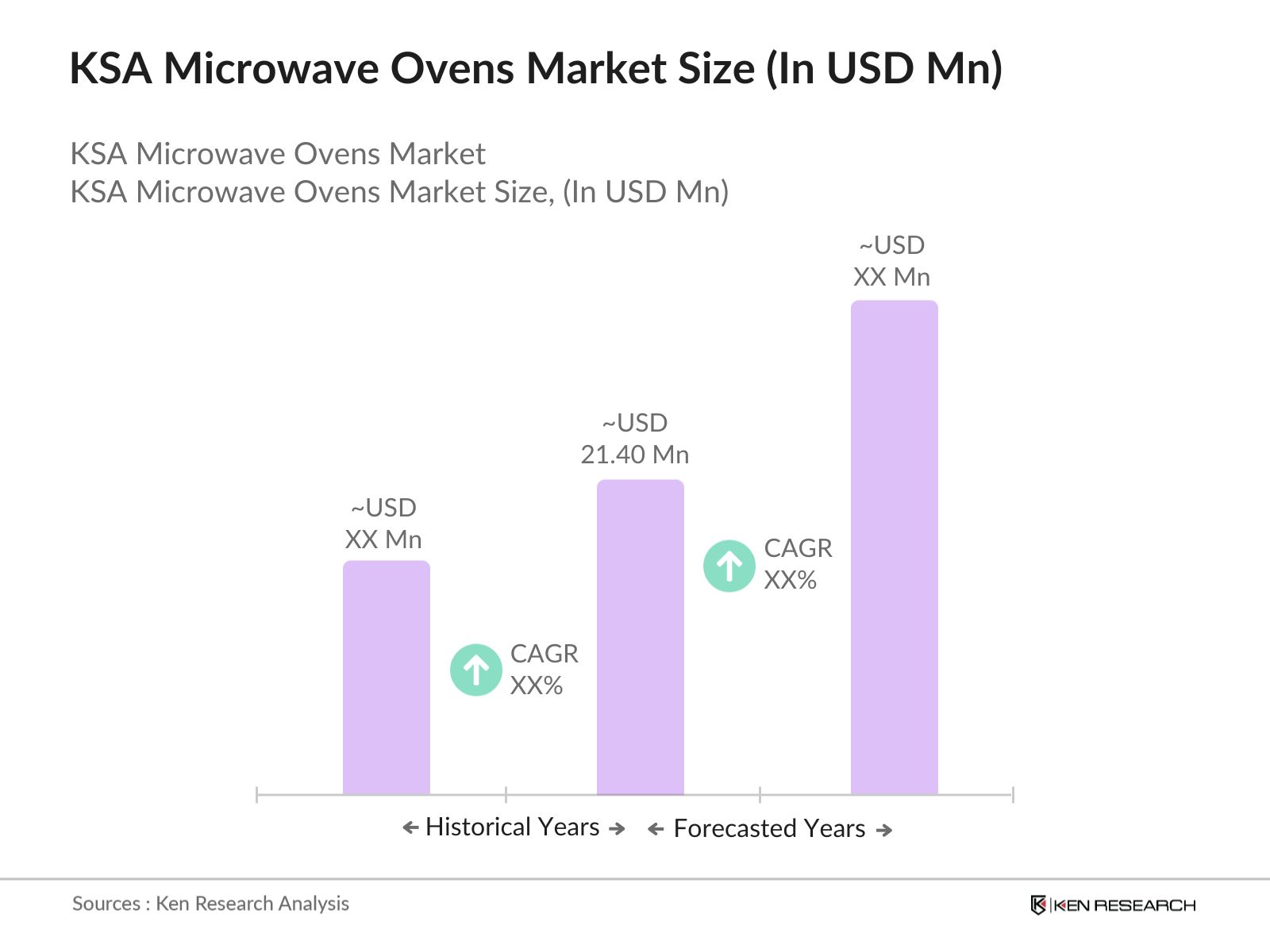
- The KSA Microwave Ovens market is valued at USD 21.40 million based on a five-year historical analysis. with steady growth driven by increasing urbanization and the shift towards convenience-based cooking methods. With consumers looking for quicker cooking solutions, microwave ovens have become a staple in modern kitchens. Additionally, government-backed initiatives like Vision 2030 are contributing to an increased focus on smart home appliances, further driving demand for advanced microwave ovens in both residential and commercial sectors.
- Riyadh, Jeddah, and Dammam dominate the KSA microwave oven market due to higher population density, rapid urbanization, and high disposable incomes. These cities have seen a growing trend toward smart kitchens and energy-efficient appliances, making them the largest consumers of microwave ovens. Additionally, the booming hospitality industry in these regions, driven by an increase in international visitors and events, has contributed to the growing adoption of commercial microwave ovens in hotels and restaurants.
- Saudi Arabia has stringent import regulations for microwave ovens to ensure compliance with local safety and energy efficiency standards. As of 2023, SASO requires all imported microwave ovens to carry valid certification under the Saudi Quality Mark. This regulation ensures that only products meeting energy efficiency and safety criteria are allowed into the market. Non-compliance results in fines and restricted market access, affecting both importers and manufacturers.
KSA Microwave Ovens Market Segmentation
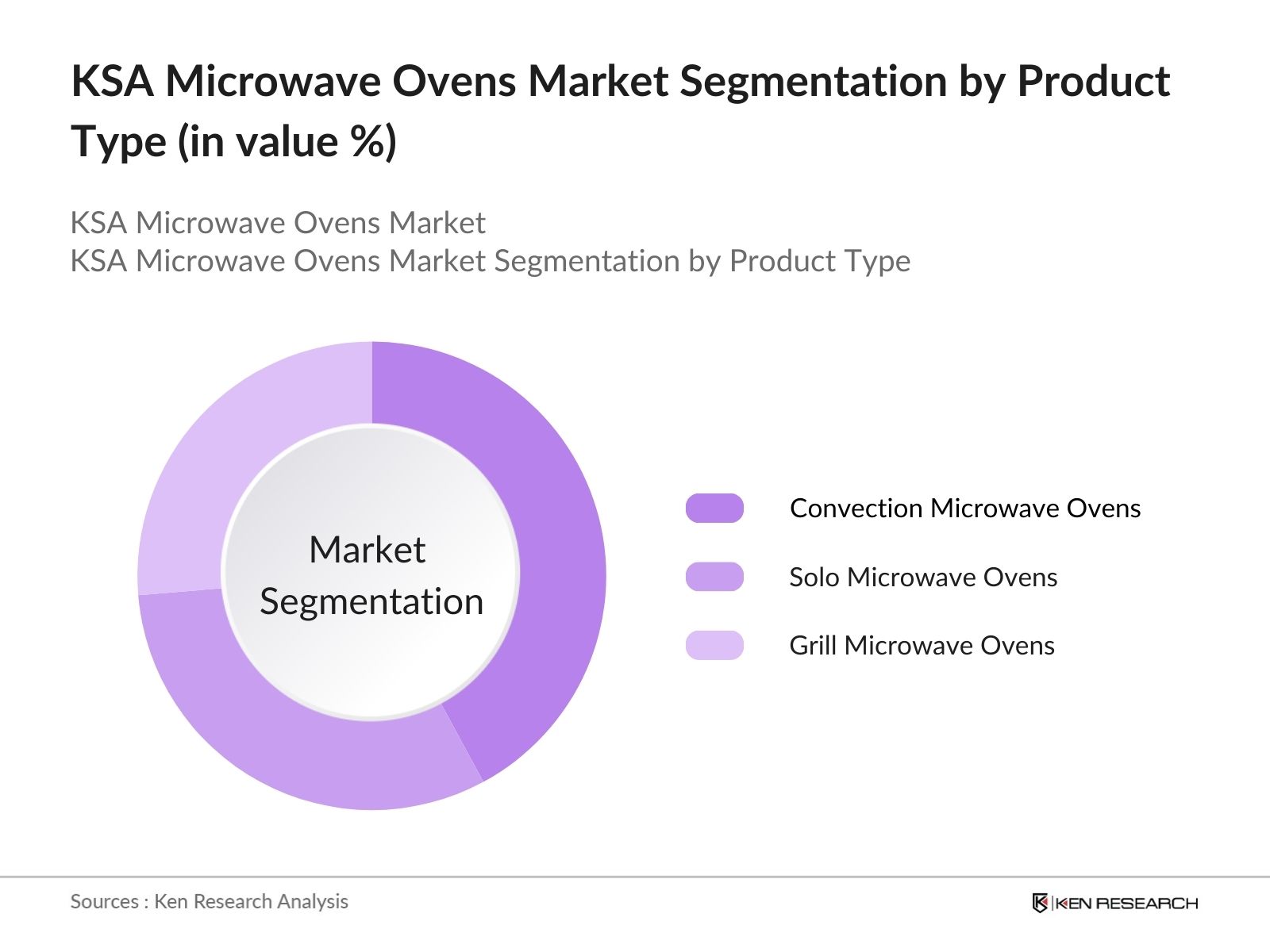
- By Product Type: The KSA Microwave Ovens market is segmented by product type into solo microwave ovens, grill microwave ovens, and convection microwave ovens. Recently, convection microwave ovens have taken a dominant market in KSA under the product type segmentation. This is due to the increasing demand for versatile cooking appliances that offer both microwave and convection functionalities. Consumers are looking for efficient, multi-functional appliances that reduce cooking time while providing better cooking quality. Convection ovens, which are well-suited for both household and commercial kitchens, fulfill these requirements, making them popular among consumers in urban areas.
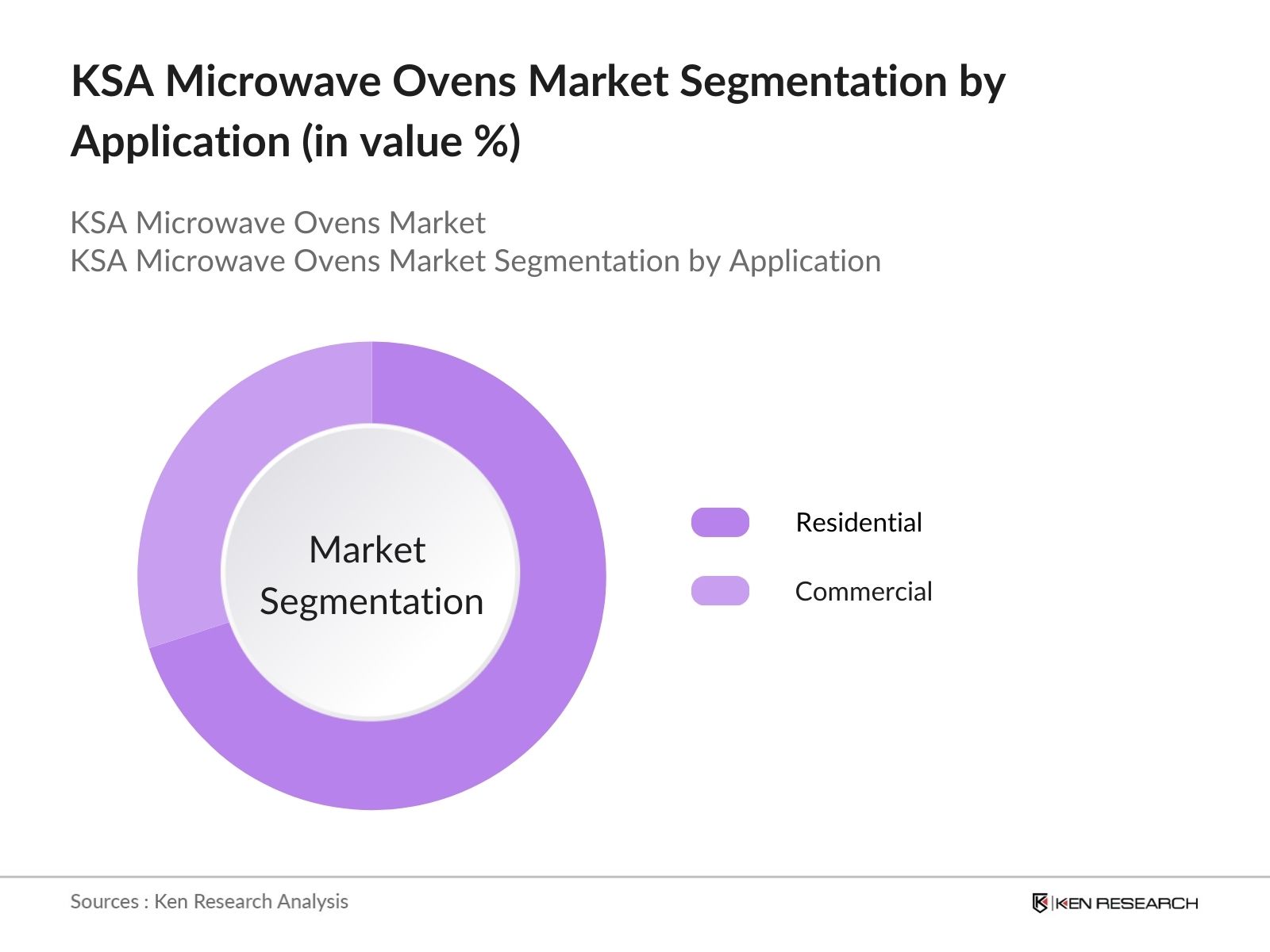
- By Application: The KSA Microwave Ovens market is segmented by application into residential and commercial sectors. The residential sector dominates the market due to the increasing trend of smart homes and the rising disposable income among middle and high-income groups. The demand for technologically advanced microwave ovens, such as those with smart features, is particularly strong in urban households where consumers are seeking high-efficiency appliances to enhance their cooking experience. The commercial segment, although smaller, is driven by the growth of the hospitality industry, which increasingly relies on high-performance appliances to cater to customer needs.
KSA Microwave Ovens Market Competitive Landscape
The KSA Microwave Ovens market is dominated by a few major global players alongside strong regional manufacturers. This consolidation reflects the competitive strength of these key brands in shaping market dynamics and consumer preferences. Large international companies like Samsung and LG lead the market by offering a wide range of products that cater to various consumer needs, from affordable models to high-end, feature-rich microwave ovens. Local players also capitalize on regional preferences, particularly in the commercial sector.
|
Company |
Establishment Year |
Headquarters |
Revenue |
R&D Investment |
Product Range |
Market Presence |
Technological Innovation |
Distribution Network |
|
Samsung Electronics |
1938 |
Suwon, South Korea |
- |
- |
- |
- |
- |
- |
|
LG Electronics |
1958 |
Seoul, South Korea |
- |
- |
- |
- |
- |
- |
|
Panasonic Corporation |
1918 |
Osaka, Japan |
- |
- |
- |
- |
- |
- |
|
Midea Group |
1968 |
Foshan, China |
- |
- |
- |
- |
- |
- |
|
Bosch Home Appliances |
1886 |
Stuttgart, Germany |
- |
- |
- |
- |
- |
- |
KSA Microwave Ovens Industry Analysis
Growth Drivers
- Rising Disposable Income (Influence on Consumer Durables): Rising disposable income across Saudi Arabia has significantly impacted the demand for consumer durables like microwave ovens. As per the World Bank, Saudi Arabias Gross National Income (GNI) per capita in 2023 stood at $22,830, reflecting improved purchasing power across the middle class. This increase in disposable income has led to higher expenditure on modern kitchen appliances, including smart microwaves, which are increasingly seen as essential. This trend aligns with Saudi Arabias growing economy, where household final consumption expenditure exceeded $300 billion in 2023, boosting demand for consumer durables.
- Growing Adoption of Smart Home Appliances: With increasing digital transformation, Saudi households are rapidly adopting smart home appliances, including microwave ovens integrated with IoT. According to the Saudi Communications and Information Technology Commission (CITC), 96% of households had internet access by 2023, supporting the widespread adoption of smart kitchen devices. This shift is further boosted by government initiatives under Vision 2030, encouraging smart technology integration in homes. The demand for smart microwaves is being driven by the rising tech-savvy population and government policies promoting innovation in consumer electronics
Market Restraints
- Intense Competition from Conventional Cooking Appliances: Traditional cooking methods, such as gas stoves, continue to dominate Saudi kitchens, posing competition for microwave ovens. In 2023, gas stoves remained prevalent in over 70% of Saudi households, as reported by the Saudi General Authority for Statistics. The familiarity and lower cost of conventional cooking methods, combined with cultural preferences, present significant competition to microwave ovens. This preference for conventional cooking solutions continues to challenge the adoption rate of microwaves, especially among older generations.
- Regulatory Standards on Energy Consumption: The Saudi Standards, Metrology and Quality Organization (SASO) has stringent regulations concerning the energy efficiency of household appliances, including microwave ovens. In 2023, SASO introduced updated energy efficiency labeling requirements for microwaves, compelling manufacturers to improve their designs to meet new standards. While these regulations aim to reduce household energy consumption, they also increase production costs, impacting manufacturers and consumers. Non-compliance with these standards results in penalties and restricted imports, limiting market accessibility for non-compliant products.
KSA Microwave Ovens Market Future Outlook
Over the next five years, the KSA Microwave Ovens market is expected to experience significant growth driven by factors such as increasing consumer demand for smart appliances, expanding urbanization, and the rising popularity of e-commerce as a primary sales channel. Government initiatives aimed at boosting technological innovation and reducing energy consumption through energy-efficient appliances will further propel the market. As more consumers in KSA adopt smarter home solutions, manufacturers will likely focus on enhancing connectivity and convenience in microwave ovens.
Market Opportunities
- Increased Penetration of Smart Kitchens The increasing penetration of smart kitchen appliances offers a lucrative opportunity for the microwave oven market in Saudi Arabia. According to a report by the Ministry of Communications and Information Technology, over 1.2 million households were fitted with smart kitchen systems in 2023, a number that is expected to grow due to ongoing smart city projects. This shift towards digitalized homes is enhancing the demand for technologically advanced appliances like smart microwaves, driving growth in this market. Source: MCIT
- Expansion of E-commerce Channels for Consumer Electronics The growth of e-commerce platforms is reshaping the retail landscape for consumer electronics, including microwave ovens. In 2023, Saudi Arabias e-commerce revenue exceeded $8 billion, as per the Ministry of Commerce. This increase is primarily driven by the younger populations preference for online shopping, offering a convenient avenue for purchasing appliances. With retailers focusing on expanding their online presence, microwave ovens are witnessing higher online sales, benefiting from promotional discounts and wider product visibility.
Scope of the Report
|
By Product Type |
Solo Microwave Ovens Grill Microwave Ovens Convection Microwave Ovens |
|
By Structure |
Countertop Microwave Ovens Built-in Microwave Ovens |
|
By Application |
Residential Commercial (Restaurants, Hotels, Cafes) |
|
By Technology |
Inverter Technology Convection Technology Smart Microwave Ovens |
|
By Distribution Channel |
Online Retail Specialty Stores Hypermarkets/Supermarkets Electronic Retailers |
Products
Key Target Audience
Microwave Oven Manufacturers
Electronics Retailers and Distributors
Investors and Venture Capitalist Firms
Government and Regulatory Bodies (Saudi Standards, Metrology and Quality Organization)
Hospitality Sector (Hotels, Restaurants, Cafes)
Home Appliance Wholesalers
Online and Offline Retail Chains
Energy Efficiency Regulators (Saudi Energy Efficiency Center)
Companies
Players Mentioned in the Report:
Samsung Electronics Co., Ltd.
LG Electronics Inc.
Panasonic Corporation
Sharp Corporation
Midea Group
Daewoo Electronics
Electrolux AB
Bosch Home Appliances
Whirlpool Corporation
Kenwood Ltd.
Hitachi Appliances, Inc.
Beko Plc
Hisense Co., Ltd.
Morphy Richards
Haier Group Corporation
Table of Contents
1. KSA Microwave Ovens Market Overview
1.1. Definition and Scope
1.2. Market Taxonomy
1.3. Market Growth Rate
1.4. Market Segmentation Overview
2. KSA Microwave Ovens Market Size (In USD Bn)
2.1. Historical Market Size
2.2. Year-On-Year Growth Analysis
2.3. Key Market Developments and Milestones
3. KSA Microwave Ovens Market Analysis
3.1. Growth Drivers
Rising Disposable Income (Influence on Consumer Durables)
Growing Adoption of Smart Home Appliances
Expanding Middle-Class Population
Government Policies Supporting Technological Advancements (e.g., Vision 2030)3.2. Market Challenges
High Cost of Energy-Efficient Models (Price Sensitivity in the Market)
Intense Competition from Conventional Cooking Appliances
Regulatory Standards on Energy Consumption
Lack of Awareness on Microwave Safety and Technology3.3. Opportunities
Increased Penetration of Smart Kitchens
Expansion of E-commerce Channels for Consumer Electronics
Technological Innovations in Cooking Methods (Convection and Inverter Technology)
Strong Demand from Hospitality Sector (Hotels and Restaurants)3.4. Trends
Surge in Demand for Compact, Energy-Efficient Microwave Ovens
Rising Popularity of Built-in Microwave Ovens in Modern Kitchens
Growth of Multi-Functional Microwave Ovens (Grill and Convection Functions)
Integration of IoT in Microwave Ovens3.5. Government Regulation
KSA Energy Efficiency Standards for Home Appliances
Import Regulations and Certification Requirements
Impact of Vision 2030 on Household Appliances Market
3.6. SWOT Analysis
Strengths
Weaknesses
Opportunities
Threats
3.7. Stakeholder Ecosystem (Manufacturers, Distributors, Retailers, End Users)
3.8. Porters Five Forces (Threat of New Entrants, Bargaining Power of Suppliers, etc.)
3.9. Competition Ecosystem
4. KSA Microwave Ovens Market Segmentation
4.1. By Product Type (In Value %)
Solo Microwave Ovens
Grill Microwave Ovens
Convection Microwave Ovens
4.2. By Structure (In Value %)
Countertop Microwave Ovens
Built-in Microwave Ovens
4.3. By Application (In Value %)
Residential
Commercial (Restaurants, Hotels, Cafes)
4.4. By Technology (In Value %)
Inverter Technology
Convection Technology
Smart Microwave Ovens
4.5. By Distribution Channel (In Value %)
Online Retail
Specialty Stores
Hypermarkets/Supermarkets
Electronic Retailers
5. KSA Microwave Ovens Market Competitive Analysis
5.1. Detailed Profiles of Major Companies
5.1.1. Samsung Electronics Co., Ltd.
5.1.2. LG Electronics Inc.
5.1.3. Panasonic Corporation
5.1.4. Sharp Corporation
5.1.5. Midea Group
5.1.6. Daewoo Electronics
5.1.7. Electrolux AB
5.1.8. Bosch Home Appliances
5.1.9. Haier Group Corporation
5.1.10. Whirlpool Corporation
5.1.11. Kenwood Ltd.
5.1.12. Hitachi Appliances, Inc.
5.1.13. Beko Plc
5.1.14. Hisense Co., Ltd.
5.1.15. Morphy Richards
5.2. Cross Comparison Parameters
5.3. Market Share Analysis
5.4. Strategic Initiatives
5.5. Mergers and Acquisitions
5.6. Investment Analysis
5.7. Venture Capital Funding
5.8. Government Grants
5.9. Private Equity Investments
6. KSA Microwave Ovens Market Regulatory Framework
6.1. Energy Efficiency Standards
6.2. Compliance Requirements
6.3. Certification Processes
7. KSA Microwave Ovens Future Market Size (In USD Bn)
7.1. Future Market Size Projections
7.2. Key Factors Driving Future Market Growth
8. KSA Microwave Ovens Future Market Segmentation
8.1. By Product Type (In Value %)
Solo Microwave Ovens
Grill Microwave Ovens
Convection Microwave Ovens
8.2. By Structure (In Value %)
Countertop Microwave Ovens
Built-in Microwave Ovens
8.3. By Application (In Value %)
Residential
Commercial
8.4. By Technology (In Value %)
Inverter Technology
Convection Technology
Smart Microwave Ovens8.5. By Distribution Channel (In Value %)
Online Retail
Specialty Stores
Hypermarkets/Supermarkets
Electronic Retailers
9. KSA Microwave Ovens Market Analysts Recommendations
9.1. TAM/SAM/SOM Analysis
9.2. Customer Cohort Analysis
9.3. Marketing Initiatives
9.4. White Space Opportunity Analysis
Research Methodology
Step 1: Identification of Key Variables
The initial phase involves mapping out key stakeholders across the KSA Microwave Ovens market. This includes manufacturers, retailers, and government bodies. Extensive desk research was conducted using a combination of secondary sources and proprietary data to collect critical market insights and identify key influencing factors.
Step 2: Market Analysis and Construction
In this phase, historical market data was compiled and analyzed to assess market penetration rates and the performance of different product segments. Additionally, the ratio of commercial to residential applications was evaluated to determine revenue generation patterns.
Step 3: Hypothesis Validation and Expert Consultation
Market hypotheses were formulated and validated through interviews with industry experts from major companies in the microwave oven market. These consultations provided valuable insights into operational dynamics, product sales performance, and consumer preferences.
Step 4: Research Synthesis and Final Output
The final phase involved synthesizing the research findings, integrating data collected from various stakeholders, and verifying this information with manufacturers to ensure an accurate and comprehensive market analysis. This synthesis allowed for the creation of a validated and detailed overview of the KSA Microwave Ovens market.
Frequently Asked Questions
01. How big is the KSA Microwave Ovens Market?
The KSA Microwave Ovens market is valued at USD 21.40 million based on a five-year historical analysis., driven by increasing urbanization and demand for convenient cooking solutions.
02. What are the challenges in the KSA Microwave Ovens Market?
Challenges include high energy consumption costs, intense competition from traditional cooking appliances, and regulatory requirements for energy-efficient appliances.
03. Who are the major players in the KSA Microwave Ovens Market?
Key players include Samsung Electronics, LG Electronics, Panasonic Corporation, Midea Group, and Bosch Home Appliances.
04. What are the growth drivers of the KSA Microwave Ovens Market?
The market is driven by increasing urbanization, government initiatives like Vision 2030, and the growing demand for smart, energy-efficient home appliances.
Why Buy From Us?

What makes us stand out is that our consultants follows Robust, Refine and Result (RRR) methodology. i.e. Robust for clear definitions, approaches and sanity checking, Refine for differentiating respondents facts and opinions and Result for presenting data with story

We have set a benchmark in the industry by offering our clients with syndicated and customized market research reports featuring coverage of entire market as well as meticulous research and analyst insights.

While we don't replace traditional research, we flip the method upside down. Our dual approach of Top Bottom & Bottom Top ensures quality deliverable by not just verifying company fundamentals but also looking at the sector and macroeconomic factors.

With one step in the future, our research team constantly tries to show you the bigger picture. We help with some of the tough questions you may encounter along the way: How is the industry positioned? Best marketing channel? KPI's of competitors? By aligning every element, we help maximize success.

Our report gives you instant access to the answers and sources that other companies might choose to hide. We elaborate each steps of research methodology we have used and showcase you the sample size to earn your trust.

If you need any support, we are here! We pride ourselves on universe strength, data quality, and quick, friendly, and professional service.