
KSA Packaging Market Outlook to 2030
Region:Saudi Arabia
Author(s):Shreya Garg
Product Code:KROD3046
Region:Saudi Arabia
Author(s):Shreya Garg
Product Code:KROD3046
November 2024
92
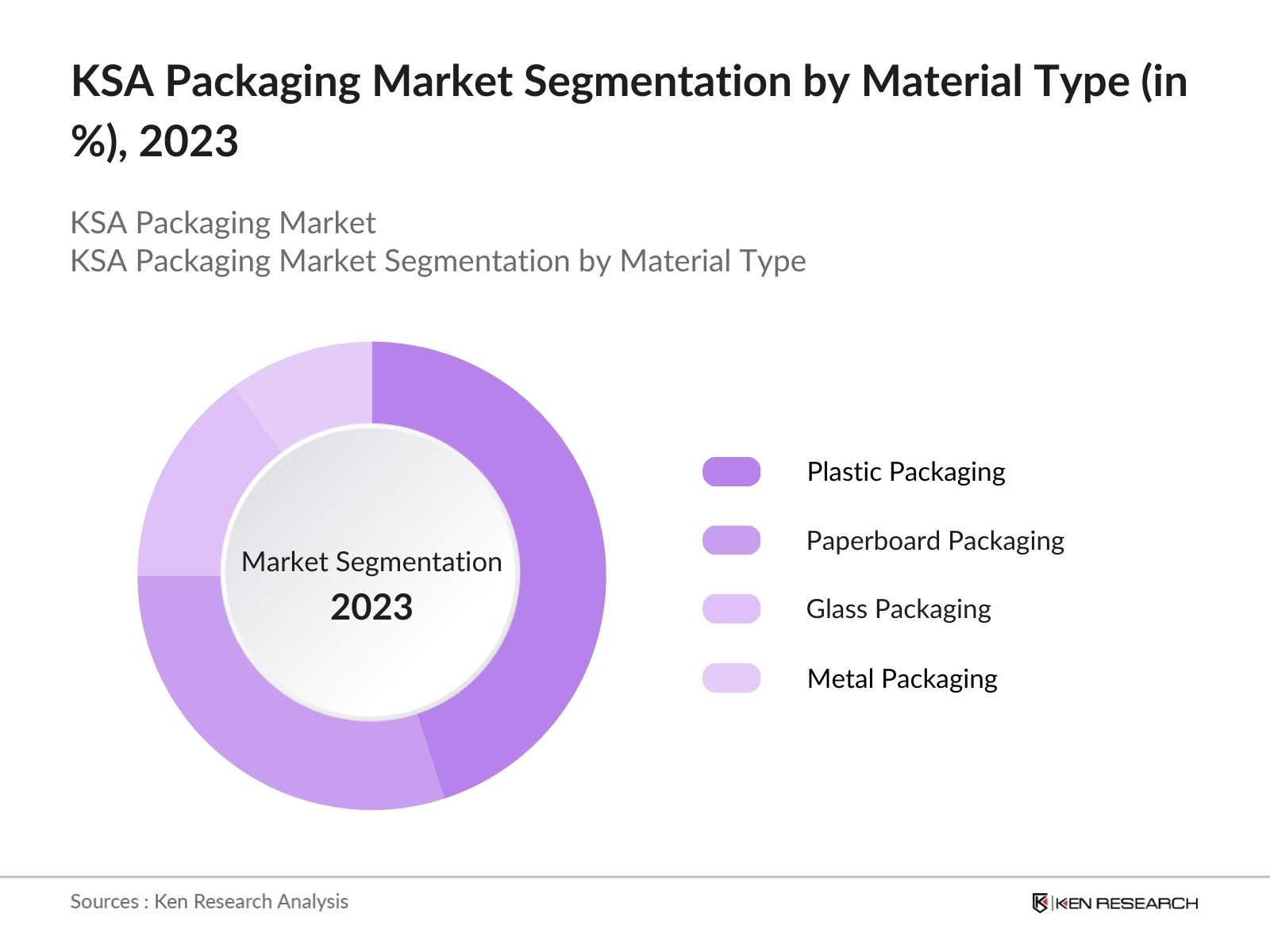
By Material Type: The market is segmented by material type into plastic packaging, paperboard packaging, glass packaging, and metal packaging. Recently, plastic packaging held a dominant market share, due to its wide application in the food and beverage sector. Plastic packaging, particularly flexible packaging, has become the go-to material for its cost-effectiveness, durability, and lightweight properties. Brands in the food, beverage, and consumer goods sectors have widely adopted plastic packaging for convenience in both production and distribution.
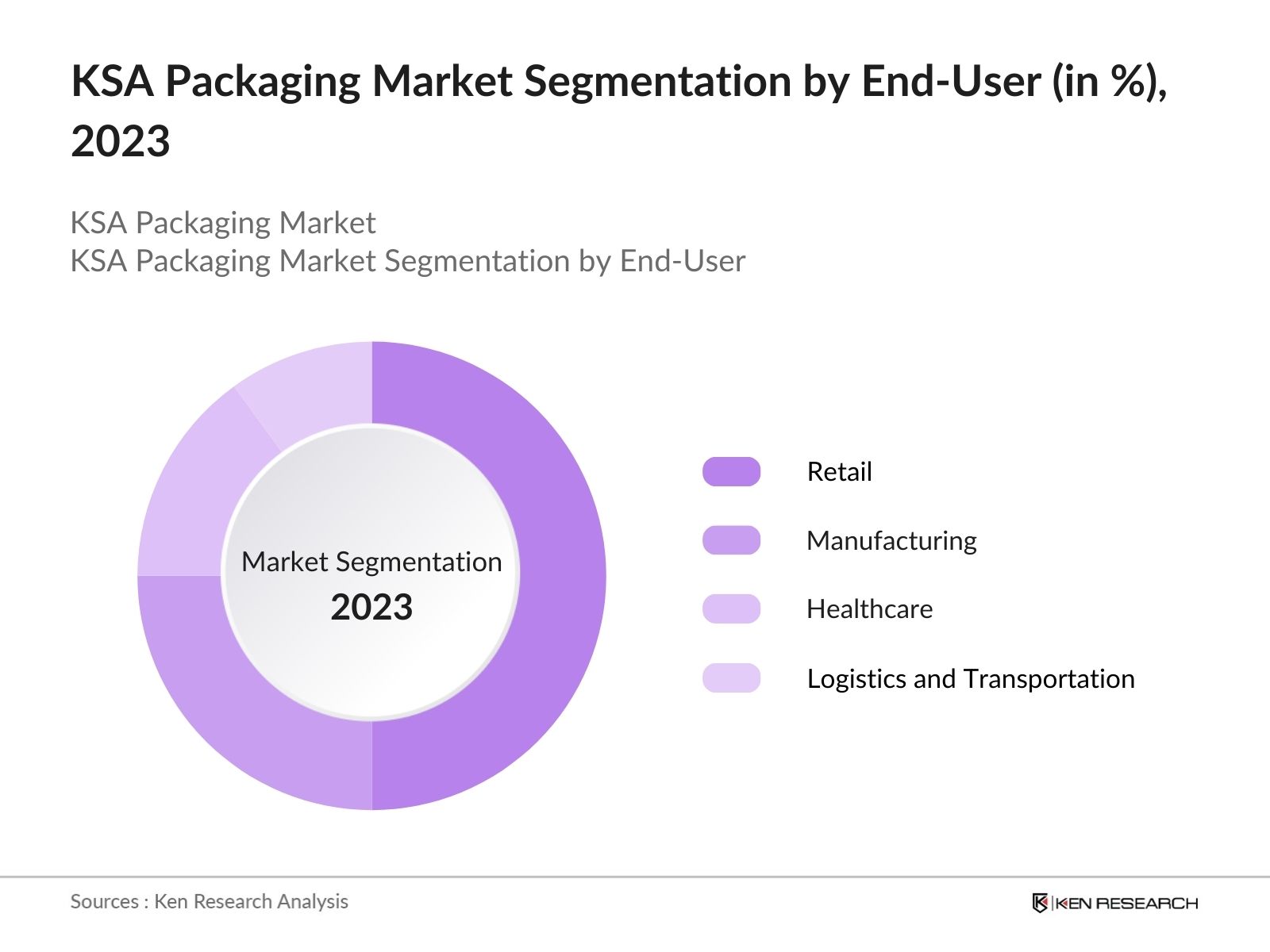
By End-User: The market is segmented by end-user into retail, manufacturing, healthcare, and logistics and transportation. The retail sector is dominating the end-user segment, largely due to the rise in e-commerce and consumer goods demand. The rapid shift towards online retail has generated a need for innovative, durable, and visually appealing packaging solutions. With e-commerce expanding across Saudi Arabia, the retail sector has become a major player in driving the demand for various types of packaging materials.
The KSA packaging market is dominated by both local and international players, each focusing on innovation and sustainability to meet the evolving needs of the market. The sector remains highly competitive, with key players investing in new technologies, automation, and environmentally friendly packaging materials. Large firms like Napco National and Middle East Packaging Company are pivotal players, leveraging their well-established supply chains and R&D capabilities to maintain market leadership.
|
Company |
Establishment Year |
Headquarters |
No. of Employees |
Revenue (USD Mn) |
Product Portfolio |
Market Share (2023) |
Sustainability Initiatives |
Production Capacity |
|
Napco National |
1956 |
Riyadh, KSA |
||||||
|
Middle East Packaging Company |
1983 |
Jeddah, KSA |
||||||
|
Zamil Plastics |
1977 |
Dammam, KSA |
||||||
|
Tetra Pak Arabia |
1951 |
Riyadh, KSA |
||||||
|
Sabic Packaging Solutions |
1976 |
Jubail, KSA |
Over the next five years, the KSA packaging market is expected to show significant growth driven by rapid industrialization, an increase in retail and e-commerce demand, and the government's focus on sustainability. The push towards environmentally friendly packaging materials, coupled with the rising consumer awareness of eco-friendly products, is set to transform the packaging landscape. Furthermore, technological advancements in smart packaging and automation are likely to open up new opportunities in both the industrial and consumer packaging sectors.
|
Material Type |
Plastic Packaging Paperboard Packaging Glass Packaging Metal Packaging Biodegradable Packaging |
|
Packaging Type |
Flexible Packaging Rigid Packaging Semi-rigid Packaging |
|
Application |
Food & Beverage Healthcare & Pharmaceutical Consumer Goods Industrial Packaging Personal Care |
|
End-User |
Retail Manufacturing Healthcare Logistics & Transportation |
|
Region |
Central Region Western Region Eastern Region Southern Region Northern Region |
1.1. Definition and Scope
1.2. Market Taxonomy
1.3. Market Growth Rate (Compound Annual Growth Rate)
1.4. Market Segmentation Overview
2.1. Historical Market Size (In Value)
2.2. Year-on-Year Growth Analysis
2.3. Key Market Developments and Milestones
3.1. Growth Drivers
3.1.1. Increasing Demand from the Food & Beverage Sector
3.1.2. Rise in E-commerce and Retail Packaging
3.1.3. Government Initiatives for Sustainability and Eco-friendly Packaging Solutions
3.1.4. Rapid Industrialization and Urbanization in KSA
3.2. Market Challenges
3.2.1. High Raw Material Costs (Plastic, Paper, Metal)
3.2.2. Environmental Concerns and Stringent Regulations on Plastic Packaging
3.2.3. Lack of Recycling Infrastructure
3.3. Opportunities
3.3.1. Shift towards Sustainable Packaging Solutions
3.3.2. Technological Advancements in Smart Packaging
3.3.3. Growth in Pharmaceuticals and Healthcare Packaging Demand
3.4. Trends
3.4.1. Adoption of Bio-degradable Packaging Materials
3.4.2. Use of Digital Printing in Packaging
3.4.3. Increasing Customization in Packaging Design for Marketing
3.5. Government Regulations
3.5.1. Saudi Vision 2030 and its Impact on Sustainable Packaging
3.5.2. National Environmental Protection Policies Related to Packaging Waste
3.5.3. Import/Export Guidelines for Packaging Materials
3.6. SWOT Analysis
3.7. Stakeholder Ecosystem
3.8. Porters Five Forces Analysis
3.9. Competition Ecosystem
4.1. By Material Type (In Value %)
4.1.1. Plastic Packaging
4.1.2. Paperboard Packaging
4.1.3. Glass Packaging
4.1.4. Metal Packaging
4.1.5. Biodegradable Packaging
4.2. By Packaging Type (In Value %)
4.2.1. Flexible Packaging
4.2.2. Rigid Packaging
4.2.3. Semi-rigid Packaging
4.3. By Application (In Value %)
4.3.1. Food & Beverage Packaging
4.3.2. Healthcare & Pharmaceutical Packaging
4.3.3. Consumer Goods Packaging
4.3.4. Industrial Packaging
4.3.5. Personal Care Packaging
4.4. By End-User (In Value %)
4.4.1. Retail
4.4.2. Manufacturing
4.4.3. Healthcare
4.4.4. Logistics & Transportation
4.5. By Region (In Value %)
4.5.1. Central Region
4.5.2. Western Region
4.5.3. Eastern Region
4.5.4. Southern Region
4.5.5. Northern Region
5.1. Detailed Profiles of Major Companies
5.1.1. Middle East Packaging Company
5.1.2. Napco National
5.1.3. Saudi Printing & Packaging Company
5.1.4. Zamil Plastics
5.1.5. Tetra Pak Arabia
5.1.6. Gulf Printing and Packaging Company
5.1.7. Sabic Packaging Solutions
5.1.8. Al Obeikan Packaging
5.1.9. Greif Saudi Arabia
5.1.10. Al Watania for Industries
5.1.11. Mondi KSA
5.1.12. National Packaging Company
5.1.13. FIPCO
5.1.14. Arabian Paper Products Company
5.1.15. Sealed Air Corporation KSA
5.2. Cross Comparison Parameters (Revenue, Production Capacity, No. of Employees, Headquarters Location, Market Share, Product Portfolio, Inception Year, Sustainability Initiatives)
5.3. Market Share Analysis
5.4. Strategic Initiatives
5.5. Mergers and Acquisitions
5.6. Investment Analysis
5.7. Venture Capital Funding
5.8. Government Grants
5.9. Private Equity Investments
6.1. Environmental Compliance Standards
6.2. Packaging Waste Regulations
6.3. Certification Processes (ISO, KSA-Specific Certifications)
7.1. Future Market Size Projections
7.2. Key Factors Driving Future Market Growth
8.1. By Material Type (In Value %)
8.2. By Packaging Type (In Value %)
8.3. By Application (In Value %)
8.4. By End-User (In Value %)
8.5. By Region (In Value %)
9.1. TAM/SAM/SOM Analysis
9.2. Customer Cohort Analysis
9.3. Marketing Strategies
9.4. White Space Opportunities
This step involves constructing a comprehensive ecosystem map encompassing all stakeholders within the KSA packaging market. Extensive desk research utilizing secondary databases provides a robust foundation to identify the key variables that influence market dynamics.
The next step involves compiling historical data on the KSA packaging market, evaluating market penetration, material consumption, and overall revenue generation. Data quality is ensured through cross-validation from proprietary sources.
Hypotheses are developed from initial research and then validated through interviews with industry professionals. These consultations allow us to gather firsthand insights from industry stakeholders, refining the research data.
The final stage synthesizes all research data into a cohesive output, ensuring that the statistics and market insights are both reliable and validated through industry sources.
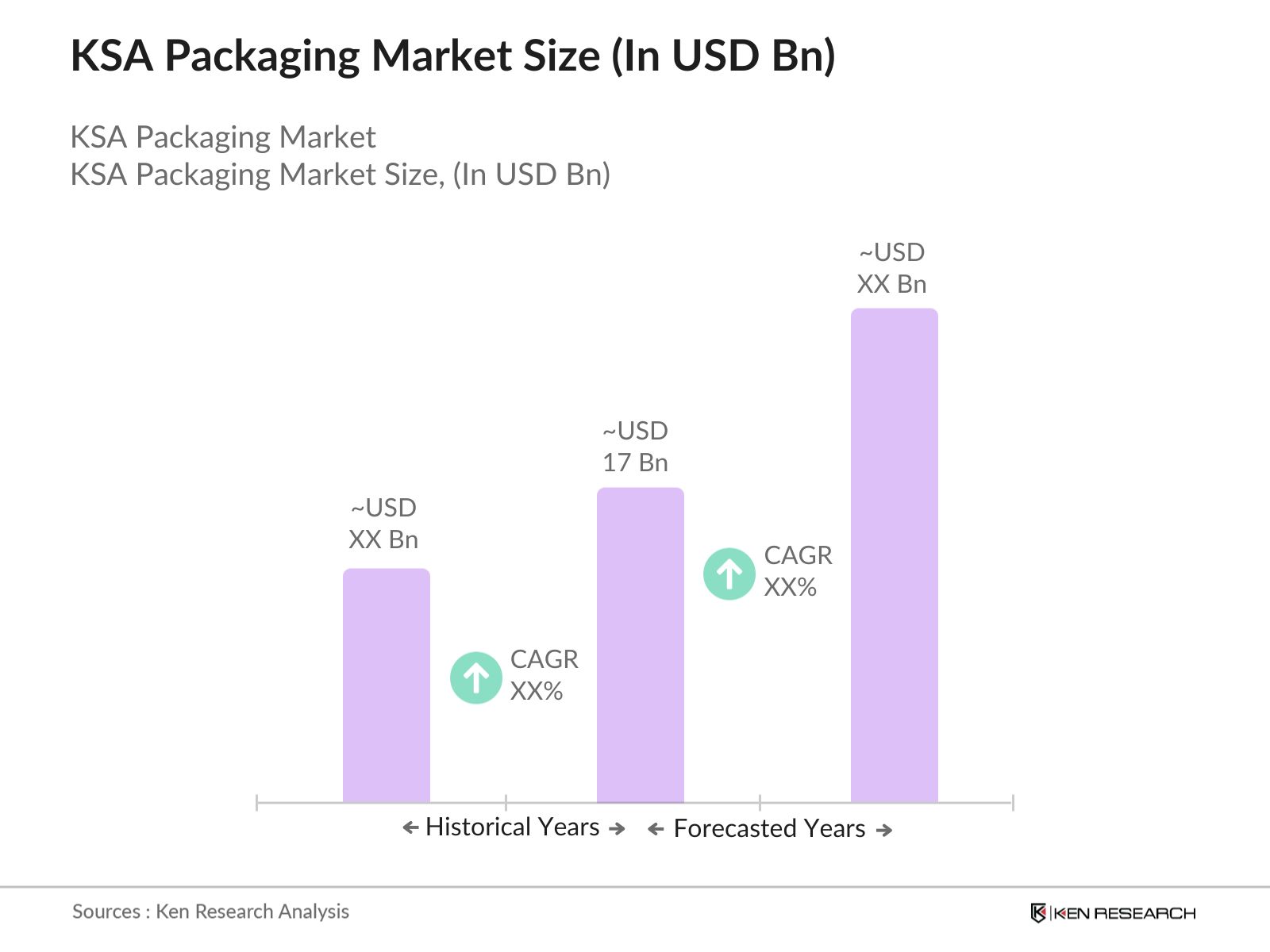
The KSA packaging market is valued at USD 17 billion, driven by factors such as rapid urbanization, increasing demand for sustainable packaging, and rising e-commerce activities.
Challenges in the KSA packaging market include high raw material costs, environmental concerns related to plastic waste, and a lack of recycling infrastructure across the Kingdom.
Key players in the KSA packaging market include Napco National, Sabic Packaging Solutions, Zamil Plastics, and Tetra Pak Arabia, dominating the market due to their extensive production capacities and innovative solutions.
The KSA packaging market is driven by government initiatives like Vision 2030, increasing demand from the food and beverage sector, and a rising focus on eco-friendly packaging materials.
Opportunities in the KSA packaging market include the shift towards biodegradable packaging materials, advancements in smart packaging, and the growing importance of sustainable packaging solutions in the retail sector.

What makes us stand out is that our consultants follows Robust, Refine and Result (RRR) methodology. i.e. Robust for clear definitions, approaches and sanity checking, Refine for differentiating respondents facts and opinions and Result for presenting data with story

We have set a benchmark in the industry by offering our clients with syndicated and customized market research reports featuring coverage of entire market as well as meticulous research and analyst insights.

While we don't replace traditional research, we flip the method upside down. Our dual approach of Top Bottom & Bottom Top ensures quality deliverable by not just verifying company fundamentals but also looking at the sector and macroeconomic factors.

With one step in the future, our research team constantly tries to show you the bigger picture. We help with some of the tough questions you may encounter along the way: How is the industry positioned? Best marketing channel? KPI's of competitors? By aligning every element, we help maximize success.

Our report gives you instant access to the answers and sources that other companies might choose to hide. We elaborate each steps of research methodology we have used and showcase you the sample size to earn your trust.

If you need any support, we are here! We pride ourselves on universe strength, data quality, and quick, friendly, and professional service.