















KSA Paper And Paperboard Packaging Market Outlook to 2030
Region:Middle East
Author(s):Yogita Sahu
Product Code:KROD3211
October 2024
98
About the Report
KSA Paper and Paperboard Packaging Market Overview
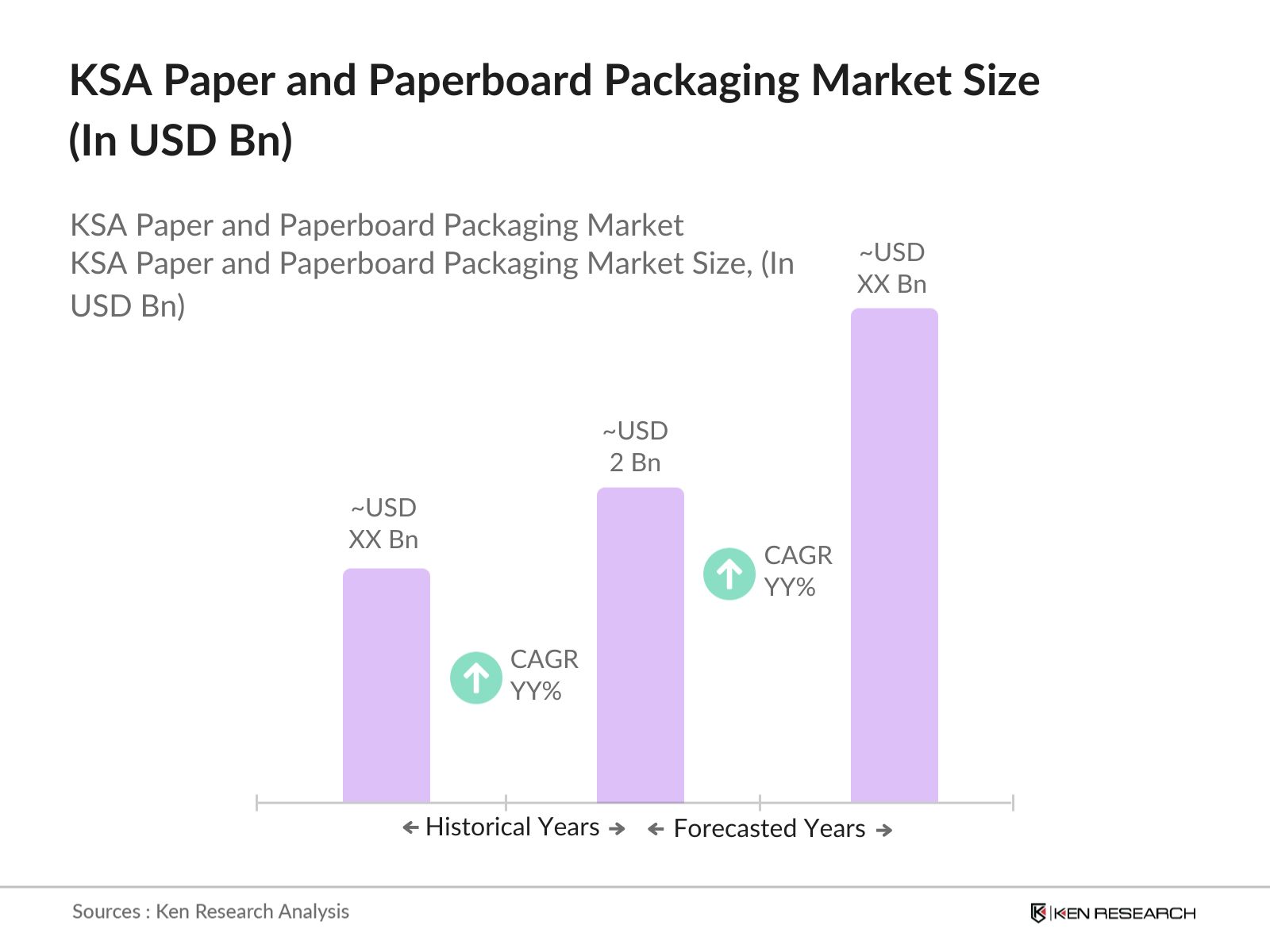
- The KSA Paper and Paperboard Packaging market is valued at USD 2 billion, based on a five-year historical analysis. The market is driven by the increasing demand for sustainable packaging solutions, spurred by government regulations aimed at reducing plastic use. Growing consumer awareness about eco-friendly packaging, coupled with the rising e-commerce industry, is also boosting the demand for paper-based packaging solutions in the Kingdom.
- Key cities such as Riyadh, Jeddah, and Dammam dominate the market in Saudi Arabia. Riyadh's dominance stems from its role as a key industrial hub, with numerous manufacturing plants that rely heavily on packaging. Jeddah, as the Kingdom's major seaport, benefits from its strategic position in international trade and logistics, driving packaging demand.
- Under Vision 2030, Saudi Arabia is actively promoting sustainability across all sectors, including packaging. Saudi Arabia'sSaudi Green Initiative, launched in 2021, aims to combat climate change by planting10 billion trees, rehabilitating40 million hectaresof land, and protecting30%of its terrestrial and marine areas by 2030, encouraging the adoption of paper-based packaging. The Ministry of Environment, Water, and Agriculture is at the forefront of this initiative, promoting paper and paperboard as environmentally friendly alternatives to single-use plastics.
KSA Paper and Paperboard Packaging Market Segmentation
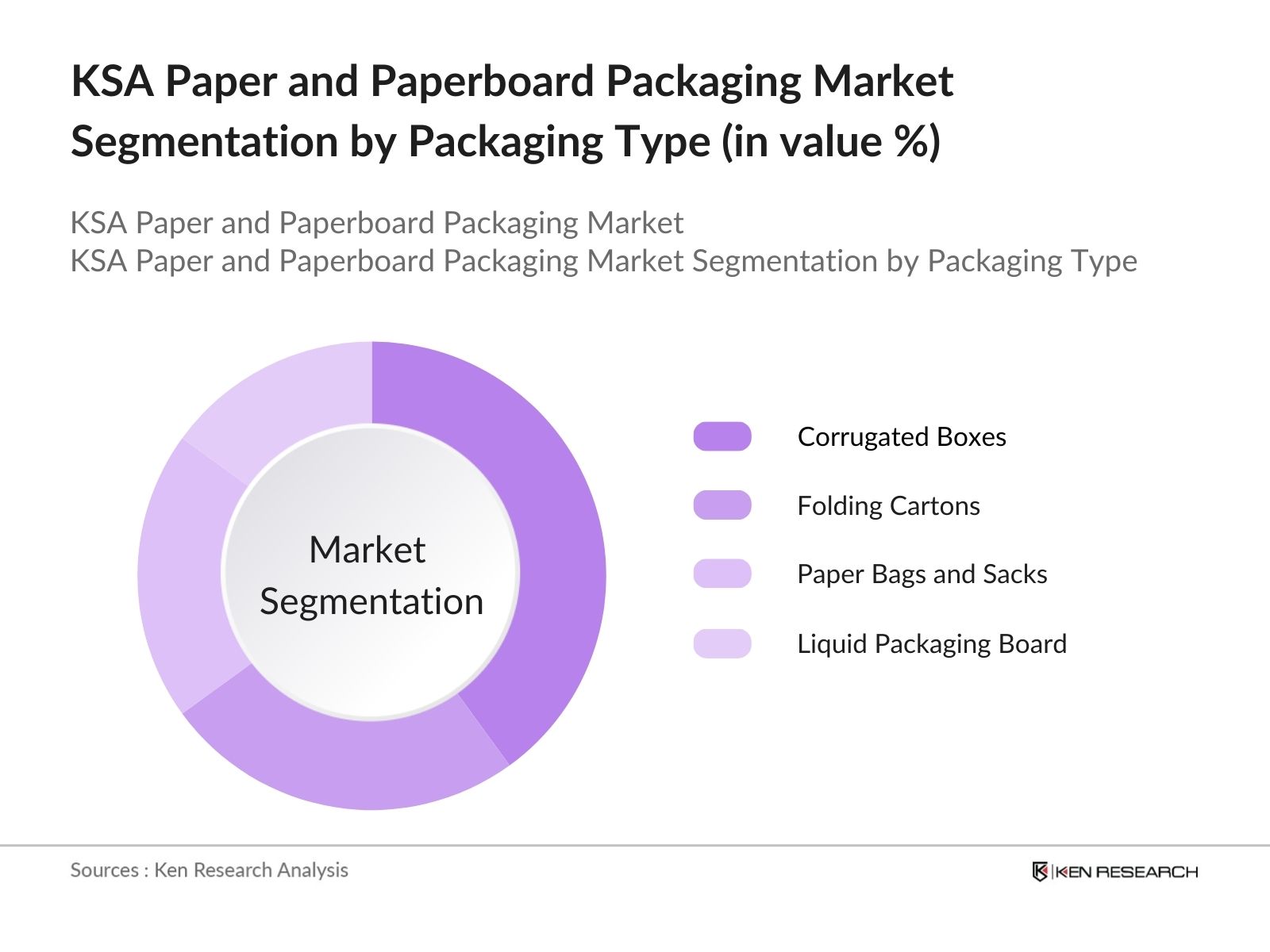
By Packaging Type: The market is segmented by packaging type into corrugated boxes, folding cartons, paper bags and sacks, rigid paper containers, and liquid packaging board. Corrugated boxes have a dominant market share in the Kingdom under this segmentation. This is primarily due to their robust design, which makes them ideal for transporting and protecting goods, especially in the booming e-commerce sector.
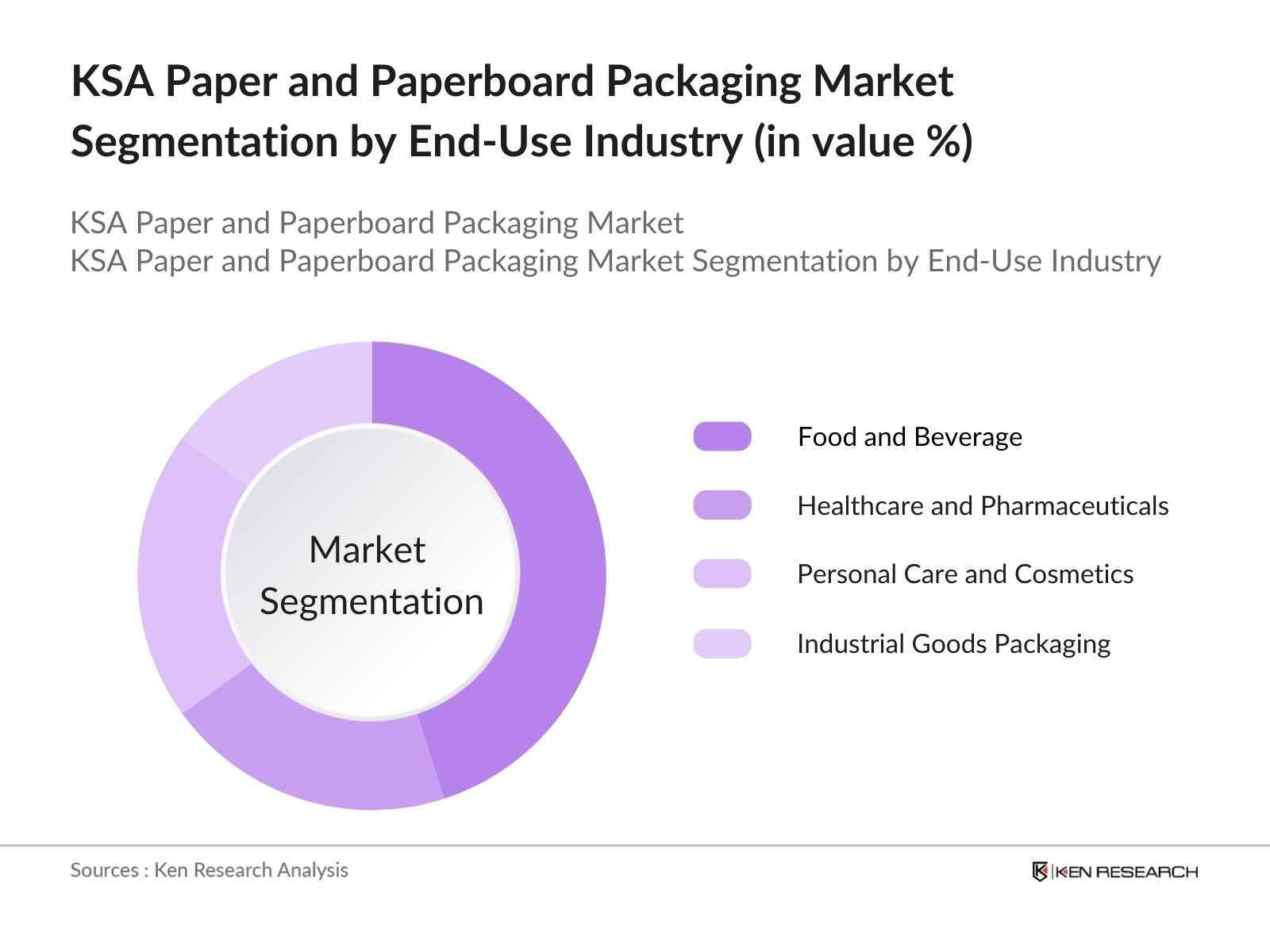
By End-Use Industry: The market is also segmented by end-use industry into food and beverage, personal care and cosmetics, healthcare and pharmaceuticals, industrial goods packaging, and e-commerce and retail. The food and beverage industry dominates this segmentation, as packaging materials such as folding cartons and paperboard are widely used for packaging snacks, beverages, and other perishable goods.
KSA Paper and Paperboard Packaging Market Competitive Landscape
The market is characterized by a mix of local and international players, each vying for a competitive edge in terms of sustainability, innovation, and cost-effectiveness. Major local players such as Saudi Paper Manufacturing Company and Al Watania for Industries are prominent due to their regional presence and ability to cater to specific needs of the local market, while international players like International Paper and Mondi Group dominate due to their global reach and advanced technologies.
|
Company |
Establishment Year |
Headquarters |
Product Range |
Sustainability Initiatives |
Innovation Capabilities |
Revenue (SAR) |
Market Penetration |
|
Saudi Paper Manufacturing Company |
1989 |
Dammam |
|||||
|
International Paper Company |
1898 |
Memphis, USA |
|||||
|
Al Watania for Industries |
1979 |
Riyadh |
|||||
|
Obeikan Paper Industries |
1983 |
Riyadh |
|||||
|
Napco National |
1956 |
Dammam |
KSA Paper and Paperboard Packaging Market Analysis
Market Growth Drivers
- Environmental Regulations Driving Demand for Sustainable Packaging: The Saudi Arabian government has implemented stringent regulations aimed at reducing plastic waste, leading to an increased demand for eco-friendly alternatives like paper and paperboard packaging. By 2024, Saudi Arabia aims to reduce waste generation by 110 million tons, as outlined in the National Waste Management Strategy. This regulatory push toward sustainability is compelling manufacturers across industries, to transition to paper-based packaging solutions that align with the nations environmental goals.
- Expansion of E-commerce Sector: The rapid growth of e-commerce in Saudi Arabia is fueling the demand for paper and paperboard packaging. As per the online sales transactions reached SAR 770.87 billion in 2023. The increase in online shopping requires secure and durable packaging solutions for goods transportation, with paperboard packaging emerging as a preferred option due to its sustainability and cost-effectiveness. This growth is further accelerated by consumer preferences for eco-friendly packaging solutions in the e-commerce space.
- Growing Food and Beverage Industry: The food and beverage industry in Saudi Arabia, is a major driver of the paper and paperboard packaging sector. As the demand for packaged food products continues to grow, packaging materials that meet both regulatory and consumer sustainability requirements are becoming essential. The Saudi Food and Drug Authority (SFDA) has issued guidelines promoting the use of biodegradable packaging materials, driving demand for paper-based solutions.
Market Challenges
- Limited Availability of Raw Materials: The KSA paper packaging industry faces a challenge due to the limited availability of raw materials, especially wood pulp, which is essential for paper production. Saudi Arabia imports a number of raw materials, with estimates suggesting that the country imported wood pulp in 2024. This reliance on imports increases production costs and hinders the expansion of the domestic paper packaging industry.
- Lack of Advanced Recycling Infrastructure: Saudi Arabia's recycling infrastructure, though developing, is still insufficient to meet the rising demand for recyclable paper packaging materials. In 2024, only 15% of paper waste is recycled domestically, highlighting the need for enhanced recycling technologies and facilities. The lack of advanced infrastructure leads to inefficiencies in raw material procurement, limiting the growth potential of the industry.
KSA Paper and Paperboard Packaging Market Future Outlook
Over the next five years, the KSA Paper and Paperboard Packaging industry is expected to experience substantial growth driven by the increasing push for sustainable packaging, advancements in manufacturing technology, and the rising consumer demand for eco-friendly products. The market is set to benefit from government initiatives that support green practices and recycling, as well as the continued expansion of e-commerce and retail industries in the Kingdom.
Future Market Opportunities
- Increased Adoption of Smart Packaging Solutions: Over the next five years, smart packaging solutions integrated with digital technology, such as QR codes and RFID tags, will become a prominent trend in the KSA market. These technologies will enhance the traceability and security of packaged products, especially in the pharmaceutical and food sectors.
- Expansion of Circular Economy Initiatives: Saudi Arabias push toward a circular economy will accelerate in the coming years, with recycling and waste reduction taking center stage in the paper packaging industry. By 2029, paper and paperboard packaging companies will increasingly adopt closed-loop recycling systems, enabling them to reuse materials and reduce waste.
Scope of the Report
|
Packaging Type |
Corrugated Boxes |
|
Folding Cartons |
|
|
Paper Bags and Sacks |
|
|
Rigid Paper Containers |
|
|
Liquid Packaging Board |
|
|
End-Use Industry |
Food and Beverage |
|
Personal Care and Cosmetics |
|
|
Healthcare and Pharmaceuticals |
|
|
Industrial Goods Packaging |
|
|
E-commerce and Retail |
|
|
Material Type |
Recycled Paperboard |
|
Virgin Paperboard |
|
|
Coated and Uncoated Paperboard |
|
|
Printing Technology |
Flexography |
|
Offset Printing |
|
|
Digital Printing |
|
|
Gravure Printing |
|
|
Region |
North |
|
East |
|
|
West |
|
|
South |
Products
Key Target Audience Organizations and Entities Who Can Benefit by Subscribing This Report:
Paper and Packaging Manufacturers
Food and Beverage Companies
Healthcare and Pharmaceutical Manufacturers
E-commerce and Retail Businesses
Logistics and Distribution Companies
Industrial Goods Packaging Providers
Government and Regulatory Bodies (Saudi Standards, Metrology and Quality Organization)
Investment and Venture Capitalist Firms
Companies
Players Mentioned in the Report:
International Paper Company
Saudi Paper Manufacturing Company
Al Watania for Industries
Mondi Group
Smurfit Kappa Group
Napco National
Obeikan Paper Industries
Middle East Paper Company (MEPCO)
DS Smith Plc
Nine Dragons Paper Holdings Limited
WestRock Company
BillerudKorsns AB
Huhtamaki OYJ
Tetra Pak International S.A.
Rengo Co., Ltd.
Table of Contents
1. KSA Paper and Paperboard Packaging Market Overview
1.1. Definition and Scope
1.2. Market Taxonomy
1.3. Market Growth Rate (CAGR)
1.4. Market Segmentation Overview
2. KSA Paper and Paperboard Packaging Market Size (In USD Bn)
2.1. Historical Market Size
2.2. Year-on-Year Growth Analysis
2.3. Key Market Developments and Milestones
3. KSA Paper and Paperboard Packaging Market Analysis
3.1. Growth Drivers
3.1.1. Rise in E-commerce Activities (Packaging demand)
3.1.2. Increasing Sustainability Trends (Eco-friendly packaging)
3.1.3. Government Regulations (Reduction of plastic use)
3.1.4. Shift Towards Circular Economy (Recycling initiatives)
3.2. Market Challenges
3.2.1. High Production Costs (Energy and raw materials)
3.2.2. Competition from Flexible Packaging (Substitute packaging materials)
3.2.3. Volatile Pulp Prices (Raw material fluctuations)
3.2.4. Logistics and Distribution Constraints (Supply chain issues)
3.3. Opportunities
3.3.1. Technological Innovations in Production (Automation and digital printing)
3.3.2. Rising Demand for Customization (Bespoke packaging solutions)
3.3.3. Expansion into Non-traditional Segments (Food and Beverage, Healthcare)
3.3.4. Government Initiatives for Green Packaging (Subsidies for green manufacturing)
3.4. Trends
3.4.1. Lightweight Packaging Materials
3.4.2. Increased Use of Recycled Paperboard
3.4.3. Adoption of Smart Packaging Solutions (QR codes, RFID)
3.4.4. Growth of Subscription-Based Packaging (B2B and B2C models)
3.5. Government Regulation
3.5.1. Saudi Vision 2030 (Impact on sustainability and packaging)
3.5.2. Regulations on Packaging Waste Management (Packaging disposal laws)
3.5.3. Import Tariffs on Raw Materials
3.5.4. Mandatory Labelling and Certification Standards (Product packaging guidelines)
3.6. SWOT Analysis
3.7. Stakeholder Ecosystem (Paper mills, converters, recyclers)
3.8. Porters Five Forces
3.9. Competition Ecosystem
4. KSA Paper and Paperboard Packaging Market Segmentation
4.1. By Packaging Type (In Value %)
4.1.1. Corrugated Boxes
4.1.2. Folding Cartons
4.1.3. Paper Bags and Sacks
4.1.4. Rigid Paper Containers
4.1.5. Liquid Packaging Board
4.2. By End-Use Industry (In Value %)
4.2.1. Food and Beverage
4.2.2. Personal Care and Cosmetics
4.2.3. Healthcare and Pharmaceuticals
4.2.4. Industrial Goods Packaging
4.2.5. E-commerce and Retail
4.3. By Material Type (In Value %)
4.3.1. Recycled Paperboard
4.3.2. Virgin Paperboard
4.3.3. Coated and Uncoated Paperboard
4.4. By Printing Technology (In Value %)
4.4.1. Flexography
4.4.2. Offset Printing
4.4.3. Digital Printing
4.4.4. Gravure Printing
4.5. By Region (In Value %)
4.5.1. North
4.5.2. East
4.5.3. West
4.5.4. South
5. KSA Paper and Paperboard Packaging Market Competitive Analysis
5.1 Detailed Profiles of Major Companies
5.1.1. International Paper Company
5.1.2. Saudi Paper Manufacturing Company
5.1.3. Al Watania for Industries
5.1.4. Obeikan Paper Industries
5.1.5. Napco National
5.1.6. Middle East Paper Company (MEPCO)
5.1.7. Mondi Group
5.1.8. Smurfit Kappa Group
5.1.9. Nine Dragons Paper Holdings Limited
5.1.10. DS Smith Plc
5.1.11. Rengo Co., Ltd.
5.1.12. BillerudKorsns AB
5.1.13. WestRock Company
5.1.14. Huhtamaki OYJ
5.1.15. Tetra Pak International S.A.
5.2 Cross Comparison Parameters (Product Portfolio, Market Presence, Revenue, Innovation Capabilities, Sustainability Initiatives, Supply Chain Strength, Market Share, Key Partnerships)
5.3 Market Share Analysis
5.4 Strategic Initiatives
5.5 Mergers and Acquisitions
5.6 Investment Analysis
5.7 Venture Capital Funding
5.8 Private Equity Investments
6. KSA Paper and Paperboard Packaging Market Regulatory Framework
6.1 Environmental Standards
6.2 Compliance Requirements
6.3 Certification Processes
7. KSA Paper and Paperboard Packaging Future Market Size (In USD Bn)
7.1 Future Market Size Projections
7.2 Key Factors Driving Future Market Growth
8. KSA Paper and Paperboard Packaging Future Market Segmentation
8.1 By Packaging Type (In Value %)
8.2 By End-Use Industry (In Value %)
8.3 By Material Type (In Value %)
8.4 By Printing Technology (In Value %)
8.5 By Region (In Value %)
9. KSA Paper and Paperboard Packaging Market Analysts Recommendations
9.1 TAM/SAM/SOM Analysis
9.2 Customer Cohort Analysis
9.3 Marketing Initiatives
9.4 White Space Opportunity Analysis
Research Methodology
Step 1: Identification of Key Variables
This initial phase involved developing a detailed ecosystem map of the KSA Paper and Paperboard Packaging Market. Through rigorous desk research and extensive use of secondary databases, key variables such as raw material sourcing, production costs, and distribution networks were identified.
Step 2: Market Analysis and Construction
Historical data on packaging consumption, production, and revenues were collected. Further analysis focused on trends in the end-user industries, including food and beverages, healthcare, and e-commerce. The final goal of this stage was to validate market segmentation and key demand drivers.
Step 3: Hypothesis Validation and Expert Consultation
In-depth interviews with key stakeholders in the industry, including manufacturers and distributors, were conducted. These consultations provided firsthand insights into production challenges, innovation trends, and competitive pressures.
Step 4: Research Synthesis and Final Output
The final stage involved synthesizing all data points to produce a comprehensive analysis of the KSA Paper and Paperboard Packaging Market. This step also included further validation from industry participants to ensure accuracy and reliability of the data.
Frequently Asked Questions
01. How big is the KSA Paper and Paperboard Packaging Market?
The KSA Paper and Paperboard Packaging market is valued at USD 2 billion, driven by rising demand for eco-friendly packaging solutions, and the growth of industries such as food and beverage and e-commerce.
02. What are the challenges in the KSA Paper and Paperboard Packaging Market?
Challenges in the KSA Paper and Paperboard Packaging market include high production costs due to fluctuating raw material prices, competition from flexible plastic packaging, and the need for compliance with increasingly stringent environmental regulations.
03. Who are the major players in the KSA Paper and Paperboard Packaging Market?
Key players in the KSA Paper and Paperboard Packaging market include International Paper, Saudi Paper Manufacturing Company, Mondi Group, Smurfit Kappa, and Al Watania for Industries, dominating due to their scale, sustainability initiatives, and strong distribution networks.
04. What are the growth drivers in the KSA Paper and Paperboard Packaging Market?
Growth in the KSA Paper and Paperboard Packaging market is driven by the increasing shift towards sustainable packaging, government regulations reducing plastic use, and the growing e-commerce sector, which demands durable and cost-effective packaging solutions.
05. What trends are shaping the KSA Paper and Paperboard Packaging Market?
Key trends in the KSA Paper and Paperboard Packaging market include the adoption of lightweight packaging, the use of recycled materials, and the integration of smart packaging technologies like RFID for supply chain efficiency.
Why Buy From Us?

What makes us stand out is that our consultants follows Robust, Refine and Result (RRR) methodology. i.e. Robust for clear definitions, approaches and sanity checking, Refine for differentiating respondents facts and opinions and Result for presenting data with story

We have set a benchmark in the industry by offering our clients with syndicated and customized market research reports featuring coverage of entire market as well as meticulous research and analyst insights.

While we don't replace traditional research, we flip the method upside down. Our dual approach of Top Bottom & Bottom Top ensures quality deliverable by not just verifying company fundamentals but also looking at the sector and macroeconomic factors.

With one step in the future, our research team constantly tries to show you the bigger picture. We help with some of the tough questions you may encounter along the way: How is the industry positioned? Best marketing channel? KPI's of competitors? By aligning every element, we help maximize success.

Our report gives you instant access to the answers and sources that other companies might choose to hide. We elaborate each steps of research methodology we have used and showcase you the sample size to earn your trust.

If you need any support, we are here! We pride ourselves on universe strength, data quality, and quick, friendly, and professional service.