















KSA Peer-to-Peer Lending Market Outlook to 2030
Region:Middle East
Author(s):Sanjna Verma
Product Code:KROD5396
November 2024
82
About the Report
KSA Peer-to-Peer Lending Market Overview
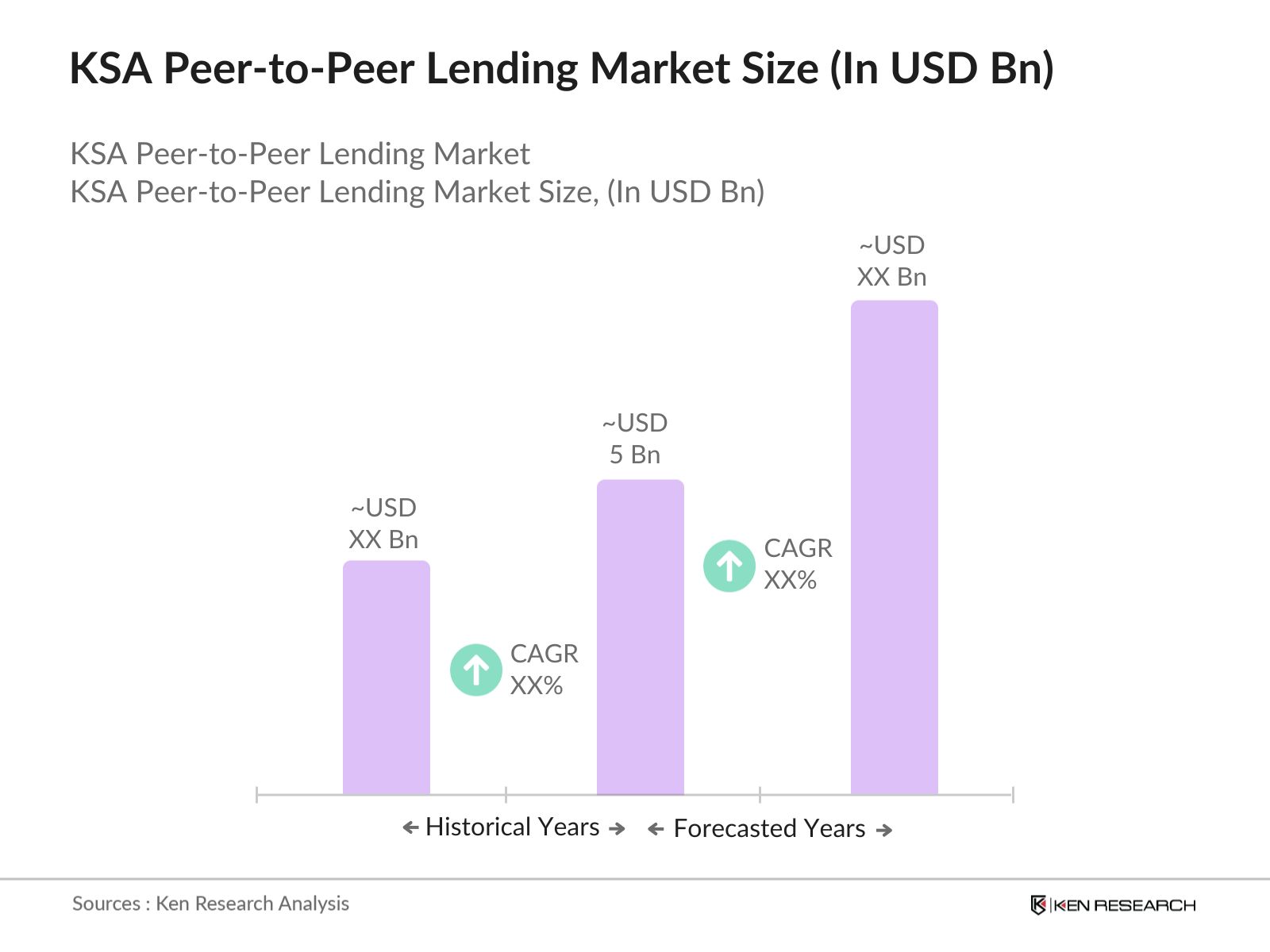
- The KSA Peer-to-Peer Lending market is valued at USD 5 billion, driven by the increasing demand for alternative lending solutions amidst the growing fintech ecosystem. With the rise in digital financial services and increasing number of small and medium enterprises (SMEs) seeking alternative funding solutions, the P2P lending market is becoming an important player in the Saudi financial ecosystem. Moreover, strong government backing through the Saudi Vision 2030 initiative further accelerates the markets growth by encouraging technological adoption in financial services.
- Riyadh and Jeddah are the dominant cities in the KSA P2P lending market due to their high concentration of SMEs and startups seeking easier access to loans. Additionally, these cities are financial hubs with greater digital infrastructure and fintech adoption, making them the focal points for P2P lending platforms. These urban centers host a growing number of fintech innovators and entrepreneurs, further solidifying their dominance in this emerging sector.
- SAMAs regulatory sandbox has been instrumental in fostering innovation in the fintech sector, including P2P lending. Since its launch, over 25 fintech companies have participated, including several P2P platforms, benefiting from a controlled environment to test their products and services. This regulatory framework ensures that new fintech solutions comply with national regulations while allowing room for innovation. The sandboxs success has been a key driver for the rapid development of Saudi Arabias P2P lending market
KSA Peer-to-Peer Lending Market Segmentation
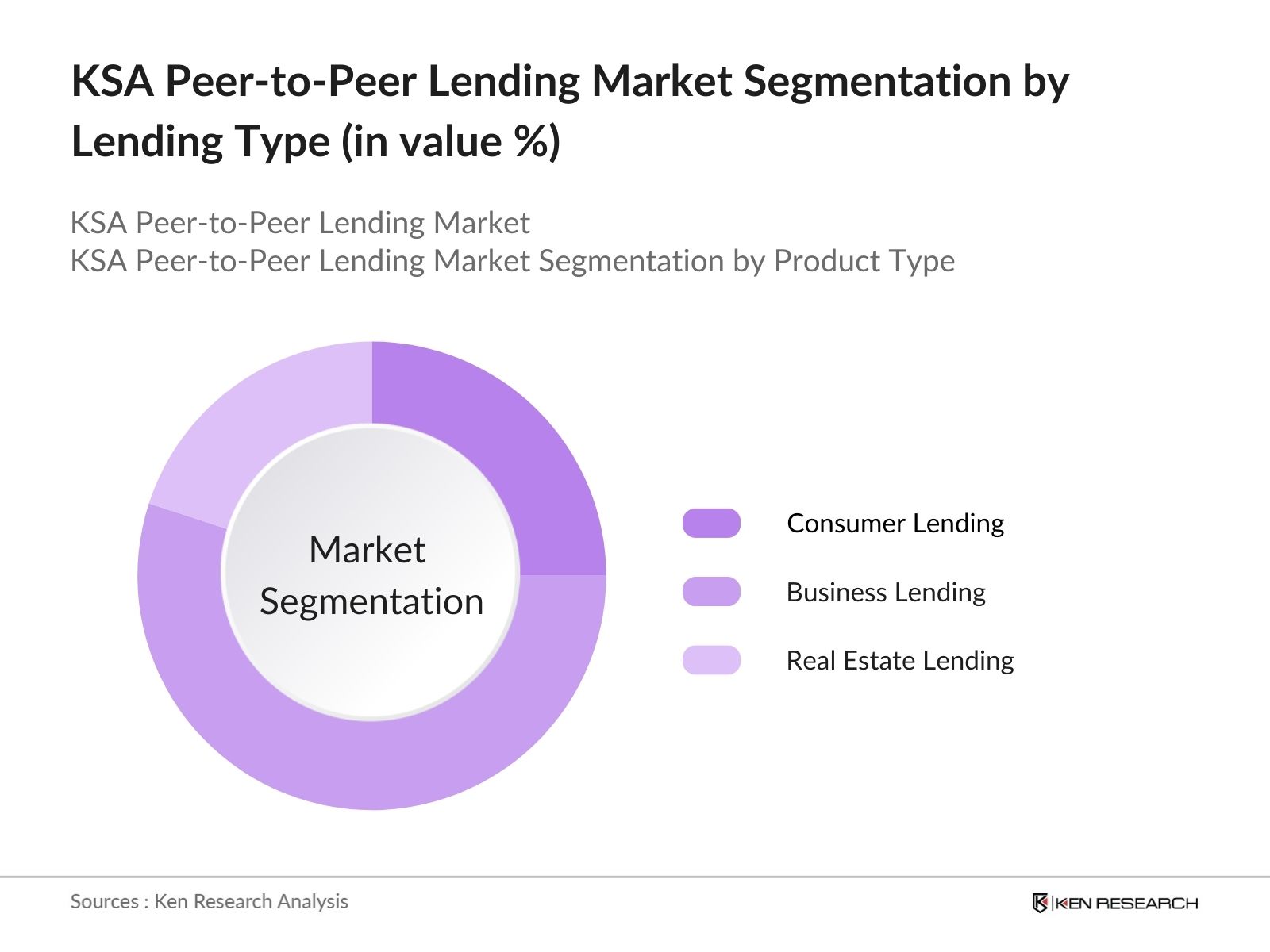
By Lending Type: The KSA Peer-to-Peer Lending market is segmented by lending type into consumer lending, business lending, and real estate lending. Business lending holds the dominant market share due to the increasing need for SMEs to access faster and more flexible loans compared to traditional banking. The limited credit access through conventional channels for these businesses has created a ripe opportunity for P2P platforms to fill the gap, particularly in providing short-term capital for business expansion and operations. Moreover, Sharia-compliant lending has also found a niche in the market, catering to the needs of businesses following Islamic finance principles.
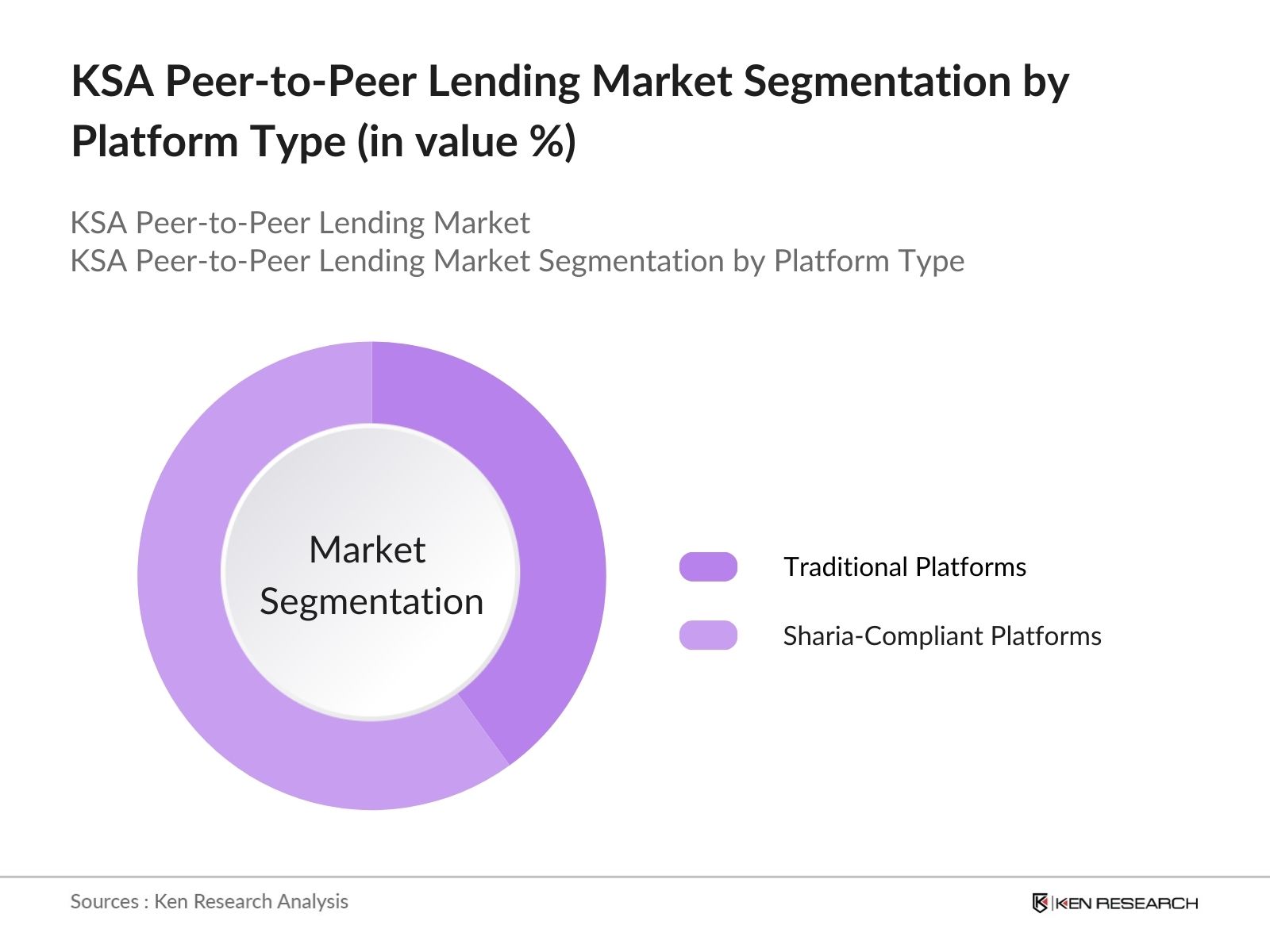
By Platform Type: The KSA P2P lending market is segmented by platform type into traditional P2P platforms and Sharia-compliant P2P platforms. Sharia-compliant platforms dominate the market due to the countrys adherence to Islamic finance principles, which are integral to the local financial ecosystem. These platforms cater to a wider audience as they align with religious guidelines, offering ethical lending solutions that avoid interest-based transactions, which are prohibited under Islamic law.
KSA Peer-to-Peer Lending Market Competitive Landscape
The KSA Peer-to-Peer Lending market is led by several key players, both local and international, who are driving innovation and providing diverse lending solutions. The market is highly consolidated with a few major players holding significant market shares. The competition is primarily driven by product offerings, regulatory compliance, and technological advancements. Additionally, partnerships between traditional banks and P2P platforms have created a competitive edge for some companies, allowing them to leverage existing financial infrastructures while expanding their digital lending capabilities.
|
Company Name |
Establishment Year |
Headquarters |
Number of Loans Disbursed |
Total Loan Value (USD) |
No. of Active Borrowers |
Credit Risk Rating |
No. of Employees |
Product Differentiation |
|
Beehive |
2014 |
Dubai, UAE |
- |
- |
- |
- |
- |
- |
|
Lendo |
2019 |
Riyadh, KSA |
- |
- |
- |
- |
- |
- |
|
Souqalmal |
2012 |
Dubai, UAE |
- |
- |
- |
- |
- |
- |
|
Money Fellows |
2018 |
Cairo, Egypt |
- |
- |
- |
- |
- |
- |
|
DarQst |
2020 |
Riyadh, KSA |
- |
- |
- |
- |
- |
- |
KSA Peer-to-Peer Lending Market Analysis
Growth Drivers
- Rise in SME Lending Demand: The demand for SME lending in Saudi Arabia has surged due to the Kingdom's Vision 2030, which emphasizes the growth of small and medium-sized enterprises (SMEs). As of 2023, SMEs contribute over 20% to Saudi Arabias GDP, with around 950,000 SMEs operating across various sectors. The Saudi Arabian Monetary Authority (SAMA) has reported a steady rise in demand for SME financing, with total SME loans granted by financial institutions amounting to over USD 46.5 billion by Q3 2023. Peer-to-peer (P2P) lending platforms are becoming a critical source of financing for these businesses.
- Sharia-Compliant P2P Platforms: Sharia-compliant P2P platforms are driving growth in Saudi Arabia's peer-to-peer lending market. These platforms adhere to Islamic finance principles, which prohibit interest-based transactions. As a result, they appeal to the majority-Muslim population. The Saudi market saw the launch of several Sharia-compliant P2P platforms between 2022 and 2024, facilitating loans worth more than USD 1.35 billion in compliance with Islamic finance principles.
- Regulatory Support from SAMA: SAMA has played a significant role in supporting the growth of the P2P lending market through its regulatory sandbox, which allows fintech startups to test innovative products and services. As of 2023, 19 fintech firms, including P2P platforms, are operating within SAMAs sandbox environment, benefiting from a supportive regulatory framework. This regulatory backing ensures compliance with the Kingdoms financial regulations while fostering innovation in the sector.
Challenges
- Limited Financial Literacy in Key Segments: A survey by the General Authority for Statistics in 2023 found that more than 60% of individuals in rural regions had limited understanding of financial products, including P2P lending. This knowledge gap restricts the markets reach and limits participation from a significant portion of the population. Addressing this challenge will require concerted efforts from both fintech companies and the government to improve financial education.
- Competition from Traditional Financial Institutions: Despite the growth of P2P lending platforms, traditional banks continue to dominate the lending space in Saudi Arabia. In 2023, the total loan portfolio of banks in the Kingdom exceeded USD 532 million, with a significant share allocated to SMEs. P2P platforms face stiff competition from banks that offer more comprehensive financial services and have a stronger customer base. Additionally, banks have started adopting digital lending technologies, further intensifying the competition for P2P platforms.
KSA Peer-to-Peer Lending Market Future Outlook
KSA Peer-to-Peer Lending market is expected to witness considerable growth, driven by increased digital penetration, regulatory support, and the need for alternative financing solutions among SMEs and individuals. The continued expansion of Sharia-compliant platforms and the growing fintech ecosystem are set to redefine the market landscape. Moreover, strategic initiatives by the Saudi Central Bank (SAMA) to regulate and encourage innovation in the financial sector will likely accelerate the adoption of P2P lending, further strengthening the sectors foothold in the region.
Market Opportunities
- Growing Youth Population and Entrepreneurial Ecosystem: Saudi Arabia's growing youth population, which represents 36.7% of the total population in 2024, offers a significant opportunity for the P2P lending market. This demographic is increasingly inclined towards entrepreneurship, with over 200,000 new business licenses issued in 2023 alone, according to the Ministry of Commerce. Many of these young entrepreneurs are seeking alternative financing options like P2P lending to fund their ventures, creating a growing demand for such platforms.
- Integration with Fintech and Digital Payment Systems: The integration of P2P lending platforms with other fintech services such as digital wallets and payment gateways is a growing opportunity. In 2023, more than SAR 350 billion in transactions were processed through digital payment systems in Saudi Arabia, according to SAMA. This integration enables seamless loan disbursements and repayments, enhancing user experience and convenience. Furthermore, the collaboration between fintech companies allows P2P platforms to leverage advanced technologies like AI and blockchain, further improving efficiency and reducing operational costs.
Scope of the Report
|
Segment Type |
Sub-Segments |
|
Lending Type |
Consumer Lending Business Lending (SME and Corporate) Real Estate Lending Green/Sustainable Lending |
|
Platform Type |
Traditional P2P Platforms Sharia-Compliant P2P Platforms Crowdfunding Platforms |
|
End-User |
Small and Medium Enterprises (SMEs) Individual Consumers Startups |
|
Funding Method |
Direct Lending Institutional Lending Mixed Lending Models |
|
Region |
Riyadh Eastern Province Makkah Region Al-Qassim Others |
Products
Key Target Audience
P2P Lending Platforms
Banks and Financial Institutions
SME Businesses
Fintech Companies
Digital Payment Providers
Islamic Finance Institutions
Investors and Venture Capitalist Firms
Government and Regulatory Bodies (SAMA, CMA)
Companies
Players Mentioned in the Report
Beehive
Lendo
Souqalmal
Money Fellows
DarQst
Funding Circle
Kiva
Bitbond
Liwwa
RainFin
Table of Contents
1. KSA Peer-to-Peer Lending Market Overview
1.1. Definition and Scope
1.2. Market Taxonomy
1.3. Evolution of P2P Lending Platforms in KSA
1.4. Overview of Financial Regulations Impacting P2P Lending
2. KSA Peer-to-Peer Lending Market Size (In USD Mn)
2.1. Historical Market Size
2.2. Year-On-Year Growth Analysis
2.3. Key Market Developments and Milestones
3. KSA Peer-to-Peer Lending Market Analysis
3.1. Growth Drivers
3.1.1. Rise in SME Lending Demand
3.1.2. Sharia-Compliant P2P Platforms
3.1.3. Regulatory Support from SAMA (Saudi Central Bank)
3.1.4. Increasing Digital Financial Services Adoption
3.2. Market Challenges
3.2.1. Limited Financial Literacy in Key Segments
3.2.2. High Credit Risk Management Costs
3.2.3. Competition from Traditional Financial Institutions
3.2.4. Data Privacy and Cybersecurity Concerns
3.3. Opportunities
3.3.1. Growing Youth Population and Entrepreneurial Ecosystem
3.3.2. Integration with Fintech and Digital Payment Systems
3.3.3. Untapped Rural Lending Markets
3.3.4. International Expansion of Saudi P2P Lending Firms
3.4. Trends
3.4.1. Introduction of Blockchain for Loan Disbursement and Tracking
3.4.2. Rise in Green and Sustainable P2P Lending
3.4.3. AI-driven Credit Risk Analysis
3.4.4. Partnerships Between Banks and P2P Lending Platforms
3.5. Government Regulations
3.5.1. SAMAs Regulatory Sandbox for Fintech
3.5.2. AML and KYC Regulations Impacting P2P Lending
3.5.3. Compliance with Sharia Law in P2P Lending
3.5.4. Tax Incentives for Fintech Startups in KSA
3.6. SWOT Analysis
3.7. Stakeholder Ecosystem
3.8. Porters Five Forces Analysis
3.9. Competition Ecosystem
4. KSA Peer-to-Peer Lending Market Segmentation
4.1. By Lending Type (In Value %)
4.1.1. Consumer Lending
4.1.2. Business Lending (SME and Corporate)
4.1.3. Real Estate Lending
4.1.4. Green/Sustainable Lending
4.2. By Platform Type (In Value %)
4.2.1. Traditional P2P Platforms
4.2.2. Sharia-Compliant P2P Platforms
4.2.3. Crowdfunding Platforms
4.3. By End-User (In Value %)
4.3.1. Small and Medium Enterprises (SMEs)
4.3.2. Individual Consumers
4.3.3. Startups
4.4. By Funding Method (In Value %)
4.4.1. Direct Lending
4.4.2. Institutional Lending
4.4.3. Mixed Lending Models
4.5. By Region (In Value %)
4.5.1. Riyadh
4.5.2. Eastern Province
4.5.3. Makkah Region
4.5.4. Al-Qassim
4.5.5. Others
5. KSA Peer-to-Peer Lending Market Competitive Analysis
5.1. Detailed Profiles of Major Companies
5.1.1. Beehive
5.1.2. Souqalmal
5.1.3. Lendo
5.1.4. Funding Circle
5.1.5. Kiva
5.1.6. Money Fellows
5.1.7. Liwwa
5.1.8. DarQst
5.1.9. RainFin
5.1.10. Bitbond
5.2. Cross Comparison Parameters (No. of Loans Disbursed, Headquarters, No. of Borrowers, Revenue, Inception Year, Geographical Presence, Credit Risk Management, Customer Support Capabilities)
5.3. Market Share Analysis
5.4. Strategic Initiatives
5.5. Mergers and Acquisitions
5.6. Investment Analysis
5.7. Venture Capital Funding
5.8. Government Grants
5.9. Private Equity Investments
6. KSA Peer-to-Peer Lending Market Regulatory Framework
6.1. SAMA Guidelines on P2P Lending Platforms
6.2. Licensing Requirements for P2P Platforms
6.3. Anti-Money Laundering (AML) Compliance
6.4. Data Protection and Privacy Regulations
7. KSA Peer-to-Peer Lending Future Market Size (In USD Mn)
7.1. Future Market Size Projections
7.2. Key Factors Driving Future Market Growth
8. KSA Peer-to-Peer Lending Future Market Segmentation
8.1. By Lending Type (In Value %)
8.2. By Platform Type (In Value %)
8.3. By End-User (In Value %)
8.4. By Funding Method (In Value %)
8.5. By Region (In Value %)
9. KSA Peer-to-Peer Lending Market Analysts Recommendations
9.1. TAM/SAM/SOM Analysis
9.2. Customer Acquisition and Retention Strategies
9.3. Innovation Roadmap for P2P Platforms
9.4. White Space Opportunity Analysis
Research Methodology
Step 1: Identification of Key Variables
The initial phase involves mapping the stakeholder ecosystem within the KSA Peer-to-Peer Lending Market. This is achieved through desk research, reviewing reports, financial data, and government regulations to identify key variables influencing market dynamics. Variables include lending patterns, regulatory frameworks, and fintech adoption rates.
Step 2: Market Analysis and Construction
In this phase, historical data from industry reports and primary databases is analyzed to build a robust understanding of the market. The data is analyzed for lending volumes, borrower demographics, and loan repayment patterns. This provides a foundational analysis of the market's structure.
Step 3: Hypothesis Validation and Expert Consultation
Consultations with industry experts from fintech companies and regulatory bodies are conducted to validate the market hypothesis. These consultations offer insights into operational challenges, borrower behavior, and emerging trends within the P2P lending space.
Step 4: Research Synthesis and Final Output
This stage involves the synthesis of all data gathered through research and consultations. The findings are then compiled into a detailed report, focusing on accurate market segmentation, competitive dynamics, and future growth trends. The report is refined through validation from additional stakeholder engagement.
Frequently Asked Questions
01. How big is the KSA Peer-to-Peer Lending Market?
The KSA Peer-to-Peer Lending market is valued at USD 5 billion, driven by the rapid growth of digital financial services and the increasing adoption of alternative lending solutions among SMEs.
02. What are the challenges in the KSA Peer-to-Peer Lending Market?
The key challenges in KSA Peer-to-Peer Lending market include managing high credit risk, limited financial literacy among certain borrower segments, and maintaining regulatory compliance amidst evolving fintech regulations.
03. Who are the major players in the KSA Peer-to-Peer Lending Market?
Key players in KSA Peer-to-Peer Lending market include Beehive, Lendo, Souqalmal, Money Fellows, and DarQst. These companies dominate the market through innovative lending models and Sharia-compliant platforms.
04. What are the growth drivers of the KSA Peer-to-Peer Lending Market?
KSA Peer-to-Peer Lending market is primarily driven by the rise of SMEs seeking alternative lending solutions, strong regulatory support for fintech development, and the growing demand for Sharia-compliant financial services.
Why Buy From Us?

What makes us stand out is that our consultants follows Robust, Refine and Result (RRR) methodology. i.e. Robust for clear definitions, approaches and sanity checking, Refine for differentiating respondents facts and opinions and Result for presenting data with story

We have set a benchmark in the industry by offering our clients with syndicated and customized market research reports featuring coverage of entire market as well as meticulous research and analyst insights.

While we don't replace traditional research, we flip the method upside down. Our dual approach of Top Bottom & Bottom Top ensures quality deliverable by not just verifying company fundamentals but also looking at the sector and macroeconomic factors.

With one step in the future, our research team constantly tries to show you the bigger picture. We help with some of the tough questions you may encounter along the way: How is the industry positioned? Best marketing channel? KPI's of competitors? By aligning every element, we help maximize success.

Our report gives you instant access to the answers and sources that other companies might choose to hide. We elaborate each steps of research methodology we have used and showcase you the sample size to earn your trust.

If you need any support, we are here! We pride ourselves on universe strength, data quality, and quick, friendly, and professional service.