















KSA Petroleum Products Market Outlook to 2030
Region:Middle East
Author(s):Sanjna
Product Code:KROD11285
December 2024
87
About the Report
KSA Petroleum Products Market Overview
- The KSA petroleum products market holds a prominent position in the global oil industry, largely driven by the countrys vast crude reserves and refining capacity. The market is valued at USD 30 billion, with a steady growth trajectory bolstered by high domestic and international demand, especially in transportation, power generation, and industrial processes.
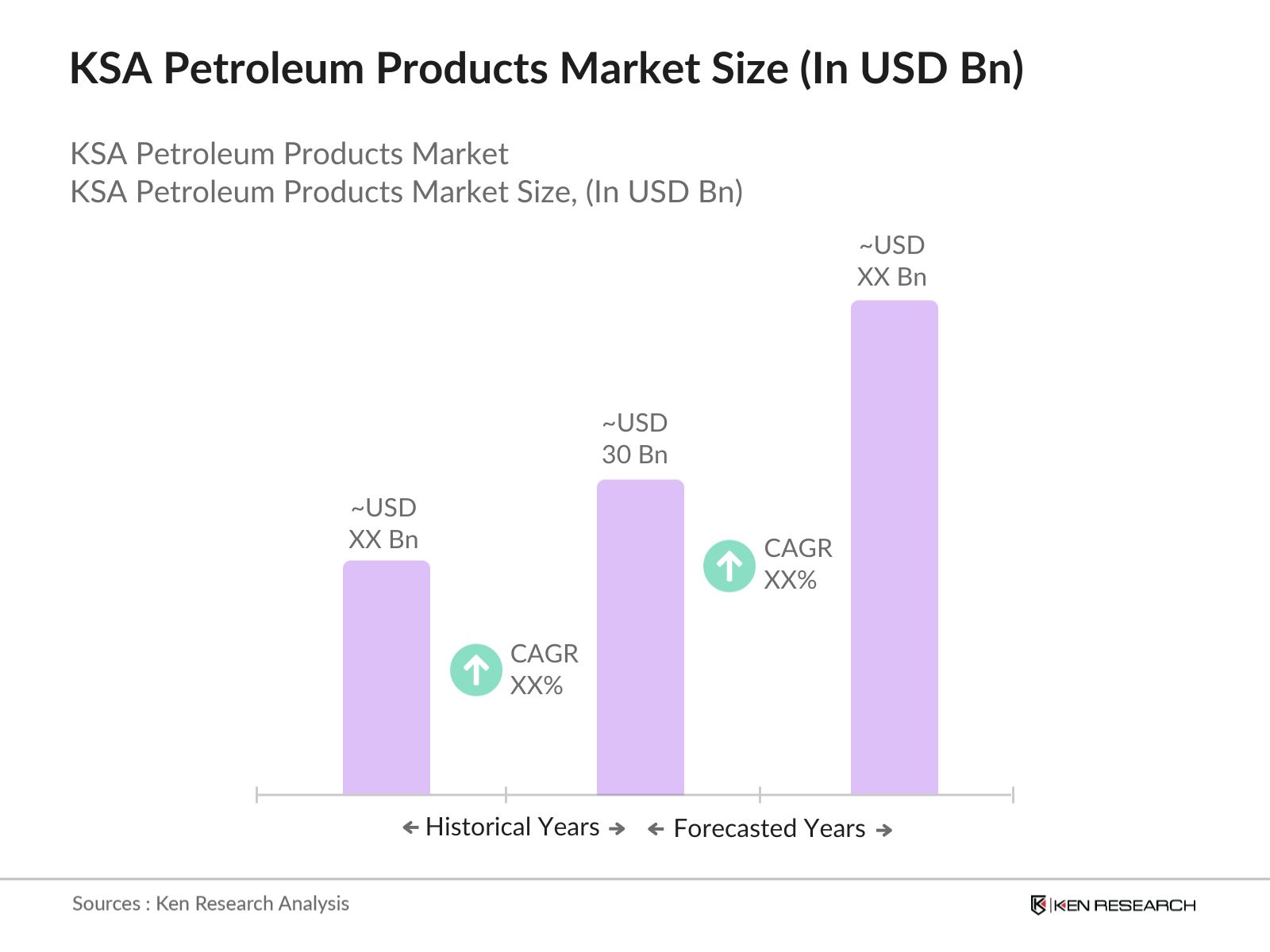
- The dominance of Riyadh and the Eastern Province in KSAs petroleum market is primarily due to the concentration of refineries, oil fields, and related infrastructure in these regions. These areas benefit from advanced facilities, ample workforce, and strategic access to international trade routes, enhancing their contribution to national and international petroleum distribution. Moreover, the Eastern Province's proximity to oil fields such as Ghawar aids in efficient extraction and refining processes, further positioning it as a leader in this market.
- In 2024, KSA restructured fuel subsidies, with government spending reaching $10 billion while aligning fuel prices closer to international benchmarks. This policy promotes efficient fuel usage and reduces fiscal strain on the national budget. The gradual elimination of subsidies also supports the diversification agenda by reallocating resources to other economic sectors, fostering sustainable growth within the energy market.
KSA Petroleum Products Market Segmentation
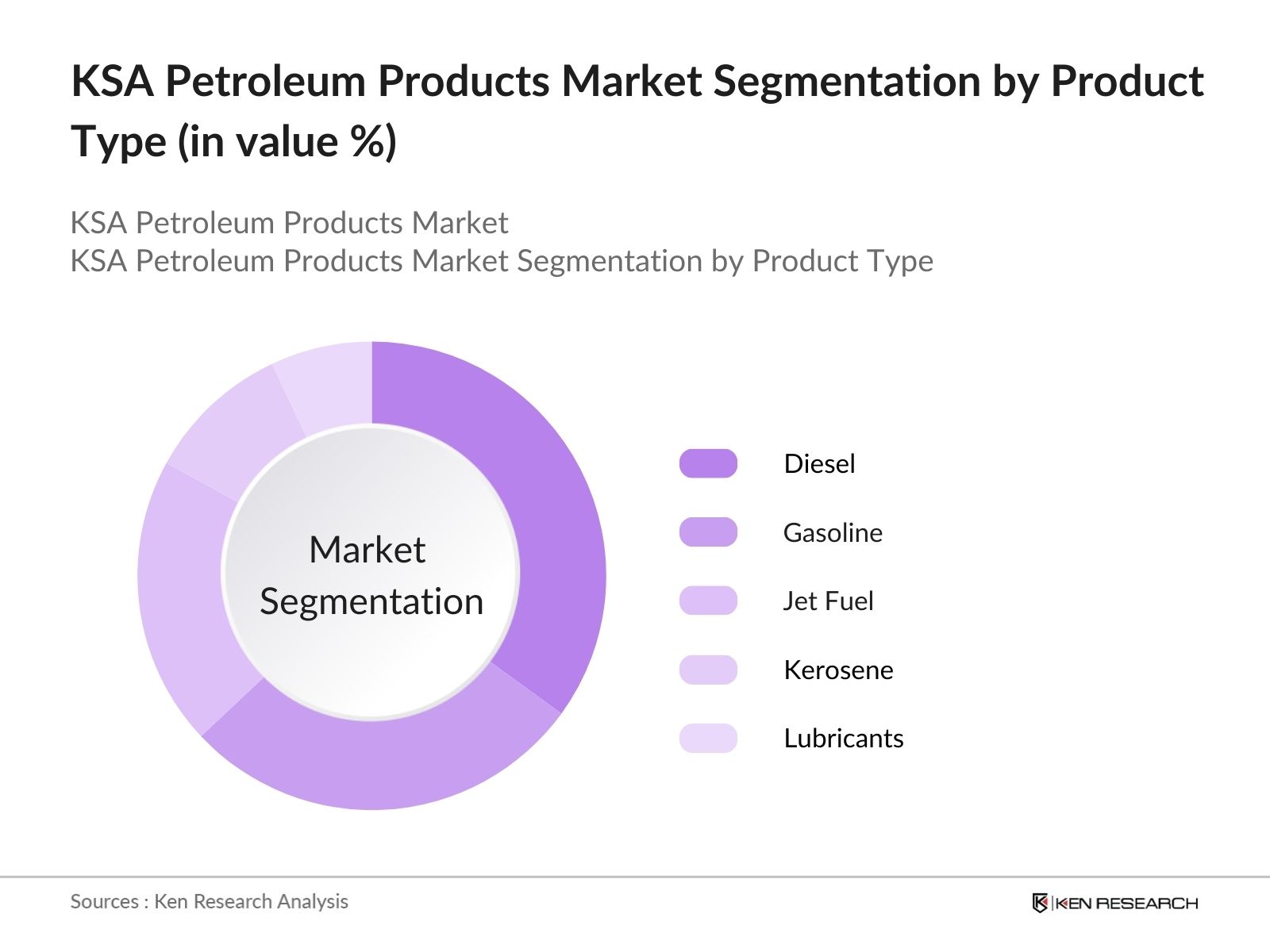
By Product Type: KSAs petroleum products market can be segmented into gasoline, diesel, jet fuel, kerosene, and lubricants. Diesel leads this segment due to its essential role in powering heavy-duty transportation and industrial machinery across the nation. The dominance of diesel stems from its high energy density and suitability for long-haul transportation, which is integral to the logistics and industrial sectors in KSA. The large-scale adoption of diesel in transportation and construction underpins its market share, especially in infrastructure projects associated with Vision 2030.
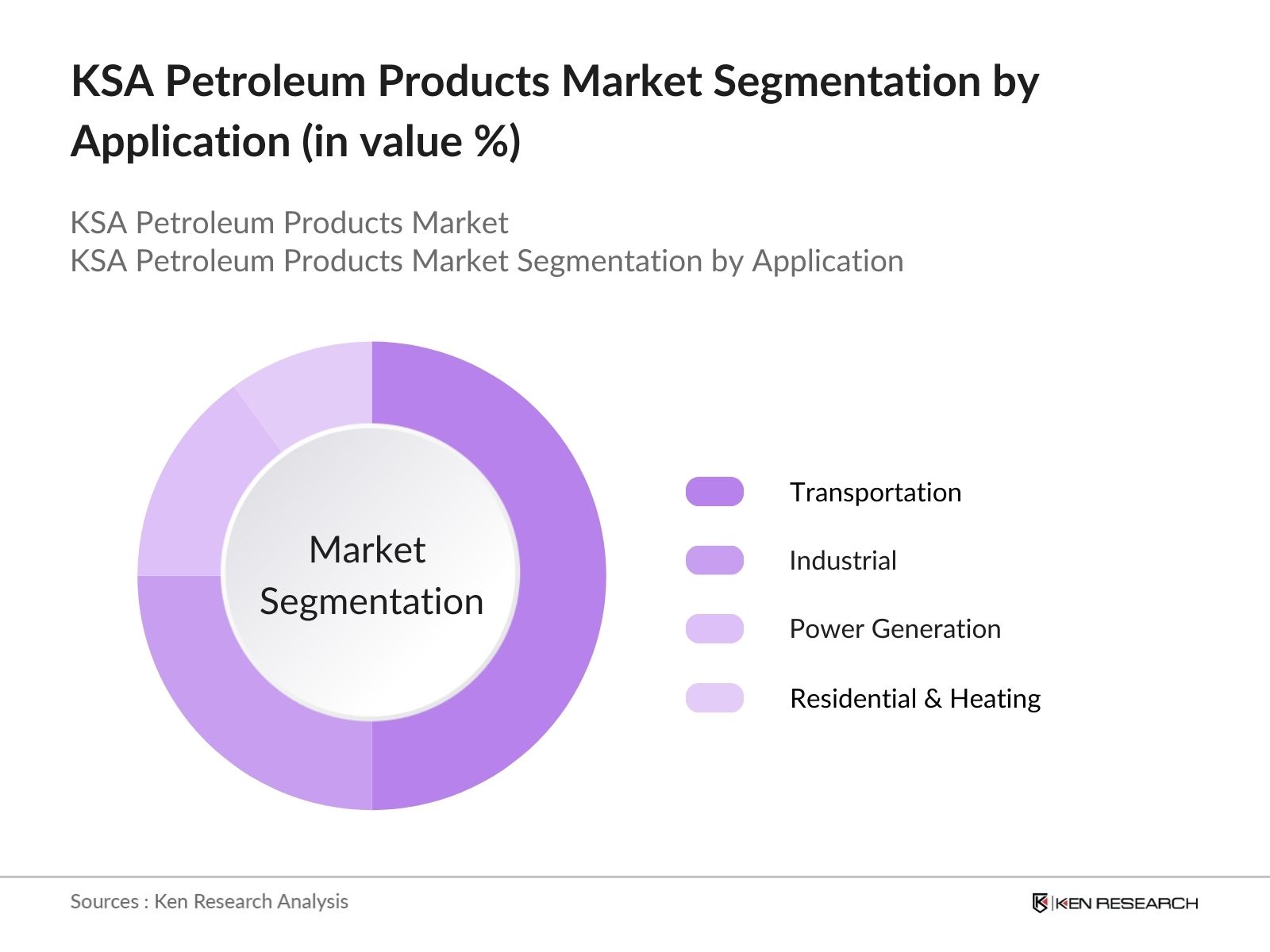
By Application: The market is further segmented by application into transportation, industrial manufacturing, power generation, and residential and commercial heating. Transportation stands as the leading segment within the application category, primarily because of KSAs extensive use of gasoline and diesel in automotive and heavy transportation vehicles. With a growing population and an expanding fleet of vehicles, transportation remains the largest consumer of petroleum products, further amplified by frequent long-distance commutes and the prevalence of personal vehicle usage across the country.
KSA Petroleum Products Market Competitive Landscape
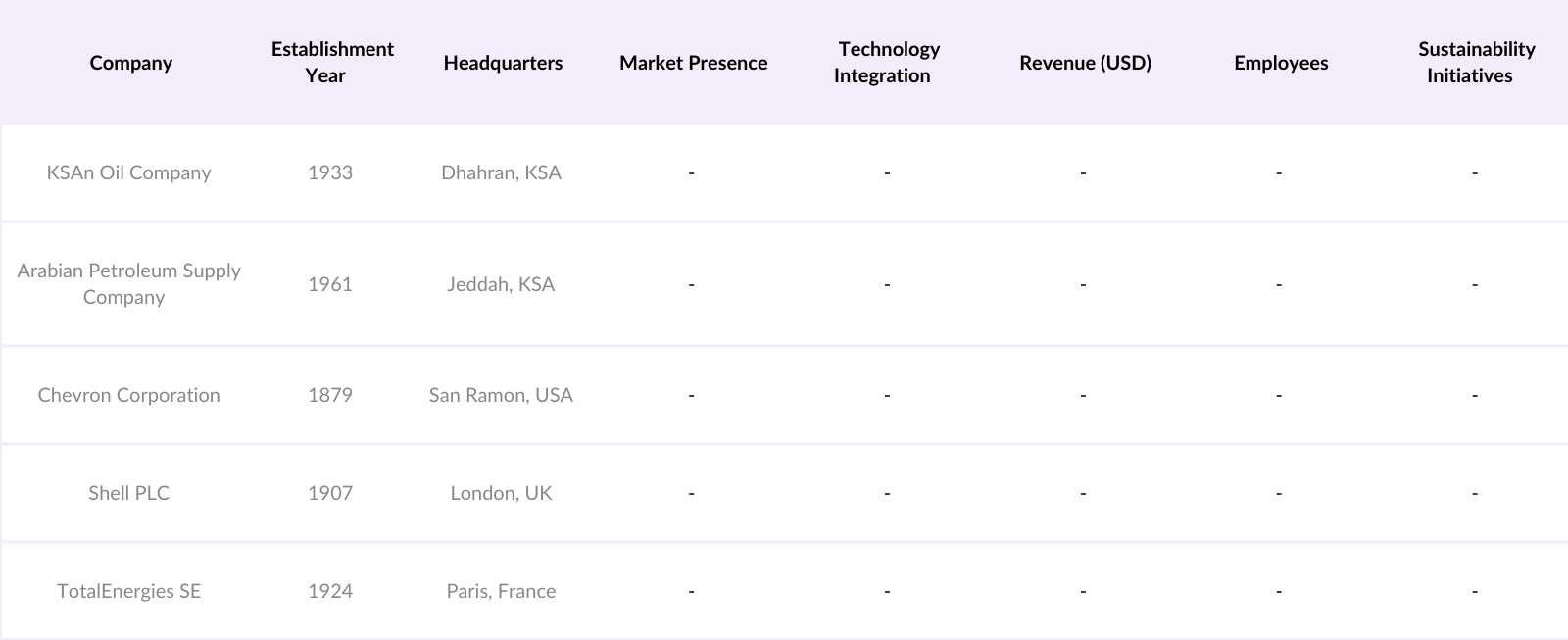
The KSA petroleum products market is dominated by a few key players, including Saudi Aramco, APSCO, and TotalEnergies SE. This consolidation is due to the large capital and infrastructure required to sustain refining and distribution, which smaller companies find challenging. Additionally, significant investment in technology and infrastructure enables these players to maintain operational efficiency and a competitive edge in both local and international markets.
KSA Petroleum Products Market Analysis
Growth Drivers
- Increasing Automotive Fuel Consumption: In KSA, the demand for automotive fuel has surged as the total vehicle stock reached over 12 million units in 2024, with an annual increase of 5% since 2021. This growth aligns with the Kingdom's expanding infrastructure projects, such as the Riyadh Metro and Jeddah Public Transport, which continue to drive automotive reliance across the country. The transportation sector remains one of the largest consumers of petroleum products, with approximately 22 billion liters of fuel consumed annually by motor vehicles. Such consumption underscores the ongoing demand for petroleum as the nation progresses towards urban expansion and modernization.
- Urbanization and Industrialization: KSA has witnessed substantial urbanization, with 84% of the population residing in urban areas by 2024, driving energy consumption. The government has invested nearly $12 billion annually in urban infrastructure, including residential and commercial construction, water, and power projects, which has intensified the demand for petroleum products for construction machinery, transportation, and production. This urban shift supports the Vision 2030 objective of creating vibrant cities, and it strengthens the petroleum demand across transport and construction sectors as urban centers grow.
- Strategic Global Role in Energy Supply: KSA continues to play a crucial role as a global energy supplier, producing 8.9 million barrels per day (bpd) in 2024, despite recent production cuts. The Kingdom's petroleum exports accounted for 73% of total exports, contributing to a trade surplus in energy exports valued at over $200 billion. KSAs unique geopolitical position and its OPEC+ alliance reinforce its influence over global energy prices, a factor pivotal to maintaining its dominant position in petroleum exports.
Challenges
- Volatile Global Oil Prices: KSAs petroleum sector is highly sensitive to global oil price fluctuations. In 2024, crude oil prices averaged $81 per barrel, with the potential for volatility due to geopolitical tensions and supply adjustments. This price sensitivity poses fiscal risks, as oil revenues contribute over 50% of KSA's national budget. Budget deficits emerged in the first half of 2024 as revenues declined due to reduced oil prices and export limitations, challenging fiscal stability and impacting petroleum investment confidence.
- Environmental Concerns and Regulations: KSA faces mounting regulatory pressure to reduce carbon emissions, with targets under Vision 2030 to reduce emissions by 278 million metric tons annually. Compliance with international standards has led to stricter environmental regulations on fuel production, incurring additional compliance costs. The shift towards cleaner energy has required an annual investment of around $10 billion in low-sulfur and environmentally friendly fuel technologies, raising operational costs across the petroleum sector.
KSA Petroleum Products Market Future Outlook
The KSA petroleum products market is projected to expand significantly, driven by continued industrial growth and infrastructure development under Vision 2030. The government's focus on diversifying energy sources and modernizing the economy, coupled with a high demand for transportation fuels, will support market growth. Additionally, advancements in refining technology and the exploration of sustainable fuel options are anticipated to foster a more robust and diversified market structure over the next five years.
Market Opportunities
- International Trade Agreements: KSA has signed recent trade agreements that foster petroleum export opportunities. In 2024, exports to Asia, particularly to China and Japan, comprised substantial portion of Saudi crude exports, reinforcing the Kingdoms trade relationships in East Asia. These trade relations enhance export stability, opening new markets and reducing dependency on volatile European markets. The Kingdoms participation in the Belt and Road Initiative further emphasizes its strategic role in global petroleum distribution
- Petrochemical Sector Expansion: KSA is advancing its petrochemical sector, which consumes approximately 15% of domestically produced crude. Recent expansions in petrochemical production have added significant value, with annual output exceeding $20 billion in refined products and polymers. The growth in petrochemicals is critical to Vision 2030's aim of transitioning from raw petroleum exports to high-value refined products, which strengthens KSA's market position in the global petrochemical industry.
Scope of the Report
|
Segment |
Sub-segments |
|
Product Type |
Gasoline Diesel Jet Fuel Kerosene Lubricants |
|
Application |
Transportation Industrial Manufacturing Power Generation Residential and Commercial Heating |
|
End User |
Automotive Marine and Aviation Petrochemical Industry Construction and Infrastructure |
|
Distribution Channel |
Direct Distribution Retail Stations Online Channels |
|
Region |
Riyadh Eastern Province Jeddah Makkah Others |
Products
Key Target Audience
Refineries and Oil Producers
Chemical Manufacturing Firms
Logistics and Transportation Companies
Infrastructure Development Firms
Energy Trading Firms
Environmental and Sustainability Organizations
Investors and Venture Capitalist Firms
Government and Regulatory Bodies (Saudi Energy Ministry, National Oil Regulatory Authority)
Companies
Players Mentioned in the Report
KSAn Oil Company (Saudi Aramco)
Arabian Petroleum Supply Company (APSCO)
Chevron Corporation
Shell PLC
TotalEnergies SE
Saudi International Petrochemical Company
Rabigh Refining & Petrochemical Co.
Gulf Chemicals & Industrial Oils Co.
Petromin Corporation
SAMREF
Table of Contents
1. KSA Petroleum Products Market Overview
1.1 Definition and Scope
1.2 Market Taxonomy
1.3 Market Growth Rate
1.4 Market Segmentation Overview
2. KSA Petroleum Products Market Size (USD Mn)
2.1 Historical Market Size
2.2 Year-On-Year Growth Analysis
2.3 Key Market Developments and Milestones
3. KSA Petroleum Products Market Analysis
3.1 Growth Drivers
3.1.1 Increasing Automotive Fuel Consumption (Transportation Demand)
3.1.2 Urbanization and Industrialization (Urban Expansion)
3.1.3 Strategic Global Role in Energy Supply (Geopolitical Influence)
3.1.4 Vision 2030 Impact on Domestic Demand (Economic Diversification)
3.2 Market Challenges
3.2.1 Volatile Global Oil Prices (Price Sensitivity)
3.2.2 Environmental Concerns and Regulations (Compliance Costs)
3.2.3 Growing Competition from Alternatives (Renewable Energy Adoption)
3.3 Opportunities
3.3.1 Investments in Refining Infrastructure (Capacity Expansion)
3.3.2 International Trade Agreements (Export Opportunities)
3.3.3 Petrochemical Sector Expansion (Value-Added Products)
3.4 Trends
3.4.1 Integration of Digital Technologies (Process Automation)
3.4.2 Shifts Toward Low-Sulfur Fuel Standards (Quality Compliance)
3.4.3 Transition to Renewable Fuels (Energy Sustainability)
3.5 Government Policies and Regulatory Framework
3.5.1 Fuel Subsidy Adjustments (Pricing Regulation)
3.5.2 Emission Control Standards (Environmental Compliance)
3.5.3 Domestic and Export Tariffs (Trade Policy)
3.6 SWOT Analysis
3.7 Industry Stakeholders Ecosystem
3.8 Porters Five Forces Analysis
3.9 Competition Ecosystem
4. KSA Petroleum Products Market Segmentation
4.1 By Product Type
4.1.1 Gasoline
4.1.2 Diesel
4.1.3 Jet Fuel
4.1.4 Kerosene
4.1.5 Lubricants
4.2 By Application
4.2.1 Transportation
4.2.2 Industrial Manufacturing
4.2.3 Power Generation
4.2.4 Residential and Commercial Heating
4.3 By End User
4.3.1 Automotive
4.3.2 Marine and Aviation
4.3.3 Petrochemical Industry
4.3.4 Construction and Infrastructure
4.4 By Distribution Channel
4.4.1 Direct Distribution
4.4.2 Retail Stations
4.4.3 Online Channels
4.5 By Region
4.5.1 Riyadh
4.5.2 Eastern Province
4.5.3 Jeddah
4.5.4 Makkah
4.5.5 Others
5. KSA Petroleum Products Market Competitive Analysis
5.1 Detailed Profiles of Major Companies
5.1.1 KSAn Oil Company (Saudi Aramco)
5.1.2 Arabian Petroleum Supply Company (APSCO)
5.1.3 Chevron Corporation
5.1.4 Shell PLC
5.1.5 TotalEnergies SE
5.1.6 Saudi International Petrochemical Company
5.1.7 Rabigh Refining & Petrochemical Co.
5.1.8 Gulf Chemicals & Industrial Oils Co.
5.1.9 Petromin Corporation
5.1.10 SAMREF
5.2 Cross Comparison Parameters (Production Capacity, Revenue, Geographical Reach, Product Portfolio, Strategic Alliances, Technological Innovation, Sustainability Initiatives, R&D Expenditure)
5.3 Market Share Analysis
5.4 Strategic Initiatives
5.5 Mergers and Acquisitions
5.6 Investment Analysis
5.7 Government Grants and Private Equity Investments
6. KSA Petroleum Products Market Regulatory Framework
6.1 Compliance with Environmental Standards
6.2 Licensing and Certification Requirements
6.3 Tariff and Subsidy Regulations
7. KSA Petroleum Products Future Market Size (USD Mn)
7.1 Future Market Size Projections
7.2 Key Drivers of Future Market Growth
8. KSA Petroleum Products Future Market Segmentation
8.1 By Product Type
8.2 By Application
8.3 By End User
8.4 By Distribution Channel
8.5 By Region
9. KSA Petroleum Products Market Analysts Recommendations
9.1 TAM/SAM/SOM Analysis
9.2 Strategic Growth Opportunities
9.3 Market Penetration and Expansion Strategies
9.4 White Space Analysis
Disclaimer Contact UsResearch Methodology
Step 1: Identification of Key Variables
In this initial phase, a comprehensive map is developed to identify primary market drivers and key participants within the KSA Petroleum Products Market. The goal is to define and categorize influential variables through secondary research and proprietary databases.
Step 2: Market Analysis and Construction
This step involves compiling data on historical and current market performance, focusing on supply chains, product pricing, and demand. This data is used to model the market dynamics and evaluate each segment's contribution to revenue.
Step 3: Hypothesis Validation and Expert Consultation
Market hypotheses are refined through expert interviews, capturing firsthand insights from industry professionals. These consultations are vital for validating preliminary findings and ensuring data reliability.
Step 4: Research Synthesis and Final Output
The final synthesis involves collating insights and data into a structured report format. Further cross-validation with industry experts and company data ensures a comprehensive analysis aligned with market realities.
Frequently Asked Questions
01. How big is the KSA Petroleum Products Market?
The KSA Petroleum Products Market is valued at USD 30 billion, driven by strong domestic and export demand across transportation, industrial, and energy sectors.
02. What challenges does the KSA Petroleum Products Market face?
Key challenges in KSA Petroleum Products Market include market volatility due to fluctuating global oil prices, increasing environmental concerns, and the regulatory shift towards cleaner energy alternatives.
03. Who are the major players in the KSA Petroleum Products Market?
Major players in KSA Petroleum Products Market include Saudi Aramco, APSCO, Chevron, Shell, and TotalEnergies, each leveraging significant resources and infrastructure to dominate both locally and internationally.
04. What drives growth in the KSA Petroleum Products Market?
KSA Petroleum Products Markets growth is driven by high energy demand for industrial and transportation applications, along with strategic infrastructure and refinery investments within the country.
Why Buy From Us?

What makes us stand out is that our consultants follows Robust, Refine and Result (RRR) methodology. i.e. Robust for clear definitions, approaches and sanity checking, Refine for differentiating respondents facts and opinions and Result for presenting data with story

We have set a benchmark in the industry by offering our clients with syndicated and customized market research reports featuring coverage of entire market as well as meticulous research and analyst insights.

While we don't replace traditional research, we flip the method upside down. Our dual approach of Top Bottom & Bottom Top ensures quality deliverable by not just verifying company fundamentals but also looking at the sector and macroeconomic factors.

With one step in the future, our research team constantly tries to show you the bigger picture. We help with some of the tough questions you may encounter along the way: How is the industry positioned? Best marketing channel? KPI's of competitors? By aligning every element, we help maximize success.

Our report gives you instant access to the answers and sources that other companies might choose to hide. We elaborate each steps of research methodology we have used and showcase you the sample size to earn your trust.

If you need any support, we are here! We pride ourselves on universe strength, data quality, and quick, friendly, and professional service.