















KSA Pharmaceutical Market Outlook to 2030
Region:Middle East
Author(s):Paribhasha Tiwari
Product Code:KROD3908
November 2024
96
About the Report
KSA Pharmaceutical Market Overview
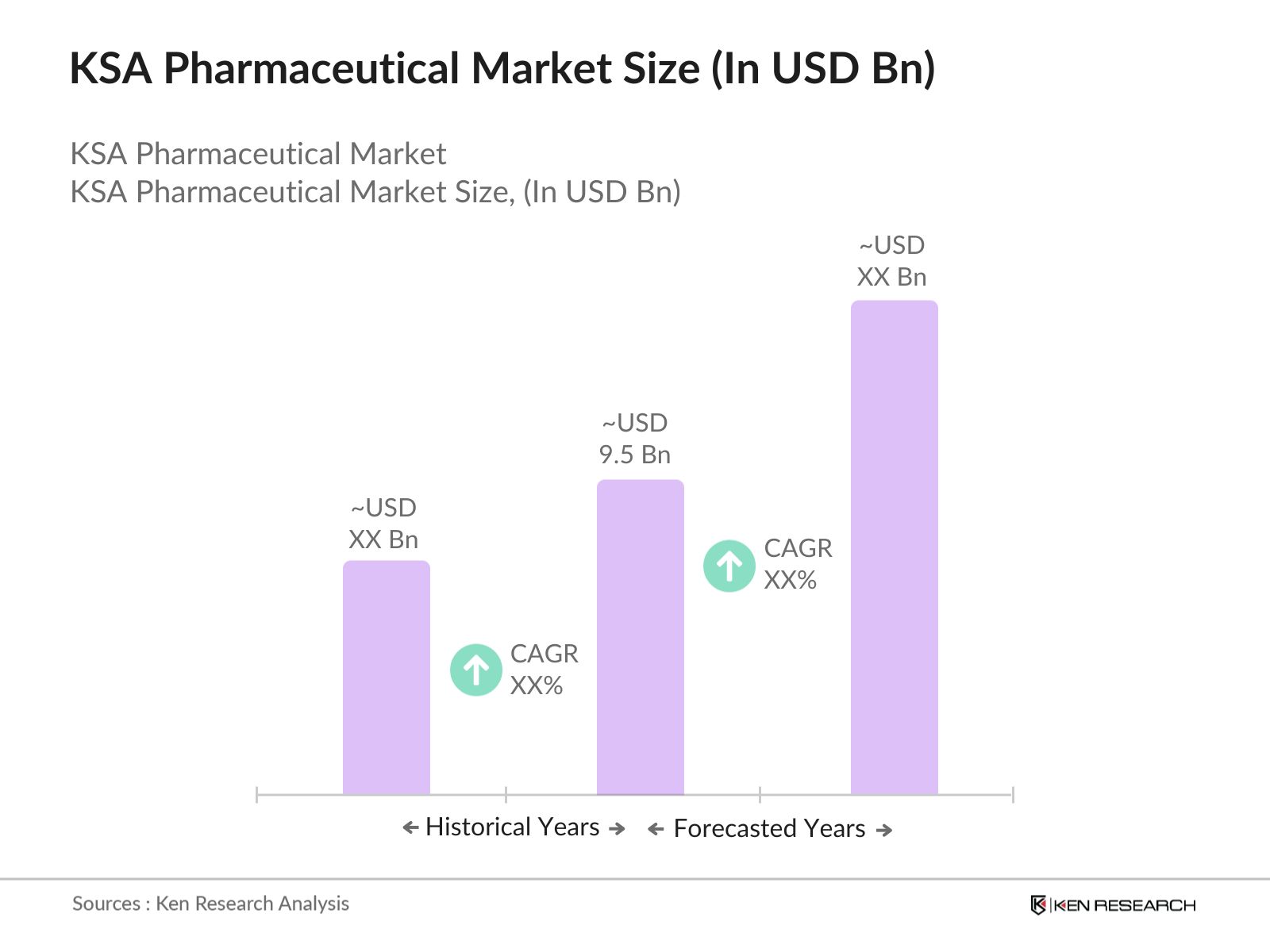
- The KSA pharmaceutical market is valued at USD 9.5 billion, based on a five-year historical analysis. This market is driven by increased government spending on healthcare, especially under the Saudi Vision 2030 program, which aims to transform the healthcare sector. The demand for pharmaceutical products is also fueled by a rising population, an increase in chronic diseases such as diabetes and cardiovascular conditions, and a shift towards localized production of pharmaceuticals.
- Major cities like Riyadh and Jeddah dominate the market due to their large populations, well-established healthcare infrastructure, and concentration of hospitals and clinics. Riyadh, being the capital, houses the largest number of pharmaceutical manufacturing facilities, making it the primary hub for pharmaceutical trade and development in the country. Jeddah, with its strategic location and access to the Red Sea, acts as a major gateway for imports and exports of pharmaceuticals.
- The Saudi government is actively promoting local pharmaceutical manufacturing to reduce reliance on imports, with a target to double domestic production from 20% to 40% by 2030. This includes attracting international companies to establish manufacturing facilities within the Kingdom, such as Pfizer, Novartis, and Sanofi.
KSA Pharmaceutical Market Segmentation
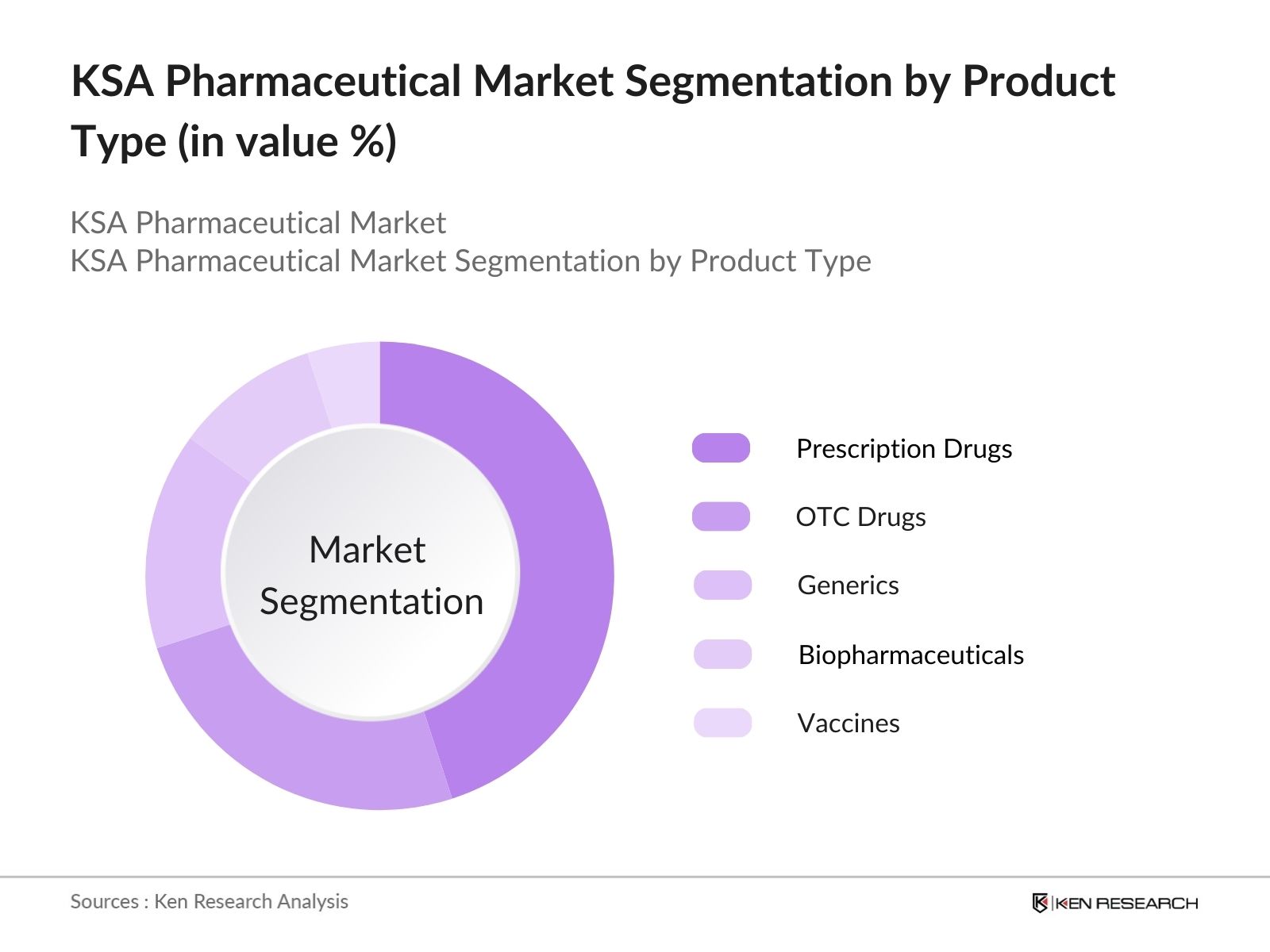
By Product Type: The KSA pharmaceutical market is segmented by product type into prescription drugs, over-the-counter (OTC) drugs, generics, biopharmaceuticals, and vaccines. Among these, prescription drugs have a dominant market share due to their strong demand for treating chronic diseases and lifestyle-related conditions such as hypertension and diabetes. Prescription drugs are also regulated more strictly, contributing to their reliability and widespread use. Local pharmaceutical companies are increasingly focusing on the production of these drugs in response to government incentives promoting local manufacturing.
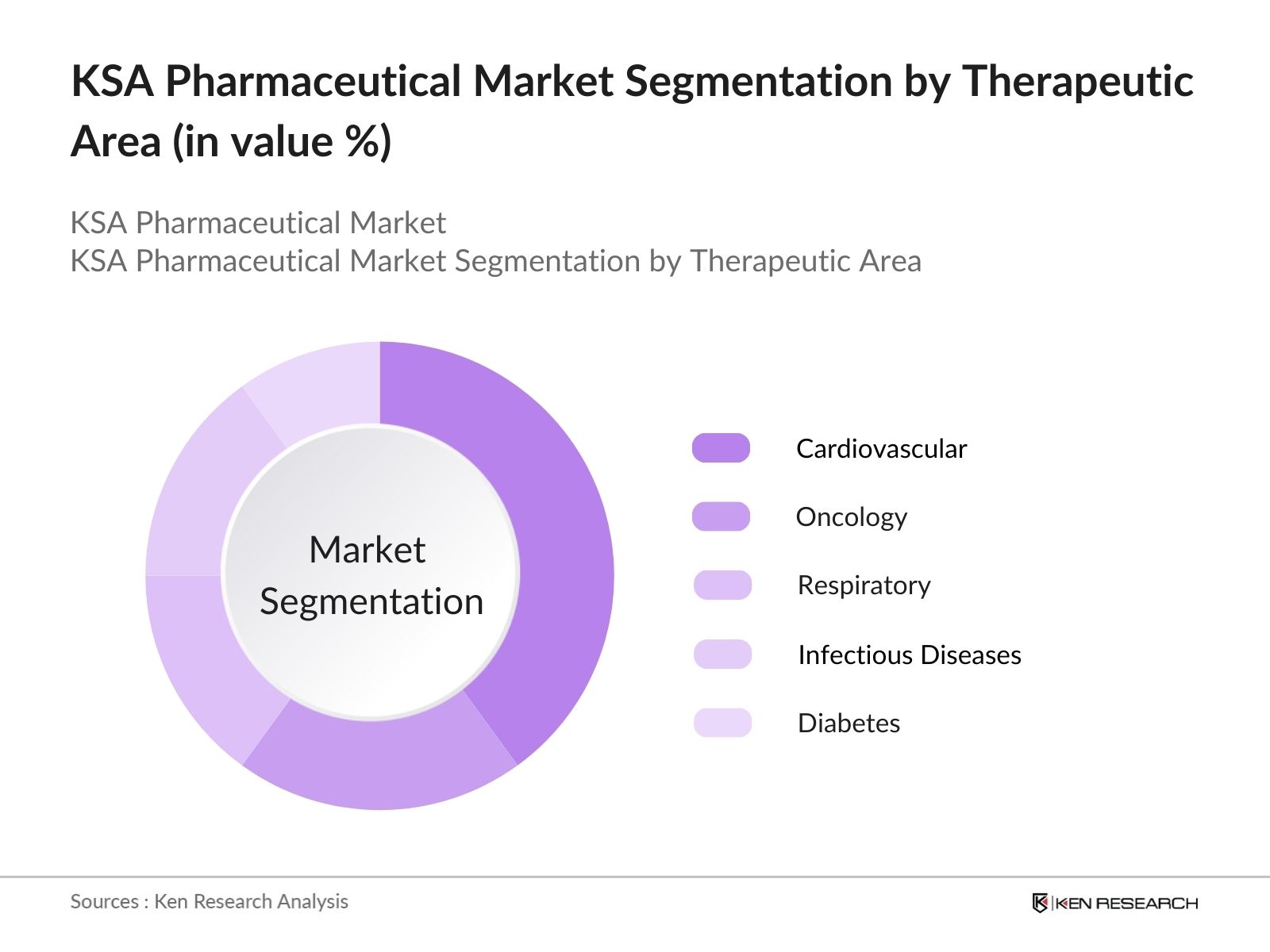
By Therapeutic Area: The market is also segmented by therapeutic area, including cardiovascular, oncology, respiratory, infectious diseases, and diabetes. Cardiovascular drugs dominate the therapeutic area due to the rising incidence of heart diseases in Saudi Arabia. Sedentary lifestyles, dietary changes, and increasing stress levels have significantly increased the demand for cardiovascular treatments. Furthermore, government policies aimed at improving public health by combating cardiovascular diseases contribute to this segments dominance.
KSA Pharmaceutical Market Competitive Landscape
The KSA pharmaceutical market is dominated by a combination of local manufacturers and global pharmaceutical giants. Companies are investing heavily in research and development, local production facilities, and strategic partnerships. The consolidation of key players highlights their influence on market trends and pricing strategies.
|
Company Name |
Established |
Headquarters |
No. of Employees |
R&D Investment |
Product Portfolio |
Market Share (2023) |
Local Manufacturing |
Therapeutic Focus |
|
Jamjoom Pharma |
1994 |
Jeddah |
- |
- |
- |
- |
- |
- |
|
SPIMACO |
1986 |
Riyadh |
- |
- |
- |
- |
- |
- |
|
Sanofi KSA |
1973 |
Riyadh |
- |
- |
- |
- |
- |
- |
|
GlaxoSmithKline KSA |
1956 |
Jeddah |
- |
- |
- |
- |
- |
- |
|
Pfizer Saudi Arabia |
1949 |
Riyadh |
- |
- |
- |
- |
- |
- |
KSA Pharmaceutical Market Analysis
Growth Drivers
- Rise in Non-Communicable Diseases (NCDs): The prevalence of non-communicable diseases (NCDs) such as diabetes, cardiovascular diseases, and cancer is significantly increasing in Saudi Arabia, driven by factors like lifestyle changes and urbanization. According to the World Health Organization, over 70% of deaths in Saudi Arabia are attributable to NCDs, with diabetes affecting over 7 million people as of 2023. This surge in NCDs is increasing the demand for pharmaceutical interventions, particularly chronic disease management drugs, pushing the growth of the local pharmaceutical market. The rising healthcare needs due to NCDs require enhanced drug accessibility and local manufacturing capabilities.
- Saudi Vision 2030 Healthcare Investments: Saudi Arabias Vision 2030 emphasizes strengthening the healthcare system, with an investment of over USD 66 billion in healthcare infrastructure and services, as stated by the Ministry of Health. The government is driving this through public-private partnerships, with a focus on pharmaceuticals, biotechnology, and health technology. These investments have led to an increase in healthcare facilities, boosting the demand for pharmaceutical products. The significant expansion of healthcare facilities under Vision 2030 will not only improve healthcare delivery but also increase local production capacities and innovation in the pharmaceutical industry.
- Increase in Demand for Generic Drugs: Saudi Arabia has seen a surge in the demand for generic drugs due to government-led cost-saving initiatives and an increase in healthcare access. The General Authority for Statistics in Saudi Arabia reported that the per capita healthcare expenditure was USD 1,475 in 2022. With rising healthcare costs, the governments push for affordable medications has led to an increased preference for generics, which constitute a growing segment in the pharmaceutical market. The development of local generic drug manufacturing also supports the growth of this segment, particularly in chronic disease treatment.
Market Challenges
- Stringent Government Regulations: The pharmaceutical sector in Saudi Arabia faces strict regulatory requirements enforced by the Saudi Food and Drug Authority (SFDA). These regulations ensure the safety and efficacy of pharmaceutical products but often lead to long approval timelines for new drugs. In 2023, the SFDA implemented new regulations requiring extensive clinical trial data for drug approval, which has slowed down the introduction of new products into the market. This has posed a challenge, particularly for foreign pharmaceutical companies looking to enter the market, limiting the speed at which new treatments become available to patients.
- High R&D Costs: The pharmaceutical industry in Saudi Arabia faces high research and development (R&D) costs, particularly in biopharmaceuticals and complex therapeutics. According to the Saudi General Authority for Statistics, R&D expenditures in healthcare accounted for over USD 4.2 billion in 2023. These high costs are a challenge for local manufacturers, limiting their ability to innovate and develop new pharmaceutical products. Additionally, international pharmaceutical companies face similar cost barriers in establishing local R&D facilities. The high financial burden hinders the rapid growth of R&D activities, which is essential for the development of advanced medicines in the Kingdom.
KSA Pharmaceutical Market Future Outlook
Over the next five years, the KSA pharmaceutical market is expected to show steady growth driven by the government's push towards increasing local production capacity and promoting research in biotechnology and biopharmaceuticals. The Saudi Vision 2030 initiative will continue to play a pivotal role in shaping the healthcare sector by investing in healthcare infrastructure, encouraging partnerships between local and international pharmaceutical companies, and supporting technological advancements in drug manufacturing and distribution. The focus on non-communicable diseases, the growing elderly population, and the increased need for vaccines and biologics will further propel the market.
Market Opportunities
- Expansion of Biopharmaceuticals: Biopharmaceuticals are becoming an increasingly important segment in Saudi Arabias pharmaceutical market, with strong government backing for local production. The Saudi Industrial Development Fund allocated over USD 2 billion in 2023 to boost biotechnology investments. This presents a significant growth opportunity as the global shift towards biopharmaceuticals, including monoclonal antibodies and gene therapies, aligns with the Kingdoms focus on healthcare innovation. Saudi Arabia is establishing partnerships with global biotechnology firms to expand its biopharmaceutical production capacity, offering a competitive edge in the Middle East.
- Adoption of Digital Health and Telemedicine: The adoption of digital health and telemedicine is rapidly transforming the healthcare landscape in Saudi Arabia, creating opportunities for pharmaceutical companies. In 2023, the Ministry of Health launched a USD 5 billion telemedicine initiative, expanding healthcare access in rural areas. This growing use of digital platforms enhances pharmaceutical distribution, allowing for easier access to medications and consultations.
Scope of the Report
|
By Product Type |
Prescription Drugs OTC Drugs Generics Biopharmaceuticals Vaccines |
|
By Therapeutic Area |
Cardiovascular Oncology Respiratory Infectious Diseases Diabetes |
|
By Distribution Channel |
Hospital Pharmacies Retail Pharmacies E-Pharmacies Direct Purchase |
|
By Form |
Tablets Capsules Injections Liquids Topical |
|
By Region |
Riyadh Jeddah Dammam Al Khobar Mecca |
Products
Key Target Audience
Pharmaceutical Manufacturers
Government and Regulatory Bodies (Saudi Food and Drug Authority)
Healthcare Providers (Hospitals, Clinics, Pharmacies)
Investors and Venture Capitalist Firms
Medical Research Institutions
International Pharmaceutical Companies
Biopharmaceutical Developers
Distributors and Wholesalers of Pharmaceuticals
Companies
Players mentioned in the report:
Jamjoom Pharma
SPIMACO
GlaxoSmithKline KSA
Sanofi KSA
Pfizer Saudi Arabia
AstraZeneca Saudi Arabia
Tabuk Pharmaceuticals
Abbott Laboratories
Hikma Pharmaceuticals
Novo Nordisk Saudi Arabia
Johnson & Johnson Saudi Arabia
Bayer Middle East
Merck KGaA
Roche Saudi Arabia
Al Jomaih Bottling Plants Pharmaceuticals
Table of Contents
1. KSA Pharmaceutical Market Overview
1.1. Definition and Scope
1.2. Market Taxonomy
1.3. Key Pharmaceutical Developments in KSA
1.4. Market Segmentation Overview
2. KSA Pharmaceutical Market Size (In USD Bn)
2.1. Historical Market Size
2.2. Year-On-Year Growth Analysis
2.3. Impact of Regulatory Reforms
2.4. Major Market Milestones
3.KSA Pharmaceutical Market Analysis
3.1.Growth Drivers
3.1.1.Rise in Non-Communicable Diseases(NCDs)
3.1.2.Saudi Vision 2030 Healthcare Investments
3.1.3.Increase in Demand for Generic Drugs
3.1.4.Growing Medical Tourism in KSA
3.2.Market Challenges
3.2.1.Stringent Government Regulations
3.2.2.High R&D Costs
3.2.3.Limited Local Manufacturing Capabilities
3.3.Opportunities
3.3.1.Expansion of Biopharmaceuticals
3.3.2.Adoptionof Digital Health and Telemedicine
3.3.3.International Collaborations and Partnerships
3.4.Trends
3.4.1.Growth of E-Pharmacies
3.4.2.Rise in Personalized Medicine
3.4.3.Integration of ArtificialIntelligence(AI) in Drug Discovery
3.5.Regulatory Landscape
3.5.1.Saudi Food and Drug Authority(SFDA) Regulations
3.5.2.Pricing Control and Drug Approvals
3.5.3.Compliance with Global Good Manufacturing Practices (GMP)
3.6.SWOT Analysis
3.7.Porters Five Forces
3.8.Value Chain Analysis
3.9.Competitive Ecosystem
4.KSA Pharmaceutical Market Segmentation
4.1.By Product Type (InValue%)
4.1.1.Prescription Drugs
4.1.2.Over-the-Counter (OTC) Drugs
4.1.3.Generics
4.1.4.Biopharmaceuticals
4.1.5.Vaccines
4.2.By Therapeutic Area (InValue%)
4.2.1.Cardiovascular
4.2.2.Oncology
4.2.3.Respiratory
4.2.4.InfectiousDiseases
4.2.5.Diabetes
4.3.By Distribution Channel (In Value%)
4.3.1.Hospital Pharmacies
4.3.2.Retail Pharmacies
4.3.3.E-Pharmacies
4.3.4.Direct Purchase
4.4.By Dosage Form (In Value%)
4.4.1.Tablets
4.4.2.Capsules
4.4.3.Injections
4.4.4.Liquids
4.4.5.Topical
4.5.By Region (In Value%)
4.5.1.Riyadh
4.5.2.Jeddah
4.5.3.Dammam
4.5.4.Mecca
4.5.5.Medina
5. KSA Pharmaceutical Market Competitive Analysis
5.1.Detailed Profiles of Major Companies
5.1.1.Jamjoom Pharma
5.1.2.Saudi Pharmaceutical Industries & Medical Appliances Corporation (SPIMACO)
5.1.3.Glaxo SmithK line KSA
5.1.4.Sanofi Saudi Arabia
5.1.5.Pfizer Saudi Arabia
5.1.6.Tabuk Pharmaceuticals
5.1.7.Abbott Laboratories
5.1.8.Astra Zeneca Saudi Arabia
5.1.9.Hikma Pharmaceuticals
5.1.10.Novo Nordisk Saudi Arabia
5.1.11.Johnson&Johnson Saudi Arabia
5.1.12.Bayer Middle East
5.1.13.Merck KGaA
5.1.14.Roche Saudi Arabia
5.1.15.Al Jomaih Bottling Plants Pharmaceuticals
5.2. Cross Comparison Parameters (No. of Employees, Headquarters, Revenue, Product Offerings, Therapeutic Area Focus, R&D Spending, Market Share, Production Capacity)
5.3. Market Share Analysis
5.4. Strategic Initiatives (Joint Ventures, Partnerships, Licensing Agreements)
5.5. Mergers and Acquisitions
5.6. Investment Analysis (Private Equity, Venture Capital)
5.7. Government Funding and Support Initiatives
5.8. Innovations in Drug Manufacturing
6. KSA Pharmaceutical Market Regulatory Framework
6.1. Saudi Food and Drug Authority (SFDA) Compliance
6.2. Patent Laws and Intellectual Property Protection
6.3. Import and Export Regulations for Pharmaceuticals
6.4. Drug Approval Process
6.5. Market Access Requirements
7. KSA Pharmaceutical Future Market Size (In USD Bn)
7.1. Projected Market Size
7.2. Key Factors Driving Future Growth
8. KSA Pharmaceutical Future Market Segmentation
8.1. By Product Type (In Value %)
8.2. By Therapeutic Area (In Value %)
8.3. By Distribution Channel (In Value %)
8.4. By Dosage Form (In Value %)
8.5. By Region (In Value %)
9. KSA Pharmaceutical Market Analysts Recommendations
9.1. TAM/SAM/SOM Analysis
9.2. R&D Investment Strategies
9.3. Target Market Opportunities in Emerging Therapeutic Areas
9.4. White Space Opportunities and Unmet Medical Needs
Research Methodology
Step 1: Identification of Key Variables
The initial phase involves constructing an ecosystem map of all stakeholders in the KSA Pharmaceutical Market. Extensive desk research, including secondary and proprietary databases, will be utilized to gather industry-level information. Key variables such as market drivers, constraints, and product types will be identified.
Step 2: Market Analysis and Construction
In this phase, we compile and analyze historical data related to market penetration and therapeutic area-specific revenue generation. This analysis will include assessing the ratio of local manufacturers to global players and understanding the contribution of these players to the overall market.
Step 3: Hypothesis Validation and Expert Consultation
Market hypotheses will be developed based on initial analysis and validated through in-depth interviews with industry experts, including pharmaceutical company executives and healthcare professionals. These consultations will provide critical financial and operational insights.
Step 4: Research Synthesis and Final Output
The final stage involves synthesizing the insights gathered and cross-verifying the results with industry experts and pharmaceutical companies. This process ensures an accurate, comprehensive, and reliable analysis of the KSA Pharmaceutical Market.
Frequently Asked Questions
01. How big is the KSA Pharmaceutical Market?
The KSA pharmaceutical market is valued at USD 9.5 billion, driven by increasing demand for prescription drugs, government healthcare initiatives, and rising chronic diseases like diabetes and cardiovascular conditions.
02. What are the challenges in the KSA Pharmaceutical Market?
The market faces challenges such as stringent regulations by the Saudi Food and Drug Authority, high R&D costs, and the limited capacity of local manufacturing units to produce specialized drugs.
03. Who are the major players in the KSA Pharmaceutical Market?
Key players in the KSA pharmaceutical market include Jamjoom Pharma, SPIMACO, Sanofi KSA, Pfizer Saudi Arabia, and GlaxoSmithKline KSA. These companies dominate due to their extensive product portfolios and strong R&D investments.
04. What are the growth drivers of the KSA Pharmaceutical Market?
Growth drivers include increasing healthcare expenditure under Saudi Vision 2030, the rising prevalence of non-communicable diseases, and government policies promoting local manufacturing of pharmaceuticals.
Why Buy From Us?

What makes us stand out is that our consultants follows Robust, Refine and Result (RRR) methodology. i.e. Robust for clear definitions, approaches and sanity checking, Refine for differentiating respondents facts and opinions and Result for presenting data with story

We have set a benchmark in the industry by offering our clients with syndicated and customized market research reports featuring coverage of entire market as well as meticulous research and analyst insights.

While we don't replace traditional research, we flip the method upside down. Our dual approach of Top Bottom & Bottom Top ensures quality deliverable by not just verifying company fundamentals but also looking at the sector and macroeconomic factors.

With one step in the future, our research team constantly tries to show you the bigger picture. We help with some of the tough questions you may encounter along the way: How is the industry positioned? Best marketing channel? KPI's of competitors? By aligning every element, we help maximize success.

Our report gives you instant access to the answers and sources that other companies might choose to hide. We elaborate each steps of research methodology we have used and showcase you the sample size to earn your trust.

If you need any support, we are here! We pride ourselves on universe strength, data quality, and quick, friendly, and professional service.