















KSA Prefabricated Buildings Market Outlook to 2030
Region:Middle East
Author(s):Vijay Kumar
Product Code:KROD9732
November 2024
93
About the Report
KSA Prefabricated Buildings Market Overview
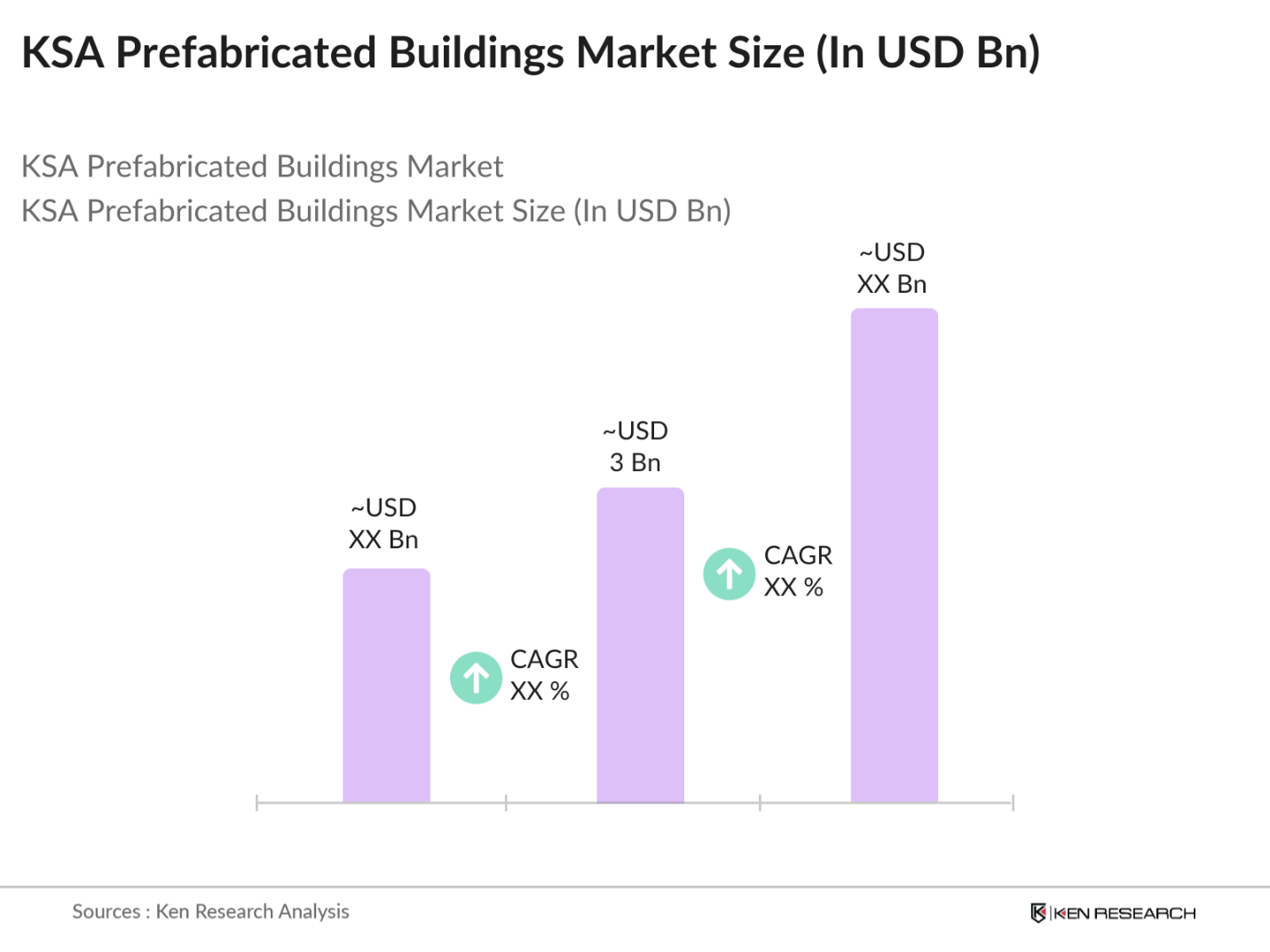
- The KSA Prefabricated Buildings market is valued at USD 3 billion, based on a five-year historical analysis. This market is primarily driven by a combination of rapid urbanization, significant infrastructure investment, and the growing need for cost-effective, efficient construction solutions. Saudi Arabia's Vision 2030 initiative supports this demand by prioritizing advancements in housing and infrastructure sectors. Prefabricated buildings, with their faster construction timelines and reduced labor requirements, are increasingly favored in meeting the high demand for residential, commercial, and industrial developments, particularly in cities like Riyadh and Jeddah.
- Riyadh and Jeddah lead in the adoption of prefabricated buildings due to urbanization and the concentration of infrastructure projects. Riyadh, the capital, is a focal point for economic and administrative developments, while Jeddahs strategic location as a major port city supports a growing demand for industrial and commercial prefabricated structures.
- Saudi Arabias Ministry of Labor mandates comprehensive safety protocols for prefab construction sites. Updated regulations focus on reducing workplace accidents, with inspections ensuring that prefab assembly adheres to national safety standards. Training programs are also in place to educate workers on safety, critical to minimizing accident rates as prefabrication becomes more widespread.
KSA Prefabricated Buildings Market Segmentation
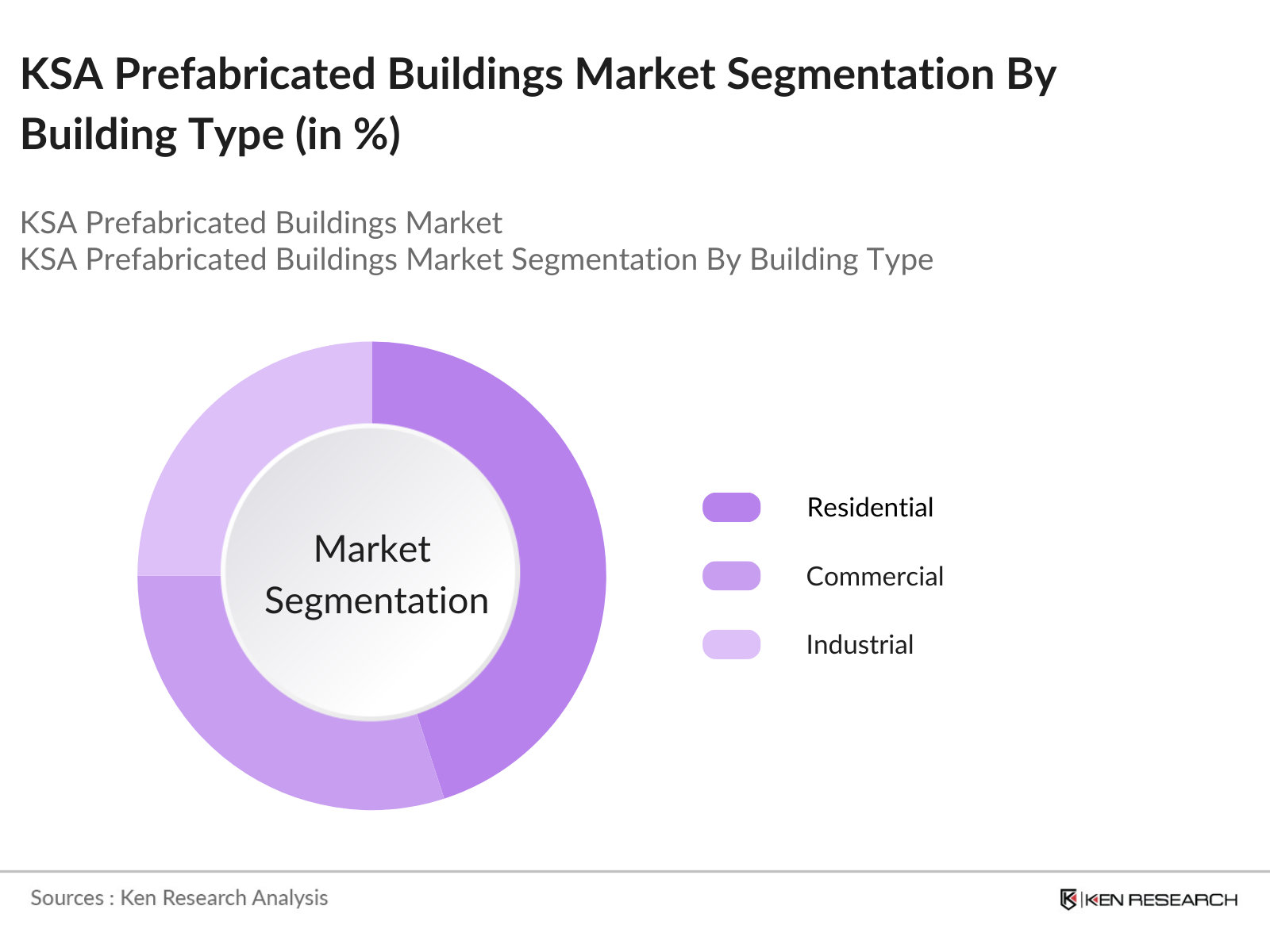
By Building Type: The KSA prefabricated buildings market is segmented by building type into residential, commercial, and industrial structures. Currently, the residential segment holds the largest market share within the prefabricated building type category. This dominance is largely due to the governments substantial investment in affordable housing projects, particularly to cater to the growing young population and urban migration trends. Additionally, the efficiency and lower costs associated with prefabrication meet the demand for faster construction cycles in the residential sector.
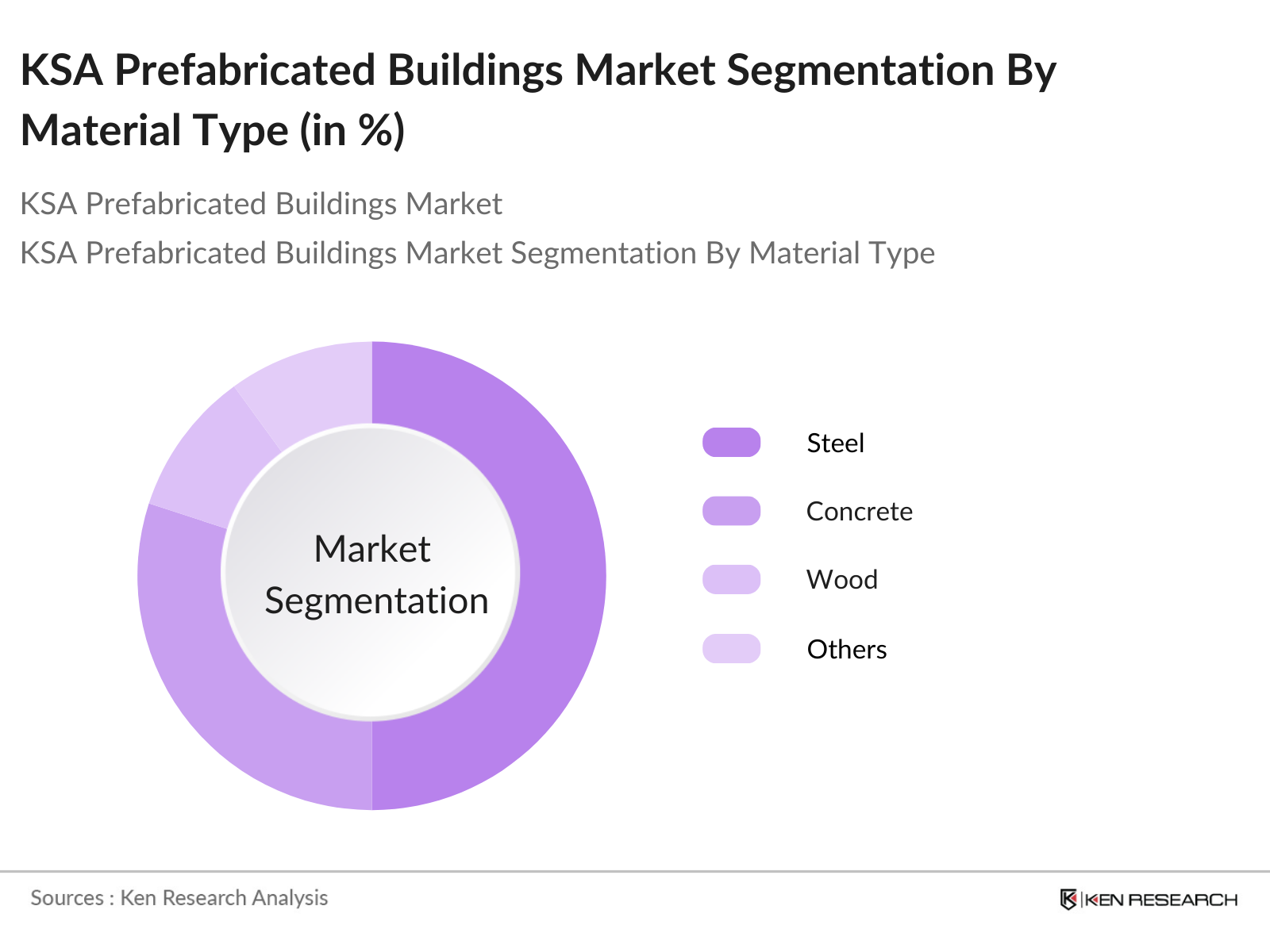
By Material Type: In the KSA prefabricated buildings market, the material type segmentation includes steel, concrete, wood, and other materials. Steel-based prefabricated structures command a dominant share within this category, driven by their durability, resistance to extreme weather, and lower maintenance needs. Saudi Arabias climate demands materials that can withstand high temperatures, and steels resilience and cost-efficiency make it a preferred choice for construction in both urban and rural areas.
KSA Prefabricated Buildings Market Competitive Landscape
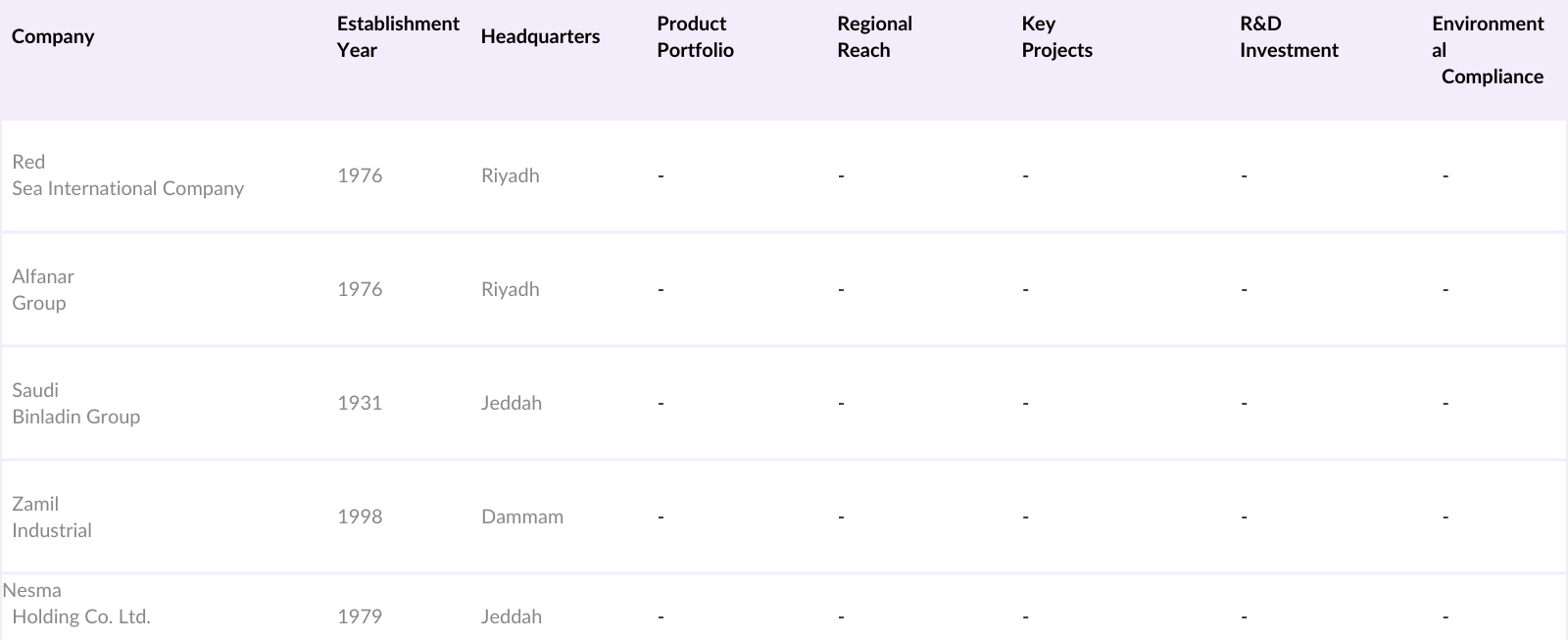
The KSA prefabricated buildings market is dominated by key players, including prominent local and international companies that bring unique competitive advantages to the market, such as extensive distribution networks and innovative product offerings. This consolidation highlights the significant influence of these established companies on the market.
KSA Prefabricated Buildings Industry Analysis
Growth Drivers
- Urbanization and Population Growth: Saudi Arabias urbanization rate has been growing steadily, reaching over 84% in recent years. Driven by both a high population growth rate (now over 36 million) and concentrated urban development, the demand for prefabricated buildings in urban areas is substantial. Riyadhs population alone has exceeded 8 million, intensifying the need for rapid and scalable housing solutions in urban centers.
- Infrastructure Investments (Public and Private): Saudi Arabia has significantly expanded infrastructure investment, dedicating more than $300 billion towards public infrastructure projects across housing, education, and healthcare. This increase in spending reflects the governments goals under Vision 2030 to diversify away from oil and foster sectors such as real estate and industrial development. The use of prefabricated buildings supports efficient project timelines and cost-effectiveness, particularly in new economic cities like Neom and Red Sea Global, designed to host millions.
- Technological Advancements in Prefabrication: Technological advancements, including the integration of robotics and automation in prefabrication, have reduced construction timelines by 50% on average in Saudi Arabia. The deployment of advanced techniques in modular construction enhances quality control and allows greater customization in large-scale housing and industrial projects. The National Industrial Development and Logistics Program (NIDLP) encourages innovation in construction technology, supporting prefabrication growth and efficiency in addressing mass-scale building needs.
Market Challenges
- High Initial Capital Requirements: While prefabrication reduces long-term operational costs, the initial capital requirement remains high, posing a challenge for many developers. With average project costs for large-scale prefabrication ranging between $5 million to $10 million, smaller developers struggle to enter the market. This high upfront cost barrier is partly due to the need for specialized equipment and workforce training in advanced prefabrication techniques, adding financial pressure.
- Skilled Labor Shortage: Saudi Arabias construction sector faces a skilled labor shortage, particularly in specialized prefabrication techniques. Only around 15% of the local labor force is trained in modular and prefabrication methods, limiting the capacity to meet large-scale demands. The government has launched vocational programs in 2024 to train over 20,000 workers by 2025, aiming to alleviate this shortage but highlighting a current capacity constraint in delivering prefabricated solutions at scale.
KSA Prefabricated Buildings Market Future Outlook
Over the next five years, the KSA prefabricated buildings market is expected to witness robust growth, driven by a combination of public sector investments, sustainable building practices, and increasing demand for affordable housing. The shift towards digitalization, coupled with advancements in building technology and materials, is anticipated to further accelerate market expansion, making prefabricated structures an integral part of the countrys construction landscape.
Market Opportunities
- Expansion into Affordable Housing: Saudi Arabia has a demand for over 1 million affordable housing units, particularly in urban areas. Prefabricated buildings present an opportunity to rapidly scale housing projects while maintaining cost efficiency. Vision 2030s focus on affordable housing and government initiatives to supply affordable homes to 60% of families makes prefabrication a key strategy in meeting this housing demand.
- Green and Sustainable Building Materials Adoption: With Saudi Arabias commitment to reducing its carbon footprint by 2030, there is a rising demand for eco-friendly building materials, which aligns with the modular building approach. Prefabricated buildings can incorporate sustainable materials like recycled steel and green-certified wood, reducing overall environmental impact. This aligns with Saudi Green Initiative goals to cut construction emissions by 15% by 2030, making prefabrication an attractive option for developers focusing on sustainability.
Scope of the Report
|
Building Type |
Residential Commercial Industrial |
|
Construction Type |
Permanent Temporary |
|
Material |
Steel Concrete Wood Others |
|
Application |
New Buildings Renovations |
|
Region |
Riyadh Jeddah Dammam Other Regions |
Products
Key Target Audience
Real Estate Developers and Contractors
Construction Material Suppliers
Government and Regulatory Bodies (e.g., Ministry of Housing, Saudi Standards, Metrology, and Quality Organization)
Investment and Venture Capitalist Firms
Industrial Infrastructure Providers
Residential Building Management Firms
Technology Providers for Digital Integration
Environmental and Sustainability Agencies
Companies
Players Mentioned in the Report
Red Sea International Company
Alfanar Group
Saudi Binladin Group
Al Arrab Contracting Company
Rabiah & Nassar Group
Zamil Industrial
Saudi Services for Electro-Mechanic Works Co. Ltd.
Saudi Oger Ltd.
Rezayat Group
Arabian Construction Company
Table of Contents
1. KSA Prefabricated Buildings Market Overview
1.1 Definition and Scope
1.2 Market Taxonomy
1.3 Market Growth Rate
1.4 Market Segmentation Overview
2. KSA Prefabricated Buildings Market Size (In USD Bn)
2.1 Historical Market Size
2.2 Year-On-Year Growth Analysis
2.3 Key Market Developments and Milestones
3. KSA Prefabricated Buildings Market Analysis
3.1 Growth Drivers
3.1.1 Urbanization and Population Growth
3.1.2 Infrastructure Investments (Public and Private)
3.1.3 Government Support and Regulations
3.1.4 Technological Advancements in Prefabrication
3.2 Market Challenges
3.2.1 High Initial Capital Requirements
3.2.2 Skilled Labor Shortage
3.2.3 Quality Control and Standardization Issues
3.3 Opportunities
3.3.1 Expansion into Affordable Housing
3.3.2 Green and Sustainable Building Materials Adoption
3.3.3 Increasing Demand for Temporary Structures in Events and Emergencies
3.4 Trends
3.4.1 Integration of BIM and IoT in Construction
3.4.2 Adoption of Modular Building Techniques
3.4.3 Shift Toward Multi-Story Prefabricated Buildings
3.5 Government Regulations
3.5.1 Saudi Vision 2030 Impact on Construction Sector
3.5.2 Environmental Standards for Building Materials
3.5.3 Labor and Safety Compliance Requirements
3.6 SWOT Analysis
3.7 Stakeholder Ecosystem (Developers, Contractors, Suppliers)
3.8 Porters Five Forces
3.9 Competitive Landscape
4. KSA Prefabricated Buildings Market Segmentation
4.1 By Building Type (In Value %)
4.1.1 Residential
4.1.2 Commercial
4.1.3 Industrial
4.2 By Construction Type (In Value %)
4.2.1 Permanent
4.2.2 Temporary
4.3 By Material (In Value %)
4.3.1 Steel
4.3.2 Concrete
4.3.3 Wood
4.3.4 Others
4.4 By Application (In Value %)
4.4.1 New Buildings
4.4.2 Renovations
4.5 By Region (In Value %)
4.5.1 Riyadh
4.5.2 Jeddah
4.5.3 Dammam
4.5.4 Other Regions
5. KSA Prefabricated Buildings Market Competitive Analysis
5.1 Detailed Profiles of Major Companies
5.1.1 Red Sea International Company
5.1.2 Alfanar Group
5.1.3 Saudi Binladin Group
5.1.4 Al Arrab Contracting Company
5.1.5 Rabiah & Nassar Group
5.1.6 Zamil Industrial
5.1.7 Saudi Services for Electro-Mechanic Works Co. Ltd.
5.1.8 Saudi Oger Ltd.
5.1.9 Rezayat Group
5.1.10 Arabian Construction Company
5.1.11 J&P (Saudi Arabia) Ltd.
5.1.12 QD-SBG Construction
5.1.13 TAV Construction
5.1.14 Nesma Holding Co. Ltd.
5.1.15 El Seif Engineering Contracting Company
5.2 Cross Comparison Parameters (Revenue, Headquarters Location, Workforce, Product Portfolio, Key Projects, Environmental Compliance, R&D Investment, Digitalization Strategy)
5.3 Market Share Analysis (In Value %)
5.4 Strategic Initiatives
5.5 Mergers and Acquisitions
5.6 Investment Analysis
5.7 Government Grants
5.8 Private Equity Investments
6. KSA Prefabricated Buildings Market Regulatory Framework
6.1 Building and Construction Codes
6.2 Environmental Regulations
6.3 Certification Processes
6.4 Compliance with Saudi Standards, Metrology, and Quality Organization (SASO)
7. KSA Prefabricated Buildings Future Market Size (In USD Bn)
7.1 Future Market Size Projections
7.2 Key Factors Driving Future Market Growth
8. KSA Prefabricated Buildings Future Market Segmentation
8.1 By Building Type (In Value %)
8.2 By Construction Type (In Value %)
8.3 By Material (In Value %)
8.4 By Application (In Value %)
8.5 By Region (In Value %)
9. KSA Prefabricated Buildings Market Analysts Recommendations
9.1 Total Addressable Market (TAM), Serviceable Addressable Market (SAM), and Serviceable Obtainable Market (SOM) Analysis
9.2 Customer Cohort Analysis
9.3 Targeted Marketing Strategies
9.4 White Space Opportunity Analysis
Disclaimer Contact UsResearch Methodology
Step 1: Identification of Key Variables
The initial phase involved the development of a stakeholder map to identify all major entities within the KSA prefabricated buildings market. Extensive desk research was conducted using a combination of proprietary databases and reliable secondary resources to pinpoint critical variables affecting the market landscape.
Step 2: Market Analysis and Construction
This step focused on compiling historical market data, including building material preferences and adoption rates across various segments. A detailed assessment of supplier and demand-side statistics ensured accuracy in revenue projections, further validated by industry averages.
Step 3: Hypothesis Validation and Expert Consultation
Industry hypotheses were constructed and validated through interviews with sector experts, including engineers and project managers, who offered insights into market growth factors, challenges, and opportunities. These consultations provided a well-rounded view of market conditions and anticipated trends.
Step 4: Research Synthesis and Final Output
In the final stage, primary data from industry sources was corroborated with secondary data to finalize the report. This synthesis approach ensured a comprehensive, accurate, and validated analysis of the KSA prefabricated buildings market, providing a holistic view of current and future market dynamics.
Frequently Asked Questions
01. How big is the KSA Prefabricated Buildings Market?
The KSA Prefabricated Buildings market is valued at USD 3 billion, based on a five-year historical analysis. This market is primarily driven by a combination of rapid urbanization, significant infrastructure investment, and the growing need for cost-effective, efficient construction solutions.
02. What are the main drivers of the KSA Prefabricated Buildings Market?
Key drivers include rapid urbanization, government support for affordable housing, and increasing demand for sustainable construction practices, which position prefabrication as an ideal solution.
03. Who are the major players in the KSA Prefabricated Buildings Market?
Key players in the market include Red Sea International Company, Alfanar Group, Saudi Binladin Group, Zamil Industrial, and Nesma Holding Co. Ltd., each with a strong presence and diverse project portfolios.
04. What challenges does the KSA Prefabricated Buildings Market face?
Challenges include high initial investment costs, skilled labor shortages, and quality standardization requirements, which could impact market adoption rates.
Why Buy From Us?

What makes us stand out is that our consultants follows Robust, Refine and Result (RRR) methodology. i.e. Robust for clear definitions, approaches and sanity checking, Refine for differentiating respondents facts and opinions and Result for presenting data with story

We have set a benchmark in the industry by offering our clients with syndicated and customized market research reports featuring coverage of entire market as well as meticulous research and analyst insights.

While we don't replace traditional research, we flip the method upside down. Our dual approach of Top Bottom & Bottom Top ensures quality deliverable by not just verifying company fundamentals but also looking at the sector and macroeconomic factors.

With one step in the future, our research team constantly tries to show you the bigger picture. We help with some of the tough questions you may encounter along the way: How is the industry positioned? Best marketing channel? KPI's of competitors? By aligning every element, we help maximize success.

Our report gives you instant access to the answers and sources that other companies might choose to hide. We elaborate each steps of research methodology we have used and showcase you the sample size to earn your trust.

If you need any support, we are here! We pride ourselves on universe strength, data quality, and quick, friendly, and professional service.