
KSA Quick Service Restaurants (QSR) Market Outlook to 2030
Region:Middle East
Author(s):Vijay Kumar
Product Code:KROD8272
November 2024
89
About the Report
KSA Quick Service Restaurants (QSR) Market Overview
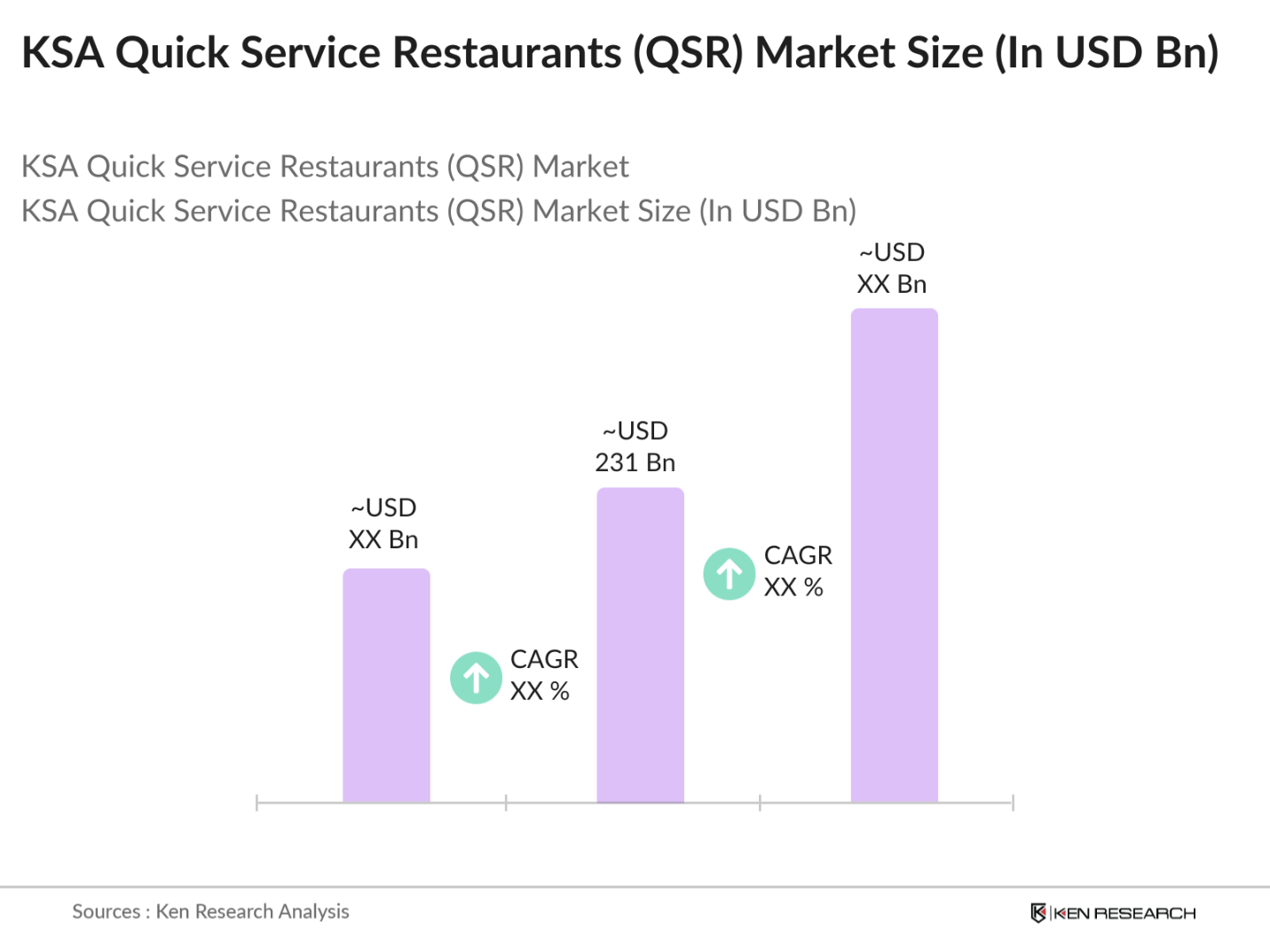
- The KSA Quick Service Restaurant (QSR) market is valued at USD 231 billion, based on a five-year historical analysis. This market is primarily driven by urbanization, rising disposable incomes, and evolving consumer preferences for convenient dining options. The increasing digital penetration in Saudi Arabia has significantly boosted online delivery services, providing customers with easy access to a variety of fast food and casual dining options. Partnerships with digital delivery platforms and a focus on efficiency have made QSRs a popular choice, particularly among young, urban consumers who prioritize convenience.
- Major cities like Riyadh, Jeddah, and Dammam lead in the KSA QSR market due to their high population density, rising youth demographic, and increased urbanization. Riyadh, being the capital, exhibits a high concentration of both local and international QSR chains, catering to a diversified customer base that seeks quality and speed in dining services. Jeddah and Dammam also reflect a robust demand, with a strong preference for global fast-food brands and a growing appetite for Western-style fast-casual dining.
- The governments commitment to food safety standards under Vision 2030 has resulted in stricter compliance requirements for QSRs. These policies prioritize public health, with consistent inspections ensuring adherence to food safety protocols, thus influencing operational standards across the QSR industry.
KSA Quick Service Restaurants (QSR) Market Segmentation
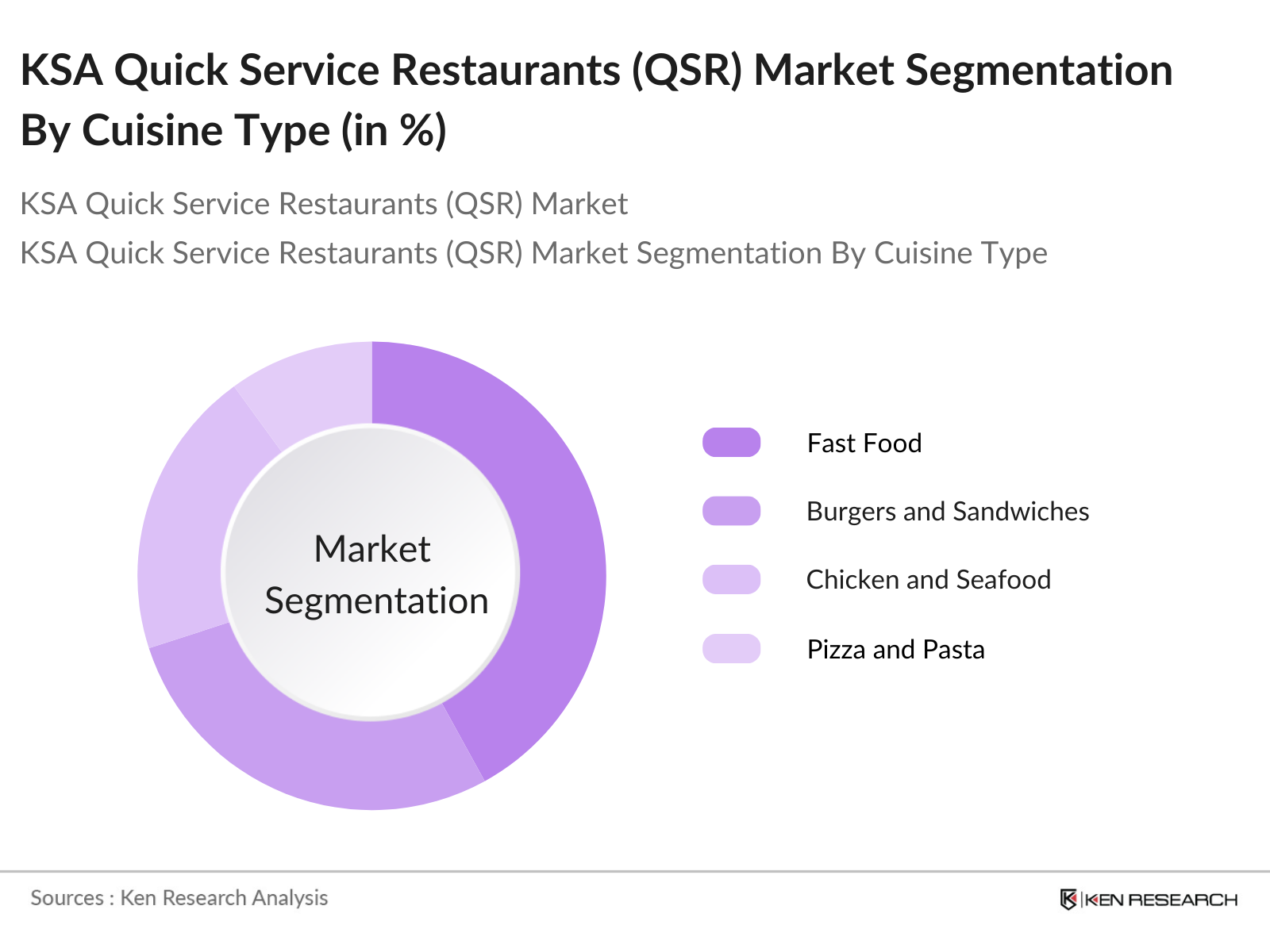
By Cuisine Type: The market is segmented by cuisine type into fast food, burgers and sandwiches, chicken and seafood, pizza and pasta, and coffee and desserts.
Recently, fast food has a dominant market share in the KSA QSR market under the cuisine type segmentation. This dominance is attributed to the convenience and affordability of fast food, which aligns well with the busy lifestyle of urban consumers.
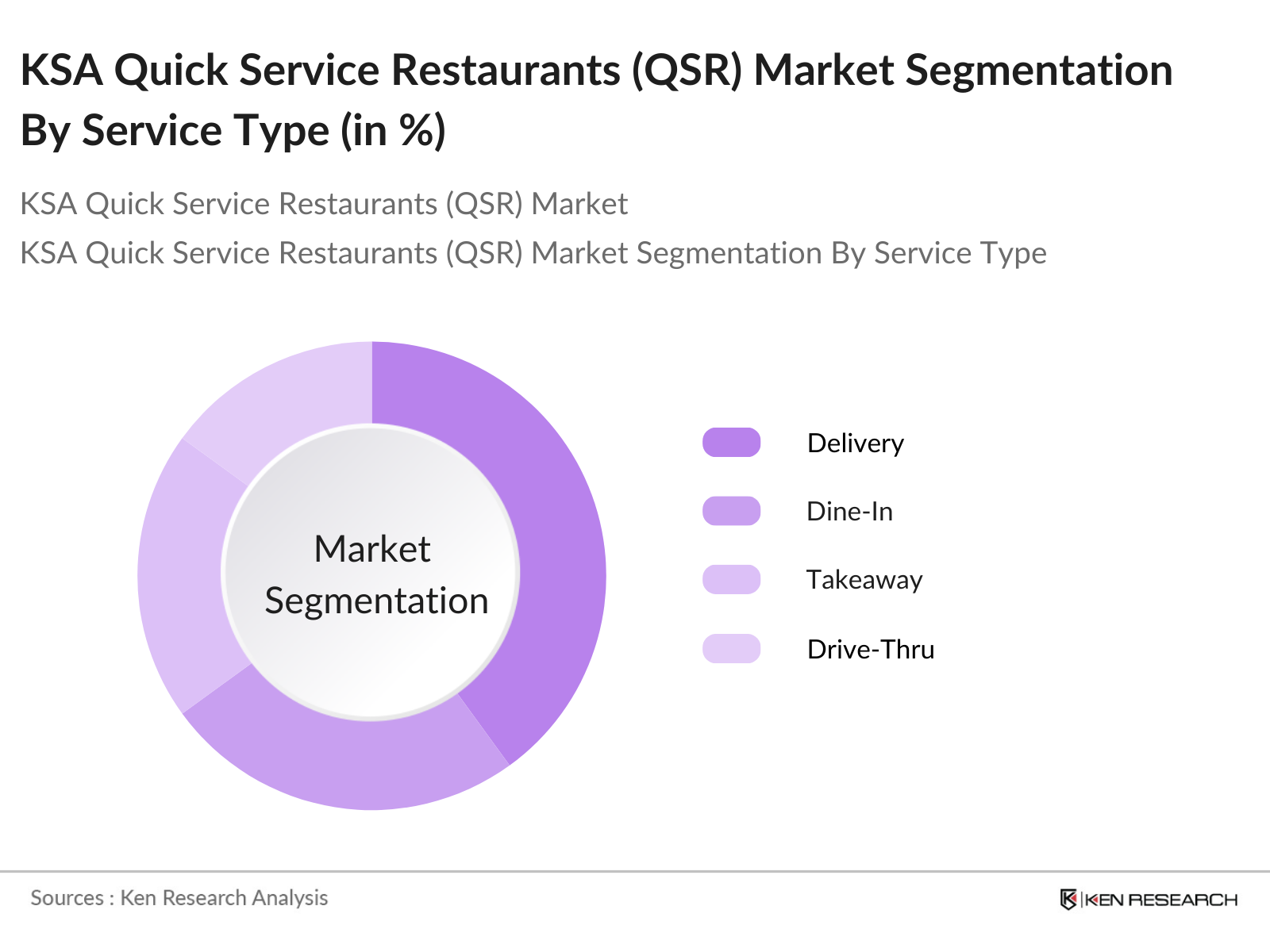
By Service Type: The market is also segmented by service type, including dine-in, takeaway, drive-thru, and delivery. Among these, delivery services dominate, driven by the increasing demand for at-home convenience, especially in urban areas. Collaborations between QSR chains and delivery platforms such as Jahez and HungerStation have contributed to this surge.
KSA Quick Service Restaurants (QSR) Market Competitive Landscape
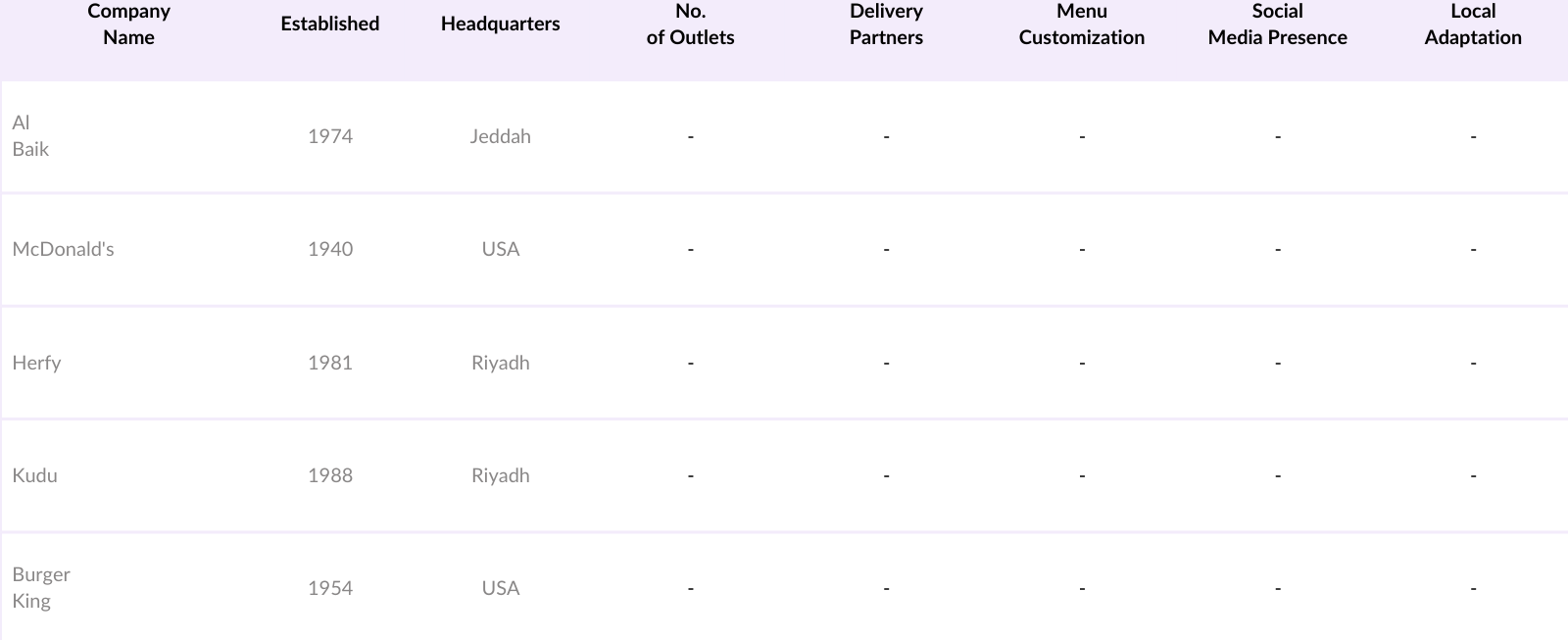
The KSA QSR market is dominated by a few key players, featuring a blend of international giants and local chains. This market structure highlights the competitive influence of major brands that have invested in extensive supply chain networks and brand loyalty initiatives.
KSA Quick Service Restaurants (QSR) Industry Analysis
Growth Drivers
- Rising Disposable Income (Economic Indicators): Saudi Arabias economic reforms have driven disposable income growth, bolstered by Vision 2030 initiatives and rising employment rates. In 2023, Saudi Arabia saw a historic low in unemployment at 7.7%, compared to 4.8% among expatriates, as per IMF estimates. This positive income trend, propelled by private sector job creation and reform-driven investments, is fostering increased consumer spending across the QSR sector.
- Urbanization and Lifestyle Changes (Demographic Trends): Rapid urbanization, notably in cities like Riyadh and Jeddah, is transforming lifestyle preferences and boosting QSR demand. Saudi Arabias urban population now exceeds 84% of the total population, attracting major investments in metropolitan areas. This urban concentration, particularly among younger demographics, has sparked heightened interest in fast-food consumption, convenience, and QSR expansion, aligning with Vision 2030 goals to modernize lifestyle choices and enhance urban amenities.
- Influence of Global Food Chains (Competitive Influence): International food chains have significantly expanded their presence in Saudi Arabia, drawn by high consumer spending and urban market penetration. This competitive influx has fostered a more dynamic QSR market, with franchises benefitting from local partnerships. The rise in non-oil GDP, which grew by 4.8% in 2022, has stimulated investment appeal for global brands and set the stage for competitive sectoral expansion, particularly in premium QSR offerings targeting affluent urban consumers.
Market Challenges
- High Real Estate Costs (Operational Costs): High real estate costs in urban centers pose a challenge for QSR operators. Rental rates in central Riyadh and Jeddah surged in 2023, reflecting increased demand due to major redevelopment projects and expatriate worker inflows. As a result, occupancy costs have intensified, pressuring operational expenses in prime locationsa significant barrier for new entrants and expansions in urban areas.
- Labor Availability and Wages (Labor Market Dynamics): Saudi Arabias labor market is evolving, with employment regulations pushing for higher wages among expatriate and local workers. Employment in the private sector saw notable growth, with the unemployment rate dropping to 4.8% in 2023. However, wage pressure, particularly in high-skilled roles, has added to labor costs, impacting profit margins for labor-intensive sectors like QSRs.
KSA Quick Service Restaurants (QSR) Market Future Outlook
Over the next five years, the KSA QSR market is expected to grow significantly, driven by urbanization trends, digital innovations in food delivery, and the increasing influence of global food trends. Rising investments in technology, especially in AI-driven customer service and automated ordering, are anticipated to support the market expansion. Additionally, government initiatives under Vision 2030 to diversify the economy and enhance the tourism and hospitality sectors will likely foster a favorable environment for QSR growth.
Market Opportunities
- Expansion into Secondary Cities (Geographic Expansion): Secondary cities in Saudi Arabia, such as Al-Kharj and Al-Qassim, are experiencing growth in QSR establishments. Increased disposable income and government efforts to distribute economic activity beyond major urban centers support this expansion. Secondary cities are seeing an influx of development projects, offering QSR chains a strategic opportunity to capture untapped demand and benefit from lower operating costs.
- Rise of Health-Conscious Consumers (Consumer Preferences): Saudi consumers are increasingly prioritizing health, creating opportunities for QSRs to introduce healthier options. Government campaigns advocating for reduced sugar and salt intake have raised awareness. This shift in dietary preferences provides a unique space for QSRs to diversify menus, catering to health-conscious consumers without sacrificing fast-service appeal.
Scope of the Report
|
Cuisine Type |
Fast Food Burgers and Sandwiches Chicken and Seafood Pizza and Pasta Coffee and Desserts |
|
Service Type |
Dine-In Takeaway Drive-Thru Delivery |
|
Location Type |
Urban Areas Suburban Areas High-Traffic Areas (Malls, Airports) Educational Institutions |
|
Consumer Age Group |
Teenagers Young Adults Families Senior Citizens |
|
Pricing Model |
Value-Based Premium |
Products
Key Target Audience
Quick Service Restaurant Chains
Investment and Venture Capitalist Firms
Government and Regulatory Bodies (Saudi Food and Drug Authority, Ministry of Municipal and Rural Affairs)
Digital Food Delivery Platforms
Restaurant Equipment Suppliers
Hospitality and Tourism Agencies
Food and Beverage Distributors
Marketing and Advertising Firms
Companies
Players Mentioned in the Report
Al Baik
McDonalds
Herfy
Kudu
Burger King
Subway
Pizza Hut
Domino's
KFC
Starbucks
Table of Contents
1. KSA Quick Service Restaurants (QSR) Market Overview
1.1. Definition and Scope
1.2. Market Taxonomy
1.3. Market Growth Rate
1.4. Market Segmentation Overview
2. KSA Quick Service Restaurants (QSR) Market Size (in SAR Million)
2.1. Historical Market Size
2.2. Year-on-Year Growth Analysis
2.3. Key Market Developments and Milestones
3. KSA QSR Market Analysis
3.1. Growth Drivers
3.1.1. Rising Disposable Income (Economic Indicators)
3.1.2. Urbanization and Lifestyle Changes (Demographic Trends)
3.1.3. Influence of Global Food Chains (Competitive Influence)
3.1.4. Digital Ordering and Delivery Services (Technological Influence)
3.2. Market Challenges
3.2.1. High Real Estate Costs (Operational Costs)
3.2.2. Labor Availability and Wages (Labor Market Dynamics)
3.2.3. Health and Safety Regulations (Regulatory Compliance)
3.3. Opportunities
3.3.1. Expansion into Secondary Cities (Geographic Expansion)
3.3.2. Rise of Health-Conscious Consumers (Consumer Preferences)
3.3.3. Partnerships with Delivery Platforms (Digital Collaboration)
3.4. Trends
3.4.1. Adoption of AI in Customer Service (Innovation Trends)
3.4.2. Focus on Localization of Menus (Cultural Adaptation)
3.4.3. Emphasis on Sustainability (Environmental Concerns)
3.5. Government Policies and Incentives
3.5.1. Vision 2030 Influence on QSR Sector
3.5.2. Investment in Hospitality and Tourism (Government Initiatives)
3.5.3. Regulations on Food Safety Standards (Regulatory Compliance)
3.6. Competitive Landscape
3.7. SWOT Analysis
3.8. Porters Five Forces
3.9. Supply Chain Ecosystem
4. KSA QSR Market Segmentation
4.1. By Cuisine Type (In Value %)
4.1.1. Fast Food
4.1.2. Burgers and Sandwiches
4.1.3. Chicken and Seafood
4.1.4. Pizza and Pasta
4.1.5. Coffee and Desserts
4.2. By Service Type (In Value %)
4.2.1. Dine-In
4.2.2. Takeaway
4.2.3. Drive-Thru
4.2.4. Delivery
4.3. By Location Type (In Value %)
4.3.1. Urban Areas
4.3.2. Suburban Areas
4.3.3. High-Traffic Areas (Malls, Airports)
4.3.4. Educational Institutions
4.4. By Consumer Age Group (In Value %)
4.4.1. Teenagers
4.4.2. Young Adults
4.4.3. Families
4.4.4. Senior Citizens
4.5. By Pricing Model (In Value %)
4.5.1. Value-Based
4.5.2. Premium
5. KSA QSR Market Competitive Analysis
5.1. Detailed Profiles of Major Companies
5.1.1. Al Baik
5.1.2. McDonald's
5.1.3. Kudu
5.1.4. Herfy
5.1.5. Burger King
5.1.6. Subway
5.1.7. Pizza Hut
5.1.8. KFC
5.1.9. Domino's
5.1.10. Starbucks
5.1.11. Dunkin' Donuts
5.1.12. TGI Fridays
5.1.13. Baskin Robbins
5.1.14. Hardee's
5.1.15. Shawarmer
5.2. Cross Comparison Parameters (No. of Outlets, Brand Equity, Menu Variety, Pricing Model, Customer Satisfaction, Delivery Partners, Sustainability Initiatives, and Market Share)
5.3. Market Share Analysis
5.4. Strategic Initiatives
5.5. Mergers and Acquisitions
5.6. Investment Analysis
5.7. Private Equity Investments
6. KSA QSR Market Regulatory Framework
6.1. Compliance Requirements
6.2. Health and Safety Standards
6.3. Licensing Requirements
6.4. Food Waste Management Regulations
7. KSA QSR Future Market Size (in SAR Million)
7.1. Future Market Size Projections
7.2. Key Factors Driving Future Market Growth
8. KSA QSR Market Future Segmentation
8.1. By Cuisine Type (In Value %)
8.2. By Service Type (In Value %)
8.3. By Location Type (In Value %)
8.4. By Consumer Age Group (In Value %)
8.5. By Pricing Model (In Value %)
9. KSA QSR Market Analysts Recommendations
9.1. Total Addressable Market (TAM), Serviceable Available Market (SAM), Serviceable Obtainable Market (SOM) Analysis
9.2. Market Entry Strategy
9.3. White Space Opportunity Analysis
9.4. Consumer Preference Analysis
Research Methodology
Step 1: Identification of Key Variables
In the initial phase, we mapped the KSA QSR market ecosystem, focusing on primary stakeholders including restaurant chains, suppliers, digital platforms, and regulatory bodies. Desk research involved analyzing credible secondary data sources for initial insights into market dynamics.
Step 2: Market Analysis and Construction
We analyzed historical data to assess market penetration and growth patterns in the KSA QSR sector. This analysis provided insights into the balance between different service and cuisine types, with a specific focus on revenue contributions by these segments.
Step 3: Hypothesis Validation and Expert Consultation
We engaged with industry experts via computer-assisted interviews to validate market hypotheses. These consultations provided real-time insights from operational perspectives, refining the data with practical observations on customer preferences and service patterns.
Step 4: Research Synthesis and Final Output
Finally, we engaged with top QSR brands to gather additional insights on consumer preferences, digital transformation, and sales performance. This step involved cross-verifying the synthesized data, ensuring comprehensive and validated insights into the KSA QSR market.
Frequently Asked Questions
01. How big is the KSA QSR market?
The KSA Quick Service Restaurant (QSR) market is valued at USD 231 billion, based on a five-year historical analysis. This market is primarily driven by urbanization, rising disposable incomes, and evolving consumer preferences for convenient dining options.
02. What are the main challenges in the KSA QSR market?
Challenges include rising operational costs, regulatory compliance in food safety standards, and increasing competition from both local and international brands vying for market share.
03. Who are the major players in the KSA QSR market?
Key players in the market include Al Baik, McDonald's, Herfy, Kudu, and Burger King, each with a significant brand presence and strong customer loyalty within Saudi Arabia.
04. What factors are driving growth in the KSA QSR market?
Growth drivers include the widespread adoption of digital ordering, the influence of urban lifestyle changes, and government initiatives that promote growth in the hospitality sector.
Why Buy From Us?

What makes us stand out is that our consultants follows Robust, Refine and Result (RRR) methodology. i.e. Robust for clear definitions, approaches and sanity checking, Refine for differentiating respondents facts and opinions and Result for presenting data with story

We have set a benchmark in the industry by offering our clients with syndicated and customized market research reports featuring coverage of entire market as well as meticulous research and analyst insights.

While we don't replace traditional research, we flip the method upside down. Our dual approach of Top Bottom & Bottom Top ensures quality deliverable by not just verifying company fundamentals but also looking at the sector and macroeconomic factors.

With one step in the future, our research team constantly tries to show you the bigger picture. We help with some of the tough questions you may encounter along the way: How is the industry positioned? Best marketing channel? KPI's of competitors? By aligning every element, we help maximize success.

Our report gives you instant access to the answers and sources that other companies might choose to hide. We elaborate each steps of research methodology we have used and showcase you the sample size to earn your trust.

If you need any support, we are here! We pride ourselves on universe strength, data quality, and quick, friendly, and professional service.