
KSA Rubber Plastic Market Outlook to 2030
Region:Saudi Arabia
Author(s):Vijay Kumar
Product Code:KROD3152
Region:Saudi Arabia
Author(s):Vijay Kumar
Product Code:KROD3152
December 2024
86
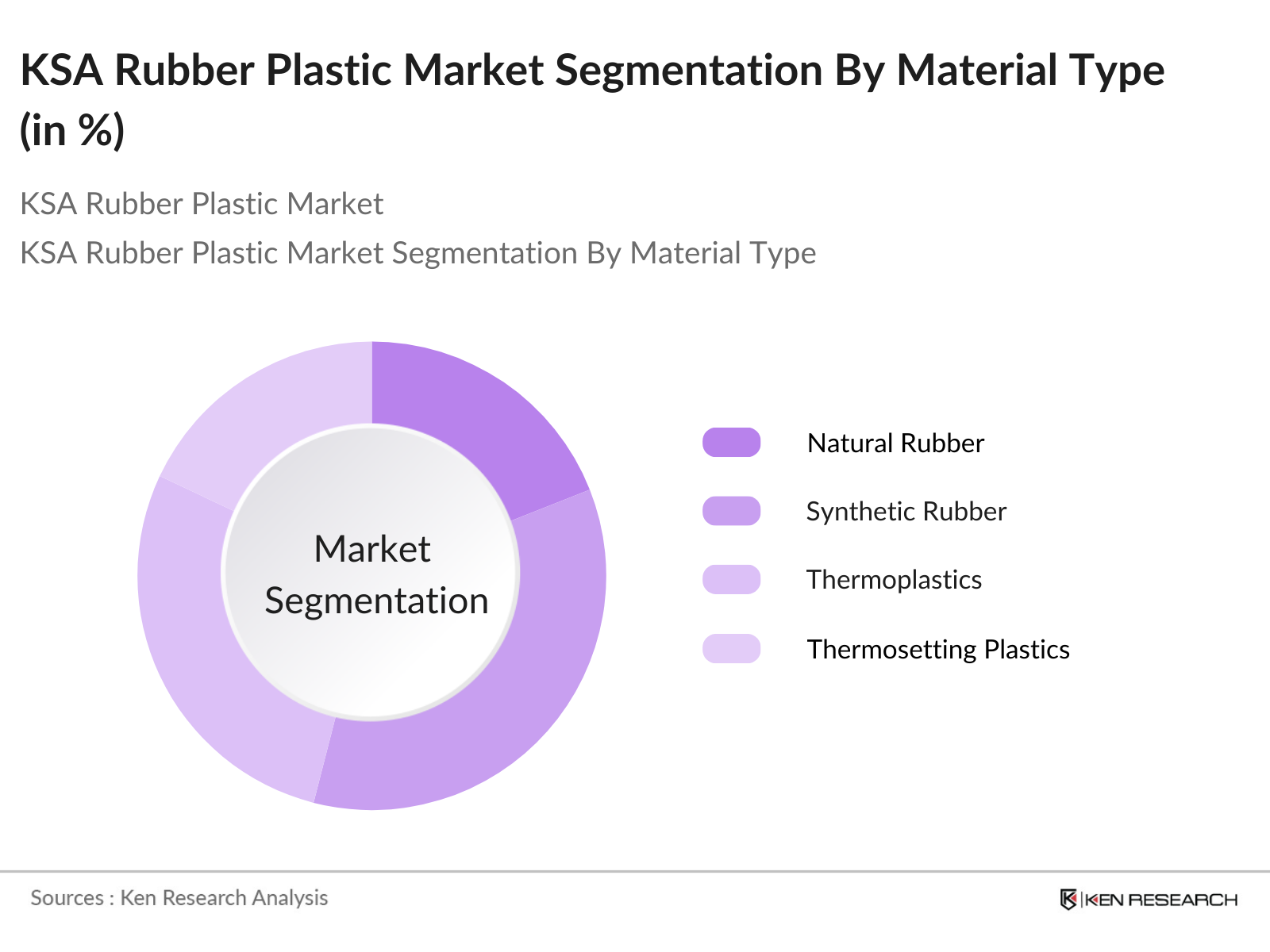
By Material Type: The KSA rubber plastic market is segmented by material type into natural rubber, synthetic rubber, thermoplastics, thermosetting plastics, and biodegradable plastics. Synthetic rubber is the dominant sub-segment, mainly due to its wide application in the automotive industry for tire production and industrial components such as seals and gaskets. The cost-effectiveness and durability of synthetic rubber, combined with KSAs robust automotive manufacturing sector, contribute to its leading position in the market.
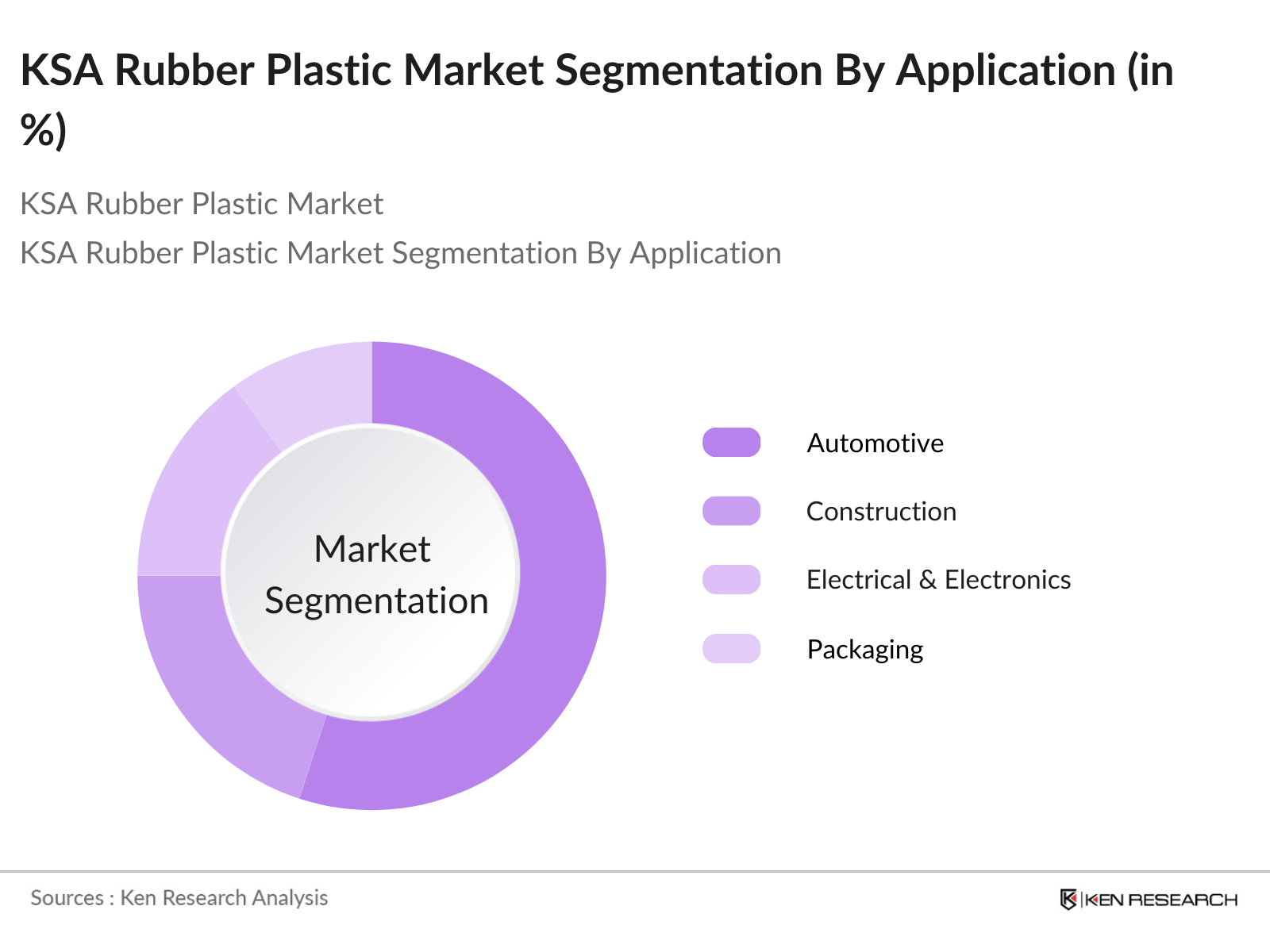
By Application: The KSA rubber plastic market is further segmented by application into automotive, construction, electrical and electronics, packaging, and oil & gas. The automotive sector dominates with a significant share due to the high demand for rubber-based components in vehicle production and maintenance, including tires and sealing products. KSA's expanding automotive assembly and manufacturing sectors, spurred by government incentives, have made this segment the largest in the rubber plastic market.
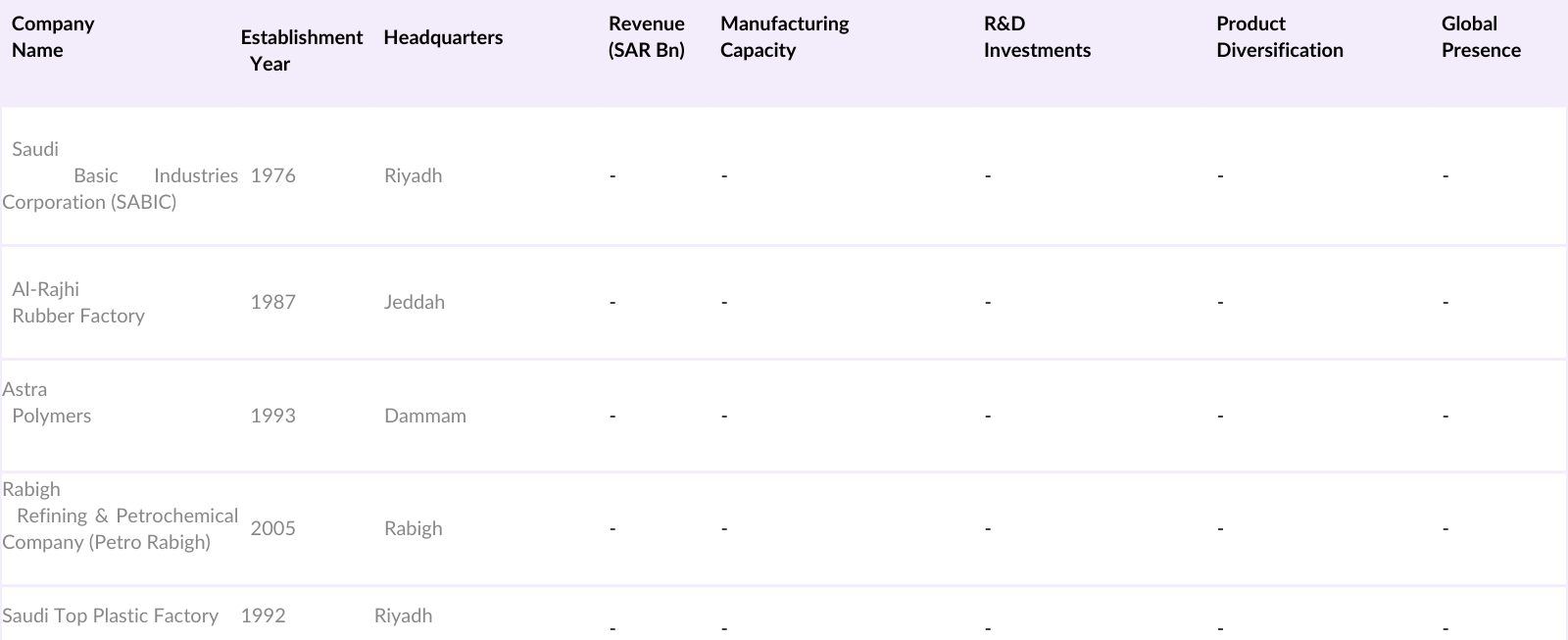
The KSA rubber and plastic market is characterized by a few dominant players who maintain a strong influence due to their established manufacturing capabilities, R&D investments, and access to raw materials. Saudi Basic Industries Corporation (SABIC) continues to lead the market due to its diversified product portfolio and strategic focus on innovation, while local players such as Al-Rajhi Rubber Factory capitalize on domestic demand.
Over the next five years, the KSA rubber and plastic market is expected to experience strong growth driven by several factors. These include government incentives for local manufacturing under Vision 2030, advancements in plastic recycling technologies, and an increased focus on sustainable and biodegradable materials. The automotive and construction industries will continue to drive demand for synthetic rubber and high-performance plastic components. Additionally, growing investments in oil and gas infrastructure are likely to spur demand for rubber and plastic materials used in pipelines and sealing applications.
|
Material Type |
Natural Rubber Synthetic Rubber Thermoplastics Thermosetting Plastics Biodegradable Plastics |
|
Application |
Automotive Construction Electrical and Electronics Packaging, Oil & Gas |
|
End-User Industry |
Manufacturing Consumer Goods Industrial Equipment Healthcare |
|
Region |
Central Region Eastern Region Western Region Northern Region Southern Region |
1.1. Definition and Scope
1.2. Market Taxonomy
1.3. Market Growth Rate
1.4. Market Segmentation Overview
2.1. Historical Market Size
2.2. Year-On-Year Growth Analysis
2.3. Key Market Developments and Milestones
3.1. Growth Drivers
3.1.1. Increasing Construction and Infrastructure Projects (Volume of Rubber and Plastic Utilized)
3.1.2. Rising Automotive Manufacturing and Demand for Components (Rubber Usage in Tires and Seals)
3.1.3. Surge in Oil and Gas Sector Investment (Plastic for Pipelines and Rubber Sealing Products)
3.1.4. Government Initiatives towards Industrial Development (Vision 2030 Influence on Rubber Plastic Sector)
3.2. Market Challenges
3.2.1. Fluctuating Raw Material Prices (Crude Oil Derivatives for Plastic)
3.2.2. Lack of Recycling Infrastructure (Impact on Plastic Waste Management)
3.2.3. Technological Gaps in Rubber Production (Local Manufacturing Limitations)
3.3. Opportunities
3.3.1. Investments in Rubber Recycling Technologies (Circular Economy Push)
3.3.2. Expansion of Biodegradable Plastics Market (Government Regulations on Single-Use Plastic)
3.3.3. International Partnerships for Advanced Material R&D (Collaborations with Global Firms for Specialty Plastics)
3.4. Trends
3.4.1. Adoption of Eco-Friendly Rubber Materials (Sustainable Alternatives for Industrial Use)
3.4.2. Development of Smart Plastics (Integration of IoT and Sensors)
3.4.3. Shifts in Consumer Preference for Recyclable Plastic Products (Influence of Retail and FMCG Sectors)
3.5. Government Regulation
3.5.1. Vision 2030 Policies Supporting Local Manufacturing of Rubber Plastic (Government Subsidies and Grants)
3.5.2. Tariff Reductions on Rubber and Plastic Imports (Trade Agreements)
3.5.3. Regulatory Requirements for Plastic Waste Management and Recycling
3.5.4. Environmental Standards for Emission and Pollution Control in Rubber Manufacturing
3.6. SWOT Analysis
3.7. Value Chain Analysis
3.8. Porters Five Forces Analysis
3.9. Competition Ecosystem
4.1. By Material Type (In Value %)
4.1.1. Natural Rubber
4.1.2. Synthetic Rubber
4.1.3. Thermoplastics
4.1.4. Thermosetting Plastics
4.1.5. Biodegradable Plastics
4.2. By Application (In Value %)
4.2.1. Automotive
4.2.2. Construction
4.2.3. Electrical and Electronics
4.2.4. Packaging
4.2.5. Oil & Gas
4.3. By End-User Industry (In Value %)
4.3.1. Manufacturing
4.3.2. Consumer Goods
4.3.3. Industrial Equipment
4.3.4. Healthcare
4.4. By Region (In Value %)
4.4.1. Central Region
4.4.2. Eastern Region
4.4.3. Western Region
4.4.4. Northern Region
4.4.5. Southern Region
5.1. Detailed Profiles of Major Companies
5.1.1. SABIC
5.1.2. Al-Rajhi Rubber Factory
5.1.3. Astra Polymers
5.1.4. Rabigh Refining & Petrochemical Company
5.1.5. Saudi Top Plastic Factory
5.1.6. Tasnee
5.1.7. KSA Polymer Company
5.1.8. Arabian Gulf Manufacturers
5.1.9. Rowad National Plastic
5.1.10. Saudi Rubber Products Co.
5.1.11. National Petrochemical Industrial Co.
5.1.12. Zamil Plastics
5.1.13. Takween Advanced Industries
5.1.14. Saudi Plastic Factory
5.1.15. International Rubber Company
5.2. Cross Comparison Parameters (No. of Employees, Revenue, Manufacturing Capacity, Inception Year, Export Volume, Local Market Share, R&D Spending, Product Diversification)
5.3. Market Share Analysis
5.4. Strategic Initiatives (Mergers & Acquisitions, Joint Ventures, Collaborations)
5.5. Investment Analysis
5.6. Venture Capital Funding
5.7. Government Grants and Support
6.1. Environmental Standards for Production
6.2. Certification Requirements for Rubber and Plastic Products
6.3. Safety and Compliance Regulations
7.1. Future Market Size Projections
7.2. Key Factors Driving Future Market Growth
8.1. By Material Type (In Value %)
8.2. By Application (In Value %)
8.3. By End-User Industry (In Value %)
8.4. By Region (In Value %)
9.1. Market Entry Strategies
9.2. White Space Opportunities
9.3. Product Innovation Focus
This phase involves mapping out the entire ecosystem of the KSA rubber plastic market by identifying major stakeholders, including manufacturers, suppliers, and end-users. Extensive desk research and the use of both proprietary databases and secondary sources are conducted to define the key market drivers and constraints.
During this step, historical data on the KSA rubber and plastic market is collected and analyzed to understand trends, market penetration, and pricing mechanisms. Additionally, a bottom-up approach is used to estimate the revenue generated by major product segments, ensuring reliable market size calculations.
Market hypotheses are developed based on the data collected and are then validated through discussions with industry experts. These consultations are conducted through phone interviews with key decision-makers from major companies in the KSA rubber and plastic industry, ensuring the accuracy of the gathered data.
The final step involves synthesizing all collected data and insights into a comprehensive market report. Engagements with leading rubber and plastic manufacturers in KSA help refine the revenue estimates and validate product segment insights, resulting in a well-rounded analysis.
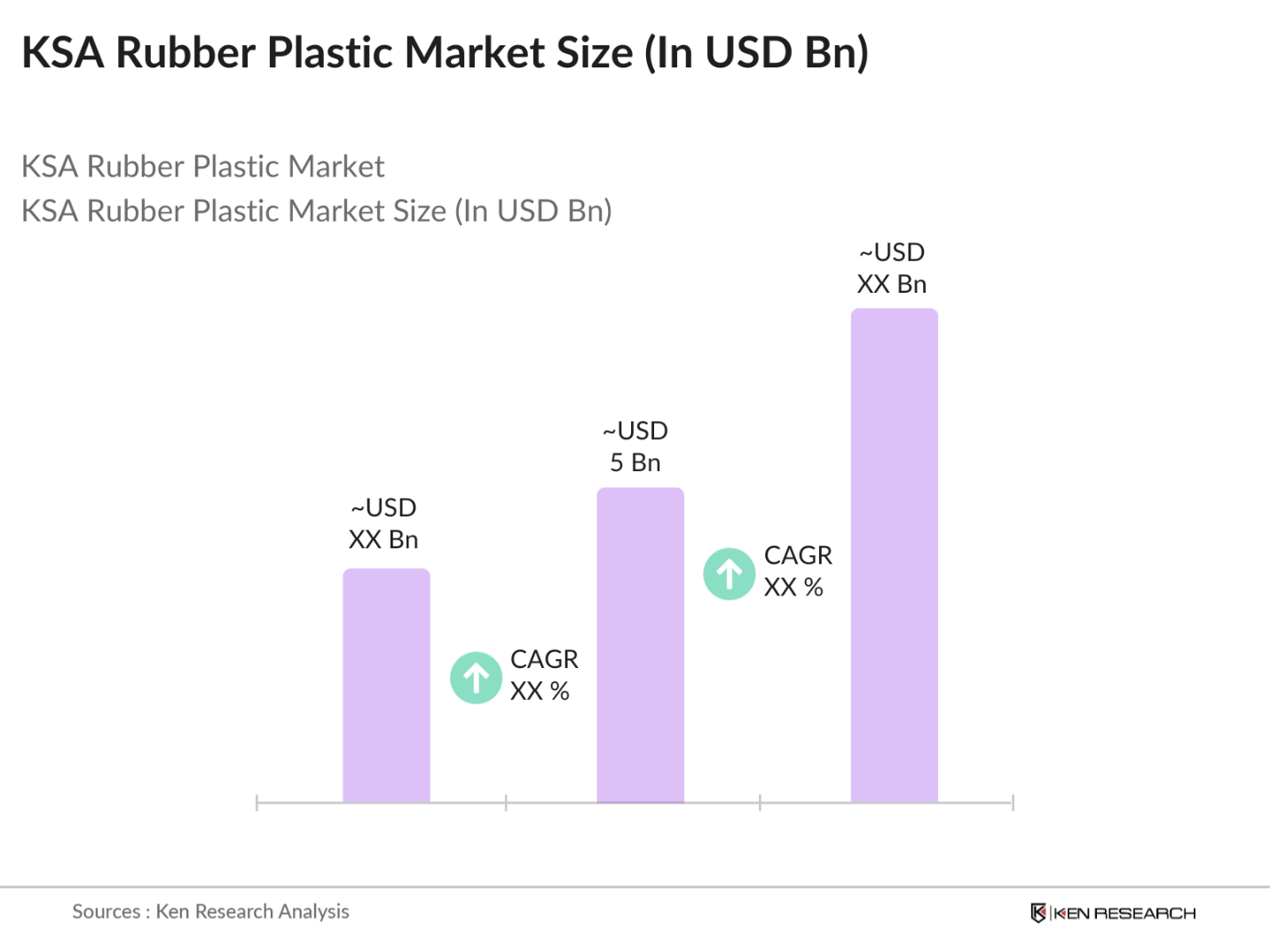
The KSA rubber plastic market is valued at USD 5 billion, primarily driven by the automotive and construction sectors, as well as increased investments in the oil and gas industry.
The KSA rubber plastic market challenges include fluctuating raw material prices, limited recycling infrastructure for plastics, and technological gaps in domestic rubber manufacturing, which could hinder market growth.
The KSA rubber plastic major players include SABIC, Al-Rajhi Rubber Factory, Astra Polymers, Rabigh Refining & Petrochemical Company, and Saudi Top Plastic Factory. These companies dominate due to their extensive manufacturing capabilities and access to raw materials.
The KSA rubber plastic market key growth drivers include the government's Vision 2030 initiatives, increasing demand from the automotive industry, and a growing focus on sustainability, especially in the use of biodegradable plastics.

What makes us stand out is that our consultants follows Robust, Refine and Result (RRR) methodology. i.e. Robust for clear definitions, approaches and sanity checking, Refine for differentiating respondents facts and opinions and Result for presenting data with story

We have set a benchmark in the industry by offering our clients with syndicated and customized market research reports featuring coverage of entire market as well as meticulous research and analyst insights.

While we don't replace traditional research, we flip the method upside down. Our dual approach of Top Bottom & Bottom Top ensures quality deliverable by not just verifying company fundamentals but also looking at the sector and macroeconomic factors.

With one step in the future, our research team constantly tries to show you the bigger picture. We help with some of the tough questions you may encounter along the way: How is the industry positioned? Best marketing channel? KPI's of competitors? By aligning every element, we help maximize success.

Our report gives you instant access to the answers and sources that other companies might choose to hide. We elaborate each steps of research methodology we have used and showcase you the sample size to earn your trust.

If you need any support, we are here! We pride ourselves on universe strength, data quality, and quick, friendly, and professional service.