
KSA Self-Monitoring Blood Glucose Devices Market Outlook to 2030
Region:Middle East
Author(s):Yogita Sahu
Product Code:KROD10262
December 2024
96
About the Report
KSA Self-Monitoring Blood Glucose Devices Market Overview
- The KSA Self-Monitoring Blood Glucose Devices Market was valued at USD 115 million, driven by the increasing prevalence of diabetes, particularly Type 2 diabetes, which affects a significant portion of the Saudi population. The high prevalence of obesity, sedentary lifestyles, and consumption of high-calorie diets are key factors behind this growing demand for self-monitoring devices.
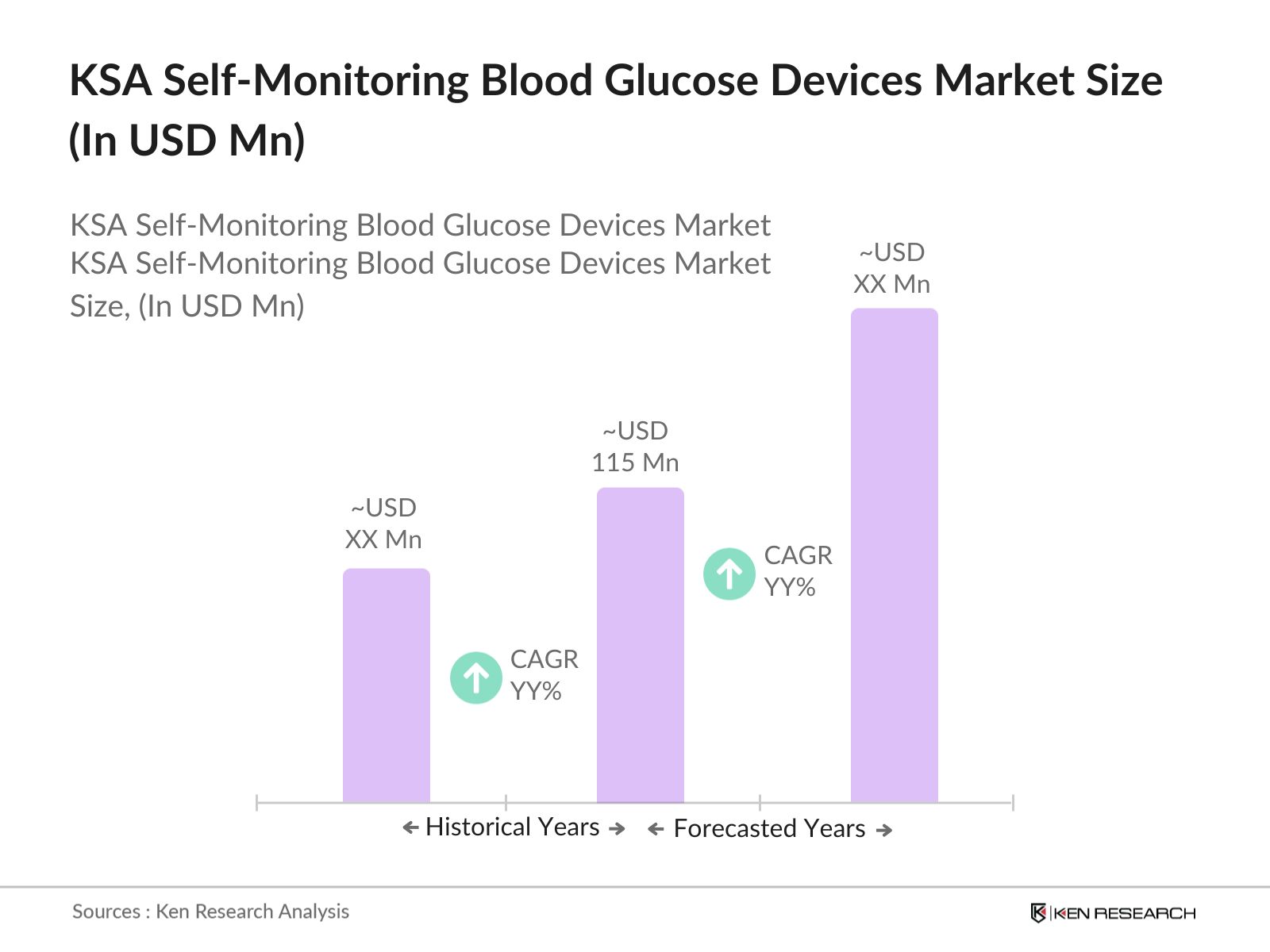
- In the Saudi market, dominant cities such as Riyadh and Jeddah play a crucial role due to their advanced healthcare infrastructure and access to cutting-edge medical technology. The high concentration of healthcare facilities and diabetes care centers in these cities, along with greater healthcare spending and consumer awareness, contributes to their leadership in this market.
- The Ministry of Health plans to provide subsidized or free self-monitoring blood glucose devices to over 500,000 low-income diabetic patients in 2024 as part of its chronic disease management initiative. This policy will improve the accessibility of essential diabetes management tools for economically disadvantaged groups.
KSA Self-Monitoring Blood Glucose Devices Market Segmentation
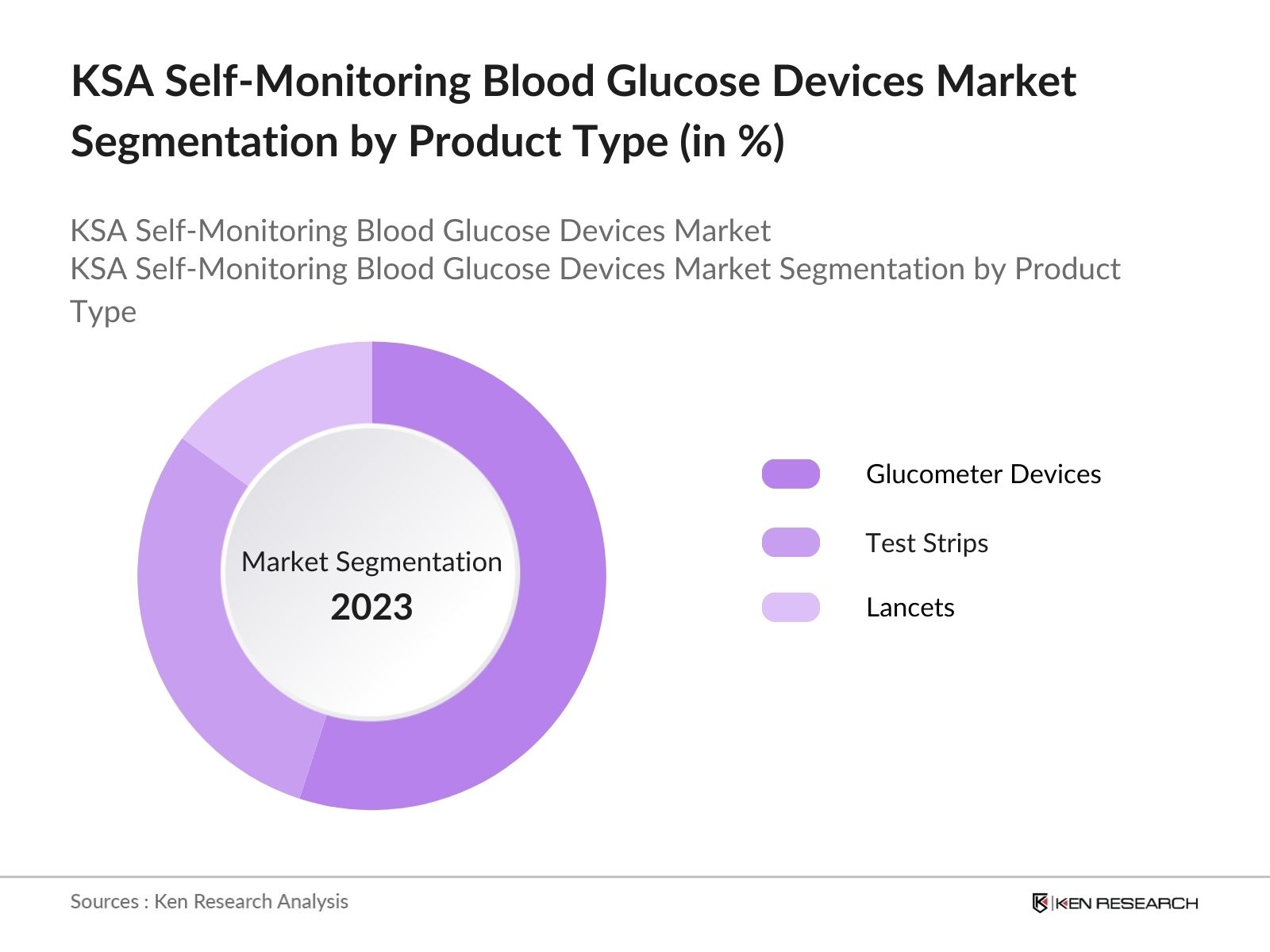
By Product Type: The market is segmented by product type into Glucometer Devices, Test Strips, and Lancets. Among these, glucometer devices hold the largest share of the market. The convenience of real-time monitoring, portability, and technological advancements like Bluetooth connectivity make glucometers a popular choice among diabetics. Moreover, the preference for home-based monitoring and user-friendly interfaces provided by glucometers have driven their demand.
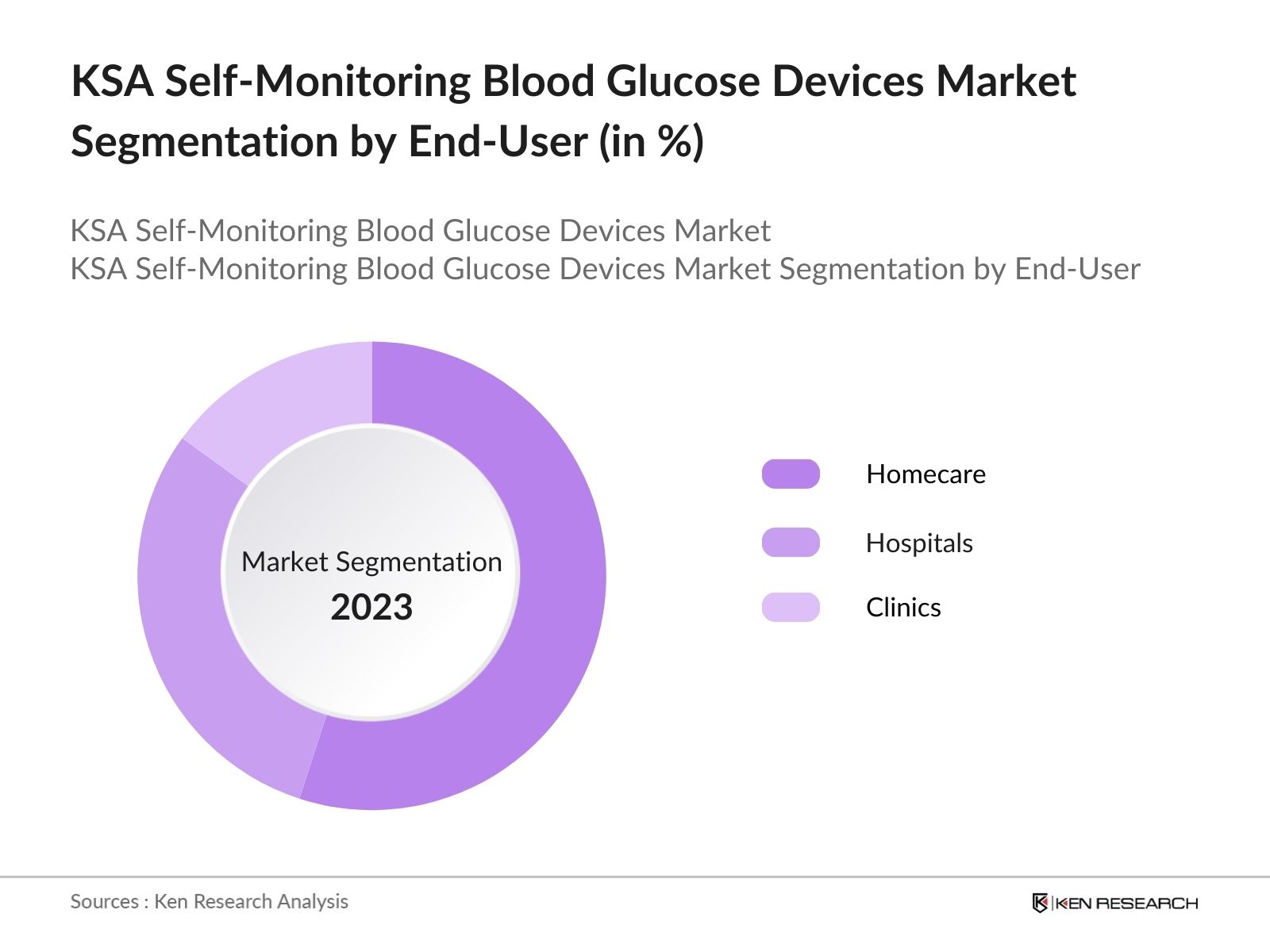
By End-User: The market for self-monitoring devices is also segmented by end-user into Hospitals, Homecare, and Clinics. Homecare dominates this segment due to the increasing trend of home-based diabetes management. With rising healthcare costs and the development of user-friendly self-monitoring devices, more patients prefer to manage their condition at home. The availability of affordable devices and remote monitoring solutions is also boosting this trend.
KSA Self-Monitoring Blood Glucose Devices Market Competitive Landscape
The market is moderately consolidated, with a few key global players dominating the market. Leading companies are focused on innovative products, strategic collaborations, and enhancing distribution networks to capture a larger market share.
|
Company Name |
Establishment Year |
Headquarters |
Revenue (USD Bn) |
No. of Employees |
Key Products |
R&D Investment |
Global Presence |
Recent Developments |
|
Roche Diabetes Care |
1896 |
Basel, Switzerland |
||||||
|
Abbott Diabetes Care |
1888 |
Illinois, USA |
||||||
|
Ascensia Diabetes Care |
2016 |
Basel, Switzerland |
||||||
|
LifeScan |
1981 |
California, USA |
||||||
|
Arkray |
1960 |
Kyoto, Japan |
KSA Self-Monitoring Blood Glucose Devices Market Analysis
Market Growth Drivers
- Rising Diabetes Prevalence: The number of people with diabetes in Saudi Arabia is projected to surpass 4.5 million in 2024, contributing to increased demand for self-monitoring blood glucose devices. The significant rise in diabetes-related hospital admissions, projected to reach over 100,000 annually, highlights the growing need for accessible glucose monitoring solutions, particularly in rural areas where diabetes management remains challenging.
- Increased Government Health Expenditure: The Saudi government is expected to allocate over SAR 200 billion toward healthcare in 2024, with a portion aimed at managing chronic conditions like diabetes. This increase in funding directly supports the adoption of self-monitoring blood glucose devices, as the governments initiative includes expanding healthcare access and improving chronic disease management through subsidies and public health programs.
- Growing Geriatric Population: The elderly population in Saudi Arabia is expected to reach 5 million by 2024, a group particularly vulnerable to diabetes and related health complications. As a result, self-monitoring blood glucose devices are becoming increasingly essential to daily care routines. The Ministry of Health is focusing on specialized healthcare programs for seniors, driving the demand for glucose monitoring devices in clinics and home-care settings.
Market Challenges
- Limited Healthcare Infrastructure in Remote Regions: While urban areas like Riyadh and Jeddah have well-developed healthcare infrastructures, remote regions with populations exceeding 2 million still struggle with access to diabetes care services. The lack of specialized healthcare professionals and diabetes educators further complicates the adoption and regular use of blood glucose monitoring devices, hindering market expansion.
- Complicated Reimbursement Processes: Although insurance coverage has expanded, the reimbursement process for self-monitoring blood glucose devices can be lengthy and complex, especially for lower-income groups. An estimated 30% of patients report difficulties in navigating reimbursement channels, delaying their access to essential monitoring devices, which continues to challenge the smooth growth of the market.
KSA Self-Monitoring Blood Glucose Devices Market Future Outlook
Over the next five years, the KSA Self-Monitoring Blood Glucose Devices industry is expected to experience growth. This is due to a combination of factors including increased government support, continued advancements in glucose monitoring technology, and rising consumer awareness of managing diabetes through self-monitoring.
Future Market Opportunities
- Increased Adoption of AI-Driven Monitoring: Over the next five years, AI-driven glucose monitoring devices will become a market standard in Saudi Arabia. By 2029, it is estimated that over 500,000 AI-powered devices will be in use, providing personalized insights into glucose levels and supporting more precise diabetes management.
- Expansion of Telemedicine Integration: The integration of self-monitoring blood glucose devices with telemedicine platforms will increase, reaching over 1.5 million users by 2029. This growth will be driven by the need for continuous, remote monitoring of chronic diseases, supported by government-backed telemedicine expansion programs.
Scope of the Report
|
Product Type |
Glucometer Devices Test Strips Lancets |
|
End-User |
Hospitals Homecare Clinics |
|
Technology |
Continuous Glucose Monitoring Capillary Blood Monitoring |
|
Distribution Channel |
Pharmacies Online Retail Hospital Pharmacies |
|
Region |
North East West South |
Products
Key Target Audience Organizations and Entities Who Can Benefit by Subscribing This Report:
Diabetes Healthcare Providers
Healthcare Companies
Banks and Financial Institution
Pharmaceutical Companies
Insurance Providers
Investor and Venture Capitalist Firms
Government and Regulatory Bodies (Ministry of Health, KSA)
Companies
Players Mentioned in the Report:
Roche Diabetes Care
Abbott Diabetes Care
Ascensia Diabetes Care
LifeScan
Arkray
Medtronic
Dexcom
Bayer AG
Nipro Corporation
Sinocare
Table of Contents
KSA Self-Monitoring Blood Glucose Devices Market Overview
Definition and Scope
Market Taxonomy
Market Growth Rate
Market Segmentation Overview
KSA Self-Monitoring Blood Glucose Devices Market Size (In USD Mn)
Historical Market Size
Year-On-Year Growth Analysis
Key Market Developments and Milestones
KSA Self-Monitoring Blood Glucose Devices Market Analysis
Growth Drivers (Prevalence of Diabetes, Technological Advancements, Home-based Monitoring Preference, Government Healthcare Initiatives)
Market Challenges (High Device Cost, Lack of Awareness in Rural Areas, Stringent Regulations, Inconsistent Insurance Coverage)
Opportunities (Technological Integration, Remote Monitoring Solutions, Rising Aging Population, Expanding Healthcare Infrastructure)
Trends (Wireless Connectivity, Smartphone Integration, Increased Usage of Homecare Devices)
Government Regulations (Diabetes Control Programs, Medical Device Regulations, Insurance Coverage Initiatives)
SWOT Analysis
Stakeholder Ecosystem
Porters Five Forces (Supplier Power, Buyer Power, Threat of Substitutes, New Entrants, Competitive Rivalry)
Competition Ecosystem
KSA Self-Monitoring Blood Glucose Devices Market Segmentation
By Product Type (In Value %) (Glucometer Devices, Test Strips, Lancets)
By End-User (In Value %) (Hospitals, Homecare, Clinics)
By Technology (In Value %) (Continuous Glucose Monitoring, Capillary Blood Monitoring)
By Distribution Channel (In Value %) (Pharmacies, Online Retail, Hospital Pharmacies)
By Region (In Value %) (North, East, West, South)
KSA Self-Monitoring Blood Glucose Devices Market Competitive Analysis
Detailed Profiles of Major Companies
Roche Diabetes Care
Abbott Diabetes Care
Ascensia Diabetes Care
LifeScan
Arkray
Medtronic
Dexcom
Bayer AG
Johnson & Johnson
Nipro Corporation
Rossmax International
Sinocare
Menarini Diagnostics
AgaMatrix
Trividia Health
Cross Comparison Parameters (Revenue, Market Share, Product Portfolio, R&D Investments, Strategic Partnerships, Distribution Network, Presence in KSA, Key Recent Developments)
Market Share Analysis
Strategic Initiatives (Partnerships, Collaborations, Product Launches)
Mergers & Acquisitions
Investment Analysis (Government Funding, Private Investments)
KSA Self-Monitoring Blood Glucose Devices Market Regulatory Framework
Compliance with SFDA (Saudi Food and Drug Authority)
Import Regulations and Certifications
Local Manufacturing Policies
Insurance Policies and Reimbursement Guidelines
KSA Self-Monitoring Blood Glucose Devices Future Market Size (In USD Mn)
Future Market Size Projections
Key Factors Driving Future Market Growth
KSA Self-Monitoring Blood Glucose Devices Future Market Segmentation
By Product Type (In Value %)
By End-User (In Value %)
By Technology (In Value %)
By Distribution Channel (In Value %)
By Region (In Value %)
KSA Self-Monitoring Blood Glucose Devices Market Analysts Recommendations
Market Entry Strategies
Product Innovation & Differentiation
Target Market Opportunities
Customer Retention Strategies
Disclaimer Contact UsResearch Methodology
Step 1: Identification of Key Variables
In this phase, we constructed a comprehensive ecosystem map for the KSA Self-Monitoring Blood Glucose Devices market. This involved extensive desk research using both proprietary and secondary databases to identify critical market drivers, inhibitors, and key players. The variables influencing market growth were defined and prioritized.
Step 2: Market Analysis and Construction
We gathered historical market data and analyzed current trends for self-monitoring devices. A focus was placed on consumer behavior, product innovations, and market penetration, which was then corroborated with financial data to assess revenue generation and growth potential.
Step 3: Hypothesis Validation and Expert Consultation
To ensure the accuracy of the data, we conducted interviews with industry experts and healthcare professionals in Saudi Arabia. These discussions provided qualitative insights into the operational challenges, market preferences, and product adoption rates.
Step 4: Research Synthesis and Final Output
All data collected was synthesized into a cohesive analysis, validated by comparing findings from different sources. Final output was prepared by integrating insights from primary research, expert interviews, and secondary sources to present a detailed and credible market report.
Frequently Asked Questions
How big is the KSA Self-Monitoring Blood Glucose Devices Market?
The KSA Self-Monitoring Blood Glucose Devices market was valued at USD 115 million in 2023, driven by rising diabetes prevalence and increasing demand for home-based monitoring solutions.
What are the challenges in the KSA Self-Monitoring Blood Glucose Devices Market?
Challenges in the KSA Self-Monitoring Blood Glucose Devices market include high costs associated with advanced devices, lack of awareness in rural areas, and regulatory barriers that slow down product approvals and market entry.
Who are the major players in the KSA Self-Monitoring Blood Glucose Devices Market?
Major players in the KSA Self-Monitoring Blood Glucose Devices market include Roche Diabetes Care, Abbott Diabetes Care, Ascensia Diabetes Care, LifeScan, and Arkray, each offering a range of products to cater to diabetic patients' needs.
What are the growth drivers for the KSA Self-Monitoring Blood Glucose Devices Market?
The KSA Self-Monitoring Blood Glucose Devices market is driven by an increasing diabetes population, technological advancements in monitoring devices, and government healthcare initiatives aimed at improving diabetes management.
What role does government regulation play in this market?
Government regulations, particularly from the SFDA, play a critical role in ensuring product safety and efficacy. Initiatives aimed at expanding healthcare coverage and promoting digital healthcare are also key in shaping the market dynamics.
Why Buy From Us?

What makes us stand out is that our consultants follows Robust, Refine and Result (RRR) methodology. i.e. Robust for clear definitions, approaches and sanity checking, Refine for differentiating respondents facts and opinions and Result for presenting data with story

We have set a benchmark in the industry by offering our clients with syndicated and customized market research reports featuring coverage of entire market as well as meticulous research and analyst insights.

While we don't replace traditional research, we flip the method upside down. Our dual approach of Top Bottom & Bottom Top ensures quality deliverable by not just verifying company fundamentals but also looking at the sector and macroeconomic factors.

With one step in the future, our research team constantly tries to show you the bigger picture. We help with some of the tough questions you may encounter along the way: How is the industry positioned? Best marketing channel? KPI's of competitors? By aligning every element, we help maximize success.

Our report gives you instant access to the answers and sources that other companies might choose to hide. We elaborate each steps of research methodology we have used and showcase you the sample size to earn your trust.

If you need any support, we are here! We pride ourselves on universe strength, data quality, and quick, friendly, and professional service.