















KSA Solar Energy Tracking Market Outlook to 2030
Region:Middle East
Author(s):Mukul
Product Code:KROD9225
October 2024
93
About the Report
KSA Solar Energy Tracking Market Overview
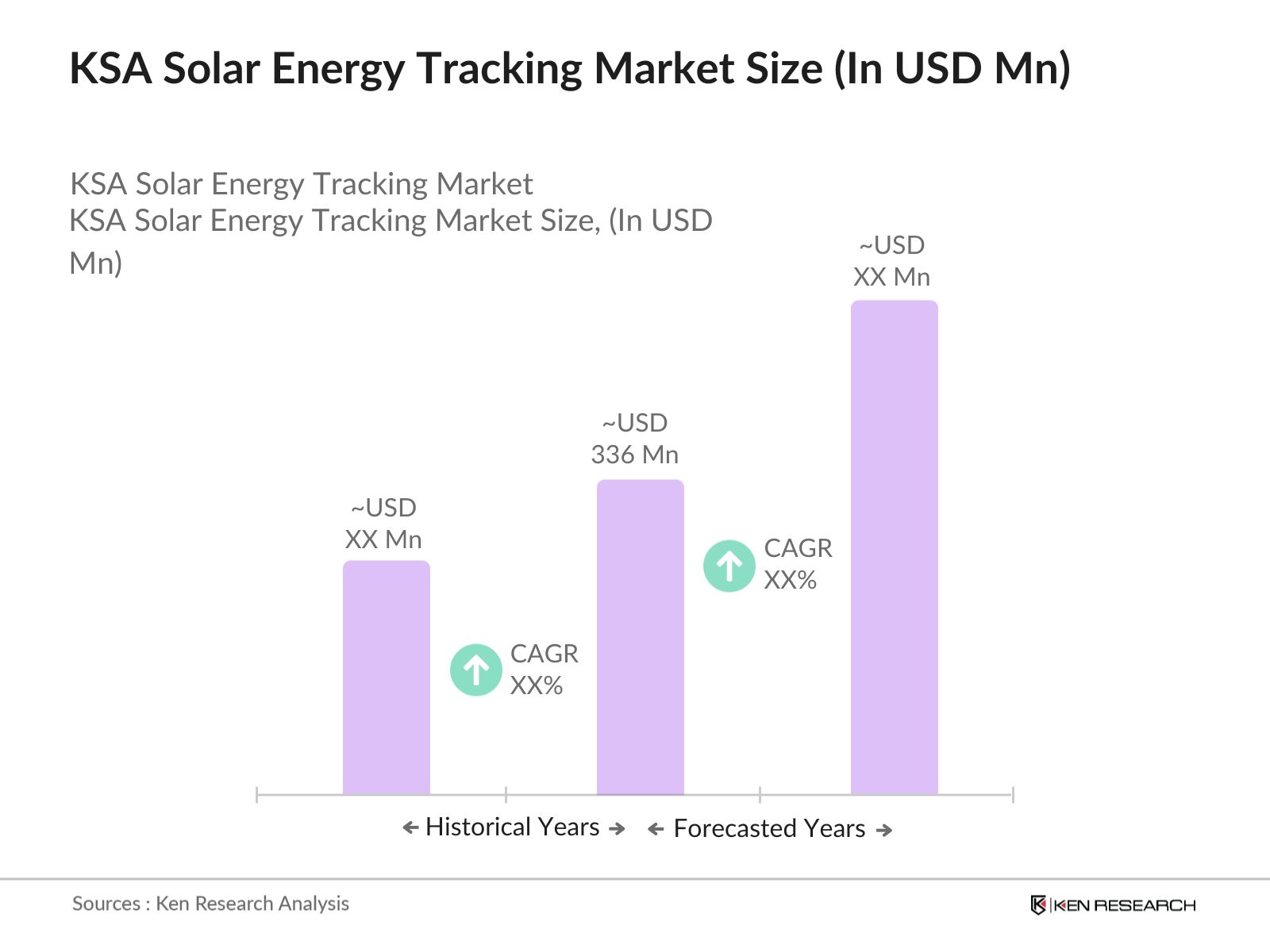
- The KSA Solar Energy Tracking market is valued at USD 336 million based on a five-year historical analysis, driven by the Kingdom's focus on renewable energy under Saudi Vision 2030. The governments ambitious target to generate 58.7 GW of renewable energy by 2030 is a key driver, along with technological advancements in solar trackers, which optimize energy efficiency by aligning panels with the suns position. The market's growth is supported by an increasing demand for energy diversification and sustainability.
- In Saudi Arabia, the central and eastern regions dominate the solar energy market due to the large-scale installation of solar farms and the availability of vast, sun-rich land. Riyadh, for example, plays a pivotal role as it hosts many solar projects aimed at diversifying the Kingdom's energy sources. This regional dominance stems from strategic government investments in solar infrastructure and favorable climatic conditions that enhance solar energy production efficiency.
- Solar energy projects in Saudi Arabia are subject to strict licensing and compliance requirements. These include environmental assessments, safety certifications, and grid connection agreements. As of 2024, the Saudi Energy Regulatory Authority (SERA) has introduced new guidelines to ensure the quality and reliability of solar installations, including those utilizing tracking technologies. Compliance with these regulations is essential for project developers to avoid penalties and ensure smooth operation.
KSA Solar Energy Tracking Market Segmentation
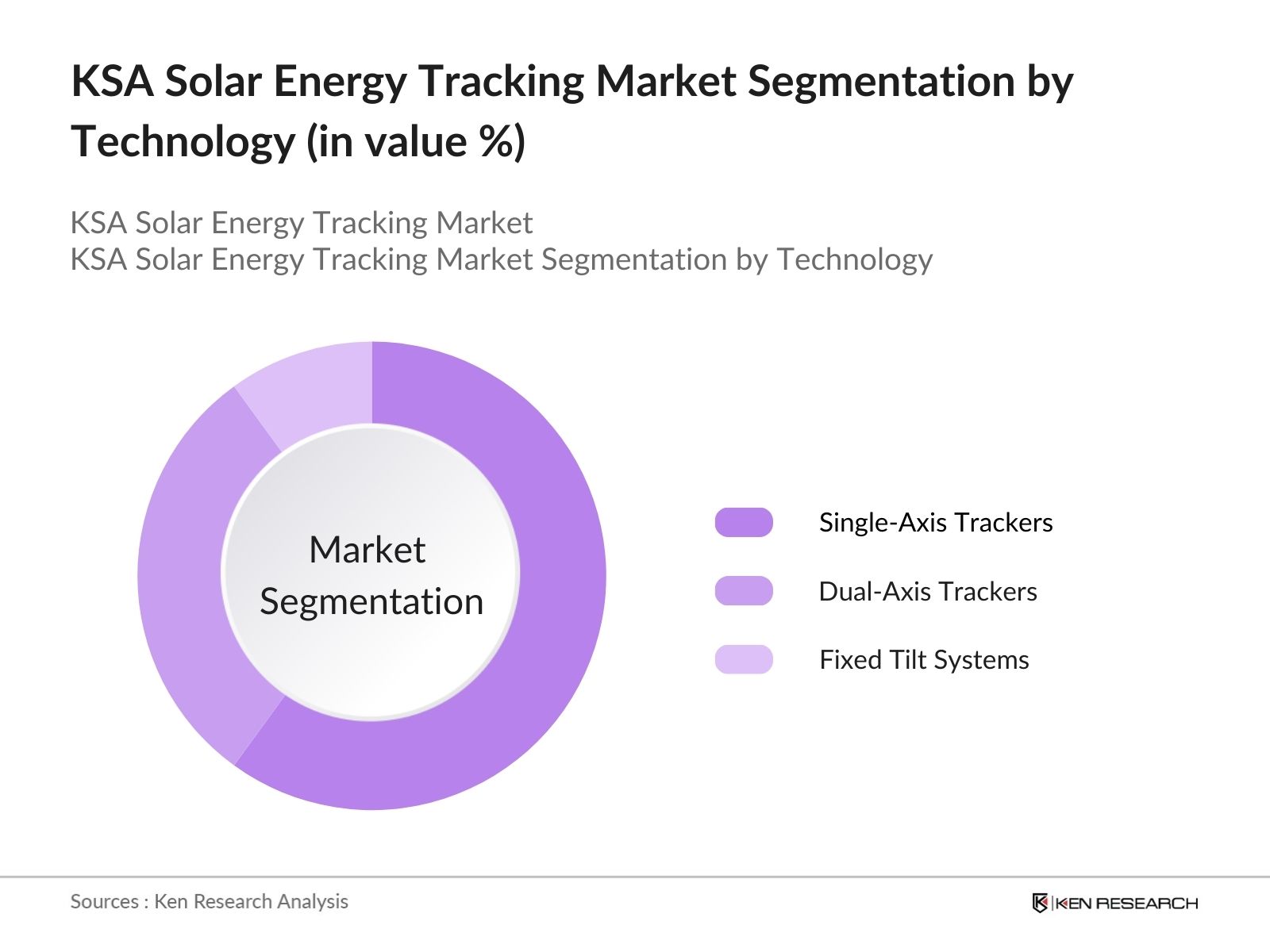
- By Technology: The KSA Solar Energy Tracking market is segmented by technology into single-axis trackers, dual-axis trackers, and fixed tilt systems. Single-axis trackers hold a dominant share of the market due to their cost-effectiveness and ability to enhance energy output by 25-35%. They are particularly favored in large-scale solar projects across Saudi Arabia, as their simplicity in installation and maintenance offers a viable solution for maximizing solar power generation in desert environments.
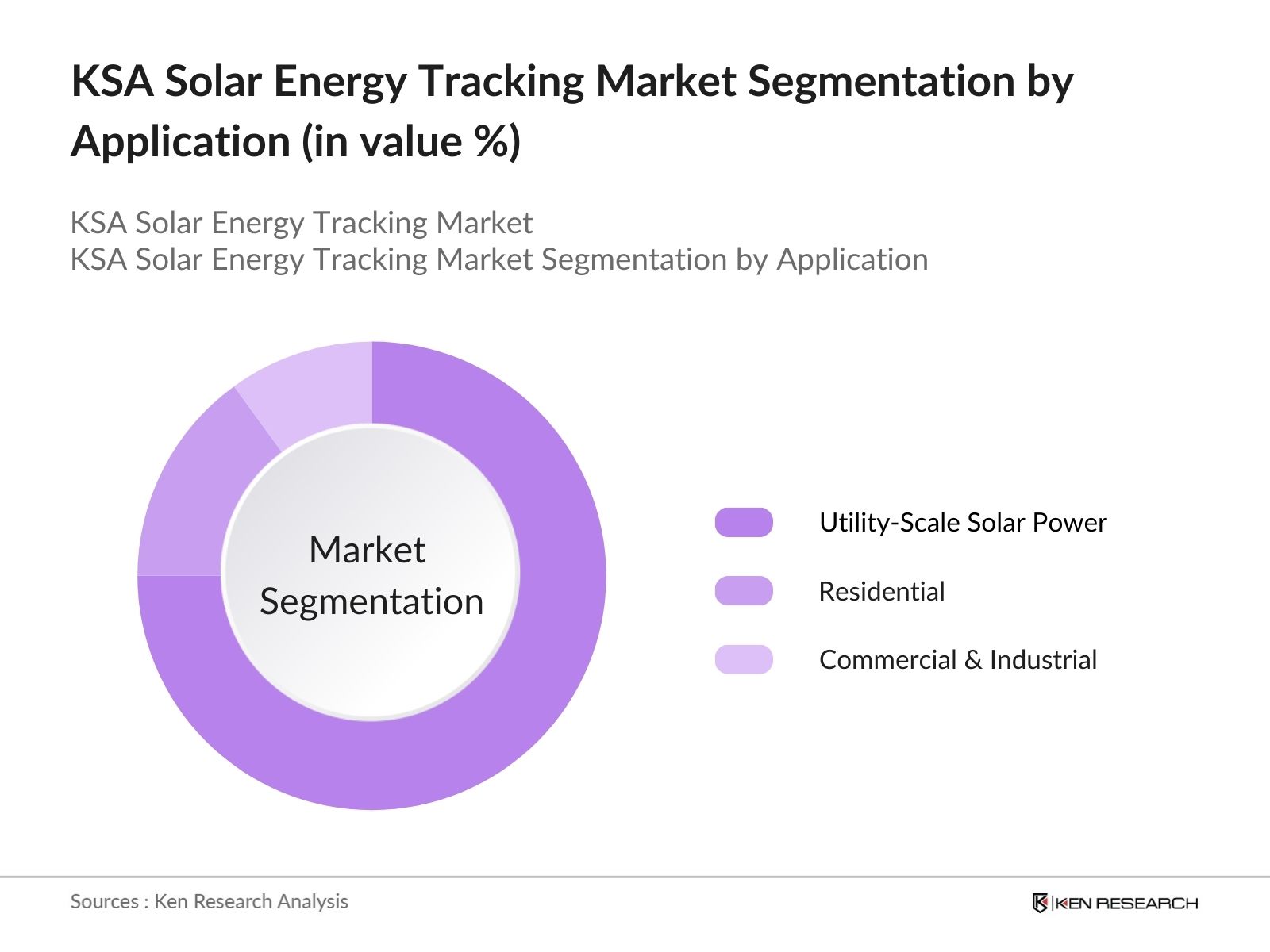
- By Application: In terms of application, the market is segmented into utility-scale solar power, residential, and commercial & industrial. Utility-scale solar power leads in market share, primarily driven by large government-backed projects and significant investments in expanding solar energy capacity. The Kingdoms focus on utility-scale projects is evident in its efforts to meet renewable energy goals, particularly in solar farms like the Sakaka project, which emphasizes efficiency and high energy output.
KSA Solar Energy Tracking Market Competitive Landscape
The KSA Solar Energy Tracking market is consolidated, with major global players operating alongside a few regional companies. Companies such as NEXTracker Inc. and Array Technologies dominate the market, supplying advanced solar tracking systems. This consolidation is supported by key partnerships between foreign technology providers and local firms, enabling technology transfer and local production. The presence of these players underscores their expertise in providing reliable and efficient tracking solutions suitable for Saudi Arabia's climatic conditions.
|
Company |
Establishment Year |
Headquarters |
No. of Employees |
Revenue (USD Bn) |
Technology Focus |
R&D Expenditure (USD Mn) |
Market Share (%) |
Installations (MW) |
Partnerships |
|
NEXTracker Inc. |
2013 |
United States |
|||||||
|
Array Technologies |
1989 |
United States |
|||||||
|
First Solar Inc. |
1999 |
United States |
|||||||
|
Soltec Energas |
2004 |
Spain |
|||||||
|
Arctech Solar |
2009 |
China |
KSA Solar Energy Tracking Industry Analysis
Growth Drivers
- Renewable Energy Adoption: The renewable energy sector in Saudi Arabia is witnessing rapid growth, primarily driven by the governments efforts to diversify the energy mix. Saudi Arabia's National Renewable Energy Program (NREP) has set an ambitious target of generating 27.3 gigawatts of renewable energy by 2025. Solar energy is a key component of this target, with the country focusing on large-scale solar farms. In 2022, renewable energy accounted for 1.3 gigawatts of installed capacity, which is expected to increase significantly by 2025. This push for renewable energy offers immense growth potential for solar energy tracking technologies.
- Government Initiatives (Saudi Vision 2030): Saudi Vision 2030 aims to reduce the nation's reliance on oil and increase renewable energys contribution to the national energy mix. The government has allocated $50 billion to develop renewable energy projects, with solar power at the forefront. The Sakaka solar plant, generating 300 megawatts of electricity, is one of several projects initiated under this vision. These government-backed initiatives directly drive the demand for solar energy tracking systems as the country shifts towards sustainable energy production.
- Increased Solar Farm Installations: Saudi Arabia has seen a rise in solar farm installations due to its abundant sunlight and government initiatives promoting solar energy. In 2022, over 1 gigawatt of solar capacity was operational, with multiple projects under development, including the 2.6-gigawatt Al Shuaibah solar farm. Solar farms require energy tracking systems to maximize efficiency, creating a favorable market for solar trackers. By 2025, solar farms will play a major role in Saudi Arabia's renewable energy landscape, fostering demand for advanced tracking technologies.
Market Restraints
- High Installation Costs: The installation of solar energy tracking systems remains expensive, posing a significant challenge to market growth. Despite a decline in solar panel costs, the overall installation costs for solar farms in Saudi Arabia remain high, ranging between $0.80 and $1.00 per watt for large-scale projects as of 2023. These costs include not only solar panels but also the necessary infrastructure and tracking systems. Government subsidies help, but the initial financial burden can still slow adoption rates.
- Supply Chain Disruptions: Global supply chain disruptions, exacerbated by the COVID-19 pandemic and geopolitical tensions, have affected the availability of key components for solar tracking systems. As of 2024, delays in the procurement of photovoltaic modules and electronic parts have increased lead times for solar energy projects in Saudi Arabia. Import-dependent markets like Saudi Arabia face challenges in securing the necessary components, contributing to project delays and increased costs.
KSA Solar Energy Tracking Market Future Outlook
Over the next five years, the KSA Solar Energy Tracking market is expected to witness substantial growth driven by continuous government support, technological advancements in solar tracking systems, and an increasing focus on sustainable energy sources. The Kingdom's ambitious renewable energy goals, particularly under Saudi Vision 2030, and large-scale solar projects are anticipated to propel the market further. The rise of dual-axis trackers and innovations in energy optimization through IoT will shape the future dynamics of this market.
Market Opportunities
- Technological Advancements in Solar Trackers: The global solar tracking technology market is evolving rapidly, with new advancements improving energy efficiency and durability. In Saudi Arabia, the adoption of dual-axis solar trackers, which increase energy production by up to 30%, offers a significant opportunity. As of 2024, innovations like weather-resistant materials and AI-driven optimization systems are being introduced, making solar trackers more viable in harsh climates. These technological improvements can significantly enhance the efficiency of solar farms in the Kingdom.
- International Collaborations for Research and Development: Saudi Arabias government has been engaging in international collaborations to drive research and development in renewable energy. In 2023, Saudi Arabia signed agreements with several European and Asian countries to collaborate on solar energy technologies, including advanced tracking systems. These collaborations will facilitate the transfer of cutting-edge technologies and expertise to local markets, fostering innovation in solar energy tracking and creating new growth opportunities for international players.
Scope of the Report
|
Technology |
Single-Axis Trackers, Dual-Axis Trackers, Fixed Tilt Systems |
|
Application |
Utility-Scale Solar Power, Residential, Commercial and Industrial |
|
Product Type |
Active Solar Trackers, Passive Solar Trackers, Photovoltaic (PV) Systems |
|
Component |
Sensors, Actuators, Controllers |
|
Region |
Central Region, Eastern Region, Western Region, Northern Region, Southern Region |
Products
Key Target Audience
Solar Energy Developers
Power Utilities and Energy Producers
Government and Regulatory Bodies (Ministry of Energy, Saudi Electricity Company)
Solar Tracker Manufacturers
Technology Providers for Solar Tracking Systems
Renewable Energy Consultants
Venture Capital Firms and Investors
Engineering, Procurement, and Construction (EPC) Firms
Companies
Players Mentioned in the Report:
NEXTracker Inc.
Array Technologies
First Solar Inc.
Soltec Energas
Arctech Solar
PV Hardware
Solar Steel
GameChange Solar
Mahindra Susten
BrightSource Energy
Trina Solar
STI Norland
SolSystems LLC
Frontier Renewables
First Solar
Table of Contents
1. KSA Solar Energy Tracking Market Overview
1.1. Definition and Scope
1.2. Market Taxonomy
1.3. Market Growth Rate (Energy efficiency, sustainability metrics)
1.4. Market Segmentation Overview (Technology, application, type, and region)
2. KSA Solar Energy Tracking Market Size (In USD Mn)
2.1. Historical Market Size
2.2. Year-On-Year Growth Analysis (Solar energy output, power generation capacity)
2.3. Key Market Developments and Milestones (Government policies, renewable energy targets)
3. KSA Solar Energy Tracking Market Analysis
3.1. Growth Drivers
3.1.1. Renewable Energy Adoption
3.1.2. Government Initiatives (Saudi Vision 2030)
3.1.3. Increased Solar Farm Installations
3.1.4. Energy Efficiency Goals
3.2. Market Challenges
3.2.1. High Installation Costs
3.2.2. Supply Chain Disruptions
3.2.3. Lack of Local Manufacturing Facilities
3.2.4. Harsh Climatic Conditions
3.3. Opportunities
3.3.1. Technological Advancements in Solar Trackers
3.3.2. International Collaborations for Research and Development
3.3.3. Expansion of Utility-Scale Solar Projects
3.4. Trends
3.4.1. Dual-Axis Solar Trackers Adoption
3.4.2. Integration of IoT and AI for Energy Optimization
3.4.3. Increased Focus on Hybrid Energy Systems
3.5. Government Regulation
3.5.1. National Renewable Energy Program (NREP)
3.5.2. Feed-in Tariff Policies
3.5.3. Regulatory Support for Solar Energy Projects
3.5.4. Licensing and Compliance Requirements
3.6. SWOT Analysis (Solar energy efficiency, local ecosystem support, regulatory hurdles)
3.7. Stakeholder Ecosystem (Government bodies, local manufacturers, R&D institutions)
3.8. Porters Five Forces (Supplier power, buyer power, competition, entry barriers)
3.9. Competitive Landscape (15 major players)
4. KSA Solar Energy Tracking Market Segmentation
4.1. By Technology (In Value %)
4.1.1. Single-Axis Trackers
4.1.2. Dual-Axis Trackers
4.1.3. Fixed Tilt Systems
4.2. By Application (In Value %)
4.2.1. Utility-Scale Solar Power
4.2.2. Residential
4.2.3. Commercial and Industrial
4.3. By Product Type (In Value %)
4.3.1. Active Solar Trackers
4.3.2. Passive Solar Trackers
4.3.3. Photovoltaic (PV) Systems
4.4. By Component (In Value %)
4.4.1. Sensors
4.4.2. Actuators
4.4.3. Controllers
4.5. By Region (In Value %)
4.5.1. Central Region
4.5.2. Eastern Region
4.5.3. Western Region
4.5.4. Northern Region
4.5.5. Southern Region
5. KSA Solar Energy Tracking Market Competitive Analysis
5.1. Detailed Profiles of Major Companies
5.1.1. NEXTracker Inc.
5.1.2. Array Technologies
5.1.3. First Solar Inc.
5.1.4. SunPower Corporation
5.1.5. Soltec Energas Renovables
5.1.6. Arctech Solar
5.1.7. GameChange Solar
5.1.8. PV Hardware
5.1.9. Solar Steel
5.1.10. Mahindra Susten
5.1.11. Trina Solar
5.1.12. BrightSource Energy
5.1.13. STI Norland
5.1.14. SolSystems LLC
5.1.15. Frontier Renewables
5.2. Cross Comparison Parameters (No. of Employees, Headquarters, Energy Output, Installations, R&D Expenditure, Patent Portfolio, Product Innovations, Revenue)
5.3. Market Share Analysis (Market share by technology, by region)
5.4. Strategic Initiatives (Joint ventures, partnerships, sustainability goals)
5.5. Mergers and Acquisitions (Recent deals, market consolidation)
5.6. Investment Analysis (Foreign direct investments, local investments in solar energy)
5.7. Venture Capital Funding (Emerging solar tracker technologies)
5.8. Government Grants (Renewable energy subsidies)
5.9. Private Equity Investments (Private funding trends in solar projects)
6. KSA Solar Energy Tracking Market Regulatory Framework
6.1. Renewable Energy Certificates
6.2. Grid Connectivity Policies
6.3. Certification and Standards (ISO certifications, compliance standards)
6.4. Licensing Requirements
7. KSA Solar Energy Tracking Market Future Market Size (In USD Mn)
7.1. Future Market Size Projections
7.2. Key Factors Driving Future Market Growth (Increase in solar adoption, technological improvements)
8. KSA Solar Energy Tracking Future Market Segmentation
8.1. By Technology (In Value %)
8.2. By Application (In Value %)
8.3. By Product Type (In Value %)
8.4. By Component (In Value %)
8.5. By Region (In Value %)
9. KSA Solar Energy Tracking Market Analysts Recommendations
9.1. TAM/SAM/SOM Analysis
9.2. Customer Segmentation Analysis (Commercial vs Residential market potential)
9.3. Key Marketing Strategies (Market penetration, brand differentiation)
9.4. Emerging White Space Opportunities (New geographic regions, underutilized segments)
Research Methodology
Step 1: Identification of Key Variables
The first step involves mapping the KSA Solar Energy Tracking Market ecosystem, identifying key stakeholders, including solar energy developers, tracker manufacturers, and government bodies. This was done using extensive secondary research across proprietary databases and publicly available industry reports to identify variables such as technology, market demand, and regulatory influences.
Step 2: Market Analysis and Construction
In this phase, historical data related to the KSA Solar Energy Tracking Market was compiled to assess market penetration, technological adoption, and revenue generation. Analyzing solar energy installations and energy output data provided insight into key trends and market size estimations.
Step 3: Hypothesis Validation and Expert Consultation
We validated market hypotheses through consultations with industry experts via telephone interviews. These experts offered insights into operational challenges, investment patterns, and technology adoption trends, which refined our understanding of market drivers.
Step 4: Research Synthesis and Final Output
The final stage involved synthesizing insights from solar energy manufacturers to understand their product offerings, sales performance, and strategic goals. This direct engagement allowed us to produce an accurate and comprehensive analysis of the KSA Solar Energy Tracking market.
Frequently Asked Questions
01. How big is the KSA Solar Energy Tracking Market?
The KSA Solar Energy Tracking Market is valued at USD 336 million, driven by Saudi Vision 2030 and the Kingdom's push for renewable energy, specifically in solar energy projects.
02. What are the challenges in the KSA Solar Energy Tracking Market?
Key challenges include high installation costs, supply chain disruptions, and the lack of local manufacturing facilities. Additionally, the harsh climatic conditions in Saudi Arabia create operational challenges for solar energy projects.
03. Who are the major players in the KSA Solar Energy Tracking Market?
Major players include NEXTracker Inc., Array Technologies, First Solar Inc., Soltec Energas, and Arctech Solar. These companies lead due to their technological innovations, strong partnerships, and robust product offerings.
04. What are the growth drivers of the KSA Solar Energy Tracking Market?
The market is driven by government initiatives under Saudi Vision 2030, the increasing installation of utility-scale solar farms, and advancements in solar tracking technologies that maximize energy efficiency.
Why Buy From Us?

What makes us stand out is that our consultants follows Robust, Refine and Result (RRR) methodology. i.e. Robust for clear definitions, approaches and sanity checking, Refine for differentiating respondents facts and opinions and Result for presenting data with story

We have set a benchmark in the industry by offering our clients with syndicated and customized market research reports featuring coverage of entire market as well as meticulous research and analyst insights.

While we don't replace traditional research, we flip the method upside down. Our dual approach of Top Bottom & Bottom Top ensures quality deliverable by not just verifying company fundamentals but also looking at the sector and macroeconomic factors.

With one step in the future, our research team constantly tries to show you the bigger picture. We help with some of the tough questions you may encounter along the way: How is the industry positioned? Best marketing channel? KPI's of competitors? By aligning every element, we help maximize success.

Our report gives you instant access to the answers and sources that other companies might choose to hide. We elaborate each steps of research methodology we have used and showcase you the sample size to earn your trust.

If you need any support, we are here! We pride ourselves on universe strength, data quality, and quick, friendly, and professional service.