
KSA Structural Steel Fabrication Market Outlook to 2030
Region:Middle East
Author(s):Meenakshi
Product Code:KROD10442
Region:Middle East
Author(s):Meenakshi
Product Code:KROD10442
November 2024
89
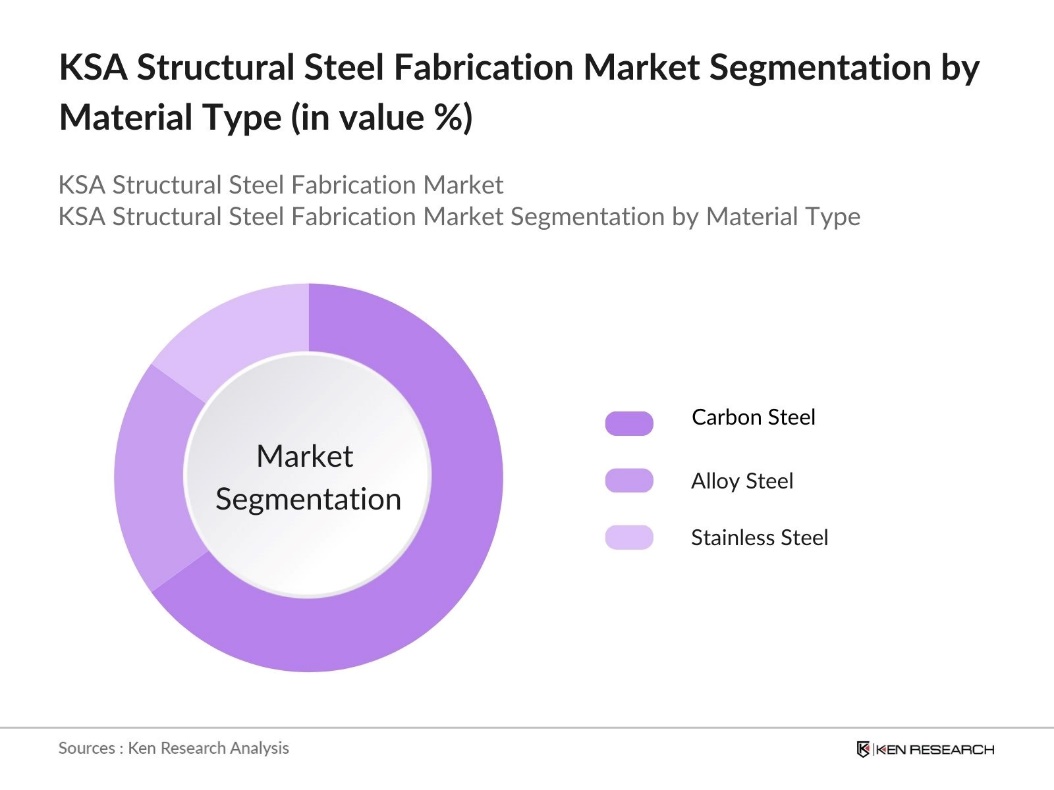
By Material Type: The KSA structural steel fabrication market is segmented by material type into carbon steel, alloy steel, and stainless steel. Carbon steel holds a dominant share due to its widespread application in construction and industrial sectors. Carbon steels cost-effectiveness and versatility make it the preferred choice for projects requiring structural integrity, such as high-rise buildings, bridges, and large industrial platforms. Alloy steel and stainless steel, while used in specialized applications like oil & gas infrastructure, occupy smaller portions of the market.
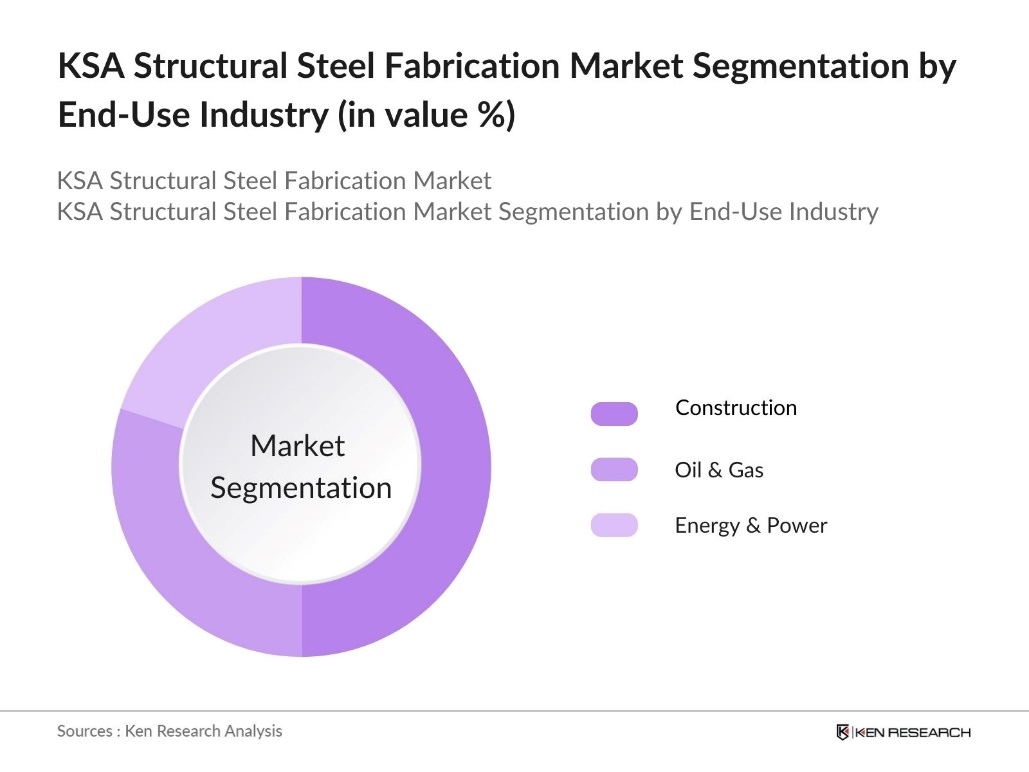
By End-Use Industry: The KSA structural steel fabrication market is segmented by end-use industry, with key sectors being construction (commercial, residential, industrial), oil & gas, and energy & power. The construction sector dominates due to its diverse applications, ranging from residential towers to commercial complexes and industrial plants. Oil & gas, while significant, comes second due to its focus on heavy-duty steel structures like platforms and pipelines that require specialized materials and fabrication processes.
The KSA structural steel fabrication market is dominated by a mix of local and international players, all of whom possess extensive fabrication capabilities and cater to a diverse range of projects. These companies maintain a competitive edge through investments in advanced fabrication technologies, expansion of production capacities, and strategic partnerships with construction and industrial players.
|
Company |
Establishment Year |
Headquarters |
Production Capacity |
Major Projects |
Fabrication Facilities |
Certifications |
Revenue (2023) |
Strategic Partners |
|
Zamil Steel |
1977 |
Dammam |
||||||
|
Al-Rashed Steel |
1950 |
Riyadh |
||||||
|
AIC Steel |
1994 |
Jeddah |
||||||
|
Al-Babtain |
1955 |
Riyadh |
||||||
|
Saudi Steel Pipe Co. |
1980 |
Dammam |
The KSA structural steel fabrication market is poised for substantial growth in the coming years, primarily driven by the governments push for economic diversification and infrastructure development under the Vision 2030 initiative. Large-scale construction projects, expanding industrial capacity, and growing energy infrastructure will be key drivers of the market. Additionally, advancements in technology such as smart steel fabrication and the increasing use of green steel for sustainable construction will provide new opportunities for market players.
|
Material Type |
Carbon Steel Alloy Steel Stainless Steel |
|
End-Use Industry |
Construction Oil & Gas Energy & Power Transportation Infrastructure Projects |
|
Application |
Beams & Columns Trusses & Girders Industrial Platforms Pipe Racks Pre-engineered Buildings |
|
Process |
Cutting Welding Bending Surface Treatment |
|
Region |
East West North South |
1.1. Definition and Scope
1.2. Market Taxonomy
1.3. Market Growth Rate
1.4. Market Segmentation Overview
2.1. Historical Market Size
2.2. Year-On-Year Growth Analysis
2.3. Key Market Developments and Milestones
3.1. Growth Drivers
3.1.1. Government Infrastructure Initiatives (Vision 2030, Public Sector Projects)
3.1.2. Expansion of Construction Sector (Industrial and Commercial Projects)
3.1.3. Increasing Urbanization and Industrialization
3.1.4. Rise in Demand for High-Quality Steel Components
3.2. Market Challenges
3.2.1. Volatility in Steel Prices
3.2.2. Supply Chain Disruptions (Raw Material Availability)
3.2.3. Environmental and Regulatory Compliance (Carbon Emissions, Sustainability Targets)
3.2.4. Shortage of Skilled Workforce in Fabrication Sector
3.3. Opportunities
3.3.1. Technological Advancements (Automation, Robotics, Smart Fabrication)
3.3.2. New Applications (Energy Sector, Renewable Energy Infrastructure)
3.3.3. Potential for Export Growth (MENA Region, Global Expansion)
3.3.4. Increasing Demand for Pre-fabricated Steel Structures
3.4. Trends
3.4.1. Adoption of Digital Fabrication Technologies
3.4.2. Rise of Modular Construction
3.4.3. Green Steel Production and Sustainable Fabrication Practices
3.4.4. Expansion into Specialized Applications (High-Rise Buildings, Oil & Gas Infrastructure)
3.5. Government Regulation
3.5.1. Import Tariffs and Local Content Regulations
3.5.2. Environmental Regulations (Emission Standards)
3.5.3. Incentives for Industrial Growth (Tax Benefits, Infrastructure Funding)
3.5.4. Compliance with International Structural Standards (ISO, ASTM)
3.6. SWOT Analysis
3.7. Stakeholder Ecosystem
3.8. Porters Five Forces
3.9. Competition Ecosystem
4.1. By Material Type (In Value %)
4.1.1. Carbon Steel
4.1.2. Alloy Steel
4.1.3. Stainless Steel
4.2. By End-Use Industry (In Value %)
4.2.1. Construction (Commercial, Industrial, Residential)
4.2.2. Oil & Gas
4.2.3. Energy & Power
4.2.4. Transportation (Bridges, Rail)
4.2.5. Infrastructure Projects
4.3. By Application (In Value %)
4.3.1. Beams & Columns
4.3.2. Trusses & Girders
4.3.3. Industrial Platforms
4.3.4. Pipe Racks
4.3.5. Pre-engineered Buildings
4.4. By Process (In Value %)
4.4.1. Cutting
4.4.2. Welding
4.4.3. Bending
4.4.4. Surface Treatment
4.5. By Region (In Value %)
4.5.1. Central Region
4.5.2. Eastern Province
4.5.3. Western Region
4.5.4. Northern Region
4.5.5. Southern Region
5.1. Detailed Profiles of Major Companies
5.1.1. Zamil Steel
5.1.2. Saudi Steel Pipe Company
5.1.3. Al-Babtain Power & Telecommunication Co.
5.1.4. Red Sea Housing Services
5.1.5. Al-Rashed Steel Products Co.
5.1.6. Al-Tuwairqi Holding
5.1.7. National Pipe Company Ltd.
5.1.8. Arabian Pipes Company
5.1.9. Al-Ittefaq Steel Products Company
5.1.10. ArcelorMittal Jubail
5.1.11. SABIC Hadeed
5.1.12. AIC Steel
5.1.13. Al Yamamah Steel
5.1.14. Attieh Steel
5.1.15. Middle East Specialized Cables Co.
5.2. Cross Comparison Parameters
5.3. Market Share Analysis
5.4. Strategic Initiatives
5.5. Mergers And Acquisitions
5.6. Investment Analysis
5.7. Government Grants and Incentives
6.1. Environmental Standards
6.2. Compliance Requirements
6.3. Certification Processes
7.1. Future Market Size Projections
7.2. Key Factors Driving Future Market Growth
8.1. By Material Type (In Value %)
8.2. By End-Use Industry (In Value %)
8.3. By Application (In Value %)
8.4. By Process (In Value %)
8.5. By Region (In Value %)
9.1. TAM/SAM/SOM Analysis
9.2. Customer Cohort Analysis
9.3. Marketing Initiatives
9.4. White Space Opportunity Analysis
Disclaimer Contact UsThe research commenced with the identification of critical market variables affecting the KSA structural steel fabrication market. This step involved mapping all key stakeholders, including steel manufacturers, fabricators, and end-users across various industries such as construction, energy, and oil & gas. Extensive desk research and proprietary databases were utilized to obtain credible data on these variables.
In the second step, historical data for market penetration, structural steel consumption, and revenue generation were compiled and analyzed. We used reliable industry databases and company financials to derive insights into the markets past performance. Key indicators like domestic steel production, import-export balances, and infrastructural spending were evaluated.
We developed initial market hypotheses, which were validated through direct consultation with industry experts. These interviews were conducted with executives from steel fabricators, construction firms, and project managers working on KSAs largest infrastructure projects. Their inputs were used to validate and adjust market projections.
The final step involved synthesizing research findings from both primary and secondary sources into a cohesive report. Engagements with industry players helped to cross-validate the data and projections, ensuring that the final output reflected a comprehensive and accurate analysis of the market.
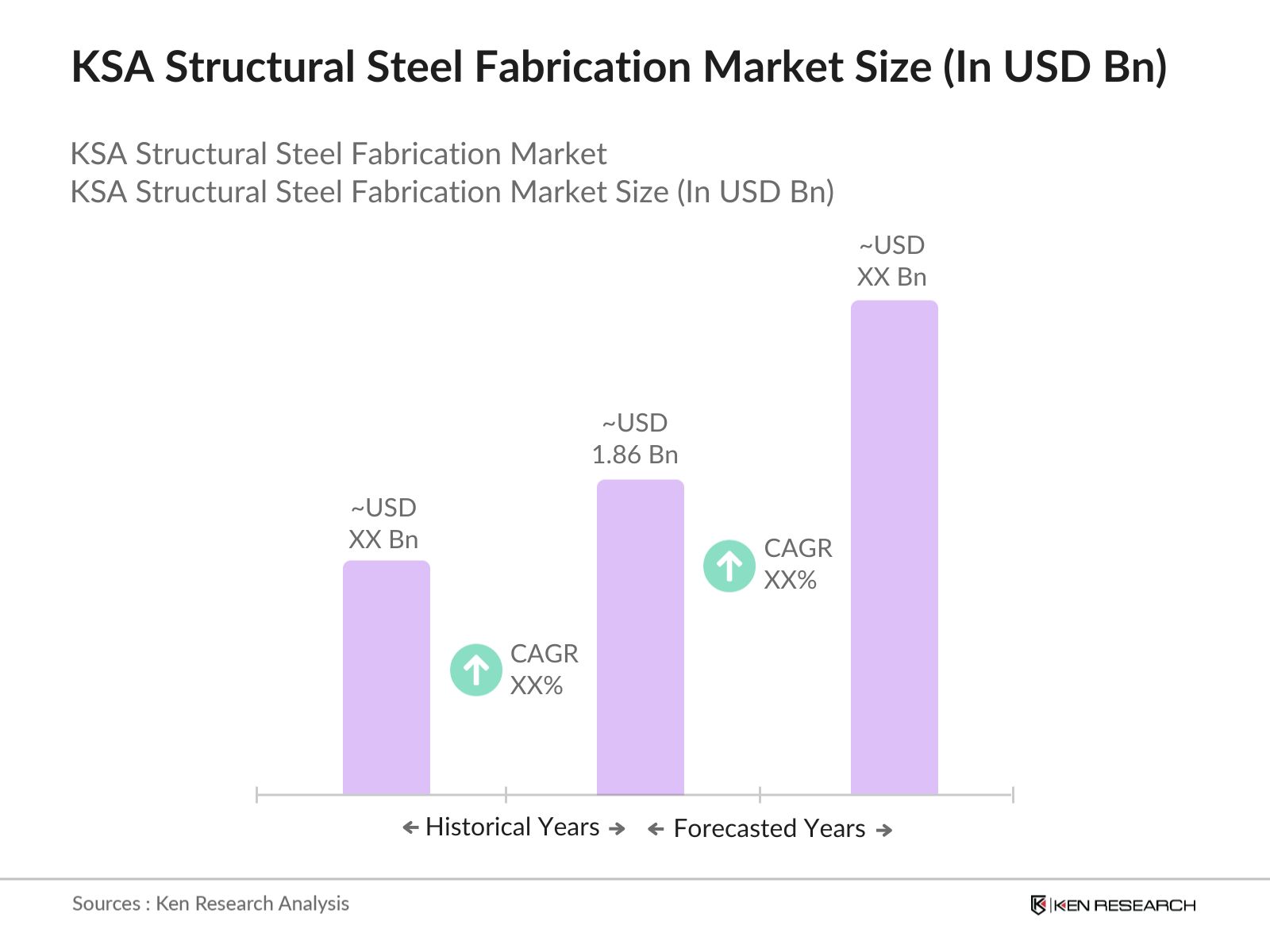
The KSA Structural Steel Fabrication Market is valued at USD 1.86 billion, driven by a surge in infrastructure projects under the Vision 2030 plan. The market continues to see high demand from sectors like construction, oil & gas, and energy.
Key challenges in KSA Structural Steel Fabrication Market include fluctuations in steel prices, supply chain disruptions, and a shortage of skilled labor. Additionally, compliance with environmental regulations and the push toward sustainable steel production pose difficulties for manufacturers.
The KSA Structural Steel Fabrication Market is led by key players such as Zamil Steel, Al-Rashed Steel, AIC Steel, Al-Babtain Power & Telecommunication Co., and Saudi Steel Pipe Co. These companies dominate through their production capacities, strategic projects, and long-term relationships with government bodies.
The KSA Structural Steel Fabrication Market is primarily driven by large infrastructure projects under the Vision 2030 initiative, demand from the oil & gas sector, and investments in industrial and commercial construction. Technological advancements and green steel production also contribute to market growth.

What makes us stand out is that our consultants follows Robust, Refine and Result (RRR) methodology. i.e. Robust for clear definitions, approaches and sanity checking, Refine for differentiating respondents facts and opinions and Result for presenting data with story

We have set a benchmark in the industry by offering our clients with syndicated and customized market research reports featuring coverage of entire market as well as meticulous research and analyst insights.

While we don't replace traditional research, we flip the method upside down. Our dual approach of Top Bottom & Bottom Top ensures quality deliverable by not just verifying company fundamentals but also looking at the sector and macroeconomic factors.

With one step in the future, our research team constantly tries to show you the bigger picture. We help with some of the tough questions you may encounter along the way: How is the industry positioned? Best marketing channel? KPI's of competitors? By aligning every element, we help maximize success.

Our report gives you instant access to the answers and sources that other companies might choose to hide. We elaborate each steps of research methodology we have used and showcase you the sample size to earn your trust.

If you need any support, we are here! We pride ourselves on universe strength, data quality, and quick, friendly, and professional service.