















KSA Tile Market Outlook to 2030
Region:Middle East
Author(s):Meenakshi Bisht
Product Code:KROD2557
November 2024
88
About the Report
KSA Tile Market Overview
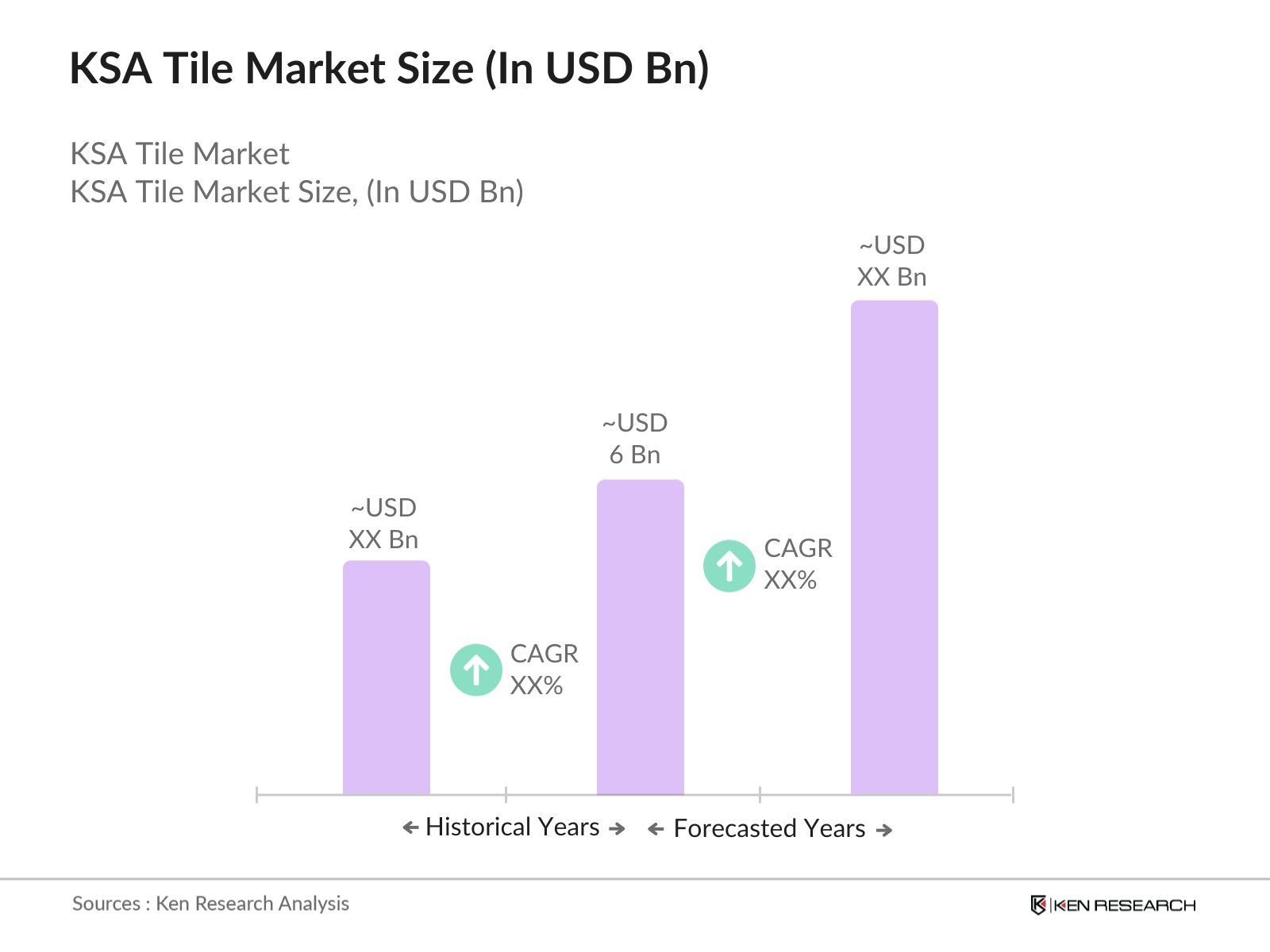
- The KSA Tile Market is valued at USD 6 billion based on a five-year historical analysis. The market is driven by strong demand from the residential and commercial construction sectors, which have seen exponential growth due to Vision 2030's development initiatives. The Kingdom's emphasis on expanding infrastructure projects, such as the Neom City and Red Sea Project, has further accelerated tile consumption in both urban and suburban areas.
- Riyadh, Jeddah, and Dammam are the dominant regions in the KSA Tile Market. Riyadh's dominance stems from being the capital city with numerous government infrastructure projects, while Jeddah serves as a major commercial hub with high demand for commercial and residential buildings. Dammam is also a key player due to its proximity to industrial and commercial zones. These cities' dominance is primarily due to their concentration of ongoing construction and urbanization efforts.
- NEOM has announced an investment of SAR 21 billion to rapidly develop residential communities, accommodating 95,000 occupants. This public-private partnership involves leading Saudi firms and aims to support the region's growing workforce. The project includes relocatable, modular units with lifestyle facilities, aligning with sustainable practices. These communities are critical to supporting NEOMs expanding workforce and advancing Saudi Arabias Vision 2030, which emphasizes large-scale urban development and infrastructure growth.
KSA Tile Market Segmentation
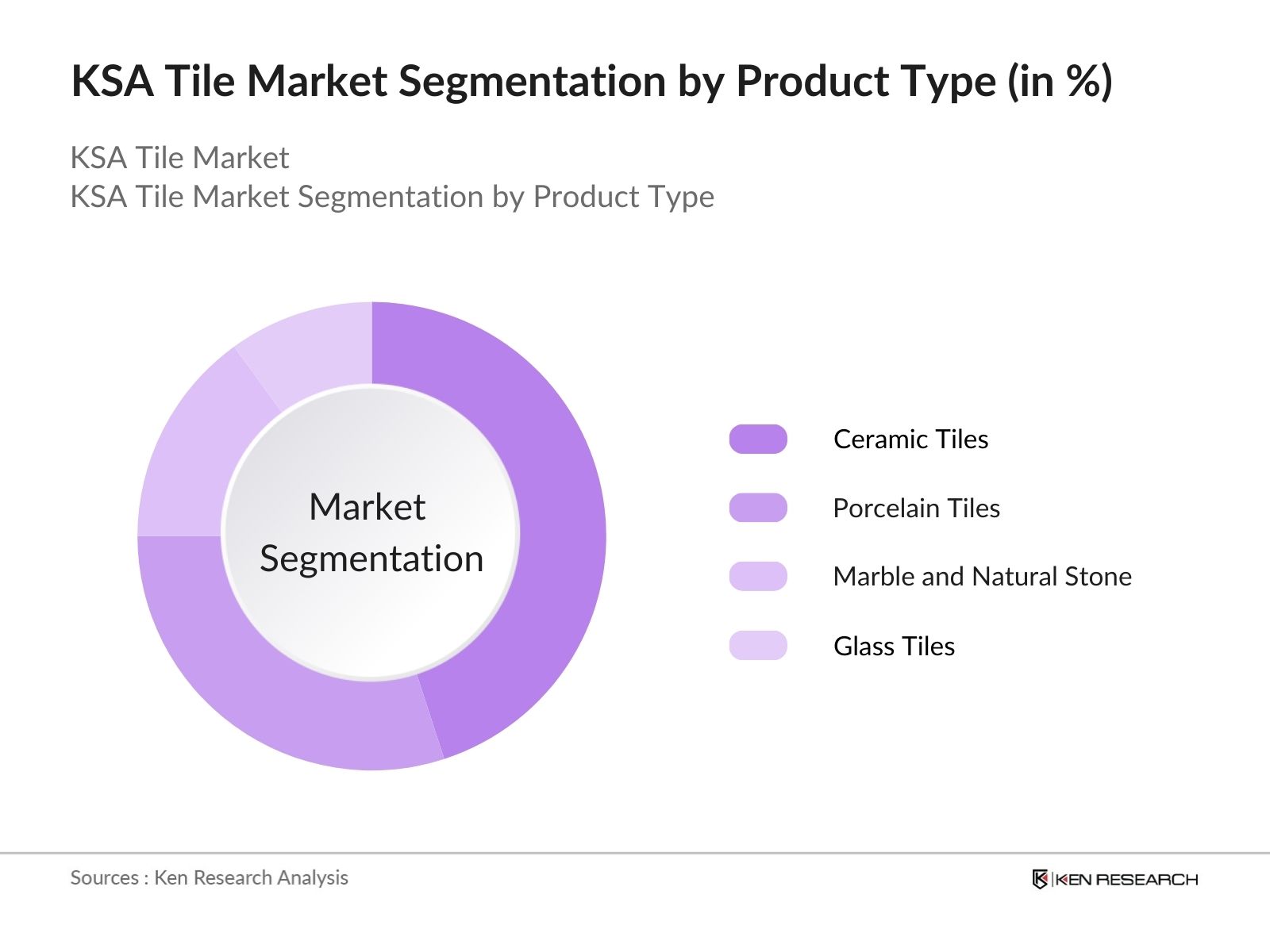
By Product Type: The KSA Tile market is segmented by product type into ceramic tiles, porcelain tiles, marble and natural stone tiles, and glass tiles. Recently, ceramic tiles have held the dominant market share in the Kingdom, primarily due to their affordability and versatility in applications, including residential and commercial settings. Ceramic tiles have become a preferred option for consumers and developers seeking cost-effective solutions while still maintaining durability and aesthetic appeal.
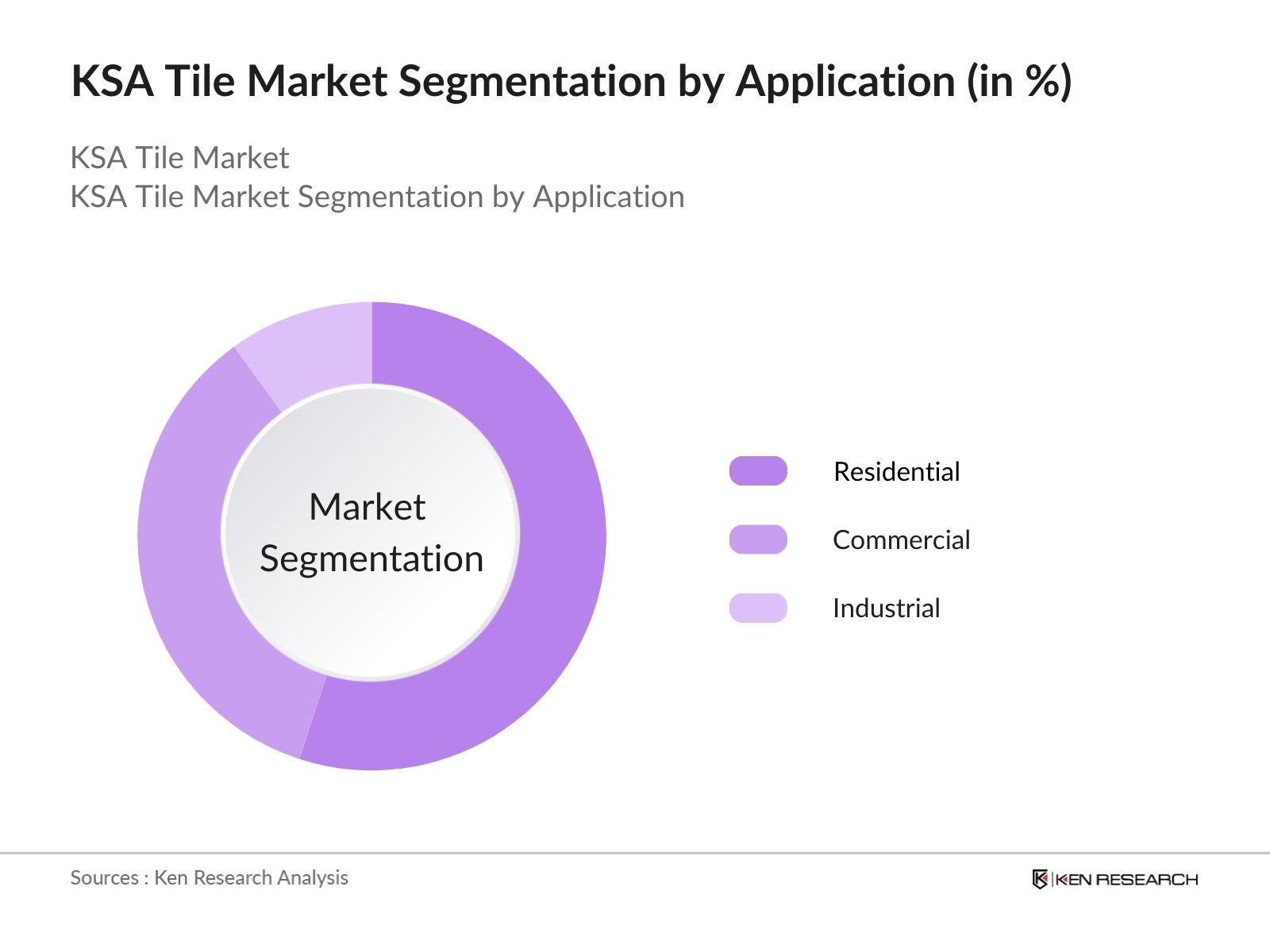
By Application: The KSA Tile market is segmented by application into residential, commercial, and industrial. The residential segment leads the market, driven by the Kingdom's focus on housing developments as part of Vision 2030. Residential construction has surged in cities such as Riyadh and Jeddah, leading to significant tile consumption. Additionally, government-backed housing projects for Saudi nationals have bolstered demand for residential tiles, making this sub-segment the top performer in the market.
KSA Tile Market Competitive Landscape
The KSA Tile market is dominated by a few key players, with both local and international manufacturers contributing to the competitive landscape. Local companies like Saudi Ceramics maintain a strong presence due to their established distribution networks and brand recognition, while international firms such as RAK Ceramics benefit from superior product innovation and high-quality standards. The consolidation in the market highlights the significant influence of these key companies, particularly in government and commercial projects.
|
Company |
Establishment Year |
Headquarters |
No. of Employees |
Revenue (2023, in USD) |
Product Range |
Market Presence |
Strategic Initiatives |
R&D Investment |
Sustainability Efforts |
|
Saudi Ceramics |
1977 |
Riyadh, KSA |
|||||||
|
RAK Ceramics |
1989 |
Ras Al Khaimah, UAE |
|||||||
|
Alfanar Ceramics |
1990 |
Riyadh, KSA |
|||||||
|
Future Ceramics |
2005 |
Riyadh, KSA |
|||||||
|
Kajaria Ceramics |
1985 |
Delhi, India |
KSA Tile Industry Analysis
Growth Drivers
- Government Housing Projects: The NTP has set specific targets related to housing, such as increasing the percentage of Saudi families owning homes from 47% to 70% by 2030. This has led to a rise in housing projects across the country, which has significantly increased the demand for tiles in the construction sector. Government initiatives are accelerating the development of social housing, making tiles a key component in residential projects. These investments are shaping a growing market for a variety of tile types and designs, particularly as housing development expands in response to urbanization and population growth, fueling further demand for construction materials.
- Expanding Retail and Hospitality Sectors: The Saudi retail and hospitality sectors are expanding rapidly, driven by tourism and retail infrastructure projects. Saudi Arabia's hospitality industry is set to add approximately320,000 new hotel rooms by 2030to accommodate a projected150 million visitors annually. These projects require vast quantities of tiles for flooring and wall decoration. The growth of malls, commercial complexes, and entertainment hubs also propels demand for high-quality tiles, particularly for luxury and modern retail spaces.
- Residential Construction Boom: The government's housing programs, including Sakani, are fueling a rise in residential construction, which is driving significant demand for tiles. The construction sector's expansion is closely linked to meeting the needs of a growing population and the push for modern, well-designed housing. Residential buildings are increasingly incorporating advanced and aesthetically pleasing tile designs to align with evolving consumer preferences, boosting tile consumption in both new projects and home renovations.
Market Restraints
- Import Dependency: Saudi Arabia relies heavily on tile imports, particularly from countries like China and Italy, making its market vulnerable to supply chain disruptions and fluctuations in costs driven by import regulations and currency variations. This dependency presents challenges for local manufacturers, as imported tiles often benefit from the cost efficiencies of mass production, giving them a competitive edge in the market. As a result, domestic producers struggle to compete effectively with lower-priced imports, limiting their ability to gain significant market share.
- Rising Raw Material Costs: The rising cost of raw materials and energy is affecting tile production in Saudi Arabia. Global supply chain disruptions and higher energy prices have increased production expenses, limiting manufacturers' ability to maintain competitive pricing. This has created significant pressure on the market, impacting the profitability and growth potential for local tile producers as they navigate these cost challenges.
KSA Tile Market Future Outlook
The KSA Tile Market is expected to experience significant growth over the next five years, driven by large-scale government infrastructure projects and residential development plans under the Vision 2030 initiative. Furthermore, increasing consumer preference for high-quality tiles, along with innovations in tile technology, will propel market demand. The expanding hospitality and tourism sectors, particularly in cities like Riyadh and Jeddah, will further fuel growth as developers invest in modern, aesthetic tile designs to attract international visitors.
Market Opportunities
- Sustainable and Eco-Friendly Tile Demand: Saudi Arabias focus on sustainability through Vision 2030 is driving demand for eco-friendly building materials, including energy-efficient tiles. These tiles, made with recycled materials and low-energy processes, are gaining popularity in both commercial and residential sectors. Public projects like NEOM prioritize such materials, offering opportunities for manufacturers producing tiles that align with environmental standards.
- Innovations in Tile Design and Technology: Technological advancements, such as digitally printed tiles and 3D printing, have significantly improved design flexibility and production efficiency in the tile industry. These innovations allow manufacturers to offer more customizable and high-quality tiles, while also lowering production costs. This shift not only enhances the aesthetic appeal of tiles but also opens up opportunities for premium products in both residential and commercial markets.
Scope of the Report
|
Product Type |
Ceramic Tiles |
|
Application |
Residential |
|
Distribution Channel |
Offline |
|
End-User |
Real Estate Developers |
|
Region |
Riyadh |
Products
Key Target Audience
Real Estate Developers
Architects and Designers
Contractors and Builders
Individual Homeowners
Hospitality and Tourism Sector Players
Investments and Venture Capitalist Firms
Government and Regulatory Bodies (Saudi Building Code, Ministry of Housing)
Companies
Major Players
Saudi Ceramics
RAK Ceramics
Alfanar Ceramics
Forsan Ceramics
Future Ceramics
Al Jawda Ceramics
Arabian Tile Company Ltd.
Tile Warehouse (KSA)
Duravit AG
Jotun
Kajaria Ceramics
Porcellan
Rakhat Ceramics
Saloni Ceramica
The Porcelain Tile Company
Table of Contents
1. KSA Tile Market Overview
1.1. Definition and Scope
1.2. Market Taxonomy
1.3. Market Growth Rate
1.4. Market Segmentation Overview
2. KSA Tile Market Size (In USD Mn)
2.1. Historical Market Size
2.2. YearOnYear Growth Analysis
2.3. Key Market Developments and Milestones
3. KSA Tile Market Analysis
3.1. Growth Drivers
3.1.1. Urban Infrastructure Development
3.1.2. Residential Construction Boom
3.1.3. Government Housing Projects
3.1.4. Expanding Retail and Hospitality Sectors
3.2. Market Restraints
3.2.1. Import Dependency
3.2.2. Rising Raw Material Costs
3.2.3. Competition from International Brands
3.3. Opportunities
3.3.1. Sustainable and EcoFriendly Tile Demand
3.3.2. Innovations in Tile Design and Technology
3.3.3. Growth in Smart City Projects
3.4. Trends
3.4.1. Adoption of Digitally Printed Tiles
3.4.2. Usage of Large Format Tiles
3.4.3. Rising Preference for Natural Stone Tiles
3.5. Government Regulations
3.5.1. Vision 2030s Impact on Construction Sector
3.5.2. Building Code Regulations
3.5.3. Import Tariff Policies
3.5.4. Energy Efficiency Standards in Buildings
3.6. SWOT Analysis
3.7. Stakeholder Ecosystem
3.8. Porters Five Forces
3.9. Competition Ecosystem
4. KSA Tile Market Segmentation
4.1. By Product Type (In Value %)
4.1.1. Ceramic Tiles
4.1.2. Porcelain Tiles
4.1.3. Marble and Natural Stone Tiles
4.1.4. Glass Tiles
4.2. By Application (In Value %)
4.2.1. Residential
4.2.2. Commercial
4.2.3. Industrial
4.3. By Distribution Channel (In Value %)
4.3.1. Offline (Retail Stores, Wholesalers)
4.3.2. Online
4.4. By EndUser (In Value %)
4.4.1. Real Estate Developers
4.4.2. Architects and Designers
4.4.3. Individual Homeowners
4.5. By Region (In Value %)
4.5.1. Riyadh
4.5.2. Jeddah
4.5.3. Dammam
4.5.4. Mecca
4.5.5. Medina
5. KSA Tile Market Competitive Analysis
5.1. Detailed Profiles of Major Companies
5.1.1. Saudi Ceramics
5.1.2. RAK Ceramics
5.1.3. Alfanar Ceramics
5.1.4. Forsan Ceramics
5.1.5. Future Ceramics
5.1.6. Al Jawda Ceramics
5.1.7. Arabian Tile Company Ltd.
5.1.8. Tile Warehouse (KSA)
5.1.9. Duravit AG
5.1.10. Jotun
5.1.11. Kajaria Ceramics
5.1.12. Porcellan
5.1.13. Rakhat Ceramics
5.1.14. Saloni Ceramica
5.1.15. The Porcelain Tile Company
5.2. Cross Comparison Parameters (No. of Employees, Revenue, Regional Presence, Product Portfolio, Technology Adoption, Market Share, Strategic Partnerships, Sustainability Initiatives)
5.3. Market Share Analysis
5.4. Strategic Initiatives
5.5. Mergers and Acquisitions
5.6. Investment Analysis
5.7. Venture Capital Funding
5.8. Government Grants
5.9. Private Equity Investments
6. KSA Tile Market Regulatory Framework
6.1. Quality Standards for Tiles
6.2. Environmental Impact Regulations
6.3. Import and Export Compliance
6.4. Certification Processes for Sustainable Products
7. KSA Tile Market Future Size (In USD Bn)
7.1. Future Market Size Projections
7.2. Key Factors Driving Future Market Growth
8. KSA Tile Market Future Segmentation
8.1. By Product Type (In Value %)
8.2. By Application (In Value %)
8.3. By Distribution Channel (In Value %)
8.4. By End-User (In Value %)
8.5. By Region (In Value %)
9. KSA Tile Market Analyst Recommendations
9.1. TAM/SAM/SOM Analysis
9.2. Customer Cohort Analysis
9.3. Marketing Initiatives
9.4. White Space Opportunity Analysis
Research Methodology
Step 1: Identification of Key Variables
In the initial phase, we identify the major stakeholders in the KSA Tile Market, including manufacturers, distributors, and end-users. A comprehensive industry-level data map is created by combining insights from proprietary and secondary databases to define the key market variables.
Step 2: Market Analysis and Construction
This phase involves analyzing the historical market data to understand the penetration of tile products across various sectors, including residential, commercial, and industrial. This data is then used to evaluate revenue generation and growth trends across key regions in Saudi Arabia.
Step 3: Hypothesis Validation and Expert Consultation
Market assumptions are validated through interviews with key industry experts and stakeholders, including manufacturers, distributors, and contractors. These consultations help refine the data, ensuring the accuracy and reliability of market projections.
Step 4: Research Synthesis and Final Output
Finally, we engage with multiple tile manufacturers to gather insights into product demand, design preferences, and evolving trends. The combined data from bottom-up and top-down approaches helps produce a comprehensive market analysis.
Frequently Asked Questions
01. How big is the KSA Tile Market?
The KSA Tile Market is valued at USD 6 billion, driven by residential and commercial construction projects, particularly fueled by government-backed initiatives such as Vision 2030.
02. What are the challenges in the KSA Tile Market?
Challenges in KSA Tile Market include increasing import costs due to tariff policies, fluctuating raw material prices, and the rising competition from international brands offering innovative tile solutions.
03. Who are the major players in the KSA Tile Market?
Key players in KSA Tile Market include Saudi Ceramics, RAK Ceramics, Alfanar Ceramics, Future Ceramics, and Kajaria Ceramics, who dominate due to their vast distribution networks and strong brand presence.
04. What are the growth drivers of the KSA Tile Market?
The KSA Tile Market is propelled by Vision 2030's infrastructure goals, urbanization, and increasing demand for residential housing. Additionally, innovations in tile design and technology are contributing to market growth.
Why Buy From Us?

What makes us stand out is that our consultants follows Robust, Refine and Result (RRR) methodology. i.e. Robust for clear definitions, approaches and sanity checking, Refine for differentiating respondents facts and opinions and Result for presenting data with story

We have set a benchmark in the industry by offering our clients with syndicated and customized market research reports featuring coverage of entire market as well as meticulous research and analyst insights.

While we don't replace traditional research, we flip the method upside down. Our dual approach of Top Bottom & Bottom Top ensures quality deliverable by not just verifying company fundamentals but also looking at the sector and macroeconomic factors.

With one step in the future, our research team constantly tries to show you the bigger picture. We help with some of the tough questions you may encounter along the way: How is the industry positioned? Best marketing channel? KPI's of competitors? By aligning every element, we help maximize success.

Our report gives you instant access to the answers and sources that other companies might choose to hide. We elaborate each steps of research methodology we have used and showcase you the sample size to earn your trust.

If you need any support, we are here! We pride ourselves on universe strength, data quality, and quick, friendly, and professional service.