
KSA Wearable Medical Devices Market Outlook to 2030
Region:Saudi Arabia
Author(s):Shubham Kashyap
Product Code:KROD2035
Region:Saudi Arabia
Author(s):Shubham Kashyap
Product Code:KROD2035
November 2024
92
Listen to the audio summary
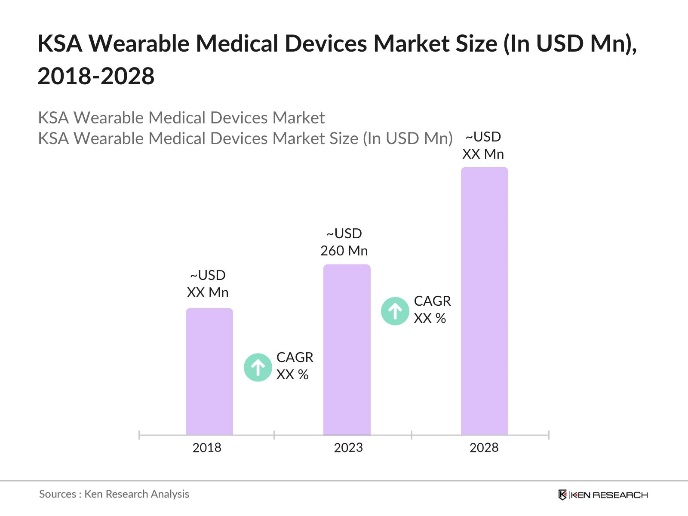
The KSA Wearable Medical Devices Market was valued at USD 260 million in 2023, driven by the rising prevalence of chronic diseases, increasing health consciousness among the population, and advancements in healthcare technology. Wearable medical devices, such as fitness trackers, smartwatches, and wearable ECG monitors, have gained substantial traction as they provide real-time health monitoring, which is crucial for managing and preventing health conditions.
Major players in the KSA Wearable Medical Devices Market include Fitbit, Apple, Garmin, Huawei, and Samsung. These companies lead the market with strong distribution networks, innovative product offerings, and strategic collaborations with healthcare providers and insurers to enhance the adoption of wearable technology in managing patient health.
Riyadh, Jeddah, and Dammam are key regions dominating the market due to their large urban populations, higher disposable incomes, and an increasing number of tech-savvy and health-conscious consumers. These cities also play a pivotal role in the distribution and consumption of wearable medical devices.
In 2023, Huawei launched its latest smartwatch, the Huawei WATCH GT 4, in the KSA market. The watch features a geometric aesthetic design and offers advanced health monitoring capabilities, including 24/7 heart rate monitoring, Blood oxygen (SpO2) tracking, and Stress and sleep tracking.
The KSA Wearable Medical Devices Market is segmented by device type, application, and end-user.
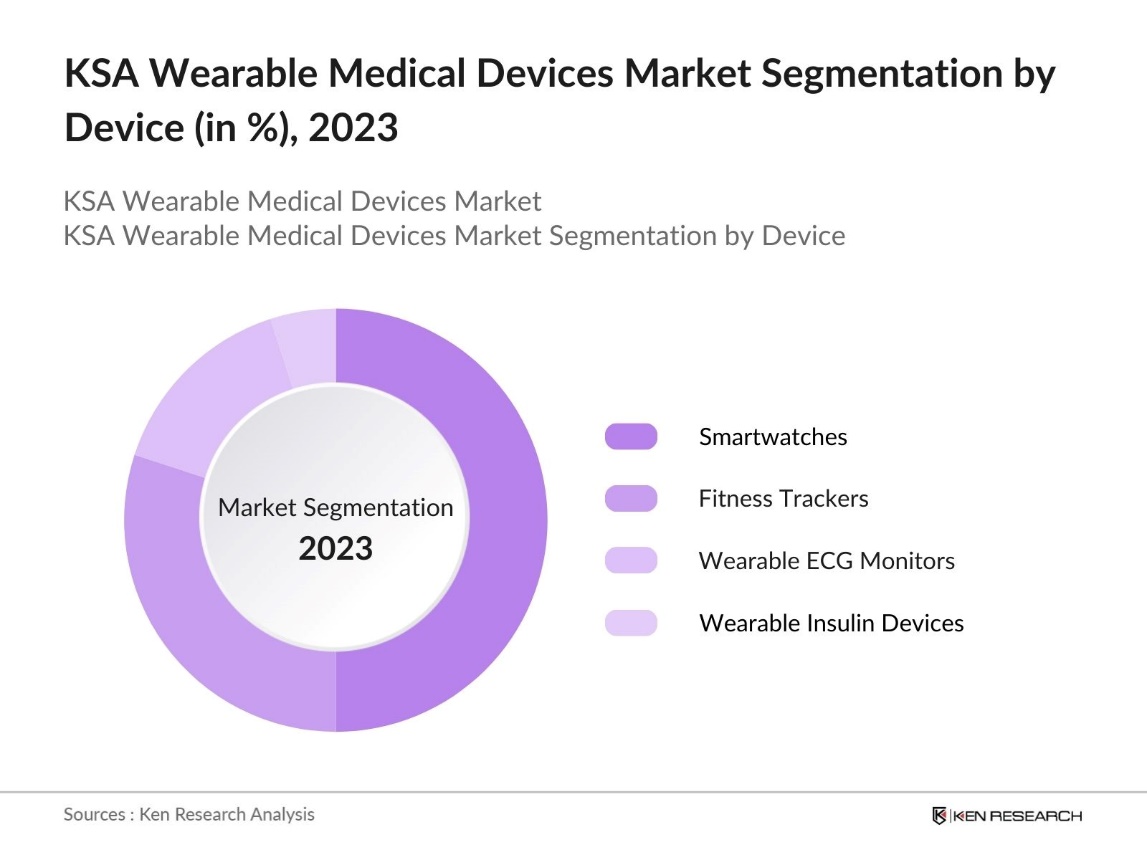
By Device Type: The market is segmented into Fitness Trackers, Smartwatches, Wearable ECG Monitors, and Wearable Insulin Devices. In 2023, Smartwatches held the dominant market share due to their multifunctionality, including health monitoring features like heart rate monitoring, ECG capabilities, and activity tracking. Companies like Apple and Samsung are key players in this segment, offering a variety of smartwatch models tailored to different consumer preferences and healthcare needs.
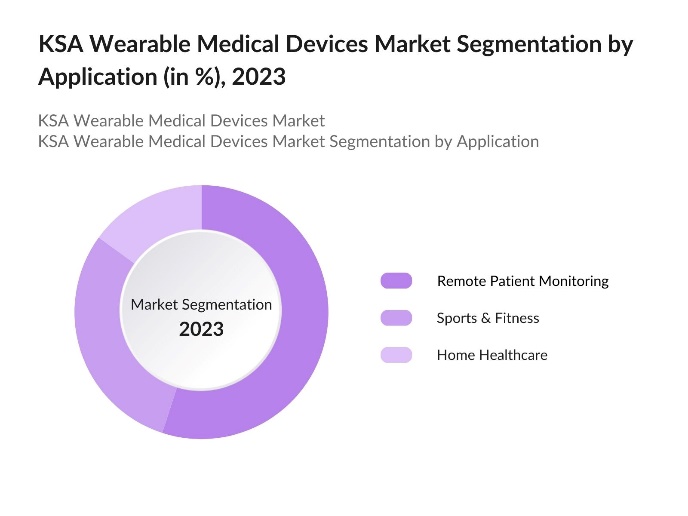
By Application: The market is segmented by application into Remote Patient Monitoring, Sports & Fitness, and Home Healthcare. Remote Patient Monitoring led the market in 2023, driven by the increasing demand for continuous health monitoring solutions and chronic disease management. The integration of wearable devices with telemedicine platforms is also gaining popularity, providing healthcare professionals with real-time patient data.
By Region: The market is segmented by region into North, South, East, and West. The North region, encompassing Riyadh and surrounding areas, dominated the market in 2023 due to its high urban population and advanced healthcare infrastructure. The region's focus on adopting digital health technologies and integrating wearable devices into healthcare practices drives market dominance.
|
Company |
Establishment Year |
Headquarters |
|
Fitbit |
2007 |
San Francisco, USA |
|
Apple |
1976 |
Cupertino, USA |
|
Garmin |
1989 |
Olathe, USA |
|
Huawei |
1987 |
Shenzhen, China |
|
Samsung |
1969 |
Seoul, South Korea |
The KSA Wearable Medical Devices Market is expected to witness substantial growth by 2028, driven by technological advancements, increasing health awareness, and supportive government policies.
|
By Device |
Fitness Trackers Smartwatches Wearable ECG Monitors Wearable Insulin Devices |
|
By Application |
Fitness Trackers Smartwatches Wearable ECG Monitors Wearable Insulin Devices |
|
By Region |
North South East West |
3.1.1 Increasing Prevalence of Chronic Diseases
3.1.2 Technological Advancements in Healthcare
3.1.3 Growing Health Awareness and Fitness Trends
3.2.1 Data Privacy and Security Concerns
3.2.2 High Cost and Limited Reimbursement Policies
3.3.1 Integration with Telemedicine and Remote Monitoring
3.3.2 Growth in Smart Healthcare Solutions
3.4.1 Rising Adoption of AI in Wearables
3.4.2 Expansion of Wearable Device Applications
3.5.1 Saudi Vision 2030 and Healthcare Modernization
3.5.2 SFDA Regulations on Data Security
4.1.1 Fitness Trackers
4.1.2 Smartwatches
4.1.3 Wearable ECG Monitors
4.1.4 Wearable Insulin Devices
4.2.1 Remote Patient Monitoring
4.2.2 Sports & Fitness
4.2.3 Home Healthcare
4.3.1 North
4.3.2 East
4.3.3 South
4.3.4 West
5.1.1 Fitbit
5.1.2 Apple
5.1.3 Garmin
5.1.4 Huawei
5.1.5 Samsung
6.4.1 Venture Capital Funding
6.4.2 Government Grants
6.4.3 Private Equity Investments
8.3.1 By Device Type (in Value %)
8.3.2 By Application (in Value %)
8.3.3 By Region (in Value %)
Ecosystem creation for all the major entities and referring to multiple secondary and proprietary databases to perform desk research around the market to collate industry-level information.
Collating statistics on the KSA wearable medical devices market over the years, penetration of marketplaces, and service providers ratio to compute revenue generated for the KSA wearable medical devices market. Reviewing service quality statistics to understand revenue generated which can ensure accuracy behind the data points shared.
Building market hypotheses and conducting CATIs with industry experts belonging to different companies to validate statistics and seek operational and financial information from company representatives.
Our team will approach multiple essential wearable medical device companies and understand the nature of product segments and sales, consumer preference, and other parameters, which will support us validate statistics derived through a bottom-to-top approach from wearable medical device companies.
The KSA wearable medical devices market was valued at USD 250 million in 2023, driven by rising demand for health monitoring solutions, technological advancements, and the growing prevalence of chronic diseases.
Challenges in the KSA wearable medical devices market include data privacy and security concerns, high costs, and limited reimbursement policies. These factors can affect market adoption and growth potential.
Key players in the KSA wearable medical devices market include Fitbit, Apple, Garmin, Huawei, and Samsung. These companies lead the market through strong distribution networks, innovative product offerings, and strategic collaborations with healthcare providers.
The KSA wearable medical devices market is propelled by the increasing prevalence of chronic diseases, technological advancements in healthcare, and growing health awareness among consumers. These factors are driving the adoption of wearable devices for health monitoring and management.
KSA Wearable Medical Devices Market Size (USD Mn), 2018-2028
Device Type Market Share (2023)

What makes us stand out is that our consultants follows Robust, Refine and Result (RRR) methodology. i.e. Robust for clear definitions, approaches and sanity checking, Refine for differentiating respondents facts and opinions and Result for presenting data with story

We have set a benchmark in the industry by offering our clients with syndicated and customized market research reports featuring coverage of entire market as well as meticulous research and analyst insights.

While we don't replace traditional research, we flip the method upside down. Our dual approach of Top Bottom & Bottom Top ensures quality deliverable by not just verifying company fundamentals but also looking at the sector and macroeconomic factors.

With one step in the future, our research team constantly tries to show you the bigger picture. We help with some of the tough questions you may encounter along the way: How is the industry positioned? Best marketing channel? KPI's of competitors? By aligning every element, we help maximize success.

Our report gives you instant access to the answers and sources that other companies might choose to hide. We elaborate each steps of research methodology we have used and showcase you the sample size to earn your trust.

If you need any support, we are here! We pride ourselves on universe strength, data quality, and quick, friendly, and professional service.