















Latin America Automated Guided Vehicles Market Outlook to 2030
Region:Central and South America
Author(s):Paribhasha Tiwari
Product Code:KROD2731
December 2024
100
About the Report
Latin America Automated Guided Vehicles Market Overview
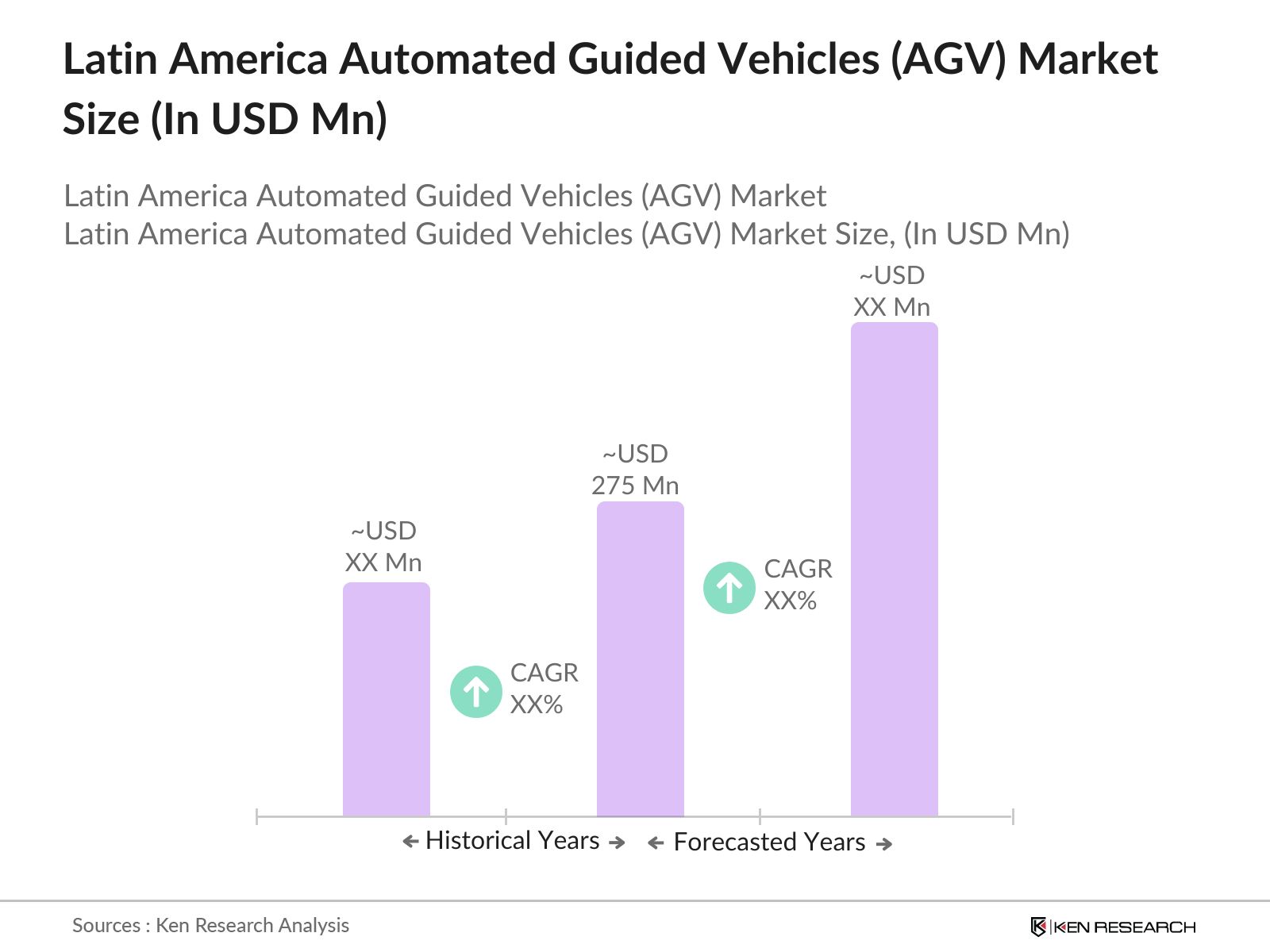
- The Latin American Automated Guided Vehicles (AGV) market is valued at USD 275 million, based on a five-year historical analysis. This growth is driven by the increasing adoption of automation in industries such as automotive, food and beverage, and retail, aiming to enhance operational efficiency and reduce labor costs. The expansion of e-commerce and the need for efficient material handling solutions have further propelled the demand for AGVs in the region.
- Brazil and Mexico are the dominant countries in the Latin American AGV market. Brazil's robust industrial base and significant investments in automation technologies contribute to its leading position. Mexico's proximity to the United States and its role as a manufacturing hub for automotive and electronics industries drive the adoption of AGVs to streamline production and logistics processes.
- Over 5 million units of home improvement products made from recycled materials entered the market in 2024, reflecting a shift in production priorities. Companies are committing to sustainable practices in response to increased consumer and regulatory pressures for eco-friendly solutions.
Latin America Automated Guided Vehicles Market Segmentation
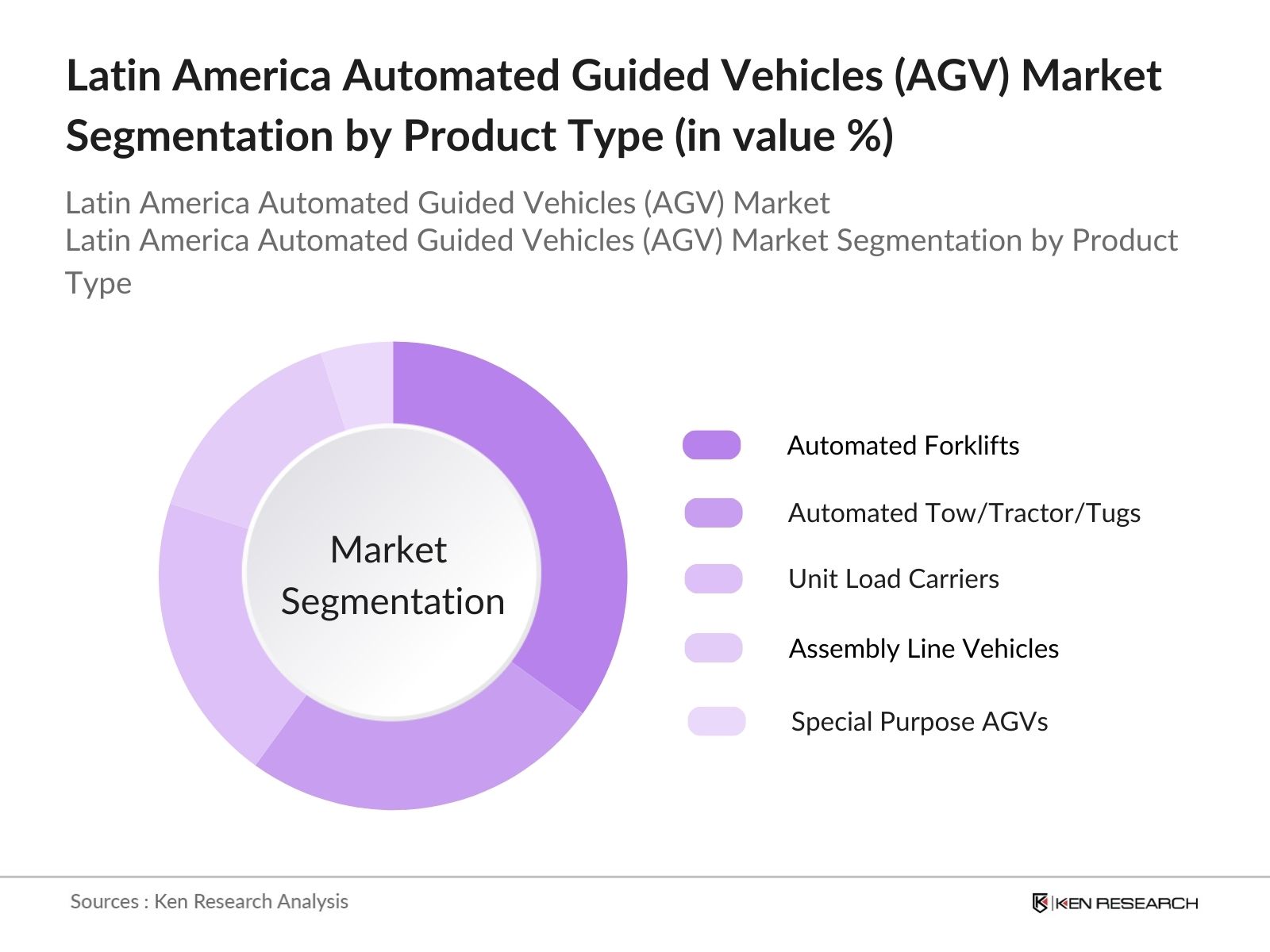
By Product Type: The Latin American AGV market is segmented by product type into Automated Forklifts, Automated Tow/Tractor/Tugs, Unit Load Carriers, Assembly Line Vehicles, and Special Purpose AGVs. Automated Forklifts hold a dominant market share due to their versatility in handling various materials and their ability to integrate seamlessly into existing warehouse infrastructures. Their capability to perform tasks such as loading, unloading, and transporting goods within warehouses and manufacturing facilities makes them indispensable in operations aiming to enhance efficiency and safety.
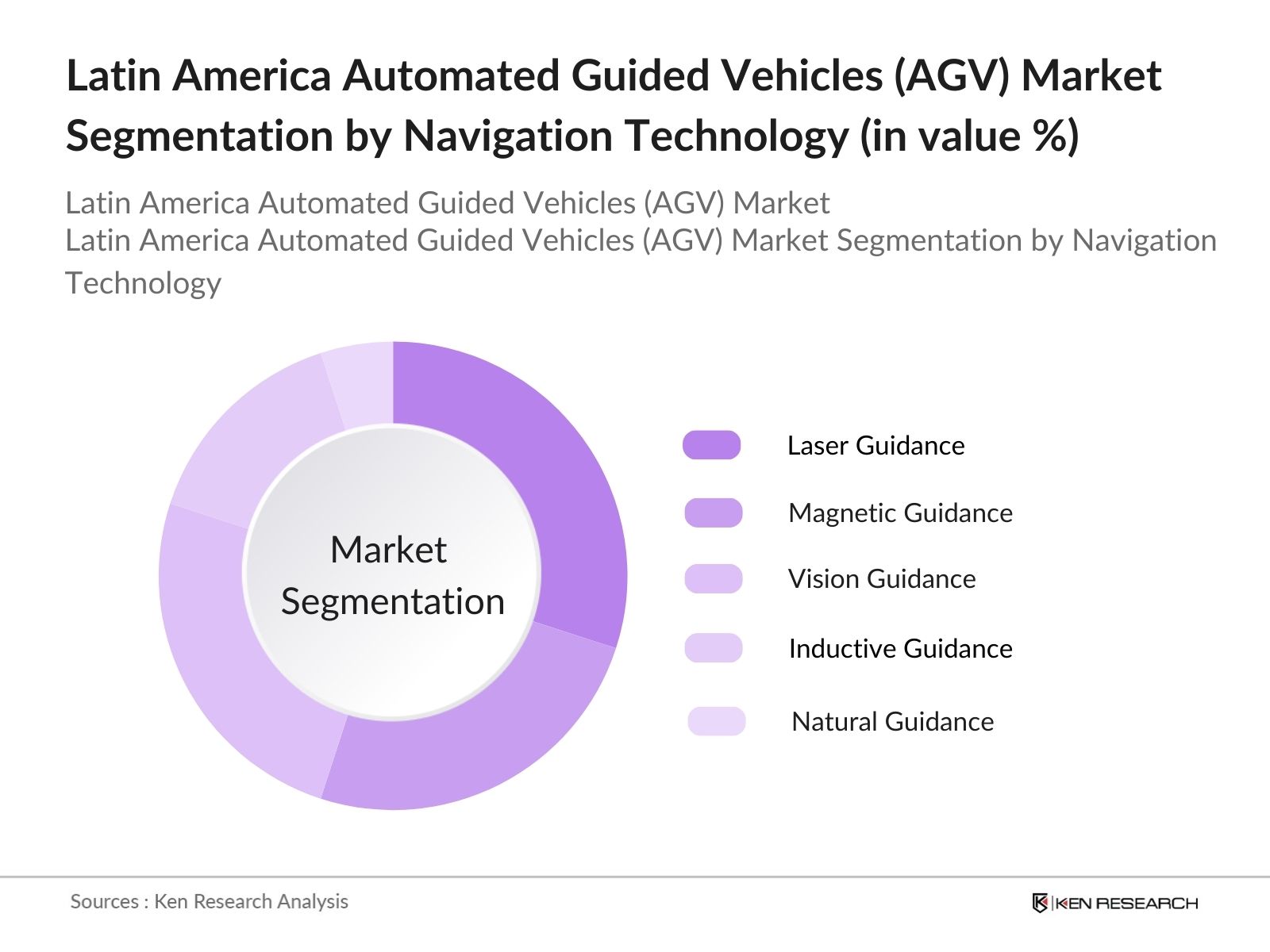
By Navigation Technology: The market is also segmented by navigation technology into Laser Guidance, Magnetic Guidance, Vision Guidance, Inductive Guidance, and Natural Navigation. Laser Guidance systems dominate the market share owing to their high precision and reliability in navigating complex environments. These systems use laser sensors to map surroundings and determine optimal paths, making them suitable for industries requiring high accuracy and flexibility in material handling operations.
Latin America Automated Guided Vehicles Market Competitive Landscape
The Latin American AGV market is characterized by the presence of both global and regional players, contributing to a competitive environment. Companies are focusing on technological advancements, strategic partnerships, and expanding their product portfolios to strengthen their market positions. The emphasis on customization and providing comprehensive after-sales services is also a notable trend among key players.
|
Company Name |
Establishment Year |
Headquarters |
Market Presence |
Technology Integration |
Regional Focus |
Revenue (USD) |
Sustainability Initiatives |
|---|---|---|---|---|---|---|---|
|
KUKA Group |
1898 |
Augsburg, Germany |
- |
- |
- |
- |
- |
|
Schaefer Systems International Pvt Ltd |
1937 |
Neunkirchen, Germany |
- |
- |
- |
- |
- |
|
ABB Ltd. |
1988 |
Zurich, Switzerland |
- |
- |
- |
- |
- |
|
Jungheinrich Group |
1953 |
Hamburg, Germany |
- |
- |
- |
- |
- |
|
Dematic Group (KION) |
1819 |
Atlanta, USA |
- |
- |
- |
- |
- |
Latin America Automated Guided Vehicles Market Analysis
Growth Drivers
- Industrial Automation Adoption: The global push towards industrial automation has significantly increased the deployment of Automated Guided Vehicles (AGVs) in manufacturing and warehousing sectors. In 2024, the global industrial automation market is projected to reach USD 250 billion, reflecting a substantial investment in technologies like AGVs to enhance operational efficiency and reduce human intervention.
- E-commerce Expansion: The e-commerce sector's rapid growth has escalated the demand for efficient material handling solutions. In 2024, global e-commerce sales are expected to surpass USD 5 trillion, necessitating advanced logistics systems, including AGVs, to manage increased order volumes and expedite delivery processes.
- Labor Cost Optimization: Rising labor costs have prompted industries to seek automation solutions to maintain profitability. In 2024, the average annual wage in the manufacturing sector is anticipated to exceed USD 50,000, making AGVs a cost-effective alternative for tasks such as material transport and assembly line operations.
Market Challenges
- High Initial Investment: The substantial upfront costs associated with AGV implementation can be a barrier for small and medium-sized enterprises. In 2024, the average cost of deploying a single AGV system is estimated to be around USD 150,000, which includes expenses for hardware, software, and integration services.
- Technical Integration Issues: Integrating AGVs into existing operations can be complex, requiring significant modifications to current infrastructure. In 2024, it is estimated that 30% of companies face challenges in integrating AGVs with their existing warehouse management systems, leading to potential operational disruptions.
Latin America Automated Guided Vehicles Market Future Outlook
Over the next five years, the Latin American AGV market is expected to exhibit significant growth driven by continuous advancements in automation technologies, increasing investments in industrial automation, and the expanding e-commerce sector. The integration of AGVs with emerging technologies such as the Internet of Things (IoT) and Artificial Intelligence (AI) is anticipated to enhance operational efficiencies and open new avenues for market expansion.
Market Opportunities
- Emerging Markets Expansion: Developing regions are increasingly adopting AGV technology to enhance their manufacturing and logistics capabilities. In 2024, the AGV market in Asia-Pacific is projected to reach USD 3 billion, driven by industrial growth and the need for automation in countries like China and India.
- Collaborations and Partnerships: Strategic alliances between AGV manufacturers and technology providers are fostering innovation and expanding market reach. In 2024, there are over 50 notable partnerships aimed at developing advanced AGV solutions, facilitating the integration of cutting-edge technologies into AGV systems.
Scope of the Report
|
By Product Type |
Automated Forklifts |
|
By Navigation Technology |
Laser Guidance |
|
By Application |
Transportation |
|
By End-User Industry |
Automotive |
|
By Country |
Brazil |
Products
Key Target Audience
Automotive Manufacturers
Retail and Warehousing Companies
Electronics and Electrical Manufacturers
Food and Beverage Companies
Pharmaceuticals and Healthcare Providers
Investors and Venture Capitalist Firms
Government and Regulatory Bodies (e.g., Ministry of Industry and Trade)
Logistics and Supply Chain Management Firms
Companies
Players Mentioned in the Report:
KUKA Group
Schaefer Systems International Pvt Ltd
ABB Ltd.
Jungheinrich Group
Dematic Group (KION)
Toyota Industries Corporation
Daifuku Co., Ltd.
JBT Corporation
Mitsubishi Caterpillar Forklift America Inc.
Oceaneering International, Inc.
Table of Contents
1. Latin America Automated Guided Vehicles Market Overview
1.1 Definition and Scope
1.2 Market Taxonomy
1.3 Market Growth Rate
1.4 Market Segmentation Overview
2. Latin America Automated Guided Vehicles Market Size (USD Million)
2.1 Historical Market Size
2.2 Year-On-Year Growth Analysis
2.3 Key Market Developments and Milestones
3. Latin America Automated Guided Vehicles Market Analysis
3.1 Growth Drivers
3.1.1 Industrial Automation Adoption
3.1.2 E-commerce Expansion
3.1.3 Labor Cost Optimization
3.1.4 Technological Advancements
3.2 Market Challenges
3.2.1 High Initial Investment
3.2.2 Technical Integration Issues
3.2.3 Skilled Workforce Shortage
3.3 Opportunities
3.3.1 Emerging Markets Expansion
3.3.2 Collaborations and Partnerships
3.3.3 Customization and Flexibility in AGV Solutions
3.4 Trends
3.4.1 Integration with IoT and AI
3.4.2 Development of Hybrid AGVs
3.4.3 Increased Use in Non-Manufacturing Sectors
3.5 Government Regulations
3.5.1 Safety Standards for AGVs
3.5.2 Import and Export Policies
3.5.3 Incentives for Automation Adoption
3.6 SWOT Analysis
3.7 Stakeholder Ecosystem
3.8 Porter's Five Forces Analysis
3.9 Competitive Landscape
4. Latin America Automated Guided Vehicles Market Segmentation
4.1 By Product Type (Value %)
4.1.1 Automated Forklifts
4.1.2 Automated Tow/Tractor/Tugs
4.1.3 Unit Load Carriers
4.1.4 Assembly Line Vehicles
4.1.5 Special Purpose AGVs
4.2 By Navigation Technology (Value %)
4.2.1 Laser Guidance
4.2.2 Magnetic Guidance
4.2.3 Vision Guidance
4.2.4 Inductive Guidance
4.2.5 Natural Navigation
4.3 By Application (Value %)
4.3.1 Transportation
4.3.2 Distribution
4.3.3 Storage
4.3.4 Assembly
4.3.5 Packaging
4.4 By End-User Industry (Value %)
4.4.1 Automotive
4.4.2 Retail & Warehousing
4.4.3 Electronics & Electrical
4.4.4 Food & Beverages
4.4.5 Pharmaceuticals & Healthcare
4.5 By Country (Value %)
4.5.1 Brazil
4.5.2 Mexico
4.5.3 Argentina
4.5.4 Chile
4.5.5 Colombia
5. Latin America Automated Guided Vehicles Market Competitive Analysis
5.1 Detailed Profiles of Major Companies
5.1.1 KUKA Group
5.1.2 Schaefer Systems International Pvt Ltd
5.1.3 ABB Ltd.
5.1.4 Jungheinrich Group
5.1.5 Dematic Group (KION)
5.1.6 Toyota Industries Corporation
5.1.7 Daifuku Co., Ltd.
5.1.8 JBT Corporation
5.1.9 Mitsubishi Caterpillar Forklift America Inc.
5.1.10 Oceaneering International, Inc.
5.1.11 Hyster-Yale Materials Handling, Inc.
5.1.12 Kollmorgen
5.1.13 Seegrid Corporation
5.1.14 Egemin Automation Inc.
5.1.15 Murata Machinery, Ltd.
5.2 Cross Comparison Parameters
5.2.1 Number of Employees
5.2.2 Headquarters Location
5.2.3 Year of Establishment
5.2.4 Annual Revenue
5.2.5 Product Portfolio
5.2.6 Regional Presence
5.2.7 R&D Investment
5.2.8 Market Share
5.3 Market Share Analysis
5.4 Strategic Initiatives
5.5 Mergers and Acquisitions
5.6 Investment Analysis
5.7 Venture Capital Funding
5.8 Government Grants
5.9 Private Equity Investments
6. Latin America Automated Guided Vehicles Market Regulatory Framework
6.1 Safety and Compliance Standards
6.2 Certification Processes
6.3 Environmental Regulations
7. Latin America Automated Guided Vehicles Future Market Size (USD Million)
7.1 Future Market Size Projections
7.2 Key Factors Driving Future Market Growth
8. Latin America Automated Guided Vehicles Future Market Segmentation
8.1 By Product Type (Value %)
8.2 By Navigation Technology (Value %)
8.3 By Application (Value %)
8.4 By End-User Industry (Value %)
8.5 By Country (Value %)
9. Latin America Automated Guided Vehicles Market Analysts Recommendations
9.1 Total Addressable Market (TAM), Serviceable Available Market (SAM), and Serviceable Obtainable Market (SOM) Analysis
9.2 Customer Cohort Analysis
9.3 Marketing Initiatives
9.4 White Space Opportunity Analysis
Disclaimer
Contact UsResearch Methodology
Step 1: Identification of Key Variables
The initial phase involves constructing an ecosystem map encompassing all major stakeholders within the Latin American AGV Market. This step is underpinned by extensive desk research, utilizing a combination of secondary and proprietary databases to gather comprehensive industry-level information. The primary objective is to identify and define the critical variables that influence market dynamics.
Step 2: Market Analysis and Construction
In this phase, we compile and analyze historical data pertaining to the Latin American AGV Market. This includes assessing market penetration, the ratio of marketplaces to service providers, and the resultant revenue generation. Furthermore, an evaluation of service quality statistics is conducted to ensure the reliability and accuracy of the revenue estimates.
Step 3: Hypothesis Validation and Expert Consultation
Market hypotheses are developed and subsequently validated through computer-assisted telephone interviews (CATIs) with industry experts representing a diverse array of companies. These consultations provide valuable operational and financial insights directly from industry practitioners, which are instrumental in refining and corroborating the market data.
Step 4: Research Synthesis and Final Output
The final phase involves direct engagement with multiple AGV manufacturers to acquire detailed insights into product segments, sales performance, consumer preferences, and other pertinent factors. This interaction serves to verify and complement the statistics derived from the bottom-up approach, thereby ensuring a comprehensive, accurate, and validated analysis of the Latin American AGV market.
Frequently Asked Questions
1. How big is the Latin America Automated Guided Vehicles (AGV) Market?
The Latin American AGV market is valued at USD 275 million, based on a five-year historical analysis. This valuation is driven by increasing automation across multiple industries, including automotive, retail, and food & beverage.
2. What are the major drivers of the Latin America AGV Market?
Key drivers for the Latin American AGV market include the adoption of automation to enhance operational efficiency, cost reduction through reduced dependency on manual labor, and a rising e-commerce sector that demands efficient material handling solutions.
3. Which countries dominate the Latin America AGV Market?
Brazil and Mexico lead the Latin American AGV market due to Brazils extensive industrial base and Mexicos strong manufacturing sector, supported by proximity to the United States and a robust automotive industry.
4. What are the main challenges in the Latin America AGV Market?
Challenges in the Latin America AGV market include high initial investment costs, technical integration difficulties within existing infrastructures, and a shortage of skilled workforce for operating and maintaining AGVs.
Why Buy From Us?

What makes us stand out is that our consultants follows Robust, Refine and Result (RRR) methodology. i.e. Robust for clear definitions, approaches and sanity checking, Refine for differentiating respondents facts and opinions and Result for presenting data with story

We have set a benchmark in the industry by offering our clients with syndicated and customized market research reports featuring coverage of entire market as well as meticulous research and analyst insights.

While we don't replace traditional research, we flip the method upside down. Our dual approach of Top Bottom & Bottom Top ensures quality deliverable by not just verifying company fundamentals but also looking at the sector and macroeconomic factors.

With one step in the future, our research team constantly tries to show you the bigger picture. We help with some of the tough questions you may encounter along the way: How is the industry positioned? Best marketing channel? KPI's of competitors? By aligning every element, we help maximize success.

Our report gives you instant access to the answers and sources that other companies might choose to hide. We elaborate each steps of research methodology we have used and showcase you the sample size to earn your trust.

If you need any support, we are here! We pride ourselves on universe strength, data quality, and quick, friendly, and professional service.