
Latin America Contact Lens Market Outlook to 2030
Region:Central and South America
Author(s):Sanjna Verma
Product Code:KROD6908
Region:Central and South America
Author(s):Sanjna Verma
Product Code:KROD6908
November 2024
96
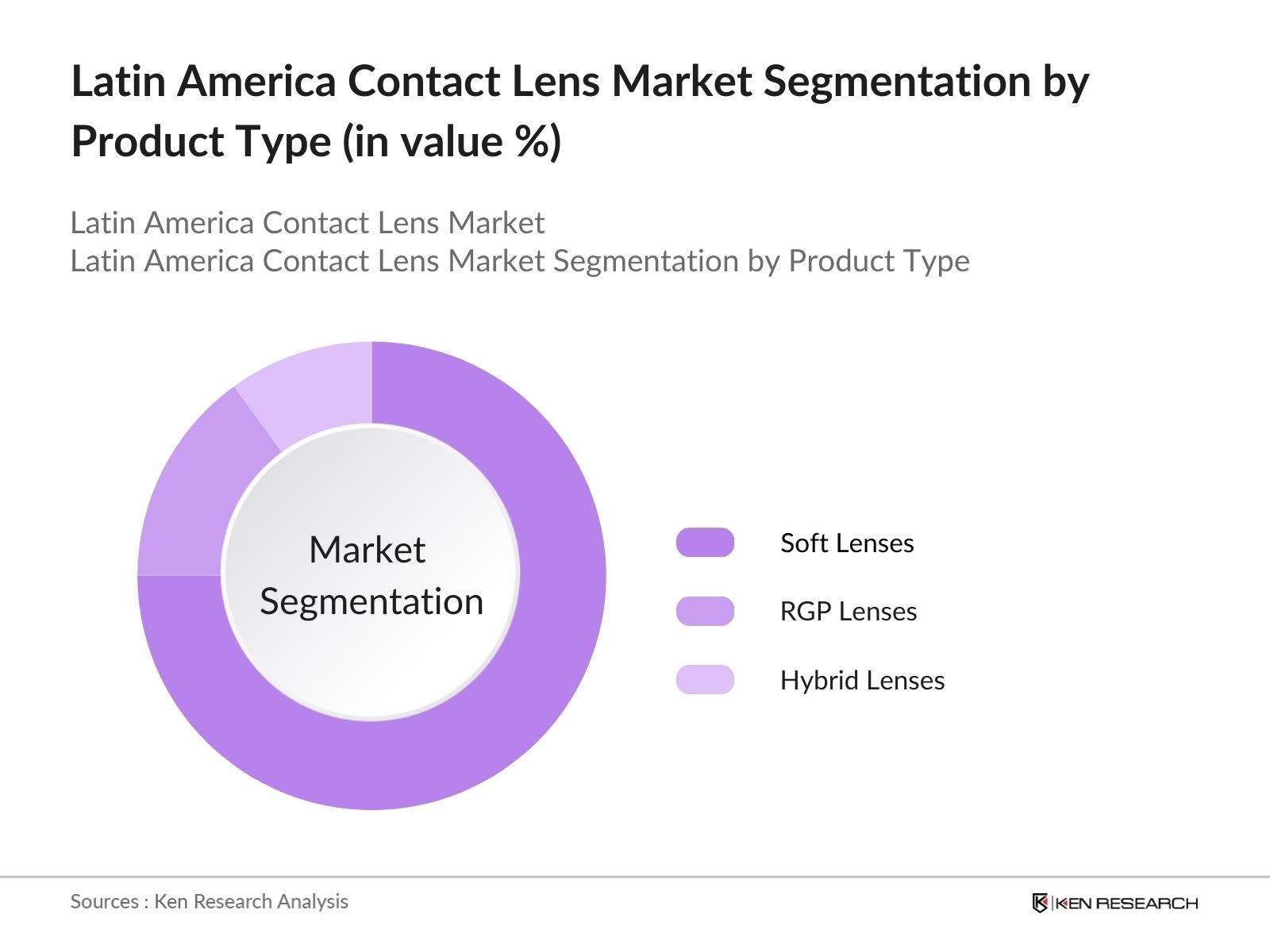
By Product Type: The Latin America contact lens market is segmented by product type into soft lenses, rigid gas-permeable (RGP) lenses, and hybrid lenses. Soft lenses hold the dominant share, driven by their comfort and widespread availability. They are preferred for their ease of adaptation, especially among first-time users. The demand for daily disposable soft lenses has been increasing due to convenience, as they eliminate the need for cleaning and storage solutions, appealing to consumers leading busy lifestyles.
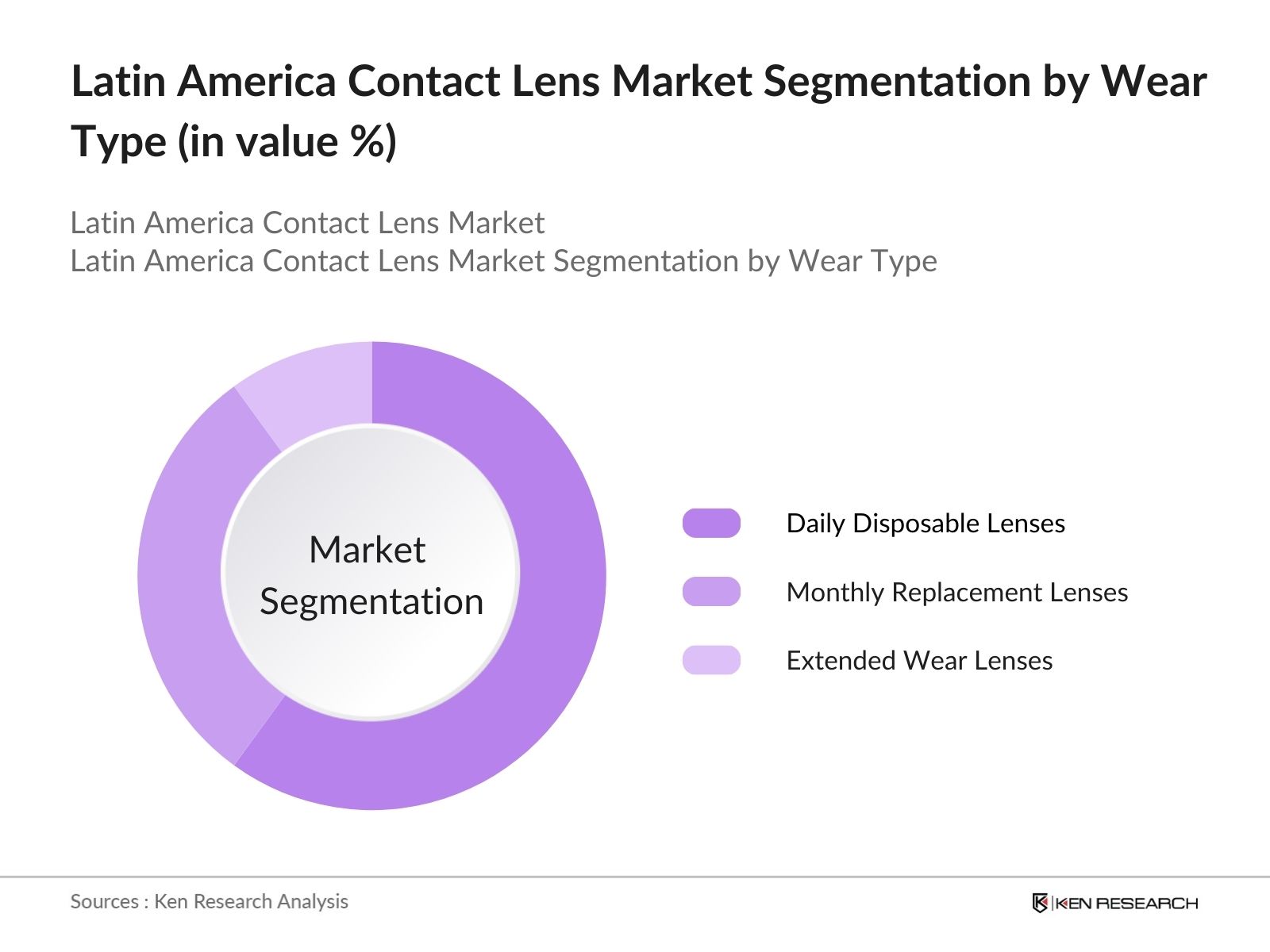
By Wear Type: By wear type, the market is segmented into daily disposable lenses, monthly replacement lenses, and extended wear lenses. Daily disposable lenses dominate the market as consumers prioritize hygiene and convenience. With increasing concerns around lens cleanliness and eye infections, especially in the context of urban living and exposure to pollutants, daily disposable lenses provide a safer and hassle-free solution. Additionally, their popularity is fueled by the growing number of new contact lens users who prefer the simplicity they offer.
The Latin America contact lens market is highly competitive, with several global players and some regional competitors. The competition is primarily driven by product innovation, quality, and affordability. Global players such as Johnson & Johnson Vision and Alcon dominate due to their well-established distribution networks and strong brand presence, while local players focus on competitive pricing to capture market share. The market is dominated by global giants like Johnson & Johnson Vision, Alcon, and CooperVision, with their robust distribution networks and strong product portfolios.
|
Company |
Establishment Year |
Headquarters |
Product Range |
R&D Investment |
Regional Presence |
Customer Focus |
Innovation |
Strategic Partnerships |
|
Johnson & Johnson Vision |
1957 |
USA |
- |
- |
- |
- |
- |
- |
|
Alcon |
1945 |
Switzerland |
- |
- |
- |
- |
- |
- |
|
CooperVision |
1958 |
USA |
- |
- |
- |
- |
- |
- |
|
Bausch + Lomb |
1853 |
USA |
- |
- |
- |
- |
- |
- |
|
SEED Co., Ltd. |
1951 |
Japan |
- |
- |
- |
- |
- |
- |
Increasing Prevalence of Myopia and Other Vision Problems: The rising prevalence of myopia and other refractive errors is a major driver for the contact lens market in Latin America. According to the World Health Organization (WHO), myopia affects approximately 1.4 billion people globally, with an increasing number of cases seen in urban Latin American regions, particularly among young populations due to increased screen time and reduced outdoor activities. In Brazil alone, over 20 million people suffer from myopia, creating a growing demand for corrective solutions like contact lenses.
Challenges
Latin America contact lens market is expected to witness moderate but steady growth. Key drivers include an increasing prevalence of vision-related issues, particularly myopia, advancements in lens technology, and the growing popularity of cosmetic lenses. The shift towards daily disposable lenses is anticipated to continue as hygiene and convenience remain priorities for consumers. The expanding e-commerce landscape will also play a significant role in market growth, allowing consumers easier access to a wider variety of products.
Market Opportunities
|
Segments |
Sub-Segments |
|
By Material Type |
Soft Contact Lenses Rigid Gas Permeable (RGP) Lenses Hybrid Lenses |
|
By Wear Type |
Daily Disposable Lenses Monthly Replacement Lenses Extended Wear Lenses |
|
By Application |
Corrective Lenses Therapeutic Lenses Cosmetic Lenses |
|
By Distribution Channel |
Online Retail Optical Stores Hospital & Clinic-Based Stores |
|
By Region |
Brazil Mexico Argentina Chile Rest of Latin America |
3.1.1 Increasing Prevalence of Myopia and Other Vision Problems
3.1.2 Rise in Disposable Income in Urban Regions
3.1.3 Growing Adoption of Daily Disposable Lenses
3.1.4 Influence of Digital Eye Strain and Screen Time
3.2.1 High Costs Associated with Advanced Contact Lenses (Material and Technology)
3.2.2 Strict Government Regulations and Compliance Requirements
3.2.3 Limited Awareness and Accessibility in Rural Areas
3.2.4 Consumer Reluctance Due to Safety Concerns (Hygiene Issues)
3.3.1 Expansion of E-commerce Distribution Channels
3.3.2 Advances in Silicone Hydrogel and Water Gradient Lenses
3.3.3 Partnerships with Ophthalmologists and Opticians for Prescription Lenses
3.3.4 Rising Demand for Aesthetic Lenses (Colored and Decorative Contact Lenses)
3.4.1 Increased Customization and Specialty Lenses (Astigmatism, Presbyopia)
3.4.2 Growth of Biocompatible and Eco-friendly Lenses
3.4.3 Contact Lens Subscription Services Gaining Popularity
3.4.4 Preference for Multifocal and Toric Lenses
4.1.1 Soft Contact Lenses
4.1.2 Rigid Gas Permeable (RGP) Lenses
4.1.3 Hybrid Lenses
4.2.1 Daily Disposable Lenses
4.2.2 Monthly Replacement Lenses
4.2.3 Extended Wear Lenses
4.3.1 Corrective Lenses
4.3.2 Therapeutic Lenses
4.3.3 Cosmetic Lenses
4.4.1 Online Retail
4.4.2 Optical Stores
4.4.3 Hospital & Clinic-Based Stores
4.5.1 Brazil
4.5.2 Mexico
4.5.3 Argentina
4.5.4 Chile
4.5.5 Rest of Latin America
5.1.1 Johnson & Johnson Vision
5.1.2 Alcon
5.1.3 CooperVision
5.1.4 Bausch + Lomb
5.1.5 Hoya Corporation
5.1.6 Carl Zeiss Meditec AG
5.1.7 Menicon Co., Ltd.
5.1.8 Contamac
5.1.9 BenQ Materials Corporation
5.1.10 SEED Co., Ltd.
The first phase focuses on mapping the entire Latin America contact lens ecosystem. Extensive desk research is conducted using credible secondary data sources, such as government publications and industry reports, to identify variables like consumer preferences, regulatory impact, and technological advancements influencing the market.
Historical market data on product segments, revenue generation, and market penetration across various countries is compiled. This analysis is supplemented by data on product availability, distribution networks, and revenue streams. The findings ensure a detailed understanding of market dynamics, helping to assess market trends and consumer behavior.
Market hypotheses are formed based on desk research and subsequently validated through interviews with industry experts. These consultations with optometrists, contact lens manufacturers, and distributors provide deeper insights into sales trends, material preferences, and competitive strategies, ensuring data reliability.
A bottom-up approach is used to synthesize research data, complemented by inputs from industry stakeholders. The final output includes verified statistics and insights that provide a detailed market analysis, including growth drivers, challenges, opportunities, and trends.
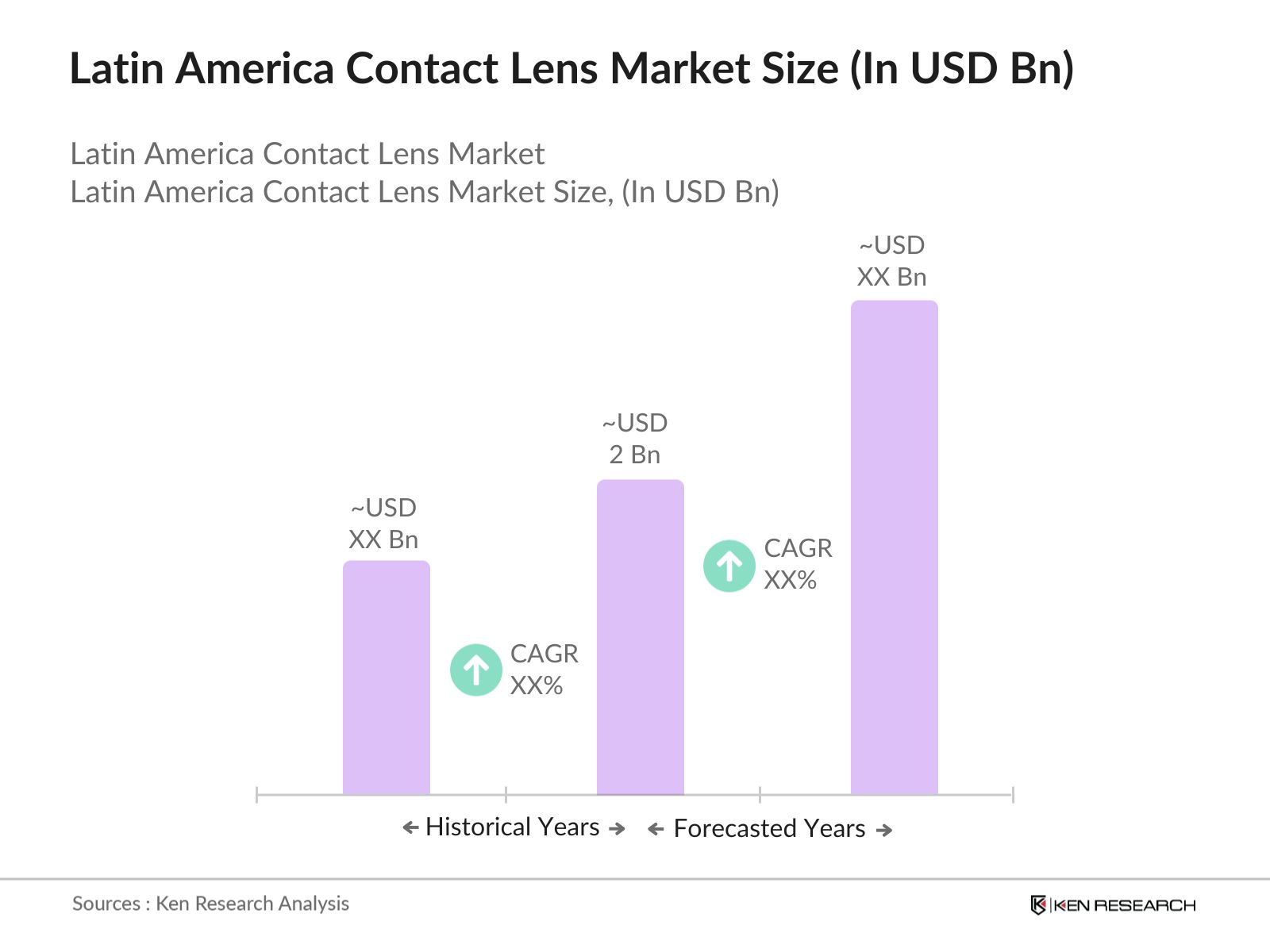
The Latin America contact lens market was valued at USD 2 billion in 2023, driven by increasing demand for vision correction solutions and the growing popularity of cosmetic lenses.
Challenges in Latin America contact lens market include high costs associated with advanced lenses, regulatory compliance, and limited accessibility in rural areas. Strict government regulations can also pose entry barriers for new players.
Key players in Latin America contact lens market include Johnson & Johnson Vision, Alcon, CooperVision, Bausch + Lomb, and SEED Co., Ltd. These companies dominate due to their extensive distribution networks and innovative product offerings.
Growth in Latin America contact lens market is driven by increasing cases of vision impairments such as myopia, rising disposable income, and the growing demand for cosmetic lenses. Technological advancements in lens materials also contribute to market expansion.

What makes us stand out is that our consultants follows Robust, Refine and Result (RRR) methodology. i.e. Robust for clear definitions, approaches and sanity checking, Refine for differentiating respondents facts and opinions and Result for presenting data with story

We have set a benchmark in the industry by offering our clients with syndicated and customized market research reports featuring coverage of entire market as well as meticulous research and analyst insights.

While we don't replace traditional research, we flip the method upside down. Our dual approach of Top Bottom & Bottom Top ensures quality deliverable by not just verifying company fundamentals but also looking at the sector and macroeconomic factors.

With one step in the future, our research team constantly tries to show you the bigger picture. We help with some of the tough questions you may encounter along the way: How is the industry positioned? Best marketing channel? KPI's of competitors? By aligning every element, we help maximize success.

Our report gives you instant access to the answers and sources that other companies might choose to hide. We elaborate each steps of research methodology we have used and showcase you the sample size to earn your trust.

If you need any support, we are here! We pride ourselves on universe strength, data quality, and quick, friendly, and professional service.