















Latin America Functional Food Market
Region:Central and South America
Author(s):Paribhasha Tiwari
Product Code:KROD1899
October 2024
86
About the Report
Latin America Functional Food Market Overview
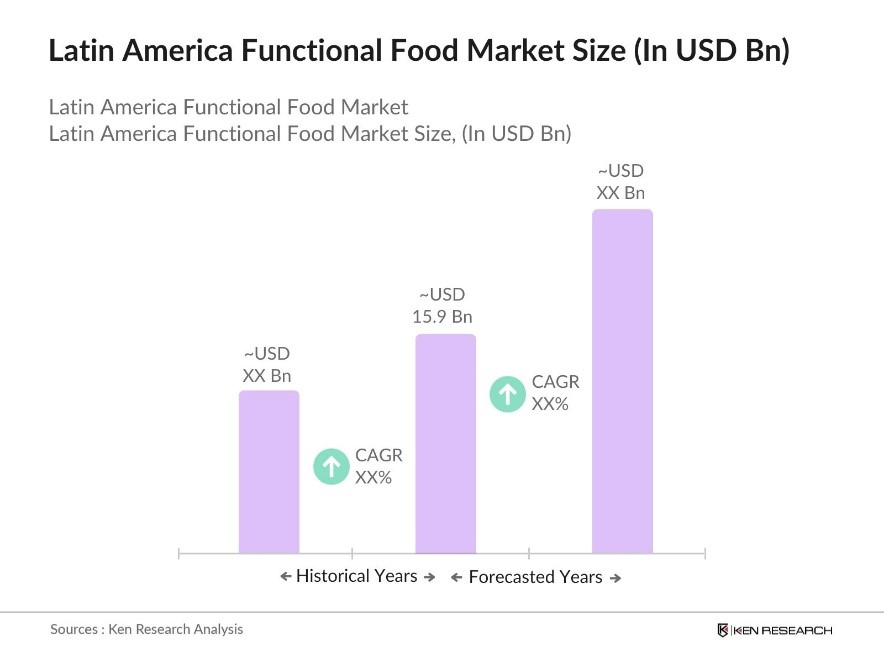
- The Latin America functional food market was valued at in 2023. The market is driven by rising consumer awareness regarding health and wellness, which has led to increased demand for products with functional benefits such as probiotics, prebiotics, omega-3 fatty acids, and vitamins. The increasing prevalence of lifestyle-related health issues such as diabetes and cardiovascular diseases has accelerated the adoption of functional foods as part of daily diets. The demand for functional food products is also driven by urbanization and changing consumer preferences.
- Key players dominating the market include companies like Nestlé, PepsiCo, Unilever, Danone, and General Mills. These companies have established a strong presence through their wide product offerings, focusing on innovation in functional ingredients. For instance, Nestlé has been a key player with its focus on nutritional and health-benefiting food products, while PepsiCo has expanded its functional beverage line to meet the growing demand in the region.
- In 2023, Danone announced the launch of its new plant-based functional food line in Brazil, aiming to tap into the growing health-se. This initiative, launched in northeastern Brazil, trains women in management, sales, and administration, helping them build their own micro-distribution businesses for functional food products. The project has expanded opportunities for women to become financially independent while increasing the accessibility of Danone's functional food offerings.
- São Paulo and Mexico City are the dominant cities driving the market. São Paulo’s dominance stems from its high population density, urbanization, and growing middle-class population, all contributing to a higher demand for health-related products. Mexico City, on the other hand, has a strong retail and distribution network, along with high consumer awareness and disposable incomes, making it a key market for functional food companies.
Latin America Functional Food Market Segmentation
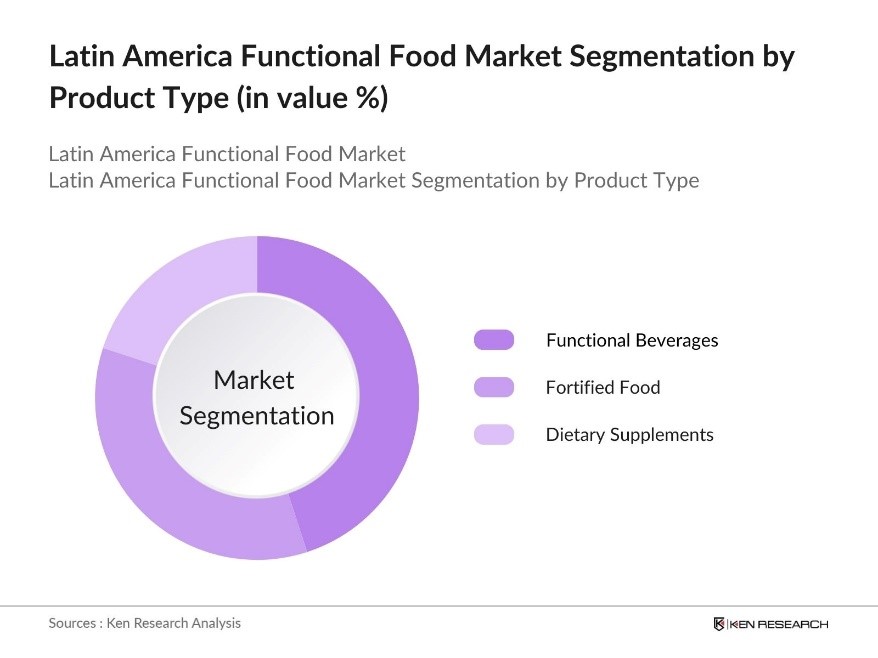
By Product Type: The Latin America functional food market is segmented by product type into dietary supplements, fortified food, and functional beverages. In 2023, functional beverages dominated the market share. The growing trend of health-conscious consumers seeking convenient and ready-to-drink products is driving the demand for functional beverages. Brands such as PepsiCo’s Tropicana and Coca-Cola’s Vitaminwater have established a loyal customer base in the region, offering beverages that provide specific health benefits like hydration, digestion, and immune support.
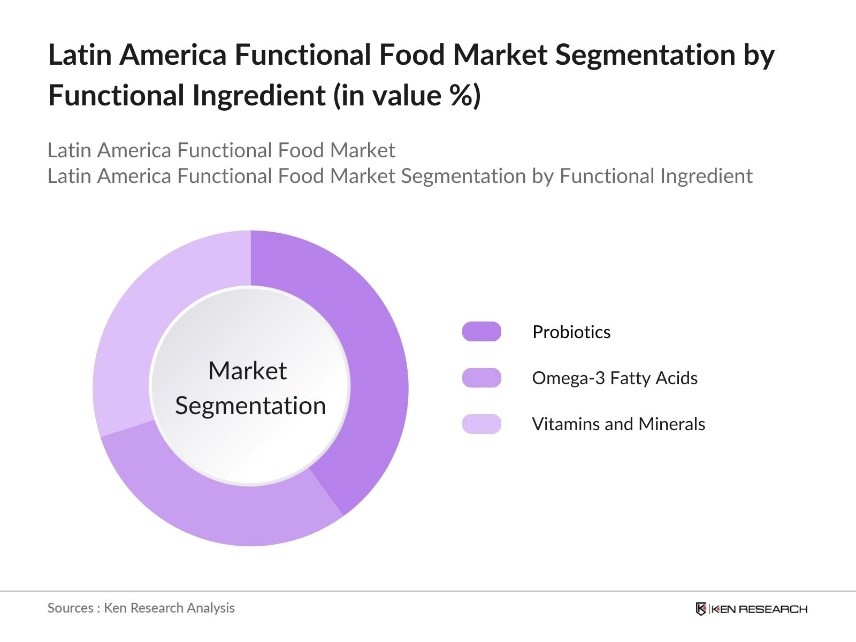
By Functional Ingredient: The market is segmented by functional ingredients into probiotics, omega-3 fatty acids, vitamins, and minerals. In 2023, probiotics dominated the market due to their increasing popularity for improving digestive health. Probiotic-rich products such as yogurts and beverages have seen growing consumer interest across Latin America, particularly in Brazil and Argentina. Leading brands have introduced more probiotic variants to cater to this rising demand, with new product launches by companies like Danone and Yakult in the past few years.
By Region: The market is segmented into Brazil, Mexico, Colombia, Costa Rica, Chile, and the Rest of LATAM. Brazil held the largest market share in 2023 due to its robust consumer base and growing urban population. Functional food consumption in Brazil has increased significantly due to heightened awareness about health and wellness. Additionally, government initiatives supporting the food and beverage industry have contributed to the growth of the functional food sector in Brazil.
Latin America Functional Food Market Competitive Landscape
|
Company |
Year Established |
Headquarters |
|
Nestlé |
1867 |
Vevey, Switzerland |
|
PepsiCo |
1965 |
Purchase, USA |
|
Unilever |
1930 |
London, UK |
|
Danone |
1919 |
Paris, France |
|
General Mills |
1928 |
Minneapolis, USA |
- Nestlé: In 2024, Nestlé experienced demand for fortified milks and coffee creamers, which contributed to double-digit growth in Brazil's dairy sales during the first quarter of 2023. Products like Nestlé's NAN infant formula and fortified dairy items performed well, driven by increased consumer interest in nutrition-enhancing products. This growth highlights the rising demand for functional dairy products in Latin America.
- PepsiCo: In 2023, PepsiCo expanded its the Latin America functional food market by introducing a new line of fortified dairy and beverage products. This move is part of PepsiCo's strategy to cater to the growing consumer demand for health-focused functional foods, especially in key markets like Brazil and Mexico, where the demand for nutrition-enhancing products is rapidly rising.
Latin America Functional Food Market Analysis
Growth Drivers
Increasing Health Consciousness among Consumers: about the role of the gut microbiome in overall health is driving demand for functional foods rich in probiotics and other gut-healthy ingredients. Products such as yogurt, fermented drinks, and dietary supplements are being tailored to promote digestive health, with companies like Nestlé and Danone leading this trend. This heightened focus on gut health is fueling innovation and product development across the region.
Expansion of Organized Retail and E-commerce: The increasing foods, particularly due to the convenience of online shopping has driven the market. As e-commerce platforms expand their offerings, consumers are turning to them for healthier, functional food products that cater to specific dietary needs. The rising consumption of functional foods like fortified dairy, snacks, and beverages is boosting the e-commerce segment, making it a key factor in market growth.
Aging Population and Demand for Nutritional Products: Latin America’s aging population is projected to reach 140 million people aged 60 and above by 2025, leading to an increase in demand for functional foods that support heart health, bone strength, and cognitive function. According to data from the Pan American Health Organization, by 2024, nearly 30% of people in Latin America over the age of 50 will be incorporating functional foods like omega-3 supplements and fortified dairy products into their diets. This demographic shift is anticipated to fuel further growth in the market.
Challenges
-
High Production Costs and Pricing Issues: Despite rising demand, the production of functional foods remains costly due to the need for specialized ingredients such as probiotics and omega-3. These products often require advanced manufacturing processes and stringent quality controls, which drive up production costs. As a result, the pricing of functional foods in Latin America remains high, limiting their affordability for lower-income groups. This price differential poses a challenge for broader market penetration.
- Regulatory Hurdles for Health Claims: Strict regulatory frameworks governing health claims on food products pose a significant challenge for companies operating in the functional food sector. In countries like Brazil and Argentina, functional food manufacturers must adhere to complex guidelines that require clinical proof for health-related claims, which increases the time and cost of product approval. This slows the introduction of new products and limits the competitive edge of smaller companies.
Government Initiatives
-
Brazil’s Nutritional Labeling Regulation (2022): Brazil's updated food labeling regulations, introduced by Anvisa (Brazilian Health Regulatory Agency) in front-of-pack warning labels on foods high in sugar, sodium, and saturated fats, providing consumers with clear nutritional information. This policy aims to improve public health by promoting transparency and helping consumers make more informed dietary choices. These efforts align with broader regional and global food labeling standards.
- Mexican Government’s "Healthy Eating for All" Campaign (2024): Mexico's "Healthy Eating for All" campaign, launched in 2024, aims to reduce malnutrition and promote of fortified foods across the country. The program offers tax incentives and subsidies to manufacturers of functional foods, encouraging the development of affordable, nutrient-rich products to reach broader segments of the population. This initiative has significantly contributed to the growth of functional food products in Mexico.
Latin America Functional Food Market Future Outlook
The Latin America Functional Food Market is projected to grow exponentially in the future. This growth will be driven by the increasing adoption of advanced farming techniques, government support for agricultural development, and a shift towards sustainable and eco-friendly agrochemical products. The demand for specialty chemicals, such as bio-pesticides and bio-stimulants, is expected to witness a significant surge, contributing to the market's expansion.
Future Trends
- Expansion of Personalized Nutrition Solutions: Over the next five years, the Latin American functional food market is expected to witness a surge in demand for personalized nutrition solutions. Companies will increasingly adopt technology-driven approaches to offer consumers products that cater to their specific health needs. By 2028, personalization will be a significant market driver, with more companies integrating AI-based platforms and mobile apps to deliver customized nutritional recommendations based on individual health data.
- Growth of the Functional Snack Market: The functional snack market is expected to grow significantly between 2024 and 2028, driven by increased demand for on-the-go, nutrient-dense products. Companies like PepsiCo and Nestlé are expected to introduce more fortified snack bars, chips, and cookies, enriched with proteins, vitamins, and minerals. By 2028, functional snacks will account for a significant market shareof the total functional food market, driven by consumer preference for convenient, healthy alternatives to traditional snacks.
Scope of the Report
|
By Product Type |
Dietary supplement Fortified food Functional beverages |
|
By Functional Ingredient |
Probiotics Omega-3 fatty acids Vitamins Minerals |
|
By Region |
Brazil Mexico Colombia Costa Rica Chile Rest of LATAM |
Products
Key Target Audience:
- Functional Food Manufacturers
- Nutraceutical Companies
- Retailers and Distributors
- Health and Wellness Industry Stakeholders
- Functional Beverage Manufacturers
- Food Safety Authorities
- E-commerce Platforms
- Consumer Health Organizations
- Supermarket Chains
- Health Food Stores
- Government and Regulatory Bodies (e.g., Ministry of Health, Brazil)
- Investors and Venture Capitalist Firms
Companies
- Nestlé
- PepsiCo
- Danone
- Unilever
- General Mills
- Yakult
- Coca-Cola
- Grupo Bimbo
- Herbalife Nutrition
- Arla Foods
- Kellogg’s
- Abbott Laboratories
- Amway
- Mead Johnson Nutrition
- Glanbia
Table of Contents
1. Latin America Functional Food Market Overview
1.1. Definition and Scope
1.2. Market Taxonomy
1.3. Functional Food Categories
1.4. Market Dynamics Overview
1.5. Key Market Players Overview
1.6. Competitive Benchmarking
2. Latin America Functional Food Market Size
2.1. Historical Market Size
2.2. Year-on-Year Growth Analysis
2.3. Key Market Milestones and Developments
2.4. Demand and Supply Metrics
2.5. Market Size by Revenue
3. Latin America Functional Food Market Analysis
3.1. Growth Drivers
3.1.1. Increasing Health Consciousness among Consumers
3.1.2. Expansion of Organized Retail
3.1.3. Increased Health Awareness Campaigns
3.2. Market Challenges
3.2.1. High Production Costs
3.2.2. Regulatory Hurdles for Health Claims
3.2.3. Consumer Skepticism
3.3. Opportunities
3.3.1. Growth in Plant-Based Functional Foods
3.3.2. Personalization of Functional Nutrition
3.3.3. Technological Advancements in Manufacturing
3.4. Recent Trends
3.4.1. Functional Beverages Growth
3.4.2. Rise in Fortified Snacks
3.4.3. Expansion into E-commerce
3.5. Government Initiatives
3.5.1. Nutritional Labeling Regulations in Brazil
3.5.2. Mexican Government’s Healthy Eating Campaign
3.5.3. Costa Rica’s Public-Private Food Fortification Partnership
3.6. SWOT Analysis
3.7. Market Stakeholders Ecosystem
3.8. Competition Landscape Analysis
4. Latin America Functional Food Market Segmentation
4.1. By Product Type
4.1.1. Functional Beverages
4.1.2. Dietary Supplements
4.1.3. Fortified Foods
4.2. By Functional Ingredient
4.2.1. Probiotics
4.2.2. Omega-3 Fatty Acids
4.2.3. Vitamins and Minerals
4.3. By Distribution Channel
4.3.1. Supermarkets/Hypermarkets
4.3.2. E-commerce
4.3.3. Specialty Health Stores
4.4. By Consumer Group
4.4.1. Children
4.4.2. Adults
4.4.3. Elderly
4.5. By Region
4.5.1. Brazil
4.5.2. Mexico
4.5.3. Colombia
4.5.4. Chile
4.5.5. Costa Rica
4.5.6. Rest of LATAM
5. Latin America Functional Food Market Competitive Landscape
5.1. Market Share Analysis
5.2. Key Competitors Overview
5.2.1. Nestlé
5.2.2. PepsiCo
5.2.3. Danone
5.2.4. Unilever
5.2.5. General Mills
5.2.6. Yakult
5.2.7. Coca-Cola
5.2.8. Grupo Bimbo
5.2.9. Herbalife Nutrition
5.2.10. Arla Foods
5.2.11. Kellogg’s
5.2.12. Abbott Laboratories
5.2.13. Mead Johnson Nutrition
5.2.14. Glanbia
5.2.15. Amway
5.3. Cross Comparison of Key Competitors (No. of Employees, Headquarters, Inception Year, Revenue)
5.4. Strategic Initiatives by Key Players
5.4.1. Mergers and Acquisitions
5.4.2. New Product Launches
5.4.3. Partnerships and Collaborations
5.4.4. Sustainability Initiatives
6. Latin America Functional Food Market Financial and Operational Analysis
6.1. Revenue and Profitability Metrics
6.2. Cost Analysis (Production and Distribution)
6.3. Investment and Funding Overview
6.3.1. Government Funding
6.3.2. Private Investments
6.3.3. Venture Capital Initiatives
6.4. Operational Efficiency Metrics
7. Latin America Functional Food Market Regulatory Framework
7.1. Government Regulations and Compliance
7.2. Food Labeling Laws and Requirements
7.3. Certification Processes for Functional Foods
7.4. International Trade Regulations Impacting the Market
8. Latin America Functional Food Market Future Outlook
8.1. Future Market Size Projections
8.2. Forecasted Demand Drivers
8.3. Anticipated Market Challenges
8.4. Future Opportunities and Key Innovations
9. Latin America Functional Food Market Future Segmentation
9.1. By Product Type
9.2. By Functional Ingredient
9.3. By Consumer Group
9.4. By Distribution Channel
9.5. By Region (Brazil, Mexico, Colombia, Chile, Rest of LATAM)
10. Analyst Recommendations for Market Professionals
10.1. Key Investment Opportunities
10.2. Strategic Marketing Insights
10.3. Product Development Recommendations
10.4. Competitive Positioning Strategies
Disclaimer
Contact Us
Research Methodology
Step: 1 Identifying Key Variables:
Ecosystem creation for all the major entities and referring to multiple secondary and proprietary databases to perform desk research around market to collate industry level information.
Step: 2 Market Building:
Collating statistics on Latin America Functional Food Market over the years, penetration of marketplaces and service providers ratio to compute revenue generated for Latin America Functional Food Industry. We will also review service quality statistics to understand revenue generated which can ensure accuracy behind the data points shared.
Step: 3 Validating and Finalizing:
Building market hypothesis and conducting CATIs with industry experts belonging to different companies to validate statistics and seek operational and financial information from company representatives.
Step: 4 Research Output:
Our team will approach multiple foods and beverages companies and understand nature of product segments and sales, consumer preference and other parameters, which will support us validate statistics derived through bottom to top approach from foods and beverages companies.
Frequently Asked Questions
01. How big is the Latin America Functional Food Market?
The Latin America functional food market was valued at USD 15.9 billion in 2023, driven by rising consumer demand for health-enhancing products, growth in e-commerce, and increasing health awareness across the region.
02. What are the challenges in the Latin America Functional Food Market?
Challenges in the Latin America functional food market include high production costs due to specialized ingredients, regulatory hurdles in obtaining health claims, and consumer skepticism regarding the efficacy of health-related benefits of functional products.
03. Who are the major players in the Latin America Functional Food Market?
Key players in the Latin America functional food market include Nestlé, PepsiCo, Danone, Unilever, and General Mills. These companies dominate due to their established brand presence, innovative product offerings, and extensive distribution networks across the region.
04. What are the growth drivers of the Latin America Functional Food Market?
The Latin America functional food market is driven by rising health awareness among consumers, increased availability of functional food products through e-commerce and organized retail, and the growing elderly population seeking nutritional products that support specific health needs.
Why Buy From Us?

What makes us stand out is that our consultants follows Robust, Refine and Result (RRR) methodology. i.e. Robust for clear definitions, approaches and sanity checking, Refine for differentiating respondents facts and opinions and Result for presenting data with story

We have set a benchmark in the industry by offering our clients with syndicated and customized market research reports featuring coverage of entire market as well as meticulous research and analyst insights.

While we don't replace traditional research, we flip the method upside down. Our dual approach of Top Bottom & Bottom Top ensures quality deliverable by not just verifying company fundamentals but also looking at the sector and macroeconomic factors.

With one step in the future, our research team constantly tries to show you the bigger picture. We help with some of the tough questions you may encounter along the way: How is the industry positioned? Best marketing channel? KPI's of competitors? By aligning every element, we help maximize success.

Our report gives you instant access to the answers and sources that other companies might choose to hide. We elaborate each steps of research methodology we have used and showcase you the sample size to earn your trust.

If you need any support, we are here! We pride ourselves on universe strength, data quality, and quick, friendly, and professional service.