
Latin America Natural Food Colors Market Outlook to 2030
Region:Central and South America
Author(s):Paribhasha Tiwari
Product Code:KROD3596
Region:Central and South America
Author(s):Paribhasha Tiwari
Product Code:KROD3596
December 2024
90
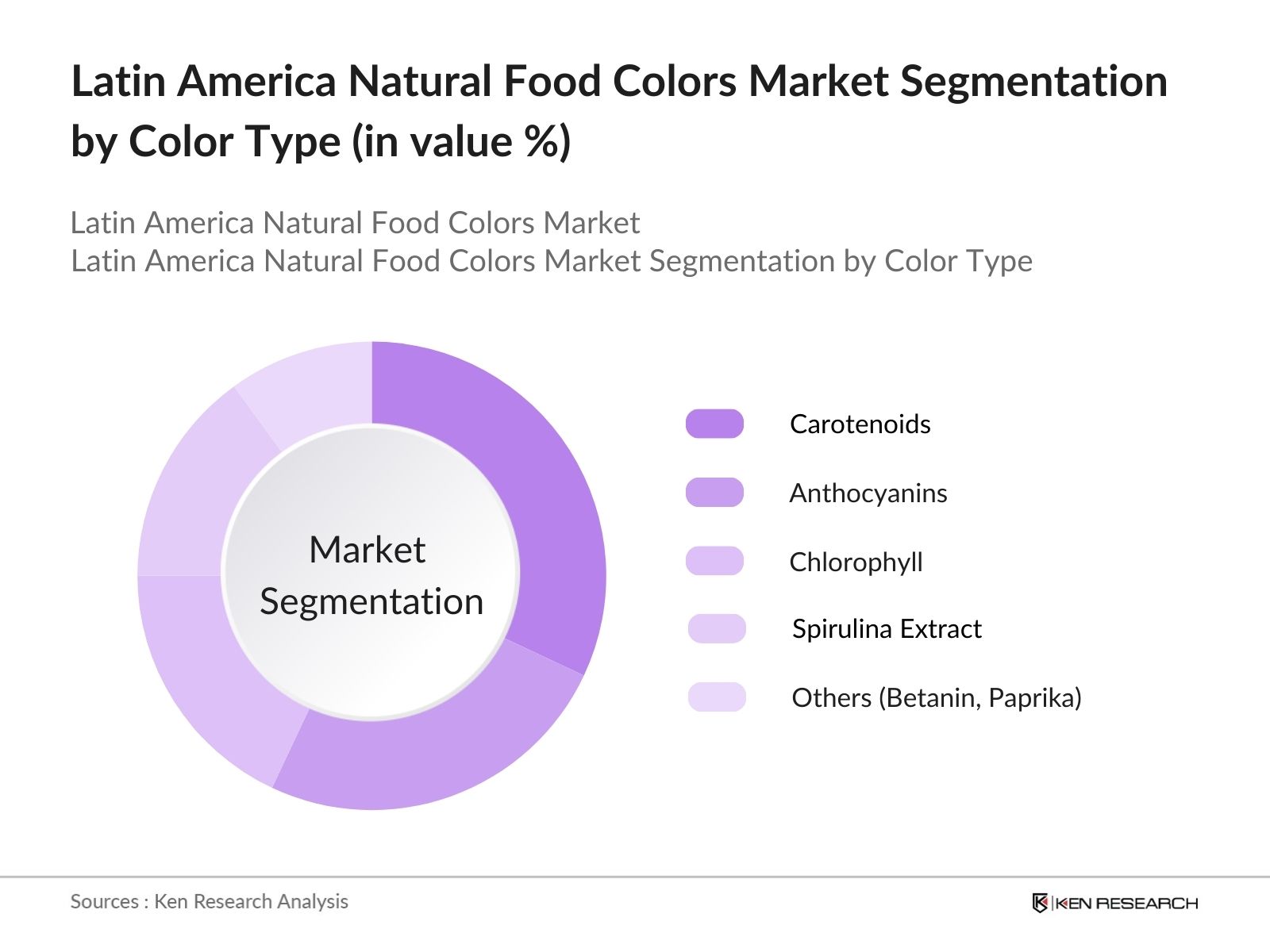
By Color Type: The Latin America Natural Food Colors market is segmented by color type into anthocyanins, carotenoids, chlorophyll, spirulina extract, and others (betanin, paprika extract). Among these, carotenoids, derived from sources such as tomatoes, carrots, and peppers, dominate the market share due to their widespread use in beverages and dairy products. Carotenoids are favored for their vibrant color and antioxidant properties, making them popular in health-conscious food segments.
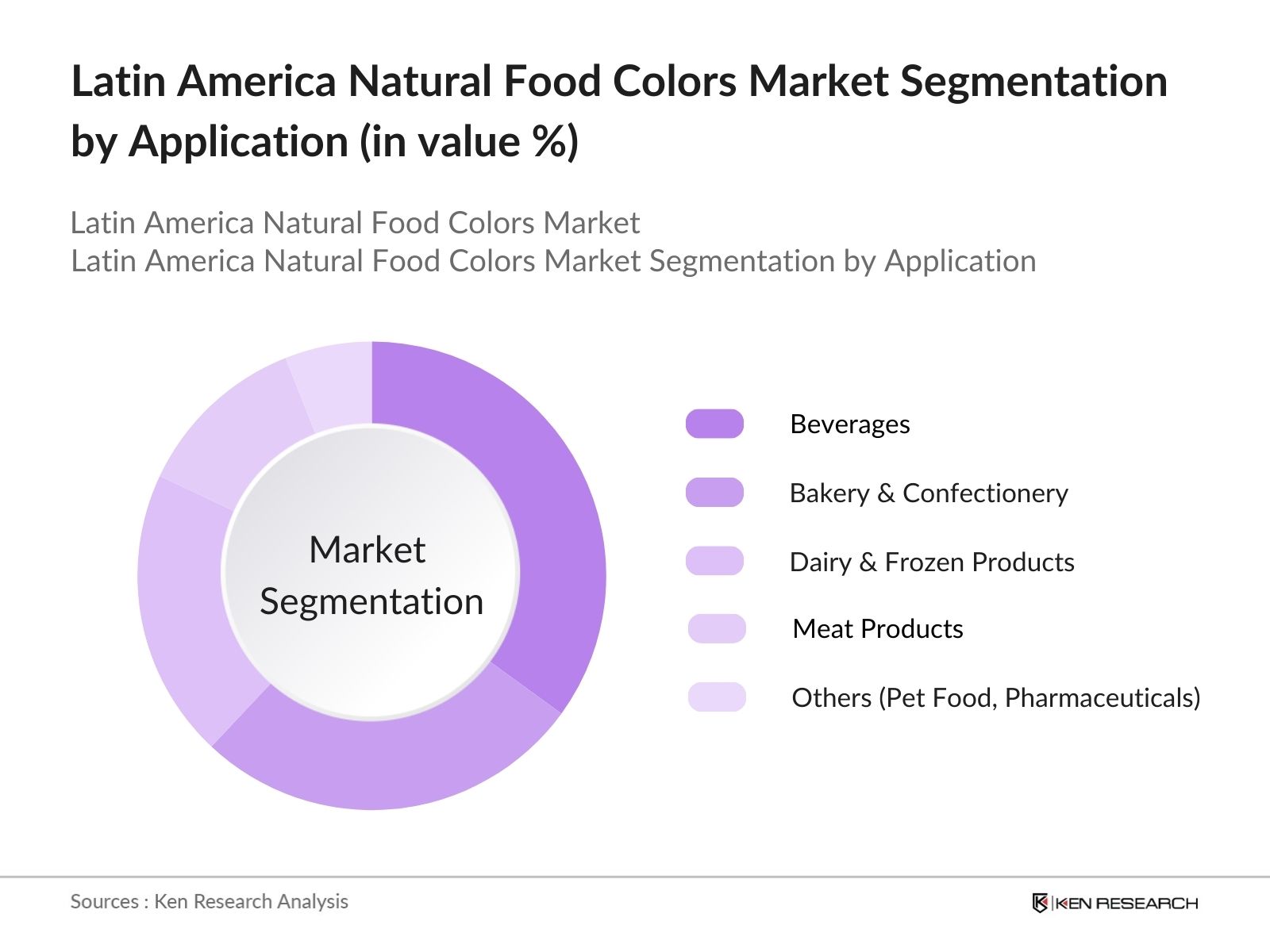
By Application: The market is segmented by application into beverages, bakery & confectionery, dairy & frozen products, meat products, and others (pet food, pharmaceuticals). The beverages segment holds a dominant position in the market due to the rising consumption of fruit-based drinks, smoothies, and flavored waters. The demand for visually appealing, natural, and healthy beverage options has fueled the uptake of natural food colors in this segment.
The Latin America Natural Food Colors market is characterized by the presence of both global and local players. These companies are constantly investing in R&D to innovate and develop new, stable, and vibrant natural food color formulations to cater to the evolving demands of the food and beverage industry. The competitive landscape is marked by consolidation, with larger companies acquiring smaller, innovative firms to expand their product portfolios and market reach.
|
Company Name |
Establishment Year |
Headquarters |
Product Range |
No. of Employees |
R&D Expenditure |
Sustainability Initiatives |
Global Reach |
Revenue (USD Mn) |
|
GNT Group |
1978 |
The Netherlands |
- | - | - | - | - | - |
|
Sensient Technologies |
1882 |
USA |
- | - | - | - | - | - |
|
Chr. Hansen Holding |
1873 |
Denmark |
- | - | - | - | - | - |
|
Naturex (Givaudan) |
1992 |
France |
- | - | - | - | - | - |
|
Kalsec Inc. |
1958 |
USA |
- | - | - | - | - | - |
Increased Consumer Preference for Natural Ingredients: Consumers in Latin America are increasingly seeking natural alternatives in food products due to growing health consciousness. In 2024, demand for food products without synthetic additives has surged, with consumers opting for foods colored using ingredients like turmeric, beetroot, and spirulina. According to a government survey conducted in Brazil, 70 million consumers actively avoid synthetic ingredients, pushing manufacturers to adopt natural food colors in processed goods. This shift in consumer preferences is driving significant growth in the natural food colors market as companies reformulate their offerings to meet this demand.
High Cost of Sourcing Natural Raw Materials One of the main challenges for manufacturers in Latin America is the high cost of sourcing raw materials for natural food colors. Ingredients like spirulina and turmeric often need to be imported or grown under specific conditions, which adds to production costs. In 2024, data from Mexicos Ministry of Agriculture show that the cost of cultivating natural color sources like beets and carrots has increased by 10%, placing pressure on small and mid-sized food companies that rely on these materials for their product lines.
Over the coming years, the Latin America Natural Food Colors market is expected to grow significantly due to continued consumer demand for organic and sustainable products. As health consciousness rises and regulatory bodies increasingly push for the restriction of synthetic additives, natural food color manufacturers will continue to innovate in response to market demands. The expanding middle class in Latin America and the ongoing efforts of regional governments to promote sustainable agriculture will also play a vital role in driving future market growth.
Growing Veganism and Plant-Based Foods The rising trend of veganism and plant-based diets in Latin America has created new opportunities for natural food color producers. Vegan food companies in markets like Brazil and Chile are increasingly using plant-based natural colors in their products to appeal to health-conscious consumers. In 2024, the number of vegan food producers doubled, contributing to the increased demand for natural colors derived from fruits and vegetables like carrots and blueberries, which are seen as clean and ethical choices for plant-based consumers.
|
By Color Type |
Anthocyanins Carotenoids Chlorophyll Spirulina Extract Others (Betanin, Paprika Extract) |
|
By Source |
Plant-Based Animal-Based Microbial |
|
By Application |
Beverages Bakery & Confectionery Dairy & Frozen Products Meat Products Others (Pet Food, Pharmaceuticals) |
|
By Form |
Powder Liquid Gel |
|
By Distribution Channel |
Direct Sales Distributors/Wholesalers Online Retail |
1.1. Definition and Scope
1.2. Market Taxonomy
1.3. Market Growth Rate
1.4. Market Segmentation Overview
2.1. Historical Market Size
2.2. Year-On-Year Growth Analysis
2.3. Key Market Developments and Milestones
3.1. Growth Drivers (Natural Ingredient Demand, Clean Label Trend, Regulatory Influence)
3.1.1. Increased Consumer Preference for Natural Ingredients
3.1.2. Rise of Clean Label Products in Processed Foods
3.1.3. Regulatory Push for Natural Additives in Food Products
3.1.4. Demand from Organic Food Processing Industry
3.2. Market Challenges (Supply Chain Constraints, Price Volatility)
3.2.1. High Cost of Sourcing Natural Raw Materials
3.2.2. Limited Availability of Raw Materials in Latin America
3.2.3. Production Costs in Comparison to Synthetic Colors
3.2.4. Shelf-life and Stability of Natural Colors
3.3. Opportunities (Sustainability, Product Innovation)
3.3.1. Growing Veganism and Plant-Based Foods
3.3.2. Expansion into Non-Food Sectors (Cosmetics, Pharmaceuticals)
3.3.3. Research in Sustainable Sourcing of Raw Materials
3.3.4. Collaboration Between Regional and Global Players for Innovation
3.4. Trends (Technological Advancements, End-Use Industry Adoption)
3.4.1. Advancements in Extraction Technologies
3.4.2. Growing Adoption in Beverages and Bakery Products
3.4.3. Increased Use in Dairy and Frozen Desserts
3.4.4. Shift Toward Hybrid Natural-Synthetic Color Solutions
3.5. Government Regulations (Labeling Standards, Safety Regulations)
3.5.1. Regulation of Additives by Latin American Food Safety Authorities
3.5.2. Harmonization of Food Color Additive Standards in Latin America
3.5.3. Guidelines on Labeling and Packaging of Products Using Natural Colors
3.5.4. Tax Incentives for Organic and Natural Food Products
3.6. SWOT Analysis
3.7. Stake Ecosystem (Farmers, Suppliers, Processors, End-Use Industries)
3.8. Porters Five Forces
3.9. Competition Ecosystem
4.1. By Color Type (In Value %)
4.1.1. Anthocyanins
4.1.2. Carotenoids
4.1.3. Chlorophyll
4.1.4. Spirulina Extract
4.1.5. Others (Betanin, Paprika Extract)
4.2. By Source (In Value %)
4.2.1. Plant-Based
4.2.2. Animal-Based
4.2.3. Microbial
4.3. By Application (In Value %)
4.3.1. Beverages
4.3.2. Bakery & Confectionery
4.3.3. Dairy & Frozen Products
4.3.4. Meat Products
4.3.5. Others (Pet Food, Pharmaceuticals)
4.4. By Form (In Value %)
4.4.1. Powder
4.4.2. Liquid
4.4.3. Gel
4.5. By Distribution Channel (In Value %)
4.5.1. Direct Sales
4.5.2. Distributors/Wholesalers
4.5.3. Online Retail
5.1. Detailed Profiles of Major Companies
5.1.1. GNT Group
5.1.2. Sensient Technologies
5.1.3. Chr. Hansen Holding
5.1.4. DDW (D.D. Williamson)
5.1.5. Naturex (Part of Givaudan)
5.1.6. Kalsec Inc.
5.1.7. San-Ei Gen F.F.I., Inc.
5.1.8. Roha Dyechem
5.1.9. Frutarom Industries Ltd.
5.1.10. ADM (Archer Daniels Midland Company)
5.1.11. Symrise AG
5.1.12. IFC Solutions
5.1.13. FMC Corporation
5.1.14. Lycored
5.1.15. BioconColors
5.2. Cross Comparison Parameters
(No. of Employees, Headquarters, Inception Year, Revenue, Product Portfolio, Global Reach, Sustainability Initiatives, Research & Development Focus)
5.3. Market Share Analysis
5.4. Strategic Initiatives
5.5. Mergers and Acquisitions
5.6. Investment Analysis
5.7. Venture Capital Funding
5.8. Government Grants
5.9. Private Equity Investments
6.1. Food Safety and Additives Standards
6.2. Certification and Compliance Requirements
6.3. Eco-Labeling and Sustainability Regulations
6.4. Customs and Trade Policies
7.1. Future Market Size Projections
7.2. Key Factors Driving Future Market Growth
8.1. By Color Type (In Value %)
8.2. By Source (In Value %)
8.3. By Application (In Value %)
8.4. By Form (In Value %)
8.5. By Distribution Channel (In Value %)
9.1. TAM/SAM/SOM Analysis
9.2. Customer Cohort Analysis
9.3. Marketing Initiatives
9.4. White Space Opportunity Analysis
The initial phase involves the creation of a market ecosystem map to identify the major stakeholders within the Latin America Natural Food Colors Market. Extensive desk research and secondary data analysis are conducted, including government databases and proprietary databases, to gather industry-level data.
In this stage, historical market data is compiled and analyzed, assessing factors such as market penetration, demand for specific food colors, and overall market revenue. This includes an evaluation of various segments and key product categories to ensure accuracy in revenue estimations.
A set of market hypotheses are validated through direct consultations with industry experts, using computer-assisted telephone interviews (CATIs) and in-depth interviews with stakeholders across the supply chain. These insights help refine and corroborate the market data.
The final step entails engagement with key players in the food and beverage sector to gain insights into product development, sales performance, and market dynamics. This data is synthesized to form a comprehensive, validated analysis of the Latin America Natural Food Colors Market.
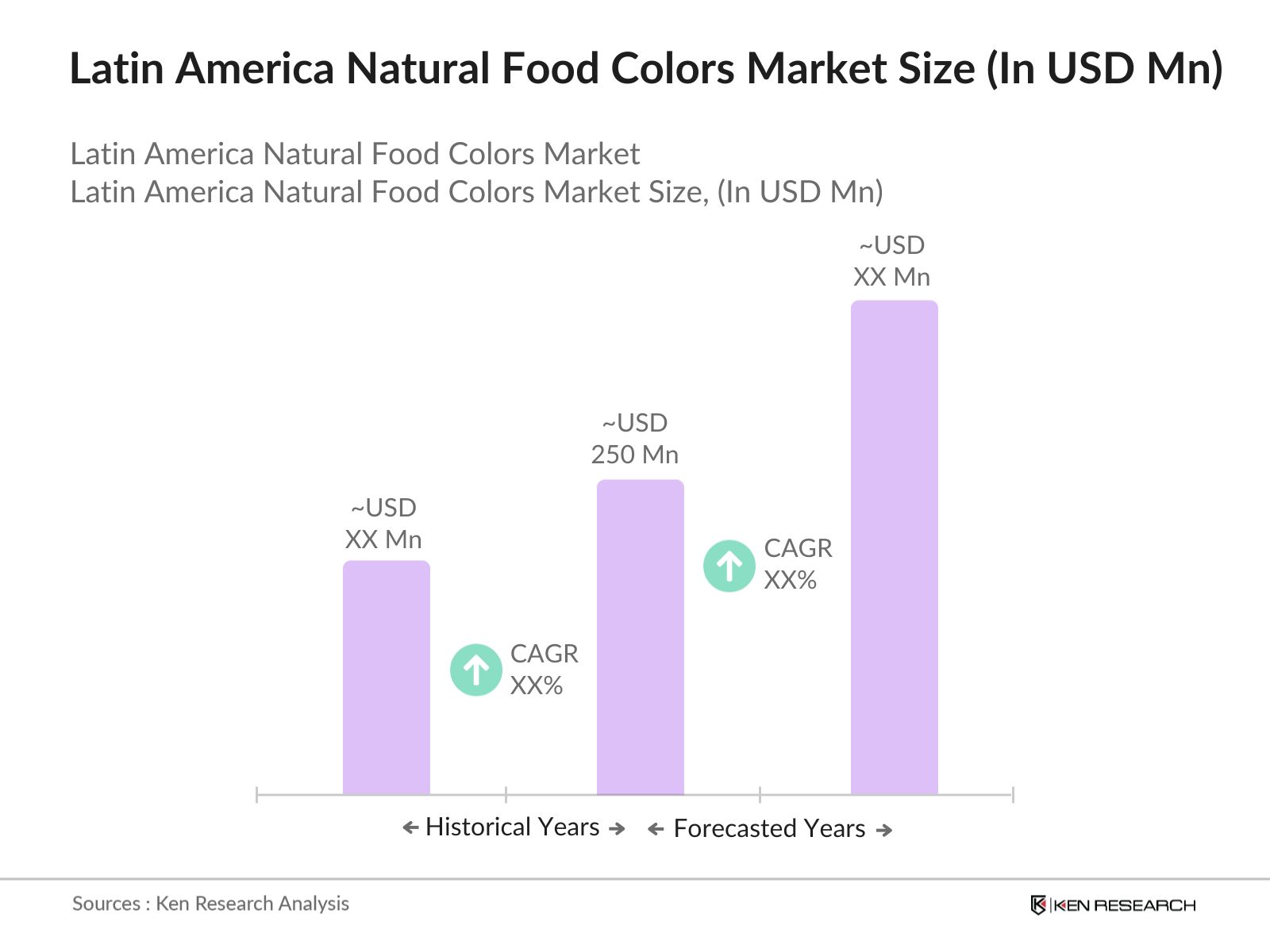
The Latin America Natural Food Colors market is valued at USD 250 million, driven by the increasing demand for clean-label and natural products across various food and beverage sectors.
Challenges in the Latin America Natural Food Colors market include high production costs due to the sourcing of raw materials, limited shelf-life of natural colorants, and stringent regulations on food additives, which can increase operational complexity for manufacturers.
Key players in the Latin America Natural Food Colors market include GNT Group, Sensient Technologies, Chr. Hansen Holding, Naturex (Givaudan), and Kalsec Inc., each dominating through their strong portfolios of natural and plant-based colorants.
The Latin America Natural Food Colors market is propelled by the growing consumer demand for organic and clean-label products, as well as regulatory pressure to reduce the use of synthetic food colorants in processed foods.

What makes us stand out is that our consultants follows Robust, Refine and Result (RRR) methodology. i.e. Robust for clear definitions, approaches and sanity checking, Refine for differentiating respondents facts and opinions and Result for presenting data with story

We have set a benchmark in the industry by offering our clients with syndicated and customized market research reports featuring coverage of entire market as well as meticulous research and analyst insights.

While we don't replace traditional research, we flip the method upside down. Our dual approach of Top Bottom & Bottom Top ensures quality deliverable by not just verifying company fundamentals but also looking at the sector and macroeconomic factors.

With one step in the future, our research team constantly tries to show you the bigger picture. We help with some of the tough questions you may encounter along the way: How is the industry positioned? Best marketing channel? KPI's of competitors? By aligning every element, we help maximize success.

Our report gives you instant access to the answers and sources that other companies might choose to hide. We elaborate each steps of research methodology we have used and showcase you the sample size to earn your trust.

If you need any support, we are here! We pride ourselves on universe strength, data quality, and quick, friendly, and professional service.