
MEA Adult Diapers Market Outlook to 2030
Region:Middle East
Author(s):Shambhavi
Product Code:KROD4003
Region:Middle East
Author(s):Shambhavi
Product Code:KROD4003
December 2024
121
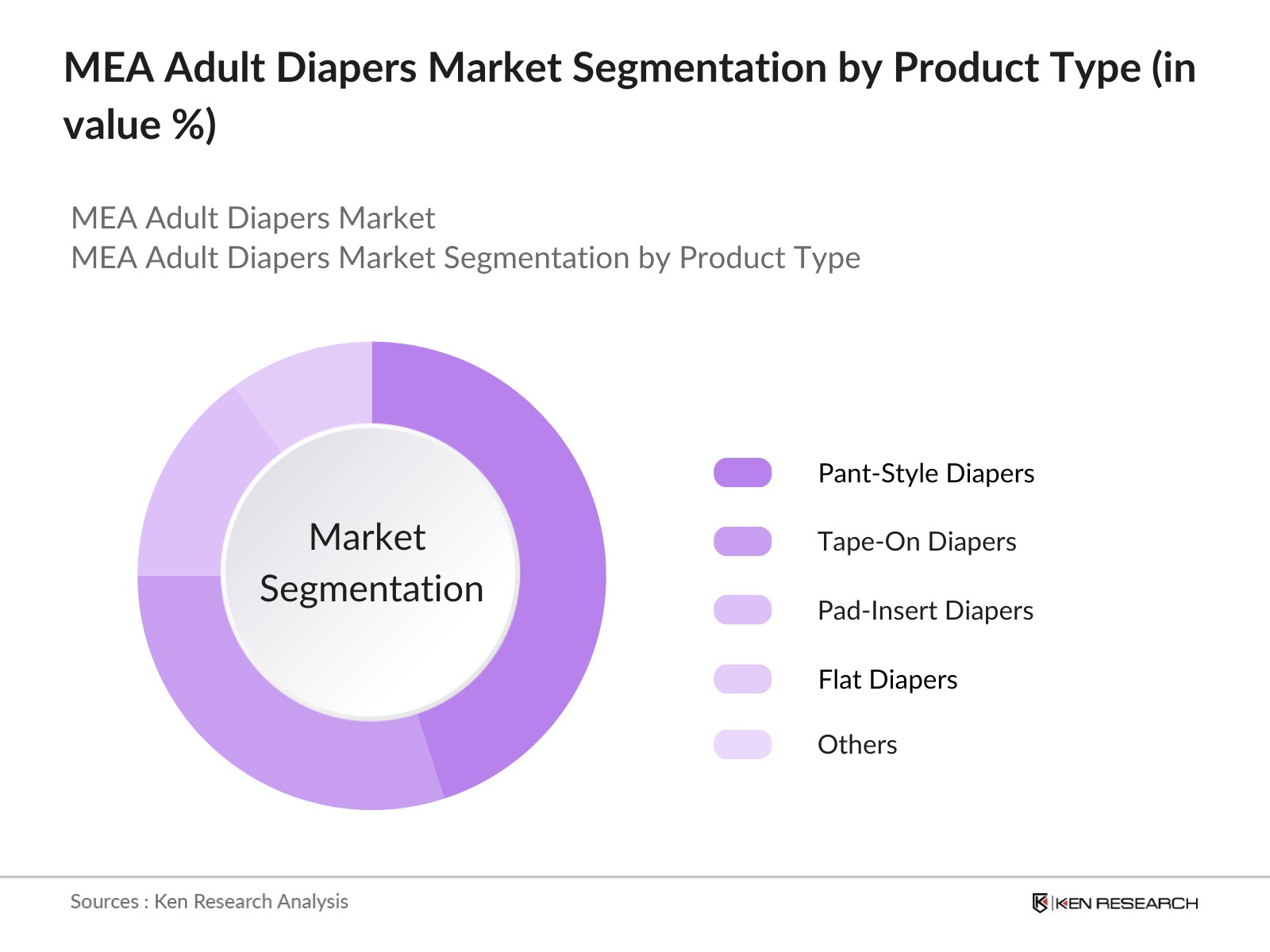
By Product Type: The MEA adult diapers market is segmented by product type into pant-style diapers, tape-on diapers, pad-insert diapers, flat diapers, and others. Recently, pant-style diapers have dominated the market due to their ease of use and comfort, which appeal to both caregivers and users. The popularity of pant-style diapers is also driven by their ability to offer a higher degree of mobility and independence, which is essential for active older adults in urban areas. Moreover, the increasing adoption of premium and high-absorbency pant-style diapers has bolstered this segment's growth.
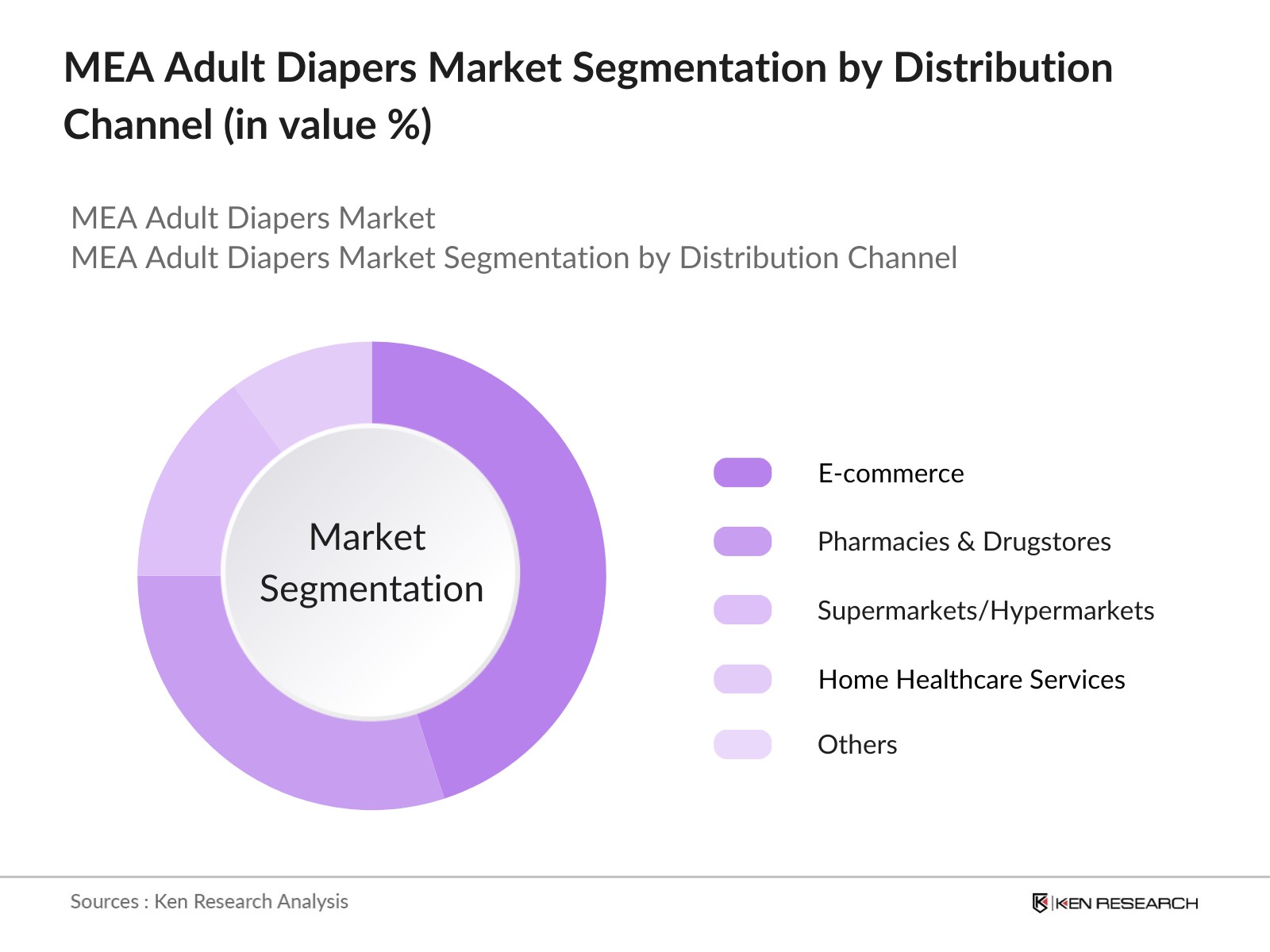
By Distribution Channel: The market is also segmented by distribution channels, including pharmacies and drugstores, e-commerce, supermarkets/hypermarkets, home healthcare services, and others. E-commerce is currently the most dominant channel, especially in countries like the UAE and Saudi Arabia, where internet penetration and consumer confidence in online shopping are significantly higher. The convenience of home delivery and access to a wide variety of products at competitive prices has made e-commerce the preferred platform for purchasing adult diapers.
The MEA adult diapers market is dominated by global and regional companies, with a few major players holding significant market shares. These companies invest heavily in research and development to introduce innovative products, including biodegradable and smart adult diapers. Some companies focus on expanding their regional presence through partnerships with local distributors, which has become a key strategy for tapping into underserved markets across Africa and the Middle East. The MEA adult diapers market is shaped by a mix of global giants like Kimberly-Clark and local players that cater to specific regional needs.
|
Company Name |
Establishment Year |
Headquarters |
Market Strategy |
R&D Investments |
Environmental Initiatives |
Product Portfolio |
Digital Transformation |
Regional Penetration |
Patents |
|
Kimberly-Clark Corporation |
1872 |
USA |
- |
- |
- |
- |
- |
- |
- |
|
Essity AB |
1929 |
Sweden |
- |
- |
- |
- |
- |
- |
- |
|
Procter & Gamble Co. |
1837 |
USA |
- |
- |
- |
- |
- |
- |
- |
|
Ontex Group |
1979 |
Belgium |
- |
- |
- |
- |
- |
- |
- |
|
Unicharm Corporation |
1961 |
Japan |
- |
- |
- |
- |
- |
- |
- |
Over the next five years, the MEA adult diapers market is expected to experience robust growth driven by increasing awareness of incontinence management, a rapidly aging population, and continued investments in healthcare infrastructure. With urbanization on the rise, demand for high-absorbency and comfortable adult diapers is projected to increase, particularly in urban centers. Furthermore, the integration of smart diapers with health monitoring capabilities is likely to appeal to caregivers and healthcare providers, further boosting market demand.
The region's focus on sustainability and biodegradable products will also play a pivotal role, as consumers and governments alike push for eco-friendly solutions. This, coupled with technological advancements in manufacturing, will continue to shape the future of the MEA adult diapers market.
Product Customization to Meet Regional Preferences: Customization presents a significant opportunity for growth in the MEA adult diaper market. By 2024, many global adult diaper brands are tailoring products to cater to regional preferences, such as modest designs and specific sizing to suit local demographics. For instance, in Egypt and Saudi Arabia, over 40% of surveyed consumers in urban areas prefer products that align with cultural and religious considerations, such as modest packaging and enhanced privacy features. This demand for tailored products creates a lucrative opportunity for manufacturers.
Expansion Opportunities in Emerging Economies: Emerging economies within the MEA region, such as Ethiopia and Tanzania, offer significant potential for market expansion. By 2023, Ethiopias GDP grew to USD 156 billion, indicating a growing middle class and improved healthcare infrastructure. This economic progress opens doors for the adult diaper market to penetrate previously underserved regions. In Tanzania, adult diaper penetration is still below 10%, suggesting untapped growth opportunities as disposable income levels rise and healthcare systems expand in rural areas.
|
By Product Type |
Pant Style Tape-On Pad-Insert Flat, Others |
|
By Absorbency Level |
Light Moderate Heavy |
|
By Distribution Channel |
Pharmacies E-Commerce Supermarkets Home Healthcare Services Others |
|
By End-User |
Elderly Adults with Disabilities Bedridden Others |
|
By Region |
GCC South Africa Egypt North Africa Sub-Saharan Africa |
1.1. Definition and Scope
1.2. Market Taxonomy
1.3. Market Growth Rate
1.4. Market Segmentation Overview
2.1. Historical Market Size
2.2. Year-On-Year Growth Analysis
2.3. Key Market Developments and Milestones
3.1. Growth Drivers (Aging Population, Increasing Healthcare Awareness, Changing Demographics, Rising Disposable Income)
3.1.1. Aging Population in the MEA Region
3.1.2. Increasing Healthcare Awareness
3.1.3. Growing Awareness on Hygiene and Incontinence Management
3.1.4. Rising Disposable Income in Emerging Markets
3.2. Market Challenges (Cultural Sensitivity, High Product Costs, Low Awareness in Rural Areas)
3.2.1. Cultural Stigmas Around Adult Diaper Usage
3.2.2. High Product Costs for Premium Adult Diapers
3.2.3. Lack of Awareness in Rural and Underserved Areas
3.3. Opportunities (Product Customization, Market Penetration in Emerging Economies, Technological Innovations)
3.3.1. Product Customization to Meet Regional Preferences
3.3.2. Expansion Opportunities in Emerging Economies
3.3.3. Integration of Biodegradable and Environmentally Friendly Products
3.4. Trends (Sustainability, Online Retail Channels, Premiumization, Product Innovations)
3.4.1. Adoption of Sustainable and Biodegradable Diaper Solutions
3.4.2. Growth in Online Retail and E-Commerce
3.4.3. Increasing Demand for Premium Adult Diapers with Advanced Features
3.4.4. Smart Diapers with IoT for Monitoring Incontinence
3.5. Government Regulation (Import Restrictions, Product Certifications, Healthcare Policies)
3.5.1. Import Tariffs and Regulations on Hygiene Products
3.5.2. Product Certification Standards for Quality Control
3.5.3. Government Healthcare Subsidies for Senior Care
3.6. SWOT Analysis
3.6.1. Strengths
3.6.2. Weaknesses
3.6.3. Opportunities
3.6.4. Threats
3.7. Stakeholder Ecosystem
3.7.1. Suppliers and Distributors
3.7.2. Retailers and E-Commerce Channels
3.7.3. Healthcare Providers
3.7.4. Government and Non-Governmental Organizations
3.8. Porters Five Forces
3.8.1. Bargaining Power of Suppliers
3.8.2. Bargaining Power of Buyers
3.8.3. Threat of New Entrants
3.8.4. Threat of Substitutes
3.8.5. Industry Rivalry
3.9. Competition Ecosystem
3.9.1. Competitive Landscape
3.9.2. Market Positioning of Key Players
3.9.3. Key Strategic Initiatives
4.1. By Product Type (In Value %)
4.1.1. Pant Style Adult Diapers
4.1.2. Tape-On Adult Diapers
4.1.3. Pad-Insert Adult Diapers
4.1.4. Flat Adult Diapers
4.1.5. Others
4.2. By Absorbency Level (In Value %)
4.2.1. Light Absorbency Diapers
4.2.2. Moderate Absorbency Diapers
4.2.3. Heavy Absorbency Diapers
4.3. By Distribution Channel (In Value %)
4.3.1. Pharmacies & Drugstores
4.3.2. E-Commerce
4.3.3. Supermarkets/Hypermarkets
4.3.4. Home Healthcare Services
4.3.5. Others
4.4. By End-User (In Value %)
4.4.1. Elderly
4.4.2. Adults with Disabilities
4.4.3. Bedridden Patients
4.4.4. Others
4.5. By Region (In Value %)
4.5.1. GCC
4.5.2. South Africa
4.5.3. Egypt
4.5.4. North Africa
4.5.5. Sub-Saharan Africa
5.1. Detailed Profiles of Major Companies
5.1.1. Kimberly-Clark Corporation
5.1.2. Essity AB
5.1.3. Procter & Gamble Co.
5.1.4. Ontex Group
5.1.5. Unicharm Corporation
5.1.6. First Quality Enterprises, Inc.
5.1.7. Daio Paper Corporation
5.1.8. Domtar Corporation
5.1.9. Hengan International Group
5.1.10. Medline Industries, Inc.
5.1.11. Drylock Technologies
5.1.12. Nippon Paper Industries Co. Ltd.
5.1.13. TZMO SA
5.1.14. Abena Group
5.1.15. Paul Hartmann AG
5.2. Cross Comparison Parameters (R&D Investments, Market Presence, Number of Patents, Product Innovation, Manufacturing Capacities, Environmental Initiatives, Digital Transformation, Strategic Partnerships)
5.3. Market Share Analysis
5.4. Strategic Initiatives
5.5. Mergers and Acquisitions
5.6. Investment Analysis
5.7. Venture Capital Funding
5.8. Government Grants
5.9. Private Equity Investments
6.1. Health and Safety Standards
6.2. Import Regulations and Duties
6.3. Product Quality Certifications
6.4. Waste Disposal and Environmental Standards
7.1. Future Market Size Projections
7.2. Key Factors Driving Future Market Growth
8.1. By Product Type (In Value %)
8.2. By Absorbency Level (In Value %)
8.3. By Distribution Channel (In Value %)
8.4. By End-User (In Value %)
8.5. By Region (In Value %)
9.1. TAM/SAM/SOM Analysis
9.2. Consumer Behavior Analysis
9.3. Product Portfolio Diversification
9.4. Untapped Market Opportunities
The initial stage of the research involved identifying the major stakeholders within the MEA adult diapers market. Extensive desk research was carried out using industry-specific reports and proprietary databases. The key variables, including consumer demographics, disposable income, and product availability, were defined during this phase.
A comprehensive analysis of historical data and current market dynamics was conducted to construct a reliable market model. This included analyzing market penetration, distribution channel performance, and key revenue drivers.
To ensure the accuracy of the data, market hypotheses were validated through consultations with industry experts and distributors. These consultations helped refine the market projections and confirmed the key growth drivers.
The final step involved compiling data from multiple sources, including direct interviews with manufacturers and healthcare providers, to validate the projections. This helped produce a well-rounded and reliable market report for stakeholders.
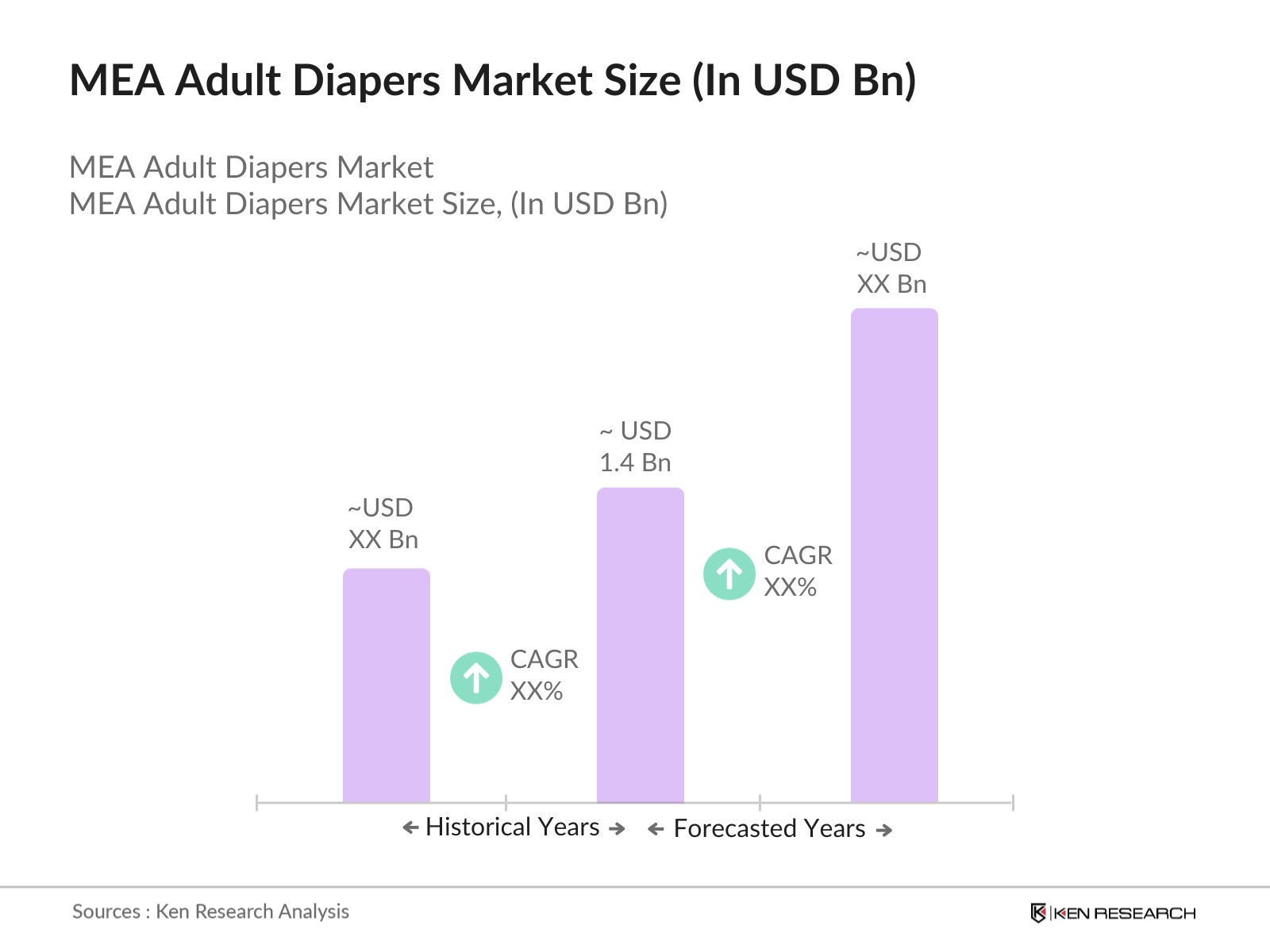
The MEA adult diapers market is valued at USD 1.4 billion, driven by increasing awareness of hygiene and a growing aging population.
The major challenges include cultural sensitivities surrounding adult incontinence, high product costs, and low awareness in rural areas.
Key players include Kimberly-Clark Corporation, Essity AB, Procter & Gamble Co., Ontex Group, and Unicharm Corporation.
The market is driven by a rising aging population, growing healthcare investments, and increasing consumer awareness about incontinence management.

What makes us stand out is that our consultants follows Robust, Refine and Result (RRR) methodology. i.e. Robust for clear definitions, approaches and sanity checking, Refine for differentiating respondents facts and opinions and Result for presenting data with story

We have set a benchmark in the industry by offering our clients with syndicated and customized market research reports featuring coverage of entire market as well as meticulous research and analyst insights.

While we don't replace traditional research, we flip the method upside down. Our dual approach of Top Bottom & Bottom Top ensures quality deliverable by not just verifying company fundamentals but also looking at the sector and macroeconomic factors.

With one step in the future, our research team constantly tries to show you the bigger picture. We help with some of the tough questions you may encounter along the way: How is the industry positioned? Best marketing channel? KPI's of competitors? By aligning every element, we help maximize success.

Our report gives you instant access to the answers and sources that other companies might choose to hide. We elaborate each steps of research methodology we have used and showcase you the sample size to earn your trust.

If you need any support, we are here! We pride ourselves on universe strength, data quality, and quick, friendly, and professional service.