
MEA Contact Lens Market Outlook to 2030
Region:Middle East
Author(s):Shubham Kashyap
Product Code:KROD3314
November 2024
90
About the Report
MEA Contact Lens Market Overview
- The MEA Contact Lens market is currently valued at USD 490 million, based on a five-year historical analysis. This market is primarily driven by the rising demand for vision correction solutions and an increasing shift towards aesthetic contact lenses. The region's young population, growing awareness about advanced vision correction methods, and increasing disposable incomes are contributing to the markets growth. Additionally, the growing prevalence of myopia, particularly in urban areas, is a driving factor for the demand for corrective contact lenses.
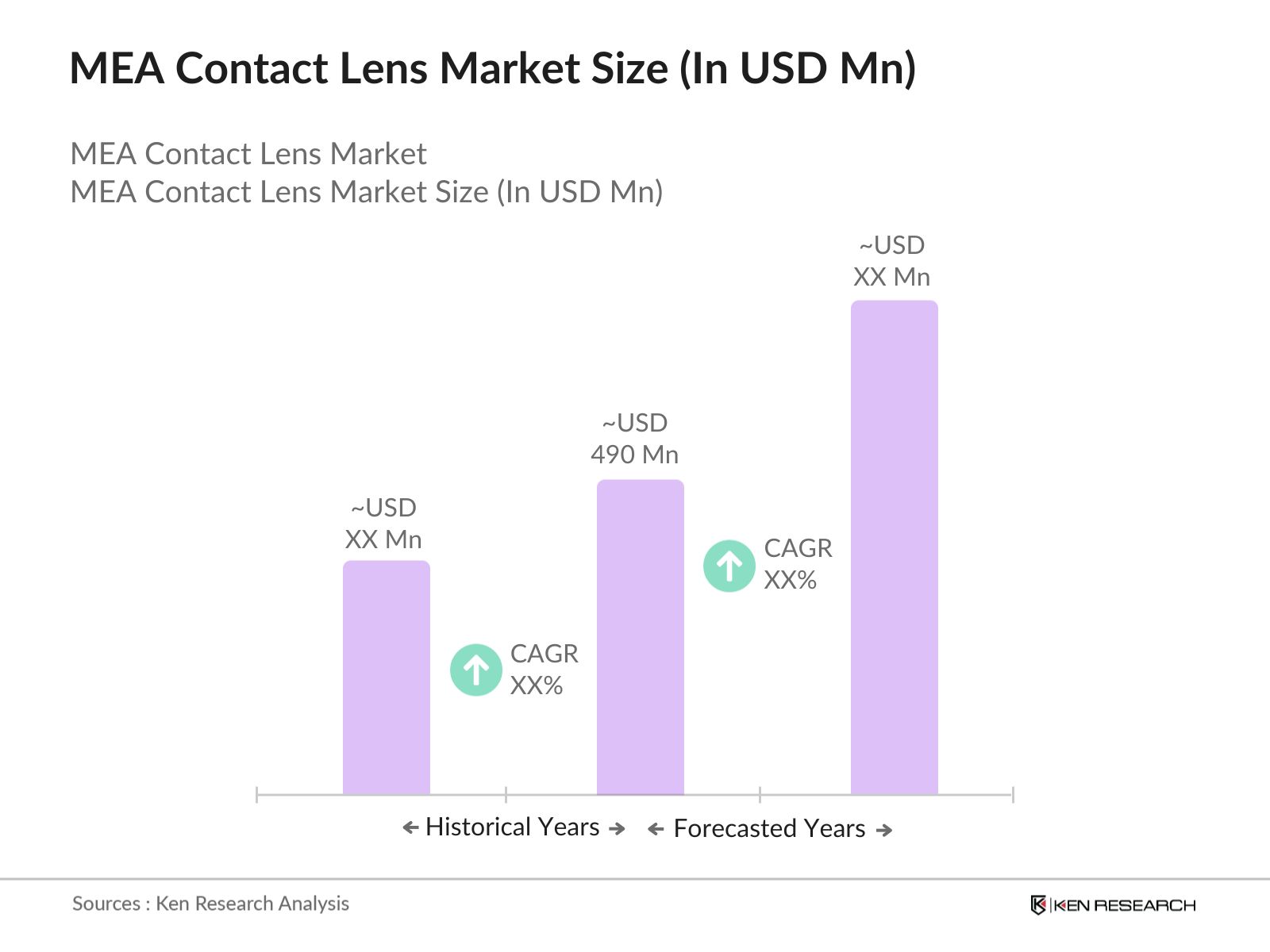
- Market growth is primarily concentrated in key countries such as the UAE, Saudi Arabia, and South Africa, due to their strong healthcare infrastructure, higher consumer spending, and increasing adoption of premium contact lenses. The demand for colored and aesthetic lenses is also rising, especially among the younger population seeking cosmetic enhancements. Meanwhile, other markets such as Egypt and Nigeria are witnessing growing awareness of eye health, driving the adoption of contact lenses for both corrective and cosmetic purposes.
- Contact lens manufacturers and distributors in the MEA region must comply with strict licensing and regulatory requirements enforced by national health bodies. In Saudi Arabia, the Saudi Food and Drug Authority (SFDA) mandates comprehensive safety checks and approvals for imported contact lenses. Similarly, in the UAE, the Ministry of Health regulates the import and distribution of medical devices, including contact lenses, ensuring compliance with international safety standards.
MEA Contact Lens Market Segmentation
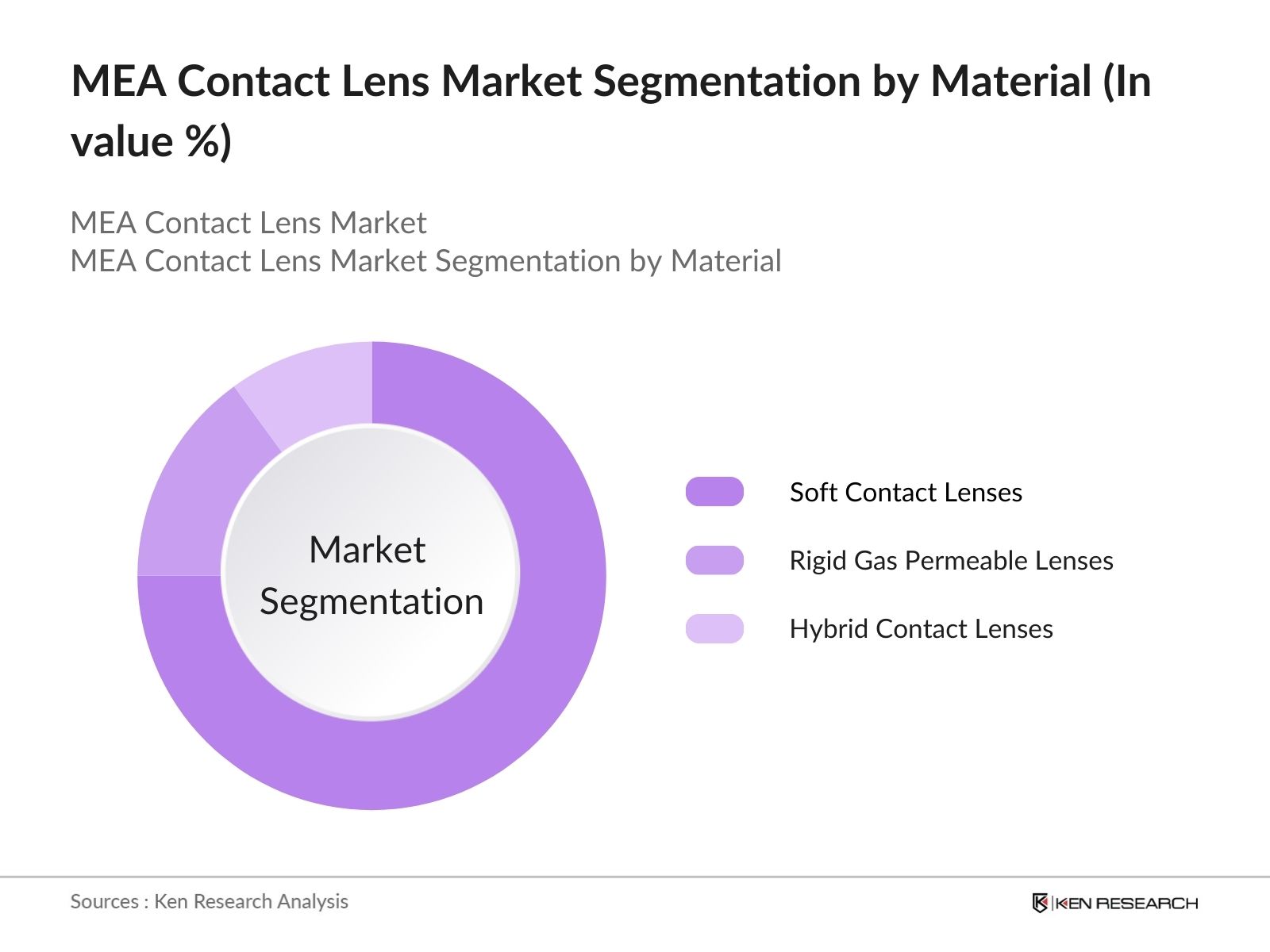
- By Material Type: The market is segmented by material type into soft contact lenses, rigid gas permeable (RGP) lenses, and hybrid lenses. Soft lenses, particularly silicone hydrogel lenses, dominate the market due to their comfort, flexibility, and high oxygen permeability. Rigid gas permeable lenses, although less popular, are favored for their durability and sharp vision correction, particularly among people with astigmatism. Hybrid lenses are also gaining traction due to their ability to combine the comfort of soft lenses with the visual clarity of RGP lenses.
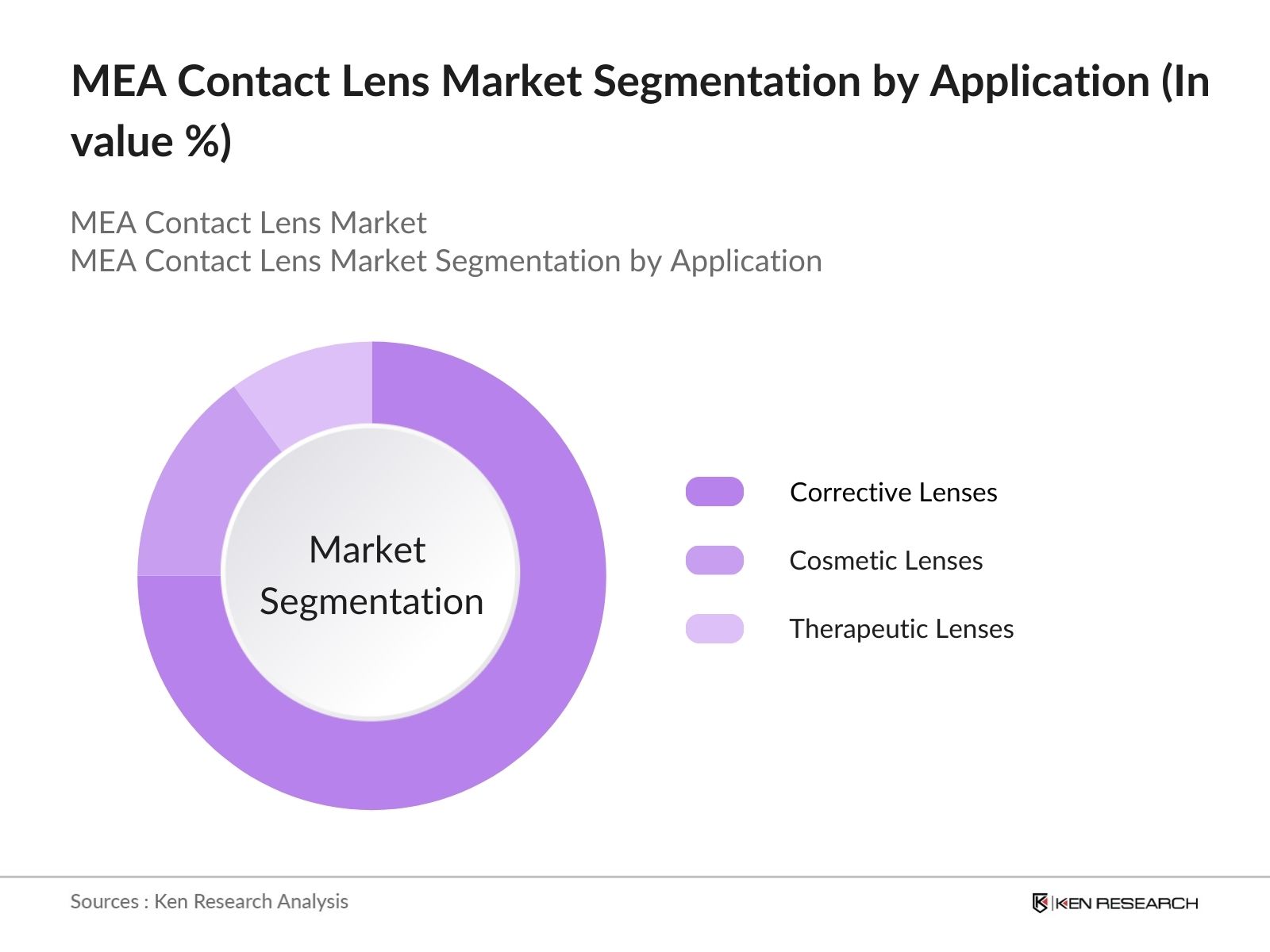
- By Application: The market is further segmented by application into corrective, therapeutic, cosmetic, and lifestyle-oriented lenses. Corrective lenses, addressing vision problems such as myopia, hyperopia, and astigmatism, form the largest segment. Cosmetic lenses, especially colored lenses, are becoming increasingly popular among younger consumers, driven by social media trends and rising beauty consciousness. Therapeutic lenses, used for conditions such as keratoconus and corneal ulcers, are also gaining attention, particularly in regions with advanced healthcare systems like the UAE and Saudi Arabia.
MEA Contact Lens Market Competitive Landscape
The MEA Contact Lens market is highly competitive, with both global and regional players seeking to gain market share through product innovation, aggressive marketing strategies, and expansion into untapped markets. Key players include Johnson & Johnson Vision Care, Alcon, CooperVision, and Bausch & Lomb, which dominate the market with their advanced product offerings and strong distribution networks.
|
Company Name |
Establishment Year |
Headquarters |
Product Range |
Key Regions |
R&D Investment |
Distribution Network |
Collaborations |
|
Johnson & Johnson Vision Care |
1886 |
New Brunswick, USA |
|||||
|
Alcon |
1945 |
Geneva, Switzerland |
|||||
|
CooperVision |
1958 |
Pleasanton, USA |
|||||
|
Bausch & Lomb |
1853 |
Rochester, USA |
|||||
|
Hoya Corporation |
1941 |
Tokyo, Japan |
MEA Contact Lens Industry Analysis
Growth Drivers
-
Increasing Prevalence of Myopia and Other Refractive Disorders: The growing prevalence of myopia and other refractive disorders in the Middle East and Africa (MEA) region is a key driver for the contact lens market. According to the World Health Organization, nearly 2.6 billion people worldwide suffer from myopia, with numbers emerging in urban areas across the Gulf Cooperation Council (GCC) countries and North Africa. The rapid urbanization and increasing screen time in cities like Riyadh, Dubai, and Cairo contribute to rising eye health issues, further driving the demand for contact lenses in the region. Moreover, governmental health programs in GCC countries are increasing awareness of myopia correction options.
- Rising Demand for Aesthetic and Colored Lenses: The demand for aesthetic and colored lenses has surged, particularly in high-income nations like Saudi Arabia, UAE, and South Africa. The aesthetic contact lenses are particularly popular among women aged 18-35 in these countries. In Saudi Arabia, the Ministry of Health reported a growing number of cosmetic lens users, citing cultural and social preferences for beauty enhancement. The introduction of new materials like silicone hydrogel also caters to consumer needs for comfort, especially with brands targeting the region's growing fashion-conscious demographic.
- Expansion of Online Retail Channels: The growth of e-commerce platforms in the MEA region has substantially boosted the sales of contact lenses. Retailers such as Amazon and Noon, along with local platforms like Souq, have become major players in distributing lenses across the region, particularly during the COVID-19 pandemic. According to the Gulf Cooperation Councils statistics, online shopping grew exponentially in 2023, with over 90% of consumers in the UAE and 85% in Saudi Arabia now preferring digital retail for convenience. This shift towards online purchasing is critical in propelling the regional contact lens market forward.
Market Challenges
- Price Sensitivity in Emerging Markets: Despite the overall growth of the contact lens market in the MEA region, price sensitivity remains a major challenge, particularly in lower-income countries such as Egypt, Nigeria, and Kenya. Many consumers in these emerging markets struggle to afford premium lenses, making cost-effective alternatives more attractive. The disparity in income levels across these countries has led to limited purchasing power, especially when it comes to higher-end vision correction products like contact lenses. As a result, consumers in these regions tend to opt for more affordable alternatives, creating a barrier for premium brands to penetrate the market effectively.
- Lack of Awareness About Proper Lens Care: A challenge in the MEA region is the lack of awareness regarding proper lens care. Government health bodies like the Saudi Ministry of Health have identified a gap in public understanding of the risks associated with improper lens hygiene, leading to an increase in eye infections. In Egypt and Nigeria, the World Health Organization reported a higher prevalence of eye diseases due to improper use and care of lenses. Public health campaigns are being run in these countries to educate the population, but awareness levels remain low.
MEA Contact Lens Market Future Outlook
The MEA Contact Lens market is expected to continue its upward trajectory, with growth anticipated over the next five years. Factors such as increasing urbanization, the rising prevalence of vision problems, and growing disposable incomes are expected to drive demand for both corrective and cosmetic lenses. Technological advancements and greater consumer access to online retail platforms will further contribute to market expansion.
Future Market Opportunities
- Growing Middle-Class Consumer Base in Gulf Cooperation Council (GCC): The expanding middle-class population in the GCC countries, particularly in Saudi Arabia, UAE, and Qatar, presents a opportunity for the contact lens market. According to the International Monetary Fund (IMF), the GDP per capita in Saudi Arabia and UAE remains among the highest globally, with the middle class growing by 5 million individuals between 2018 and 2023. This affluent consumer base has shown increased interest in personal care products, including contact lenses, driven by a strong demand for both corrective and cosmetic lenses.
- Increasing Adoption of Disposable and Daily Wear Lenses: There is a notable shift towards disposable and daily wear lenses in the MEA region, driven by the increasing focus on hygiene and convenience. Disposable lenses offer the advantage of reduced maintenance and are considered safer, particularly in the context of rising awareness about eye health. In 2023, health departments in UAE and Saudi Arabia have recommended daily disposable lenses for first-time users, further boosting sales in the category. The Gulf countries, with higher disposable incomes, are at the forefront of this transition towards daily and disposable lenses.
Scope of the Report
|
By Material |
Soft Contact Lenses Rigid Gas Permeable (RGP) Lenses Hybrid Contact Lenses |
|
By Application |
Corrective Contact Lenses Cosmetic Contact Lenses (Colored, Patterned) Therapeutic Contact Lenses |
|
By Usage |
Daily Disposable Lenses Monthly/Extended Wear Lenses Annual Lenses |
|
By Distribution Channel |
Offline Retail (Optical Stores, Clinics) Online Retail Hospitals and Eye Clinics |
|
By Region |
GCC (UAE, Saudi Arabia) South Africa North Africa (Egypt, Morocco) East Africa (Kenya) West Africa (Nigeria) |
Products
Key Target Audience
Investors and Venture Capitalist Firms
Government and Regulatory Bodies (e.g., Saudi Food and Drug Authority, UAE Ministry of Health)
Contact Lens Manufacturers
Optical Retail Chains
Eye Hospitals and Clinics
Online Retail Platforms
Health and Beauty Retailers
Technology Providers in Eye Care
Banks and Financial Institutions
Companies
Major Players Mentioned in the Report
Johnson & Johnson Vision Care
Alcon
CooperVision
Bausch & Lomb
Hoya Corporation
SEED Co., Ltd.
Menicon Co., Ltd.
Carl Zeiss Meditec AG
Novartis AG
UltraVision CLPL
Gelflex
Bescon Co., Ltd.
Clerio Vision, Inc.
Hydron
SynergEyes Inc.
Table of Contents
1. MEA Contact Lens Market Overview
1.1. Definition and Scope
1.2. Market Taxonomy
1.3. Market Growth Rate (based on lens material, usage pattern, and application)
1.4. Market Segmentation Overview
2. MEA Contact Lens Market Size (In USD Mn)
2.1. Historical Market Size
2.2. Year-On-Year Growth Analysis
2.3. Key Market Developments and Milestones
3. MEA Contact Lens Market Analysis
3.1. Growth Drivers
3.1.1. Increasing Prevalence of Myopia and Other Refractive Disorders
3.1.2. Rising Demand for Aesthetic and Colored Lenses
3.1.3. Expansion of Online Retail Channels
3.1.4. Technological Advancements in Contact Lenses (e.g., silicone hydrogel, extended wear)
3.2. Market Challenges
3.2.1. Price Sensitivity in Emerging Markets
3.2.2. Lack of Awareness About Proper Lens Care
3.2.3. Competition from Alternative Vision Correction Methods (Eyeglasses, LASIK)
3.3. Opportunities
3.3.1. Growing Middle-Class Consumer Base in Gulf Cooperation Council (GCC)
3.3.2. Increasing Adoption of Disposable and Daily Wear Lenses
3.3.3. Opportunities in Emerging Markets (Egypt, Nigeria, Kenya)
3.4. Trends
3.4.1. Increasing Popularity of Multifocal Lenses
3.4.2. Rising Adoption of Sustainable and Eco-Friendly Lens Materials
3.4.3. Digital Lenses to Address Screen-Induced Eye Strain
3.5. Regulatory Overview
3.5.1. Licensing and Compliance Regulations (by region)
3.5.2. Product Registration Procedures
3.5.3. Import Restrictions and Tariffs on Contact Lenses
3.6. SWOT Analysis
3.7. Stakeholder Ecosystem
3.8. Porters Five Forces Analysis (specific to MEA contact lens market)
3.9. Competition Ecosystem
4. MEA Contact Lens Market Segmentation
4.1. By Material Type (In Value %)
4.1.1. Soft Contact Lenses
4.1.2. Rigid Gas Permeable (RGP) Lenses
4.1.3. Hybrid Contact Lenses
4.2. By Application (In Value %)
4.2.1. Corrective Contact Lenses
4.2.2. Cosmetic Contact Lenses (Colored and Patterned)
4.2.3. Therapeutic Contact Lenses
4.3. By Usage Type (In Value %)
4.3.1. Daily Disposable Lenses
4.3.2. Monthly/Extended Wear Lenses
4.3.3. Annual Lenses
4.4. By Distribution Channel (In Value %)
4.4.1. Offline Retail (Optical Stores, Clinics)
4.4.2. Online Retail
4.4.3. Hospital and Eye Clinics
4.5. By Region (In Value %)
4.5.1. GCC (UAE, Saudi Arabia)
4.5.2. South Africa
4.5.3. North Africa (Egypt, Morocco)
4.5.4. East Africa (Kenya)
4.5.5. West Africa (Nigeria)
5. MEA Contact Lens Market Competitive Analysis
5.1. Detailed Profiles of Major Companies
5.1.1. Johnson & Johnson Vision Care
5.1.2. Alcon
5.1.3. CooperVision
5.1.4. Bausch & Lomb
5.1.5. Menicon Co. Ltd.
5.1.6. SEED Co., Ltd.
5.1.7. Hoya Corporation
5.1.8. Carl Zeiss Meditec AG
5.1.9. Novartis AG
5.1.10. Gelflex
5.1.11. UltraVision CLPL
5.1.12. Bescon Co., Ltd.
5.1.13. Hydron
5.1.14. SynergEyes Inc.
5.1.15. Clerio Vision, Inc.
5.2. Cross Comparison Parameters
No. of Employees
Headquarters
Inception Year
Annual Revenue
Product Portfolio
R&D Investment
Distribution Network Size
Regional Focus
5.3. Market Share Analysis
5.4. Strategic Initiatives
5.5. Mergers and Acquisitions
5.6. Investment Analysis
5.7. Venture Capital Funding
5.8. Government Grants
5.9. Private Equity Investments
6. MEA Contact Lens Market Regulatory Framework
6.1. Health and Safety Standards
6.2. Product Certification Processes
6.3. Import/Export Regulations
6.4. Regulatory Bodies (By Region)
7. MEA Contact Lens Future Market Size (In USD Mn)
7.1. Future Market Size Projections
7.2. Key Factors Driving Future Market Growth (e.g., technological advancements, product innovation)
8. MEA Contact Lens Future Market Segmentation
8.1. By Material Type
8.2. By Application
8.3. By Usage Type
8.4. By Distribution Channel
8.5. By Region
9. MEA Contact Lens Market Analysts Recommendations
9.1. TAM/SAM/SOM Analysis
9.2. Customer Cohort Analysis
9.3. Marketing Initiatives
9.4. White Space Opportunity Analysis
Disclaimer Contact UsResearch Methodology
Step 1: Identification of Key Variables
The initial phase involves constructing an ecosystem map of the MEA contact lens market. Extensive desk research using a combination of secondary and proprietary databases was conducted to gather detailed industry-level data. Key variables such as product categories, distribution channels, and application types were identified for further analysis.
Step 2: Market Analysis and Construction
In this phase, historical data on the MEA contact lens market was compiled and analyzed. This included assessing market penetration rates, distribution network sizes, and revenue generation across different product segments. The goal was to ensure reliable and accurate revenue estimates.
Step 3: Hypothesis Validation and Expert Consultation
Market hypotheses were developed and validated through interviews with industry experts from leading manufacturers and distributors. These consultations provided insights into operational and financial aspects of the market, refining the data gathered.
Step 4: Research Synthesis and Final Output
The final phase involved synthesizing data from manufacturers and stakeholders to provide comprehensive insights into the MEA contact lens market. This bottom-up approach was essential to verifying market data and ensuring a robust analysis.
Frequently Asked Questions
01. How big is the MEA Contact Lens Market?
The MEA contact lens market is valued at USD 490 million, driven by an increasing need for vision correction and aesthetic enhancements, alongside advancements in lens technology.
02. What are the growth drivers in the MEA Contact Lens Market?
Key drivers in the MEA contact lens market include the rising prevalence of myopia, demand for cosmetic lenses, and technological innovations like silicone hydrogel lenses that provide enhanced comfort.
03. Who are the major players in the MEA Contact Lens Market?
Leading companies in the MEA contact lens market include Johnson & Johnson Vision Care, Alcon, CooperVision, and Bausch & Lomb, which dominate due to their strong product portfolios and widespread distribution networks.
04. What challenges does the MEA Contact Lens Market face?
Challenges in the MEA contact lens market include price sensitivity in emerging markets, competition from alternative vision correction solutions like LASIK, and a lack of awareness about proper lens care in certain regions.
Why Buy From Us?

What makes us stand out is that our consultants follows Robust, Refine and Result (RRR) methodology. i.e. Robust for clear definitions, approaches and sanity checking, Refine for differentiating respondents facts and opinions and Result for presenting data with story

We have set a benchmark in the industry by offering our clients with syndicated and customized market research reports featuring coverage of entire market as well as meticulous research and analyst insights.

While we don't replace traditional research, we flip the method upside down. Our dual approach of Top Bottom & Bottom Top ensures quality deliverable by not just verifying company fundamentals but also looking at the sector and macroeconomic factors.

With one step in the future, our research team constantly tries to show you the bigger picture. We help with some of the tough questions you may encounter along the way: How is the industry positioned? Best marketing channel? KPI's of competitors? By aligning every element, we help maximize success.

Our report gives you instant access to the answers and sources that other companies might choose to hide. We elaborate each steps of research methodology we have used and showcase you the sample size to earn your trust.

If you need any support, we are here! We pride ourselves on universe strength, data quality, and quick, friendly, and professional service.