
MEA Cut Flowers Market Outlook to 2030
Region:Saudi Arabia
Author(s):Meenakshi Bisht
Product Code:KROD1334
Region:Saudi Arabia
Author(s):Meenakshi Bisht
Product Code:KROD1334
October 2024
100
The MEA Cut Flowers Market is segmented into different factors like by product, by distribution channel and by region.
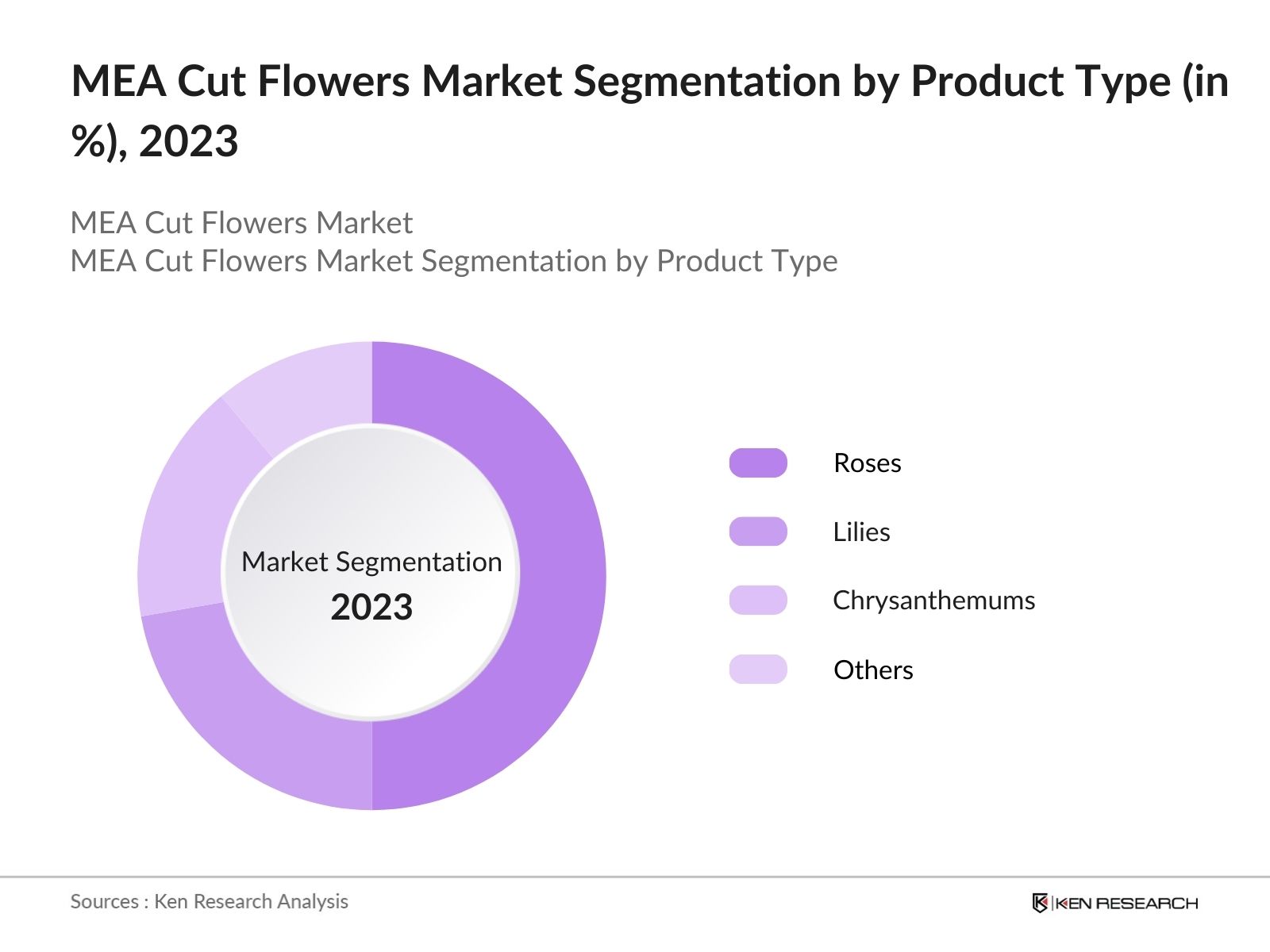
By Product Type: The market is segmented by product type into roses, lilies, chrysanthemums, and others. In 2023, roses held the largest market share, due to their popularity in floral arrangements for events and special occasions. Their extensive use in both personal and corporate settings contribute to their leading market position.
By Region: The market is segmented into the following regions Israel, United Arab Emirates, Jordan, Morocco, South Africa, and the Rest of MEA. In 2023, UAE emerged as the largest market, followed by South Africa and Israel. UAE leads the market due to its advanced infrastructure, high demand for luxury and premium floral products, and strategic location as a regional distribution hub. The city's growing population and tourism sector further boost its market dominance.
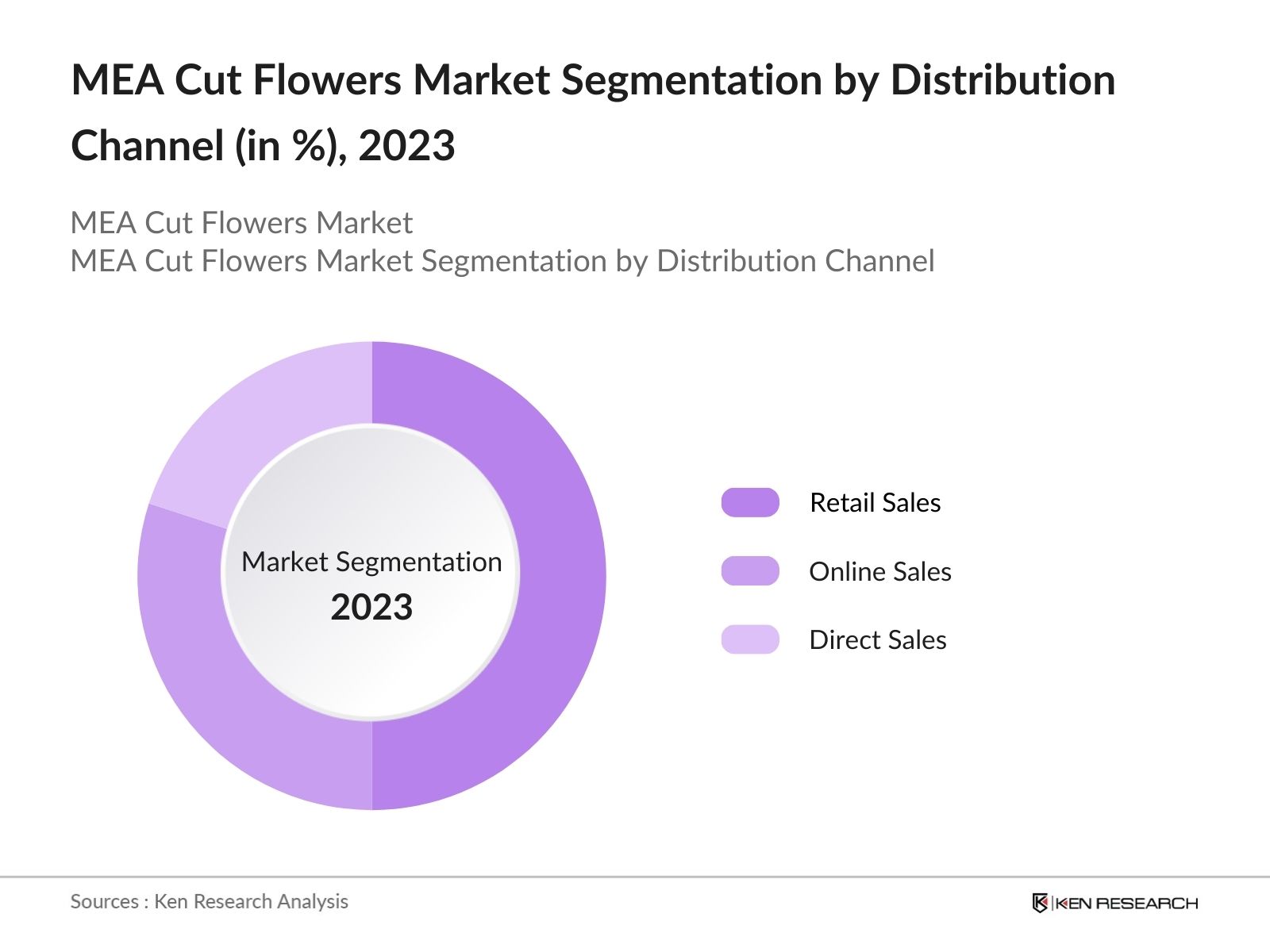
By Distribution Channel: The market is also segmented by distribution channel into direct sales, online sales, and retail sales. In 2023, retail sales dominated the market, due to their established presence and the ease with which consumers can purchase flowers. The wide availability of flower shops and supermarkets contributes to the high market share of retail sales.
|
Company |
Establishment Year |
Headquarters |
|---|---|---|
|
Snoeck |
1985 |
Netherlands |
|
FleuraMetz |
1965 |
Netherlands |
|
Royal FloraHolland |
1911 |
Netherlands |
|
Bougainvillea |
1992 |
UAE |
|
Netafim |
1965 |
Israel |
The MEA Cut Flowers Market is growing continuously by 2028, driven by continued growth in consumer spending on floral products and expansion of flower cultivation areas. Innovations in floral varieties and sustainable farming practices are expected to shape the future landscape, enhancing market dynamics and offering new growth opportunities.
|
By Product Type |
Roses Lilies Chrysanthemums Others |
|
By Application |
Home Commercial |
|
By Distribution Channel |
Direct Sales Online Sales Retail Sales |
|
By Region |
Israel United Arab Emirates Jordan Morocco South Africa Rest of MEA |
1.1. Definition and Scope
1.2. Market Taxonomy
1.3. Market Growth Rate
1.4. Market Segmentation Overview
2.1. Historical Market Size
2.2. Year-on-Year Growth Analysis
2.3. Key Market Developments and Milestones
3.1. Growth Drivers
3.1.1. Increased Consumer Spending on Floral Products
3.1.2. Expansion of Floral Distribution Channels
3.1.3. Development of Advanced Cultivation Technologies
3.1.4. Emergence of Premium Floral Products
3.2. Challenges
3.2.1. Fluctuations in Supply Due to Weather Conditions
3.2.2. High Cost of Flower Production
3.2.3. Logistical Issues in Distribution
3.2.4. Regulatory Constraints on Importing Flowers
3.3. Government Initiatives
3.3.1. Moroccos Support for Farmers
3.3.2. Emirates Sustainable Agriculture Label
3.3.3. Agricultural Productivity Enhancement Programs
3.3.4. Investment in Irrigation and Farming Technologies
3.4. Trends
3.4.1. Increased Adoption of Sustainable Cultivation Practices
3.4.2. Emergence of New Floral Varieties
3.4.3. Growth of Online Floral Retail Platforms
3.4.4. Rising Demand for Exotic Floral Arrangements
3.5. Competitive Landscape
3.5.1. Market Share Analysis
3.5.2. Strategic Initiatives
3.5.3. Mergers and Acquisitions
3.5.4. Investment Analysis
4.1. By Product Type (in Value %)
4.1.1. Roses
4.1.2. Lilies
4.1.3. Chrysanthemums
4.1.4. Others
4.2. By Region (in Value %)
4.2.1. Israel
4.2.2. United Arab Emirates
4.2.3. Jordan
4.2.4. Morocco
4.2.5. South Africa
4.2.6. Rest of MEA
4.3. By Distribution Channel (in Value %)
4.3.1. Direct Sales
4.3.2. Online Sales
4.3.3. Retail Sales
4.4. By Application (in Value %)
4.4.1. Corporate Events
4.4.2. Weddings
4.4.3. Holidays
4.4.4. Personal Use
4.5. By Floral Arrangement Type (in Value %)
4.5.1. Bouquets
4.5.2. Centerpieces
4.5.3. Wreaths
4.5.4. Custom Arrangements
5.1. Detailed Profiles of Major Companies
5.1.1. Snoeck
5.1.2. FleuraMetz
5.1.3. Royal FloraHolland
5.1.4. Bougainvillea
5.1.5. Netafim
5.2. Cross Comparison Parameters (No. of Employees, Headquarters, Inception Year, Revenue)
6.1. Market Share Analysis
6.2. Strategic Initiatives
6.3. Mergers and Acquisitions
6.4. Investment Analysis
6.4.1. Venture Capital Funding
6.4.2. Government Grants
6.4.3. Private Equity Investments
7.1. Environmental Standards
7.2. Compliance Requirements
7.3. Certification Processes
8.1. Future Market Size Projections
8.2. Key Factors Driving Future Market Growth
9.1. By Product Type (in Value %)
9.2. By Region (in Value %)
9.3. By Distribution Channel (in Value %)
9.4. By Application (in Value %)
9.5. By Floral Arrangement Type (in Value %)
10.1. TAM/SAM/SOM Analysis
10.2. Customer Cohort Analysis
10.3. Marketing Initiatives
10.4. White Space Opportunity Analysis
Ecosystem creation for all the major entities and referring to multiple secondary and proprietary databases to perform desk research around the market to collate industry level information.
Collating statistics on MEA Cut Flowers Market over the years, penetration of marketplaces and service providers ratio to compute revenue generated for MEA Cut Flowers Industry. We will also review service quality statistics to understand revenue generated which can ensure accuracy behind the data points shared.
Building market hypothesis and conducting CATIs with industry experts belonging to different companies to validate statistics and seek operational and financial information from company representatives.
Our team will approach multiple horticulture companies and understand nature of product segments and sales, consumer preference and other parameters, which will support us validate statistics derived through bottom to top approach fromsuch industry specific companies.
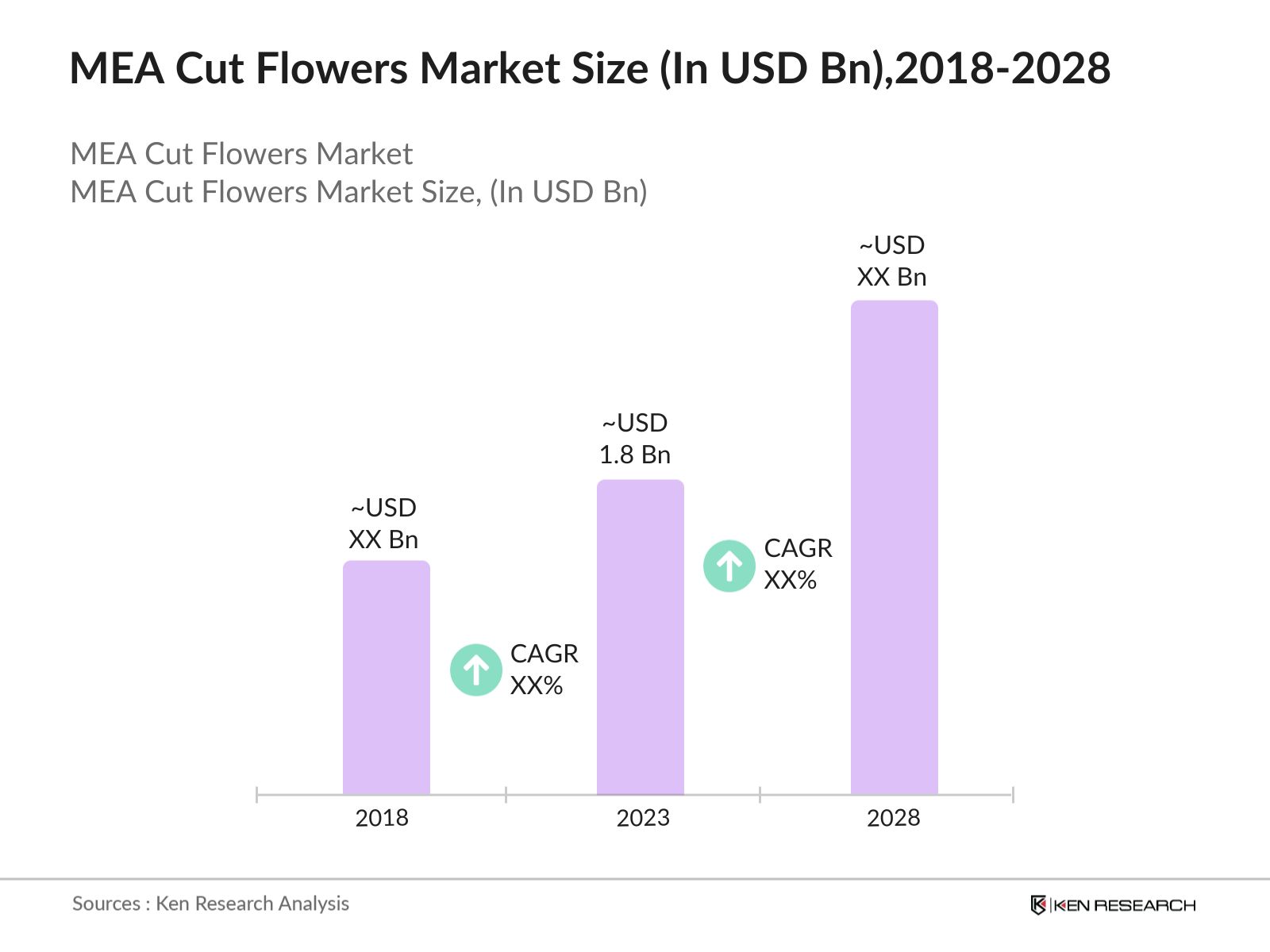
The MEA Cut Flowers Market was valued at USD 1.8 billion in 2023, driven by increased consumer spending on floral products and the expansion of floral distribution channels.
Challenges in MEA Cut Flowers Market include fluctuations in supply due to unpredictable weather conditions, high production costs, logistical issues in distribution, and regulatory constraints on importing flowers.
Key players in the MEA Cut Flowers Market include Snoeck, FleuraMetz, Royal FloraHolland, Bougainvillea, and Netafim. These companies are prominent due to their extensive production networks, broad product ranges, and innovative solutions in the floral industry.
The MEA Cut Flowers Market is driven by increased consumer spending on floral products, expansion of distribution channels, development of advanced cultivation technologies, and the growing events and hospitality industry.

What makes us stand out is that our consultants follows Robust, Refine and Result (RRR) methodology. i.e. Robust for clear definitions, approaches and sanity checking, Refine for differentiating respondents facts and opinions and Result for presenting data with story

We have set a benchmark in the industry by offering our clients with syndicated and customized market research reports featuring coverage of entire market as well as meticulous research and analyst insights.

While we don't replace traditional research, we flip the method upside down. Our dual approach of Top Bottom & Bottom Top ensures quality deliverable by not just verifying company fundamentals but also looking at the sector and macroeconomic factors.

With one step in the future, our research team constantly tries to show you the bigger picture. We help with some of the tough questions you may encounter along the way: How is the industry positioned? Best marketing channel? KPI's of competitors? By aligning every element, we help maximize success.

Our report gives you instant access to the answers and sources that other companies might choose to hide. We elaborate each steps of research methodology we have used and showcase you the sample size to earn your trust.

If you need any support, we are here! We pride ourselves on universe strength, data quality, and quick, friendly, and professional service.