
MEA Metal Cans Market Outlook to 2030
Region:Global
Author(s):Shambhavi
Product Code:KROD2696
December 2024
100
About the Report
MEA Metal Cans Market Overview
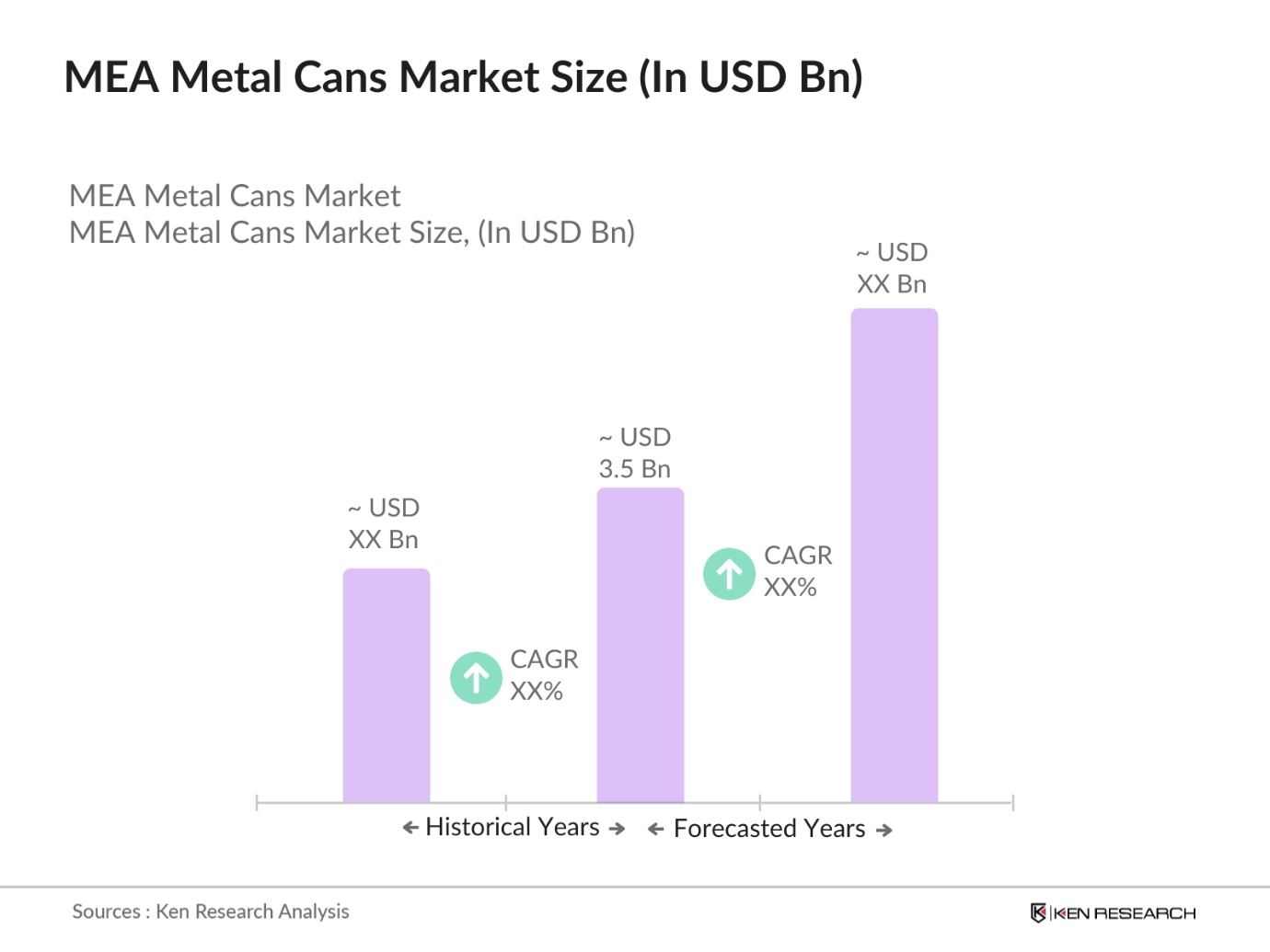
- In 2023, the Middle East and Africa (MEA) Metal Cans Market was valued at USD 3.5 billion. The market has been driven by a growing demand for sustainable and recyclable packaging solutions, particularly in the food and beverage sector. This growth has been supported by increased urbanization and the rising consumer preference for eco-friendly packaging options. Additionally, the proliferation of the beverage industry, coupled with increased production of processed foods, has substantially contributed to the growth of the metal cans market in the region.
- The MEA Metal Cans Market is dominated by key players such as Ball Corporation, Crown Holdings Inc., Ardagh Group, Can-Pack S.A., and Nampak Ltd. These companies have maintained their positions through innovation and the expansion of their manufacturing capacities. For example, Ball Corporation has enhanced its aluminum can production lines to meet rising demand in the region. These key players continuously invest in R&D to introduce lighter and more sustainable can designs, catering to various industries such as food, beverages, and household goods.
- Governments in the MEA region, notably in Saudi Arabia and the UAE, have been launching sustainability campaigns that emphasize the importance of recycling and reducing plastic usage. In 2023, the Saudi Green Initiative included specific mandates to reduce plastic packaging waste, thereby encouraging the use of recyclable metal cans. Similarly, the UAE government has introduced new packaging regulations that mandate an increased focus on sustainability, aiming for a 75% recycling rate by 2025.
- The MEA Metal Cans Market is dominated by cities like Dubai, Riyadh, and Cairo due to their well-established food and beverage industries and advanced infrastructure for packaging production. These cities have significant consumption of canned beverages and processed food, with a rising demand for eco-friendly packaging options. Moreover, these urban centers serve as hubs for multinational companies, which further enhances the demand for premium packaging solutions like metal cans in various consumer goods industries.
MEA Metal Cans Market Segmentation
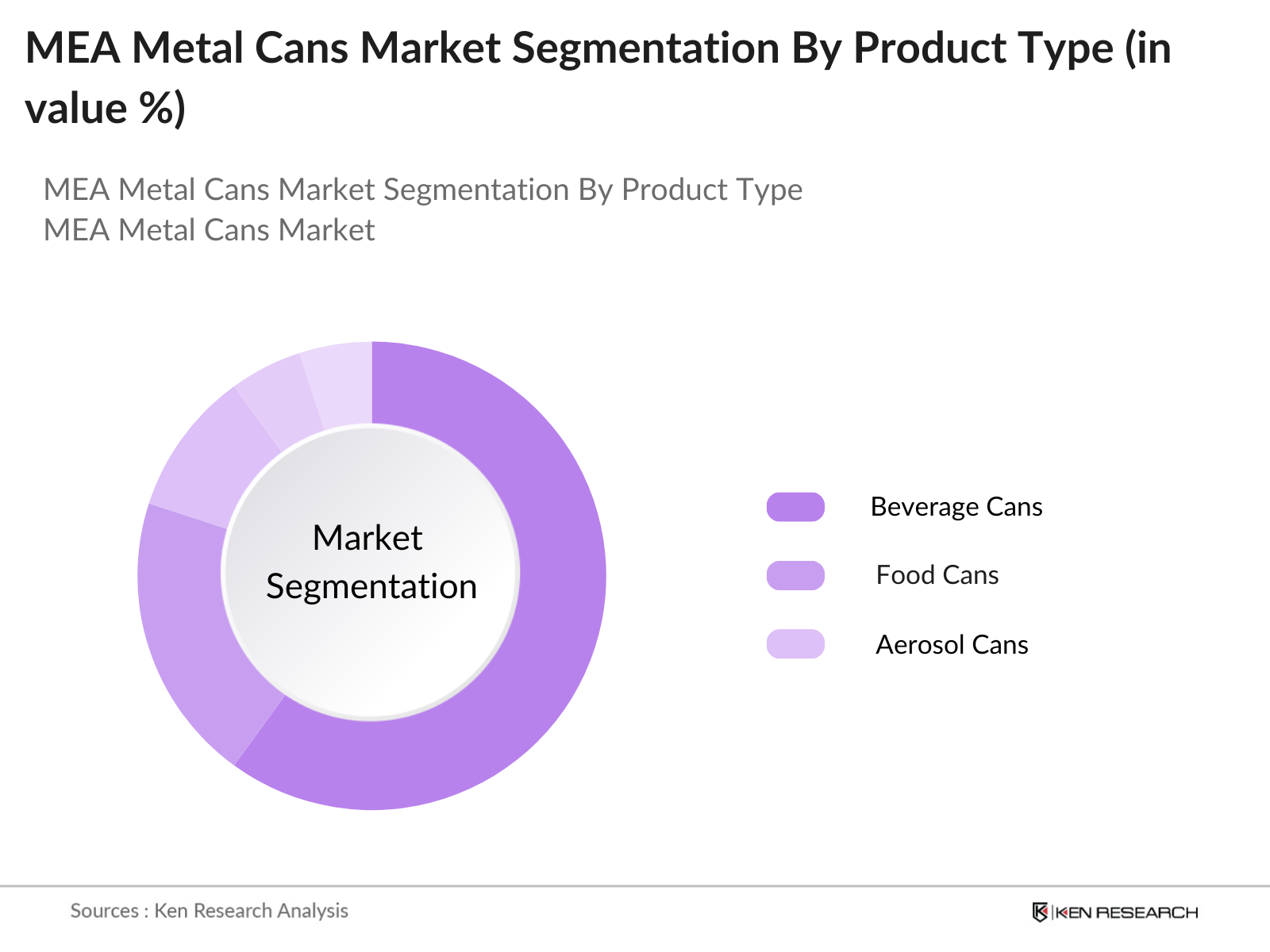
By Product Type: The MEA Metal Cans Market is segmented by product type into beverage cans, food cans, and aerosol cans. In 2023, beverage cans held the dominant market share. This is largely due to the rising consumption of carbonated soft drinks and energy drinks, which are primarily packaged in metal cans. Beverage companies prefer metal cans due to their ability to preserve the quality and flavor of drinks while being lightweight and easy to transport. The popularity of aluminum cans in this segment is further boosted by their recyclability, making them a preferred choice among consumers and companies.
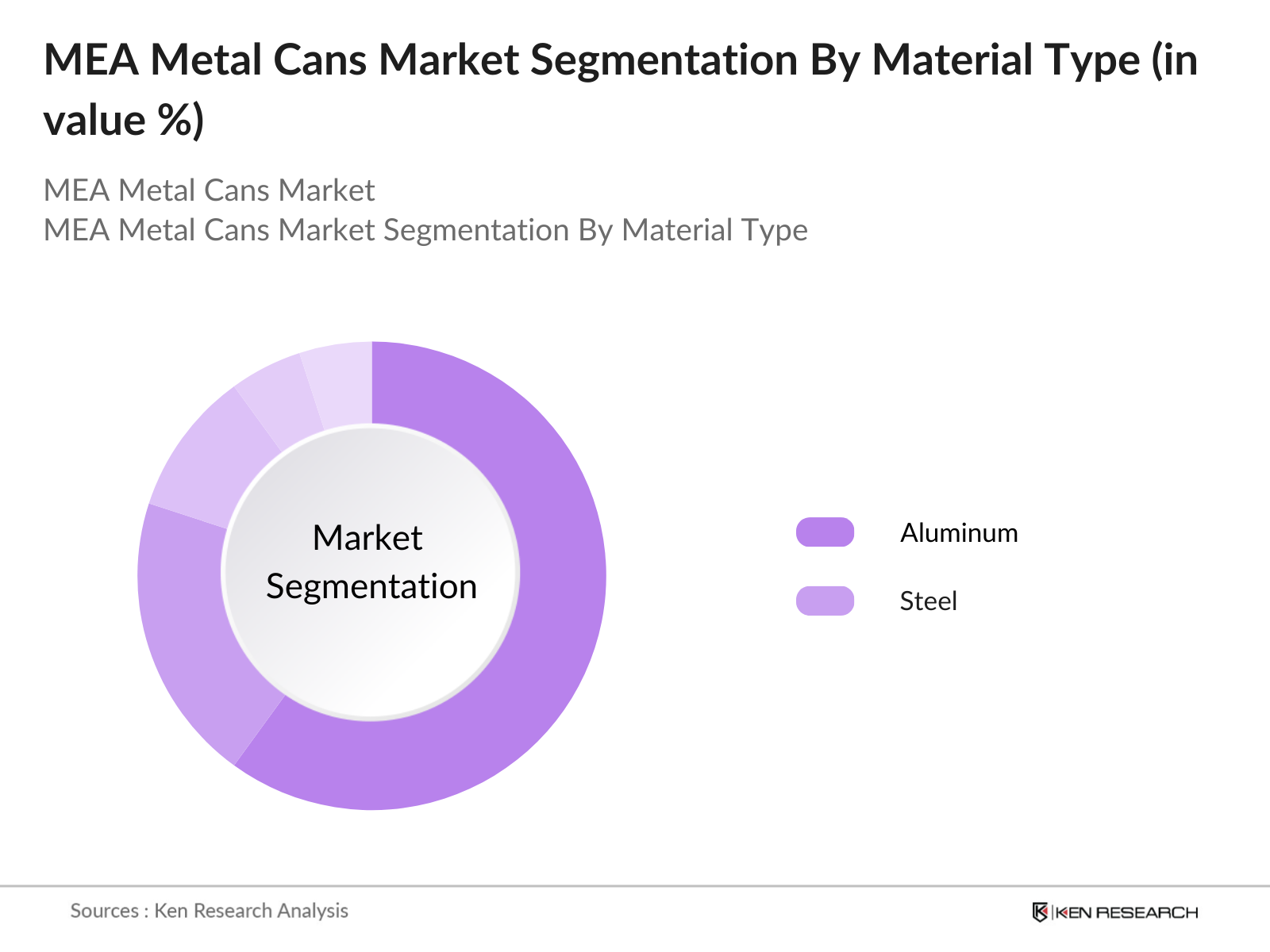
By Material Type: By material type, the market is segmented into aluminium and steel. In 2023, aluminium held a dominant market share due to its superior recyclability and lightweight properties. Aluminium cans are the preferred choice for packaging beverages because they offer a high barrier against oxygen and light, which helps in maintaining the freshness of the contents for a longer time. Additionally, the environmental benefits associated with recycling aluminum make it the material of choice for both manufacturers and consumers, aligning with the region's growing focus on sustainability.
By Region: The MEA Metal Cans Market is segmented into Israel, the United Arab Emirates, Jordan, Morocco, South Africa, and the Rest of MEA. In 2023, the United Arab Emirates dominated the regional market. This is driven by the country's large-scale beverage production and a strong focus on sustainability initiatives, including the adoption of recyclable materials. Israel followed with second dominant market share, benefiting from advanced recycling infrastructure and strong demand in the food and beverage sectors.
MEA Metal Cans Market Competitive Landscape
|
Company Name |
Establishment Year |
Headquarters |
|
Ball Corporation |
1880 |
Westminster, USA |
|
Crown Holdings Inc. |
1892 |
Philadelphia, USA |
|
Ardagh Group |
1932 |
Luxembourg |
|
Can-Pack S.A. |
1992 |
Krakw, Poland |
|
Nampak Ltd. |
1968 |
Johannesburg, South Africa |
- Ball Corporation: In 2024, Ball Corporation announced plans to increase its aluminum can production capacity in Egypt with an investment of USD 100 million. This expansion is part of its strategy to meet the rising demand for recyclable beverage packaging in the African region. In 2023, the company also opened a new manufacturing facility in South Africa to cater to the growing local demand for canned beverages and food.
- Crown Holdings Inc.: Crown Holdings expanded its production capabilities in Saudi Arabia by investing USD 150 million in 2023 to increase its output of metal beverage cans. This facility is expected to produce more than 1.5 billion cans annually, catering to the booming demand for energy drinks and soft beverages in the GCC region. In 2024, the company announced the launch of new lightweight aluminum cans, which are expected to reduce material usage by 10%.
MEA Metal Cans Market Analysis
Growth Drivers
- Increased Consumption of Canned Beverages and Food: The MEA Metal Cans Market has experienced a significant boost in demand driven by the increasing consumption of canned beverages, particularly in the Gulf Cooperation Council (GCC) countries. As of 2024, Saudi Arabia alone is projected to consume 8.2 billion liters of beverages annually, of which approximately 30% will be packaged in metal cans. Similarly, the processed food industry in countries like the UAE and Egypt is adopting metal cans for their durability and preservation capabilities. This surge is supported by the expanding middle-class population and their growing preference for convenient food and beverage options.
- Government-Led Sustainability Campaigns: In 2023, the UAE government launched its Zero Waste by 2050 initiative, mandating the reduction of plastic packaging and promoting the use of recyclable materials like metal cans. Saudi Arabias Vision 2030 also emphasizes sustainability, aiming to increase the recycling rate of aluminum cans from 7,000 tons annually to over 10,000 tons by 2025. These regulatory frameworks are creating a favorable environment for the metal cans market, as businesses increasingly switch to eco-friendly packaging to align with government directives.
- Growth in Recycling Infrastructure: Africa, particularly South Africa and Nigeria, has made substantial investments in recycling infrastructure, further boosting the demand for metal cans. In 2024, South Africa is expected to recycle over 120,000 tons of aluminum, with a significant portion coming from metal cans. This robust recycling ecosystem allows manufacturers to reduce production costs and meet the rising demand for sustainable products. The availability of advanced recycling facilities across the region also supports the growing preference for metal packaging in sectors such as beverages, food, and household goods.
Challenges
- High Production Costs Due to Aluminum Price Volatility: One of the major challenges faced by the MEA Metal Cans Market is the fluctuating cost of raw materials, particularly aluminum. In 2024, the average price of aluminum in the global market is projected to be USD 2,200 per ton, significantly affecting the profitability of manufacturers in the region. These price fluctuations often result from global supply chain disruptions and trade policies. The instability in raw material costs forces manufacturers to either absorb the cost or pass it on to consumers, thereby reducing the competitiveness of metal cans compared to other packaging materials.
- Limited Recycling Infrastructure in Certain African Markets: While some parts of Africa, like South Africa, have advanced recycling capabilities, other regions, such as West Africa, lag behind. In 2023, less than 15% of aluminum cans were recycled in countries like Nigeria and Kenya, highlighting the infrastructure gap. This lack of proper recycling facilities increases the cost of raw materials, as manufacturers need to import or process aluminum. Moreover, insufficient governmental support in these countries hampers the development of recycling initiatives, making it difficult for the metal cans market to grow sustainably in certain parts of Africa.
Government Initiatives
- Saudi Green Initiative (2023): Saudi Arabias Green Initiative, part of Vision 2030, was launched in 2023 to promote the use of recyclable materials in packaging. The initiative targets a 15% reduction in plastic waste by 2025 and has introduced policies to increase the recycling of metal cans. As of 2024, the Saudi government has invested USD 500 million in recycling plants across the kingdom, which will process over 10,000 tons of aluminum annually. These policies provide significant support for the metal cans industry by encouraging companies to adopt more sustainable packaging solutions.
- UAEs Circular Economy Policy (2023) In 2023, the UAE introduced its Circular Economy Policy, which includes specific mandates for the packaging industry to increase the use of recyclable materials like aluminum and steel. This initiative aims to achieve a 75% recycling rate for metal cans by 2025. The government has allocated USD 150 million to upgrade recycling facilities and provide incentives for companies switching to eco-friendly packaging materials. This policy plays a pivotal role in the growth of the metal cans market by creating a favorable regulatory environment.
MEA Metal Cans Market Future Outlook
The MEA Metal Cans Market is expected to witness steady growth over the next five years, driven by several key factors. The demand for recyclable and sustainable packaging solutions is likely to remain a significant growth driver, particularly as governments in the region continue to implement stricter environmental regulations. The beverage and food processing industries are expected to adopt more metal cans in their packaging due to the materials recyclability, durability, and ability to preserve product quality. Additionally, investments in recycling infrastructure across Africa and the Middle East will support the markets expansion by reducing production costs and meeting consumer demand for eco-friendly packaging.
Future Trends
- Expansion of Aluminum Can Recycling Facilities Over the next five years, the MEA region is expected to see a significant expansion in recycling facilities, particularly for aluminum cans. Governments and private companies will invest in advanced technologies to increase the efficiency of recycling processes. This will reduce production costs and make metal cans a more attractive option for manufacturers across various industries, including beverages and food.
- Growth in E-commerce Packaging Solutions As e-commerce continues to grow in the MEA region, there will be an increasing demand for durable and protective packaging materials like metal cans. The robust nature of metal cans makes them an ideal choice for shipping beverages and food products, ensuring product integrity during transportation. This trend is expected to drive the adoption of metal cans in the packaging industry as companies seek more sustainable and reliable packaging options.
Scope of the Report
|
By Product Type |
Beverage Cans Food Cans Aerosol Cans |
|
By Material Type |
Aluminum Steel |
|
By Region |
United Arab Emirates Jordan Morocco South Africa Rest of MEA |
Products
Key Target Audience Organizations and Entities Who Can Benefit by Subscribing This Report:
Beverage Manufacturers
Food Processing Companies
Household Products Manufacturers
Retailers and Distributors
Aluminum Suppliers
Packaging Companies
Metal Recycling Companies
FMCG Companies
Investors and Venture Capitalist Firms
Government and Regulatory Bodies (Saudi Food & Drug Authority, UAE Ministry of Climate Change and Environment)
Time Period Captured in the Report:
Historical Period: 2018-2023
Base Year: 2023
Forecast Period: 2023-2028
Companies
Players Mentioned in the Report:
Philips Healthcare
Medtronic
GE Healthcare
Stryker Corporation
Cardinal Health
Smiths Medical
Asahi Kasei Corporation
Braun Melsungen AG
Honeywell Life Sciences
Zoll Medical Corporation 11
Table of Contents
1. MEA Metal Cans Market Overview
1.1. Definition and Scope
1.2. Market Taxonomy (By material, application, region)
1.3. MEA Metal Cans Market Growth Rate (Analysis of year-on-year growth)
1.4. Market Ecosystem Overview
1.5. Impact of Regulatory Bodies (Food & Beverage Packaging Standards, Environmental Sustainability Norms)
2. MEA Metal Cans Market Size and Forecast (in USD billion)
2.1. Historical Market Size
2.2. Year-on-Year Growth Analysis
2.3. Key Market Developments and Milestones (Analysis of government-led sustainability drives and corporate expansions)
3. MEA Metal Cans Market Analysis
3.1. Growth Drivers
3.1.1. Increasing demand for sustainable packaging solutions
3.1.2. Rise in canned beverage consumption
3.1.3. Expansion in recycling infrastructure across the MEA region
3.2. Market Restraints
3.2.1. Volatility in raw material prices (Aluminum and Steel)
3.2.2. Regulatory challenges in export markets
3.2.3. Lack of recycling infrastructure in low-income areas
3.3. Opportunities
3.3.1. Rising investment in eco-friendly manufacturing
3.3.2. Partnerships with government recycling initiatives
3.3.3. Increasing beverage consumption in emerging markets
3.4. Trends
3.4.1. Adoption of lightweight aluminum cans
3.4.2. Integration of smart packaging technology
3.4.3. Increase in biodegradable coatings for metal cans
3.5. Government Initiatives
3.5.1. UAE Circular Economy Policy
3.5.2. Saudi Vision 2030 - Recycling and Sustainability Focus
3.5.3. South Africa's Extended Producer Responsibility (EPR) Regulations
3.6. SWOT Analysis (Detailed analysis of strengths, weaknesses, opportunities, and threats)
3.7. Stakeholder Ecosystem (Analysis of suppliers, manufacturers, recyclers, and regulators)
3.8. Competitive Ecosystem (Overview of competition in terms of market penetration and brand presence)
4. MEA Metal Cans Market Segmentation
4.1. By Material Type (in value %)
4.1.1. Aluminum
4.1.2. Steel
4.1.3. Tin
4.2. By Application (in value %)
4.2.1. Food & Beverages
4.2.2. Personal Care & Cosmetics
4.2.3. Pharmaceuticals
4.3. By Can Type (in value %)
4.3.1. 2-piece Cans
4.3.2. 3-piece Cans
4.4. By End-User (in value %)
4.4.1. Consumer Goods
4.4.2. Industrial Packaging
4.4.3. Transportation & Logistics
4.5. By Region (in value %)
4.5.1. North
4.5.2 South
4.5.3 West
4.5.4 East
5. MEA Metal Cans Market Cross Comparison
5.1. Detailed Profiles of Major Competitors
5.1.1. Ball Corporation
5.1.2. Crown Holdings
5.1.3. Nampak Ltd.
5.1.4. Alucan Egypt
5.1.5. Can-Pack Middle East
5.2. Cross Comparison Parameters (Financial Performance, Revenue, Production Capacity, Geographic Presence)
6. MEA Metal Cans Market Competitive Landscape
6.1. Market Share Analysis
6.2. Strategic Initiatives (Sustainability Programs, Partnerships, New Product Launches)
6.3. Mergers and Acquisitions (Recent M&A in the region)
6.4. Investment Analysis
6.4.1. Government Grants
6.4.2. Private Equity Investments
6.4.3. Infrastructure Investment in Recycling and Production
7. MEA Metal Cans Market Regulatory Framework
7.1. Environmental Standards (Waste Management Regulations, Recycling Targets)
7.2. Compliance Requirements (Food Safety, Packaging Standards)
7.3. Certification Processes (ISO Certifications, Local Compliance Standards)
8. MEA Metal Cans Future Market Size (in USD billion)
8.1. Market Size Projections
8.2. Key Factors Driving Future Growth
9. MEA Metal Cans Future Market Segmentation
9.1. By Material Type (Future Market in value %)
9.2. By Application (Future Market in value %)
9.3. By Can Type (Future Market in value %)
9.4. By End-User (Future Market in value %)
9.5. By Region (Future Market in value %)
10. Analyst Recommendations for MEA Metal Cans Market
10.1. TAM/SAM/SOM Analysis
10.2. Investment Opportunities (White Space Analysis)
10.3. Strategic Marketing Initiatives
10.4. Sustainability Recommendations
11. Key Competitors in the MEA Metal Cans Market
11.1. Ball Corporation
11.2. Crown Holdings
11.3. Nampak Ltd.
11.4. Alucan Egypt
11.5. Can-Pack Middle East
11.6. Ardagh Group
11.7. Alucon Public Company Ltd.
11.8. Envases Group
11.9. Silgan Holdings
11.10. Toyo Seikan Co.
11.11. Rexam PLC
11.12. Hindalco Industries
11.13. Greif Inc.
11.14. United Can Company
11.15. Massilly Holding Group
Disclaimer Contact UsResearch Methodology
Step 1: Identifying Key Variables
Ecosystem creation for all major entities and referring to multiple secondary and proprietary databases to perform desk research around the market to collate market-level information.
Step 2: Market Building
Collating statistics on the MEA Metal Cans Market over the years, analyzing the penetration of EMS technologies, and computing the revenue generated for the market. This step also involves reviewing technology adoption rates and application effectiveness to ensure accuracy behind the data points shared.
Step 3: Validating and Finalizing
Building market hypotheses and conducting CATIs with market experts belonging to different companies to validate statistics and seek operational and financial information from company representatives.
Step 4: Research Output
Our team will approach multiple EMS companies to understand the nature of technology segments, consumer preferences, and other parameters. This supports validating statistics derived through a bottom-to-top approach from these EMS companies, ensuring accuracy and reliability in the report.
Frequently Asked Questions
01. How big is the MEA Metal Cans Market?
The MEA Metal Cans Market, valued at USD 3.5 billion in 2023, is driven by increased demand for sustainable packaging, especially in the food and beverage industries, as well as government initiatives promoting recyclable materials like aluminum.
02. What are the challenges in the MEA Metal Cans Market?
Challenges include fluctuating raw material costs, particularly aluminum, limited recycling infrastructure in parts of Africa, and stringent import regulations in North African countries that raise production costs for manufacturers.
03. Who are the major players in the MEA Metal Cans Market?
Key players in the market include Ball Corporation, Crown Holdings, Nampak Ltd., Alucan Egypt, and Can-Pack Middle East. These companies maintain a strong market presence through investments in production capacity and sustainability-focused innovations.
04. What are the growth drivers of the MEA Metal Cans Market?
The market is driven by government-led sustainability campaigns, increased consumption of canned beverages and food, and growing investments in recycling infrastructure across regions like South Africa and the GCC countries.
Why Buy From Us?

What makes us stand out is that our consultants follows Robust, Refine and Result (RRR) methodology. i.e. Robust for clear definitions, approaches and sanity checking, Refine for differentiating respondents facts and opinions and Result for presenting data with story

We have set a benchmark in the industry by offering our clients with syndicated and customized market research reports featuring coverage of entire market as well as meticulous research and analyst insights.

While we don't replace traditional research, we flip the method upside down. Our dual approach of Top Bottom & Bottom Top ensures quality deliverable by not just verifying company fundamentals but also looking at the sector and macroeconomic factors.

With one step in the future, our research team constantly tries to show you the bigger picture. We help with some of the tough questions you may encounter along the way: How is the industry positioned? Best marketing channel? KPI's of competitors? By aligning every element, we help maximize success.

Our report gives you instant access to the answers and sources that other companies might choose to hide. We elaborate each steps of research methodology we have used and showcase you the sample size to earn your trust.

If you need any support, we are here! We pride ourselves on universe strength, data quality, and quick, friendly, and professional service.