
MEA Pet Food Market Outlook to 2030
Region:Africa
Author(s):Shreya Garg
Product Code:KROD9094
Region:Africa
Author(s):Shreya Garg
Product Code:KROD9094
December 2024
90
Listen to the audio summary
By Product Type: The market is segmented by product type into dry pet food, wet pet food, and pet treats. Recently, dry pet food has a dominant market share under the product type segment. This dominance is due to the long shelf life, convenience of storage, and cost-effectiveness of dry food products. Many consumers in the region prefer dry food for its affordability and ease of distribution, particularly in countries where large quantities are consumed. 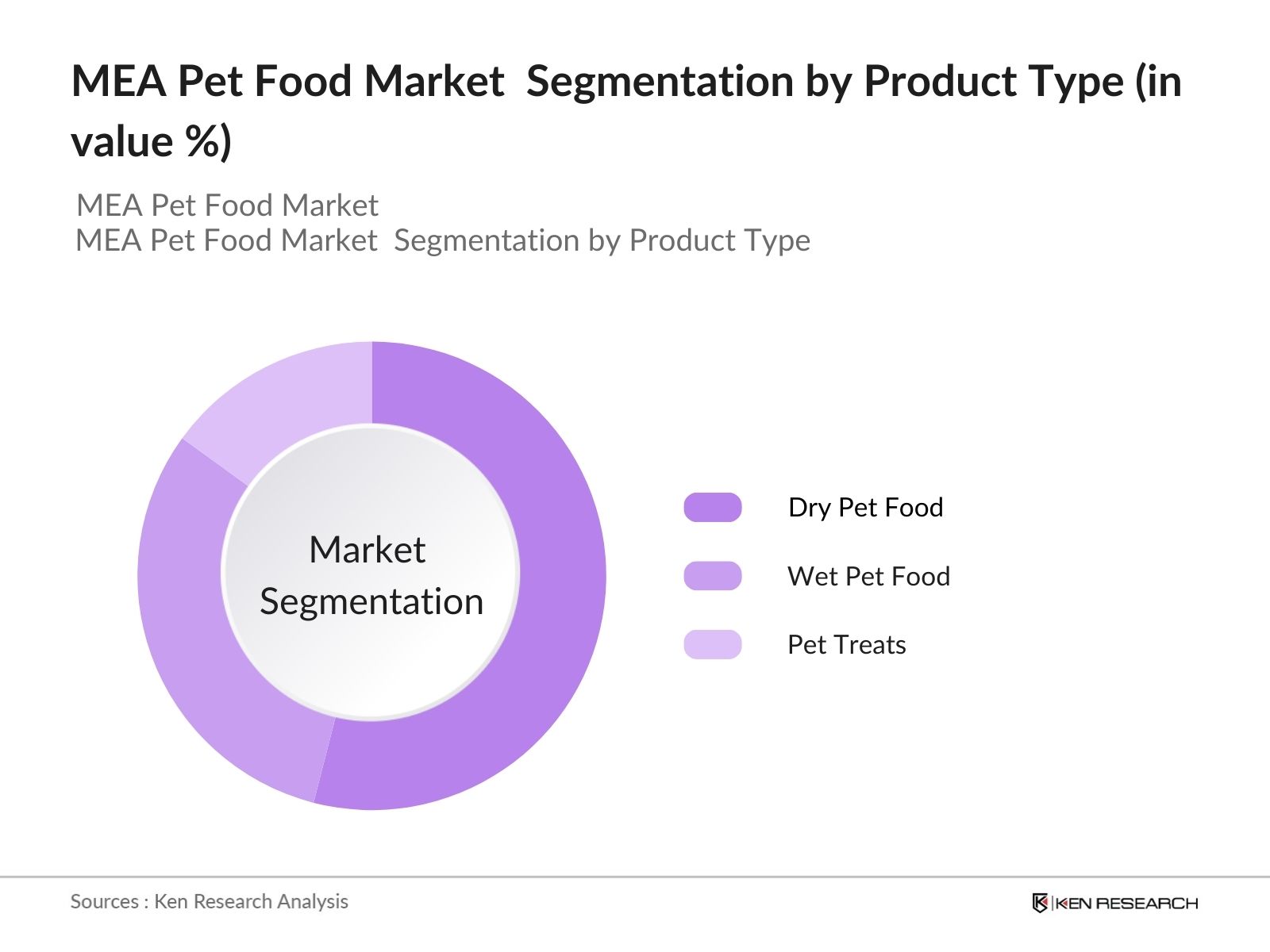
By Distribution Channel: The market is also segmented by distribution channels into supermarkets/hypermarkets, online retail, pet specialty stores, and veterinary clinics. Supermarkets and hypermarkets hold a dominant position in the market. This is due to their widespread presence across urban and semi-urban areas, providing consumers with convenient access to a variety of pet food options. These stores also offer promotions and discounts, making them popular choices among budget-conscious consumers. 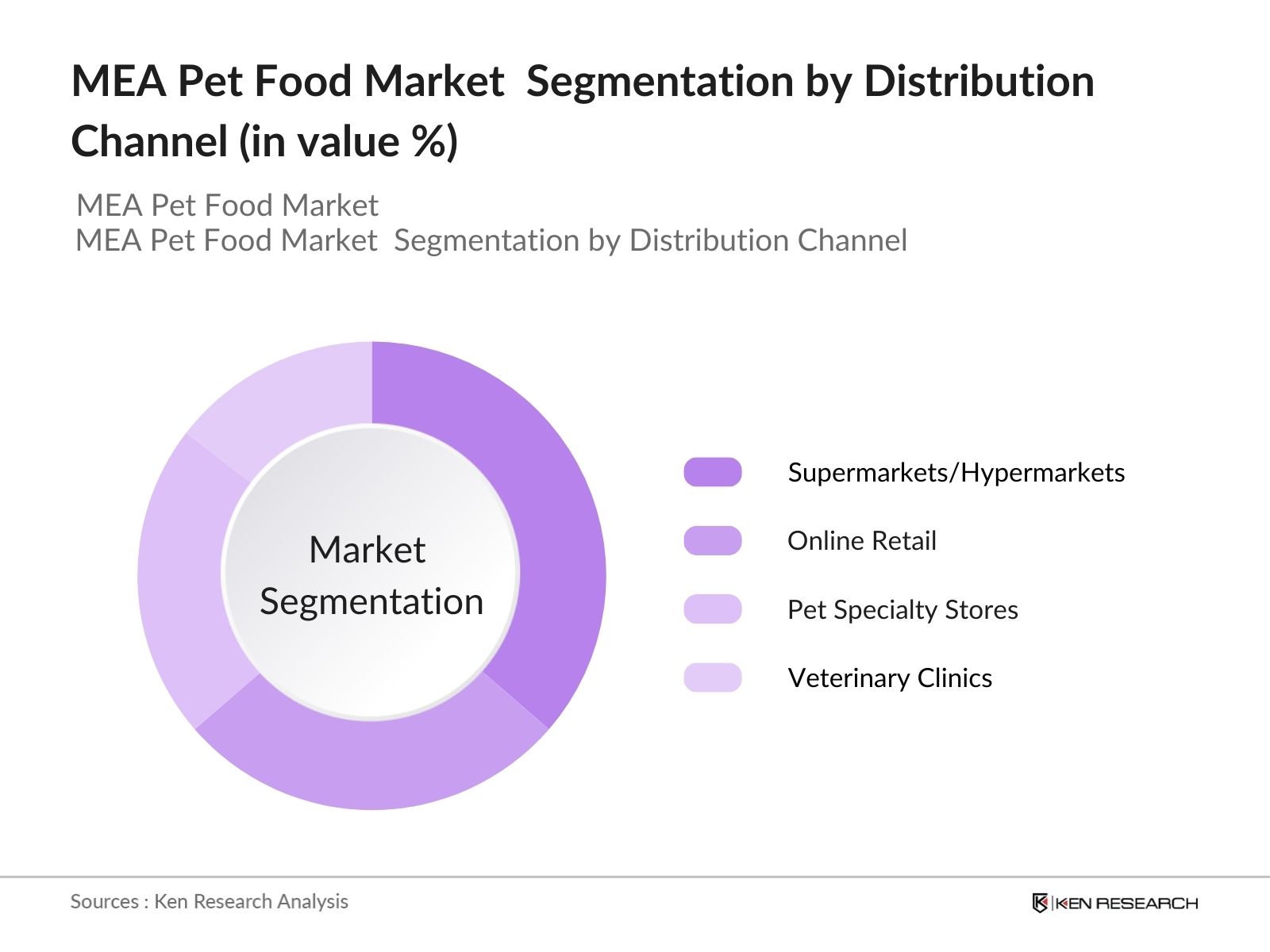
The MEA pet food market is dominated by both local manufacturers and international players. The market is characterized by the strong presence of established brands that have built customer loyalty through high-quality products. Local manufacturers are increasingly competing by offering region-specific products, while international players dominate premium segments. The rising trend of organic and natural pet food is also seeing several small niche brands gaining market share.
|
Company |
Establishment Year |
Headquarters |
No. of Employees |
Revenue (USD) |
Product Range |
Distribution Channels |
R&D Focus |
Market Share |
|
Mars, Inc. |
1911 |
McLean, USA |
||||||
|
Nestl Purina PetCare |
1894 |
Vevey, Switzerland |
||||||
|
Hill's Pet Nutrition |
1907 |
Topeka, USA |
||||||
|
Royal Canin |
1968 |
Aimargues, France |
||||||
|
Farmina Pet Foods |
1965 |
Naples, Italy |
The MEA pet food market is expected to show significant growth driven by increasing pet ownership rates, urbanization, and rising awareness about pet nutrition. The growing availability of premium, organic, and natural pet food products is expected to drive higher consumer spending in the market. Additionally, the rise of online retail and direct-to-consumer sales models will provide further growth opportunities, especially for niche brands targeting health-conscious pet owners. The ongoing shift toward sustainability, with brands adopting eco-friendly packaging and sourcing ingredients ethically, will further shape the market's development.
Expansion into Untapped Regions: The MEA region offers untapped opportunities, particularly in sub-Saharan Africa and rural areas of the Middle East. For instance, Nigeria and Ethiopia, with large populations and increasing urbanization, represent emerging markets for pet food products. As of 2023, Nigeria alone is home to over 220 million people, many of whom are migrating to cities, leading to a growth in pet ownership and a corresponding rise in pet food demand. The African Development Banks reports on economic expansion in these regions highlight growing consumer markets that international pet food companies can explore.
Growth in E-Commerce Distribution: The rise of e-commerce platforms in the MEA region has created new distribution channels for pet food products. In 2024, more than 60% of consumers in urban centers like Dubai and Johannesburg now prefer to purchase pet food online, utilizing platforms such as Jumia and Amazons regional sites. These digital marketplaces provide opportunities for pet food companies to reach a broader audience without the need for physical stores. Additionally, subscription-based services for pet food, which guarantee monthly deliveries, are growing in popularity, particularly among affluent households in cities like Riyadh.
|
By Product Type |
Dry Pet Food Wet Pet Food Treats and Snacks Raw/Freeze-Dried Pet Food |
|
By Animal Type |
Dogs Cats Birds Others (Fish, Small Mammals) |
|
By Ingredient Type |
Animal-Based Plant-Based Grain-Free Organic Ingredients |
|
By Distribution Channel |
Online Retail Supermarkets/Hypermarkets Pet Specialty Stores Veterinary Clinics |
|
By Region |
GCC North Africa Sub-Saharan Africa Levant |
1.1. Definition and Scope
1.2. Market Taxonomy
1.3. Market Growth Rate
1.4. Market Segmentation Overview
2.1. Historical Market Size
2.2. Year-on-Year Growth Analysis
2.3. Key Market Developments and Milestones
2.4. Market Share by Major Players (Revenue, Product Mix)
3.1. Growth Drivers
Increasing Pet Adoption Rates (Region-Specific Pet Ownership Statistics)
Shifting Consumer Preferences Towards Premium Products (Organic, Grain-Free, etc.)
Rising Awareness on Pet Nutrition (Nutritional Composition, Regulatory Requirements)
3.2. Market Challenges
High Import Costs of Raw Materials (Supply Chain Issues, Logistics Costs)
Low Penetration of Specialized Pet Products (Per Capita Pet Food Consumption, Consumer Behavior)
Stringent Import and Quality Regulations (Local Regulatory Standards)
3.3. Opportunities
Expansion into Untapped Regions (Geographic Opportunities in Africa & Middle East)
Growth in E-Commerce Distribution (Digital Marketplaces, Pet Food Subscriptions)
Customization and Personalized Pet Nutrition (Market for Tailored Diets)
3.4. Trends
Growing Popularity of Natural and Organic Pet Food (Consumer Health Consciousness, Ingredient Preferences)
Rise of Pet Treats and Functional Foods (Nutraceutical Trends in Pet Food)
Sustainable Packaging Initiatives (Market Push Towards Eco-Friendly Materials)
3.5. Government Regulations
Food Safety and Animal Feed Standards (Regulatory Bodies, Certification Processes)
Veterinary and Health Certification for Pet Food (Regulatory Compliance for Imports)
Trade Agreements Affecting Pet Food Import/Export (Tariffs and Bilateral Agreements)
3.6. SWOT Analysis
3.7. Stakeholder Ecosystem (Manufacturers, Distributors, Pet Specialty Retailers)
3.8. Porters Five Forces Analysis (Supplier Power, Buyer Power, Threat of Substitutes, etc.)
3.9. Competitive Ecosystem (Local vs. International Players)
4.1. By Product Type (In Value %)
Dry Pet Food
Wet Pet Food
Treats and Snacks
Raw/Freeze-Dried Pet Food
4.2. By Animal Type (In Value %)
Dogs
Cats
Birds
Others (Fish, Small Mammals)
4.3. By Ingredient Type (In Value %)
Animal-Based
Plant-Based
Grain-Free
Organic Ingredients
4.4. By Distribution Channel (In Value %)
Online Retail
Supermarkets/Hypermarkets
Pet Specialty Stores
Veterinary Clinics
4.5. By Region (In Value %)
GCC
North Africa
Sub-Saharan Africa
Levant
5.1. Detailed Profiles of Major Companies
Mars, Inc.
Nestl Purina PetCare
Hill's Pet Nutrition
Royal Canin
Blue Buffalo
The J.M. Smucker Company
Champion Petfoods
Affinity Petcare
Orijen
Spectrum Brands
Monge & C. S.p.A
Farmina Pet Foods
Pet Line S.A.E.
Petco
ZuPreem
5.2. Cross Comparison Parameters (Product Portfolio, Manufacturing Locations, Distribution Network, Sustainability Initiatives, Product Certifications, Revenue, Market Penetration)
5.3. Market Share Analysis (Top Players, Local Brands)
5.4. Strategic Initiatives (Expansion Plans, Brand Partnerships, Product Launches)
5.5. Mergers and Acquisitions
5.6. Investment Analysis
5.7. Venture Capital and Private Equity Investments
5.8. Government Support and Incentives (Subsidies, Grants for Local Manufacturers)
6.1. Food Safety Standards (Regulatory Bodies, Compliance Levels)
6.2. Labeling Requirements (Nutritional Information, Ingredient Lists)
6.3. Import Tariffs and Trade Restrictions (By Region, Specific Ingredients)
7.1. Market Size Projections
7.2. Key Factors Driving Future Market Growth
Urbanization and Rise in Pet Ownership
Innovations in Pet Food Formulation
8.1. By Product Type (In Value %)
8.2. By Animal Type (In Value %)
8.3. By Ingredient Type (In Value %)
8.4. By Distribution Channel (In Value %)
8.5. By Region (In Value %)
9.1. TAM/SAM/SOM Analysis
9.2. Consumer Cohort Analysis (Pet Ownership Segmentation, Buyer Personas)
9.3. Brand Positioning Strategy
9.4. White Space Opportunity Analysis (Product Innovation Areas)
Disclaimer Contact UsThe first step involved mapping the ecosystem of the MEA pet food market by identifying key stakeholders, including manufacturers, distributors, and consumers. This step was facilitated by in-depth desk research, analyzing existing reports, government publications, and industry white papers to collect relevant data on the market's key variables.
This step involved collecting and analyzing historical data on the MEA pet food market, including market penetration, sales volumes, and consumer preferences. This analysis also took into consideration market growth drivers such as urbanization, pet ownership rates, and changing consumer behavior towards pet health.
Expert consultations were conducted with industry professionals from pet food manufacturing companies, distribution networks, and veterinary associations. These consultations provided qualitative insights and helped validate quantitative data, particularly on product demand and supply chain efficiencies.
The final step involved synthesizing the data collected from secondary and primary research to produce a comprehensive analysis of the MEA pet food market. This phase ensured that the market forecasts were accurate and reflective of the current market dynamics.
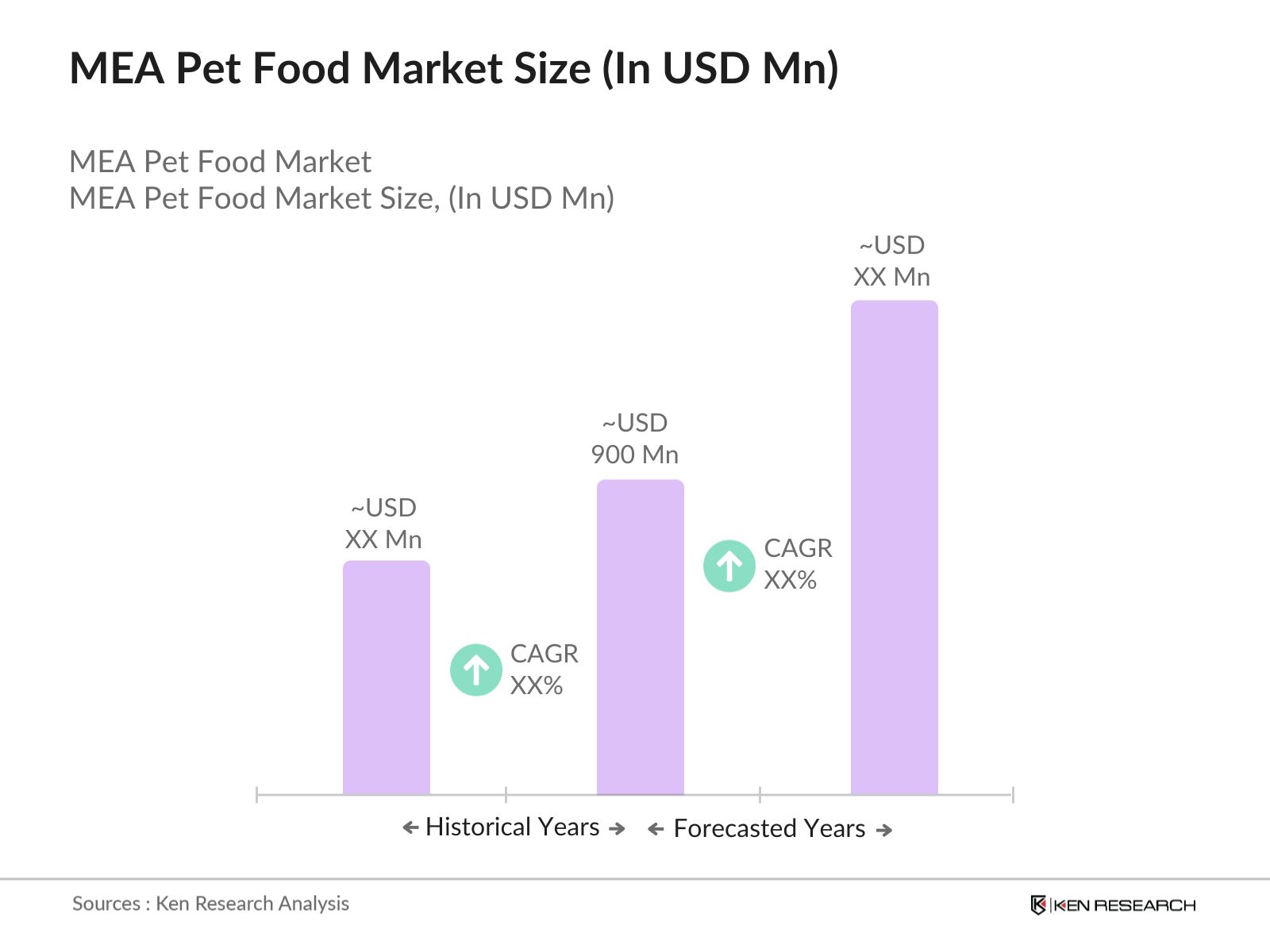
The MEA pet food market is valued at USD 900 Mn, driven by increasing pet ownership rates and rising consumer awareness about pet nutrition across key countries like Saudi Arabia, UAE, and South Africa.
The main challenges in the MEA pet food market include high import costs of raw materials, 900 million regulatory compliance requirements, and the limited availability of specialized pet products in certain regions. Additionally, logistical challenges in certain parts of the region further complicate distribution.
Major players in the MEA pet food market include Mars, Inc., Nestl Purina PetCare, Hill's Pet Nutrition, Royal Canin, and Farmina Pet Foods. These companies dominate the market due to their strong product portfolios and extensive distribution networks.
The MEA pet food market is driven by increasing pet ownership, rising disposable incomes, and growing awareness of the nutritional needs of pets. Additionally, the expansion of e-commerce platforms offering a wide variety of pet food products has also contributed to market growth.
Countries like Saudi Arabia, UAE, and South Africa dominate the MEA pet food market due to high pet ownership rates, strong retail infrastructure, and consumer spending power. These countries have a well-developed import network that allows access to premium international pet food brands.

What makes us stand out is that our consultants follows Robust, Refine and Result (RRR) methodology. i.e. Robust for clear definitions, approaches and sanity checking, Refine for differentiating respondents facts and opinions and Result for presenting data with story

We have set a benchmark in the industry by offering our clients with syndicated and customized market research reports featuring coverage of entire market as well as meticulous research and analyst insights.

While we don't replace traditional research, we flip the method upside down. Our dual approach of Top Bottom & Bottom Top ensures quality deliverable by not just verifying company fundamentals but also looking at the sector and macroeconomic factors.

With one step in the future, our research team constantly tries to show you the bigger picture. We help with some of the tough questions you may encounter along the way: How is the industry positioned? Best marketing channel? KPI's of competitors? By aligning every element, we help maximize success.

Our report gives you instant access to the answers and sources that other companies might choose to hide. We elaborate each steps of research methodology we have used and showcase you the sample size to earn your trust.

If you need any support, we are here! We pride ourselves on universe strength, data quality, and quick, friendly, and professional service.