
MEA Self Tanning Products Market Outlook to 2030
Region:Africa
Author(s):Shambhavi
Product Code:KROD4549
Region:Africa
Author(s):Shambhavi
Product Code:KROD4549
December 2024
81
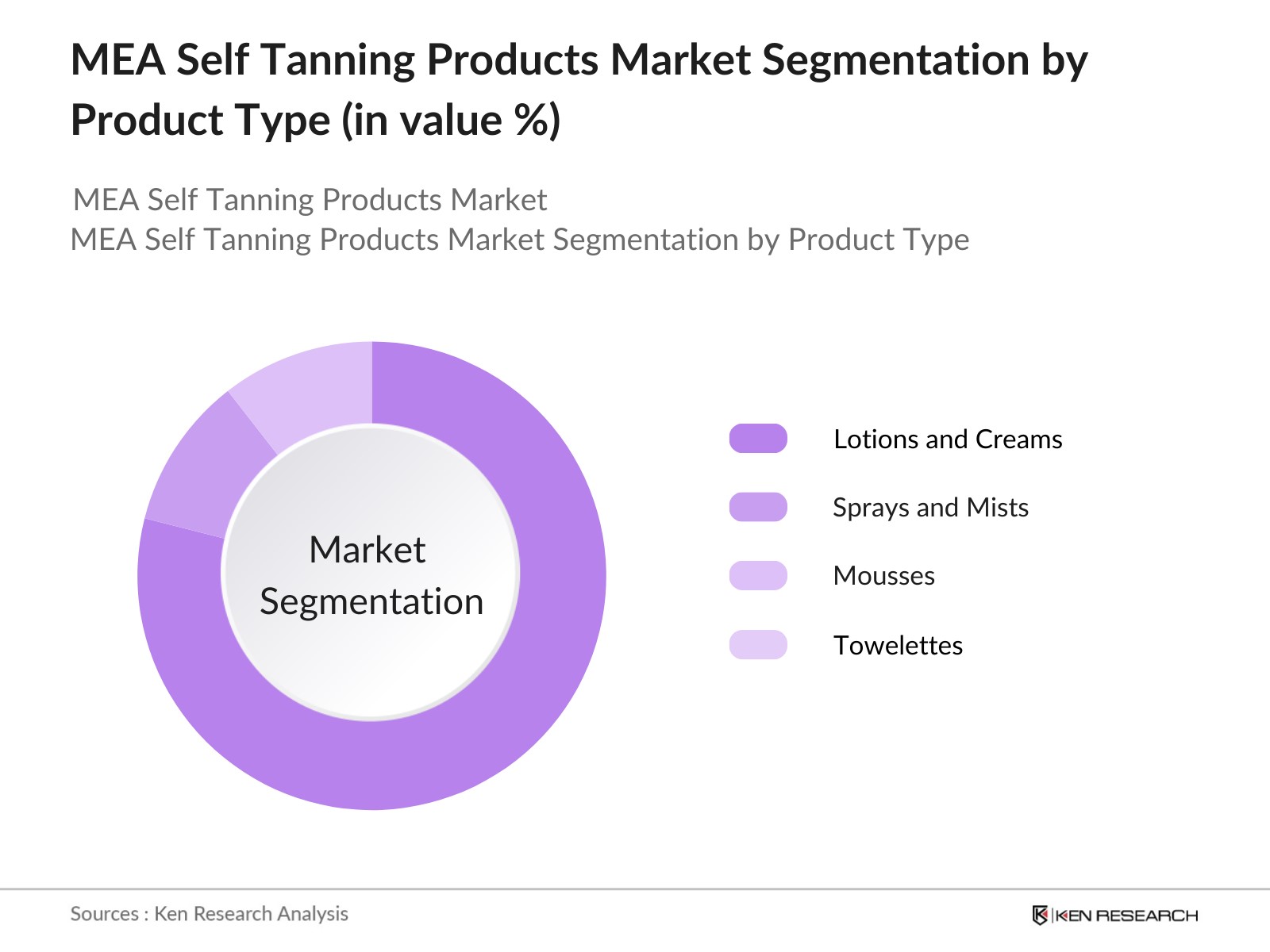
By Product Type: The MEA Self Tanning Products market is segmented by product type into lotions and creams, sprays and mists, mousses, towelettes, and gels. Lotions and creams currently dominate the market, driven by their ease of application and longstanding consumer trust. Lotions provide a more even application and are less likely to cause streaking compared to other forms like sprays or mousses. Moreover, the inclusion of additional skincare benefits, such as moisturizing ingredients in lotions, makes them highly appealing to consumers.
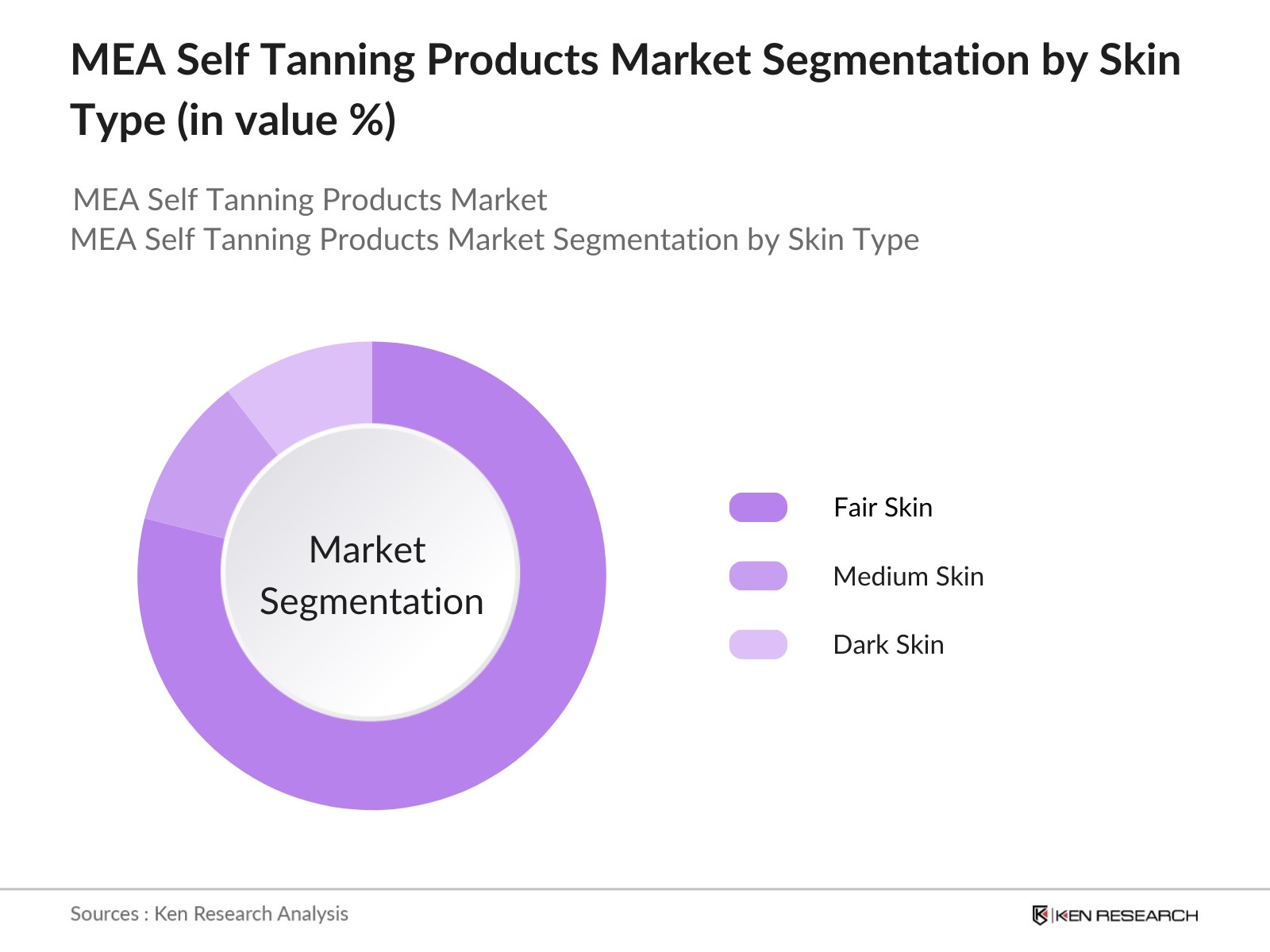
By Skin Type: This market is further segmented by skin type into fair skin, medium skin, and dark skin. Products for medium skin types dominate the market as the MEA region has a majority of consumers with medium-toned skin, making self-tanning products for this skin tone highly sought after. Additionally, medium skin tones often require products that provide gradual tanning effects, making them ideal for consumers looking for a subtle yet noticeable change.
The MEA Self Tanning Products market is dominated by several key players who have established a strong foothold in the region. These companies leverage their extensive distribution networks, brand reputation, and innovation in product formulation to capture a significant market share. The market remains moderately fragmented with both global and regional players contributing to its competitive dynamics. The market is led by companies like L'Oral, Unilever, and Johnson & Johnson, who are known for their diverse product portfolios. These firms dominate through their robust marketing strategies, heavy investment in research and development (R&D), and focus on organic and sustainable product offerings.
|
Company |
Establishment Year |
Headquarters |
R&D Expenditure |
Product Portfolio |
Distribution Network |
Sustainability Initiatives |
Digital Marketing Strategies |
|
L'Oral S.A. |
1909 |
France |
- |
- |
- |
- |
- |
|
Unilever PLC |
1930 |
UK/Netherlands |
- |
- |
- |
- |
- |
|
Johnson & Johnson |
1886 |
USA |
- |
- |
- |
- |
- |
|
PZ Cussons Plc |
1879 |
UK |
- |
- |
- |
- |
- |
|
Beiersdorf AG |
1882 |
Germany |
- |
- |
- |
- |
- |
Over the next five years, the MEA Self Tanning Products market is expected to exhibit steady growth, driven by the increasing focus on skincare safety, rising disposable incomes, and growing consumer awareness of non-UV tanning alternatives. Continuous product innovation, especially in the organic and vegan-friendly product segment, will contribute to the market's positive trajectory. Moreover, the rise of e-commerce channels is likely to enhance product accessibility, fueling market expansion across both urban and rural regions in MEA.
|
By Product Type |
Lotions and Creams Sprays and Mists Mousses Towelettes Gels |
|
By Skin Type |
Fair Skin Medium Skin Dark Skin |
|
By End-User |
Men Women |
|
By Distribution Channel |
Online Retail Specialty Stores Hypermarkets/Supermarkets Pharmacies |
|
By Region |
Gulf Cooperation Council (GCC) North Africa South Africa Levant Region |
1.1. Definition and Scope
1.2. Market Taxonomy
1.3. Market Growth Rate (Market Demand for Skin Care and Aesthetic Products)
1.4. Market Segmentation Overview
2.1. Historical Market Size (Skin Care Market Revenue)
2.2. Key Market Developments and Milestones (Product Launches and Innovations)
3.1. Growth Drivers
3.1.1. Rising Beauty Consciousness (Consumer Preferences for Aesthetic Appearance)
3.1.2. Increasing Popularity of Non-UV Tanning Methods
3.1.3. Availability of Easy-to-Use Self Tanning Products (Product Penetration)
3.2. Market Challenges
3.2.1. High Competition from Traditional Sun-Tanning Products
3.2.2. Presence of Harmful Chemicals in Self-Tanning Formulas (Regulatory Compliance)
3.2.3. Limited Consumer Awareness in Rural Areas
3.3. Opportunities
3.3.1. Demand for Organic and Natural Self Tanning Products
3.3.2. Growing E-commerce and Online Sales Channels (Digital Sales Penetration)
3.3.3. Market Expansion into Emerging MEA Economies
3.4. Trends
3.4.1. Increasing Use of DHA (Dihydroxyacetone) in Formulations
3.4.2. Vegan and Cruelty-Free Product Innovations (Sustainability)
3.4.3. Customizable Tanning Solutions for Different Skin Types
3.5. Government Regulation
3.5.1. MEA Cosmetic Product Safety Standards (Health and Safety Regulations)
3.5.2. Import Regulations for Self Tanning Products (Trade Barriers)
3.5.3. Labeling and Packaging Requirements (Consumer Information Regulations)
3.6. SWOT Analysis
3.7. Stakeholder Ecosystem
3.8. Porters Five Forces Analysis
3.9. Competition Ecosystem
4.1. By Product Type (In Value %)
4.1.1. Lotions and Creams
4.1.2. Sprays and Mists
4.1.3. Mousses
4.1.4. Towelettes
4.1.5. Gels
4.2. By Skin Type (In Value %)
4.2.1. Fair Skin
4.2.2. Medium Skin
4.2.3. Dark Skin
4.3. By End-User (In Value %)
4.3.1. Men
4.3.2. Women
4.4. By Distribution Channel (In Value %)
4.4.1. Online Retail
4.4.2. Specialty Stores
4.4.3. Hypermarkets/Supermarkets
4.4.4. Pharmacies
4.5. By Region (In Value %)
4.5.1. Gulf Cooperation Council (GCC)
4.5.2. North Africa
4.5.3. South Africa
4.5.4. Levant Region
5.1. Detailed Profiles of Major Companies
5.1.1. L'Oral S.A.
5.1.2. Unilever PLC
5.1.3. Beiersdorf AG
5.1.4. Johnson & Johnson
5.1.5. PZ Cussons Plc
5.1.6. Kao Corporation
5.1.7. Clarins Group
5.1.8. St. Tropez (PZ Cussons)
5.1.9. Bondi Sands Pty Ltd.
5.1.10. Coty Inc.
5.1.11. The Este Lauder Companies Inc.
5.1.12. Tan-Luxe
5.1.13. Fake Bake
5.1.14. Vita Liberata
5.1.15. Isle of Paradise
5.2. Cross Comparison Parameters (R&D Expenditure, Sustainability Initiatives, Product Portfolio, Distribution Network, Customer Base, Market Presence, Digital Marketing Strategies, Innovation Capabilities)
5.3. Market Share Analysis
5.4. Strategic Initiatives (Partnerships, Collaborations)
5.5. Mergers and Acquisitions
5.6. Investment Analysis
5.7. Private Equity Investments
6.1. MEA Cosmetic Product Standards
6.2. Safety and Compliance Regulations
6.3. Certification Processes for Self Tanning Products
7.1 Future Market Size Projections
7.2 Key Factors Driving Future Market Growth
8.1 By Product Type
8.2 By Skin
8.3 By End-User
8.4 By Distribution Channel
8.5 By Region
9.1 TAM/SAM/SOM Analysis
9.2 Customer Cohort Analysis
9.3 Marketing Initiatives
9.4 White Space Opportunity Analysis
Disclaimer Contact Us
The first phase involves mapping the stakeholder ecosystem within the MEA Self Tanning Products Market. Extensive desk research was conducted using proprietary databases and secondary research sources to gather critical information. The goal of this step is to identify the core variables affecting market growth and demand.
Historical data for the self-tanning products market was compiled and analyzed, with attention given to market penetration by product type and consumer demographics. Additional analysis of sales figures and revenue generation was undertaken to ensure accurate data representation.
This stage involved validating initial hypotheses through interviews with key industry experts, including manufacturers and retailers. These consultations helped refine the market data, providing insights into sales trends and operational dynamics that influence market behavior.
In the final stage, engagement with multiple manufacturers helped refine product segment insights. This ensured comprehensive and accurate analysis, verified through a bottom-up approach to market data, ensuring the final output is a complete representation of the MEA Self Tanning Products Market.
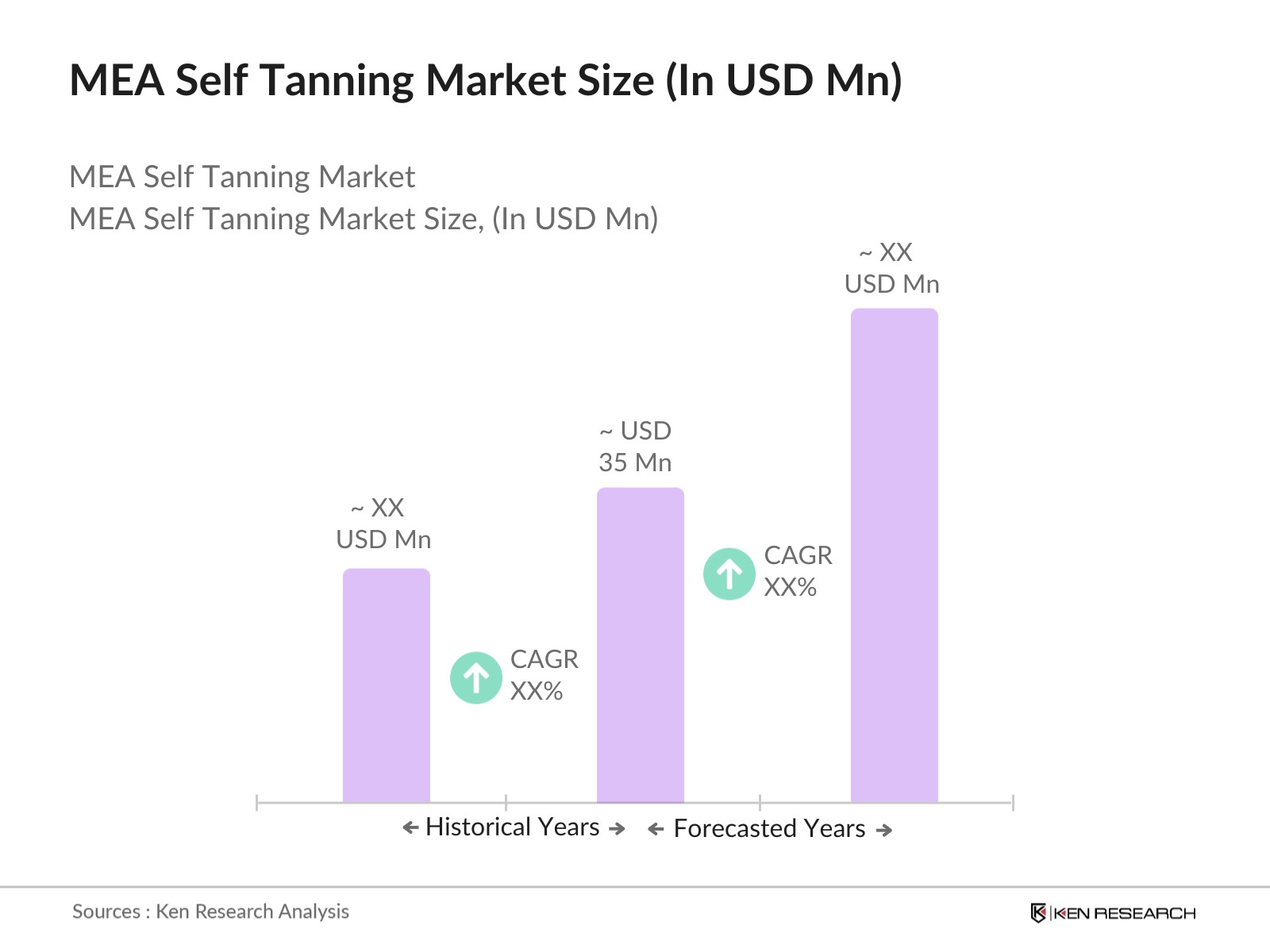
The MEA Self Tanning Products market is valued at USD 35 miliion, driven by consumer preferences for safe, non-UV tanning alternatives and increasing demand for organic skincare solutions.
Challenges include competition from traditional sun-tanning products, regulatory compliance issues regarding product safety, and limited consumer awareness in rural areas.
Key players include L'Oral S.A., Unilever PLC, Johnson & Johnson, PZ Cussons Plc, and Beiersdorf AG, dominating the market with diverse product portfolios and strong distribution networks.
Growth is propelled by increasing awareness of skin damage caused by UV exposure, rising demand for organic and vegan-friendly tanning products, and expanding e-commerce sales channels.

What makes us stand out is that our consultants follows Robust, Refine and Result (RRR) methodology. i.e. Robust for clear definitions, approaches and sanity checking, Refine for differentiating respondents facts and opinions and Result for presenting data with story

We have set a benchmark in the industry by offering our clients with syndicated and customized market research reports featuring coverage of entire market as well as meticulous research and analyst insights.

While we don't replace traditional research, we flip the method upside down. Our dual approach of Top Bottom & Bottom Top ensures quality deliverable by not just verifying company fundamentals but also looking at the sector and macroeconomic factors.

With one step in the future, our research team constantly tries to show you the bigger picture. We help with some of the tough questions you may encounter along the way: How is the industry positioned? Best marketing channel? KPI's of competitors? By aligning every element, we help maximize success.

Our report gives you instant access to the answers and sources that other companies might choose to hide. We elaborate each steps of research methodology we have used and showcase you the sample size to earn your trust.

If you need any support, we are here! We pride ourselves on universe strength, data quality, and quick, friendly, and professional service.