
MEA Wheat Protein Flour Market Outlook to 2030
Region:Global
Author(s):Shambhavi
Product Code:KROD7038
Region:Global
Author(s):Shambhavi
Product Code:KROD7038
December 2024
90
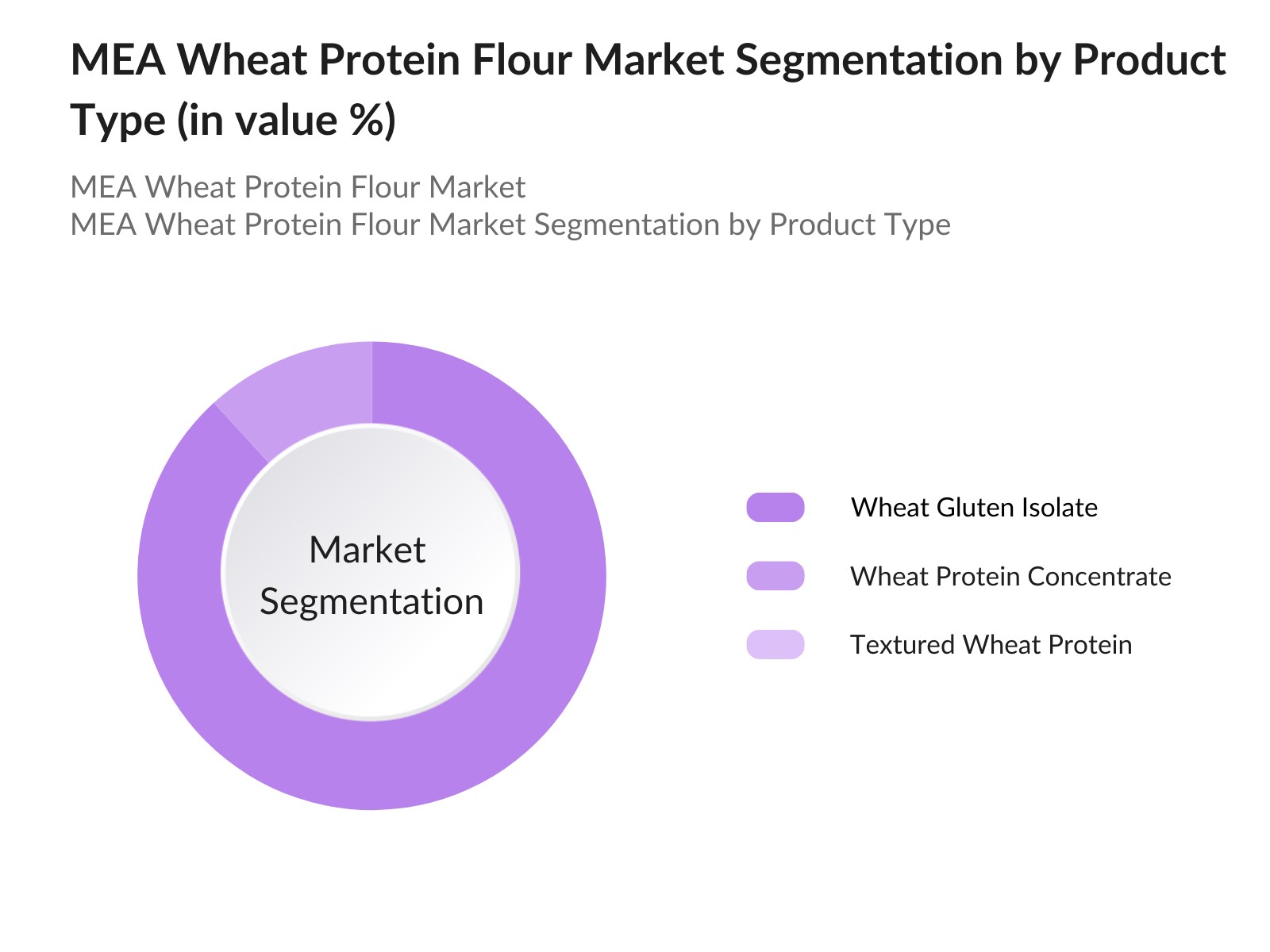
By Product Type: The MEA Wheat Protein Flour market is segmented by product type into wheat gluten isolate, wheat protein concentrate, and textured wheat protein. Recently, wheat gluten isolate has gained a dominant market share due to its high protein content and versatility in applications like bakery and processed foods. This product type meets consumer demands for protein-rich and gluten-structured products, catering to growing trends in health-conscious and fitness-focused diets.
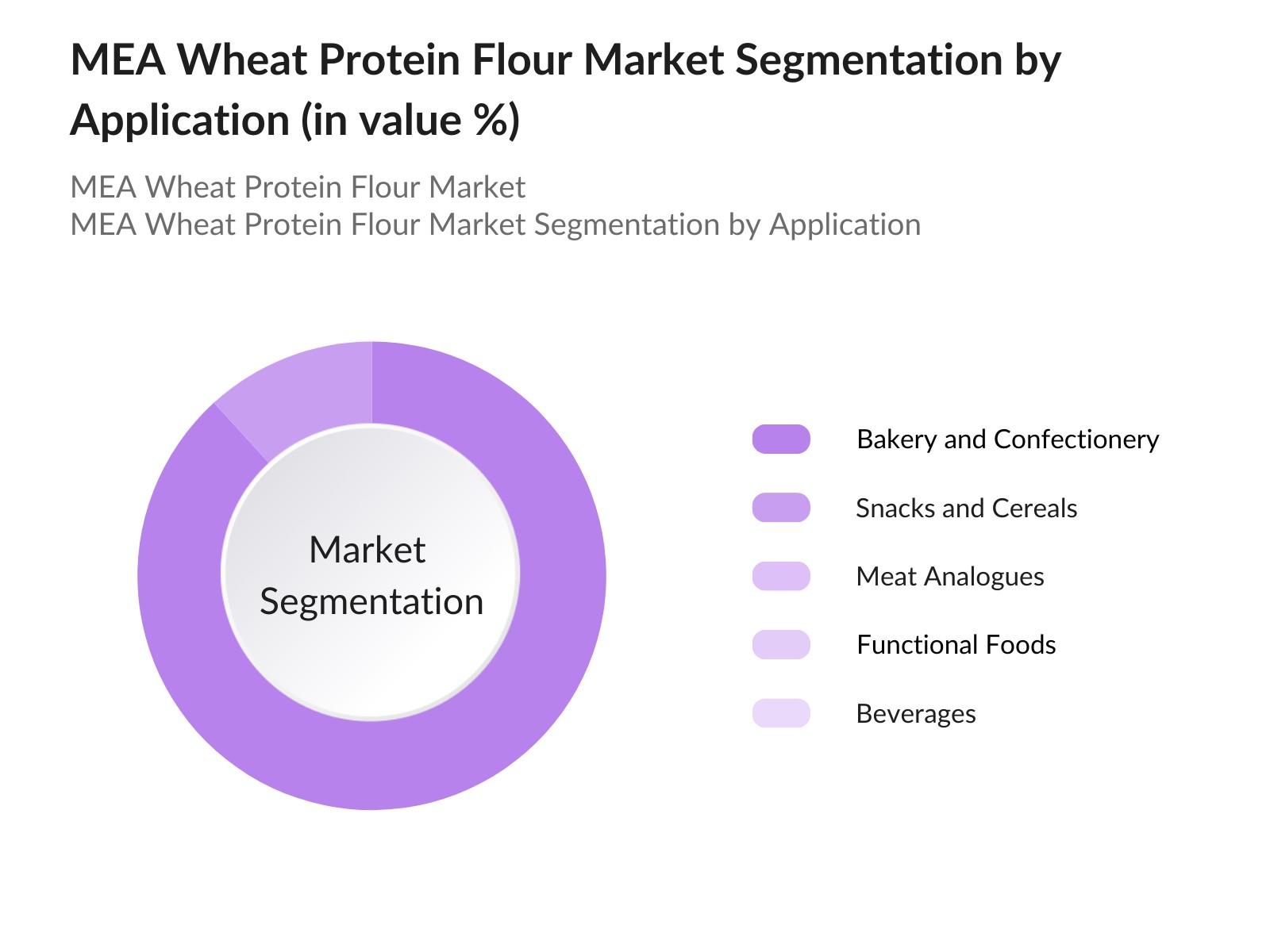
By Application: The market is further segmented by application into bakery and confectionery, snacks and cereals, meat analogues, functional foods, and beverages. The bakery and confectionery segment dominates due to the extensive use of wheat protein flour to improve the texture and nutritional profile of baked goods. The ongoing demand for high-protein bakery items, especially in urban areas, contributes to the prominence of this segment.
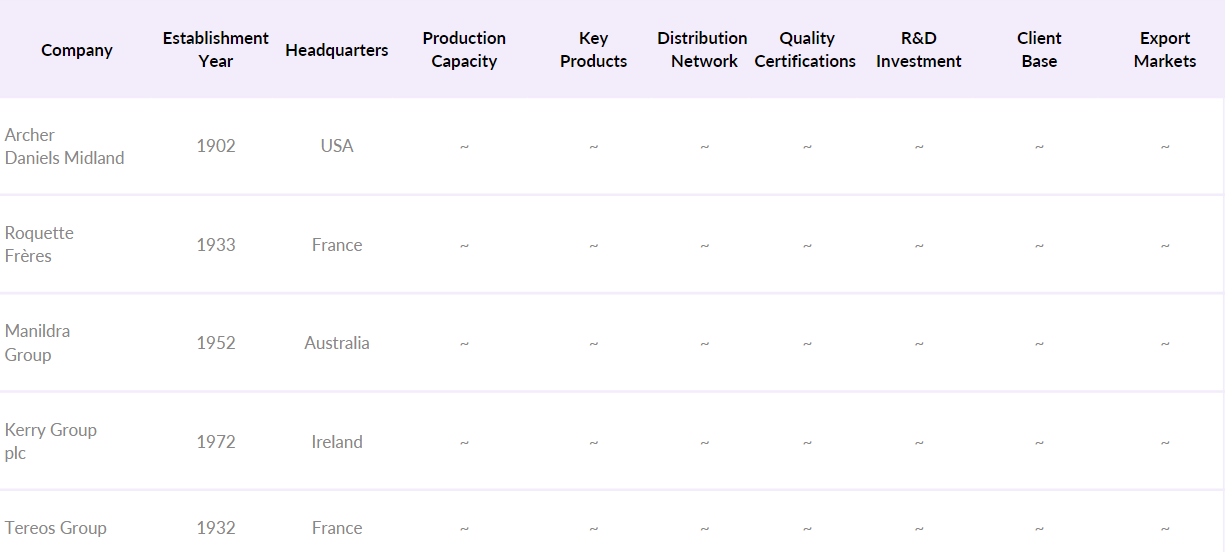
The MEA Wheat Protein Flour market is dominated by a few established players, including both local and international companies that contribute to market consolidation. Companies leverage advanced protein extraction technology and strong distribution networks to maintain a competitive edge.
The MEA Wheat Protein Flour market is expected to continue evolving, driven by health-oriented consumer trends and the expansion of the food and beverage sector. With innovations in plant-based food products and wheat protein applications, the market is set for steady growth. Increasing collaborations between local suppliers and international firms to meet demand for organic and high-quality protein ingredients will likely further boost the market.
|
Product Type |
Wheat Gluten Isolate |
|
Application |
Bakery and Confectionery |
|
Form |
Dry |
|
Distribution Channel |
B2B |
|
Region |
Central MEA |
1.1 Definition and Scope
1.2 Market Taxonomy
1.3 Market Dynamics Overview
1.4 Supply Chain Analysis
2.1 Historical Market Size
2.2 Year-On-Year Growth Analysis
2.3 Market Penetration Analysis
3.1 Growth Drivers
3.1.1 Consumer Demand for High-Protein Diets
3.1.2 Increase in Processed Food Manufacturing
3.1.3 Expansion of Bakery and Confectionery Industry
3.1.4 Government Support for Domestic Wheat Production
3.2 Market Challenges
3.2.1 Price Fluctuations of Wheat
3.2.2 High Production Costs
3.2.3 Limited Awareness Among End-Users
3.3 Opportunities
3.3.1 Technological Advancements in Protein Extraction
3.3.2 Expansion in Plant-Based Food Segment
3.3.3 Growing Export Potential
3.4 Trends
3.4.1 Rising Popularity of Gluten-Free and High-Protein Foods
3.4.2 Focus on Organic Wheat Protein Flour
3.4.3 Increased Application in Nutraceuticals
3.5 Regulatory Environment
3.5.1 Food Safety Standards
3.5.2 Certification Requirements for Organic Wheat Protein Flour
3.5.3 Labeling and Ingredient Regulations
3.6 Competitive Ecosystem
3.7 Porters Five Forces Analysis
3.8 SWOT Analysis of Market Participants
4.1 By Product Type (In Value %)
4.1.1 Wheat Gluten Isolate
4.1.2 Wheat Protein Concentrate
4.1.3 Textured Wheat Protein
4.2 By Application (In Value %)
4.2.1 Bakery and Confectionery
4.2.2 Snacks and Cereals
4.2.3 Meat Analogues
4.2.4 Functional Foods
4.2.5 Beverages
4.3 By Form (In Value %)
4.3.1 Dry
4.3.2 Liquid
4.4 By Distribution Channel (In Value %)
4.4.1 B2B
4.4.2 B2C
4.5 By Region (In Value %)
4.5.1 Central MEA
4.5.2 Western MEA
4.5.3 Eastern MEA
5.1 Profiles of Major Companies
5.1.1 Archer Daniels Midland Company
5.1.2 Roquette Frres
5.1.3 Cargill, Inc.
5.1.4 Manildra Group
5.1.5 MGP Ingredients, Inc.
5.1.6 Kroner-Starke GmbH
5.1.7 Tereos Group
5.1.8 Agrana Beteiligungs-AG
5.1.9 Kerry Group plc
5.1.10 Meelunie BV
5.1.11 Glico Nutrition Co., Ltd.
5.1.12 Shandong Qufeng Food Technology Co., Ltd.
5.1.13 Permolex Ltd.
5.1.14 Jckering Group
5.1.15 Amilina
5.2 Cross-Comparison Parameters (Employee Strength, Global Presence, Market Share, R&D Investment, Product Portfolio, Key Clients, Quality Certifications, Distribution Network)
5.3 Market Share Analysis
5.4 Strategic Initiatives
5.5 Partnerships and Collaborations
5.6 Investment Trends
5.7 R&D Expenditures
5.8 Export Market Potential
6.1 Compliance with MEA Food Safety Regulations
6.2 Import and Export Regulations
6.3 Organic Certification Standards
7.1 Key Growth Indicators for Future Market Size
7.2 Technological Influences on Market Development
8.1 By Product Type (In Value %)
8.2 By Application (In Value %)
8.3 By Form (In Value %)
8.4 By Distribution Channel (In Value %)
8.5 By Region (In Value %)
9.1 Target Market Analysis (TAM/SAM/SOM)
9.2 Customer Profile Analysis
9.3 Strategic Marketing Recommendations
9.4 White Space Opportunity Analysis
Disclaimer Contact Us
The research began with mapping out critical stakeholders within the MEA Wheat Protein Flour Market, including major producers, suppliers, and end-users. Comprehensive desk research using secondary data sources identified essential variables shaping market dynamics.
Data collection encompassed gathering historical data on the wheat protein flour market in MEA, including consumer demand, production capacities, and technological advancements. Rigorous analysis ensured that all data was accurate and applicable.
Market hypotheses were verified through expert consultations. Interviews with industry stakeholders provided insights into production trends, demand, and regulatory influences, corroborating findings from secondary sources.
Synthesized data from all sources were consolidated into the final report, integrating verified insights on market size, competitive dynamics, and key drivers. This approach ensured an accurate representation of the MEA Wheat Protein Flour market.
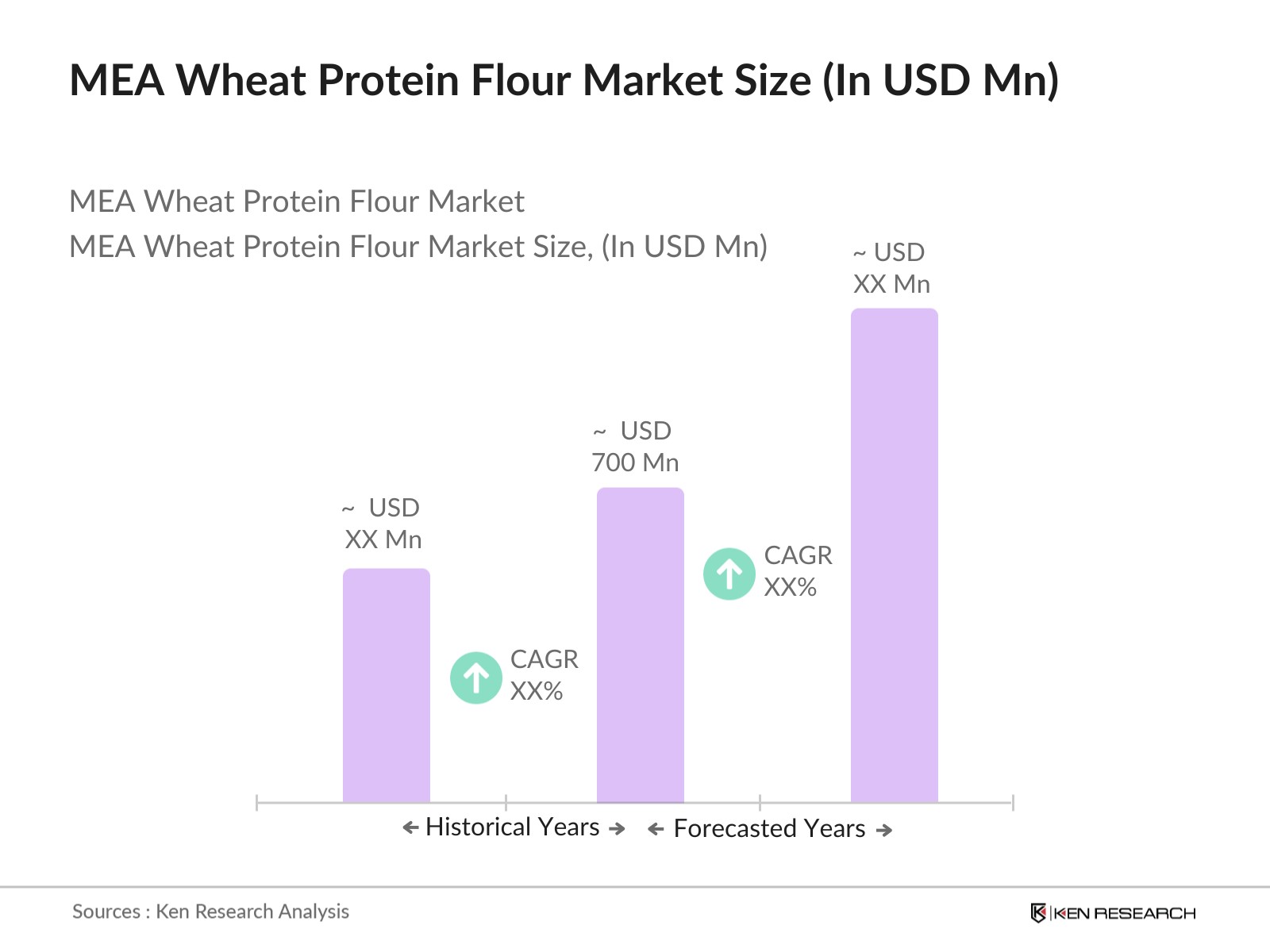
The MEA Wheat Protein Flour market is valued at USD 700 million, driven by consumer health trends and increased production capacities within the food industry.
Challenges include fluctuating wheat prices, production costs, and limited consumer awareness about wheat protein benefits in certain regions.
Key players include Archer Daniels Midland, Roquette Frres, Manildra Group, and MGP Ingredients, each holding a significant market presence due to strong product portfolios and extensive distribution networks.
Growth drivers include rising demand for high-protein diets, expanding applications in bakery and functional foods, and supportive government initiatives for local wheat production.

What makes us stand out is that our consultants follows Robust, Refine and Result (RRR) methodology. i.e. Robust for clear definitions, approaches and sanity checking, Refine for differentiating respondents facts and opinions and Result for presenting data with story

We have set a benchmark in the industry by offering our clients with syndicated and customized market research reports featuring coverage of entire market as well as meticulous research and analyst insights.

While we don't replace traditional research, we flip the method upside down. Our dual approach of Top Bottom & Bottom Top ensures quality deliverable by not just verifying company fundamentals but also looking at the sector and macroeconomic factors.

With one step in the future, our research team constantly tries to show you the bigger picture. We help with some of the tough questions you may encounter along the way: How is the industry positioned? Best marketing channel? KPI's of competitors? By aligning every element, we help maximize success.

Our report gives you instant access to the answers and sources that other companies might choose to hide. We elaborate each steps of research methodology we have used and showcase you the sample size to earn your trust.

If you need any support, we are here! We pride ourselves on universe strength, data quality, and quick, friendly, and professional service.