















Middle East & Africa Cryogenic Equipment Market Outlook to 2030
Region:Middle East
Author(s):Sanjna Verma
Product Code:KROD5167
November 2024
97
About the Report
Middle East & Africa Cryogenic Equipment Market Overview
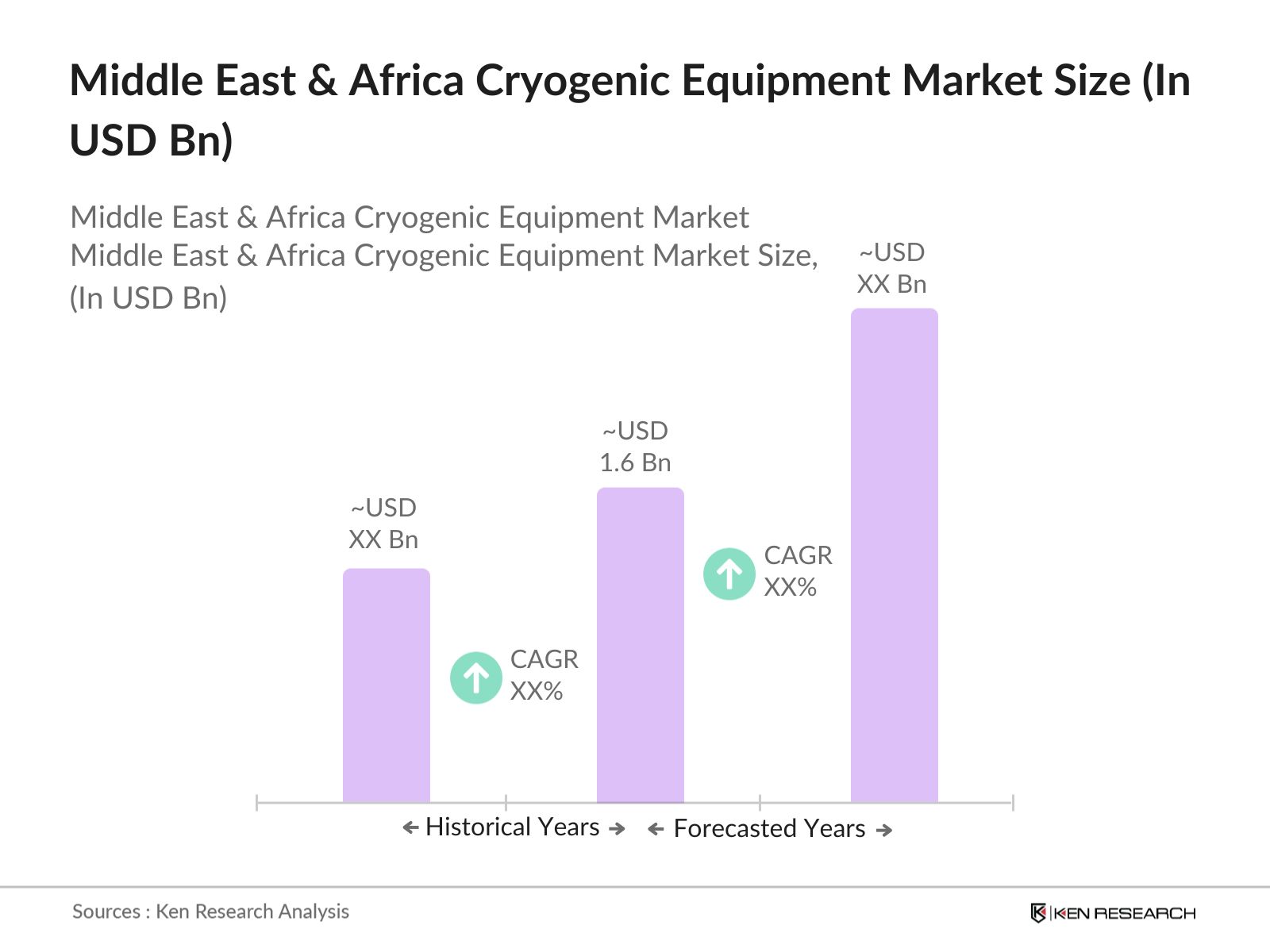
- The Middle East & Africa Cryogenic Equipment market is valued at USD 1.6 billion, driven by the expansion of the LNG (Liquefied Natural Gas) industry, increasing demand in the healthcare sector for cryogenic medical applications, and the growing use of cryogenic technology in the energy & power sectors. The rise of renewable energy solutions, such as hydrogen storage, has also significantly fueled the demand for cryogenic equipment across the region.
- Countries such as Saudi Arabia, the UAE, and South Africa dominate the cryogenic equipment market. Saudi Arabia and the UAE have a strong presence due to their well-established oil & gas sectors, where LNG applications heavily utilize cryogenic storage and transport systems. Additionally, the healthcare sectors in these countries are rapidly advancing, further boosting demand for cryogenic technologies.
- Governments in the Middle East & Africa have established stringent regulatory standards for the design, manufacture, and operation of cryogenic equipment. For instance, Saudi Arabias Saudi Standards, Metrology, and Quality Organization (SASO) mandates specific guidelines for cryogenic pressure vessels used in industrial applications. The UAE and Qatar also have similar regulations requiring certification for cryogenic equipment that handle hazardous materials like LNG and liquid nitrogen. This regulatory framework ensures safety but also increases operational costs.
Middle East & Africa Cryogenic Equipment Market Segmentation
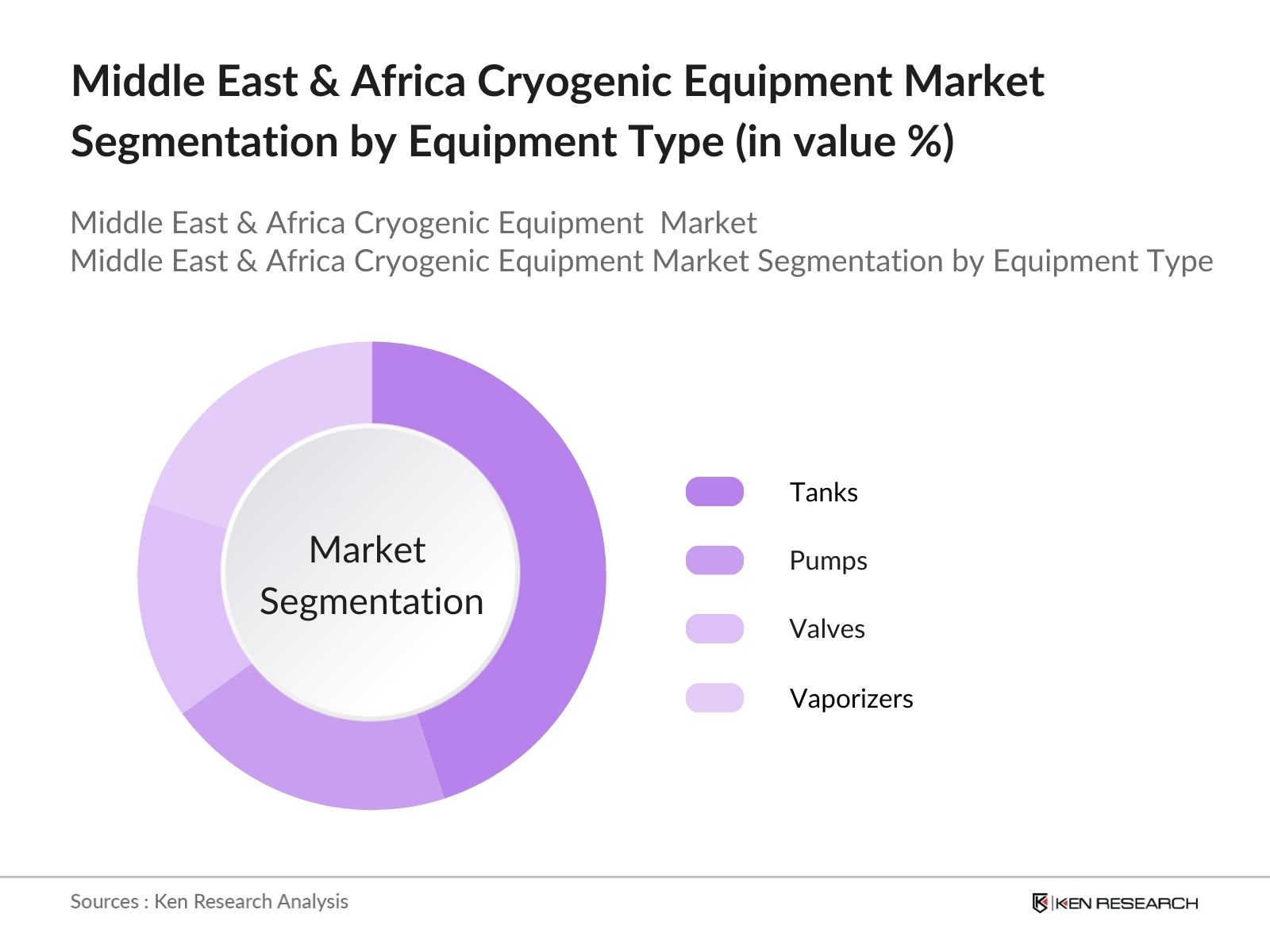
By Equipment Type: The Middle East & Africa Cryogenic Equipment market is segmented by equipment type into tanks, pumps, valves, and vaporizers. Among these, cryogenic tanks hold a dominant market share, primarily due to their widespread usage in the oil & gas sector, particularly for LNG storage and transportation. The tanks are crucial for maintaining ultra-low temperatures, ensuring safe storage and efficient transportation of liquefied gases.
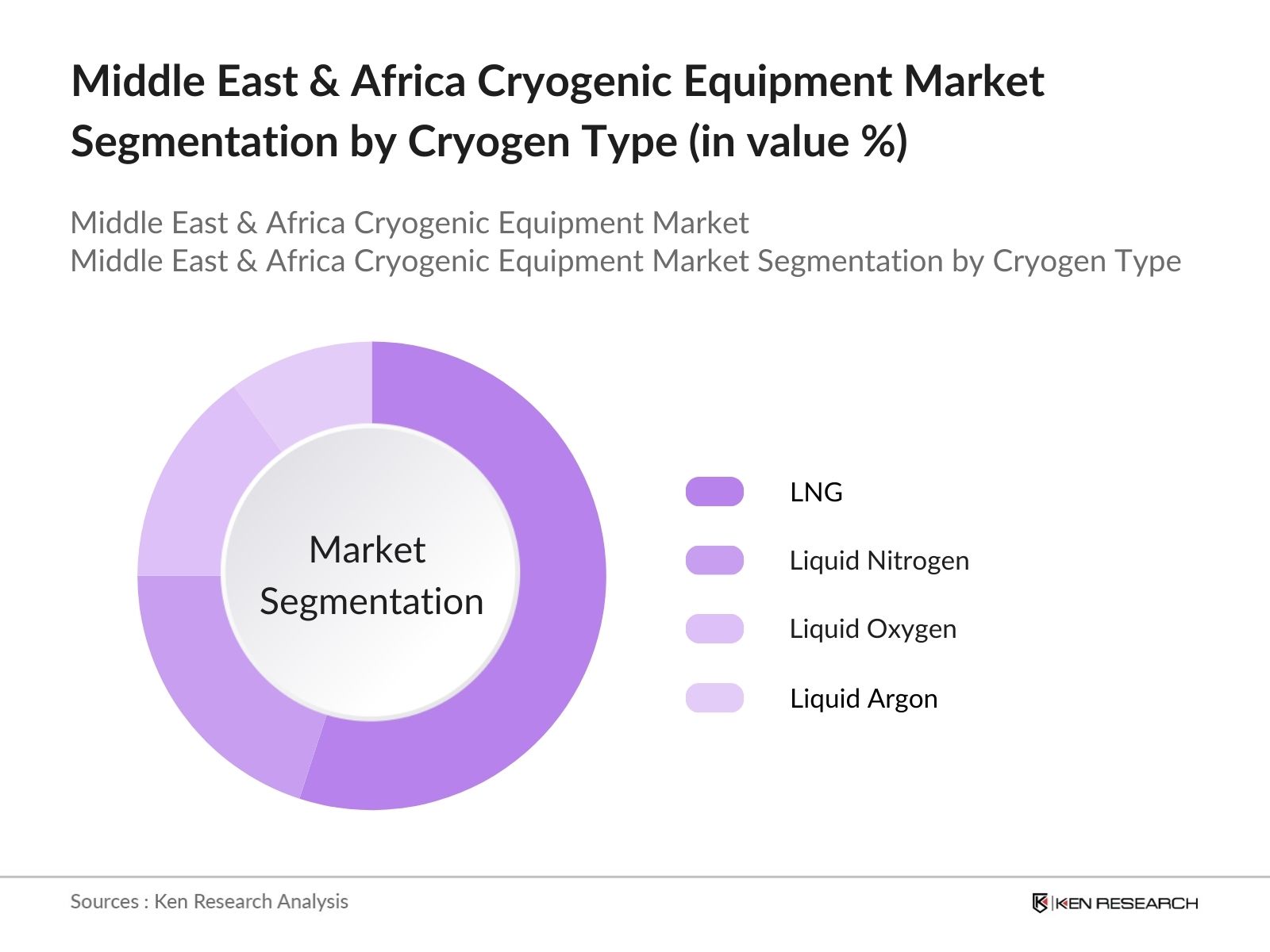
By Cryogen Type: The market is also segmented by cryogen type, which includes liquid nitrogen, liquid oxygen, liquid argon, and LNG. Among these, LNG dominates the market, with a significant share attributed to its increasing use in both energy and transportation sectors. LNG is preferred for its lower environmental impact compared to traditional fossil fuels, making it an essential component of clean energy initiatives across the Middle East and Africa.
Middle East & Africa Cryogenic Equipment Market Competitive Landscape
The Middle East & Africa Cryogenic Equipment market is dominated by a few key players, including global giants such as Air Liquide and Linde Group, as well as regional players like Wessington Cryogenics and Inox India Pvt. Ltd. These companies play a crucial role in shaping the market due to their advanced product offerings, strong distribution networks, and strategic partnerships. Local manufacturers and smaller suppliers also contribute to the competitive landscape, providing specialized solutions catering to niche markets, particularly in healthcare and industrial gas storage.
|
Company |
Establishment Year |
Headquarters |
Market Presence |
Product Portfolio |
Technological Capabilities |
Regional Focus |
R&D Investment |
Strategic Partnerships |
Sustainability Initiatives |
|
Air Liquide |
1902 |
Paris, France |
- |
- |
- |
- |
- |
- |
- |
|
Linde Group |
1879 |
Munich, Germany |
- |
- |
- |
- |
- |
- |
- |
|
Chart Industries |
1992 |
Ball Ground, Georgia, USA |
- |
- |
- |
- |
- |
- |
- |
|
Wessington Cryogenics |
1984 |
Newcastle, UK |
- |
- |
- |
- |
- |
- |
- |
|
Inox India Pvt. Ltd. |
1992 |
Gujarat, India |
- |
- |
- |
- |
- |
- |
- |
Middle East & Africa Cryogenic Equipment Market Analysis
Growth Drivers
-
Rising Demand in LNG Transportation: The increase in natural gas production and liquefied natural gas (LNG) exports from countries such as Qatar and Nigeria has surged demand for cryogenic equipment in the transportation and storage of LNG. In 2023, Qatar exported around 110 billion cubic meters of LNG, requiring cryogenic storage to handle temperatures as low as -162C. The expanding infrastructure for LNG terminals in coastal areas, especially in South Africa and Egypt, further boosts the market for cryogenic tanks and pipelines.
- Medical Cryogenics Expansion: Medical cryogenics has seen significant growth, particularly with the need for cryogenic systems in storing vaccines, biological samples, and organ transplants. Under Vision 2030, the Health Sector Transformation Program was initiated to restructure the healthcare system, focusing on public-private partnerships and enhancing service delivery. This program aligns with broader economic goals to diversify the economy and improve public health services.
- Cold Storage Needs: Cryogenic equipment is vital for cold storage solutions in the food and beverage industry, particularly for preserving perishable goods. The Middle East & Africa's food export market has grown, with countries like South Africa and Egypt exporting over 20 million tons of fresh produce annually in 2023. Cryogenic storage ensures these goods maintain freshness during long transit periods. South Africas Department of Agriculture has been allocating over $500 million annually since 2022 to enhance cold storage logistics, boosting the demand for cryogenic refrigeration equipment.
Challenges
-
High Initial Investment Costs: Cryogenic equipment, such as specialized tanks, valves, and pipelines, requires significant upfront investment due to the complexity of design and materials needed to withstand extremely low temperatures. For instance, installing an LNG storage facility can cost up to $80 million depending on the scale. This cost barrier is a significant challenge for small- and medium-scale industries in the region, particularly in less developed markets like Ethiopia and Sudan, where access to capital is limited. Government incentives in these countries are minimal, further constraining industry growth.
- Regulatory Compliance in Hazardous Material Handling: Handling cryogenic materials, particularly liquefied gases, requires stringent regulatory compliance, which adds complexity and cost to operations. South Africa's government has stringent safety regulations for handling hazardous materials like liquefied nitrogen and oxygen, which require businesses to invest heavily in compliance infrastructure. The Occupational Health and Safety Act mandates companies to ensure secure handling and transportation of cryogenic gases, with penalties for non-compliance. This deters smaller firms from entering the market.
Middle East & Africa Cryogenic Equipment Market Future Outlook
Middle East & Africa Cryogenic Equipment market is poised to experience significant growth, driven by the ongoing expansion of LNG infrastructure, increased focus on clean energy solutions, and advancements in cryogenic storage technology. Government investments in healthcare and energy projects across the region will also create new opportunities for market players, especially in areas where renewable energy and cryogenic applications intersect. In particular, the oil & gas and healthcare sectors will remain major drivers of demand as these industries continue to innovate and expand.
Market Opportunities
-
Adoption of Cryogenic Applications in the Healthcare Sector: The healthcare sector in the Middle East & Africa is expanding its use of cryogenic technology for various applications, including vaccine storage, organ transplantation, and biomedical research. In 2023, cryogenic storage solutions were critical in preserving the over 18 million doses of vaccines distributed across the region. As countries like Saudi Arabia and the UAE push for modernization of healthcare facilities under their respective healthcare infrastructure development programs, the demand for cryogenic freezers and storage units is set to continue.
- Expansion into Emerging Markets: Emerging markets in Sub-Saharan Africa, such as Kenya and Ghana, are increasingly adopting cryogenic technology, particularly in industries like food processing and pharmaceuticals. Kenya's National Industrialization Plan 2023 includes a $200 million investment in cold chain logistics infrastructure, much of which requires cryogenic systems to meet international standards for food safety. This expansion offers significant opportunities for cryogenic equipment manufacturers, particularly for smaller, mobile cryogenic systems used in regional storage hubs.
Scope of the Report
|
Segment |
Sub-Segment |
|
By Equipment Type |
Tanks |
|
Pumps |
|
|
Valves |
|
|
Vaporizers |
|
|
By Cryogen Type |
Liquid Nitrogen |
|
Liquid Oxygen |
|
|
Liquid Argon |
|
|
LNG (Liquefied Natural Gas) |
|
|
By Application |
Energy & Power |
|
Healthcare |
|
|
Electronics |
|
|
Metallurgy |
|
|
By End-User Industry |
Oil & Gas |
|
Chemicals |
|
|
Food & Beverage |
|
|
Aerospace |
|
|
By Region |
GCC |
|
North Africa |
|
|
Sub-Saharan Africa |
Products
Key Target Audience
Cryogenic Equipment Manufacturers
LNG Transport and Storage Companies
Oil & Gas Companies
Healthcare and Medical Device Providers
Energy & Power Sector Companies
Aerospace and Defense Contractors
Investors and Venture Capitalist Firms
Government and Regulatory Bodies (e.g., Saudi Energy Ministry, UAE Ministry of Energy)
Companies
Players Mentioned in the Report
Air Liquide
Linde Group
Chart Industries
Wessington Cryogenics
Inox India Pvt. Ltd.
Herose GmbH
Cryofab, Inc.
Technifab Products, Inc.
Taylor-Wharton International LLC
VRV S.p.A.
Table of Contents
1. Middle East & Africa Cryogenic Equipment Market Overview
1.1. Definition and Scope
1.2. Market Taxonomy
1.3. Market Growth Rate
1.4. Market Segmentation Overview
2. Middle East & Africa Cryogenic Equipment Market Size (In USD Bn)
2.1. Historical Market Size
2.2. Year-On-Year Growth Analysis
2.3. Key Market Developments and Milestones
3. Middle East & Africa Cryogenic Equipment Market Analysis
3.1. Growth Drivers
3.1.1. Rising Demand in LNG Transportation
3.1.2. Medical Cryogenics Expansion
3.1.3. Cold Storage Needs
3.2. Market Challenges
3.2.1. High Initial Investment Costs
3.2.2. Regulatory Compliance in Hazardous Material Handling
3.2.3. Skilled Labor Shortage
3.3. Opportunities
3.3.1. Adoption of Cryogenic Applications in the Healthcare Sector
3.3.2. Expansion into Emerging Markets
3.3.3. Technological Advancements in Cryogenic Storage
3.4. Trends
3.4.1. Increased Usage of Cryogenics in Space Exploration
3.4.2. Integration with IoT for Monitoring
3.4.3. Surge in Use of Renewable Energy Storage
3.5. Government Regulations
3.5.1. Regulatory Standards for Cryogenic Equipment
3.5.2. Export/Import Restrictions on Cryogenic Gases
3.5.3. Compliance to Safety and Hazard Guidelines
3.6. SWOT Analysis
3.7. Stakeholder Ecosystem
3.8. Porters Five Forces
3.9. Competitive Landscape
4. Middle East & Africa Cryogenic Equipment Market Segmentation
4.1. By Equipment Type (In Value %)
4.1.1. Tanks
4.1.2. Pumps
4.1.3. Valves
4.1.4. Vaporizers
4.2. By Cryogen Type (In Value %)
4.2.1. Liquid Nitrogen
4.2.2. Liquid Oxygen
4.2.3. Liquid Argon
4.2.4. LNG (Liquefied Natural Gas)
4.3. By Application (In Value %)
4.3.1. Energy & Power
4.3.2. Healthcare
4.3.3. Electronics
4.3.4. Metallurgy
4.4. By End-User Industry (In Value %)
4.4.1. Oil & Gas
4.4.2. Chemicals
4.4.3. Food & Beverage
4.4.4. Aerospace
4.5. By Region (In Value %)
4.5.1. GCC
4.5.2. North Africa
4.5.3. Sub-Saharan Africa
5. Middle East & Africa Cryogenic Equipment Market Competitive Analysis
5.1. Detailed Profiles of Major Companies
5.1.1. Air Liquide
5.1.2. Linde Group
5.1.3. Cryofab, Inc.
5.1.4. Chart Industries
5.1.5. Taylor-Wharton International LLC
5.1.6. Herose GmbH
5.1.7. VRV S.p.A.
5.1.8. Wessington Cryogenics
5.1.9. Inox India Pvt. Ltd.
5.1.10. Technifab Products, Inc.
5.2. Cross Comparison Parameters
5.3. Market Share Analysis
5.4. Strategic Initiatives
5.5. Mergers and Acquisitions
5.6. Investment Analysis
5.7. Venture Capital Funding
5.8. Government Grants
5.9. Private Equity Investments
6. Middle East & Africa Cryogenic Equipment Market Regulatory Framework
6.1. Safety Standards for Handling Cryogenic Equipment
6.2. Environmental Regulations for Cryogenic Applications
6.3. Import and Export Regulations
6.4. Certification Processes and Compliance
7. Middle East & Africa Cryogenic Equipment Future Market Size (In USD Bn)
7.1. Future Market Size Projections
7.2. Key Factors Driving Future Market Growth
8. Middle East & Africa Cryogenic Equipment Future Market Segmentation
8.1. By Equipment Type (In Value %)
8.2. By Cryogen Type (In Value %)
8.3. By Application (In Value %)
8.4. By End-User Industry (In Value %)
8.5. By Region (In Value %)
9. Middle East & Africa Cryogenic Equipment Market Analysts' Recommendations
9.1. TAM/SAM/SOM Analysis
9.2. Competitive Benchmarking
9.3. White Space Opportunity Analysis
9.4. Strategic Partnerships
Research Methodology
Step 1: Identification of Key Variables
In this stage, an ecosystem map was constructed, identifying all major stakeholders, such as cryogenic equipment manufacturers, LNG transporters, and energy providers within the Middle East & Africa Cryogenic Equipment market. Extensive desk research utilizing secondary and proprietary databases was carried out to gather comprehensive industry data, aiming to identify critical market variables such as LNG demand, healthcare advancements, and renewable energy applications.
Step 2: Market Analysis and Construction
Historical data from credible sources like government databases, industry reports, and proprietary databases were compiled and analyzed. This analysis included assessing market penetration, cryogenic equipment demand, and LNG infrastructure expansion across key industries, including healthcare and energy. Revenue generation metrics were validated using industry reports.
Step 3: Hypothesis Validation and Expert Consultation
A series of consultations with industry experts through interviews (CATIS) provided financial and operational insights into the Middle East & Africa Cryogenic Equipment market. These consultations helped refine market hypotheses and validate the data gathered through primary and secondary sources, ensuring the accuracy and relevance of market findings.
Step 4: Research Synthesis and Final Output
In the final phase, direct engagement with cryogenic equipment manufacturers was undertaken to verify product segments, sales performance, and customer demand. The bottom-up approach was used to complement top-down data, ensuring that the final report offered a comprehensive, accurate analysis of the market.
Frequently Asked Questions
01. How big is the Middle East & Africa Cryogenic Equipment Market?
The Middle East & Africa Cryogenic Equipment market was valued at USD 1.6 billion. This growth is driven by the increasing demand for cryogenic solutions in the oil & gas, healthcare, and power sectors.
02. What are the challenges in the Middle East & Africa Cryogenic Equipment Market?
Middle East & Africa Cryogenic Equipment market faces challenges such as high initial investment costs, stringent regulatory requirements, and a lack of skilled labor in operating and maintaining advanced cryogenic technologies.
03. Who are the major players in the Middle East & Africa Cryogenic Equipment Market?
Key players in Middle East & Africa Cryogenic Equipment Market include global companies like Air Liquide, Linde Group, and Chart Industries, as well as regional players such as Inox India Pvt. Ltd. and Wessington Cryogenics.
04. What are the growth drivers of the Middle East & Africa Cryogenic Equipment Market?
Growth drivers in Middle East & Africa Cryogenic Equipment Market include the rising demand for LNG in the energy sector, expansion of cryogenic applications in healthcare (e.g., cryogenic storage of vaccines), and advancements in cryogenic technology for renewable energy solutions.
Why Buy From Us?

What makes us stand out is that our consultants follows Robust, Refine and Result (RRR) methodology. i.e. Robust for clear definitions, approaches and sanity checking, Refine for differentiating respondents facts and opinions and Result for presenting data with story

We have set a benchmark in the industry by offering our clients with syndicated and customized market research reports featuring coverage of entire market as well as meticulous research and analyst insights.

While we don't replace traditional research, we flip the method upside down. Our dual approach of Top Bottom & Bottom Top ensures quality deliverable by not just verifying company fundamentals but also looking at the sector and macroeconomic factors.

With one step in the future, our research team constantly tries to show you the bigger picture. We help with some of the tough questions you may encounter along the way: How is the industry positioned? Best marketing channel? KPI's of competitors? By aligning every element, we help maximize success.

Our report gives you instant access to the answers and sources that other companies might choose to hide. We elaborate each steps of research methodology we have used and showcase you the sample size to earn your trust.

If you need any support, we are here! We pride ourselves on universe strength, data quality, and quick, friendly, and professional service.