
Middle East & Africa IR Camera Market Outlook to 2030
Region:Global
Author(s):Sanjna
Product Code:KROD4688
November 2024
86
About the Report
Middle East & Africa IR Camera Market Overview
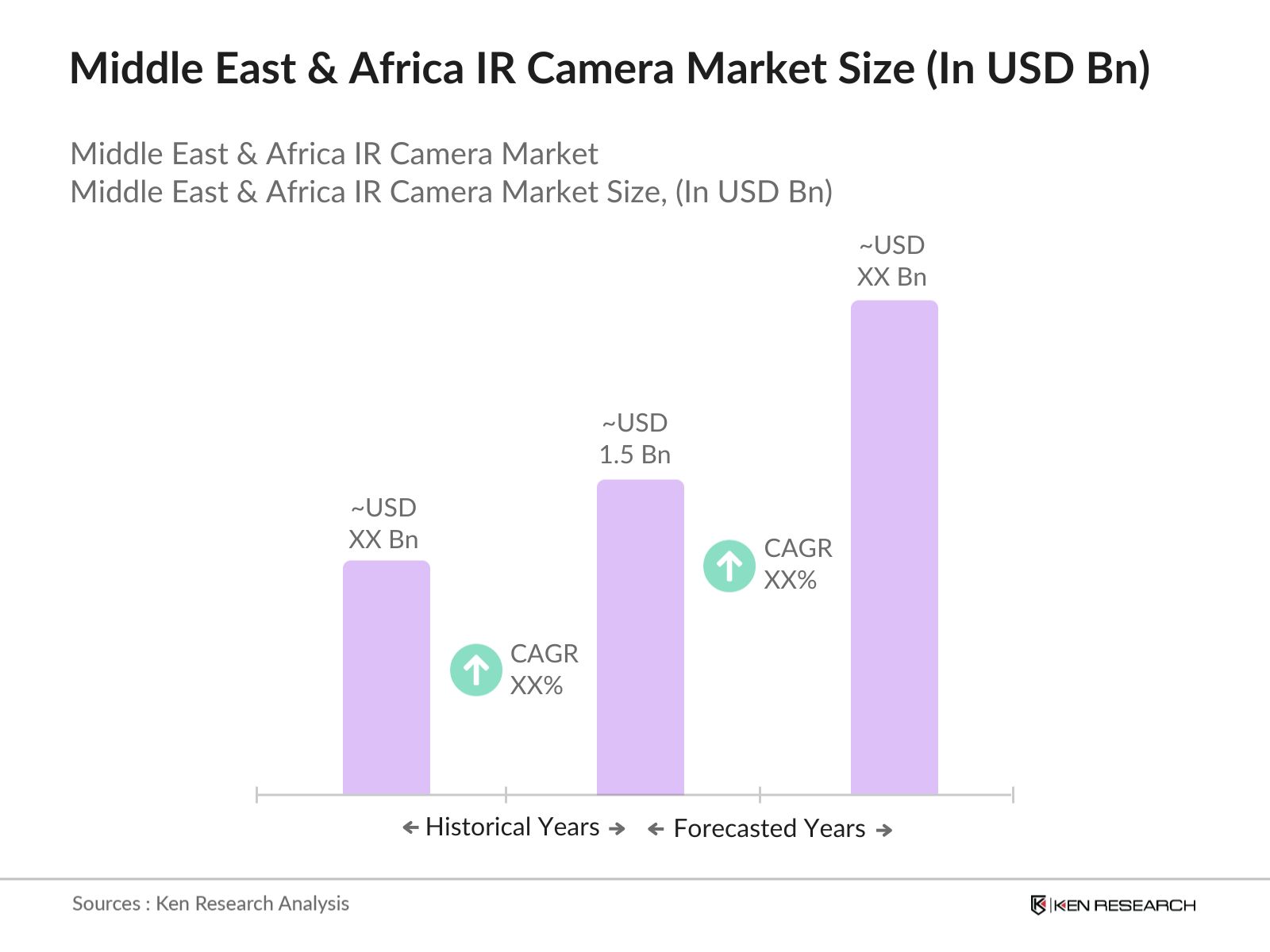
- The Middle East & Africa IR camera market, based on a five-year historical analysis, has grown significantly, reaching a valuation of USD 1.5 billion. This market is driven by increasing demand for IR cameras across multiple sectors such as defense, automotive, and industrial automation. The rise in defense budgets and the need for advanced surveillance systems in this region have contributed to the sustained market expansion.
- Countries like the United Arab Emirates, Saudi Arabia, and South Africa dominate the Middle East & Africa IR camera market. These countries have prioritized technological advancements in defense and smart infrastructure, fostering high demand for IR cameras. The UAE and Saudi Arabia, in particular, are leveraging IR camera technology for enhanced security in public and private sectors, while South Africas growing industrial sector has been a major driver for IR camera adoption in industries such as mining and energy.
- The export of defense-related IR cameras is tightly regulated in the Middle East and Africa. In 2024, the UAE's defense export laws mandated specific clearances for the sale of advanced thermal imaging systems to foreign entities. Countries like South Africa have stringent laws governing the export of military-grade technology, ensuring compliance with international security standards. These regulations ensure that sensitive thermal imaging equipment does not fall into the hands of unauthorized entities, but they also present barriers for manufacturers looking to expand internationally.
Middle East & Africa IR Camera Market Segmentation
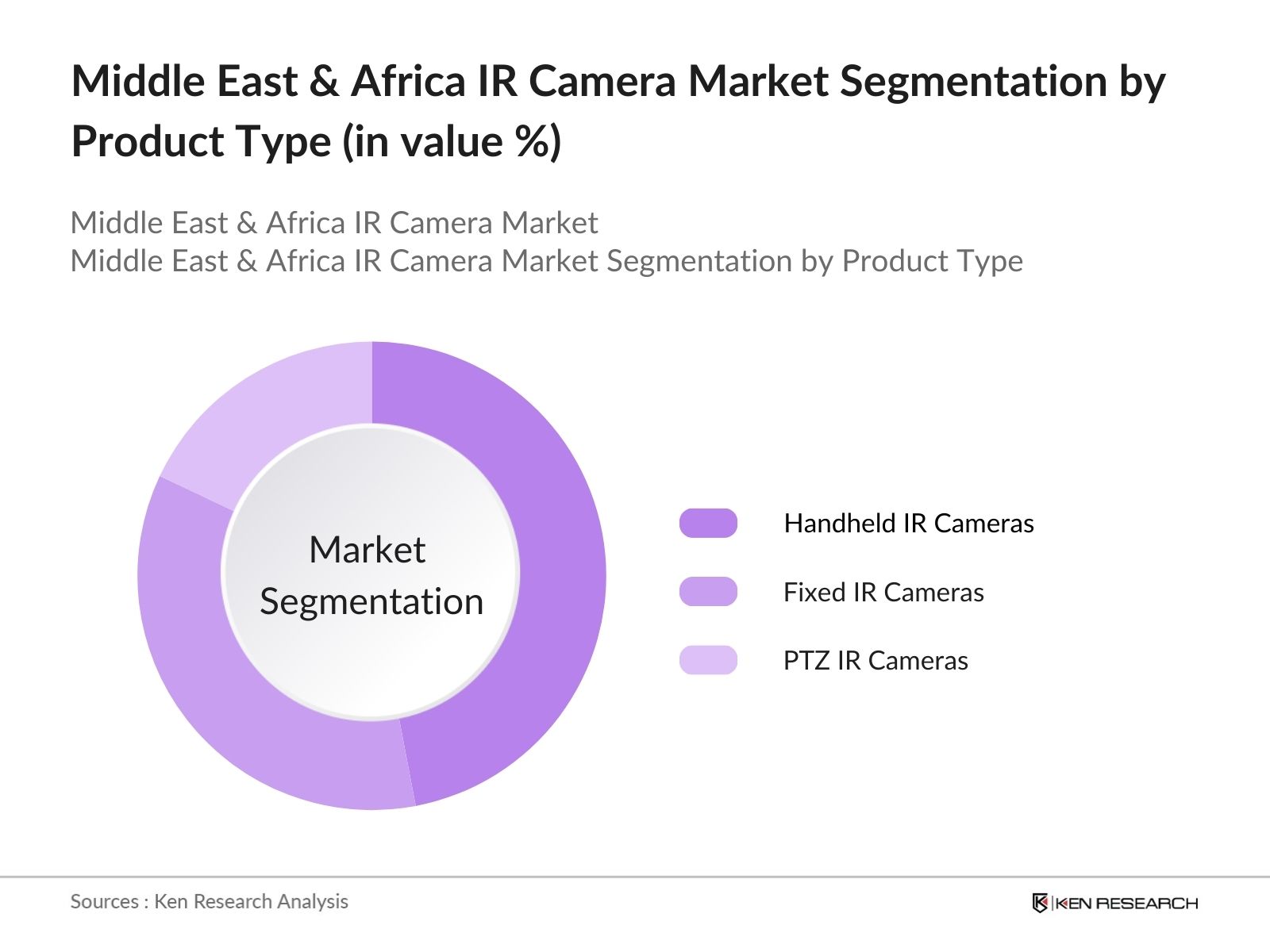
By Product Type: The Middle East & Africa IR camera market is segmented by product type into handheld IR cameras, fixed IR cameras, and pan-tilt-zoom (PTZ) IR cameras. Handheld IR cameras hold the dominant market share under this segment due to their ease of use, portability, and widespread application across industries such as automotive, security, and industrial maintenance. These cameras are preferred in sectors requiring flexibility and mobility, such as field diagnostics and thermal inspections.
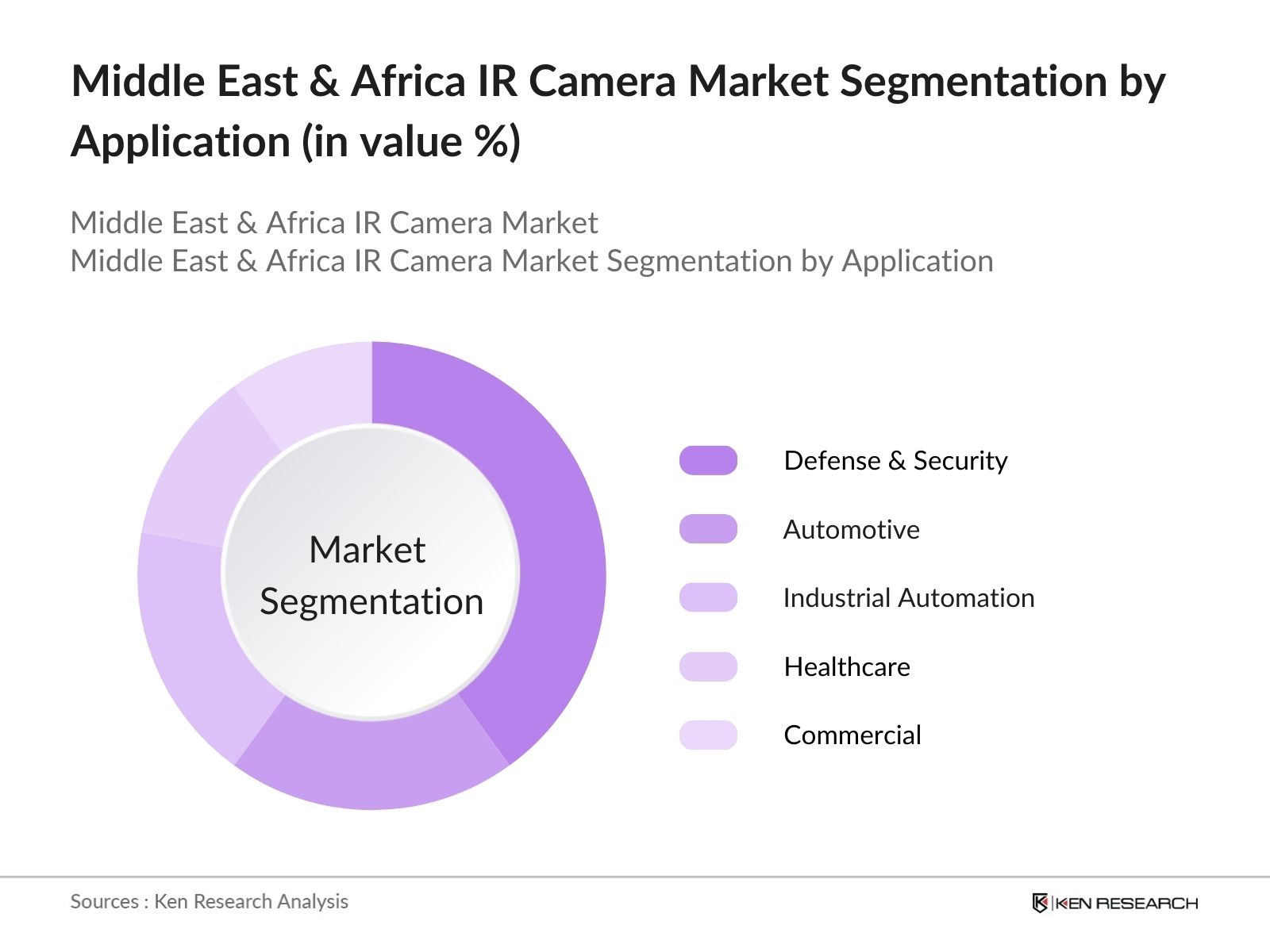
 By Application: The market is also segmented by application into defense & security, automotive, industrial automation, healthcare, and commercial. The defense & security segment dominates the market due to the growing need for surveillance and monitoring solutions in this region, which is prone to geopolitical tensions. The increasing defense budgets of countries like Saudi Arabia and the UAE and the use of IR cameras for border security and drone surveillance further contribute to the dominance of this segment. Additionally, the demand for IR cameras in industrial automation is growing due to the push for smart infrastructure and predictive maintenance.
Middle East & Africa IR Camera Market Competitive Landscape
The Middle East & Africa IR camera market is dominated by key global and regional players that provide innovative products and integrated solutions. The market is highly competitive, with companies continuously investing in research and development to enhance product capabilities and expand their applications. The market has seen consolidation in recent years, with a few dominant players holding the majority share. Companies like FLIR Systems, Teledyne Technologies, and Leonardo DRS have made significant advancements in thermal imaging technologies, securing large defense and industrial contracts.
The leading players include:
|
Company |
Established Year |
Headquarters |
Product Portfolio |
R&D Investment |
Market Presence |
Strategic Collaborations |
Manufacturing Capabilities |
Revenue |
|
FLIR Systems, Inc. |
1978 |
Wilsonville, Oregon |
- |
- |
- |
- |
- |
- |
|
Leonardo DRS |
1969 |
Arlington, Virginia |
- |
- |
- |
- |
- |
- |
|
Teledyne Technologies |
1960 |
Thousand Oaks, CA |
- |
- |
- |
- |
- |
- |
|
Axis Communications |
1984 |
Lund, Sweden |
- |
- |
- |
- |
- |
- |
|
Opgal Optronic Industries |
1983 |
Karmiel, Israel |
- |
- |
- |
- |
- |
- |
Middle East & Africa IR Camera Market Analysis
Growth Drivers
-
Increasing Defense and Security Investments: In 2024, defense spending in the Middle East and Africa saw a marked increase, particularly in nations like Saudi Arabia, which allocated $69 billion to defense, and South Africa, with $3.6 billion. This rise in security investments is driving demand for IR cameras used in border surveillance, critical infrastructure protection, and night-vision capabilities. As nations prioritize advanced military technology, including thermal imaging systems, IR cameras are becoming vital for enhancing situational awareness in defense applications.
- Rising Industrial Automation: Industrial automation is accelerating across MEA, especially in sectors such as oil and gas, mining, and manufacturing. In 2024, the UAE's oil production reached approximately 2.93 million barrels per day, with the petrochemical industry heavily relying on infrared cameras for monitoring and safety. These devices are integral in detecting heat anomalies, ensuring operational safety, and enhancing efficiency. Nations like South Africa are also advancing automation in mining operations, further boosting the adoption of IR cameras for predictive maintenance and monitoring equipment performance. IMF.
- Expansion of Smart Infrastructure Projects: Mega-projects in smart infrastructure, such as Saudi Arabia's NEOM (worth over $500 billion), are driving the demand for IR cameras in smart cities, security, and environmental monitoring. These projects incorporate thermal imaging for energy management and public safety. As more governments in the region invest in large-scale smart city initiatives, IR cameras become essential for maintaining security, improving energy efficiency, and monitoring building temperatures. The expansion of infrastructure, driven by Vision 2030 in Saudi Arabia and the UAE, underpins this trend.
Challenges
-
High Initial Cost of IR Cameras: Despite the technological advancements, the initial cost of high-performance IR cameras remains prohibitive, especially for smaller industries and public sector entities in emerging economies like Kenya and Egypt. IR camera systems used in defense and industrial applications often cost between $10,000 to $100,000 per unit, which can limit widespread adoption across sectors. For cost-sensitive regions, the high price of thermal imaging technology continues to challenge market growth.
- Technical Limitations in Low-End Models: While IR cameras offer significant advantages, low-end models face technical constraints, including lower image resolution and limited temperature range detection, which hinder adoption in critical applications like healthcare and industrial safety. In industrial settings where high precision is required, low-end cameras may fail to deliver the accuracy needed for thermal inspections. This creates a gap between advanced users and smaller companies that may not afford high-end systems.
Middle East & Africa IR Camera Market Future Outlook
Middle East & Africa IR camera market is expected to witness substantial growth, driven by increasing investments in defense and security technologies, industrial automation, and smart infrastructure. As countries in the region continue to strengthen their defense capabilities and adopt modern technologies for security and surveillance, IR camera demand is likely to rise. Furthermore, advancements in AI and machine learning integration with IR cameras for applications such as predictive maintenance and healthcare diagnostics are expected to create new growth opportunities for market players.
Market Opportunities
-
Integration of AI with IR Cameras: The integration of artificial intelligence (AI) with IR cameras opens new avenues for applications in defense, healthcare, and industrial automation. AI-driven IR cameras, which enable advanced image processing and predictive analytics, are gaining traction in industries like energy and utilities. In the renewable energy sector, particularly solar energy, IR cameras are being used for real-time monitoring of photovoltaic systems.
- Expansion in Automotive Applications: As the automotive sector in the Middle East and Africa shifts towards advanced driver-assistance systems (ADAS), the demand for IR cameras is rising. Automotive manufacturers, especially in South Africa's expanding electric vehicle (EV) market, are integrating IR cameras for night-vision systems and pedestrian detection. In 2024, South Africa's automotive industry produced 470,000 vehicles, with more automakers adopting thermal imaging technologies for enhanced safety. The rising use of IR cameras in ADAS is anticipated to transform vehicle safety features in the region.
Scope of the Report
|
Segment |
Sub-segments |
|
By Product Type |
Handheld IR Cameras |
|
Fixed IR Cameras |
|
|
Pan-Tilt-Zoom (PTZ) IR Cameras |
|
|
By Wavelength Type |
Short-Wave Infrared (SWIR) |
|
Mid-Wave Infrared (MWIR) |
|
|
Long-Wave Infrared (LWIR) |
|
|
By Application |
Defense & Security |
|
Automotive |
|
|
Industrial Automation |
|
|
Healthcare |
|
|
Commercial |
|
|
By Technology |
Uncooled Thermal Imaging |
|
Cooled Thermal Imaging |
|
|
By Region |
GCC Countries |
|
South Africa |
|
|
North Africa |
|
|
Rest of Middle East & Africa |
Products
Key Target Audience
Defense & Security Agencies (e.g., UAE Ministry of Defense, Saudi Arabia Ministry of Defense)
Automotive Manufacturers (OEMs)
Industrial Automation Companies
Healthcare Providers
Renewable Energy Companies
Surveillance and Security System Integrators
Investors and Venture Capitalist Firms
Government and Regulatory Bodies (e.g., National Regulatory Authorities in UAE, South African Bureau of Standards)
Companies
Players Mentioned in the Report
FLIR Systems, Inc.
Leonardo DRS
Teledyne Technologies Incorporated
Axis Communications AB
Opgal Optronic Industries Ltd.
Seek Thermal, Inc.
L3Harris Technologies, Inc.
BAE Systems, Inc.
Xenics nv
Raytheon Technologies Corporation
Table of Contents
1. Middle East & Africa IR Camera Market Overview
1.1. Definition and Scope
1.2. Market Taxonomy
1.3. Market Growth Rate
1.4. Market Segmentation Overview
2. Middle East & Africa IR Camera Market Size (In USD Mn)
2.1. Historical Market Size
2.2. Year-On-Year Growth Analysis
2.3. Key Market Developments and Milestones
3. Middle East & Africa IR Camera Market Analysis
3.1. Growth Drivers
3.1.1. Increasing Defense and Security Investments
3.1.2. Rising Industrial Automation
3.1.3. Expansion of Smart Infrastructure Projects
3.1.4. Growing Adoption in Medical Applications
3.2. Market Challenges
3.2.1. High Initial Cost of IR Cameras
3.2.2. Technical Limitations in Low-End Models
3.2.3. Regulatory Constraints on Cross-border Exports
3.3. Opportunities
3.3.1. Integration of AI with IR Cameras
3.3.2. Expansion in Automotive Applications
3.3.3. Increasing Demand in Renewable Energy Sectors
3.4. Trends
3.4.1. Adoption of Wireless and Cloud-Connected IR Cameras
3.4.2. Rising Use of IR Cameras for Predictive Maintenance
3.4.3. Growth in Adoption of Thermal Imaging for Remote Diagnostics
3.5. Government Regulations
3.5.1. Defense Export Regulations
3.5.2. Compliance with Energy-Efficiency Standards
3.5.3. Security and Privacy Laws
3.6. SWOT Analysis
3.7. Stakeholder Ecosystem
3.8. Porters Five Forces Analysis
3.9. Competitive Ecosystem
4. Middle East & Africa IR Camera Market Segmentation
4.1. By Product Type (In Value %)
4.1.1. Handheld IR Cameras
4.1.2. Fixed IR Cameras
4.1.3. Pan-Tilt-Zoom (PTZ) IR Cameras
4.2. By Wavelength Type (In Value %)
4.2.1. Short-Wave Infrared (SWIR)
4.2.2. Mid-Wave Infrared (MWIR)
4.2.3. Long-Wave Infrared (LWIR)
4.3. By Application (In Value %)
4.3.1. Defense & Security
4.3.2. Automotive
4.3.3. Industrial Automation
4.3.4. Healthcare
4.3.5. Commercial
4.4. By Technology (In Value %)
4.4.1. Uncooled Thermal Imaging
4.4.2. Cooled Thermal Imaging
4.5. By Region (In Value %)
4.5.1. GCC Countries
4.5.2. South Africa
4.5.3. North Africa
4.5.4. Rest of Middle East & Africa
5. Middle East & Africa IR Camera Market Competitive Analysis
5.1. Detailed Profiles of Major Companies
5.1.1. FLIR Systems, Inc.
5.1.2. Leonardo DRS
5.1.3. Teledyne Technologies Incorporated
5.1.4. Axis Communications AB
5.1.5. Opgal Optronic Industries Ltd.
5.1.6. Seek Thermal, Inc.
5.1.7. L3Harris Technologies, Inc.
5.1.8. BAE Systems, Inc.
5.1.9. Xenics nv
5.1.10. Raytheon Technologies Corporation
5.2. Cross Comparison Parameters (Product Portfolio, Market Presence, R&D Investments, Strategic Collaborations, Manufacturing Capacities, Headquarters, Revenue, Market Share)
5.3. Market Share Analysis
5.4. Strategic Initiatives
5.5. Mergers and Acquisitions
5.6. Investment Analysis
5.7. Venture Capital Funding
5.8. Government Grants
5.9. Private Equity Investments
6. Middle East & Africa IR Camera Market Regulatory Framework
6.1. Import and Export Restrictions
6.2. Safety Standards for Industrial Use
6.3. Licensing and Certification Requirements
7. Middle East & Africa IR Camera Future Market Size (In USD Mn)
7.1. Future Market Size Projections
7.2. Key Factors Driving Future Market Growth
8. Middle East & Africa IR Camera Future Market Segmentation
8.1. By Product Type (In Value %)
8.2. By Wavelength Type (In Value %)
8.3. By Application (In Value %)
8.4. By Technology (In Value %)
8.5. By Region (In Value %)
9. Middle East & Africa IR Camera Market Analysts' Recommendations
9.1. TAM/SAM/SOM Analysis
9.2. Go-To-Market Strategies
9.3. Competitive Positioning
9.4. White Space Opportunity Analysis
Research Methodology
Step 1: Identification of Key Variables
The initial phase involved constructing an ecosystem map encompassing all major stakeholders within the Middle East & Africa IR Camera market. This step is underpinned by extensive desk research, utilizing secondary and proprietary databases to gather industry-level information. The primary objective was to identify and define the critical variables influencing market dynamics.
Step 2: Market Analysis and Construction
In this phase, we compiled and analyzed historical data pertaining to the Middle East & Africa IR Camera market. This included assessing market penetration across sectors such as defense, industrial automation, and healthcare. Furthermore, an evaluation of product quality statistics ensured the reliability and accuracy of the revenue estimates.
Step 3: Hypothesis Validation and Expert Consultation
Market hypotheses were developed and subsequently validated through consultations with industry experts representing a diverse array of companies. These consultations provided valuable operational and financial insights from industry practitioners, which were instrumental in refining the market data.
Step 4: Research Synthesis and Final Output
The final phase involved direct engagement with IR camera manufacturers and key stakeholders to acquire detailed insights into product segments, sales performance, and other factors. This interaction verified the statistics derived from the bottom-up approach, ensuring a comprehensive and validated analysis of the Middle East & Africa IR Camera market.
Frequently Asked Questions
1. How big is the Middle East & Africa IR Camera Market?
The Middle East & Africa IR camera market is valued at USD 1.5 billion, driven by increasing demand for surveillance systems, industrial automation, and healthcare diagnostics.
2. What are the challenges in the Middle East & Africa IR Camera Market?
Challenges in Middle East & Africa IR camera market include high initial costs of IR cameras, limited technical expertise in certain regions, and regulatory hurdles in exporting advanced thermal imaging technologies across borders.
3. Who are the major players in the Middle East & Africa IR Camera Market?
Major players in Middle East & Africa IR camera market include FLIR Systems, Leonardo DRS, Teledyne Technologies, Axis Communications, and Opgal Optronic Industries, who dominate due to strong R&D capabilities and defense partnerships.
4. What are the growth drivers of the Middle East & Africa IR Camera Market?
Middle East & Africa IR camera market is driven by rising defense budgets, technological advancements in industrial automation, and increasing adoption of IR cameras for healthcare and energy applications.
Why Buy From Us?

What makes us stand out is that our consultants follows Robust, Refine and Result (RRR) methodology. i.e. Robust for clear definitions, approaches and sanity checking, Refine for differentiating respondents facts and opinions and Result for presenting data with story

We have set a benchmark in the industry by offering our clients with syndicated and customized market research reports featuring coverage of entire market as well as meticulous research and analyst insights.

While we don't replace traditional research, we flip the method upside down. Our dual approach of Top Bottom & Bottom Top ensures quality deliverable by not just verifying company fundamentals but also looking at the sector and macroeconomic factors.

With one step in the future, our research team constantly tries to show you the bigger picture. We help with some of the tough questions you may encounter along the way: How is the industry positioned? Best marketing channel? KPI's of competitors? By aligning every element, we help maximize success.

Our report gives you instant access to the answers and sources that other companies might choose to hide. We elaborate each steps of research methodology we have used and showcase you the sample size to earn your trust.

If you need any support, we are here! We pride ourselves on universe strength, data quality, and quick, friendly, and professional service.