















Middle East & Africa Metal Cans Market Outlook to 2030
Region:Global
Author(s):Sanjna
Product Code:KROD5195
November 2024
100
About the Report
Middle East & Africa Market Overview
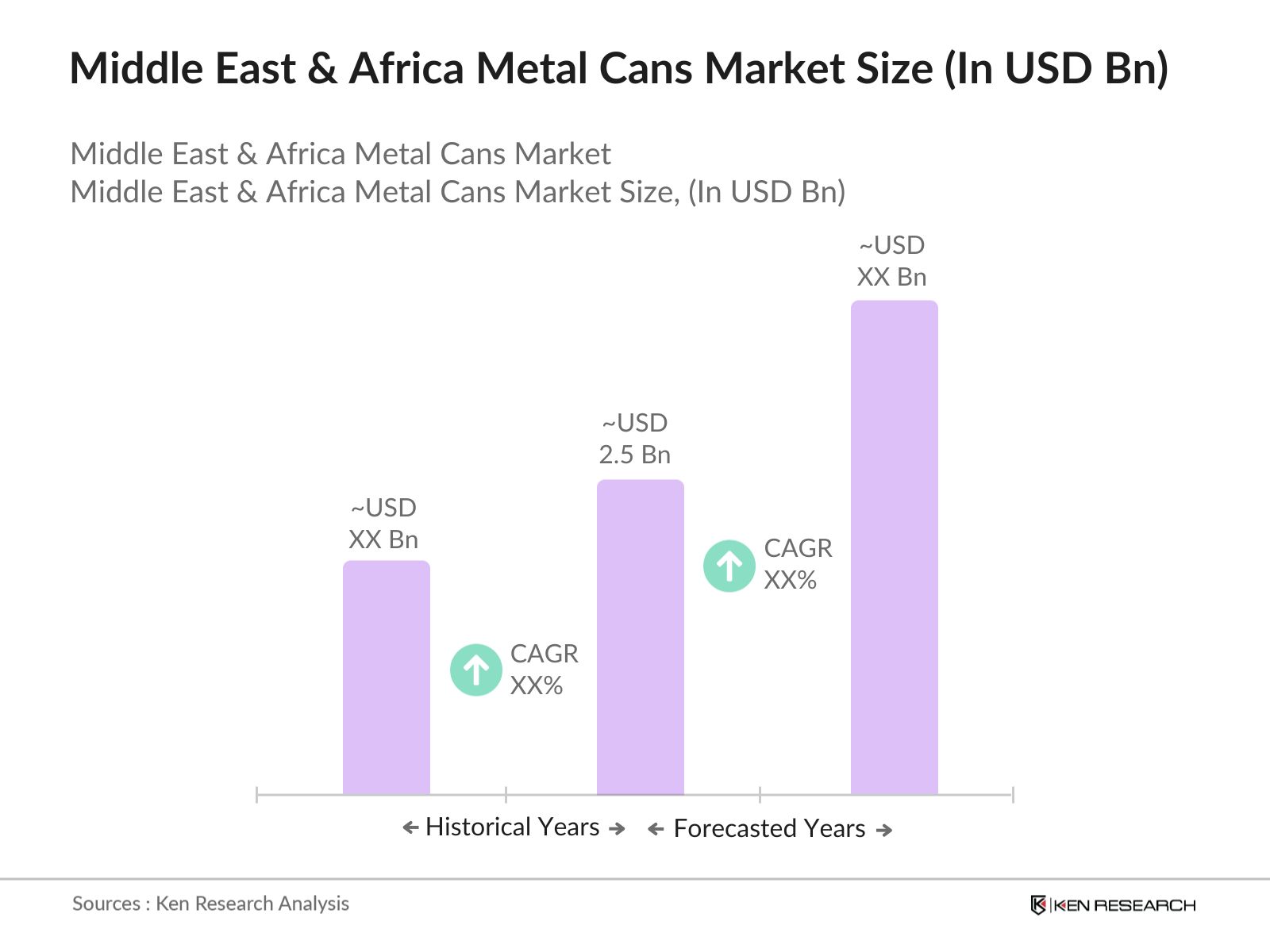
- The Middle East & Africa metal cans market is valued at USD 2.5 billion, driven by the expanding food and beverage industry as well as the increasing demand for sustainable packaging solutions. Metal cans, particularly aluminum and steel cans, are preferred due to their durability, recyclability, and ability to preserve the freshness of products. The market is further influenced by growing consumer awareness of eco-friendly packaging, pushing major brands to shift towards sustainable materials in packaging solutions, fostering steady growth in the region.
- Countries like the United Arab Emirates and South Africa dominate the metal cans market in the Middle East & Africa. The UAEs dominance is primarily due to the high demand for canned beverages in a rapidly urbanizing economy, along with its leading role in the tourism and hospitality industry. Meanwhile, South Africa's metal can market is driven by its established food and beverage manufacturing industry and the increasing shift towards recyclable packaging. These countries have robust supply chains and extensive manufacturing capabilities, solidifying their leadership positions in the market.
- Saudi Arabias National Environmental Strategy outlines specific targets for reducing packaging waste, including metal waste, by 30% by 2025. Similarly, the South African government has introduced Extended Producer Responsibility (EPR) schemes that mandate packaging manufacturers, including metal can producers, to participate in waste management efforts. Such regulations create an environment where sustainable packaging solutions, such as metal cans, are encouraged, driving market growth.
Middle East & Africa Market Segmentation
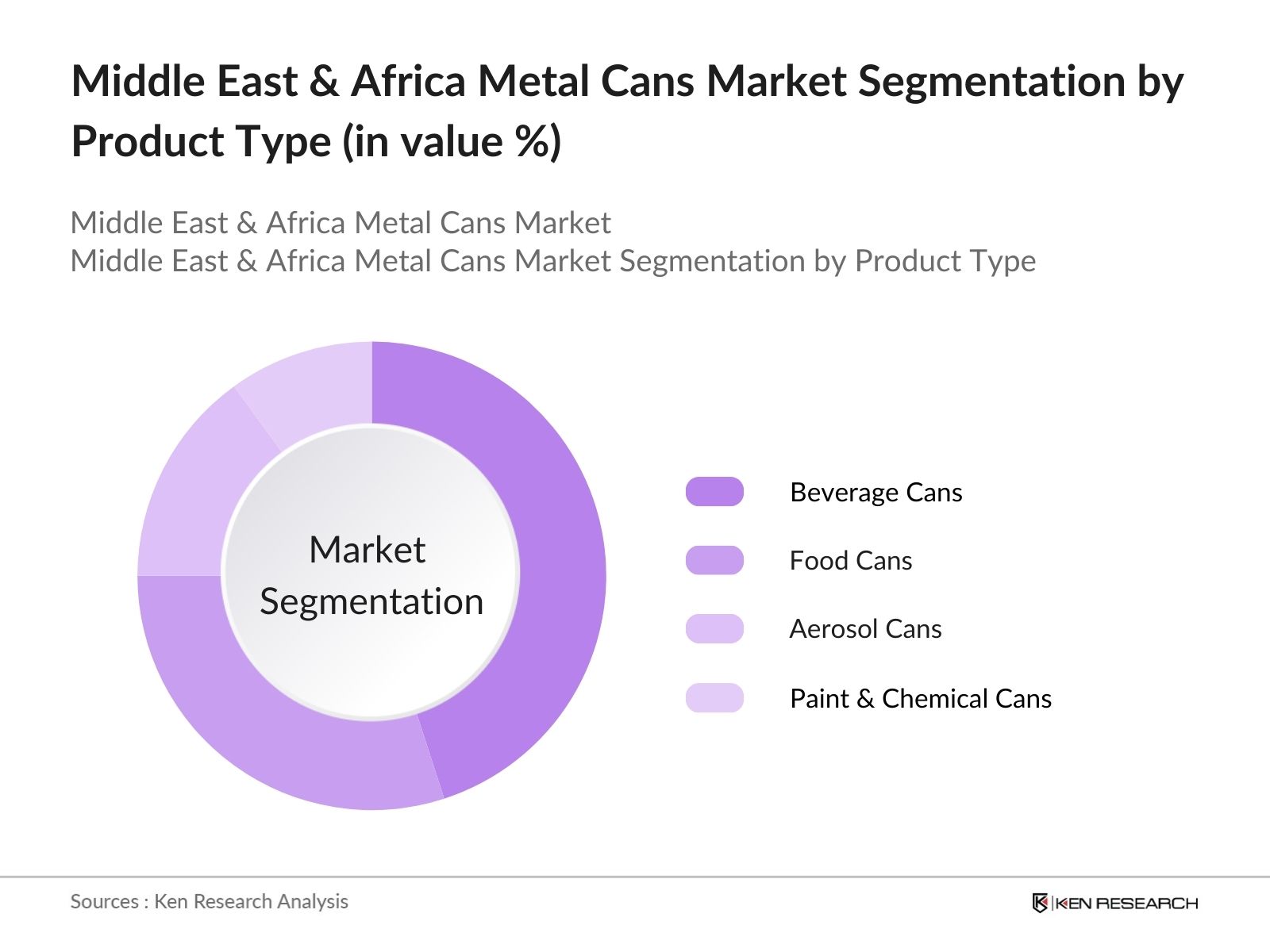
By Product Type: The Middle East & Africa metal cans market is segmented by product type into beverage cans, food cans, aerosol cans, and paint & chemical cans. Among these, beverage cans hold a dominant market share, largely due to the burgeoning consumption of soft drinks and alcoholic beverages in urban centers. The rise in disposable income, along with increasing consumption of energy drinks and ready-to-drink beverages, is fueling demand for this segment. Brands are increasingly opting for metal cans due to their ability to preserve taste and carbonation, which is essential for both alcoholic and non-alcoholic beverages.
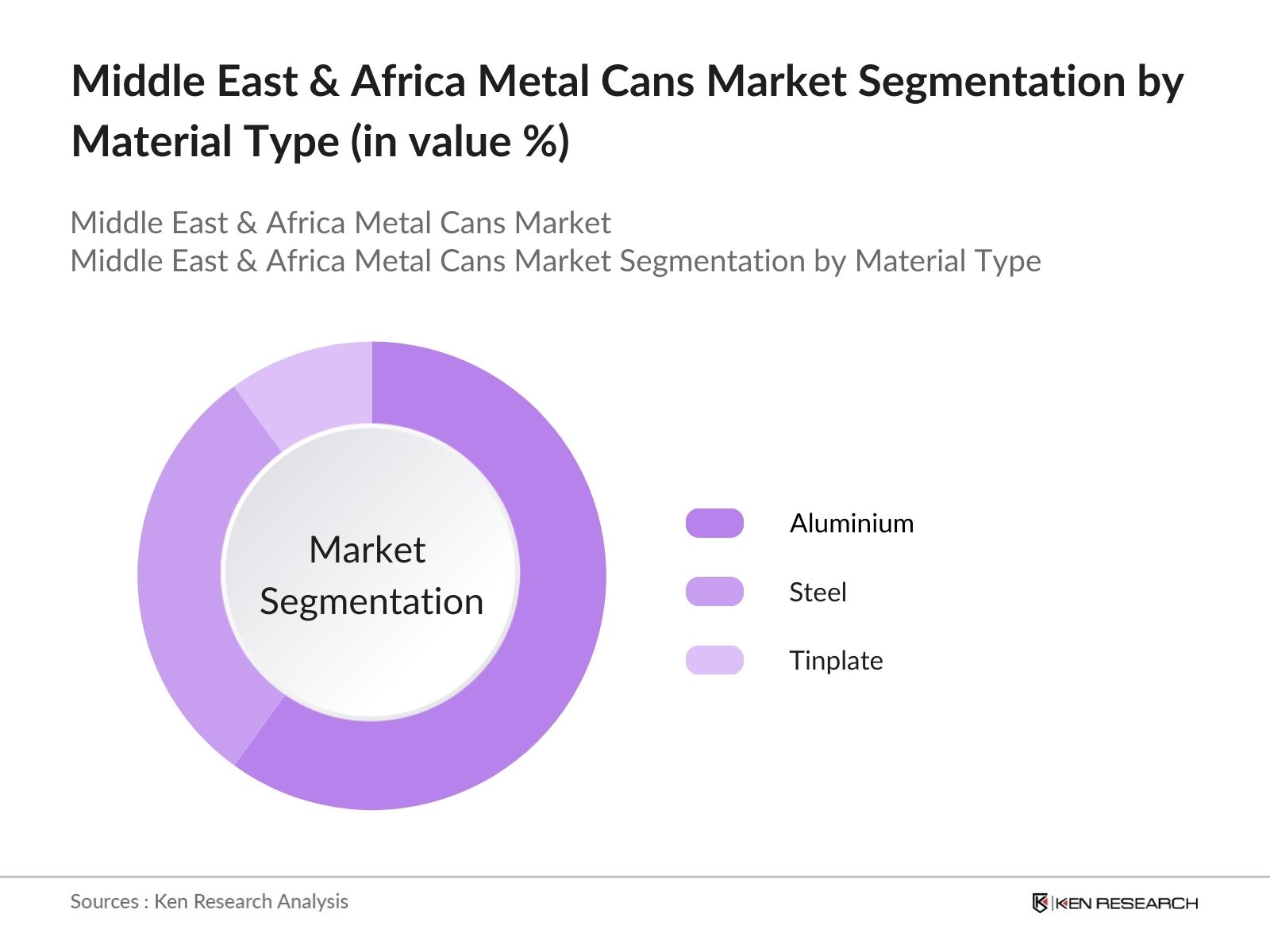
By Material Type: Metal cans are categorized into aluminum, steel, and tinplate, with aluminum leading the market share. The lightweight nature and corrosion-resistant properties of aluminum make it the most preferred material, particularly in beverage packaging. Additionally, aluminum cans are infinitely recyclable without any loss in quality, aligning with the growing focus on environmental sustainability. This has prompted companies to adopt aluminum cans over other materials, which has become a key driver in this segment's growth.
Middle East & Africa Metal Cans Market Competitive Landscape
The Middle East & Africa metal cans market is consolidated, with several key players dominating the space. Major players in the market include global giants like Crown Holdings, Ardagh Group, and local manufacturers like Nampak Limited. These companies have established production facilities across the region, and their dominance is bolstered by long-term partnerships with key beverage and food producers. The competition is centered around innovations in can design, lightweighting of cans, and advancements in sustainability initiatives, with companies vying to capture a larger share of the growing demand for environmentally friendly packaging.
|
Company Name |
Establishment Year |
Headquarters |
No. of Employees |
Production Capacity (Million Units) |
Revenue (USD Bn) |
Key Customers |
Metal Source |
Sustainability Initiatives |
|
Crown Holdings, Inc. |
1892 |
USA |
- |
- |
- |
- |
- |
- |
|
Ardagh Group |
1932 |
Luxembourg |
- |
- |
- |
- |
- |
- |
|
Ball Corporation |
1880 |
USA |
- |
- |
- |
- |
- |
- |
|
Nampak Limited |
1968 |
South Africa |
- |
- |
- |
- |
- |
- |
|
Silgan Holdings Inc. |
1987 |
USA |
- |
- |
- |
- |
- |
- |
Middle East & Africa Metal Cans Market Analysis
Growth Drivers
-
Expansion of Beverage Industry: The expansion of the beverage industry is a significant growth driver for the metal cans market in the Middle East and Africa. The region has witnessed rising per capita beverage consumption, particularly in urbanized areas. Namibia, South Africa, and Botswana have the highest per capita soft drink consumption on the continent, at 262, 244 and 155 eight-ounce units per year, respectively. This steady consumption growth in both alcoholic and non-alcoholic beverages, fueled by increased disposable income and changing consumer preferences, drives demand for metal cans, widely used in packaging for their durability and recyclability.
- Shift towards Eco-Friendly Packaging: The rise in environmental awareness, particularly in UAE and South Africa, has pushed the demand for recyclable packaging options like metal cans. Currently, the global recycling rate for aluminum beverage cans is estimated to be around70%, making them an attractive option in markets such as the UAE, where sustainability initiatives are underway. The surge in sustainability awareness has also led governments to introduce policies that encourage using eco-friendly packaging materials like aluminum and steel.
- Increasing Urbanization: Rapid urbanization in the Middle East and Africa is another major growth driver for the metal cans market. As of 2024, approximately 60% of the population in the Middle East is urbanized, and in Sub-Saharan Africa, urban population growth continues at a rate of 3.6% annually, per World Bank data. This growing urban population has led to an increase in packaged food and beverages, with metal cans being a preferred packaging solution due to their ability to preserve the freshness and longevity of products. This growth in urban centers directly impacts the demand for metal cans in retail markets.
Challenges
-
Raw Material Price Volatility: The volatility in the prices of key raw materials, including aluminum and steel, poses a significant challenge to the Middle East and Africa metal cans market. In 2024, aluminum prices ranged between USD 2,200 and USD 2,500 per metric ton, fluctuating due to supply chain constraints and geopolitical tensions. Such price fluctuations make it challenging for manufacturers to maintain cost efficiency, directly impacting the profit margins in the metal cans industry.
- Availability of Substitute Packaging Materials (Plastic vs. Metal Adoption): The availability of cheaper and more flexible substitute materials such as plastics continues to pose a threat to the metal cans market. In regions like Nigeria, the use of plastic packaging has become more prevalent due to its lower production costs and flexibility in packaging design. Although metal cans offer superior recyclability, the competitive pricing of plastics makes it a preferred option for several beverage companies, which impedes the growth of metal cans.
Middle East & Africa Metal Cans Future Market Outlook
The Middle East & Africa metal cans market is poised to experience substantial growth, driven by a growing shift towards sustainable packaging solutions. With increasing consumer awareness regarding environmental concerns, governments are also implementing regulations that support the adoption of recyclable materials. Additionally, advancements in manufacturing technologies will likely reduce production costs, further spurring demand for metal cans across various industries.
Market Opportunities
-
Growing Demand for Canned Food Products: The demand for canned food products is increasing in the Middle East and Africa, with penetration rates growing across key markets like Egypt and the UAE. The total retail sales in the packaged food market in Egypt reached approximately$12.7 billionin 2023, reflecting a significant growth rate of87.7%since 2019. This trend is driven by a shift towards convenient and longer-lasting food products, supported by urbanization and busy lifestyles. Metal cans, as the preferred packaging for canned goods, stand to benefit from this growing demand.
- Emerging Recycling Initiatives: Recycling initiatives in the Middle East and Africa are gaining momentum, presenting a substantial opportunity for the metal cans market. In 2022, South Africa achieved a metal recycling rate of72%for beverage cans and aluminum. Similar recycling efforts are taking shape in the UAE, where regulations are encouraging the use of recycled metals in the packaging industry. The increasing adoption of these initiatives supports the growth of metal cans, which are among the most recyclable materials in the packaging sector.
Scope of the Report
|
Segment |
Sub-Segment |
|
By Product Type |
Beverage Cans |
|
By Material Type |
Aluminum |
|
By End-User Industry |
Food & Beverage |
|
By Region |
GCC |
Products
Key Target Audience
Beverage Manufacturers
Food Canning Companies
Paint and Chemical Manufacturers
Personal Care Product Companies
Recycling Companies
Investors and Venture Capitalist Firms
Government and Regulatory Bodies (Environmental Protection Agencies, Packaging Regulatory Authorities)
Companies
Major Players in the Market
Crown Holdings, Inc.
Ardagh Group
Ball Corporation
Nampak Limited
Can-Pack S.A.
Toyo Seikan Group Holdings, Ltd.
Silgan Holdings Inc.
Rexam PLC
Envases Group
Massilly Group
Mauser Packaging Solutions
Hindustan Tin Works Ltd.
ORG Technology Co., Ltd.
Universal Can Corporation
CPMC Holdings Ltd.
Table of Contents
1. Market Overview
1.1. Definition and Scope
1.2. Market Taxonomy
1.3. Market Growth Rate
1.4. Market Segmentation Overview
2. Middle East & Africa Metal Cans Market Size (In USD Bn)
2.1. Historical Market Size
2.2. Year-On-Year Growth Analysis
2.3. Key Market Developments and Milestones
3. Middle East & Africa Metal Cans Market Analysis
3.1. Growth Drivers
3.1.1. Expansion of Beverage Industry (Beverage Consumption Per Capita)
3.1.2. Shift towards Eco-Friendly Packaging (Sustainability Preferences)
3.1.3. Increasing Urbanization (Urban Population Growth Rate)
3.2. Market Challenges
3.2.1. Raw Material Price Volatility (Aluminum & Steel Price Index)
3.2.2. Availability of Substitute Packaging Materials (Plastic vs. Metal Adoption)
3.2.3. Logistics and Supply Chain Disruptions (Shipping Lead Times)
3.3. Opportunities
3.3.1. Growing Demand for Canned Food Products (Canned Food Penetration Rate)
3.3.2. Emerging Recycling Initiatives (Metal Recycling Rates)
3.3.3. Rising Popularity of Craft Beverages (Craft Beverage Production Growth)
3.4. Trends
3.4.1. Lightweighting of Metal Cans (Reduction in Can Weight per Volume)
3.4.2. Advancements in Can Design (Decorative & Shaped Cans Innovation)
3.4.3. Adoption of Recycled Content (Percentage of Recycled Metal in Cans)
3.5. Government Regulations
3.5.1. Environmental Packaging Regulations (Packaging Waste Management Legislation)
3.5.2. Metal Recycling Targets (National Recycling Initiatives)
3.5.3. Import and Export Tariffs (Tariff Impact on Metal Imports)
3.6. SWOT Analysis
3.7. Stakeholder Ecosystem (Supply Chain Participants & Metal Can Producers)
3.8. Porters Five Forces Analysis
3.9. Competitive Landscape
4. Market Segmentation
4.1. By Product Type (In Value %)
4.1.1. Beverage Cans
4.1.2. Food Cans
4.1.3. Aerosol Cans
4.1.4. Paint & Chemical Cans
4.2. By Material Type (In Value %)
4.2.1. Aluminum
4.2.2. Steel
4.2.3. Tinplate
4.3. By End-User Industry (In Value %)
4.3.1. Food & Beverage
4.3.2. Personal Care
4.3.3. Pharmaceuticals
4.3.4. Chemicals & Paints
4.4. By Region (In Value %)
4.4.1. GCC
4.4.2. North Africa
4.4.3. Sub-Saharan Africa
4.4.4. South Africa
4.4.5. Rest of Middle East & Africa
5. Middle East & Africa Metal Cans Market Competitive Analysis
5.1. Detailed Profiles of Major Companies
5.1.1. Crown Holdings, Inc.
5.1.2. Ardagh Group
5.1.3. Ball Corporation
5.1.4. Can-Pack S.A.
5.1.5. Nampak Limited
5.1.6. CPMC Holdings Ltd.
5.1.7. Toyo Seikan Group Holdings, Ltd.
5.1.8. Silgan Holdings Inc.
5.1.9. Rexam PLC
5.1.10. Envases Group
5.1.11. Massilly Group
5.1.12. Mauser Packaging Solutions
5.1.13. Hindustan Tin Works Ltd.
5.1.14. ORG Technology Co., Ltd.
5.1.15. Universal Can Corporation
5.2. Cross Comparison Parameters
5.2.1. Number of Employees
5.2.2. Headquarters
5.2.3. Inception Year
5.2.4. Revenue
5.2.5. Production Capacity (Million Units)
5.2.6. Key Customers (Beverage Companies, Paint Companies, etc.)
5.2.7. Metal Source (Aluminum, Steel)
5.2.8. Sustainability Initiatives (Carbon Footprint Reduction, Recycling Rate)
5.3. Market Share Analysis
5.4. Strategic Initiatives
5.5. Mergers and Acquisitions
5.6. Investment Analysis
5.7. Venture Capital Funding
5.8. Government Grants
5.9. Private Equity Investments
6. Middle East & Africa Metal Cans Market Regulatory Framework
6.1. Environmental Standards
6.2. Compliance Requirements
6.3. Certification Processes
7. Middle East & Africa Metal Cans Future Market Size (In USD Bn)
7.1. Future Market Size Projections
7.2. Key Factors Driving Future Market Growth
8. Middle East & Africa Metal Cans Future Market Segmentation
8.1. By Product Type (In Value %)
8.2. By Material Type (In Value %)
8.3. By End-User Industry (In Value %)
8.4. By Region (In Value %)
9. Middle East & Africa Metal Cans Market Analysts Recommendations
9.1. TAM/SAM/SOM Analysis
9.2. Customer Cohort Analysis
9.3. Marketing Initiatives
9.4. White Space Opportunity Analysis
Research Methodology
Step 1: Identification of Key Variables
In the initial phase, we construct an ecosystem map encompassing all key stakeholders within the Middle East & Africa metal cans market. Extensive desk research is conducted using secondary and proprietary databases to gather industry-level information, including key drivers, trends, and challenges influencing the market.
Step 2: Market Analysis and Construction
We gather and analyze historical data pertaining to the Middle East & Africa metal cans market. This includes evaluating market penetration and revenue generation by segment. Detailed data collection from reliable sources is conducted to ensure the accuracy and reliability of the estimates.
Step 3: Hypothesis Validation and Expert Consultation
Key market hypotheses are developed and validated through consultations with industry experts using computer-assisted telephone interviews (CATIS). This process provides insights into operational challenges, demand drivers, and growth potential.
Step 4: Research Synthesis and Final Output
Finally, insights are synthesized through direct engagement with manufacturers to verify and complement bottom-up research. This ensures a comprehensive and accurate understanding of the market dynamics, trends, and projections.
Frequently Asked Questions
01. How big is the Middle East & Africa Metal Cans Market?
The Middle East & Africa metal cans market is valued at USD 2.5 billion, driven by the growth of the food and beverage industry, increased urbanization, and a growing preference for sustainable packaging materials.
02. What are the challenges in the Middle East & Africa Metal Cans Market?
Challenges include volatility in raw material prices, competition from alternative packaging materials like plastics, and logistical issues related to supply chains. Moreover, ensuring environmental compliance and boosting recycling efforts pose significant challenges.
03. Who are the major players in the Middle East & Africa Metal Cans Market?
Key players include Crown Holdings, Ardagh Group, Ball Corporation, Nampak Limited, and Can-Pack S.A. These companies dominate due to their strong production capabilities, extensive partnerships, and commitment to sustainability.
04. What are the growth drivers of the Middle East & Africa Metal Cans Market?
Growth drivers include increased demand for eco-friendly packaging solutions, the expansion of the beverage industry, and rising urbanization. Governments pushing for sustainability and the adoption of recyclable materials also support market growth.
Why Buy From Us?

What makes us stand out is that our consultants follows Robust, Refine and Result (RRR) methodology. i.e. Robust for clear definitions, approaches and sanity checking, Refine for differentiating respondents facts and opinions and Result for presenting data with story

We have set a benchmark in the industry by offering our clients with syndicated and customized market research reports featuring coverage of entire market as well as meticulous research and analyst insights.

While we don't replace traditional research, we flip the method upside down. Our dual approach of Top Bottom & Bottom Top ensures quality deliverable by not just verifying company fundamentals but also looking at the sector and macroeconomic factors.

With one step in the future, our research team constantly tries to show you the bigger picture. We help with some of the tough questions you may encounter along the way: How is the industry positioned? Best marketing channel? KPI's of competitors? By aligning every element, we help maximize success.

Our report gives you instant access to the answers and sources that other companies might choose to hide. We elaborate each steps of research methodology we have used and showcase you the sample size to earn your trust.

If you need any support, we are here! We pride ourselves on universe strength, data quality, and quick, friendly, and professional service.