
Middle East & Africa Powersport Market Outlook to 2030
Region:Middle East
Author(s):Abhinav kumar
Product Code:KROD8417
November 2024
86
About the Report
Middle East & Africa Powersport Market Overview
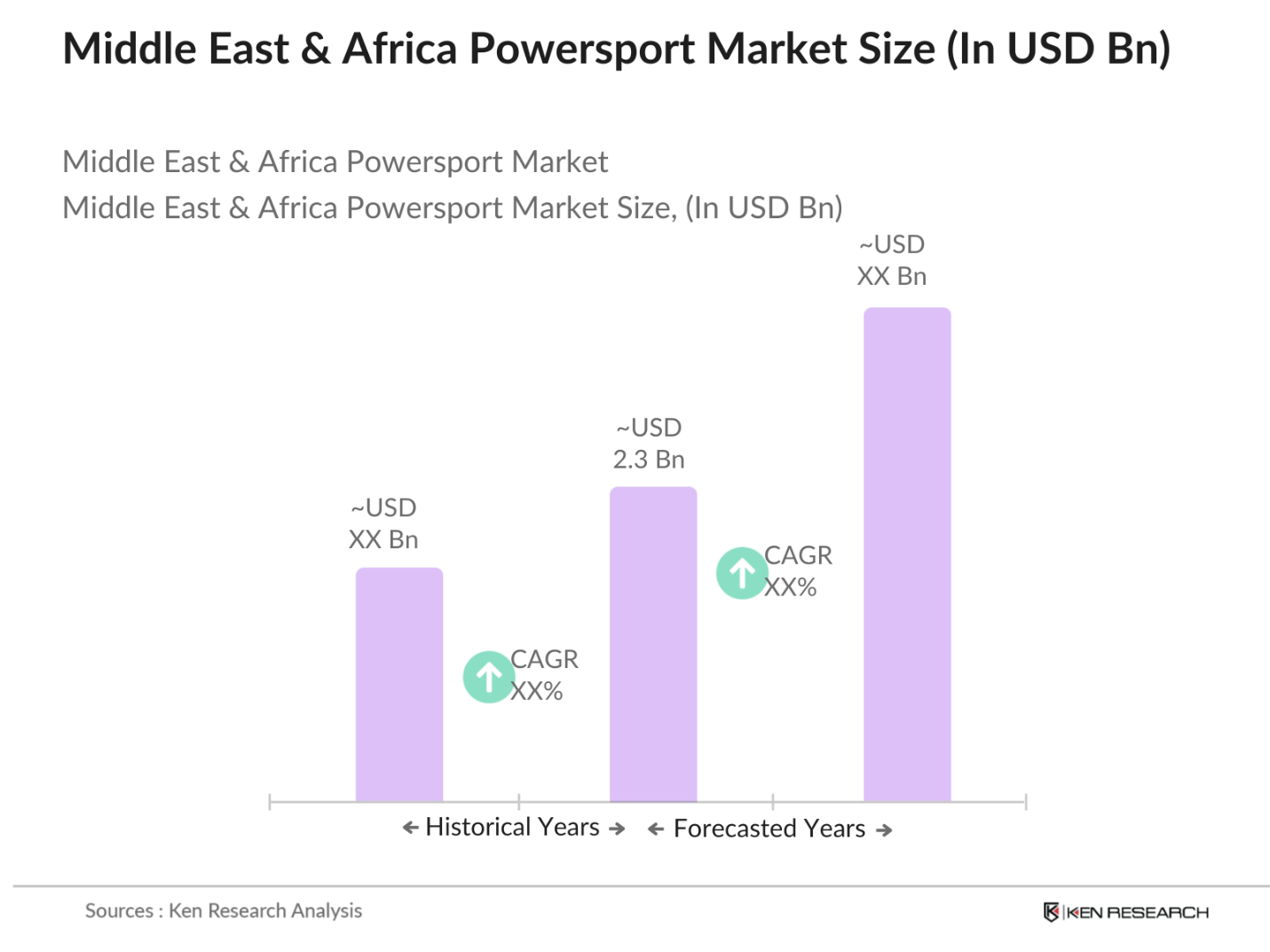
- The Middle East & Africa powersport market is valued at approximately USD 2.3 billion, as per a five-year historical analysis. The market is primarily driven by the growing demand for recreational vehicles, increased disposable income, and government investments in motorsport activities. Additionally, the rise of adventure tourism in the region, particularly in Gulf Cooperation Council (GCC) countries, has significantly contributed to market growth. The expansion of infrastructure for outdoor sports, as well as growing consumer interest in off-road activities, also propels the market.
- The Gulf Cooperation Council (GCC) countries, especially the United Arab Emirates (UAE) and Saudi Arabia, dominate the Middle East & Africa powersport market due to their advanced motorsport infrastructure and government support for recreational activities. The UAE hosts several major motorsport events, including desert rallies and dune bashing, which have contributed to the popularity of powersport vehicles. Additionally, the favorable economic conditions and high purchasing power in these countries further drive the dominance of the powersport market in the region.
- Governments in the Middle East & Africa are increasingly enforcing stringent safety and emission standards to regulate the powersport market. The UAE implemented new emissions guidelines for off-road vehicles in 2023, aimed at reducing carbon emissions by 20%. Similarly, South Africa has strengthened its safety regulations for ATVs, requiring manufacturers to comply with more rigorous testing and certification standards. These regulations ensure that powersport vehicles meet international safety and environmental benchmarks, which, while increasing production costs, help drive market standardization.
Middle East & Africa Powersport Market Segmentation
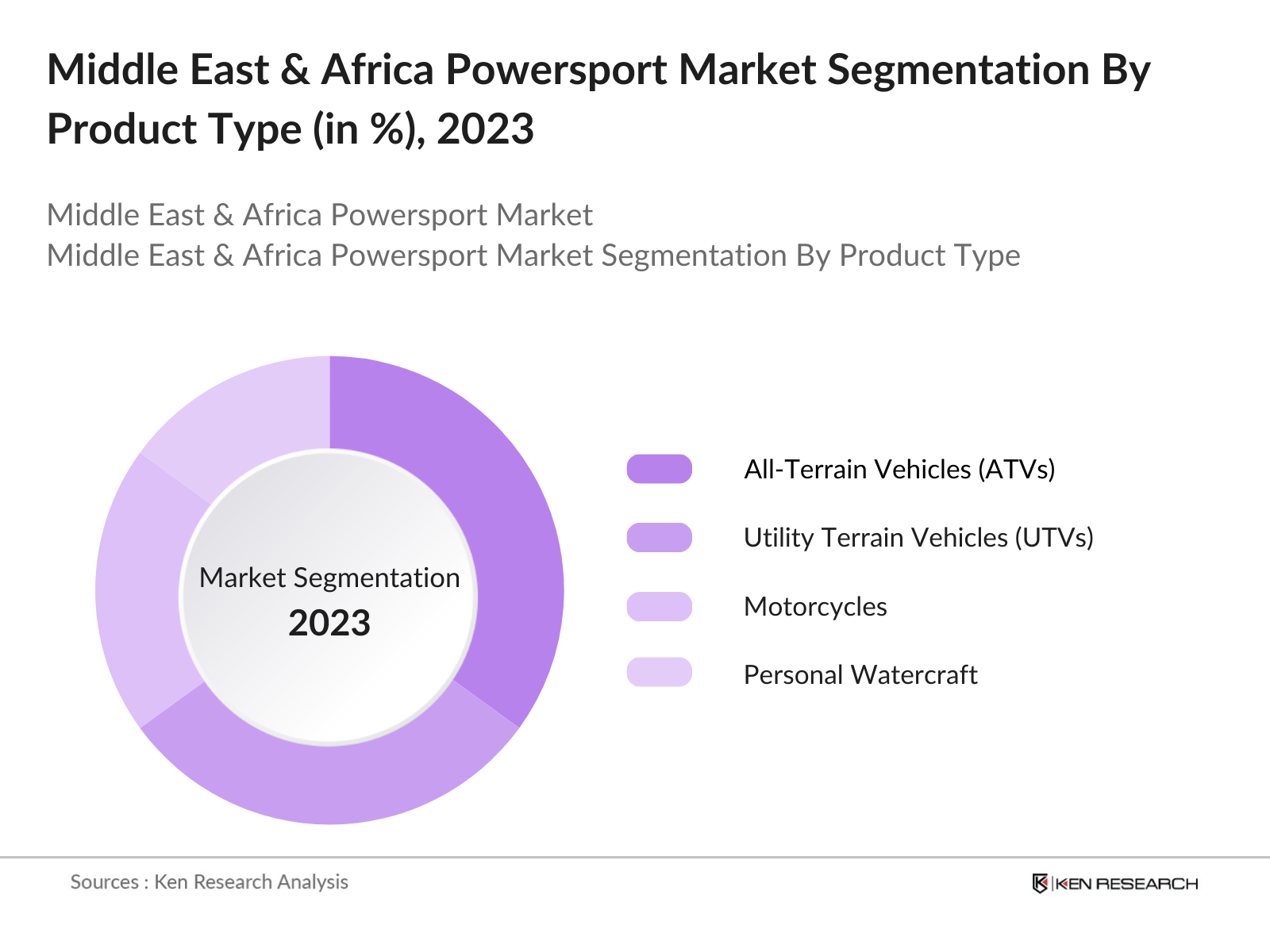
By Product Type: The Middle East & Africa powersport market is segmented by product type into all-terrain vehicles (ATVs), utility terrain vehicles (UTVs), motorcycles, personal watercraft, and snowmobiles. Among these, all-terrain vehicles (ATVs) hold the dominant market share. The preference for ATVs is driven by their versatility and suitability for off-road environments, making them popular for recreational and adventure activities. In countries like Saudi Arabia and the UAE, ATVs are frequently used for dune bashing and desert racing, further establishing their strong presence in the region's powersport market.
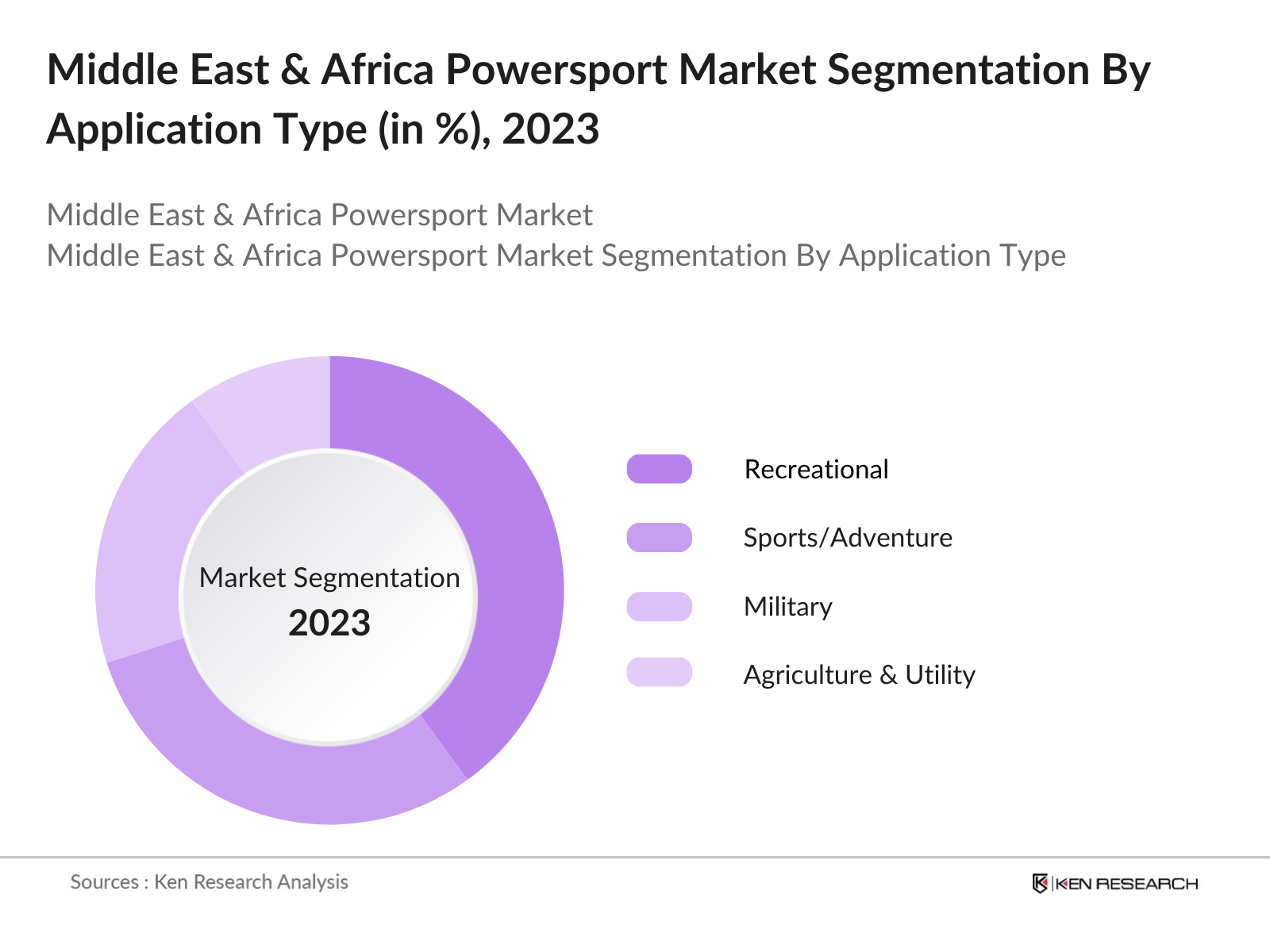
By Application: The powersport market in the Middle East & Africa is segmented by application into recreational, sports/adventure, military, agriculture & utility, and commercial. The recreational segment holds a significant market share due to the rising popularity of adventure tourism and outdoor sports. The regions diverse landscapes, ranging from deserts to coastal areas, provide ample opportunities for recreational activities involving powersport vehicles. The growing trend of adventure tours in countries like the UAE and South Africa has led to increased demand for powersports equipment in the recreational sector.
Middle East & Africa Powersport Market Competitive Landscape
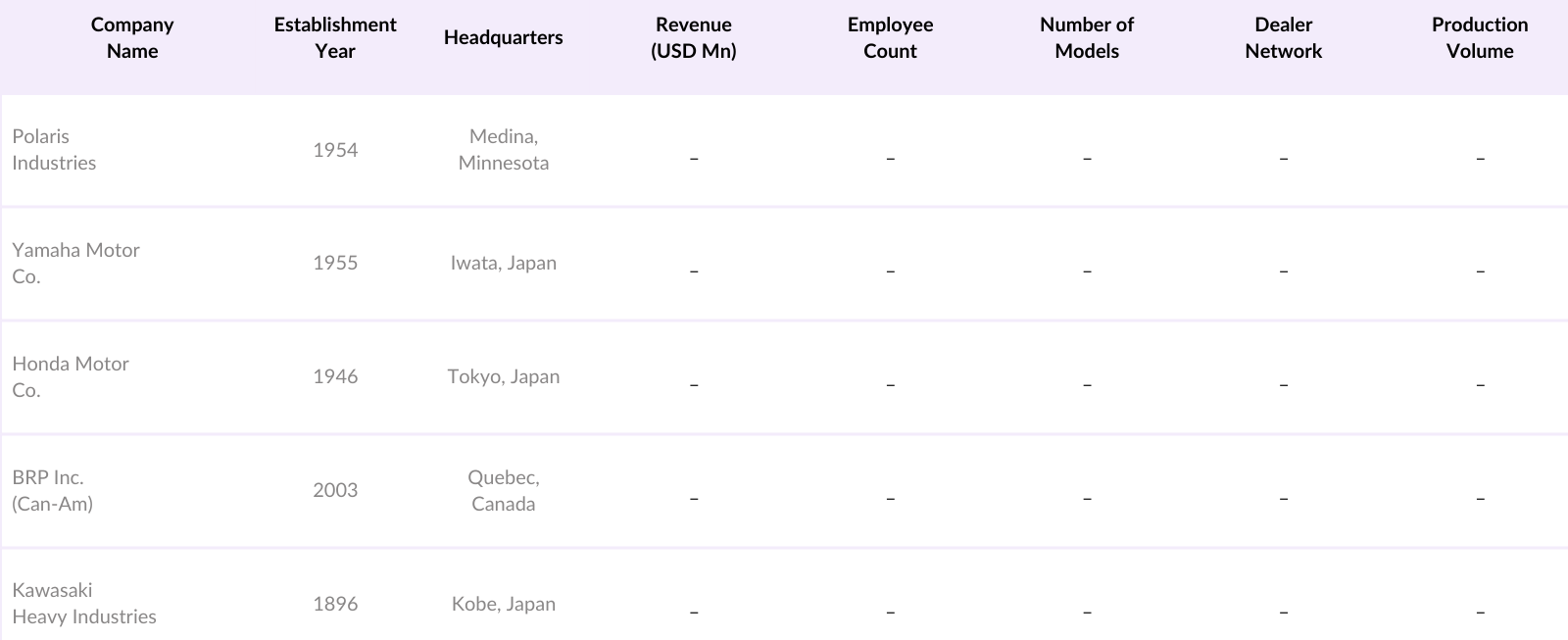
The Middle East & Africa powersport market is characterized by a combination of local manufacturers and international brands, creating a competitive environment. Companies like Polaris Industries, Yamaha Motor Co., and Honda Motor Co. dominate the market with their diverse product portfolios and established presence. Local brands, particularly in the GCC, are also emerging as competitors through the establishment of niche offerings targeted at regional preferences, such as vehicles suited for desert terrains. This consolidation reflects the high barriers to entry and the significant influence of key companies in shaping the market dynamics.
Middle East & Africa Powersport Industry Analysis
Growth Drivers
- Increase in Recreational Tourism: The surge in recreational tourism in the Middle East & Africa has directly fueled demand for powersport vehicles. Governments are increasingly focusing on promoting adventure tourism as part of their economic diversification strategies. In the UAE, adventure tourism generated an estimated 800,000 international visitors in 2023, significantly benefiting the powersports industry. Countries like South Africa have recorded over 1.3 million visitors engaging in motorsports and desert activities, driven by strong tourism campaigns. The World Bank highlights tourisms contribution to regional GDP, with travel and tourism generating $136 billion for the MENA region by 2023.
- Rising Disposable Income: Higher disposable incomes across the region are a significant growth driver for the powersports market. The World Bank reported that the average gross national income per capita in the UAE increased to $47,600 in 2023, reflecting greater spending power for luxury and recreational purchases such as ATVs and off-road vehicles. In Saudi Arabia, post-pandemic economic recovery has led to stronger consumer spending, with recreational vehicle purchases seeing steady growth. South Africa's middle class has also seen improved disposable income, which grew by $2.5 billion in 2023.
- Government Support for Motorsport Events: Several governments in the Middle East and Africa have actively supported motorsport events as part of their tourism and entertainment strategies. The UAE government, for example, invests significantly in promoting the Abu Dhabi Grand Prix, which attracted over 300,000 visitors in 2023. Additionally, Saudi Arabia has hosted multiple events, including the Dakar Rally, which saw 1,500 participants and generated $50 million in tourism-related revenue. This governmental backing enhances the profile of powersport activities and drives vehicle sales.
Market Challenges
- High Initial Cost of Vehicles: The high initial cost of powersport vehicles remains a significant barrier to market expansion. For example, the average price for an ATV in the Middle East is around $15,000 in 2023, a cost prohibitively high for much of the population. Even with rising disposable income, affordability continues to be an issue, limiting wider market penetration in countries like Kenya and Egypt, where GDP per capita remains under $7,000. This has resulted in relatively slower adoption rates compared to more affluent regions.
- Fluctuations in Oil Prices: Oil price fluctuations present a challenge for the fuel-dependent powersport market in the region. As of October 2024, global oil prices have hovered around $85 per barrel, a sharp increase from the previous year's $70. This price volatility directly affects operating costs for powersport vehicles, especially in off-road and desert environments where fuel consumption is higher. Oil-exporting nations like Saudi Arabia benefit from these high prices, but non-oil-producing African countries, such as Ethiopia, face higher fuel costs, affecting consumer spending on powersport vehicles.
Middle East & Africa Powersport Market Market Future Outlook
Over the next five years, the Middle East & Africa powersport market is expected to experience significant growth driven by increased government support for motorsport events, technological advancements in vehicle electrification, and a rise in consumer interest in adventure tourism. The market will see further diversification as electric and hybrid powersport vehicles are introduced, offering eco-friendly alternatives to traditional gasoline-powered models. Expansion into emerging markets within North Africa, coupled with strategic investments in infrastructure, will also contribute to the markets future growth.
Opportunities
- Emerging Markets in North Africa: North Africa represents a growing market for powersport vehicles, particularly in Egypt and Morocco, where motorsports are gaining popularity. The Moroccan government has invested $300 million in 2023 to promote desert rally events and adventure tourism. Egypt, with an estimated 500,000 motorsport enthusiasts, has also shown potential for increased vehicle sales. North African economies have demonstrated stable GDP growth, with Egypt registering a $400 billion GDP in 2023, which indicates growing economic capacity to sustain the powersport market.
- Technological Integration: Technological advancements in electric and hybrid powersport vehicles present substantial opportunities for market growth in the Middle East & Africa. By 2023, several manufacturers began introducing hybrid and electric models to the UAE and Saudi markets, catering to growing environmental concerns. Saudi Arabia has earmarked $5 billion in investments for clean energy initiatives, which directly supports the development and adoption of electric vehicles. This trend aligns with the regions increasing focus on sustainable energy, making it a viable future market for electric powersport vehicles.
Scope of the Report
|
Product Type |
All-Terrain Vehicles (ATVs) Utility Terrain Vehicles (UTVs) Snowmobiles Motorcycles Personal Watercraft |
|
Application |
Recreational Sports/Adventure Military Agriculture & Utility Commercial |
|
Propulsion Type |
Gasoline Electric/Hybrid Diesel |
|
End-User |
Individuals Rental Services Commercial Enterprises Government Agencies |
|
Region |
Gulf Cooperation Council (GCC) South Africa North Africa Sub-Saharan Africa Levant |
Products
Key Target Audience Organizations and Entities Who Can Benefit by Subscribing This Report:
Investors and venture capitalists
Government and regulatory bodies (Dubai Sports Council, Saudi Motorsport Federation)
Powersport vehicle manufacturing Companies
Rental service provider Companies
Adventure tourism operators
Military agencies (Middle East Defense Ministries)
Dealers and distributors of powersport vehicles
OEMs (Original Equipment Manufacturers)
Companies
Players Mentioned in the Report
Polaris Industries Inc.
Yamaha Motor Co., Ltd.
Honda Motor Co., Ltd.
BRP Inc. (Can-Am)
Kawasaki Heavy Industries
Arctic Cat Inc.
KTM AG
Segway Inc.
Suzuki Motor Corporation
Textron Inc.
Table of Contents
1. Middle East & Africa Powersport Market Overview
1.1. Definition and Scope
1.2. Market Taxonomy (ATVs, UTVs, Snowmobiles, Personal Watercraft, Motorcycles)
1.3. Market Growth Rate (Key Growth Metrics: Demand Growth, Technological Adoption)
1.4. Market Segmentation Overview
2. Middle East & Africa Powersport Market Size (In USD Mn)
2.1. Historical Market Size
2.2. Year-On-Year Growth Analysis
2.3. Key Market Developments and Milestones (Growth in Recreational Tourism, Government Investment in Motorsport)
3. Middle East & Africa Powersport Market Analysis
3.1. Growth Drivers
3.1.1. Increase in Recreational Tourism
3.1.2. Rising Disposable Income
3.1.3. Government Support for Motorsport Events
3.1.4. Infrastructure Development for Adventure Sports
3.2. Market Challenges
3.2.1. High Initial Cost of Vehicles
3.2.2. Fluctuations in Oil Prices (Fuel Dependency)
3.2.3. Limited Distribution Channels in Remote Areas
3.3. Opportunities
3.3.1. Emerging Markets in North Africa
3.3.2. Technological Integration (Electric and Hybrid Powersports Vehicles)
3.3.3. Expansion of Powersport Leasing Services
3.4. Trends
3.4.1. Adoption of Electric Powersports Vehicles
3.4.2. Rise of Motorsports Events (Desert Racing, Rally Cross)
3.4.3. Integration with IoT and Smart Control Systems
3.5. Government Regulations
3.5.1. Safety and Emission Standards
3.5.2. Public-Private Partnerships in Adventure Tourism Development
3.5.3. Import Tariff Regulations for Powersport Vehicles
3.6. SWOT Analysis
3.7. Stakeholder Ecosystem (Manufacturers, Distributors, Government Agencies)
3.8. Porters Five Forces
3.9. Competition Ecosystem
4. Middle East & Africa Powersport Market Segmentation
4.1. By Product Type (In Value %)
4.1.1. All-Terrain Vehicles (ATVs)
4.1.2. Utility Terrain Vehicles (UTVs)
4.1.3. Snowmobiles
4.1.4. Motorcycles
4.1.5. Personal Watercraft
4.2. By Application (In Value %)
4.2.1. Recreational
4.2.2. Sports/Adventure
4.2.3. Military
4.2.4. Agriculture & Utility
4.2.5. Commercial
4.3. By Propulsion Type (In Value %)
4.3.1. Gasoline
4.3.2. Electric/Hybrid
4.3.3. Diesel
4.4. By End-User (In Value %)
4.4.1. Individuals
4.4.2. Rental Services
4.4.3. Commercial Enterprises
4.4.4. Government Agencies
4.5. By Region (In Value %)
4.5.1. Gulf Cooperation Council (GCC)
4.5.2. South Africa
4.5.3. North Africa
4.5.4. Sub-Saharan Africa
4.5.5. Levant
5. Middle East & Africa Powersport Market Competitive Analysis
5.1. Detailed Profiles of Major Companies
5.1.1. Polaris Industries Inc.
5.1.2. BRP Inc.
5.1.3. Yamaha Motor Co., Ltd.
5.1.4. Honda Motor Co., Ltd.
5.1.5. Suzuki Motor Corporation
5.1.6. Arctic Cat Inc.
5.1.7. Kawasaki Heavy Industries, Ltd.
5.1.8. KTM AG
5.1.9. Segway Inc.
5.1.10. CF Moto
5.1.11. Textron Inc.
5.1.12. Triumph Motorcycles Ltd.
5.1.13. Hisun Motors
5.1.14. Can-Am (BRP)
5.1.15. Linhai Group
5.2. Cross Comparison Parameters (Headquarters, Revenue, Inception Year, Market Share, Employee Count, Number of Models, Dealer Networks, Global Presence)
5.3. Market Share Analysis
5.4. Strategic Initiatives
5.5. Mergers and Acquisitions
5.6. Investment Analysis
5.7. Venture Capital Funding
5.8. Government Grants and Incentives
5.9. Private Equity Investments
6. Middle East & Africa Powersport Market Regulatory Framework
6.1. Import and Export Regulations
6.2. Safety Standards and Certifications
6.3. Environmental Regulations
6.4. Compliance Requirements for Off-Road Vehicles
7. Middle East & Africa Powersport Future Market Size (In USD Mn)
7.1. Future Market Size Projections
7.2. Key Factors Driving Future Market Growth
8. Middle East & Africa Powersport Future Market Segmentation
8.1. By Product Type (In Value %)
8.2. By Application (In Value %)
8.3. By Propulsion Type (In Value %)
8.4. By End-User (In Value %)
8.5. By Region (In Value %)
9. Middle East & Africa Powersport Market Analysts Recommendations
9.1. Total Addressable Market (TAM), Serviceable Available Market (SAM), and Serviceable Obtainable Market (SOM) Analysis
9.2. Customer Cohort Analysis
9.3. Marketing and Distribution Strategies
9.4. White Space Opportunity Analysis
Disclaimer Contact UsResearch Methodology
Step 1: Identification of Key Variables
In this step, we mapped the major stakeholders in the Middle East & Africa powersport market through desk research using secondary databases. This involved identifying key market drivers, such as economic indicators and consumer behavior trends, which significantly influence the market.
Step 2: Market Analysis and Construction
We analyzed historical data for the Middle East & Africa powersport market to assess revenue generation, market penetration, and distribution networks. This phase also included evaluating service quality metrics to refine the market analysis.
Step 3: Hypothesis Validation and Expert Consultation
Market assumptions were tested through interviews with industry professionals from powersport vehicle manufacturers. These discussions provided insights into production volumes, competitive positioning, and growth strategies.
Step 4: Research Synthesis and Final Output
The final report was synthesized by incorporating inputs from manufacturers, distributors, and government agencies. This allowed for a comprehensive and accurate analysis of the market, verified through both bottom-up and top-down approaches.
Frequently Asked Questions
1. How big is the Middle East & Africa powersport market?
The Middle East & Africa powersport market is valued at USD 2.3 billion, primarily driven by the increasing popularity of recreational vehicles and adventure tourism in the region.
2. What are the challenges in the Middle East & Africa powersport market?
Key challenges include fluctuating oil prices that affect vehicle fuel costs, limited distribution channels in remote areas, and high initial costs of purchasing powersport vehicles.
3. Who are the major players in the Middle East & Africa powersport market?
Leading companies include Polaris Industries, Yamaha Motor Co., Honda Motor Co., BRP Inc., and Kawasaki Heavy Industries, which dominate the market due to their diverse product portfolios and established distribution networks.
4. What are the growth drivers of the Middle East & Africa powersport market?
The market is driven by increasing disposable income, growing interest in adventure tourism, and government investments in motorsport events and infrastructure development for outdoor sports.
Why Buy From Us?

What makes us stand out is that our consultants follows Robust, Refine and Result (RRR) methodology. i.e. Robust for clear definitions, approaches and sanity checking, Refine for differentiating respondents facts and opinions and Result for presenting data with story

We have set a benchmark in the industry by offering our clients with syndicated and customized market research reports featuring coverage of entire market as well as meticulous research and analyst insights.

While we don't replace traditional research, we flip the method upside down. Our dual approach of Top Bottom & Bottom Top ensures quality deliverable by not just verifying company fundamentals but also looking at the sector and macroeconomic factors.

With one step in the future, our research team constantly tries to show you the bigger picture. We help with some of the tough questions you may encounter along the way: How is the industry positioned? Best marketing channel? KPI's of competitors? By aligning every element, we help maximize success.

Our report gives you instant access to the answers and sources that other companies might choose to hide. We elaborate each steps of research methodology we have used and showcase you the sample size to earn your trust.

If you need any support, we are here! We pride ourselves on universe strength, data quality, and quick, friendly, and professional service.