















Middle East & Africa Wound Dressing Market Outlook to 2030
Region:Middle East
Author(s):Abhinav kumar
Product Code:KROD8137
November 2024
88
About the Report
Middle East & Africa Wound Dressing Market Overview
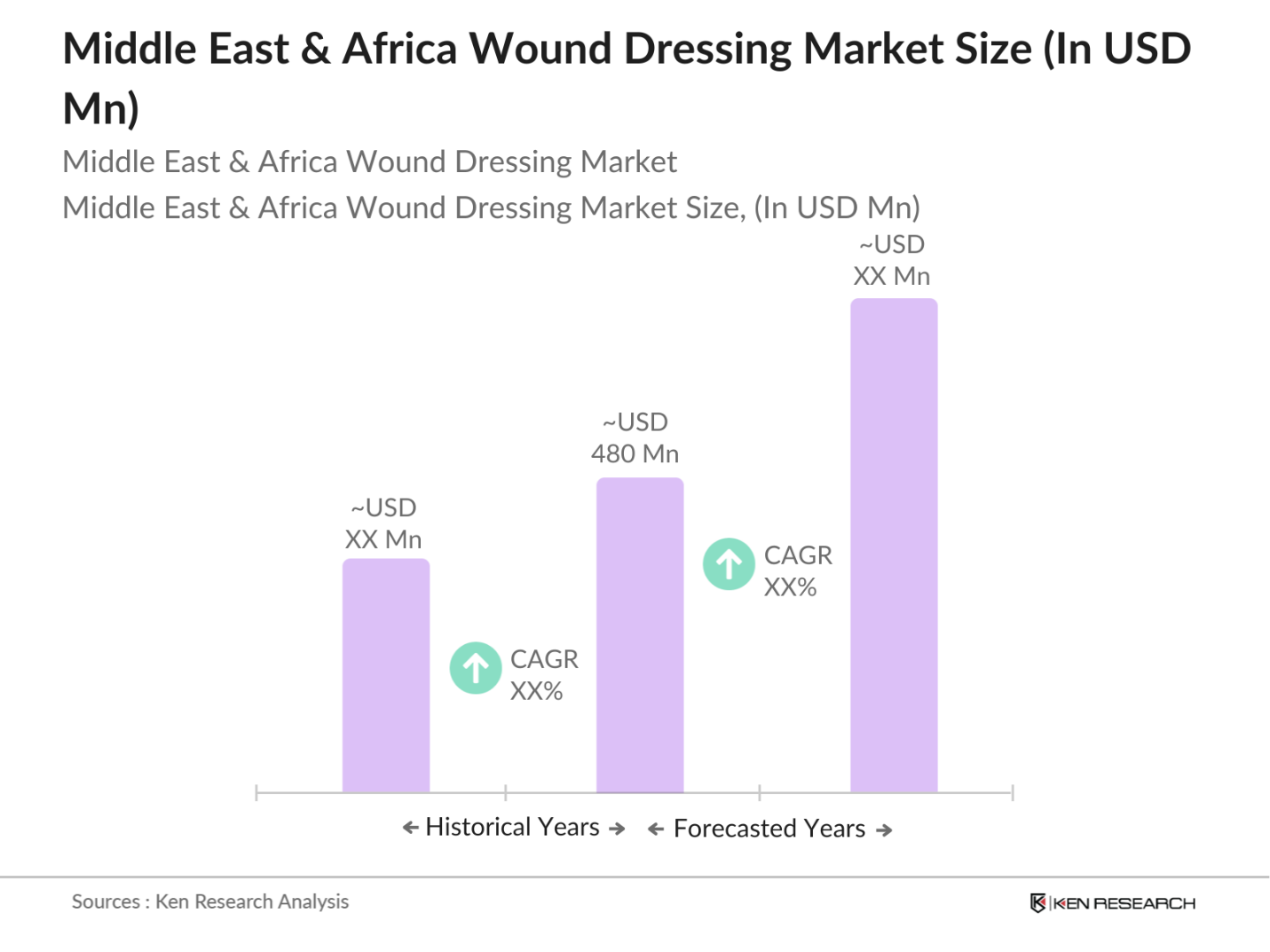
- The Middle East & Africa wound dressing market is valued at approximately USD 480 million, based on a detailed five-year historical analysis. The growth in the market is predominantly driven by the rising prevalence of chronic wounds, including diabetic ulcers, pressure sores, and post-surgical wounds. Furthermore, advancements in healthcare infrastructure and increased spending on healthcare services have contributed to the market's expansion. Additionally, there is growing awareness about advanced wound care solutions, which has led to a shift from traditional dressings to more sophisticated options like foam, hydrocolloid, and alginate dressings.
- Key regions driving this market include Saudi Arabia, the United Arab Emirates (UAE), and South Africa. Saudi Arabia and the UAE dominate the market due to their advanced healthcare systems, high per capita healthcare expenditure, and a growing elderly population prone to chronic wounds. In South Africa, the expansion of healthcare infrastructure, coupled with increased healthcare access in urban areas, has also significantly contributed to the markets dominance in this region.
- Healthcare policies across the Middle East & Africa, particularly in countries like the UAE, Saudi Arabia, and South Africa, are evolving to promote better wound care management. In 2024, Saudi Arabia introduced new healthcare guidelines aimed at improving wound care for patients with diabetes, allocating USD 500 million toward this initiative. These policies emphasize the use of advanced dressings in treating chronic wounds and are driving the demand for modern wound care products in both public and private healthcare settings.
Middle East & Africa Wound Dressing Market Segmentation
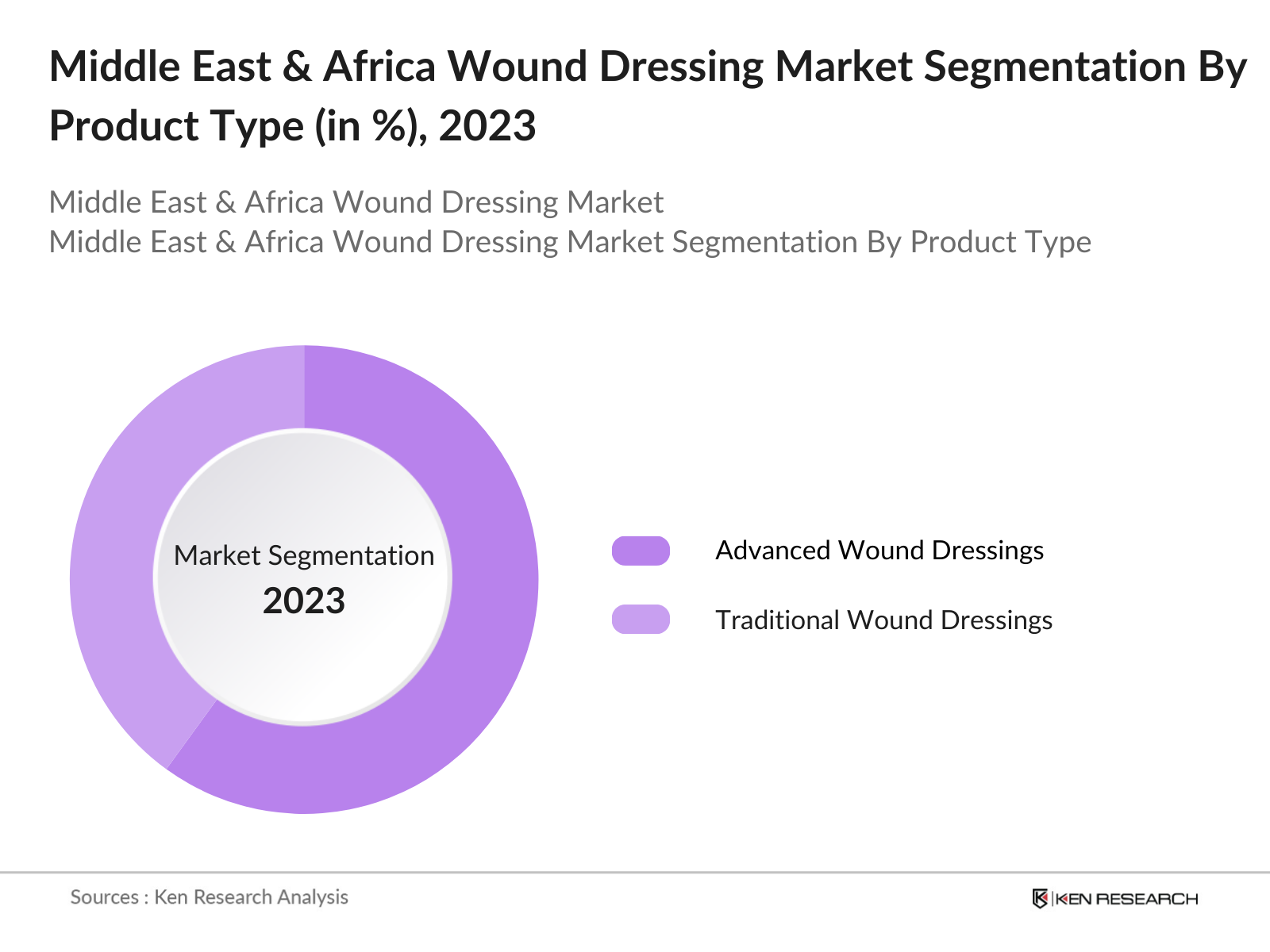
By Product Type: The Middle East & Africa wound dressing market is segmented by product type into Traditional Wound Dressings and Advanced Wound Dressings. Recently, advanced wound dressings, particularly foam dressings, have captured a dominant market share under this segmentation. Foam dressings are favored due to their superior moisture-retentive properties, which enhance healing for chronic wounds like ulcers and post-surgical wounds. Additionally, the adoption of antimicrobial foam dressings has risen, as they offer enhanced protection against infections, a critical factor in healthcare settings, especially in regions with humid climates.
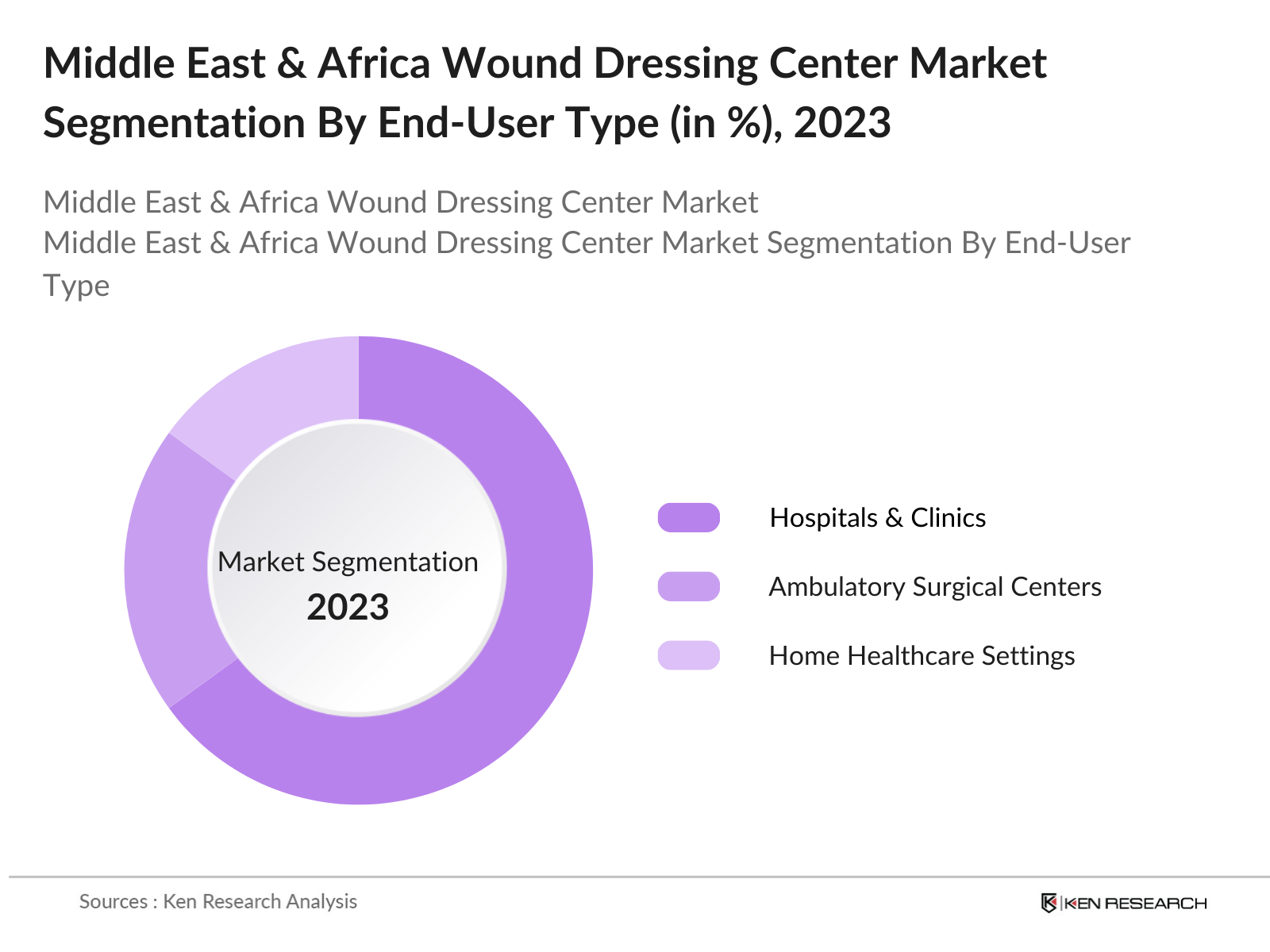
By End User: The market is segmented into Hospitals & Clinics, Ambulatory Surgical Centers, and Home Healthcare Settings. Hospitals and clinics hold the largest market share due to the increasing number of surgical procedures and the high prevalence of chronic diseases requiring long-term wound care. Hospitals typically invest in advanced wound care products to ensure faster patient recovery and reduce hospital stay durations. Moreover, the rise in the number of specialized wound care centers within hospitals has further fueled the dominance of this sub-segment.
Middle East & Africa Wound Dressing Market Competitive Landscape
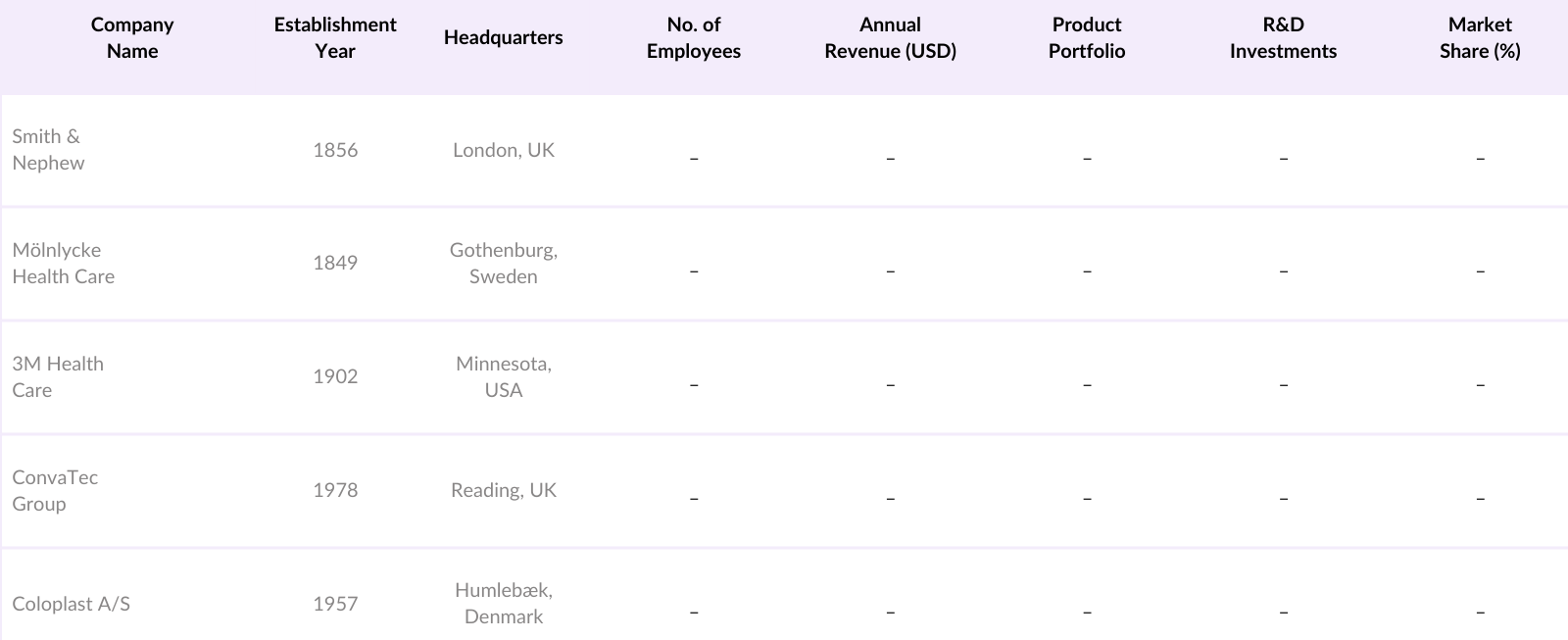
The Middle East & Africa wound dressing market is dominated by key global players and a few regional players. The competition is consolidated, with major companies holding significant market influence due to their extensive product portfolios and established distribution channels. The markets competitive landscape is also characterized by frequent product innovations, particularly in the advanced wound care segment.
Middle East & Africa Wound Dressing Industry Analysis
Growth Drivers
- Increased Prevalence of Chronic Wounds: The Middle East & Africa has seen a significant rise in the prevalence of chronic wounds, such as diabetic ulcers and pressure sores, especially with the increasing number of diabetes cases in countries like Saudi Arabia and Egypt. According to the World Health Organization, over 42 million people are affected by diabetes in the region, which has been a major factor behind the growing demand for wound care. This has led to an increased need for advanced wound dressing products that can manage chronic wounds effectively. Chronic wound cases are expected to increase further, driving the demand for wound dressings.
- Expansion of Healthcare Infrastructure: The healthcare infrastructure across the Middle East & Africa is expanding rapidly, particularly in regions such as the Gulf Cooperation Council (GCC) countries and South Africa. Governments in countries like the UAE are investing heavily in upgrading healthcare facilities. The UAEs healthcare budget allocation for 2024 stands at USD 4.3 billion, which is set to improve access to wound care management services, including advanced wound dressings. This increased investment in healthcare systems has positively impacted the wound care sector, providing improved accessibility and availability of modern wound care products
- Rising Geriatric Population: The Middle East & Africa region is experiencing a rise in the geriatric population, particularly in countries like South Africa, Morocco, and Egypt, where the number of people aged 65 and older has increased by 2 million since 2020. According to the United Nations, by 2024, the population aged 65 and above will exceed 17 million across the region. This aging population is more susceptible to chronic conditions that lead to wounds, such as diabetic ulcers and pressure sores, leading to increased demand for effective wound care solutions and advanced dressings.
Market Challenges
- High Costs of Advanced Wound Dressings: The cost of advanced wound dressings, such as bioactive and antimicrobial dressings, remains a significant challenge in the region. In countries like Kenya and Nigeria, where healthcare systems are predominantly self-funded, the high price of such products limits their accessibility to low-income populations. A standard antimicrobial dressing in Nigeria can cost up to USD 50, making it unaffordable for many patients. This financial burden hinders the widespread adoption of advanced wound care products in low-resource settings across the region.
- Limited Access to Healthcare in Rural Areas: Access to healthcare services, including wound care, remains a critical issue in many rural areas of the Middle East & Africa. Approximately 60% of the population in sub-Saharan Africa lives in rural regions, where healthcare infrastructure is underdeveloped. For example, in Ethiopia, rural healthcare access is limited, with one doctor serving every 10,000 people. This lack of access significantly restricts the availability of proper wound care treatments and advanced wound dressing products, particularly in remote areas where basic healthcare services are already scarce.
Middle East & Africa Wound Dressing Future Outlook
The Middle East & Africa wound dressing market is expected to experience steady growth over the next five years. The market expansion will be driven by rising demand for advanced wound care products, increasing healthcare access in rural areas, and the regions growing elderly population. Additionally, advancements in wound care technologies, such as the development of bioactive dressings and negative pressure wound therapy (NPWT) systems, are likely to enhance the markets growth trajectory. The ongoing investments in healthcare infrastructure by governments across the region are also expected to further boost market expansion.
Opportunities
- Technological Advancements in Wound Care Products: The increasing adoption of cutting-edge technologies such as bioactive dressings and nanotechnology in wound care presents substantial opportunities in the region. Researchers in South Africa have been developing nanotechnology-based antimicrobial dressings to improve healing times for chronic wounds. Furthermore, the adoption of 3D printing technology for customized wound care solutions is growing, with Dubai Healthcare City investing USD 50 million in research for personalized medical devices, including wound dressings. These technological advancements are expected to revolutionize the wound care market, offering more effective treatment options.
- Increasing Demand for Advanced Dressings: The demand for advanced wound care dressings, such as foam and hydrocolloid dressings, is rising across the region, particularly in the UAE and Saudi Arabia. The UAE has witnessed a growing number of patients requiring post-surgical wound care, increasing the use of these advanced solutions in hospitals. In 2024, the number of surgical procedures in the UAE exceeded 750,000, driving the demand for high-quality wound care products. This trend indicates an increasing shift toward advanced dressings that offer better patient outcomes and quicker healing.
Scope of the Report
|
By Type |
Traditional Wound Dressings Advanced Wound Dressings |
|
By Application |
Surgical Wounds Ulcers Burns Traumatic Wounds |
|
By End User |
Hospitals & Clinics Ambulatory Surgical Centers Homecare |
|
By Distribution Channel |
Hospital Pharmacies Retail Pharmacies Online Platforms |
|
By Region |
GCC Countries North Africa Sub-Saharan Africa |
Products
Key Target Audience Organizations and Entities Who Can Benefit by Subscribing This Report:
Investor and Venture Capitalist Firms
Government and Regulatory Bodies (e.g., Saudi Food and Drug Authority, UAE Ministry of Health and Prevention)
Hospitals and Healthcare Provider Companies
Wound Care Companies
Home Healthcare Service Provider Industries
Pharmaceutical Distributor Companies
Medical Device Manufacturing Industries
Insurance Companies
Companies
Players Mentioned in the Report
Smith & Nephew
Mlnlycke Health Care
3M Health Care
ConvaTec Group
Coloplast A/S
Paul Hartmann AG
Medline Industries
B. Braun Melsungen AG
Cardinal Health
Integra LifeSciences
Table of Contents
1. Middle East & Africa Wound Dressing Market Overview
1.1. Definition and Scope
1.2. Market Taxonomy
1.3. Market Dynamics Overview
1.4. Market Segmentation Overview
2. Middle East & Africa Wound Dressing Market Size (In USD Mn)
2.1. Historical Market Size
2.2. Growth Analysis (In %)
2.3. Key Market Developments and Milestones
2.4. Impact of Healthcare Expenditure on Market
3. Middle East & Africa Wound Dressing Market Analysis
3.1. Growth Drivers
3.1.1. Increased Prevalence of Chronic Wounds
3.1.2. Expansion of Healthcare Infrastructure
3.1.3. Rising Geriatric Population
3.1.4. Government Initiatives on Wound Care
3.2. Market Challenges
3.2.1. High Costs of Advanced Wound Dressings
3.2.2. Limited Access to Healthcare in Rural Areas
3.2.3. Stringent Regulatory Requirements
3.3. Opportunities
3.3.1. Technological Advancements in Wound Care Products
3.3.2. Increasing Demand for Advanced Dressings
3.3.3. Growth of Home Healthcare Services
3.4. Trends
3.4.1. Shift from Traditional to Advanced Dressings
3.4.2. Increased Usage of Antimicrobial Dressings
3.4.3. Adoption of E-Health Platforms for Wound Care Management
3.5. Government Regulations
3.5.1. Regional Healthcare Policies
3.5.2. Licensing and Compliance Requirements
3.5.3. Public-Private Collaborations in Wound Care
3.6. SWOT Analysis
3.7. Stakeholder Ecosystem Analysis
3.8. Porters Five Forces Analysis
3.9. Competitive Ecosystem Analysis
4. Middle East & Africa Wound Dressing Market Segmentation
4.1. By Type (In Value %)
4.1.1. Traditional Wound Dressings
4.1.2. Advanced Wound Dressings
4.1.3. Foam Dressings
4.1.4. Hydrocolloids
4.1.5. Hydrogels
4.1.6. Alginate Dressings
4.1.7. Collagen Dressings
4.2. By Application (In Value %)
4.2.1. Surgical Wounds
4.2.2. Ulcers (Pressure Ulcers, Diabetic Ulcers)
4.2.3. Burns
4.2.4. Traumatic Wounds
4.3. By End User (In Value %)
4.3.1. Hospitals & Clinics
4.3.2. Ambulatory Surgical Centers
4.3.3. Home Healthcare Settings
4.4. By Distribution Channel (In Value %)
4.4.1. Hospital Pharmacies
4.4.2. Retail Pharmacies
4.4.3. Online Platforms
4.5. By Region (In Value %)
4.5.1. Gulf Cooperation Council (GCC) Countries
4.5.2. North Africa
4.5.3. Sub-Saharan Africa
5. Middle East & Africa Wound Dressing Market Competitive Analysis
5.1. Detailed Profiles of Major Competitors
5.1.1. Smith & Nephew
5.1.2. Mlnlycke Health Care
5.1.3. 3M Health Care
5.1.4. ConvaTec Group
5.1.5. Coloplast A/S
5.1.6. Medline Industries
5.1.7. Paul Hartmann AG
5.1.8. B. Braun Melsungen AG
5.1.9. Cardinal Health
5.1.10. Integra LifeSciences
5.1.11. Acelity L.P. Inc.
5.1.12. BSN Medical
5.1.13. Hollister Incorporated
5.1.14. Derma Sciences Inc.
5.1.15. Lohmann & Rauscher GmbH & Co. KG
5.2. Cross Comparison Parameters (No. of Employees, Headquarters, Revenue, Market Share, Product Offerings, Manufacturing Facilities, R&D Investments, Distribution Networks)
5.3. Market Share Analysis
5.4. Strategic Initiatives by Competitors
5.5. Mergers and Acquisitions
5.6. Investment and Partnership Analysis
5.7. Venture Capital and Private Equity Funding
6. Middle East & Africa Wound Dressing Market Regulatory Framework
6.1. Healthcare Regulations
6.2. Compliance and Certification Processes
6.3. Market Entry Barriers for New Entrants
7. Middle East & Africa Wound Dressing Future Market Size (In USD Mn)
7.1. Projections for Market Growth
7.2. Key Factors Driving Future Market Expansion
8. Middle East & Africa Wound Dressing Future Market Segmentation
8.1. By Type (In Value %)
8.2. By Application (In Value %)
8.3. By End User (In Value %)
8.4. By Distribution Channel (In Value %)
8.5. By Region (In Value %)
9. Middle East & Africa Wound Dressing Market Analysts Recommendations
9.1. Total Addressable Market (TAM) Analysis
9.2. Customer Cohort Analysis
9.3. Marketing Strategies for Regional Expansion
9.4. White Space and Innovation Opportunities
Disclaimer Contact UsResearch Methodology
Step 1: Identification of Key Variables
The initial phase of research involves mapping out the ecosystem of the Middle East & Africa wound dressing market. This is achieved through extensive desk research using proprietary and secondary databases to identify the major stakeholders. The primary goal is to highlight the variables driving the market, such as product types, end users, and regional factors.
Step 2: Market Analysis and Construction
In this step, we assess historical data for the wound dressing market, focusing on market penetration rates and regional differences. Data related to healthcare expenditure and patient demographics are compiled to evaluate the current market landscape and revenue generation.
Step 3: Hypothesis Validation and Expert Consultation
To validate the market hypotheses, we conduct interviews with industry experts and stakeholders across the value chain. These interviews provide insights into emerging trends, competitive dynamics, and operational challenges, refining our understanding of the market.
Step 4: Research Synthesis and Final Output
The final phase involves synthesizing data from primary and secondary sources. This ensures a comprehensive and accurate analysis, which is further cross-referenced with feedback from key industry players. This approach ensures the final report offers validated, data-backed insights into the market.
Frequently Asked Questions
01. How big is the Middle East & Africa Wound Dressing Market?
The Middle East & Africa wound dressing market is valued at USD 480 million. The market is primarily driven by increasing cases of chronic wounds and a growing geriatric population requiring advanced wound care solutions.
02. What are the challenges in the Middle East & Africa Wound Dressing Market?
Key challenges include high costs associated with advanced wound care products and limited access to healthcare services in remote and rural areas. Regulatory hurdles also pose challenges for market entry.
03. Who are the major players in the Middle East & Africa Wound Dressing Market?
The major players in the market include Smith & Nephew, Mlnlycke Health Care, 3M Health Care, ConvaTec Group, and Coloplast A/S. These companies dominate the market due to their strong distribution networks and product innovation.
04. What are the growth drivers of the Middle East & Africa Wound Dressing Market?
The market is driven by increasing prevalence of chronic wounds, rising healthcare expenditures, and technological advancements in wound care. The growing demand for advanced dressings, such as foam and antimicrobial dressings, further fuels market growth.
Why Buy From Us?

What makes us stand out is that our consultants follows Robust, Refine and Result (RRR) methodology. i.e. Robust for clear definitions, approaches and sanity checking, Refine for differentiating respondents facts and opinions and Result for presenting data with story

We have set a benchmark in the industry by offering our clients with syndicated and customized market research reports featuring coverage of entire market as well as meticulous research and analyst insights.

While we don't replace traditional research, we flip the method upside down. Our dual approach of Top Bottom & Bottom Top ensures quality deliverable by not just verifying company fundamentals but also looking at the sector and macroeconomic factors.

With one step in the future, our research team constantly tries to show you the bigger picture. We help with some of the tough questions you may encounter along the way: How is the industry positioned? Best marketing channel? KPI's of competitors? By aligning every element, we help maximize success.

Our report gives you instant access to the answers and sources that other companies might choose to hide. We elaborate each steps of research methodology we have used and showcase you the sample size to earn your trust.

If you need any support, we are here! We pride ourselves on universe strength, data quality, and quick, friendly, and professional service.