
Middle East And Africa Aquafeed Market Outlook to 2030
Region:Middle East
Author(s):Naman Rohilla
Product Code:KROD3137
November 2024
81
About the Report
Middle East And Africa Aquafeed Market Overview
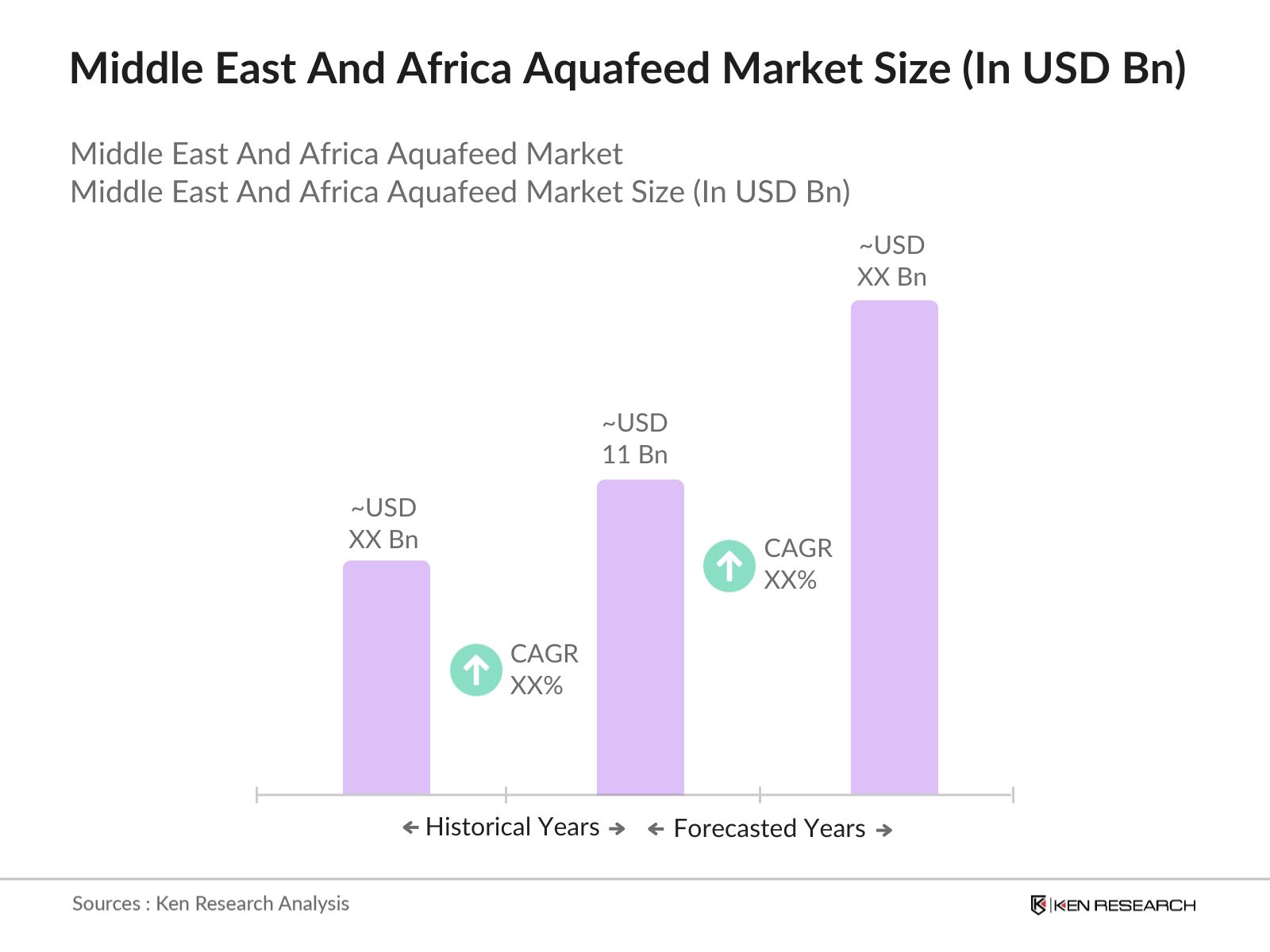
- The Middle East And Africa Aquafeed Market is valued at USD 11 billion, based on a five-year historical analysis. The market is driven by the rapid expansion of aquaculture across the region, particularly in countries like Egypt and Saudi Arabia. Increasing demand for fish and seafood, driven by population growth and the rising preference for protein-rich diets, has boosted aquafeed consumption. Technological advancements in feed composition and feed efficiency are also contributing to market growth.
- Egypt and Saudi Arabia dominate the MEA aquafeed market due to their large-scale aquaculture operations. Egypt, with its vast Nile Delta and agricultural base, has become a major player in the fish farming industry. Saudi Arabia, on the other hand, has seen government support and investments in aquaculture as part of its Vision 2030 initiative, aimed at diversifying the economy. Both countries benefit from favorable environmental conditions and growing domestic demand for seafood products.
- Marine protection policies aimed at conserving natural fish stocks are shaping the aquaculture industry in the MEA region. South Africa's 2023 "Marine Biodiversity Conservation" initiative, for example, imposes stricter regulations on fishing and encourages the development of sustainable aquaculture to alleviate pressure on wild fish stocks. These policies are creating opportunities for aquafeed manufacturers to innovate and provide more sustainable feed solutions that align with environmental conservation goals while supporting the growth of the aquaculture sector.
Middle East And Africa Aquafeed Market Segmentation
The Middle East and Africa Aquafeed Market is segmented by ingredient type, species, form, application, and geographical region.
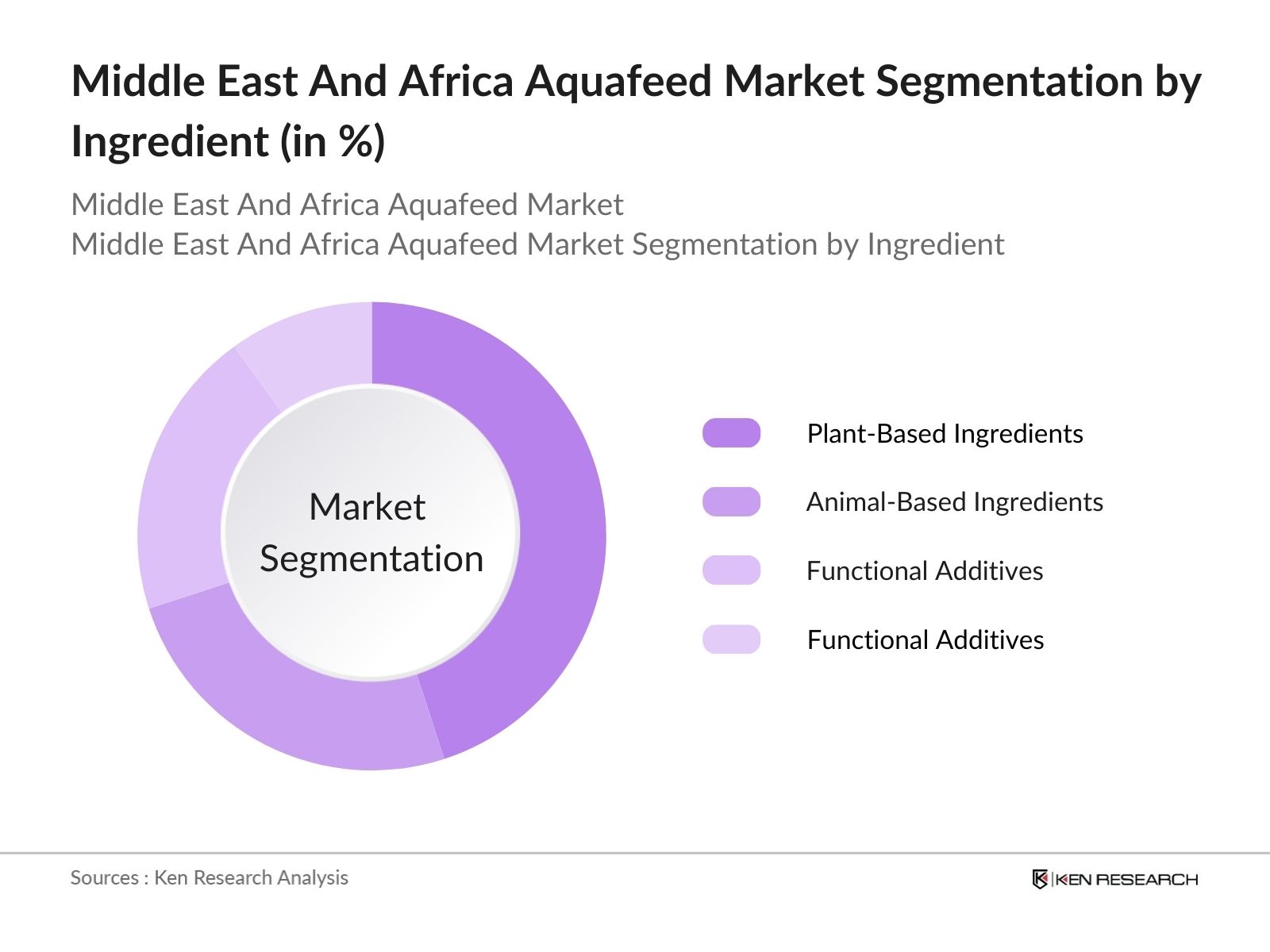
By Ingredient Type: The MEA aquafeed market is segmented by ingredient type into plant-based ingredients, animal-based ingredients, marine-derived ingredients, and functional additives. Plant-based ingredients currently dominate the market due to their lower cost and availability, especially in regions with strong agricultural sectors like Egypt and Tunisia. These ingredients provide essential nutrients at a reduced cost, which is crucial for keeping aquafeed prices competitive. Additionally, plant-based feeds contribute to sustainability efforts by reducing the reliance on animal-based proteins, which have faced scrutiny for their environmental impact.
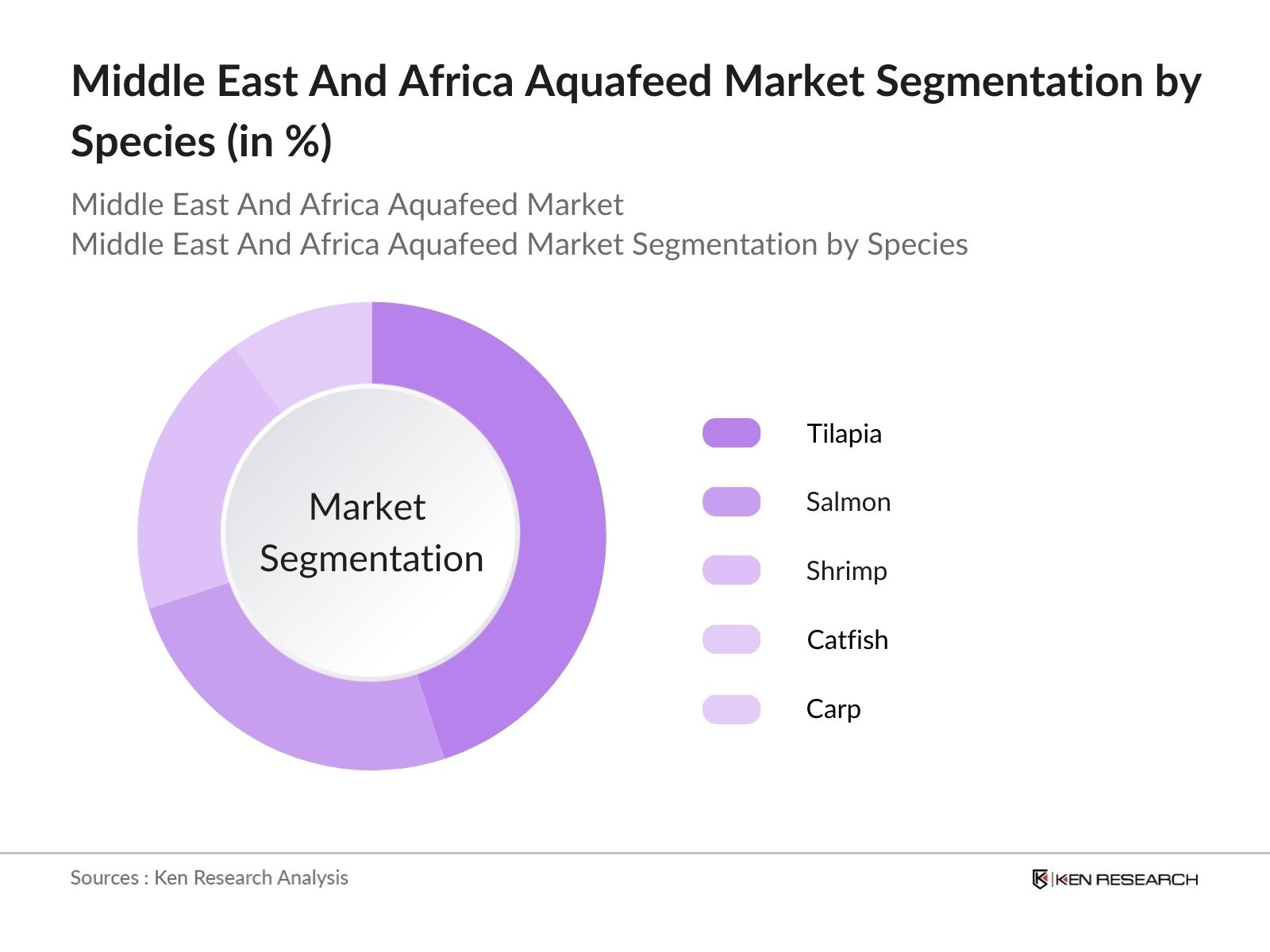
By Species: The MEA aquafeed market is also segmented by species into tilapia, salmon, shrimp, catfish, and carp. Tilapia holds the largest market share, driven by its adaptability to different water conditions and its popularity among consumers for being an affordable, protein-rich fish. The ease of breeding and fast growth rates also contributes to its dominance in the aquafeed market. Shrimp is another key segment, especially in countries like Saudi Arabia and Egypt, where government support for shrimp farming has been strong.
Middle East and Africa Aquafeed Market Competitive Landscape
The MEA aquafeed market is dominated by a mix of international and regional players. These companies have established strong supply chains and partnerships with local aquaculture farms to strengthen their market presence. The consolidation in the industry highlights the influence of these key companies.
|
Company Name |
Established |
Headquarters |
R&D Investment |
Global Presence |
Product Diversification |
Sustainability Initiatives |
Strategic Partnerships |
Certifications |
|
Nutreco N.V. |
1899 |
Netherlands |
- |
- |
- |
- |
- |
- |
|
Cargill Incorporated |
1865 |
United States |
- |
- |
- |
- |
- |
- |
|
Biomar Group |
1962 |
Denmark |
- |
- |
- |
- |
- |
- |
|
Aller Aqua Group |
1963 |
Denmark |
- |
- |
- |
- |
- |
- |
|
Skretting |
1899 |
Norway |
- |
- |
- |
- |
- |
- |
Middle East And Africa Aquafeed Market Analysis
Middle East And Africa Aquafeed Market Growth Drivers:
- Increase in Aquaculture Production: Aquaculture production in the MEA region has seen growth, with Egypt leading the sector at over 1.5 million metric tons annually by 2023, according to the Food and Agriculture Organization (FAO). This increase is driven by government support and increasing demand for fish-based proteins. The total fish production in Africa exceeded 12 million tons in 2022, a substantial portion of which came from aquaculture. Key regions such as Morocco, Nigeria, and Kenya are also witnessing rapid expansion in this sector, directly contributing to the rising demand for aquafeed.
- Rising Demand for Fish-Based Protein: In 2023, the per capita fish consumption in the MEA region was estimated at 8.2 kg, with projections indicating an increase due to a growing middle class and population growth, particularly in Egypt and Nigeria. FAO data shows that nearly 35% of animal protein intake in parts of the MEA comes from fish, positioning fish as a staple in the regional diet. With the demand for high-quality, nutrient-rich food products rising, aquafeed production is essential for maintaining the supply of fish.
- Government Support and Subsidies: Governments across the MEA region, especially in Egypt and South Africa, have introduced subsidies for aquaculture operations and feed production. Egypt allocated $40 million in 2023 for aquaculture growth initiatives, focusing on improving infrastructure and feed quality to support small-scale fish farmers. Moreover, countries such as Morocco have set targets to boost aquaculture by 2030 under national strategic plans, indirectly increasing aquafeed demand. These policies are aimed at meeting the region's protein needs and alleviating food security concerns.
Middle East And Africa Aquafeed Market Challenges:
- High Feed Costs: One of the most substantial challenges in the MEA aquafeed market is the rising cost of raw materials used in feed production, particularly fishmeal and soybeans. According to FAO reports, the average price of fishmeal rose by 10% in 2023 due to increased demand and supply chain disruptions. With feed accounting for over 60% of aquaculture operational costs, price volatility directly impacts farmers' profitability. Alternative feed ingredients like insects are gaining traction, but the cost remains a limiting factor for widespread adoption.
- Volatile Raw Material Prices: Raw material price fluctuations continue to challenge the aquafeed industry, particularly due to geopolitical issues affecting the availability of fishmeal and soybean. In 2023, global soybean prices increased by 12%, driven by poor harvests in key producing regions. These rising input costs are a significant concern for MEA countries that rely heavily on imports for feed production. In Egypt, over 70% of aquafeed ingredients are imported, making local markets highly sensitive to global price changes, thus impacting overall feed production and availability.
Middle East And Africa Aquafeed Future Market Outlook
Over the next five years, the MEA aquafeed market is expected to experience growth, driven by continuous government support, increasing demand for seafood, and technological advancements in feed production. Expansion of sustainable and organic aquafeed options will also be a major growth area, as consumers and producers alike show greater interest in environmental impact. Furthermore, with growing investments in aquaculture infrastructure and operations, especially in Egypt and Saudi Arabia, the region is poised to increase its output of high-quality fish products, further driving demand for advanced aquafeed solutions.
Middle East And Africa Aquafeed Market Opportunities:
- Expansion of Sustainable and Organic Aquafeed: The global shift towards sustainability is creating opportunities for the growth of organic and eco-friendly aquafeed products in the MEA region. As of 2023, around 15% of aquafeed used in the region is sourced from sustainable ingredients, such as plant-based proteins and insect meals. With international markets increasingly demanding sustainably farmed fish, countries like South Africa and Egypt are working on expanding the use of certified sustainable feeds. This shift is expected to provide opportunities for new players and investments in the sustainable aquafeed market.
- Rise in Functional Ingredients Demand: Functional ingredients, such as probiotics, prebiotics, and amino acids, are becoming integral to aquafeed formulations in the MEA region, particularly to boost fish immunity and growth rates. By 2024, it is expected that nearly 20% of the aquafeed in Egypt will incorporate such functional ingredients, reflecting a rising demand for specialized, value-added feed. These additives help improve nutrient absorption and disease resistance in farmed fish, reducing mortality rates and enhancing overall productivity. This trend aligns with the region's need to optimize aquaculture operations amid rising feed costs.
Scope of the Report
|
By Ingredient Type |
Plant-Based Ingredients Animal-Based Ingredients Marine-Derived Ingredients Functional Additives (Vitamins, Minerals, Amino Acids) |
|
By Aquaculture Type |
Freshwater Aquaculture Marine Aquaculture Brackish Aquaculture |
|
By Form |
Pellets Crumbles Extruded Feed Powder |
|
By Species |
Tilapia Salmon Shrimp Catfish Carp |
|
By Region |
Middle East North Africa Sub-Saharan Africa |
Products
Table of Contents
1. MEA Aquafeed Market Overview
1.1. Definition and Scope
1.2. Market Taxonomy
1.3. Market Growth Rate (Annual Growth, CAGR)
1.4. Market Segmentation Overview
2. MEA Aquafeed Market Size (in USD Bn)
2.1. Historical Market Size (in USD Bn, Volume)
2.2. Year-on-Year Growth Analysis
2.3. Key Market Developments and Milestones
3. MEA Aquafeed Market Analysis
3.1. Growth Drivers
3.1.1. Increase in Aquaculture Production
3.1.2. Rising Demand for Fish-Based Protein
3.1.3. Government Support and Subsidies
3.1.4. Technological Advancements in Feed Composition
3.2. Market Challenges
3.2.1. High Feed Costs
3.2.2. Environmental Regulations
3.2.3. Volatile Raw Material Prices
3.3. Opportunities
3.3.1. Expansion of Sustainable and Organic Aquafeed
3.3.2. Rise in Functional Ingredients Demand
3.3.3. Growing Middle-Class Population in the MEA
3.4. Trends
3.4.1. Shift to Plant-Based Protein Sources
3.4.2. Use of Precision Nutrition in Aquafeed
3.4.3. Innovations in Extrusion Technology
3.5. Government Regulations
3.5.1. Feed Safety Standards
3.5.2. Aquaculture Expansion Plans
3.5.3. Marine Protection Policies
3.6. SWOT Analysis
3.7. Stakeholder Ecosystem (Aquaculture Producers, Feed Manufacturers, Distributors, Regulators)
3.8. Porters Five Forces
3.9. Competition Ecosystem
4. MEA Aquafeed Market Segmentation
4.1. By Ingredient Type (in Value and Volume)
4.1.1. Plant-Based Ingredients
4.1.2. Animal-Based Ingredients
4.1.3. Marine-Derived Ingredients
4.1.4. Functional Additives (Vitamins, Minerals, Amino Acids)
4.2. By Aquaculture Type (in Value and Volume)
4.2.1. Freshwater Aquaculture
4.2.2. Marine Aquaculture
4.2.3. Brackish Aquaculture
4.3. By Form (in Value and Volume)
4.3.1. Pellets
4.3.2. Crumbles
4.3.3. Extruded Feed
4.3.4. Powder
4.4. By Species (in Value and Volume)
4.4.1. Tilapia
4.4.2. Salmon
4.4.3. Shrimp
4.4.4. Catfish
4.4.5. Carp
4.5. By Region (in Value and Volume)
4.5.1. Middle East
4.5.2. North Africa
4.5.3. Sub-Saharan Africa
5. MEA Aquafeed Market Competitive Analysis
5.1. Detailed Profiles of Major Companies
5.1.1. Nutreco N.V.
5.1.2. Cargill Incorporated
5.1.3. Biomar Group
5.1.4. Aller Aqua Group
5.1.5. Skretting
5.1.6. Ridley Corporation
5.1.7. Alltech Inc.
5.1.8. ADM Animal Nutrition
5.1.9. Beneo Animal Nutrition
5.1.10. Dibaq Group
5.1.11. De Heus
5.1.12. EWOS
5.1.13. INVE Aquaculture
5.1.14. Zeigler Bros. Inc.
5.1.15. Uni-President Feed
5.2. Cross Comparison Parameters (Revenue, No. of Employees, Global Presence, R&D Spend, Product Portfolio, Sustainability Initiatives, Certifications, Partnerships)
5.3. Market Share Analysis
5.4. Strategic Initiatives
5.5. Mergers and Acquisitions
5.6. Investment Analysis
5.7. Venture Capital Funding
5.8. Government Grants
5.9. Private Equity Investments
6. MEA Aquafeed Market Regulatory Framework
6.1. Aquafeed Safety and Quality Standards
6.2. Compliance and Certification Requirements
6.3. Aquaculture Industry Regulations
7. MEA Aquafeed Future Market Size (in USD Bn)
7.1. Future Market Size Projections
7.2. Key Factors Driving Future Market Growth
8. MEA Aquafeed Future Market Segmentation
8.1. By Ingredient Type (in Value and Volume)
8.2. By Aquaculture Type (in Value and Volume)
8.3. By Form (in Value and Volume)
8.4. By Species (in Value and Volume)
8.5. By Region (in Value and Volume)
9. MEA Aquafeed Market Analysts Recommendations
9.1. TAM/SAM/SOM Analysis
9.2. Customer Cohort Analysis
9.3. Marketing and Expansion Initiatives
9.4. White Space Opportunity Analysis
Disclaimer Contact UsResearch Methodology
Step 1: Identification of Key Variables
In this initial phase, we construct an ecosystem map covering all key stakeholders in the MEA Aquafeed Market. The research includes identifying aquaculture producers, feed manufacturers, and regulatory bodies across the region to gather comprehensive data on market size, ingredients, and species demand.
Step 2: Market Analysis and Construction
This step involves collecting and analyzing historical data related to the MEA aquafeed market, including the penetration of different ingredient types and species demand. Secondary sources such as government reports and company filings are extensively used to validate the market figures.
Step 3: Hypothesis Validation and Expert Consultation
In this phase, market hypotheses regarding key growth drivers, challenges, and opportunities are validated through interviews with industry experts from leading aquafeed companies and aquaculture associations.
Step 4: Research Synthesis and Final Output
The final step synthesizes all collected data and industry insights to create a comprehensive report on the MEA Aquafeed Market. The findings are cross-verified with multiple stakeholders to ensure accuracy and relevance.
Frequently Asked Questions
01. How big is the MEA Aquafeed Market?
The MEA aquafeed market is valued at USD 11 billion, driven by growing demand for seafood and strong aquaculture initiatives in countries like Egypt and Saudi Arabia.
02. What are the key challenges in the MEA Aquafeed Market?
The MEA aquafeed market key challenges include high feed costs, fluctuating raw material prices, and the need to comply with strict environmental regulations. Producers also face increasing pressure to adopt sustainable practices.
03. Who are the major players in the MEA Aquafeed Market?
Leading players in the MEA aquafeed market include Nutreco N.V., Cargill Incorporated, Biomar Group, Aller Aqua Group, and Skretting. These companies are known for their innovation in feed technology and strong market presence.
04. What is driving the growth of the MEA Aquafeed Market?
The growth of the MEA aquafeed market is primarily driven by the expansion of aquaculture operations, increasing demand for protein-rich diets, and government support for sustainable fish farming practices.
Why Buy From Us?

What makes us stand out is that our consultants follows Robust, Refine and Result (RRR) methodology. i.e. Robust for clear definitions, approaches and sanity checking, Refine for differentiating respondents facts and opinions and Result for presenting data with story

We have set a benchmark in the industry by offering our clients with syndicated and customized market research reports featuring coverage of entire market as well as meticulous research and analyst insights.

While we don't replace traditional research, we flip the method upside down. Our dual approach of Top Bottom & Bottom Top ensures quality deliverable by not just verifying company fundamentals but also looking at the sector and macroeconomic factors.

With one step in the future, our research team constantly tries to show you the bigger picture. We help with some of the tough questions you may encounter along the way: How is the industry positioned? Best marketing channel? KPI's of competitors? By aligning every element, we help maximize success.

Our report gives you instant access to the answers and sources that other companies might choose to hide. We elaborate each steps of research methodology we have used and showcase you the sample size to earn your trust.

If you need any support, we are here! We pride ourselves on universe strength, data quality, and quick, friendly, and professional service.