
Middle East and Africa Hybrid Seeds Market Overview to 2030
Region:Middle East
Author(s):Yogita Sahu
Product Code:KROD1649
October 2024
99
About the Report
Middle East and Africa Hybrid Seeds Market Overview
- The Middle East and Africa Hybrid Seeds Market was valued at USD 3.9 billion in 2023. The market expansion is primarily driven by the increasing demand for high-yielding, disease-resistant crops, which is essential for improving food security in the region. The adoption of advanced agricultural practices and the growing awareness among farmers about the benefits of hybrid seeds are key factors driving market growth.
- Major players in this market include Syngenta AG, Bayer CropScience AG, Corteva Agriscience, East-West Seed, and Sakata Seed Corporation. These companies have established a strong presence in the region through extensive research and development, strategic partnerships, and a focus on offering high-quality seeds tailored to the specific needs of farmers in different MEA countries.
- Corteva Agriscience invests in Africa and the Middle East's seed treatment capabilitiesto improve agricultural productivity in the region.The company also partnered with AGRA to boost Ethiopia farmers' productivity by providing new, high-quality maize seeds and agronomic training.
- South Africa stands out as a leading market for hybrid seeds. The country's well-developed agricultural sector and the strong presence of multinational seed companies. The countrys favorable climate, coupled with government support for agricultural innovation, has made it a hub for hybrid seed development and adoption.
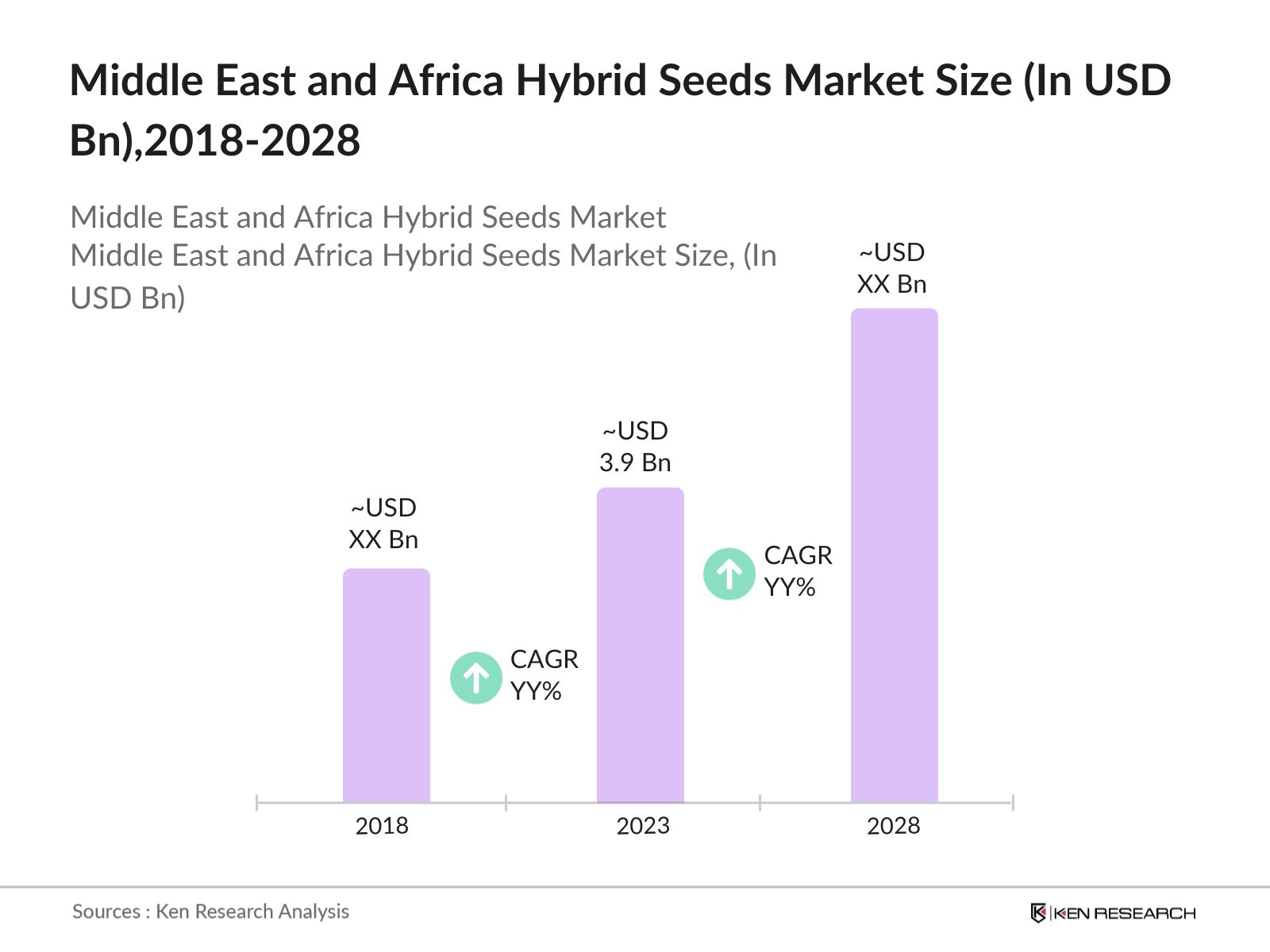
Middle East and Africa Hybrid Seeds Market Segmentation
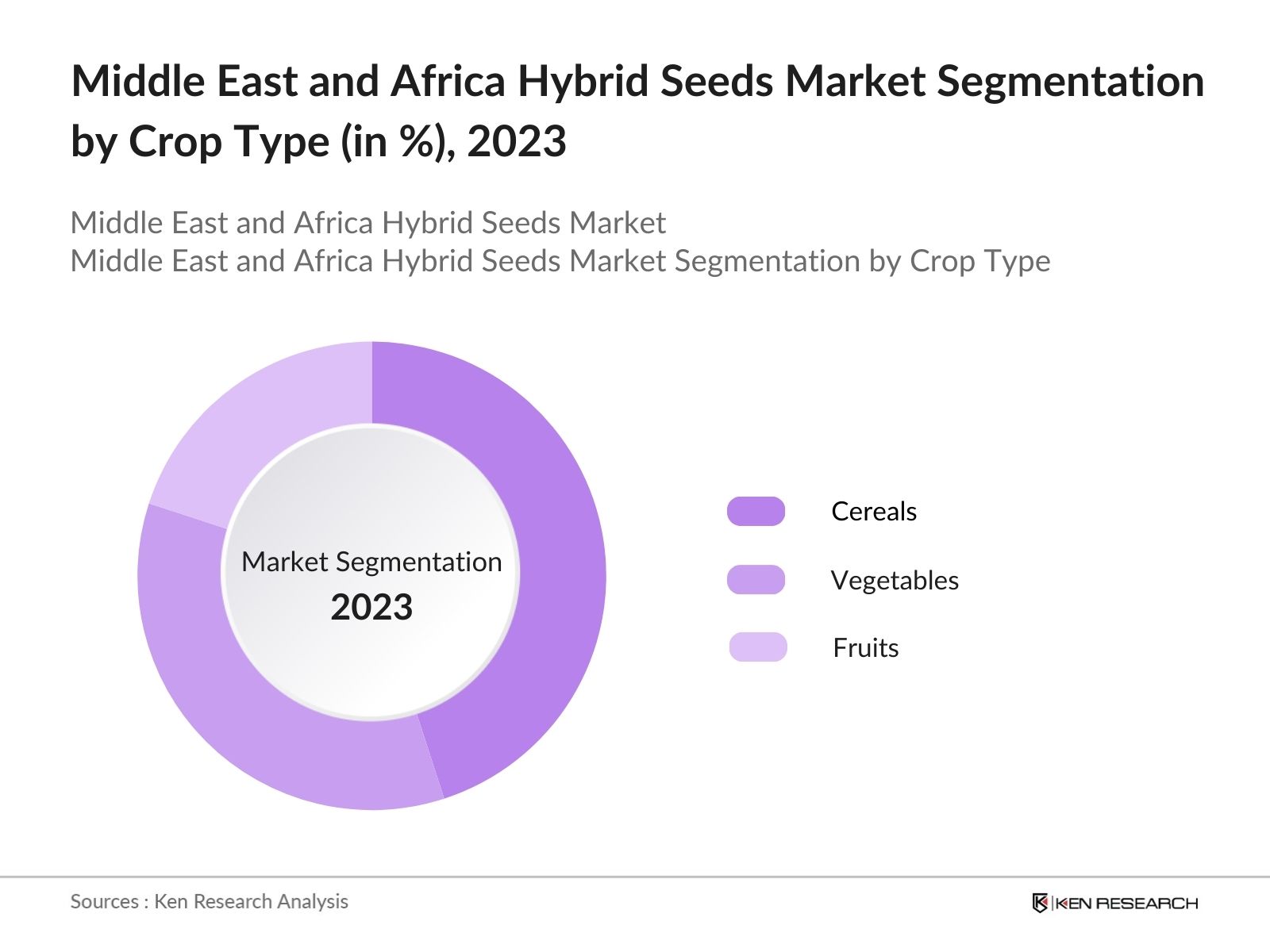
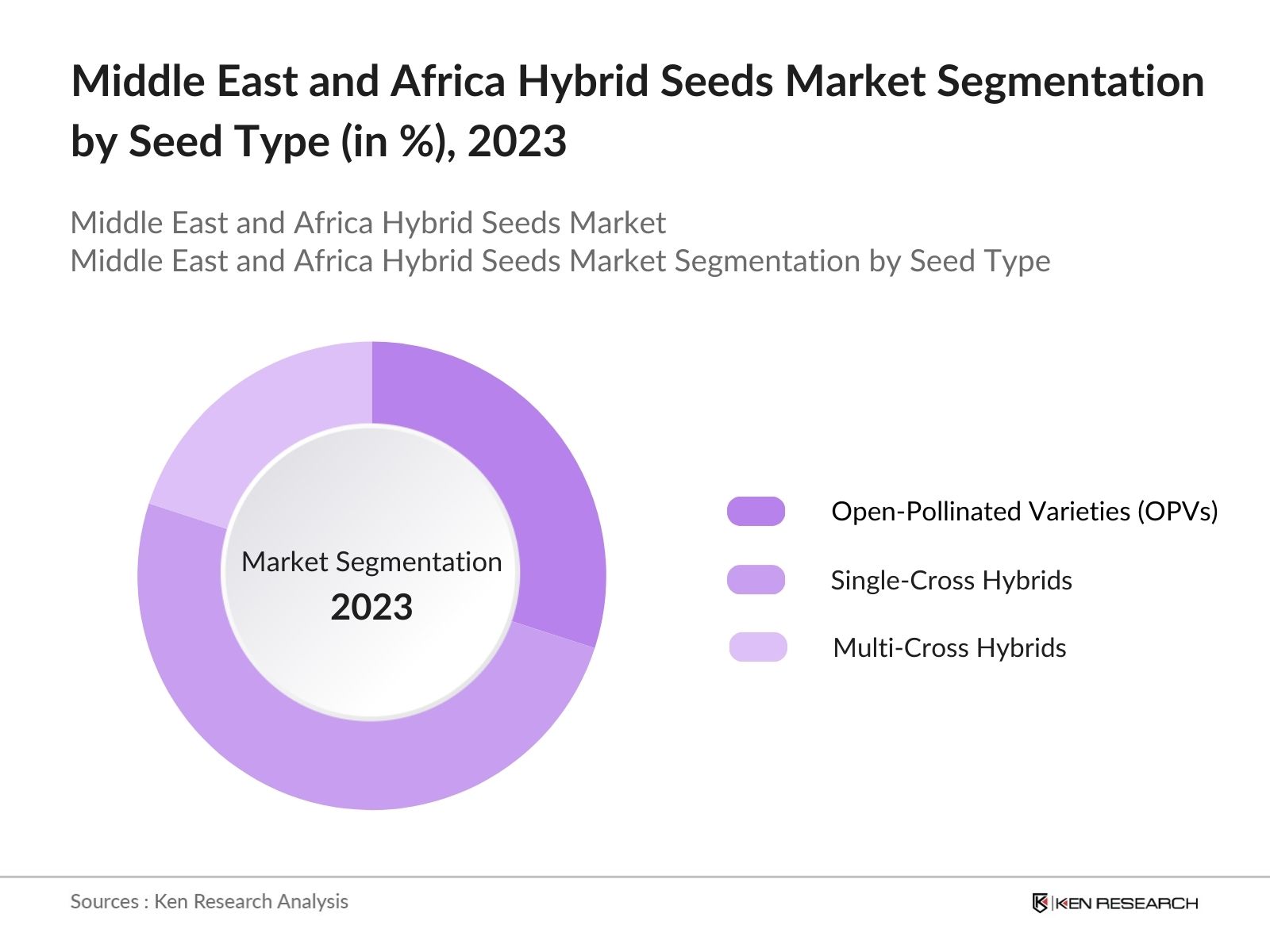
The MES hybrid seeds market is segmented into various factors like as crop type, seed type, and region.
By Crop Type: The market can be segmented by crop into cereals, vegetables, and fruits. In 2023, cereals crops lead the market, primarily due to their importance as staple crops. The dominance of this segment is attributed to the high demand for these crops across the region, coupled with the significant yield improvements offered by hybrid seeds.
By Region: The market can be segmented by region into Israel, United Arab Emirates, Jordan, Morocco, South Africa, and the Rest of MEA. In 2023, Morocco dominates the market, making it one of the largest markets for hybrid seeds in the MEA region. The countrys agricultural sector is a key pillar of the economy, with significant exports of fruits and vegetables.
By Seed Type: The market can be segmented by seed into open-pollinated varieties (OPVs), single-cross hybrids, and multi-cross hybrids. In 2023, Single-cross hybrids, which are developed by crossing two pure lines, lead the market by their ability to produce consistent and high-quality crops, which is essential for meeting the demands of both domestic and export markets.
Middle East and Africa Hybrid Seeds Market Competitive Landscape
|
Company |
Establishment Year |
Headquarters |
|
Syngenta AG |
2000 |
Basel, Switzerland |
|
Bayer CropScience AG |
1863 |
Leverkusen, Germany |
|
Corteva Agriscience |
2019 |
Wilmington, USA |
|
East-West Seed |
1982 |
Nonthaburi, Thailand |
|
Sakata Seed Corporation |
1913 |
Yokohama, Japan |
- Syngenta AG: In 2023, Syngenta AG announced a strategic partnership with a leading African agricultural cooperative to expand the distribution of its hybrid maize seeds in sub-Saharan Africa. This partnership aims to reach over 500,000 smallholder farmers, providing them with access to high-yielding seeds and agronomic support. The collaboration is expected to significantly boost maize production in the region, contributing to food security and rural development.
- Bayer CropScience AG: In June 2024, Bayer and Solynta partnered to introduce hybrid potato seeds in Kenya and India, targeting smallholder farmers. These true potato seeds require only 25 grams per hectare, significantly reducing the need for traditional seed tubers (2,500 kg/ha). This initiative aims to enhance food and nutritional security in both regions by addressing the shortage of disease-free potato starting material.
Middle East and Africa Hybrid Seeds Market Analysis
Market Growth Drivers
- Increased Demand for High-Yield Crops: In 2024, the Middle East and Africa (MEA) region witnessed a surge in demand for high-yield crops, driven by the growing population and the need to enhance food security. The region's population reached 493 million in 2024, exerting pressure on agricultural systems to produce more food. Hybrid maize seeds have been reported to produce an additional 4-5 tons per hectare compared to traditional varieties, helping to meet the region's food requirements.
- Expansion of Irrigated Land: The expansion of irrigated agricultural land in the MEA region has been a major driver for the hybrid seeds market. In 2024, the total irrigated area in the region increased, supported by government investments in water infrastructure projects. Countries like Egypt and Morocco have led the way, with substantial investments in modern irrigation systems.
- Growing Awareness and Adoption of Biotechnology: The MEA region has seen a marked increase in the adoption of biotechnology in agriculture, particularly in the use of genetically modified (GM) hybrid seeds. In 2024, farmland in South Africa alone were planted with GM hybrid crops, such as maize and cotton. This trend is driven by the need to combat pest infestations and diseases, which have been exacerbated by climate change.
Market Challenges
- Lack of Infrastructure and Distribution Channels: The lack of adequate infrastructure and distribution channels in remote and rural areas of the MEA region poses a challenge to the widespread adoption of hybrid seeds. In 2024, it was estimated that over 30% of smallholder farmers in sub-Saharan Africa had limited or no access to hybrid seeds due to poor road networks and insufficient supply chain infrastructure.
- Limited Access to Financing: In 2024, the World Bank reported that limited smallholder farmers in Africa had access to formal credit, making it difficult for them to purchase expensive hybrid seeds and other agricultural inputs. The lack of financial services tailored to the needs of farmers, coupled with high interest rates and collateral requirements, has hindered the adoption of hybrid seeds, particularly among resource-constrained farmers.
Government Initiatives
- Kenyas Agricultural Sector Transformation and Growth Strategy (ASTGS): Launched in 2024, the Kenyan government allocated USD 300 million to improve agricultural productivity by promoting the use of hybrid seeds. The initiative aims to increase the adoption of high-yielding seeds across 5 million smallholder farms, with a focus on staple crops like maize and potatoes.
- Nigerias Seed Certification Scheme: In 2024, Nigeria's National Agricultural Seed Council (NASC) rolled out a USD 50 million initiative to certify and monitor hybrid seed production. The program aims to ensure that 85% of seeds used in agriculture are certified by 2025, improving crop yields and farmer incomes.
Middle East and Africa Hybrid Seeds Market Future Outlook
The future trends of MEA Hybrid Seeds Industry include increased adoption of climate-resilient hybrid seeds, expansion of digital agriculture solutions, rising investment in agricultural R&D, and growth in public-private partnerships to enhance seed production and distribution.
Future Market Trends
- Increased Adoption of Climate-Resilient Hybrid Seeds: Over the next five years, the MEA hybrid seeds market is expected to increase in the adoption of climate-resilient seed varieties. These seeds, which are engineered to withstand extreme weather conditions such as drought, heat, and floods, will become increasingly important as climate change continues to impact agricultural productivity.
- Expansion of Digital Agriculture Solutions: By 2028, digital platforms that provide real-time data on crop performance, weather forecasts, and soil conditions will be widely adopted by farmers in the MEA region. These platforms will enable farmers to optimize the use of hybrid seeds, leading to higher yields and more efficient resource use.
Scope of the Report
|
By Crop Type |
Cereals Vegetables Fruits |
|
By Seed Type |
Open-Pollinated Varieties (OPVs) Single-Cross Hybrids Multi-Cross Hybrids |
|
By Duration |
Short Term Medium Term Long Term |
|
By Treatment |
Treated Untreated |
|
By Farms |
Indoor Farms Outdoor Farms |
|
By Region |
Israel United Arab Emirates Jordan Morocco South Africa Rest of MEA |
Products
Key Target Audience Organizations and Entities Who Can Benefit by Subscribing This Report:
Banks and Financial Institutions
Government Agricultural Departments
Seed Distribution Companies
Biotechnology Firms
Agribusiness Investors
Agrochemical Companies
Export-Oriented Agribusinesses
Companies
Players Mentioned in the Report:
Syngenta AG
Bayer CropScience AG
Corteva Agriscience
East-West Seed
Sakata Seed Corporation
Monsanto (Bayer)
Limagrain
Rijk Zwaan
Advanta Seeds
Dow AgroSciences (Corteva)
Bejo Zaden
Enza Zaden
KWS SAAT SE
Takii & Co., Ltd.
Nuziveedu Seeds
Table of Contents
1. Middle East and Africa Hybrid Seeds Market Overview
1.1. Definition and Scope
1.2. Market Taxonomy
1.3. Market Growth Rate
1.4. Market Segmentation Overview
2. Middle East and Africa Hybrid Seeds Market Size (in USD Bn), 2018-2023
2.1. Historical Market Size
2.2. Year-on-Year Growth Analysis
2.3. Key Market Developments and Milestones
3. Middle East and Africa Hybrid Seeds Market Analysis
3.1. Growth Drivers
3.1.1. Increasing Demand for High-Yield Crops
3.1.2. Expansion of Irrigated Land
3.1.3. Government Support for Agricultural Innovation
3.1.4. Adoption of Biotechnology
3.2. Restraints
3.2.1. High Cost of Hybrid Seeds
3.2.2. Lack of Infrastructure and Distribution Channels
3.2.3. Limited Access to Financing
3.3. Opportunities
3.3.1. Development of Climate-Resilient Seeds
3.3.2. Expansion of Digital Agriculture Solutions
3.3.3. Public-Private Partnerships
3.4. Trends
3.4.1. Integration of IoT in Agriculture
3.4.2. Increased Use of Hybrid Seeds in Arid Regions
3.4.3. Rise in Seed Certification Programs
3.5. Government Regulation
3.5.1. National Seed Certification Schemes
3.5.2. Subsidies for Hybrid Seeds
3.5.3. Agricultural Modernization Initiatives
3.6. SWOT Analysis
3.7. Stake Ecosystem
3.8. Competition Ecosystem
4. Middle East and Africa Hybrid Seeds Market Segmentation, 2023
4.1. By Crop Type (in Value %)
4.1.1. Cereals (Maize, Wheat, Rice)
4.1.2. Vegetables (Tomatoes, Peppers, Onions)
4.1.3. Fruits (Melons, Watermelons, Strawberries)
4.2. By Seed Type (in Value %)
4.2.1. Open-Pollinated Varieties (Non-GMO, GMO)
4.2.2. Single-Cross Hybrids (Conventional, Bt Corn)
4.2.3. Multi-Cross Hybrids (Conventional, Drought-resistant)
4.3. By Region (in Value %)
4.3.1. Israel
4.3.2. UAE
4.3.3. Jordan
4.3.4. Morocco
4.3.5. South Africa
4.3.6. Rest of MEA
4.4. By Duration (in Value %)
4.4.1. Short Term
4.4.2. Medium Term
4.4.3. Long Term
4.5. By Treatment (in Value %)
4.5.1. Treated
4.5.2. Untreated
4.6. By Farm (in Value %)
4.6.1 Indoor Farms
4.6.2 Outdoor Farms
5. Middle East and Africa Hybrid Seeds Market Cross Comparison
5.1. Detailed Profiles of Major Companies
5.1.1. Syngenta AG
5.1.2. Bayer CropScience AG
5.1.3. Corteva Agriscience
5.1.4. East-West Seed
5.1.5. Sakata Seed Corporation
5.2. Cross Comparison Parameters (No. of Employees, Headquarters, Inception Year, Revenue)
6. Middle East and Africa Hybrid Seeds Market Competitive Landscape
6.1. Market Share Analysis
6.2. Strategic Initiatives
6.3. Mergers and Acquisitions
6.4. Investment Analysis
6.4.1. Venture Capital Funding
6.4.2. Government Grants
6.4.3. Private Equity Investments
7. Middle East and Africa Hybrid Seeds Market Regulatory Framework
7.1. Seed Certification Standards
7.2. Compliance Requirements
7.3. Certification Processes
8. Middle East and Africa Hybrid Seeds Future Market Size (in USD Bn), 2023-2028
8.1. Future Market Size Projections
8.2. Key Factors Driving Future Market Growth
8. Middle East and Africa Hybrid Seeds Future Market Segmentation, 2028
9.1. By Crop Type (in Value %)
9.2. By Seed Type (in Value %)
9.3. By Region (in Value %)
9.5. By Duration (in Value %)
9.6. By Treatment (in Value %)
9.7. By Farm (in Value %)
10. Middle East and Africa Hybrid Seeds Market Analysts Recommendations
10.1. TAM/SAM/SOM Analysis
10.2. Customer Cohort Analysis
10.3. Marketing Initiatives
10.4. White Space Opportunity Analysis
Disclaimer Contact UsResearch Methodology
Step:1 Identifying Key Variables:
Ecosystem creation for all the major entities and referring to multiple secondary and proprietary databases to perform desk research around the market to collate industry-level information.
Step:2 Market Building:
Collating statistics on the Middle East and Africa Hybrid Seeds industry over the years, penetration of marketplaces and service providers ratio to compute revenue generated for the Middle East and Africa Hybrid Seeds industry. We will also review service quality statistics to understand revenue generated which can ensure accuracy behind the data points shared.
Step:3 Validating and Finalizing:
Building market hypothesis and conducting CATIs with industry experts belonging to different companies to validate statistics and seek operational and financial information from company representatives.
Step:4 Research output:
Our team will approach multiple agribusiness companies and understand nature of product segments and sales, consumer preference and other parameters, which will support us validate statistics derived through bottom to top approach from such agribusiness companies.
Frequently Asked Questions
01 How big is the Middle East and Africa Hybrid Seeds market?
The Middle East and Africa Hybrid Seeds Market was valued at USD 3.9 billion in 2023. The market expansion is primarily driven by the increasing demand for high-yielding, disease-resistant crops, which is essential for improving food security in the region.
02 What are the challenges in Middle East and Africa Hybrid Seeds market?
The major challenges in the Middle East and Africa Hybrid Seeds market include the high cost of hybrid seeds, lack of infrastructure and distribution channels in rural areas, limited access to financing for farmers, and the impacts of climate change on crop productivity.
03 Who are the major players in the Middle East and Africa Hybrid Seeds market?
Key players in the Middle East and Africa Hybrid Seeds market include Syngenta AG, Bayer CropScience AG, Corteva Agriscience, East-West Seed, and Sakata Seed Corporation, which dominate the market through innovation, extensive R&D, and strong distribution networks.
04 What are the main growth drivers of the Middle East and Africa Hybrid Seeds market?
The main growth drivers in the Middle East and Africa Hybrid Seeds include increasing demand for high-yield crops, expansion of irrigated agricultural land, growing awareness of biotechnology, and substantial government support for agricultural innovation.
Why Buy From Us?

What makes us stand out is that our consultants follows Robust, Refine and Result (RRR) methodology. i.e. Robust for clear definitions, approaches and sanity checking, Refine for differentiating respondents facts and opinions and Result for presenting data with story

We have set a benchmark in the industry by offering our clients with syndicated and customized market research reports featuring coverage of entire market as well as meticulous research and analyst insights.

While we don't replace traditional research, we flip the method upside down. Our dual approach of Top Bottom & Bottom Top ensures quality deliverable by not just verifying company fundamentals but also looking at the sector and macroeconomic factors.

With one step in the future, our research team constantly tries to show you the bigger picture. We help with some of the tough questions you may encounter along the way: How is the industry positioned? Best marketing channel? KPI's of competitors? By aligning every element, we help maximize success.

Our report gives you instant access to the answers and sources that other companies might choose to hide. We elaborate each steps of research methodology we have used and showcase you the sample size to earn your trust.

If you need any support, we are here! We pride ourselves on universe strength, data quality, and quick, friendly, and professional service.