
Middle East and Africa Oil & Gas Storage Market Outlook to 2030
Region:Middle East
Author(s):Yogita Sahu
Product Code:KROD10542
December 2024
92
About the Report
Middle East and Africa Oil & Gas Market Overview
- The Middle East and Africa oil and gas storage market was valued at USD 783 million, the market's expansion is primarily driven by the necessity to manage substantial hydrocarbon production, transport, and export activities. Countries like Saudi Arabia and the UAE have invested heavily in state-of-the-art storage facilities, including aboveground tanks and underground caverns, designed to handle large volumes of crude oil, refined products, and natural gas.
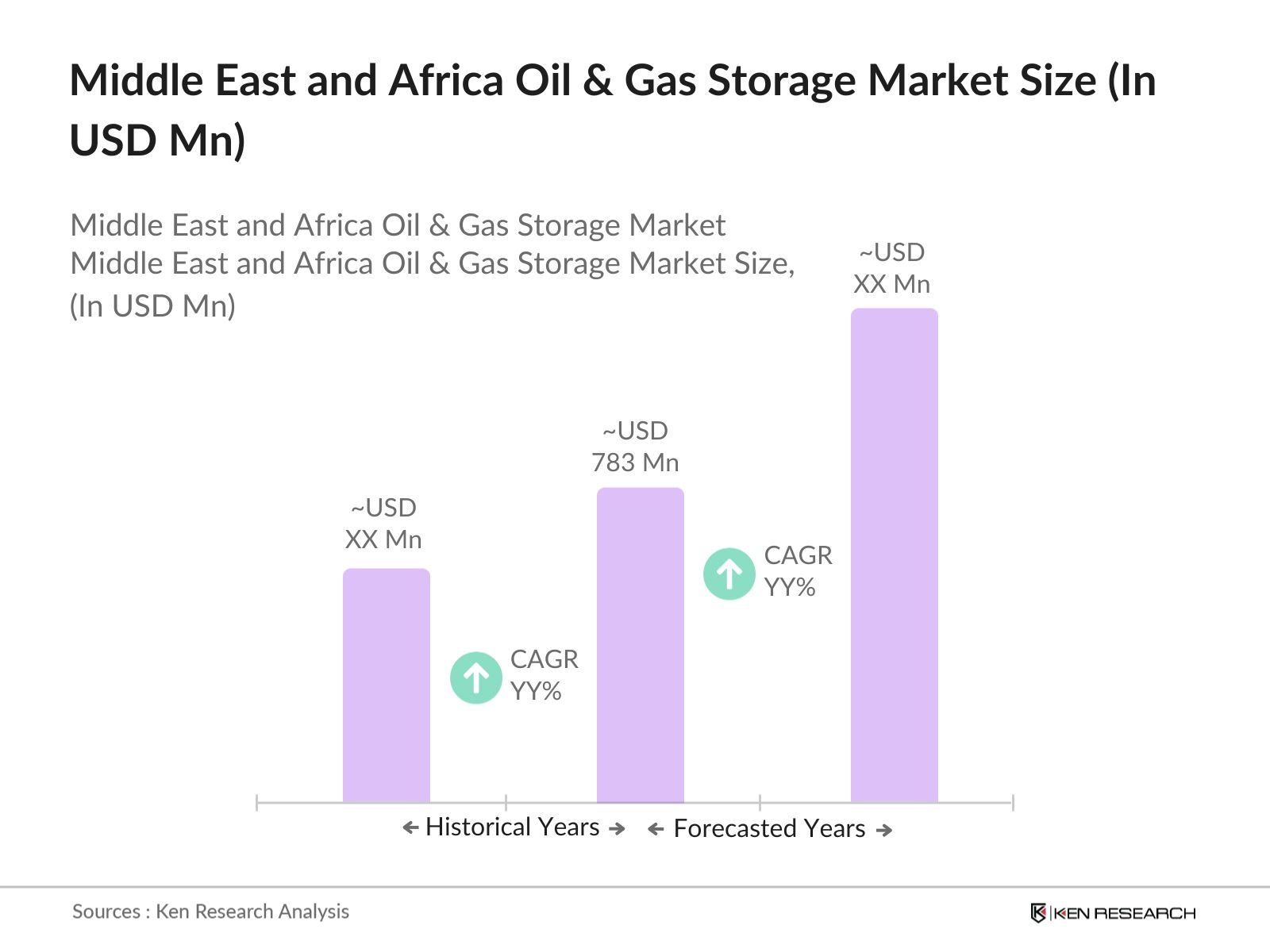
- The market due to its vast reserves and critical infrastructure managed by Saudi Aramco, one of the largest oil companies globally. The strategic locations of Saudi ports, such as Ras Tanura and Yanbu, support its dominance in the global energy supply chain. These facilities are key transit points for international trade, making Saudi Arabia a major hub for oil storage, not only due to its large reserves but also its capacity to efficiently manage storage and distribution activities in the region.
- Saudi Arabias Vision 2030 includes plans to expand its oil storage capacity. The country has allocated $10 billion in its 2024 budget to boost strategic oil storage, with plans to increase its reserve capacity by 20 million barrels by 2025. This initiative is aimed at improving national energy security and stabilizing global oil markets, ensuring uninterrupted supply in times of crisis.
Middle East and Africa Oil & Gas Market Segmentation
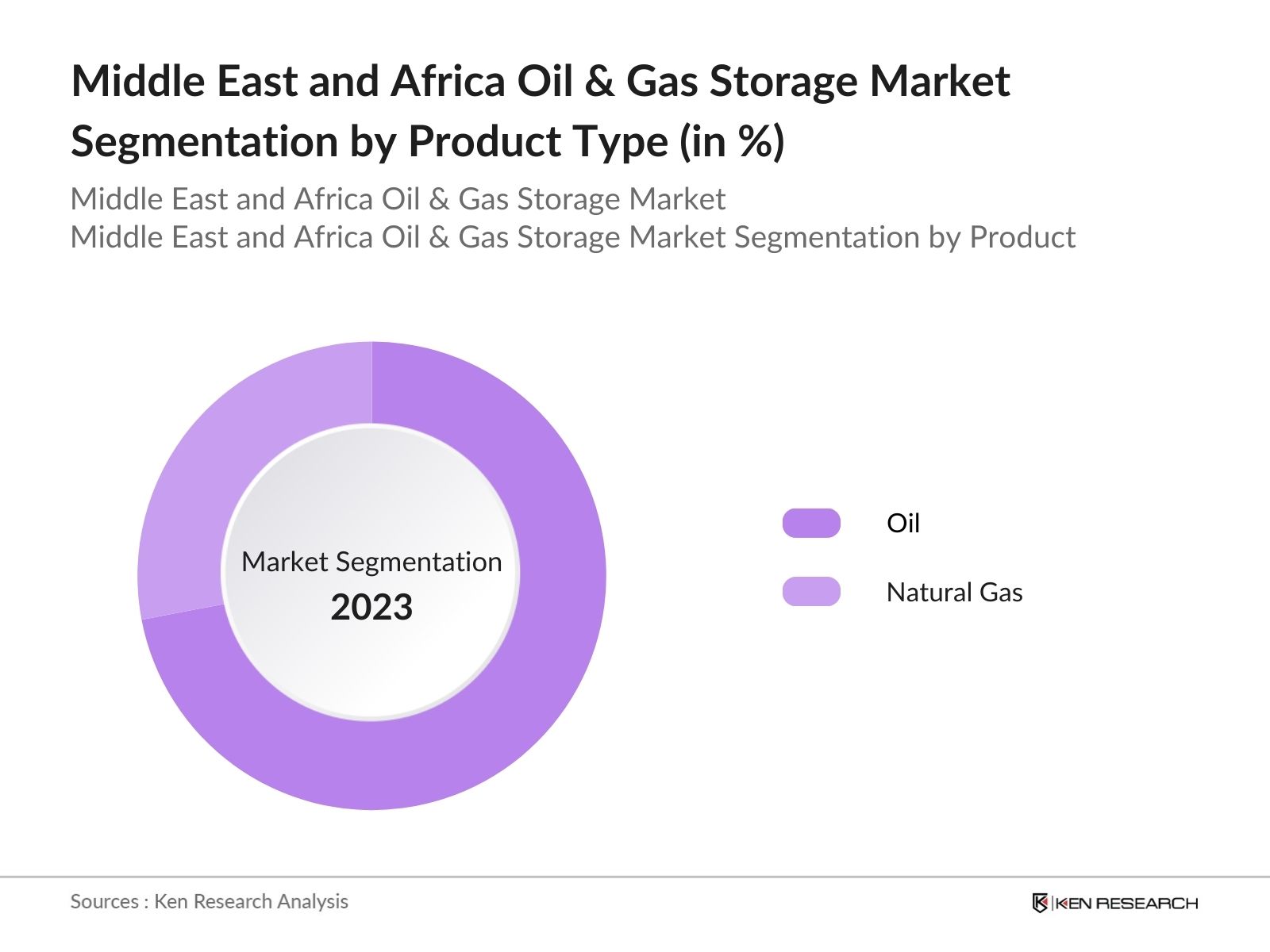
By Product Type: The market is segmented by product type into oil and natural gas. In 2023, the oil segment held the dominant market share, mainly due to the regions vast crude oil reserves, particularly in countries like Saudi Arabia, the UAE, and Iraq. These countries are responsible for significant portions of the global oil supply, necessitating large-scale storage solutions to accommodate their extensive production activities.
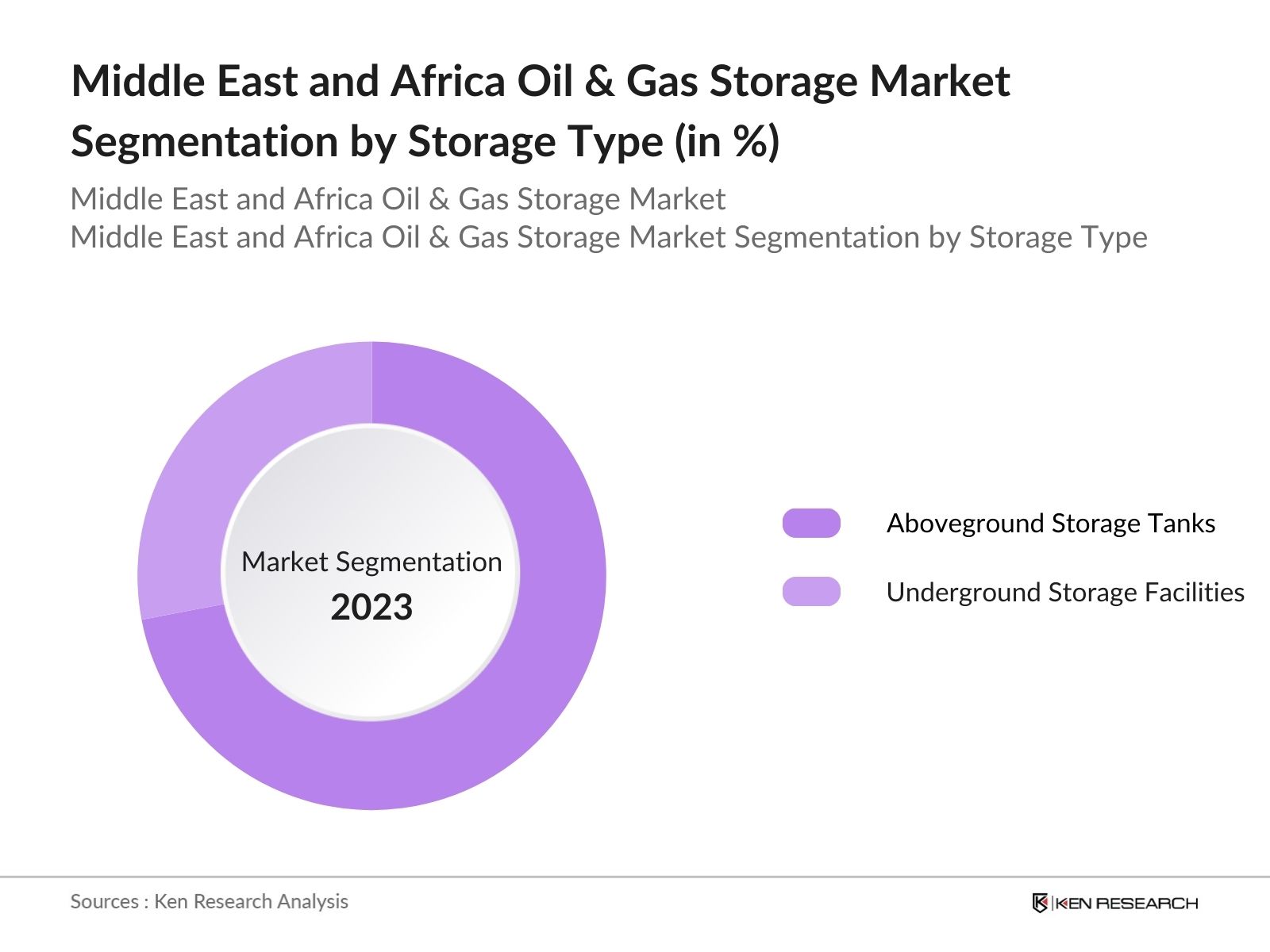
By Storage Type: The market is also segmented by storage type, including aboveground storage tanks and underground storage facilities. Aboveground tanks are the dominant storage type, primarily because they are more commonly used for storing crude oil and refined products in large volumes. These tanks are critical in managing the substantial oil production and export operations in countries like Saudi Arabia, where they provide flexibility in storage and logistics management.
Middle East and Africa Oil & Gas Market Competitive Landscape
The market is highly competitive, with several major international and regional players actively participating. These companies have established themselves through extensive investments in infrastructure, technological innovation, and strategic collaborations.
|
Company |
Establishment Year |
Headquarters |
Storage Capacity (Million Barrels) |
Technology Integration |
Regional Presence |
Annual Revenue (USD bn) |
Strategic Partnerships |
|
Saudi Aramco |
1933 |
Dhahran, Saudi Arabia |
|||||
|
ADNOC |
1971 |
Abu Dhabi, UAE |
|||||
|
Oiltanking GmbH |
1972 |
Hamburg, Germany |
|||||
|
Vopak |
1999 |
Rotterdam, Netherlands |
|||||
|
Enbridge Inc. |
1949 |
Calgary, Canada |
Middle East and Africa Oil and Gas Storage Market Analysis
Market Growth Drivers
- Expansion of Strategic Petroleum Reserves (SPR): The Middle East and Africa are strategically expanding their oil reserves due to geopolitical uncertainty and growing energy demands. By 2024, it is projected that countries such as the UAE and Saudi Arabia will continue to increase their strategic reserves to ensure energy security. Saudi Arabia alone aims to add 200 million barrels of crude oil to its reserve capacity.
- Rising Investments in Oil Storage Infrastructure: Investments in storage facilities are increasing as MEA governments look to secure their energy needs. For instance, the UAE's Fujairah port has seen a rapid increase in storage capacity, growing by 2.5 million cubic meters in 2023, driven by government-backed expansions and private sector involvement.
- Increased Production in Key Oil & Gas Countries: Countries like Saudi Arabia, Nigeria, and Angola are ramping up oil production, leading to a surge in storage demand. Saudi Arabias oil production, for instance, remains steady at around 10 million barrels per day, requiring enhanced storage infrastructure to manage excess production.
Market Challenges
- Environmental Regulations and Compliance: Stringent environmental regulations imposed by governments in the Middle East and Africa are putting pressure on storage operators. For example, South Africas revised environmental protection laws mandate that oil storage facilities install advanced vapor recovery systems, adding around $5 million per facility in compliance costs.
- Aging Storage Infrastructure in Key Regions: Many oil storage facilities in the region, particularly in countries like Angola and Sudan, are outdated and prone to operational inefficiencies. For example, more than 40% of Angola's storage infrastructure is over 30 years old, leading to higher maintenance costs and reduced storage capacity.
Middle East and Africa Oil and Gas Storage Market Future Outlook
The oil and gas storage industry in the Middle East and Africa is poised for sustained growth over the next five years. This growth will be driven by increasing energy demand, geopolitical factors, and strategic investments in storage capacity.
Future Market Opportunities
- Increased Focus on Carbon Capture and Storage (CCS): Over the next five years, countries like Saudi Arabia and the UAE will increasingly integrate carbon capture and storage (CCS) technologies into their oil storage facilities. By 2028, it is estimated that Saudi Arabia will invest over $1 billion in CCS systems to reduce carbon emissions from its oil storage operations, aligning with global sustainability goals.
- Expansion of Floating Storage and Regasification Units (FSRUs): The Middle East and Africa will witness a surge in the deployment of Floating Storage and Regasification Units (FSRUs) by 2026, with countries like Nigeria and Angola expected to add 5 million barrels of offshore storage capacity. This trend is driven by the increasing need for flexible and mobile storage solutions to support both domestic use and exports.
Scope of the Report
|
By Product Type |
Oil Natural Gas |
|
By Storage Type |
Aboveground Storage Tanks Underground Storage Facilities |
|
By Purpose of Storage |
Strategic Reserves Commercial Reserves |
|
By Location |
Free Zones Export Terminals |
|
By Region |
Saudi Arabia UAE Kuwait Qatar South Africa |
Products
Key Target Audience Organizations and Entities Who Can Benefit by Subscribing This Report:
National Oil Companies (e.g., Saudi Aramco, ADNOC)
Private Oil Storage Operators
Crude Oil Trading Firms
LNG Storage Companies
Strategic Oil Reserve Managers
Government Regulatory Bodies (e.g., Ministry of Energy UAE)
Investor and Venture Capitalist Firms
Petrochemical Producers
Companies
Players Mentioned in the Report:
Saudi Aramco
ADNOC
Oiltanking GmbH
Vopak
Enbridge Inc.
Kinder Morgan, Inc.
SEACOR Holdings Inc.
ONEOK, Inc.
Teekay Corporation
Petrobras Transporte S.A.
Table of Contents
1. Middle East and Africa Oil & Gas Storage Market Overview
1.1 Definition and Scope
1.2 Market Taxonomy
1.3 Market Growth Rate
1.4 Market Segmentation Overview
2. Middle East and Africa Oil & Gas Storage Market Size (In USD Bn)
2.1 Historical Market Size
2.2 Year-On-Year Growth Analysis
2.3 Key Market Developments and Milestones
3. Middle East and Africa Oil & Gas Storage Market Analysis
3.1 Growth Drivers
3.1.1 Strategic Geopolitical Location (Proximity to Major Shipping Routes)
3.1.2 Increasing Oil and Gas Production in the Region (Significant Reserve Base)
3.1.3 Infrastructure Investments (Storage Terminals, Pipelines)
3.1.4 Technological Advancements (Automation, Smart Monitoring Systems)
3.2 Market Challenges
3.2.1 Fluctuating Oil Prices (Volatile Market Dynamics)
3.2.2 Geopolitical Tensions (Security Risks in Key Countries)
3.2.3 High Infrastructure Investment Costs (Continuous Upgrades)
3.2.4 Environmental and Regulatory Pressures (Compliance with Global Standards)
3.3 Opportunities
3.3.1 Expansion of Strategic Reserves
3.3.2 Public-Private Partnerships in Infrastructure
3.3.3 Integration of Renewable Energy Storage Solutions
3.3.4 Increasing Demand for LNG Storage
3.4 Trends
3.4.1 Adoption of Digital Technologies (Smart Inventory Management)
3.4.2 Expansion of Oil and Gas Free Zones (Freeport Developments)
3.4.3 Focus on Environmental Sustainability (Eco-friendly Storage Practices)
3.4.4 Rise in Strategic Joint Ventures (Partnerships for Storage Expansion)
4. Middle East and Africa Oil & Gas Storage Market Segmentation
4.1 By Product Type (In Value %)
4.1.1 Oil (Crude, Refined Products)
4.1.2 Natural Gas (LNG, Compressed Gas)
4.2 By Storage Type (In Value %)
4.2.1 Aboveground Storage Tanks (Crude, Finished Products)
4.2.2 Underground Storage Facilities (Natural Gas, LNG)
4.3 By Purpose of Storage (In Value %)
4.3.1 Strategic Reserves (National Reserves)
4.3.2 Commercial Reserves (Private Sector Storage)
4.4 By Location (In Value %)
4.4.1 Free Zones (Fujairah, Jebel Ali)
4.4.2 Export Terminals (Ras Tanura, Yanbu)
4.5 By Country (In Value %)
4.5.1 Saudi Arabia
4.5.2 UAE
4.5.3 Kuwait
4.5.4 Qatar
4.5.5 South Africa
5. Middle East and Africa Oil & Gas Storage Market Competitive Analysis
5.1 Detailed Profiles of Major Companies
5.1.1 Saudi Aramco
5.1.2 ADNOC (Abu Dhabi National Oil Company)
5.1.3 ENOC (Emirates National Oil Company)
5.1.4 VTTI Group
5.1.5 Oiltanking GmbH
5.1.6 Kinder Morgan, Inc.
5.1.7 Royal Vopak
5.1.8 Teekay Corporation
5.1.9 Buckeye Partners
5.1.10 Petrofac Ltd.
5.1.11 SEACOR Holdings
5.1.12 Enbridge Inc.
5.1.13 Gibson Energy
5.1.14 ONEOK Inc.
5.1.15 PBF Energy Inc.
5.2 Cross Comparison Parameters (Storage Capacity, Infrastructure Type, Technological Integration, Expansion Plans, Revenue)
5.3 Market Share Analysis
5.4 Strategic Initiatives
5.5 Mergers and Acquisitions
5.6 Investment Analysis
5.7 Government Grants and Private Investments
6. Middle East and Africa Oil & Gas Storage Market Regulatory Framework
6.1 Environmental Standards
6.2 Compliance Requirements
6.3 Certification Processes
6.4 Impact of International Trade Agreements
7. Middle East and Africa Oil & Gas Storage Future Market Size (In USD Bn)
7.1 Future Market Size Projections
7.2 Key Factors Driving Future Market Growth
8. Middle East and Africa Oil & Gas Storage Future Market Segmentation
8.1 By Product Type (In Value %)
8.2 By Storage Type (In Value %)
8.3 By Purpose of Storage (In Value %)
8.4 By Location (In Value %)
8.5 By Region (In Value %)
9. Middle East and Africa Oil & Gas Storage Market Analysts Recommendations
9.1 TAM/SAM/SOM Analysis
9.2 Strategic Geographic Expansion
9.3 Infrastructure Development Opportunities
9.4 Sustainability and ESG Considerations
Disclaimer Contact UsResearch Methodology
Step 1: Identification of Key Variables
This stage involves mapping all critical stakeholders within the Middle East and Africa oil and gas storage ecosystem. Extensive desk research is carried out, using both secondary sources and proprietary databases to gather vital industry-level information.
Step 2: Market Analysis and Construction
Historical data related to oil and gas storage operations are analyzed, including insights into storage capacity, facility utilization rates, and emerging trends across various regional markets. This data is crucial in evaluating market growth and capacity utilization.
Step 3: Hypothesis Validation and Expert Consultation
Key industry hypotheses are validated through direct consultations with industry experts and practitioners in the oil and gas storage market. This process ensures that the data is accurate and reflects the current market dynamics.
Step 4: Research Synthesis and Final Output
The final step involves integrating primary and secondary research findings, ensuring a comprehensive and detailed analysis of the market is presented. Final data validation is performed before the report is finalized.
Frequently Asked Questions
01. How big is the Middle East and Africa Oil & Gas Storage Market?
The Middle East and Africa oil and gas storage market was valued at over USD 783 million, driven by increasing energy production and export activities.
02. What are the challenges in the Middle East and Africa Oil & Gas Storage Market?
Key challenges in the Middle East and Africa oil and gas storage market include fluctuating oil prices, geopolitical instability, and the high costs associated with infrastructure development and maintenance.
03. Who are the major players in the Middle East and Africa Oil & Gas Storage Market?
Major players in the Middle East and Africa oil and gas storage market include Saudi Aramco, ADNOC, Oiltanking GmbH, Vopak, and Enbridge Inc.
04. What are the growth drivers of the Middle East and Africa Oil & Gas Storage Market?
The Middle East and Africa oil and gas storage market is driven by rising demand for energy storage solutions, increasing investments in infrastructure, and the region's strategic importance in global oil exports.
05. What is the future outlook for the Middle East and Africa Oil & Gas Storage Market?
Over the next five years, the Middle East and Africa oil and gas storage market is expected to grow due to ongoing investments in storage facilities and the adoption of advanced storage technologies.
Why Buy From Us?

What makes us stand out is that our consultants follows Robust, Refine and Result (RRR) methodology. i.e. Robust for clear definitions, approaches and sanity checking, Refine for differentiating respondents facts and opinions and Result for presenting data with story

We have set a benchmark in the industry by offering our clients with syndicated and customized market research reports featuring coverage of entire market as well as meticulous research and analyst insights.

While we don't replace traditional research, we flip the method upside down. Our dual approach of Top Bottom & Bottom Top ensures quality deliverable by not just verifying company fundamentals but also looking at the sector and macroeconomic factors.

With one step in the future, our research team constantly tries to show you the bigger picture. We help with some of the tough questions you may encounter along the way: How is the industry positioned? Best marketing channel? KPI's of competitors? By aligning every element, we help maximize success.

Our report gives you instant access to the answers and sources that other companies might choose to hide. We elaborate each steps of research methodology we have used and showcase you the sample size to earn your trust.

If you need any support, we are here! We pride ourselves on universe strength, data quality, and quick, friendly, and professional service.