
Middle East Protein Market Outlook to 2030
Region:Middle East
Author(s):Naman Rohilla
Product Code:KROD2662
November 2024
89
About the Report
MEA Protein Market Overview
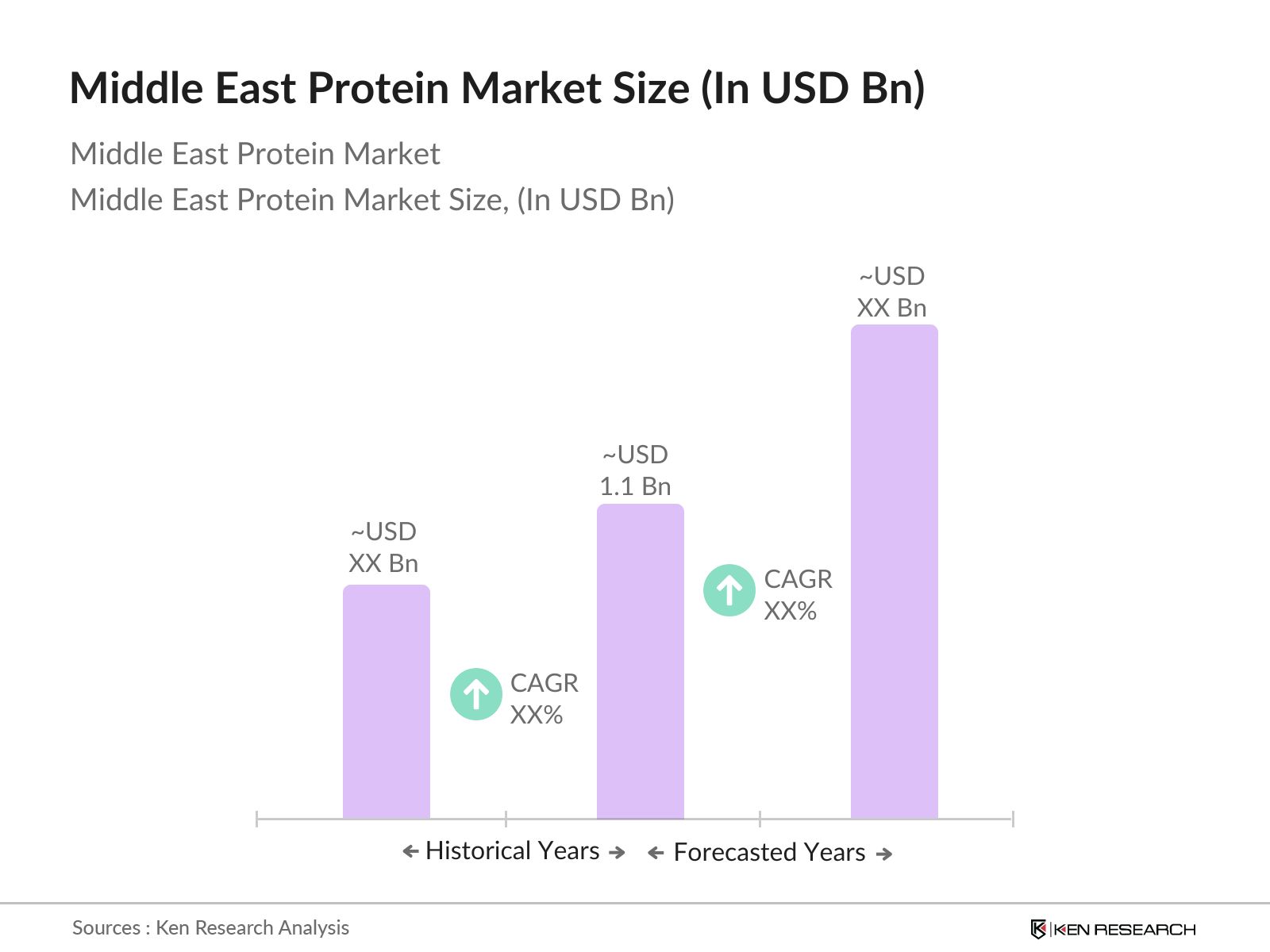
- The MEA Protein Market was valued at USD 1.1 billion, driven by increasing consumer awareness of health and wellness, the growing popularity of plant-based diets, and rising demand for protein-enriched products. Key sectors driving this growth include dietary supplements, functional foods, and sports nutrition products. The market is also seeing a shift towards sustainable, alternative proteins such as plant-based and insect-based sources, with increasing investments in innovation.
- Key players in the MEA protein market include Nestl S.A., Arla Foods, Glanbia Plc, ADM, and Cargill. These companies are driving innovation in protein formulations, including advancements in plant-based protein and new applications for animal-based protein.
- Nestl has commenced the expansion of its protein-foods factory in Rosbach vor der Hhe, Germany, investing over 8 million ($8.6 million) to enhance production for congenital metabolic disorders. This project aims to boost production volumes and create jobs, supporting global demand for speciality dietary foods.
- South Africa dominated the MEA protein market in 2023, driven by the rising consumption of protein-rich foods and beverages. The United Arab Emirates followed closely, with a strong demand for premium protein supplements in the health and wellness sector.
MEA Protein Market Segmentation
The MEA Protein Market is segmented by Type, Source, and Region.
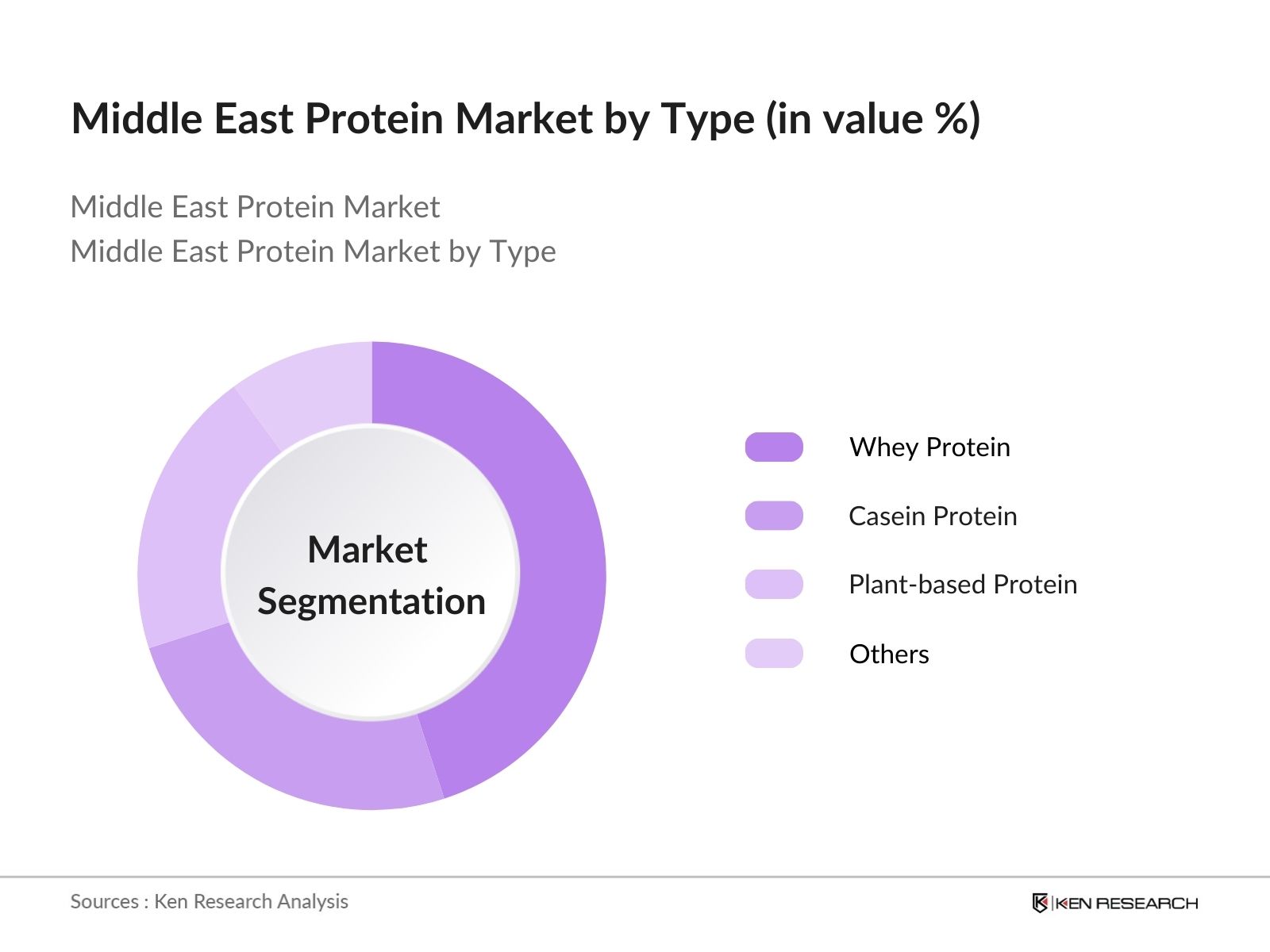
- By Type: The market is divided into Whey Protein, Casein Protein, Plant-based Protein, and Others. Whey Protein held the largest share in 2023 due to its widespread use in sports nutrition and dietary supplements.
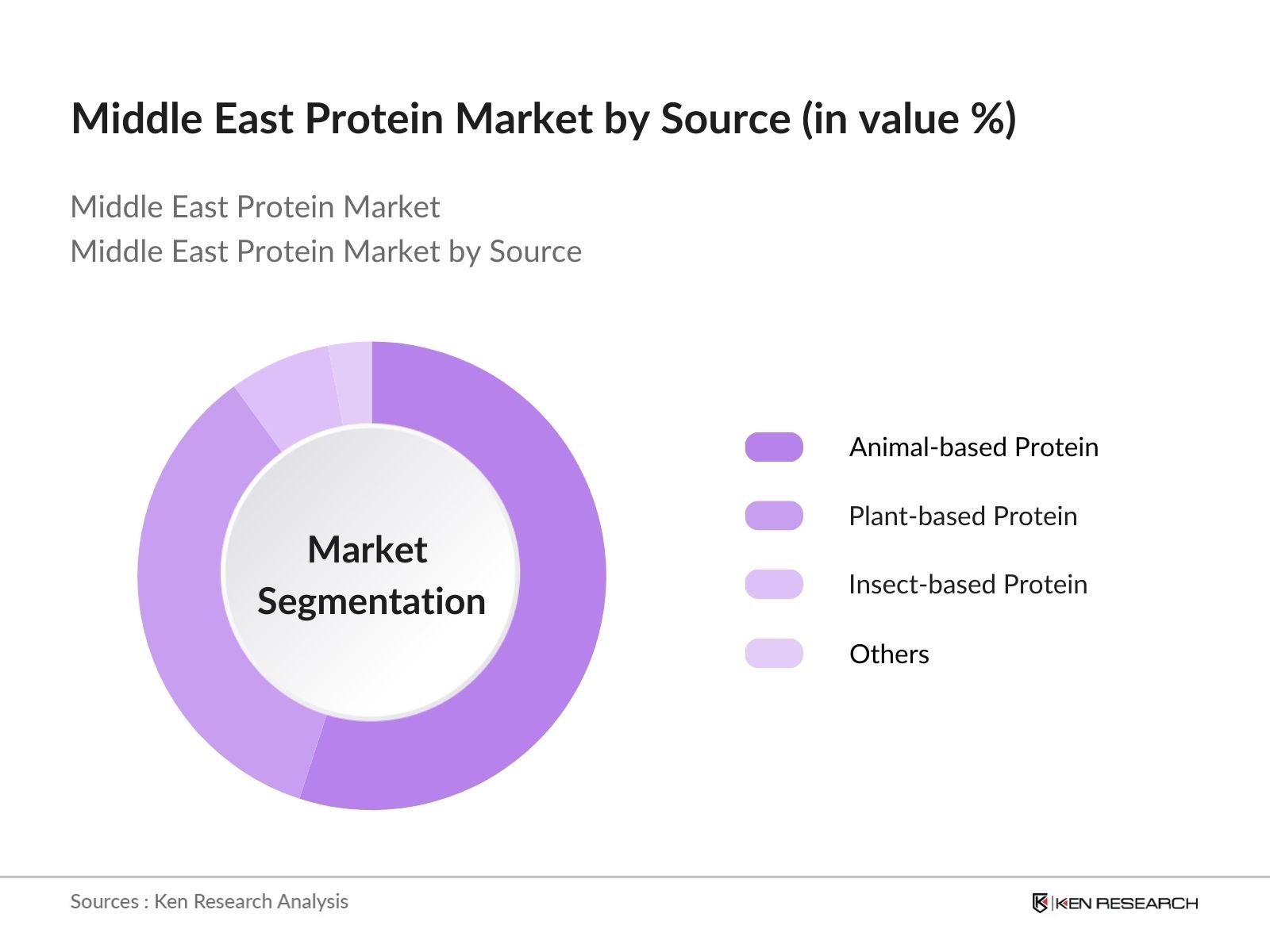
- By Source: The market is segmented into Animal-based Protein, Plant-based Protein, and Insect-based Protein. While Animal-based Protein dominates the market, Plant-based Protein is gaining substantial traction due to sustainability concerns and the growing preference for plant-based diets.
- By Region: The market is segmented into Israel, United Arab Emirates, Jordan, Morocco, South Africa, and the Rest of MEA. South Africa led the market, driven by a robust demand for protein supplements in the health and wellness industry.
MEA Protein Market Competitive Landscape
|
Company Name |
Establishment Year |
Headquarters |
|
Nestl S.A. |
1867 |
Vevey, Switzerland |
|
Arla Foods |
1881 |
Viby, Denmark |
|
Glanbia Plc |
1999 |
Kilkenny, Ireland |
|
ADM |
1902 |
Illinois, USA |
|
Cargill |
1865 |
Minnesota, USA |
- Glanbia Plc: Glanbia Performance Nutrition plans to expand its product line, focusing on ready-to-drink and plant-based options to capture new consumer segments. The company's flagship brand, Optimum Nutrition, reported a 34.9% revenue growth, driven by rising demand for protein products in Asia, particularly in Japan and South Korea.
- Arla Foods: Arla Foods Ingredients has signed an agreement to acquire Volac's Whey Nutrition business, enhancing its position in the sports nutrition market. The deal includes Volac's facilities in Wales and aims to establish a global production hub, pending regulatory approvals later this year.
MEA Protein Market Analysis
MEA Protein Market Growth Drivers:
- Increasing Demand for Health and Wellness Products: Rising health consciousness, along with the popularity of fitness activities, is fueling demand for protein-rich foods and supplements. Recent studies indicate that around 65% of consumers in the region actively seek out high-protein products.
- Shift Towards Sustainable Protein Sources: Demand for sustainable protein sources has surged by 35%, especially for plant-based proteins in regions like the UAE and South Africa. This growth is fueled by increased awareness of environmental sustainability and a preference for healthier dietary choices, favouring alternatives to traditional animal proteins.
- Expansion of Sports Nutrition Market: The sports nutrition market in the MEA region is expanding rapidly, as consumers increasingly seek protein products to enhance athletic performance and muscle recovery. This trend reflects a growing interest in fitness and wellness, indicating strong demand for specialized nutrition tailored to active lifestyles.
MEA Protein Market Challenges:
- High Cost of Premium Protein Sources: Sustainable protein sources, including plant-based and insect-based proteins, can be up to 30% more expensive to produce than traditional animal proteins. For instance, retail prices for pea protein isolate can reach $45.19 per kg, compared to $6.28 per kg for chicken breast, limiting adoption among price-sensitive consumers.
- Limited Consumer Awareness: Around 40% of consumers remain unaware of the benefits of alternative protein sources, hindering market growth. This lack of awareness is substantial, especially as studies show that plant-based diets can reduce food costs by 26% compared to meat-based diets, highlighting the need for educational initiatives.
MEA Protein Market Government Initiatives:
- South Africa's National Food Strategy: South Africa's National Food Strategy aims to combat nutritional deficiencies, with 6.8 million people experiencing hunger and 10.4 million lacking access to adequate food. The strategy emphasizes promoting protein-rich food products, particularly in underprivileged communities, to improve overall nutrition and food security.
- UAE Health and Wellness Campaigns: UAE Health and Wellness Campaigns have led to a 25% increase in public engagement with healthy eating initiatives. These government-led efforts promote protein-rich diets as part of broader public health strategies, targeting lifestyle-related diseases and encouraging better nutrition among the population.
MEA Protein Future Market Outlook
The MEA Protein Market is expected to grow steadily over the next five years, driven by increasing consumer demand for protein-enriched foods, sports nutrition products, and plant-based protein alternatives.
MEA Protein Future Market Trends:
- Increased Adoption of Plant-Based Proteins: In the coming years, the shift towards plant-based nutrition is expected to accelerate, with more companies introducing vegan-friendly protein products. This trend will be driven by increasing consumer awareness of health and environmental benefits, leading to a greater demand for plant-based options.
- Growth in Functional Foods: In the coming years, the trend of incorporating high-protein content into everyday foods, such as snacks and beverages, will continue to expand. This growth will create new opportunities for protein manufacturers to tap into the functional food market, catering to health-conscious consumers seeking nutritious options.
Scope of the Report
|
By Source |
Animal-based Protein Plant-based Protein Insect-based Protein Others |
|
By Type |
Whey Protein Casein Protein Plant-based Protein Others |
|
By Region |
Israel United Arab Emirates Jordan Morocco South Africa Rest of MEA |
Products
Key Target Audience Organizations and Entities Who Can Benefit by Subscribing This Report:
Government and Regulatory Bodies
Banks and Financial Institutes
Investors and Venture Capitalists
Protein Manufacturing Companies
Functional Food Producers
Dietary Supplement Manufacturers
Time Period Captured in the Report
Historical Period: 2018-2023
Base Year: 2023
Forecast Period: 2023-2028
Table of Contents
1. MEA Protein Market Overview
1.1 Definition and Scope of the MEA Protein Market
1.2 Market Taxonomy (Source, Type, Region)
1.3 Market Growth Rate and Trends
1.4 Market Drivers (Health Awareness, Plant-Based Diets, Innovation in Protein Formulations)
1.5 Market Restraints (High Costs of Premium Protein Sources, Limited Consumer Awareness)
2. MEA Protein Market Size (in USD Billion)
2.1 Historical Market Size Analysis (2018-2023)
2.2 Year-on-Year Growth Analysis
2.3 Forecast Market Size and Growth Projections (2023-2028)
2.4 Key Market Milestones and Developments
3. MEA Protein Market Analysis
3.1 Growth Drivers
3.1.1 Rising Consumer Awareness of Health and Wellness
3.1.2 Shift Towards Plant-Based and Sustainable Proteins
3.1.3 Expansion of Sports Nutrition Market
3.2 Market Challenges
3.2.1 High Production Costs of Sustainable Protein Sources
3.2.2 Limited Consumer Awareness About Alternative Proteins
3.3 Opportunities
3.3.1 Increasing Demand for Functional Foods
3.3.2 Growth of Protein-Enriched Foods and Beverages
3.4 Market Trends
3.4.1 Rise of Plant-Based and Insect-Based Proteins
3.4.2 Growth of Ready-to-Drink Protein Beverages
4. MEA Protein Market Segmentation
4.1 By Source (in Value %)
4.1.1 Animal-Based Protein
4.1.2 Plant-Based Protein
4.1.3 Insect-Based Protein
4.1.4 Others
4.2 By Type (in Value %)
4.2.1 Whey Protein
4.2.2 Casein Protein
4.2.3 Plant-Based Protein
4.2.4 Others
4.3 By Region (in Value %)
4.3.1 Israel
4.3.2 United Arab Emirates
4.3.3 Jordan
4.3.4 Morocco
4.3.5 South Africa
4.3.6 Rest of MEA
5. MEA Protein Market Competitive Landscape
5.1 Competitive Market Share Analysis
5.2 Company Profiles
5.2.1 Nestl S.A. (Established 1867, Headquarters: Vevey, Switzerland)
5.2.2 Arla Foods (Established 1881, Headquarters: Viby, Denmark)
5.2.3 Glanbia Plc (Established 1999, Headquarters: Kilkenny, Ireland)
5.2.4 ADM (Established 1902, Headquarters: Illinois, USA)
5.2.5 Cargill (Established 1865, Headquarters: Minnesota, USA)
5.2.6 Kerry Group (Established 1972, Headquarters: Tralee, Ireland)
5.2.7 DuPont (Established 1802, Headquarters: Wilmington, Delaware, USA)
5.2.8 Ingredion (Established 1906, Headquarters: Westchester, Illinois, USA)
5.2.9 Roquette Frres (Established 1933, Headquarters: Lestrem, France)
5.2.10 Burcon NutraScience (Established 1998, Headquarters: Vancouver, Canada)
5.2.11 Axiom Foods (Established 2005, Headquarters: Los Angeles, California, USA)
5.2.12 BASF SE (Established 1865, Headquarters: Ludwigshafen, Germany)
5.2.13 Emsland Group (Established 1928, Headquarters: Emlichheim, Germany)
5.2.14 Tate & Lyle (Established 1921, Headquarters: London, UK)
5.2.15 DSM (Established 1902, Headquarters: Heerlen, Netherlands)
5.3 Strategic Initiatives and Investments
5.4 Recent Mergers and Acquisitions
5.5 Technological Innovations and R&D Investments
6. MEA Protein Market Government Regulations and Initiatives
6.1 South Africas National Food Strategy
6.2 UAEs Health and Wellness Campaigns
6.3 Government Support for Sustainable Protein Development
7. MEA Protein Market Future Market Size and Segmentation
7.1 Market Segmentation by Source (2023-2028)
7.2 Market Segmentation by Type (2023-2028)
7.3 Market Segmentation by Region (2023-2028)
7.4 Future Market Trends (Plant-Based Proteins, Functional Foods)
8. MEA Protein Market Technological Advancements
8.1 Innovations in Protein Extraction and Processing
8.2 Advances in Sustainable Protein Sources
8.3 Technological Impact on Protein-Enriched Products
9. MEA Protein Market Investment and Funding Landscape
9.1 Key Investments in Protein Technologies
9.2 Mergers and Acquisitions in the Protein Market
9.3 Government Grants and Incentives for Protein Development
9.4 Private Equity and Venture Capital Funding in Protein Startups
10. MEA Protein Market SWOT Analysis
10.1 Strengths (Rising Health Consciousness, Growing Market for Functional Foods)
10.2 Weaknesses (High Production Costs, Limited Consumer Awareness)
10.3 Opportunities (Growth in Plant-Based Proteins, Expansion in Functional Foods)
10.4 Threats (Regulatory Hurdles, Competition from Low-Cost Alternatives)
11. Analysts Recommendations
11.1 Strategic Market Entry and Expansion Opportunities
11.2 Collaboration with Functional Food and Supplement Companies
11.3 Innovative Product Development (Sustainable and Alternative Proteins)
11.4 Market Positioning Strategies for Key Players
Disclaimer Contact UsResearch Methodology
Step: 1 Identifying Key Variables
Ecosystem creation for all the major entities and referring to multiple secondary and proprietary databases to perform desk research around the market to collate market-level information.
Step: 2 Market Building
Collating statistics on the MEA Protein Market over the years and analyzing the penetration of products as well as the ratio of suppliers to compute the revenue generated for the market. We will also review product quality statistics to ensure accuracy behind the data points shared.
Step: 3 Validating and Finalizing
Building market hypotheses and conducting CATIs with market experts from different companies to validate statistics and seek operational and financial information from company representatives.
Step: 4 Research Output
Our research team approaches multiple protein manufacturers to understand product segments, sales trends, consumer preferences, and other parameters. This approach supports us in validating the statistics derived from the bottom-up approach of these protein manufacturers.
Frequently Asked Questions
01. How big is the MEA Protein Market?
The MEA Protein Market was valued at USD 1.1 billion, driven by growing health consciousness and demand for protein-rich foods, particularly plant-based alternatives.
02. Who are the major players in the MEA Protein Market?
Major players include Nestle, Cargill, ADM, Kerry Group, and DuPont, leading the MEA Protein Market with innovative protein solutions like plant-based and whey proteins.
03. What are the growth drivers of the MEA Protein Market?
Key growth drivers in the MEA Protein Market include increasing consumer interest in health and fitness, rising demand for plant-based proteins, and technological advancements in protein extraction methods.
04. What are the MEA Protein Market challenges?
Challenges in the MEA Protein Market include the high cost of producing plant-based proteins and consumer resistance to novel protein sources like insect-based proteins.
Why Buy From Us?

What makes us stand out is that our consultants follows Robust, Refine and Result (RRR) methodology. i.e. Robust for clear definitions, approaches and sanity checking, Refine for differentiating respondents facts and opinions and Result for presenting data with story

We have set a benchmark in the industry by offering our clients with syndicated and customized market research reports featuring coverage of entire market as well as meticulous research and analyst insights.

While we don't replace traditional research, we flip the method upside down. Our dual approach of Top Bottom & Bottom Top ensures quality deliverable by not just verifying company fundamentals but also looking at the sector and macroeconomic factors.

With one step in the future, our research team constantly tries to show you the bigger picture. We help with some of the tough questions you may encounter along the way: How is the industry positioned? Best marketing channel? KPI's of competitors? By aligning every element, we help maximize success.

Our report gives you instant access to the answers and sources that other companies might choose to hide. We elaborate each steps of research methodology we have used and showcase you the sample size to earn your trust.

If you need any support, we are here! We pride ourselves on universe strength, data quality, and quick, friendly, and professional service.