
North America Acetic Acid Market Outlook to 2030
Region:North America
Author(s):Sanjna Verma
Product Code:KROD8685
Region:North America
Author(s):Sanjna Verma
Product Code:KROD8685
November 2024
83
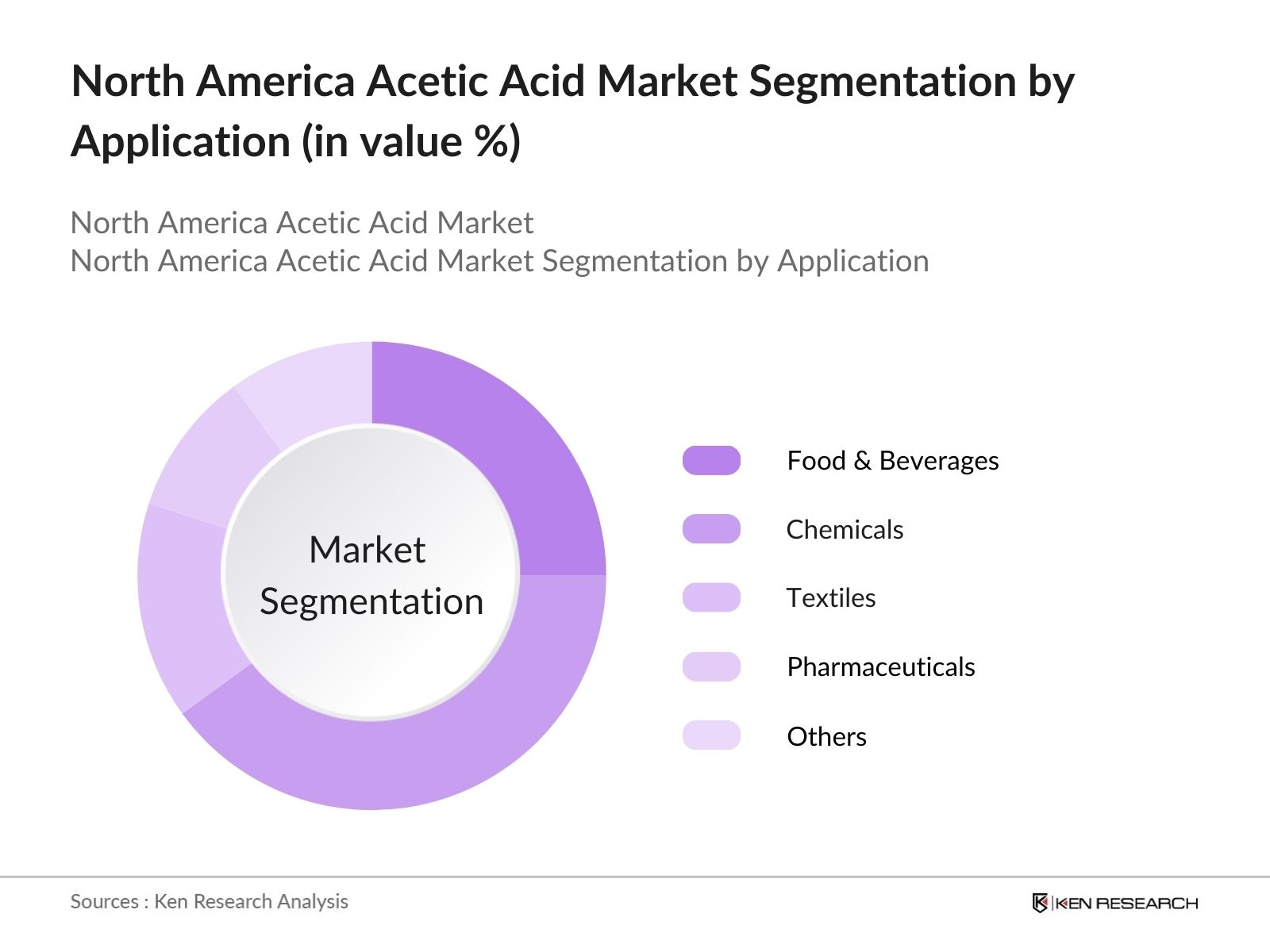
By Application: The North America acetic acid market is segmented by application into food & beverage, chemicals, textiles, pharmaceuticals, and others (plastics, adhesives, etc.). Recently, the chemicals segment holds a dominant market share due to the extensive use of acetic acid as a precursor in the production of VAM and PTA. These compounds are critical in manufacturing adhesives, coatings, and synthetic fibers, which are in high demand in both industrial and consumer applications. The growing use of acetic acid in the food industry as a preservative and flavoring agent also bolsters its share in this segment.
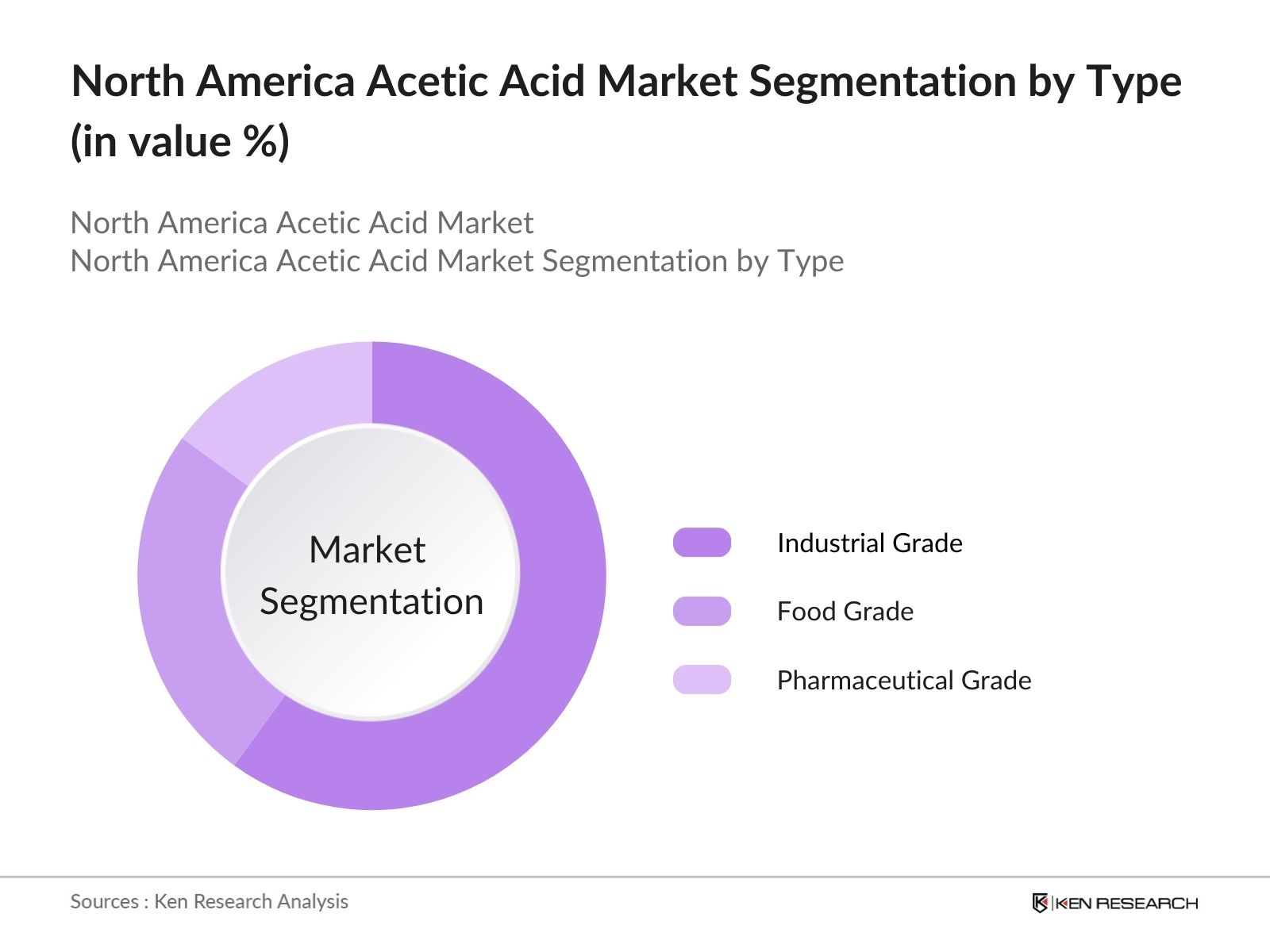
By Type: The market is also segmented by type into industrial grade, food grade, and pharmaceutical grade. Industrial-grade acetic acid dominates the market share due to its high demand in the chemical and textile industries, where large quantities are needed for the production of VAM and PTA. The demand for food-grade acetic acid, though significant, is more niche, driven by the food and beverage sector for its use as an acidulant and preservative.
The North America acetic acid market is dominated by several key players, including multinational companies with a strong global presence. These players have established themselves through large-scale production capacities, strategic collaborations, and investments in bio-based acetic acid technologies. The competitive landscape highlights the significant influence of established companies such as Celanese and LyondellBasell, which drive market trends through innovation and expansions.
|
Company |
Establishment Year |
Headquarters |
Production Capacity |
Global Presence |
Key Products |
Revenue (2023) |
R&D Investment |
Sustainability Initiatives |
|
Celanese Corporation |
1918 |
Texas, U.S. |
- |
- |
- |
- |
- |
- |
|
LyondellBasell Industries |
1985 |
Texas, U.S. |
- |
- |
- |
- |
- |
- |
|
Eastman Chemical Company |
1920 |
Tennessee, U.S. |
- |
- |
- |
- |
- |
- |
|
Dow Chemical Company |
1897 |
Michigan, U.S. |
- |
- |
- |
- |
- |
- |
|
Sasol Limited |
1950 |
Johannesburg, SA |
- |
- |
- |
- |
- |
- |
Growth Drivers
Challenges
North America acetic acid market is poised for significant growth, driven by increasing demand from the chemical and textile industries. The growing shift toward bio-based acetic acid, fueled by sustainability initiatives, is expected to reshape the competitive landscape. Additionally, advancements in acetic acid production technologies, particularly in terms of reducing carbon emissions, are likely to play a key role in shaping the future market trajectory. The expanding application of acetic acid in industries such as food and beverages, and pharmaceuticals will also contribute to overall market growth.
Market Opportunities
|
Segment |
Sub-Segment |
|
By Application |
Food & Beverage |
|
Chemicals |
|
|
Textiles |
|
|
Pharmaceuticals |
|
|
Others (Plastics, Adhesives, etc.) |
|
|
By Type |
Industrial Grade |
|
Food Grade |
|
|
Pharmaceutical Grade |
|
|
By Manufacturing Process |
Carbonylation of Methanol |
|
Oxidation of Acetaldehyde |
|
|
Oxidation of Ethanol |
|
|
By End-Use Industry |
Petrochemicals |
|
Plastics |
|
|
Paints and Coatings |
|
|
Agriculture |
|
|
Others (Pharmaceuticals, Detergents) |
|
|
By Region |
United States |
|
Canada |
|
|
Mexico |
1.1. Definition and Scope
1.2. Market Taxonomy
1.3. Industry Dynamics
1.4. Value Chain Analysis
2.1. Historical Market Size
2.2. Current Market Size
2.3. Acetic Acid Consumption Trends
2.4. Key Market Milestones
3.1. Growth Drivers (Acetic Acid Industry)
3.1.1. Increasing Demand in the Textile Industry
3.1.2. Rising Use in the Chemical Sector
3.1.3. Government Support for Bio-Based Acetic Acid
3.1.4. Expansion of the Food & Beverage Sector
3.2. Market Challenges (Acetic Acid Industry)
3.2.1. Fluctuation in Raw Material Prices
3.2.2. Environmental Regulations on Acetic Acid Production
3.2.3. Competitive Landscape and Substitutes
3.2.4. Limited Capacity Expansion in Key Regions
3.3. Opportunities (Acetic Acid Industry)
3.3.1. Adoption of Bio-Acetic Acid
3.3.2. Growth in Emerging Markets for Vinyl Acetate Monomer (VAM)
3.3.3. Strategic Collaborations in Pharmaceutical Sector
3.3.4. Development of New Applications in Paints and Coatings
3.4. Trends (Acetic Acid Industry)
3.4.1. Shift Toward Sustainable and Green Chemicals
3.4.2. Technological Advancements in Production Methods
3.4.3. Integration of Acetic Acid in Carbon Neutral Processes
3.4.4. Growth in Online Retail of Acetic Acid-based Products
3.5. Government Regulation (Acetic Acid Industry)
3.5.1. Environmental Compliance and Emission Control
3.5.2. Trade Policies on Acetic Acid Exports and Imports
3.5.3. Subsidies and Incentives for Bio-Based Acetic Acid
3.5.4. Regulatory Standards on Food-Grade Acetic Acid
3.6. SWOT Analysis (Acetic Acid Industry)
3.7. Stake Ecosystem (Acetic Acid Industry)
3.8. Porters Five Forces (Acetic Acid Industry)
3.9. Competition Ecosystem (Acetic Acid Industry)
4.1. By Application (In Value %)
4.1.1. Food & Beverage
4.1.2. Chemicals
4.1.3. Textiles
4.1.4. Pharmaceuticals
4.1.5. Others (Plastics, Adhesives, etc.)
4.2. By Type (In Value %)
4.2.1. Industrial Grade
4.2.2. Food Grade
4.2.3. Pharmaceutical Grade
4.3. By Manufacturing Process (In Value %)
4.3.1. Carbonylation of Methanol
4.3.2. Oxidation of Acetaldehyde
4.3.3. Oxidation of Ethanol
4.4. By End-Use Industry (In Value %)
4.4.1. Petrochemicals
4.4.2. Plastics
4.4.3. Paints and Coatings
4.4.4. Agriculture
4.4.5. Others (Pharmaceuticals, Detergents)
4.5. By Region (In Value %)
4.5.1. United States
4.5.2. Canada
4.5.3. Mexico
5.1. Detailed Profiles of Major Companies
5.1.1. Celanese Corporation
5.1.2. BP Plc
5.1.3. LyondellBasell Industries
5.1.4. Eastman Chemical Company
5.1.5. Dow Chemicals
5.1.6. Daicel Corporation
5.1.7. Jubilant Life Sciences
5.1.8. Sasol Limited
5.1.9. HELM AG
5.1.10. GNFC (Gujarat Narmada Valley Fertilizers & Chemicals)
5.2. Cross Comparison Parameters (Revenue, Global Presence, Inception Year, Employee Base, Market Share, Acquisitions, R&D Investments, Production Capacity)
5.3. Market Share Analysis
5.4. Strategic Initiatives (Acetic Acid Industry)
5.5. Mergers and Acquisitions (Acetic Acid Industry)
5.6. Investment Analysis (Acetic Acid Industry)
5.7. Venture Capital Funding (Acetic Acid Industry)
5.8. Government Grants (Acetic Acid Industry)
5.9. Private Equity Investments (Acetic Acid Industry)
6.1. Emission Control Regulations
6.2. Compliance with Food Safety Standards (Food Grade Acetic Acid)
6.3. Environmental Impact Assessment (EIA) Requirements
6.4. Safety and Handling Standards
7.1. Future Market Size Projections
7.2. Key Factors Driving Future Market Growth
8.1. By Application (In Value %)
8.2. By Type (In Value %)
8.3. By End-Use Industry (In Value %)
8.4. By Manufacturing Process (In Value %)
8.5. By Region (In Value %)
9.1. TAM/SAM/SOM Analysis
9.2. Product Positioning Strategy
9.3. Key Areas for Investment
9.4. White Space Opportunity Analysis
The first step involves mapping out the entire ecosystem of stakeholders within the North America acetic acid market. Extensive desk research, supported by proprietary databases, is conducted to identify the primary variables that influence market trends, such as production capacity, raw material pricing, and government regulations.
This step includes collecting and analyzing historical data on production volumes, acetic acid applications, and regional trends in North America. Market penetration and the key factors influencing demand and supply are evaluated, including pricing strategies and competitive positioning. The aim is to provide accurate revenue and consumption forecasts.
We validate the market hypotheses through consultations with industry experts from various sectors, such as petrochemicals and pharmaceuticals, using structured interviews and surveys. These insights ensure that the data gathered reflects real-world market conditions and is robust enough to support decision-making.
The final step involves synthesizing all the data collected into a comprehensive report. This includes verifying the accuracy of the statistics through interaction with major acetic acid producers in North America. This bottom-up approach ensures a precise understanding of the market's future trajectory.
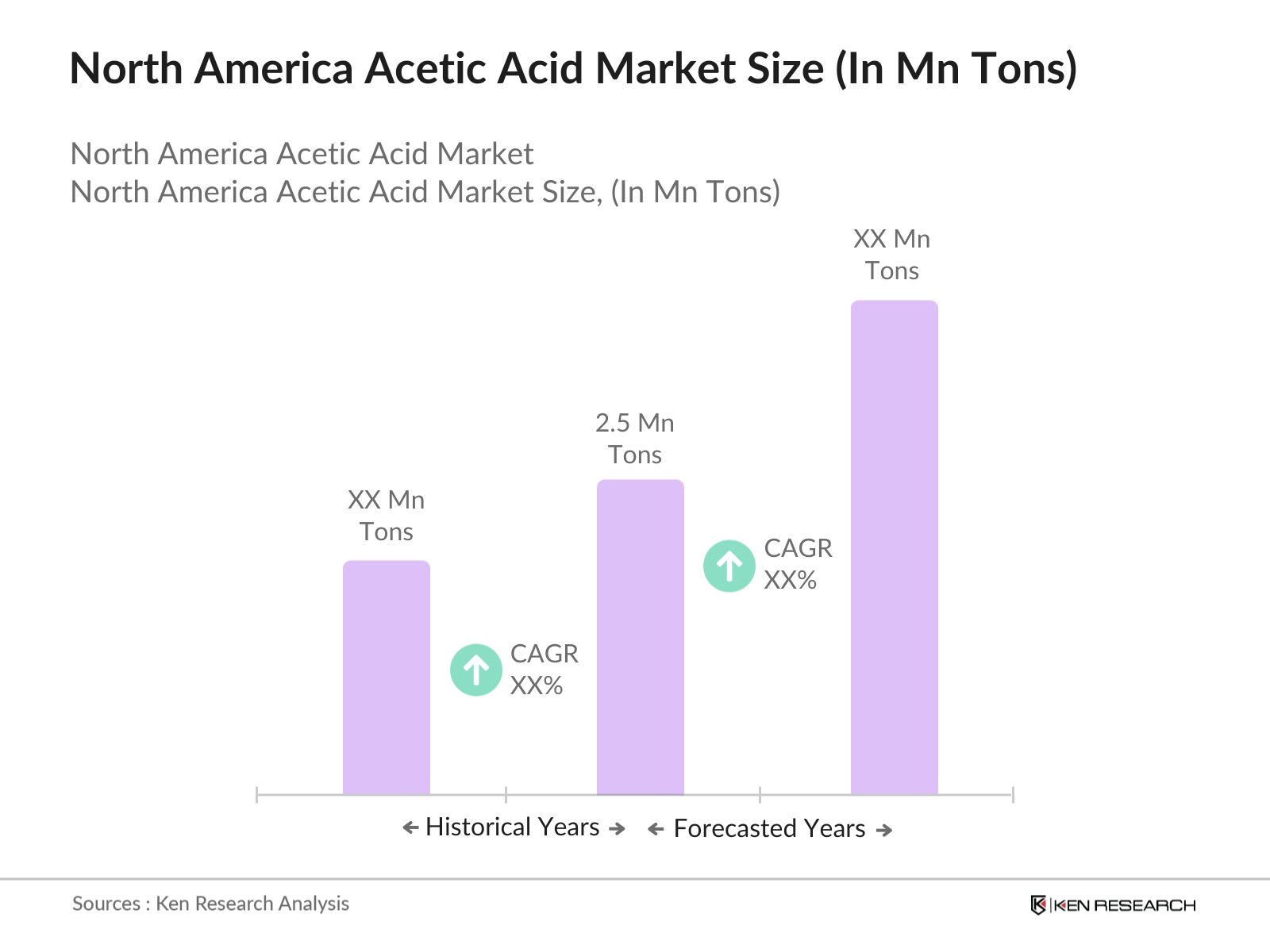
The North America acetic acid market is valued at 2.5 million tons, driven by increasing demand across various sectors such as chemicals, textiles, and food and beverages.
Key challenges of North America acetic acid market include fluctuating raw material prices, stringent environmental regulations on production, and the availability of substitutes such as propionic acid.
The major players in North America acetic acid market market include Celanese Corporation, LyondellBasell Industries, Eastman Chemical Company, Dow Chemical Company, and Sasol Limited.
North America acetic acid market is driven by the growing demand for VAM and PTA in industries like adhesives, coatings, and textiles. Increasing bio-based acetic acid production is also a major driver.

What makes us stand out is that our consultants follows Robust, Refine and Result (RRR) methodology. i.e. Robust for clear definitions, approaches and sanity checking, Refine for differentiating respondents facts and opinions and Result for presenting data with story

We have set a benchmark in the industry by offering our clients with syndicated and customized market research reports featuring coverage of entire market as well as meticulous research and analyst insights.

While we don't replace traditional research, we flip the method upside down. Our dual approach of Top Bottom & Bottom Top ensures quality deliverable by not just verifying company fundamentals but also looking at the sector and macroeconomic factors.

With one step in the future, our research team constantly tries to show you the bigger picture. We help with some of the tough questions you may encounter along the way: How is the industry positioned? Best marketing channel? KPI's of competitors? By aligning every element, we help maximize success.

Our report gives you instant access to the answers and sources that other companies might choose to hide. We elaborate each steps of research methodology we have used and showcase you the sample size to earn your trust.

If you need any support, we are here! We pride ourselves on universe strength, data quality, and quick, friendly, and professional service.