















North America Adaptive Lighting Systems Market Outlook to 2030
Region:North America
Author(s):Paribhasha Tiwari
Product Code:KROD9506
December 2024
90
About the Report
North America Automotive Adaptive Lighting Systems Market Overview
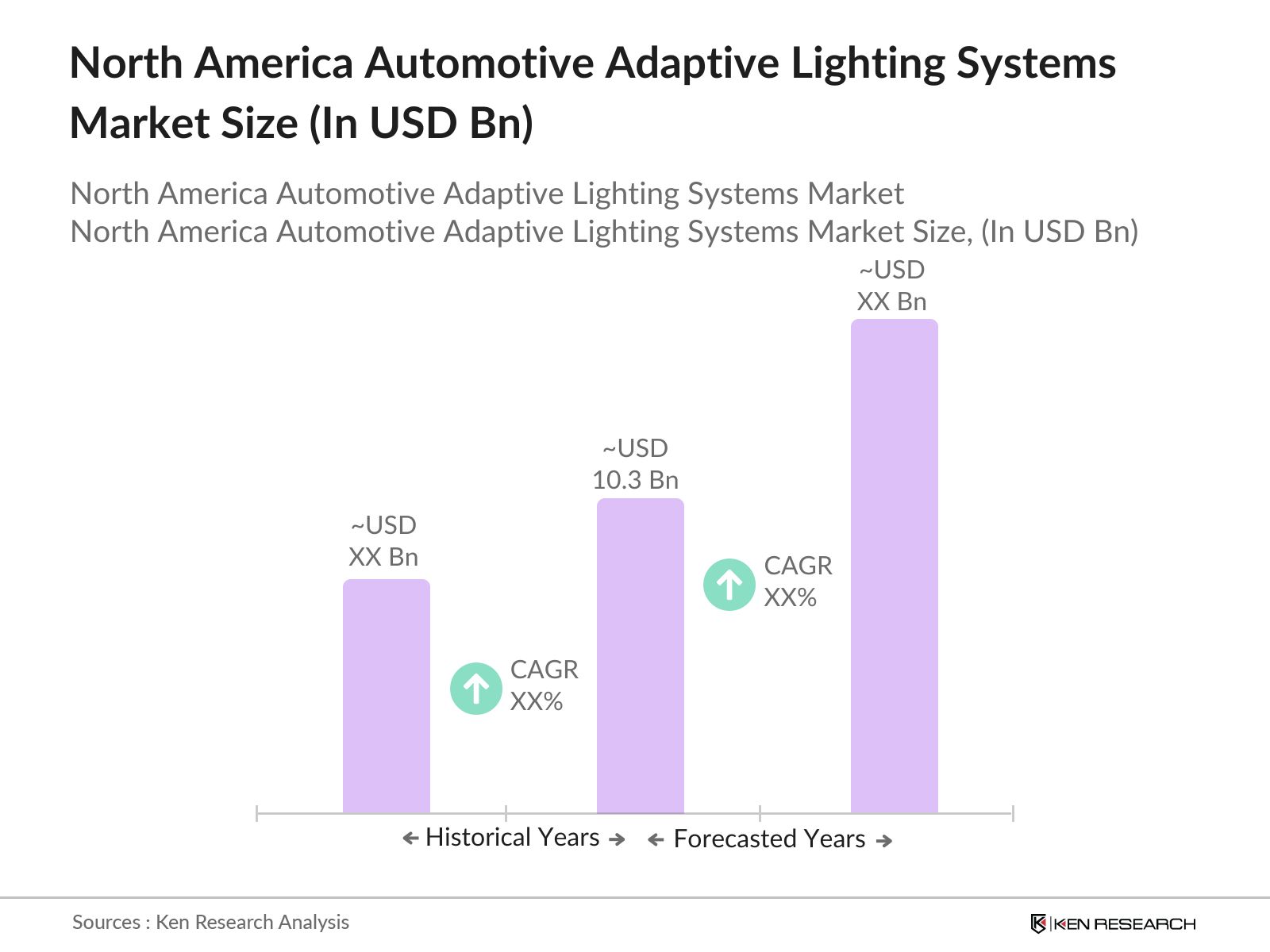
- The North America Automotive Adaptive Lighting Systems Market is valued at USD 10.3 billion, driven by the increasing demand for energy-efficient lighting solutions and IoT-based lighting management. Technological advancements in lighting systems, coupled with the rapid adoption of smart city initiatives, are fueling market expansion. Automotive Adaptive Lighting systems allow efficient power management, reducing energy consumption and offering enhanced lighting experiences in various applications, from residential to commercial and industrial sectors.
- The United States is the primary market leader in Automotive Adaptive Lighting systems due to high urbanization rates, robust government support for energy efficiency, and early adoption of smart infrastructure. Canada follows closely, supported by sustainable development policies and demand for eco-friendly technology in urban planning. The dominance of these countries stems from significant investments in smart building solutions and supportive regulatory frameworks promoting energy-efficient technologies.
- Green building certifications like LEED in the U.S. and BREEAM in Canada incentivize energy-efficient lighting practices. In 2024, LEED-certified buildings saved an estimated 15 million kWh in energy from Automotive Adaptive Lighting technologies, promoting market growth by setting benchmarks for sustainability. These certifications are a crucial factor in the widespread adoption of Automotive Adaptive Lighting in new and existing structures.
North America Automotive Adaptive Lighting Systems Market Segmentation
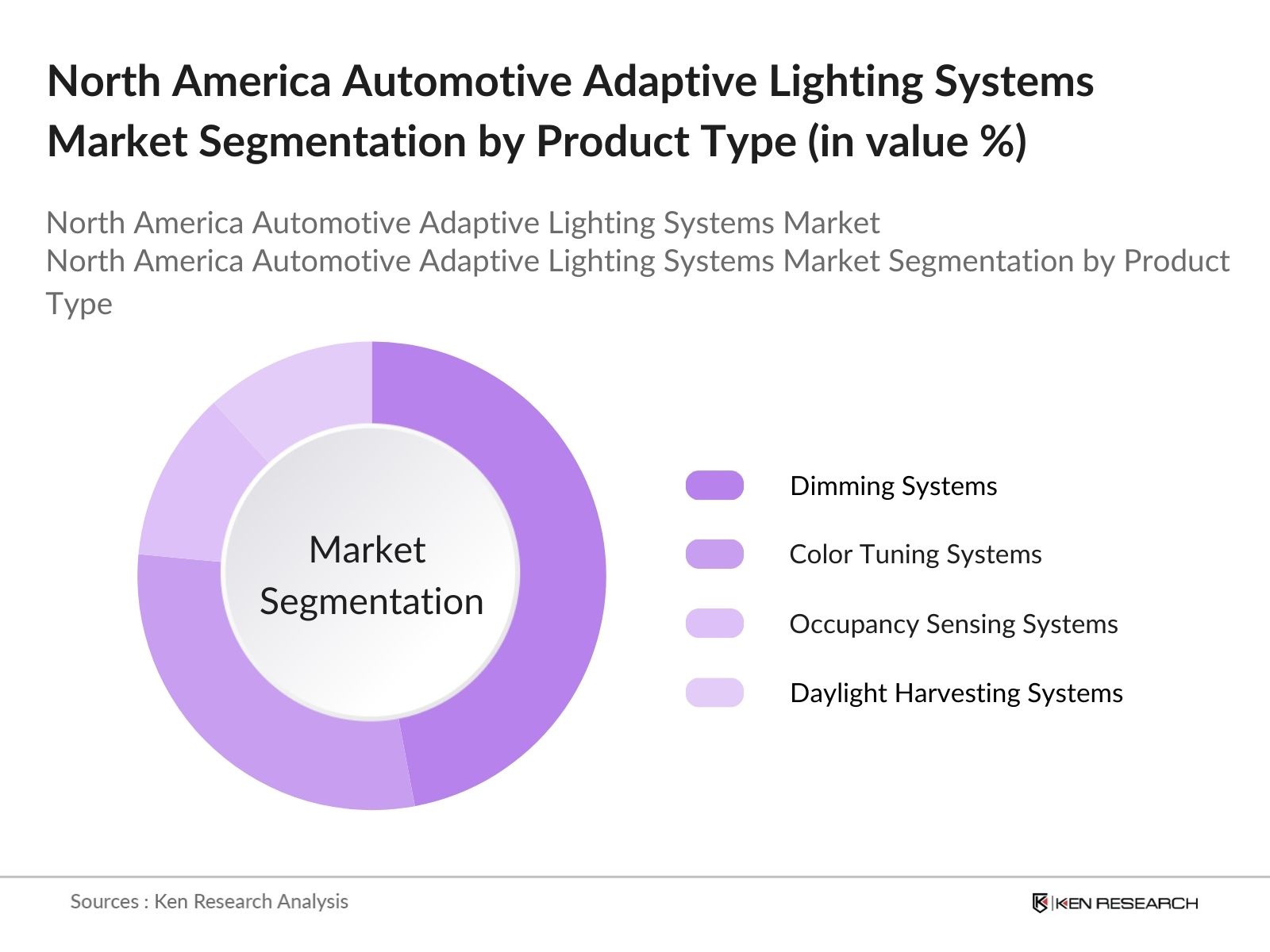
By Product Type: The Market is segmented by product type into Dimming Systems, Color Tuning Systems, Occupancy Sensing Systems, and Daylight Harvesting Systems. Among these, Dimming Systems hold the largest market share. This segments dominance is attributed to its critical role in managing lighting levels to conserve energy and improve ambience, especially in commercial spaces and homes. With advancements in dimming technology allowing seamless integration with wireless controls and IoT platforms, dimming systems are becoming the preferred choice in smart lighting solutions across North America.
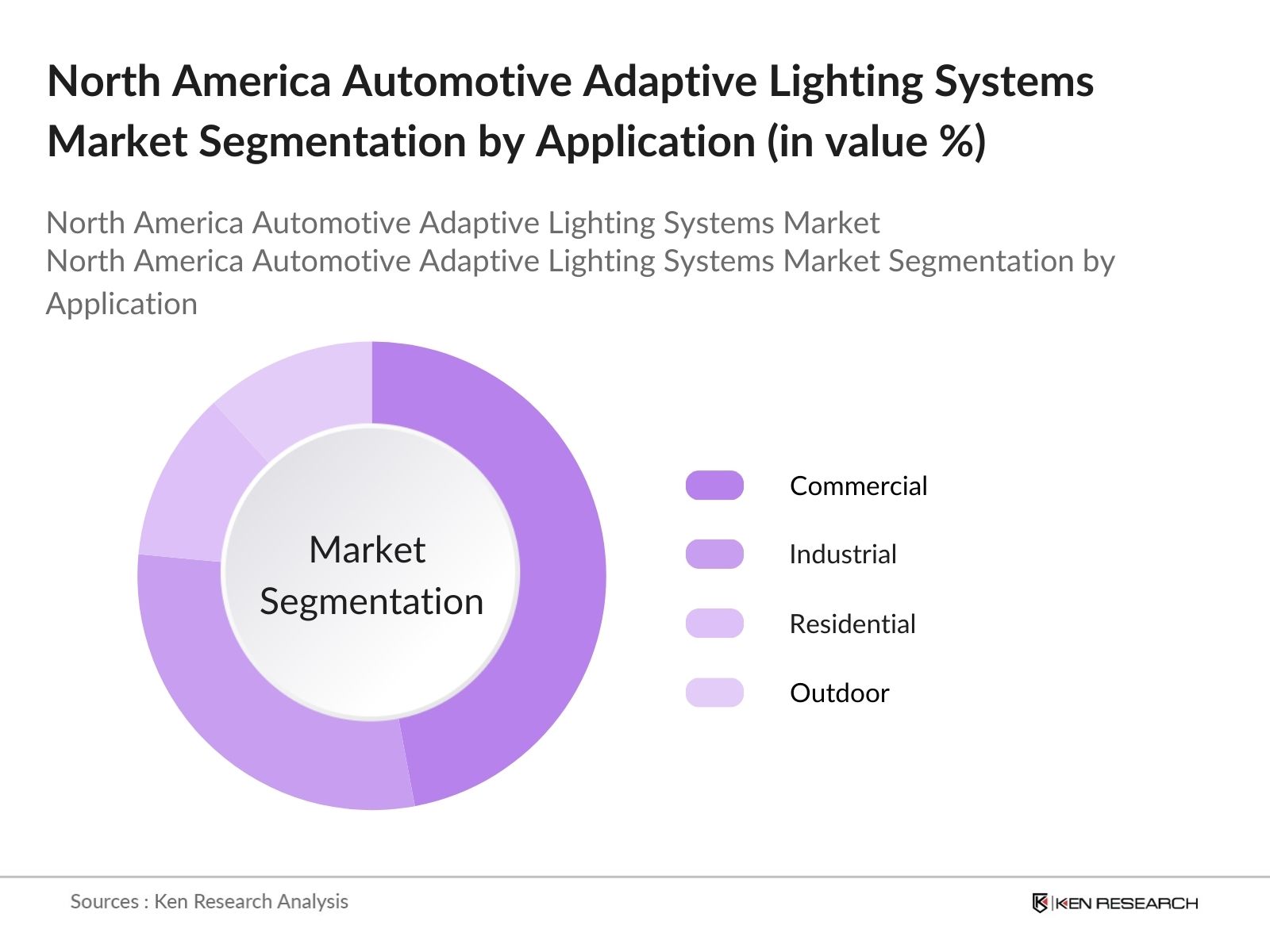
By Application: The market is segmented by application into Residential, Commercial, Industrial, and Outdoor. The Commercial segment holds the largest market share due to the growing demand for energy-efficient lighting in corporate offices, retail stores, and hospitality spaces. Automotive Adaptive Lighting solutions in the commercial sector contribute to reducing energy costs and enhancing the aesthetic appeal of spaces. Additionally, with sustainability becoming a priority, companies are increasingly investing in Automotive Adaptive Lighting to meet environmental regulations and improve workplace ambiance and productivity.
North America Automotive Adaptive Lighting Systems Market Competitive Landscape
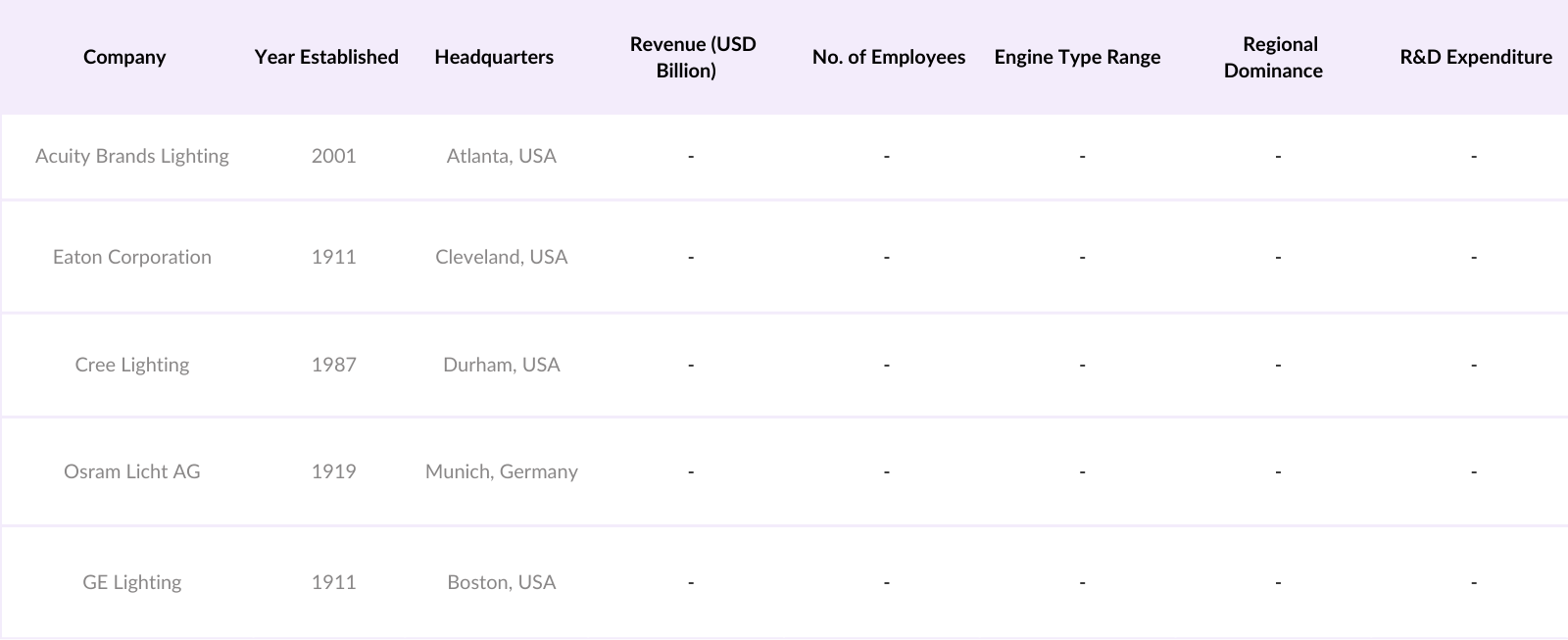
The North America Automotive Adaptive Lighting Systems Market is characterized by a mix of established players and new entrants innovating within the smart lighting ecosystem. Leading companies such as Acuity Brands, Eaton Corporation, and GE Lighting dominate the market, leveraging their extensive R&D capabilities and product portfolios to meet evolving consumer demands.
North America Automotive Adaptive Lighting Systems Industry Anaysis
Growth Drivers
- Advancements in IoT-Integrated Lighting: The North American Automotive Adaptive Lighting systems market is seeing increased demand driven by advancements in IoT-integrated lighting solutions. In 2024, an estimated 1.5 billion IoT devices will be used across various applications, including lighting, creating opportunities for highly automated, efficient systems. According to the U.S. Department of Energy, IoT-connected lighting systems can reduce energy consumption by up to 20 billion kWh annually. This integration allows for optimized lighting based on occupancy, daylight, and environmental factors, further enhancing energy efficiency and system automation.
- Increasing Energy Efficiency Mandates: Energy efficiency mandates are pushing adoption in the Automotive Adaptive Lighting sector across North America. The U.S. Energy Policy Act requires lighting installations to meet specific efficiency levels, resulting in an annual reduction of approximately 300 million kWh. Furthermore, Canadas Energy Efficiency Regulations call for similar compliance, with lighting upgrades accounting for nearly 5 million tons in reduced CO emissions. These regulatory mandates are instrumental in driving demand for Automotive Adaptive Lighting solutions.
- Adoption of Smart City Initiatives: Smart city programs in North America are advancing the market for Automotive Adaptive Lighting. U.S. cities like San Diego have installed more than 4,000 Automotive Adaptive Lighting systems in urban areas, reducing municipal lighting costs by over $1 million annually. In Canada, Torontos Waterfront Toronto project integrates Automotive Adaptive Lighting as part of its smart city model, enhancing both energy efficiency and public safety. These initiatives significantly boost the regional demand for Automotive Adaptive Lighting systems.
Market Challenges
- High Installation and Maintenance Costs: Automotive Adaptive Lighting systems often involve high initial costs, limiting adoption across North America. According to the U.S. Department of Energy, installations of Automotive Adaptive Lighting can cost up to $40 per fixture, which is higher than conventional lighting. Maintenance costs further increase due to the advanced sensors and IoT technology required. This economic barrier impacts the adoption rate, particularly in residential applications.
- Data Privacy and Cybersecurity Concerns: Cybersecurity concerns present challenges for IoT-enabled Automotive Adaptive Lighting systems. In 2023, the U.S. Cybersecurity and Infrastructure Security Agency reported over 5,000 security incidents related to IoT systems, highlighting vulnerabilities in lighting networks. Privacy concerns arise as systems collect data on user behavior and occupancy. These security and privacy issues pose significant barriers to widespread adoption in sensitive applications like healthcare and government buildings.
North America Automotive Adaptive Lighting Systems Market Future Outlook
The North America Automotive Adaptive Lighting Systems Market is poised for substantial growth over the next five years. This anticipated expansion will be driven by increasing adoption of IoT-integrated lighting solutions, growing energy efficiency standards, and the rising trend of smart cities. As sustainability becomes a central theme across North America, the market is expected to attract more investments in advanced lighting technologies and green infrastructure projects, positioning it for long-term growth.
Market Opportunities
- Growth in Smart Home Adoption: The increase in smart home installations presents growth opportunities for Automotive Adaptive Lighting systems in North America. The U.S. Department of Commerce reported that 55 million households use at least one smart home device, with lighting among the top three applications. As home automation becomes mainstream, Automotive Adaptive Lighting systems are expected to see greater adoption, driven by consumer preference for customizable and energy-efficient home environments.
- Expansion in Wireless Lighting Controls: Wireless lighting controls are expanding, creating new opportunities in the Automotive Adaptive Lighting market. In 2023, nearly 40% of new commercial lighting installations in North America featured wireless control systems, according to the International Energy Agency. These systems are particularly favored for their easy integration into existing infrastructures and reduced installation time. This trend boosts market demand for flexible and retrofit-friendly lighting solutions.
Scope of the Report
|
By Product Type |
Dimming Systems Color Tuning System Occupancy Sensing Systems Daylight Harvesting Systems |
|
By Application |
Residential Commercial Industrial Outdoor |
|
By Component |
Sensors |
|
By Region |
United States |
Products
Key Target Audience
Automotive Adaptive Lighting Solution Providers
Real Estate and Smart Building Developers
Lighting Fixture Manufacturers
Industrial and Commercial Lighting Contractors
IoT and Smart Home Platform Providers
Investments and Venture Capitalist Firms
Environmental Sustainability Organizations
Government and Regulatory Bodies (e.g., U.S. Department of Energy, Canadian Ministry of Natural Resources)
Companies
Players Mentioned in the Report:
-
Acuity Brands Lighting
-
Eaton Corporation
-
Cree Lighting
-
Osram Licht AG
-
GE Lighting
-
Hubbell Incorporated
-
Signify (Philips Lighting)
-
Lutron Electronics Co., Inc.
-
Honeywell International Inc.
-
Legrand
Table of Contents
1. North America Automotive Adaptive Lighting Systems Market Overview
1.1 Definition and Scope
1.2 Market Taxonomy
1.3 Market Growth Rate (Lumens per Watt)
1.4 Market Segmentation Overview
2. North America Automotive Adaptive Lighting Systems Market Size (In USD Mn)
2.1 Historical Market Size
2.2 Year-On-Year Growth Analysis
2.3 Key Market Developments and Milestones
3. North America Automotive Adaptive Lighting Systems Market Dynamics
3.1 Growth Drivers
3.1.1 Advancements in IoT-Integrated Lighting
3.1.2 Increasing Energy Efficiency Mandates
3.1.3 Adoption of Smart City Initiatives
3.1.4 Rise in Sustainable Building Practices
3.2 Market Challenges
3.2.1 High Installation and Maintenance Costs
3.2.2 Data Privacy and Cybersecurity Concerns
3.2.3 Limited Standardization Across Platforms
3.3 Opportunities
3.3.1 Growth in Smart Home Adoption
3.3.2 Expansion in Wireless Lighting Controls
3.3.3 Innovations in Sensor Technologies
3.3.4 Integration with Augmented Reality
3.4 Trends
3.4.1 Customizable Ambient Lighting Solutions
3.4.2 Wireless Control Systems
3.4.3 Development of Daylight Harvesting Technologies
3.4.4 Increased Demand for Aesthetic Flexibility in Architecture
3.5 Government Regulations
3.5.1 Energy Star and Efficiency Standards
3.5.2 Federal Tax Incentives for Energy Efficiency
3.5.3 Green Building Certifications
3.5.4 Zoning and Lighting Ordinances
3.6 SWOT Analysis
3.7 Ecosystem and Stakeholder Analysis
3.8 Porters Five Forces Analysis
3.9 Competitive Landscape Overview
4. North America Automotive Adaptive Lighting Systems Market Segmentation
4.1 By Product Type (In Value %)
4.1.1 Dimming Systems
4.1.2 Color Tuning Systems
4.1.3 Occupancy Sensing Systems
4.1.4 Daylight Harvesting Systems
4.2 By Application (In Value %)
4.2.1 Residential
4.2.2 Commercial (Retail, Hospitality)
4.2.3 Industrial
4.2.4 Outdoor (Street Lighting)
4.3 By Technology (In Value %)
4.3.1 Wired Automotive Adaptive Lighting
4.3.2 Wireless Automotive Adaptive Lighting
4.3.3 Hybrid Systems
4.4 By End-User (In Value %)
4.4.1 Governmental
4.4.2 Corporate
4.4.3 Educational Institutions
4.4.4 Entertainment Venues
4.5 By Region (In Value %)
4.5.1 United States
4.5.2 Canada
4.5.3 Mexico
5. North America Automotive Adaptive Lighting Systems Market Competitive Analysis
5.1 Detailed Profiles of Major Companies
5.1.1 Acuity Brands Lighting
5.1.2 Eaton Corporation
5.1.3 Cree Lighting
5.1.4 Osram Licht AG
5.1.5 GE Lighting
5.1.6 Lutron Electronics Co., Inc.
5.1.7 Philips Lighting (Signify)
5.1.8 Hubbell Incorporated
5.1.9 Honeywell International Inc.
5.1.10 Legrand
5.1.11 RAB Lighting Inc.
5.1.12 Cooper Lighting Solutions
5.1.13 Zumtobel Group
5.1.14 Cree Inc.
5.1.15 Fagerhult Group
5.2 Cross-Comparison Parameters (R&D Expenditure, Patents Filed, IoT Integration Level, Sustainability Goals, Revenue, Number of Smart Lighting Projects, Employee Base, Key Partnerships)
5.3 Market Share Analysis
5.4 Strategic Initiatives
5.5 Mergers and Acquisitions
5.6 Investment Analysis
5.7 Government Subsidies
5.8 Private Equity Investments
6. North America Automotive Adaptive Lighting Systems Market Regulatory Framework
6.1 Lighting Efficiency Standards
6.2 Privacy and Data Protection Laws
6.3 Product Safety and Testing Requirements
6.4 Smart Infrastructure Policies
7. North America Automotive Adaptive Lighting Systems Future Market Size (In USD Mn)
7.1 Market Forecast and Growth Projections
7.2 Key Influencing Factors for Future Market Expansion
8. North America Automotive Adaptive Lighting Systems Future Market Segmentation
8.1 By Product Type (In Value %)
8.2 By Application (In Value %)
8.3 By Technology (In Value %)
8.4 By End-User (In Value %)
8.5 By Region (In Value %)
9.North America Automotive Adaptive Lighting Systems Market Analysts Recommendations
9.1 Total Addressable Market (TAM)/Serviceable Addressable Market (SAM)/Serviceable Obtainable Market (SOM) Analysis
9.2 Strategic Entry Points and Customer Segment Analysis
9.3 Recommended Marketing and Distribution Channels
9.4 Innovation and White Space Opportunity Analysis
Disclaimer Contact UsResearch Methodology
Step 1: Identification of Key Variables
In the initial phase, we map the Automotive Adaptive Lighting system ecosystem, including all major stakeholders. Extensive desk research utilizing secondary and proprietary databases is conducted to gather comprehensive industry-level data and identify key market dynamics and influencers.
Step 2: Market Analysis and Construction
This phase compiles and analyzes historical data for the North America Automotive Adaptive Lighting Systems Market. Key metrics include market penetration rates, adoption levels in residential versus commercial segments, and revenue generation by product type. We also assess operational quality to ensure accuracy in revenue estimates.
Step 3: Hypothesis Validation and Expert Consultation
Market hypotheses are formulated and validated through in-depth interviews with industry experts using computer-assisted telephone interviews (CATIs). These interviews yield operational insights, adding depth to our market projections and understanding of market dynamics.
Step 4: Research Synthesis and Final Output
The final phase involves collaborating with lighting system manufacturers and smart building solution providers to obtain insights on product segments, sales trends, consumer preferences, and other crucial factors. This bottom-up approach ensures a comprehensive and validated analysis of the North America Automotive Adaptive Lighting Systems Market.
Frequently Asked Questions
01. How big is the North America Automotive Adaptive Lighting Systems Market?
The North America Automotive Adaptive Lighting Systems Market is valued at USD 10.3 billion, driven by increased demand for energy-efficient solutions and IoT-based smart lighting controls.
02. What are the major challenges in the North America Automotive Adaptive Lighting Systems Market?
Challenges in the North America Automotive Adaptive Lighting Systems Market include high installation costs, concerns over data privacy in IoT-enabled systems, and the lack of standardized lighting protocols across different smart home platforms.
03. Who are the key players in the North America Automotive Adaptive Lighting Systems Market?
Key players in the North America Automotive Adaptive Lighting Systems Market include Acuity Brands Lighting, Eaton Corporation, Cree Lighting, GE Lighting, and Osram Licht AG, each known for their innovative lighting solutions and strong market presence.
04. What drives the growth of the North America Automotive Adaptive Lighting Systems Market?
Growth in the North America Automotive Adaptive Lighting Systems Market is driven by smart city initiatives, advancements in lighting control technologies, and increasing environmental awareness pushing demand for sustainable lighting solutions.
Why Buy From Us?

What makes us stand out is that our consultants follows Robust, Refine and Result (RRR) methodology. i.e. Robust for clear definitions, approaches and sanity checking, Refine for differentiating respondents facts and opinions and Result for presenting data with story

We have set a benchmark in the industry by offering our clients with syndicated and customized market research reports featuring coverage of entire market as well as meticulous research and analyst insights.

While we don't replace traditional research, we flip the method upside down. Our dual approach of Top Bottom & Bottom Top ensures quality deliverable by not just verifying company fundamentals but also looking at the sector and macroeconomic factors.

With one step in the future, our research team constantly tries to show you the bigger picture. We help with some of the tough questions you may encounter along the way: How is the industry positioned? Best marketing channel? KPI's of competitors? By aligning every element, we help maximize success.

Our report gives you instant access to the answers and sources that other companies might choose to hide. We elaborate each steps of research methodology we have used and showcase you the sample size to earn your trust.

If you need any support, we are here! We pride ourselves on universe strength, data quality, and quick, friendly, and professional service.