















North America Aircraft Engine Market Outlook to 2030
Region:North America
Author(s):Meenakshi Bisht
Product Code:KROD6966
December 2024
88
About the Report
North America Aircraft Engine Market Overview
- The North America Aircraft Engine Market is valued at USD 54.6 billion, driven by increasing aircraft deliveries, fleet expansion, and a strong focus on technological advancements. The aviation sector in North America has been seeing a significant recovery post-pandemic, with a surge in both domestic and international travel. Furthermore, airlines are increasingly opting for fuel-efficient and sustainable engines to meet regulatory demands and reduce operational costs, which is further fueling the demand for next-generation aircraft engines.
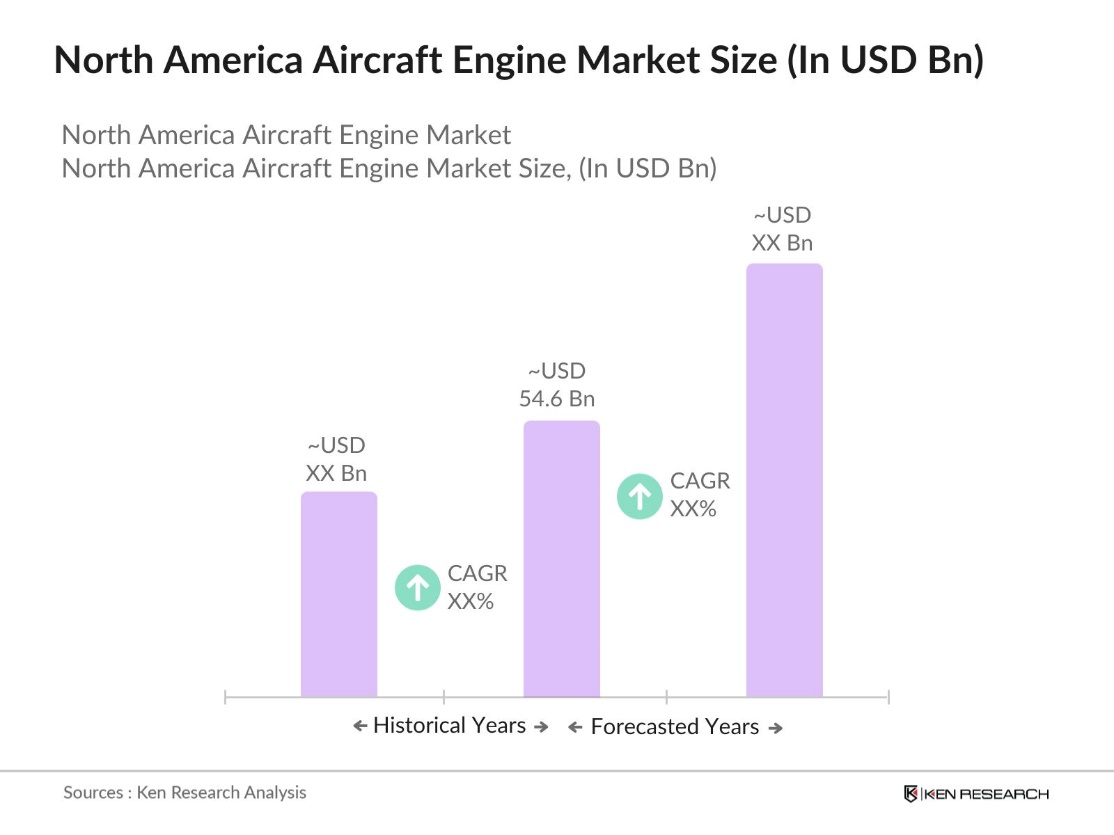
- The United States dominates the North American Aircraft Engine market due to its well-established aerospace industry, which hosts key global engine manufacturers such as GE Aviation and Pratt & Whitney. The countrys defense spending is also a critical factor, as military aviation programs demand advanced engine technologies. Additionally, Canada plays a significant role, particularly in the development and production of turboprop and regional aircraft engines, driven by Bombardier's extensive aerospace manufacturing capabilities.
- The FAA enforces strict certification requirements for aircraft engines, ensuring safety and reliability. In 2023, the FAA introduced new safety protocols requiring engine manufacturers to meet more stringent certification standards for commercial aircraft engines. These standards include enhanced safety checks, which have increased production timelines for engine manufacturers. Compliance with these regulations is mandatory, driving demand for certified, high-quality engines in the North American market.
North America Aircraft Engine Market Segmentation
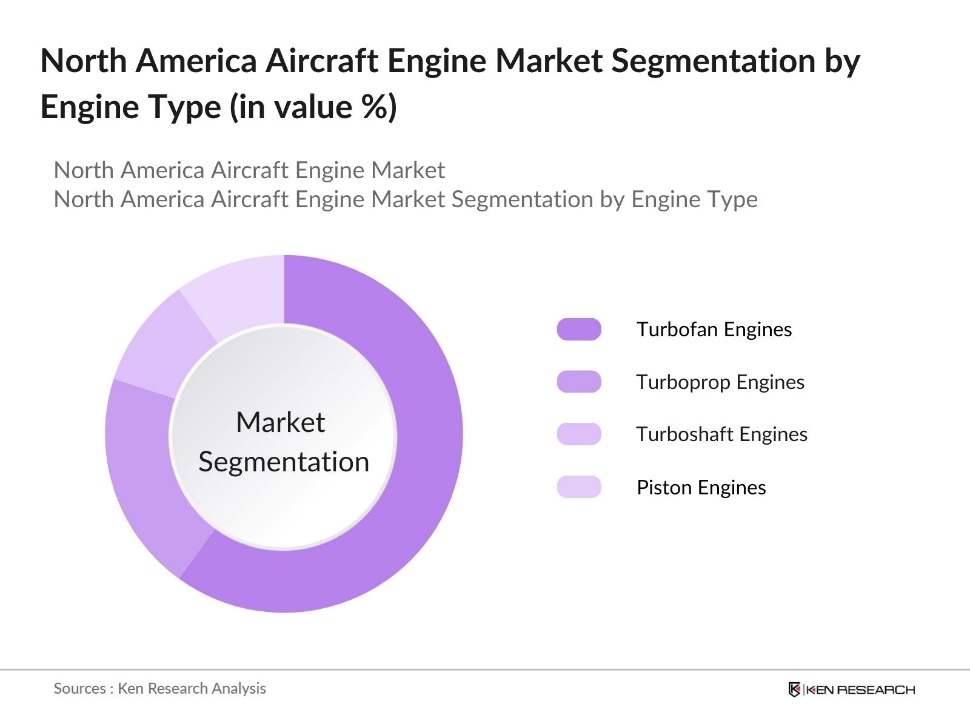
By Engine Type: The North American aircraft engine market is segmented by engine type into turbofan engines, turboprop engines, turboshaft engines, and piston engines. Among these, turbofan engines hold a dominant market share due to their application in commercial aviation, particularly in long-haul and wide-body aircraft. The demand for fuel-efficient turbofan engines, equipped with advanced technologies such as high-bypass ratios and noise-reducing features, has risen significantly as airlines aim to reduce fuel costs and meet stringent environmental regulations.
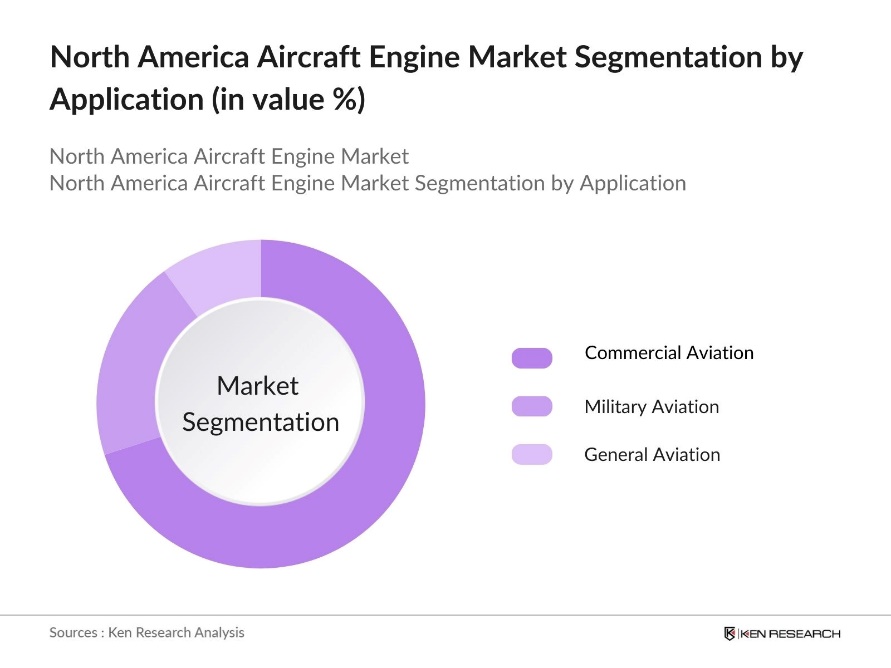
By Application: The North American aircraft engine market is segmented by application into commercial aviation, military aviation, and general aviation. Commercial aviation dominates the market due to the growing demand for air travel, aircraft replacements, and fleet modernization programs. Major airlines are upgrading their fleets with fuel-efficient engines to cut down operational costs and meet environmental targets, making the commercial sector a crucial growth driver. The military segment also plays a significant role, driven by government defense contracts that demand high-performance engines for fighter jets and unmanned aerial vehicles.
North America Aircraft Engine Market Competitive Landscape
The market is dominated by a few key players who have established a strong presence through continuous innovation, strategic partnerships, and a wide portfolio of engine models catering to both commercial and military aviation. Major players such as GE Aviation and Pratt & Whitney lead the market due to their cutting-edge engine technologies, extensive R&D investments, and established relationships with major aircraft manufacturers like Boeing and Airbus. The competitive landscape is further characterized by collaborations with government bodies and defense agencies, solidifying their market positions.
|
Company Name |
Establishment Year |
Headquarters |
R&D Spend (USD) |
Number of Employees |
Major Product Lines |
Strategic Partnerships |
Recent Developments |
|
GE Aviation |
1917 |
Ohio, USA |
|||||
|
Pratt & Whitney |
1925 |
Connecticut, USA |
|||||
|
Rolls-Royce Holdings |
1904 |
London, UK |
|||||
|
Safran Aircraft Engines |
1905 |
Paris, France |
|||||
|
Honeywell Aerospace |
1914 |
Arizona, USA |
North America Aircraft Engine Industry Analysis
Growth Drivers
- Rising Air Passenger Traffic (Aircraft Deliveries, Load Factors): The North American region has seen a consistent rise in air passenger traffic, supported by strong macroeconomic growth and increasing disposable incomes. Increased load factors for airlines also led to new aircraft orders. Boeing, for example, reported delivering over 528 aircraft in 2023 alone, fueled by this rising demand. This demand drives the need for new, efficient aircraft engines, benefiting the market.
- Technological Advancements (Fuel Efficiency, Engine Modularity): Technological advancements, such as improvements in fuel efficiency and engine modularity, are significant growth drivers. Next-generation engines like the Pratt & Whitney GTF have demonstrated a 16% fuel burn improvement. Modular designs allow for more cost-effective upgrades and maintenance, reducing operational downtime. These innovations directly correlate with a stronger demand for high-efficiency engines across both commercial and military sectors.
- Fleet Expansion (Commercial and Military): Fleet expansion is a major growth driver in the North American aircraft engine market, with both commercial airlines and military programs increasing their fleets. As airlines acquire new aircraft to meet rising passenger demand and military upgrades continue, the demand for efficient and advanced engines rises. This steady expansion supports engine deliveries and technological advancements in fuel efficiency and performance.
Market Challenges
- High Development Costs (R&D, Manufacturing): The development of aircraft engines requires significant financial investment, particularly in research and development (R&D) and manufacturing. These costs are heightened by the need for advanced technologies and skilled labor. Additionally, fluctuations in raw material prices further drive up manufacturing expenses. Such high costs create barriers for new market entrants and can delay the adoption of innovative engine technologies due to the substantial capital required for development.
- Stringent Environmental Regulations (Emission Standards, Noise Pollution): Strict environmental regulations present a major challenge for the aircraft engine industry. Emission and noise pollution standards require manufacturers to invest in eco-friendly technologies, which increases production costs and timelines. These regulations drive innovation but also slow down manufacturing processes. Non-compliance can result in penalties and limit market access for older, less efficient technologies, making it essential for manufacturers to keep up with evolving regulatory demands.
North America Aircraft Engine Market Future Outlook
Over the next five years, the North American aircraft engine market is expected to experience significant growth, driven by advancements in sustainable propulsion technologies and the need for more fuel-efficient aircraft. Airlines are projected to continue investing in new engine types, such as hybrid-electric and hydrogen-powered systems, to meet the growing demand for eco-friendly aviation solutions.
Market Opportunities
- Growing Demand for Sustainable Aviation Fuel (SAF-Compatible Engines): The global shift towards sustainability has created significant opportunities for engines compatible with sustainable aviation fuel (SAF). As airlines aim to reduce their carbon footprint, the demand for SAF-compatible engines is growing. These engines allow airlines to meet environmental regulations while advancing their sustainability goals. The adoption of SAF across commercial aviation presents a substantial growth opportunity for the aircraft engine market, driving innovation and development in this space.
- Electrification of Aircraft (Hybrid Electric and Fully Electric Propulsion Systems): The electrification of aircraft presents a major growth opportunity for the North American aircraft engine market. Hybrid-electric and fully electric propulsion systems are being developed to reduce fuel consumption and emissions. As this technology advances, demand for engines that support hybrid-electric and fully electric aircraft is expected to grow. This trend offers significant potential for manufacturers to innovate and capture new market segments in the aviation industry.
Scope of the Report
|
Engine Type |
Turbofan Engines Turboprop Engines Turboshaft Engines Piston Engines |
|
Platform |
Commercial Aviation Military Aviation Business and General Aviation |
|
Component |
Compressors Combustors Turbines Fan Sections |
|
Material |
Composites Alloys Titanium Ceramics |
|
Region |
United States Canada Mexico |
Products
Key Target Audience
Aircraft Manufacturers (Boeing, Airbus)
Engine Component Manufacturers
Aerospace Engineering Firms
Government and Regulatory Bodies (FAA, ICAO)
Investors and venture capital Firms
Banks and Financial Institutions
Companies
Players Mentioned in the Report
GE Aviation
Pratt & Whitney
Rolls-Royce Holdings
Safran Aircraft Engines
Honeywell Aerospace
MTU Aero Engines
IAE International Aero Engines
Williams International
PowerJet
Engine Alliance
Table of Contents
1. North America Aircraft Engine Market Overview
1.1. Definition and Scope
1.2. Market Taxonomy
1.3. Market Growth Rate
1.4. Market Segmentation Overview
2. North America Aircraft Engine Market Size (In USD Bn)
2.1. Historical Market Size
2.2. Year-On-Year Growth Analysis
2.3. Key Market Developments and Milestones
3. North America Aircraft Engine Market Analysis
3.1. Growth Drivers
3.1.1. Rising Air Passenger Traffic (Aircraft Deliveries, Load Factors)
3.1.2. Technological Advancements (Fuel Efficiency, Engine Modularity)
3.1.3. Government Investments (Aerospace Industry Development Funds)
3.1.4. Fleet Expansion (Commercial and Military)
3.2. Market Challenges
3.2.1. High Development Costs (R&D, Manufacturing)
3.2.2. Stringent Environmental Regulations (Emission Standards, Noise Pollution)
3.2.3. Supply Chain Disruptions (Raw Material Availability, Semiconductor Shortages)
3.3. Opportunities
3.3.1. Growing Demand for Sustainable Aviation Fuel (SAF-Compatible Engines)
3.3.2. Electrification of Aircraft (Hybrid Electric and Fully Electric Propulsion Systems)
3.3.3. Emerging Markets (Latin America and APAC Aircraft Procurement Programs)
3.4. Trends
3.4.1. Lightweight Engine Materials (Composites, Ceramic Matrix Components)
3.4.2. Digital Twin Technology (Predictive Maintenance, Real-Time Data Analytics)
3.4.3. Next-Generation Supersonic Engines (Sonic Boom Reduction Technologies)
3.5. Government Regulations
3.5.1. FAA Standards for Aircraft Engines (Certification Requirements, Safety Protocols)
3.5.2. ICAO Emission Guidelines (Carbon Emission Reduction, Global Offsetting Plans)
3.5.3. Military Defense Contracts (Engine Supply for Defense Aviation Programs)
3.6. SWOT Analysis
3.7. Stakeholder Ecosystem (OEMs, MRO Providers, Suppliers)
3.8. Porters Five Forces
3.9. Competition Ecosystem
4. North America Aircraft Engine Market Segmentation
4.1. By Engine Type (In Value %)
4.1.1. Turbofan Engines
4.1.2. Turboprop Engines
4.1.3. Turboshaft Engines
4.1.4. Piston Engines
4.2. By Platform (In Value %)
4.2.1. Commercial Aviation
4.2.2. Military Aviation
4.2.3. Business and General Aviation
4.3. By Component (In Value %)
4.3.1. Compressors
4.3.2. Combustors
4.3.3. Turbines
4.3.4. Fan Sections
4.4. By Material (In Value %)
4.4.1. Composites
4.4.2. Alloys
4.4.3. Titanium
4.4.4. Ceramics
4.5. By Region (In Value %)
4.5.1. United States
4.5.2. Canada
4.5.3. Mexico
5. North America Aircraft Engine Market Competitive Analysis
5.1. Detailed Profiles of Major Companies
5.1.1. General Electric Aviation
5.1.2. Pratt & Whitney (Raytheon Technologies)
5.1.3. Rolls-Royce Holdings
5.1.4. Safran Aircraft Engines
5.1.5. Honeywell Aerospace
5.1.6. CFM International (GE-Safran JV)
5.1.7. MTU Aero Engines
5.1.8. IAE International Aero Engines
5.1.9. Williams International
5.1.10. PowerJet (Snecma-NPO Saturn JV)
5.1.11. Engine Alliance (GE-Pratt & Whitney JV)
5.1.12. AVIC Aircraft Engine Company
5.1.13. Klimov
5.1.14. Hindustan Aeronautics Limited (HAL)
5.1.15. Aerojet Rocketdyne
5.2. Cross Comparison Parameters (R&D Spend, Production Capacity, Market Share, Strategic Collaborations, Engine Programs, Customer Base, Fleet Coverage, Certification Portfolio)
5.3. Market Share Analysis
5.4. Strategic Initiatives
5.5. Mergers And Acquisitions
5.6. Investment Analysis
5.7. Venture Capital Funding
5.8. Government Grants
5.9. Private Equity Investments
6. North America Aircraft Engine Market Regulatory Framework
6.1. Emission Standards
6.2. Compliance Requirements
6.3. Certification Processes
7. North America Aircraft Engine Future Market Size (In USD Bn)
7.1. Future Market Size Projections
7.2. Key Factors Driving Future Market Growth
8. North America Aircraft Engine Future Market Segmentation
8.1. By Engine Type (In Value %)
8.2. By Platform (In Value %)
8.3. By Component (In Value %)
8.4. By Material (In Value %)
8.5. By Region (In Value %)
9. North America Aircraft Engine Market Analysts Recommendations
9.1. TAM/SAM/SOM Analysis
9.2. Customer Cohort Analysis
9.3. Marketing Initiatives
9.4. White Space Opportunity Analysis
Disclaimer Contact UsResearch Methodology
Step 1: Identification of Key Variables
The research process begins with identifying key variables impacting the North America Aircraft Engine market. This includes the collection of industry-level data from proprietary databases, government publications, and financial reports of key stakeholders. These variables include engine performance metrics, fuel efficiency trends, and regulatory frameworks that directly influence market dynamics.
Step 2: Market Analysis and Construction
This step involves analyzing historical data on aircraft engine deliveries, maintenance cycles, and technological advancements. The data is then used to construct revenue estimates for different engine types and application segments. Special attention is paid to understanding the impact of defense contracts and commercial aviation fleet upgrades on market growth.
Step 3: Hypothesis Validation and Expert Consultation
Market hypotheses are validated through consultations with industry experts, including engine manufacturers, airline operators, and military officials. These discussions provide deeper insights into market trends, technological innovations, and future demand for specific engine models.
Step 4: Research Synthesis and Final Output
The final stage involves synthesizing all data and insights into a comprehensive report. This includes detailed analysis of engine types, application segments, and market trends. The report is then validated through peer reviews and secondary data checks, ensuring the accuracy of all figures and projections.
Frequently Asked Questions
01 How big is the North America Aircraft Engine Market?
The North America Aircraft Engine Market is valued at USD 54.6 billion, driven by strong demand for fuel-efficient engines and advanced technologies across both commercial and military aviation sectors.
02 What are the challenges in the North America Aircraft Engine Market?
Challenges in North America Aircraft Engine Market include high R&D costs, stringent environmental regulations, and supply chain disruptions affecting engine component availability. Additionally, the industry faces the challenge of integrating sustainable aviation technologies.
03 Who are the major players in the North America Aircraft Engine Market?
Major players in North America Aircraft Engine Market include GE Aviation, Pratt & Whitney, Rolls-Royce Holdings, Safran Aircraft Engines, and Honeywell Aerospace, all of which have established strong relationships with both commercial airlines and defense agencies.
04 What are the growth drivers of the North America Aircraft Engine Market?
The North America Aircraft Engine Market is propelled by increasing air traffic, fleet expansion, and rising demand for next-generation, fuel-efficient engines. Government investments in defense aviation also drive growth.
Why Buy From Us?

What makes us stand out is that our consultants follows Robust, Refine and Result (RRR) methodology. i.e. Robust for clear definitions, approaches and sanity checking, Refine for differentiating respondents facts and opinions and Result for presenting data with story

We have set a benchmark in the industry by offering our clients with syndicated and customized market research reports featuring coverage of entire market as well as meticulous research and analyst insights.

While we don't replace traditional research, we flip the method upside down. Our dual approach of Top Bottom & Bottom Top ensures quality deliverable by not just verifying company fundamentals but also looking at the sector and macroeconomic factors.

With one step in the future, our research team constantly tries to show you the bigger picture. We help with some of the tough questions you may encounter along the way: How is the industry positioned? Best marketing channel? KPI's of competitors? By aligning every element, we help maximize success.

Our report gives you instant access to the answers and sources that other companies might choose to hide. We elaborate each steps of research methodology we have used and showcase you the sample size to earn your trust.

If you need any support, we are here! We pride ourselves on universe strength, data quality, and quick, friendly, and professional service.