















North America Aromatherapy Diffuser Market Outlook to 2030
Region:Global
Author(s):Meenakshi
Product Code:KROD2980
November 2024
84
About the Report
North America Aromatherapy Diffuser Market Overview
- The North America aromatherapy diffuser market is valued at USD 672.5 million, based on a five-year historical analysis. The market is primarily driven by increasing consumer demand for wellness products and natural therapies, as well as the rising popularity of essential oils for stress relief and relaxation. The adoption of diffusers for both home and commercial use has accelerated due to the growing awareness of health benefits associated with aromatherapy, particularly for mental well-being and relaxation.
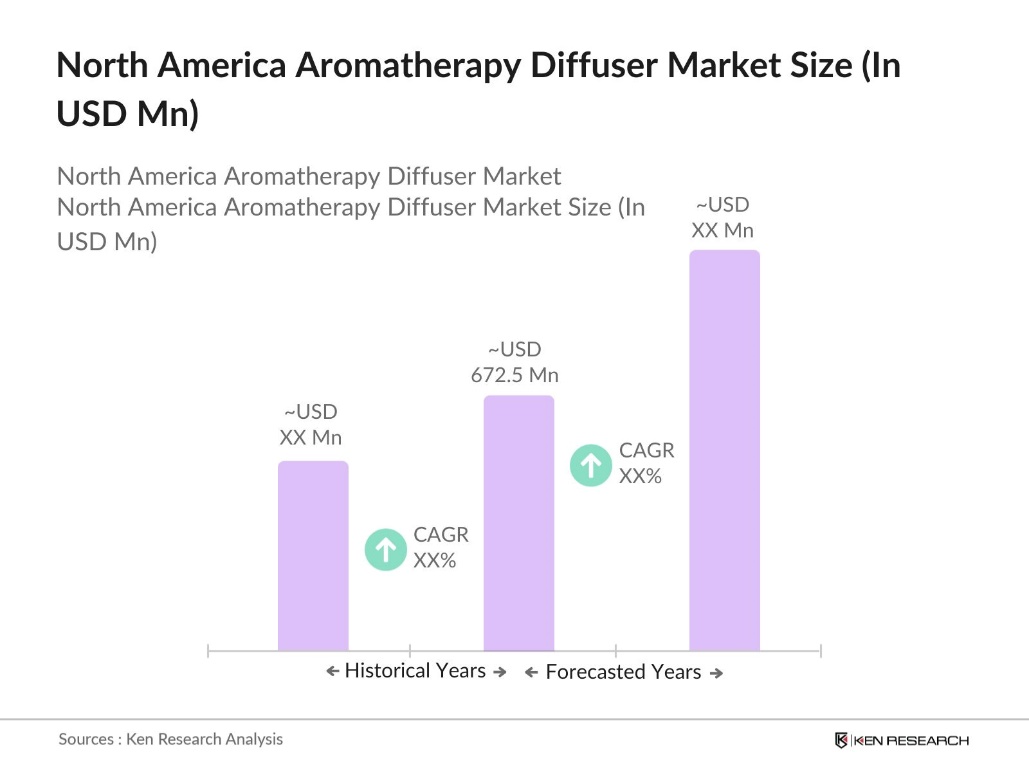
- In terms of geographical dominance, the United States leads the market, driven by higher consumer spending power, an established wellness industry, and a rising preference for alternative health treatments. Additionally, Canada shows substantial growth, with increasing demand for organic and natural wellness products. Urban centers like New York, Los Angeles, and Toronto stand out due to high consumer interest and a well-developed retail network for essential oil and diffuser products.
- The FDA regulates essential oils under the Federal Food, Drug, and Cosmetic Act when they are marketed with therapeutic claims. In 2023, the FDA issued several warning letters to companies for making unverified health claims about their essential oils. As the aromatherapy diffuser market expands, companies must ensure compliance with FDA guidelines to avoid legal repercussions and maintain consumer trust.
North America Aromatherapy Diffuser Market Segmentation
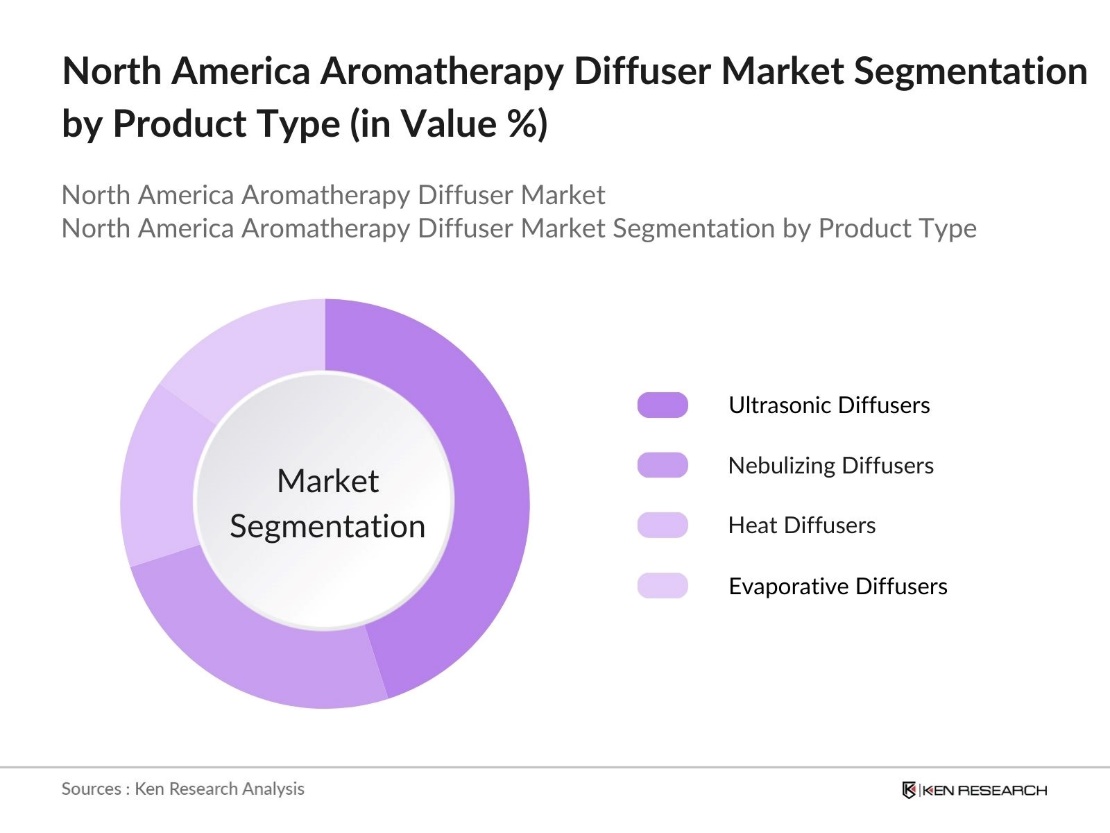
By Product Type: The North America aromatherapy diffuser market is segmented by product type into ultrasonic diffusers, nebulizing diffusers, heat diffusers, and evaporative diffusers. Recently, ultrasonic diffusers have dominated the market due to their affordability, efficiency, and ease of use. These diffusers work by using ultrasonic vibrations to disperse essential oils, preserving their natural properties and covering large areas. Their rising popularity in households and wellness centers across North America is largely due to their quiet operation and energy efficiency, making them suitable for daily use.
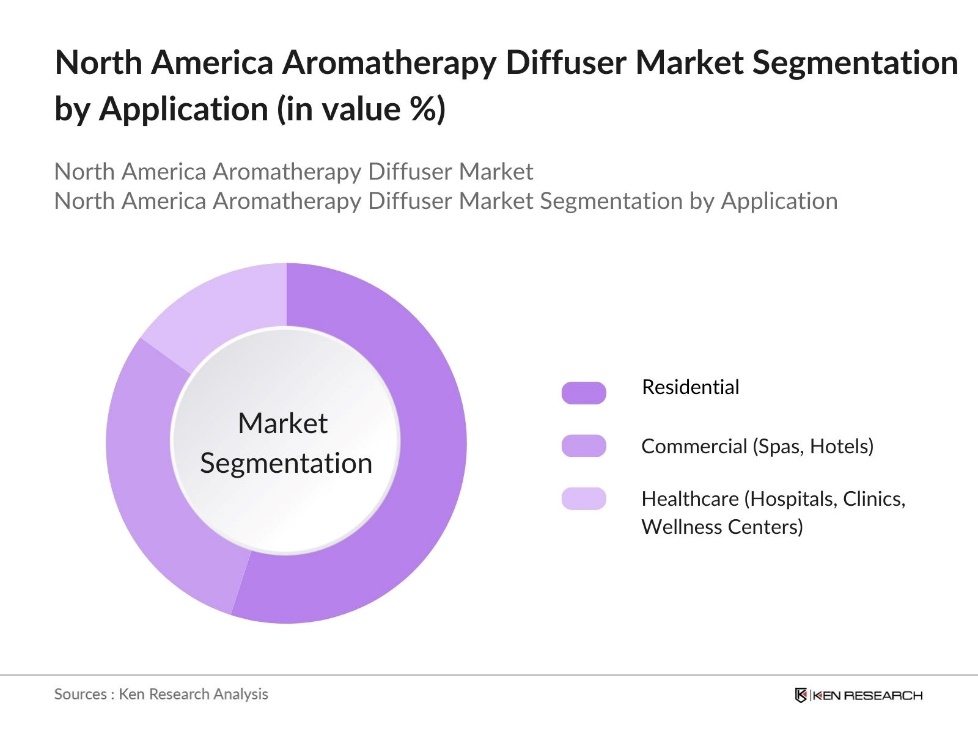
By Application: The North America aromatherapy diffuser market is segmented by application into residential, commercial, and healthcare. The residential segment is the largest due to the increasing adoption of aromatherapy for personal use at home. With the rising trend of home wellness, consumers are using diffusers not just for relaxation but also to enhance the ambiance of their living spaces. This shift in consumer behavior is supported by the growing popularity of DIY aromatherapy and the availability of a wide range of essential oils.
North America Aromatherapy Diffuser Market Competitive Landscape
The market is characterized by a mix of global giants and emerging local players. The competitive landscape is shaped by the innovation in product offerings, marketing strategies, and distribution channels. The market is dominated by a few key players, including companies that specialize in both essential oils and diffusers, such as doTERRA and Young Living, alongside specialized diffuser manufacturers like Organic Aromas. Their dominance is attributed to their extensive product portfolios, strong distribution networks, and the ability to innovate with new diffuser technologies.
|
Company Name |
Establishment Year |
Headquarters |
Revenue (2023) |
Product Portfolio |
Distribution Channels |
Technology Focus |
Brand Reach |
|
doTERRA International |
2008 |
Pleasant Grove, USA |
|||||
|
Young Living Essential Oils |
1994 |
Lehi, USA |
|||||
|
Organic Aromas |
2014 |
Boise, USA |
|||||
|
Saje Natural Wellness |
1992 |
Vancouver, Canada |
|||||
|
GreenAir, Inc. |
2008 |
Cleveland, USA |
North America Aromatherapy Diffuser Industry Analysis
Growth Drivers
- Rise of Natural and Organic Products: The trend towards natural and organic products is accelerating the demand for aromatherapy diffusers in North America. According to the Organic Trade Association, organic product sales reached $63.8 billion in the U.S. in 2023. Aromatherapy, which relies heavily on essential oils, benefits from this trend, as consumers are increasingly avoiding synthetic fragrances and choosing natural alternatives. With the U.S. being the largest organic market globally, this preference for organic products is driving the growth of diffusers that use natural oils.
- Popularity of Essential Oils for Stress Relief: The use of essential oils for stress relief is a major driver for the aromatherapy diffuser market. The survey, which included responses from 3,185 adults aged 18 and older, highlighted that 81% of respondents reported that stress affects their daily lives. Essential oils, known for their calming properties, are increasingly incorporated into daily routines, creating demand for diffusers that can disperse these oils in homes and workplaces. This trend is bolstered by a rise in anxiety and stress-related disorders, particularly post-pandemic, positioning aromatherapy diffusers as a beneficial tool for relaxation.
- E-commerce Growth in Aromatherapy Products: E-commerce plays a crucial role in driving aromatherapy diffuser sales in North America by offering consumers convenient access to a wide range of products. Online platforms provide diverse diffuser options, essential oils, and wellness accessories, enabling both established and niche brands to reach a broader audience. This shift towards digital shopping has expanded market access, making diffusers more readily available to consumers across the region.
Market Challenges
- High Cost of Premium Diffusers: The high price of premium aromatherapy diffusers, such as ultrasonic and nebulizing models, poses a barrier to widespread adoption. These diffusers are often considered luxury items, making them inaccessible to budget-conscious consumers. As a result, many may opt for more affordable alternatives or choose not to invest in diffusers at all, limiting the markets growth, especially among middle-income households.
- Volatile Essential Oil Supply Chain: The essential oil supply chain faces challenges due to its dependence on agricultural factors and global trade fluctuations. Variability in crop yields and environmental conditions can disrupt the availability and consistency of key oils, impacting manufacturers and consumers. This volatility leads to fluctuating prices and affects the overall supply, creating hurdles for the aromatherapy market.
North America Aromatherapy Diffuser Market Future Outlook
Over the next five years, the North America aromatherapy diffuser market is expected to witness steady growth, driven by the increasing adoption of natural and organic wellness products, advancements in diffuser technologies, and the expansion of e-commerce channels. Consumer preferences for sustainable, eco-friendly products are anticipated to further influence the product innovation pipeline, with companies likely focusing on biodegradable and reusable diffuser materials.
Market Opportunities
- Innovation in Diffuser Technology (Ultrasonic, Nebulizing, etc.): Advancements in diffuser technology, such as ultrasonic and nebulizing diffusers, present significant growth opportunities in the aromatherapy market. Ultrasonic diffusers use electronic frequencies to produce a fine mist, making them energy-efficient and popular among consumers. These innovations focus on enhancing user experience and functionality, offering features like quiet operation and adjustable mist settings. As consumers seek more efficient and versatile products, these technological advancements are making diffusers more attractive and expanding their appeal.
- Sustainability and Eco-friendly Diffusers: The growing demand for sustainable products is driving interest in eco-friendly aromatherapy diffusers made from biodegradable or recycled materials. Manufacturers are increasingly focusing on environmentally conscious designs, such as diffusers made from wood or recycled plastics. This shift aligns with consumer preferences for products that promote wellness while also reducing environmental impact. The trend towards sustainability is helping position diffusers as both functional and eco-responsible, encouraging wider adoption among environmentally conscious consumers.
Scope of the Report
|
By Product Type |
Ultrasonic Nebulizing, Heat Evaporative |
|
By Application |
Residential Commercial Healthcare |
|
By Distribution Channel |
Online Retail Offline Retail |
|
By Technology |
Traditional Smart |
|
By Region |
United States Canada Mexico |
Products
Key Target Audience
Aromatherapy Product Manufacturers
Subscription Box Companies
Home Fragrance Brands
Government and Regulatory Bodies (FDA, Health Canada)
Investors and venture capital Firms
Banks and Financial Institutions
Companies
Players Mentioned in the Report
doTERRA International
Young Living Essential Oils
Organic Aromas
Saje Natural Wellness
GreenAir, Inc.
NOW Foods
InnoGear
Vitruvi
SpaRoom
Urpower
Table of Contents
1. North America Aromatherapy Diffuser Market Overview
1.1. Definition and Scope
1.2. Market Taxonomy (Product Type, Application, Distribution Channel)
1.3. Market Growth Rate (CAGR, Market Value, Market Volume)
1.4. Market Segmentation Overview
2. North America Aromatherapy Diffuser Market Size (In USD Mn)
2.1. Historical Market Size (Revenue, Units Sold)
2.2. Year-On-Year Growth Analysis (Percentage Growth, Revenue Changes)
2.3. Key Market Developments and Milestones (M&A, Technological Innovations, New Product Launches)
3. North America Aromatherapy Diffuser Market Analysis
3.1. Growth Drivers
3.1.1. Increased Consumer Focus on Wellness
3.1.2. Rise of Natural and Organic Products
3.1.3. Popularity of Essential Oils for Stress Relief
3.1.4. E-commerce Growth in Aromatherapy Products
3.2. Market Challenges
3.2.1. High Cost of Premium Diffusers
3.2.2. Volatile Essential Oil Supply Chain
3.2.3. Lack of Standardization in Essential Oils
3.2.4. Low Awareness in Untapped Markets
3.3. Opportunities
3.3.1. Innovation in Diffuser Technology (Ultrasonic, Nebulizing, etc.)
3.3.2. Sustainability and Eco-friendly Diffusers
3.3.3. Growing Wellness Tourism and Aromatherapy Integration
3.3.4. Increasing Presence in Mainstream Retail Channels
3.4. Trends
3.4.1. Adoption of Smart and Connected Diffusers
3.4.2. Personalization and Customizable Fragrance Options
3.4.3. Growing Popularity of Portable Diffusers
3.4.4. Rising Consumer Preference for Non-toxic, Chemical-free Aromatherapy
3.5. Regulatory Landscape
3.5.1. FDA Guidelines for Essential Oils
3.5.2. Labeling and Compliance Standards
3.5.3. Product Safety Regulations
3.5.4. Environmental and Sustainability Certifications
3.6. SWOT Analysis
3.6.1. Strengths
3.6.2. Weaknesses
3.6.3. Opportunities
3.6.4. Threats
3.7. Stakeholder Ecosystem
3.7.1. Raw Material Suppliers (Essential Oils)
3.7.2. Diffuser Manufacturers
3.7.3. Retailers (Online and Offline)
3.7.4. End-users (Consumers, Spas, Hotels, etc.)
3.8. Porters Five Forces Analysis
3.8.1. Threat of New Entrants
3.8.2. Bargaining Power of Suppliers
3.8.3. Bargaining Power of Buyers
3.8.4. Threat of Substitutes
3.8.5. Competitive Rivalry
3.9. Competitive Landscape and Ecosystem
4. North America Aromatherapy Diffuser Market Segmentation
4.1. By Product Type (In Value %)
4.1.1. Ultrasonic Diffusers
4.1.2. Nebulizing Diffusers
4.1.3. Heat Diffusers
4.1.4. Evaporative Diffusers
4.2. By Application (In Value %)
4.2.1. Residential
4.2.2. Commercial (Spas, Salons, Hotels)
4.2.3. Healthcare (Hospitals, Clinics, Wellness Centers)
4.3. By Distribution Channel (In Value %)
4.3.1. Online Retail
4.3.2. Offline Retail (Hypermarkets, Supermarkets, Specialty Stores)
4.4. By Technology (In Value %)
4.4.1. Traditional Diffusion Technology
4.4.2. Smart Diffusion Technology
4.5. By Region (In Value %)
4.5.1. United States
4.5.2. Canada
4.5.3. Mexico
5. North America Aromatherapy Diffuser Market Competitive Analysis
5.1. Detailed Profiles of Major Companies
5.1.1. doTERRA International
5.1.2. Young Living Essential Oils
5.1.3. Organic Aromas
5.1.4. Saje Natural Wellness
5.1.5. GreenAir, Inc.
5.1.6. NOW Foods
5.1.7. InnoGear
5.1.8. Vitruvi
5.1.9. SpaRoom
5.1.10. Urpower
5.1.11. Ellia (HoMedics)
5.1.12. ZAQ
5.1.13. Muji
5.1.14. Serene House
5.1.15. Stadler Form
5.2. Cross Comparison Parameters
5.2.1. Number of Employees
5.2.2. Headquarters
5.2.3. Inception Year
5.2.4. Revenue
5.2.5. Product Portfolio
5.2.6. Distribution Network
5.2.7. Market Share
5.2.8. Product Innovations
5.3. Market Share Analysis
5.4. Strategic Initiatives (Partnerships, Collaborations, Joint Ventures)
5.5. Mergers And Acquisitions
5.6. Investment Analysis
5.7. Venture Capital Funding
5.8. Government Grants and Incentives
5.9. Private Equity Investments
6. North America Aromatherapy Diffuser Market Regulatory Framework
6.1. Environmental Regulations
6.2. Compliance Requirements
6.3. Product Safety Certifications
6.4. Standardization of Aromatherapy Products
7. North America Aromatherapy Diffuser Future Market Size (In USD Mn)
7.1. Future Market Size Projections
7.2. Key Factors Driving Future Market Growth (Technological Advancements, Consumer Preferences, Economic Growth)
8. North America Aromatherapy Diffuser Future Market Segmentation
8.1. By Product Type (In Value %)
8.2. By Application (In Value %)
8.3. By Technology (In Value %)
8.4. By Distribution Channel (In Value %)
8.5. By Region (In Value %)
9. North America Aromatherapy Diffuser Market Analysts Recommendations
9.1. TAM/SAM/SOM Analysis
9.2. Customer Segmentation and Cohort Analysis
9.3. Marketing and Branding Strategies
9.4. White Space Opportunity Analysis
Disclaimer Contact UsResearch Methodology
Step 1: Identification of Key Variables
The initial step involved mapping out the aromatherapy diffuser ecosystem, identifying key market players, product types, and essential oil suppliers. Extensive desk research was carried out using proprietary databases and secondary research tools to identify variables such as product types, consumer preferences, and distribution channels that influence market growth.
Step 2: Market Analysis and Construction
Historical market data was compiled to analyze the trends in the North America aromatherapy diffuser market. This included studying sales data, revenue figures, and distribution networks. We also evaluated key milestones such as product innovations and mergers and acquisitions to gain insights into the competitive landscape.
Step 3: Hypothesis Validation and Expert Consultation
Market hypotheses were tested by engaging with industry experts through telephonic interviews and questionnaires. These consultations provided valuable insights into product development, consumer preferences, and market dynamics, helping to refine our understanding of the market landscape.
Step 4: Research Synthesis and Final Output
The final phase involved synthesizing data from diffuser manufacturers and essential oil producers to validate the revenue and sales estimates obtained through the bottom-up approach. This was complemented by insights from industry reports and market analyses, ensuring accuracy and comprehensiveness in the final report.
Frequently Asked Questions
01. How big is the North America Aromatherapy Diffuser Market?
The North America aromatherapy diffuser market was valued at USD 672.5 million, driven by rising consumer interest in wellness products and the expanding adoption of essential oils for mental health and relaxation.
02. What are the challenges in the North America Aromatherapy Diffuser Market?
Challenges in North America aromatherapy diffuser market include the high cost of premium diffusers, supply chain volatility in essential oils, and the lack of standardization in product offerings, which can confuse consumers and hamper growth.
03. Who are the major players in the North America Aromatherapy Diffuser Market?
Key players in the North America aromatherapy diffuser market include doTERRA International, Young Living Essential Oils, Organic Aromas, Saje Natural Wellness, and GreenAir, Inc. These companies dominate due to their broad product offerings, strong distribution networks, and innovative product designs.
04. What are the growth drivers of the North America Aromatherapy Diffuser Market?
The North America aromatherapy diffuser market is propelled by increasing consumer interest in wellness products, the rising popularity of natural therapies, and advancements in diffuser technology, including the development of smart and eco-friendly diffusers.
Why Buy From Us?

What makes us stand out is that our consultants follows Robust, Refine and Result (RRR) methodology. i.e. Robust for clear definitions, approaches and sanity checking, Refine for differentiating respondents facts and opinions and Result for presenting data with story

We have set a benchmark in the industry by offering our clients with syndicated and customized market research reports featuring coverage of entire market as well as meticulous research and analyst insights.

While we don't replace traditional research, we flip the method upside down. Our dual approach of Top Bottom & Bottom Top ensures quality deliverable by not just verifying company fundamentals but also looking at the sector and macroeconomic factors.

With one step in the future, our research team constantly tries to show you the bigger picture. We help with some of the tough questions you may encounter along the way: How is the industry positioned? Best marketing channel? KPI's of competitors? By aligning every element, we help maximize success.

Our report gives you instant access to the answers and sources that other companies might choose to hide. We elaborate each steps of research methodology we have used and showcase you the sample size to earn your trust.

If you need any support, we are here! We pride ourselves on universe strength, data quality, and quick, friendly, and professional service.