
North America Automated Guided Vehicle (AGV) Market Outlook to 2030
Region:North America
Author(s):Sanjna
Product Code:KROD4450
December 2024
85
About the Report
North America Automated Guided Vehicle (AGV) Market Overview
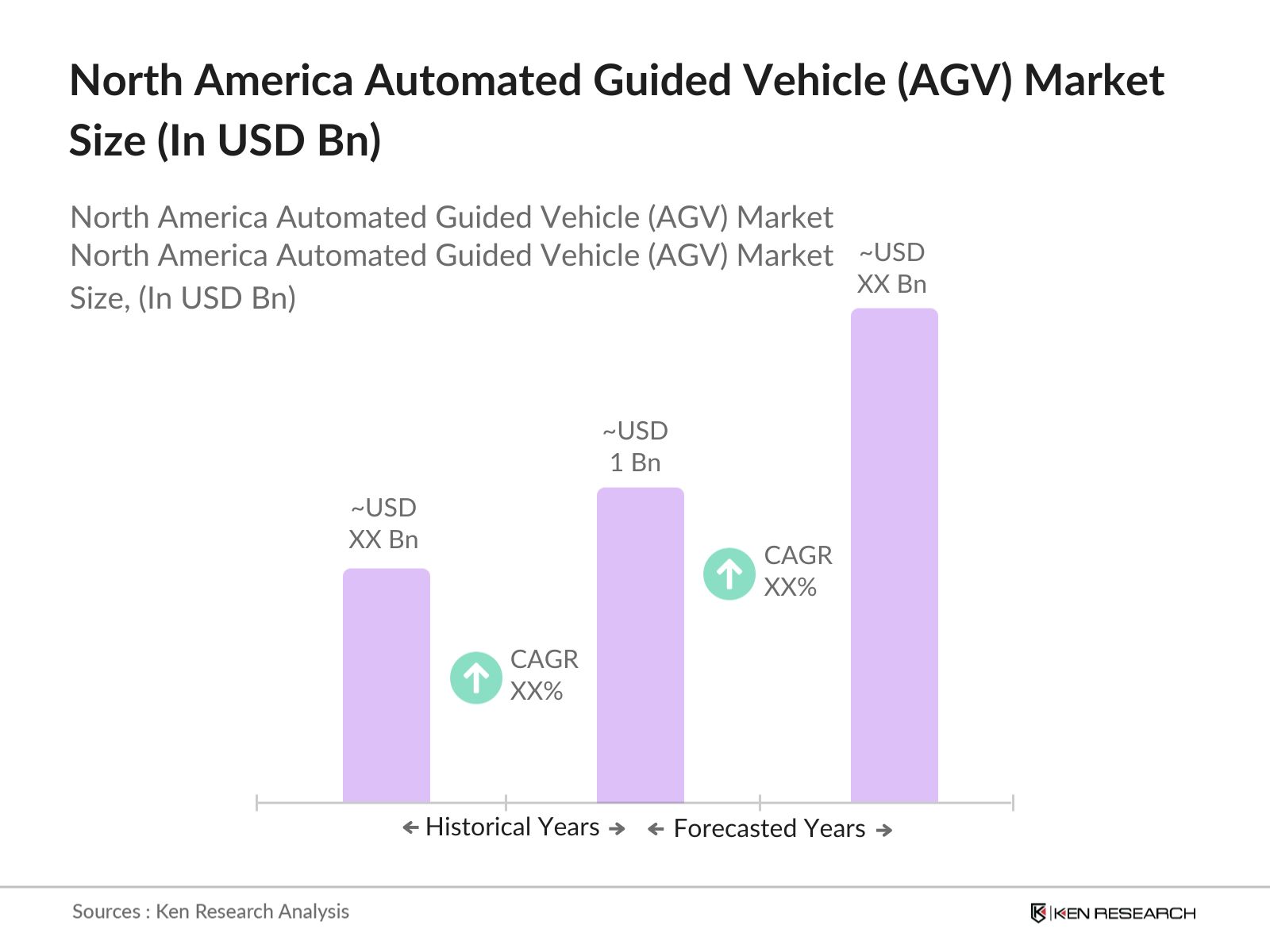
- The North America Automated Guided Vehicle (AGV) market is valued at USD 1 billion, driven primarily by the increasing automation in manufacturing and logistics sectors. Key drivers include the need for enhanced operational efficiency, reduced labor costs, and the rise of e-commerce platforms demanding efficient material handling solutions. The AGV market is also benefiting from advancements in artificial intelligence and robotics technology, which are enabling smarter and more versatile vehicles to meet the complex needs of various industries.
- The dominant regions within the North American AGV market include the United States and Canada, with the U.S. leading due to its advanced industrial infrastructure and high adoption rate of automated solutions in industries like automotive, warehousing, and logistics. Canada follows closely, driven by increased adoption of AGVs in the food and beverage sector and strong government initiatives supporting industrial automation. These countries have also seen significant investments in AGV technologies, fueling their dominance in the market.
- OSHA has established stringent safety regulations for the deployment of AGVs in industrial settings, aimed at preventing workplace accidents and ensuring safe operations. These regulations cover aspects such as speed limits, load capacity, and collision avoidance mechanisms for AGVs. In 2023, OSHA reported over 1,200 safety violations related to automated equipment, emphasizing the need for compliance to avoid penalties.
North America Automated Guided Vehicle (AGV) Market Segmentation
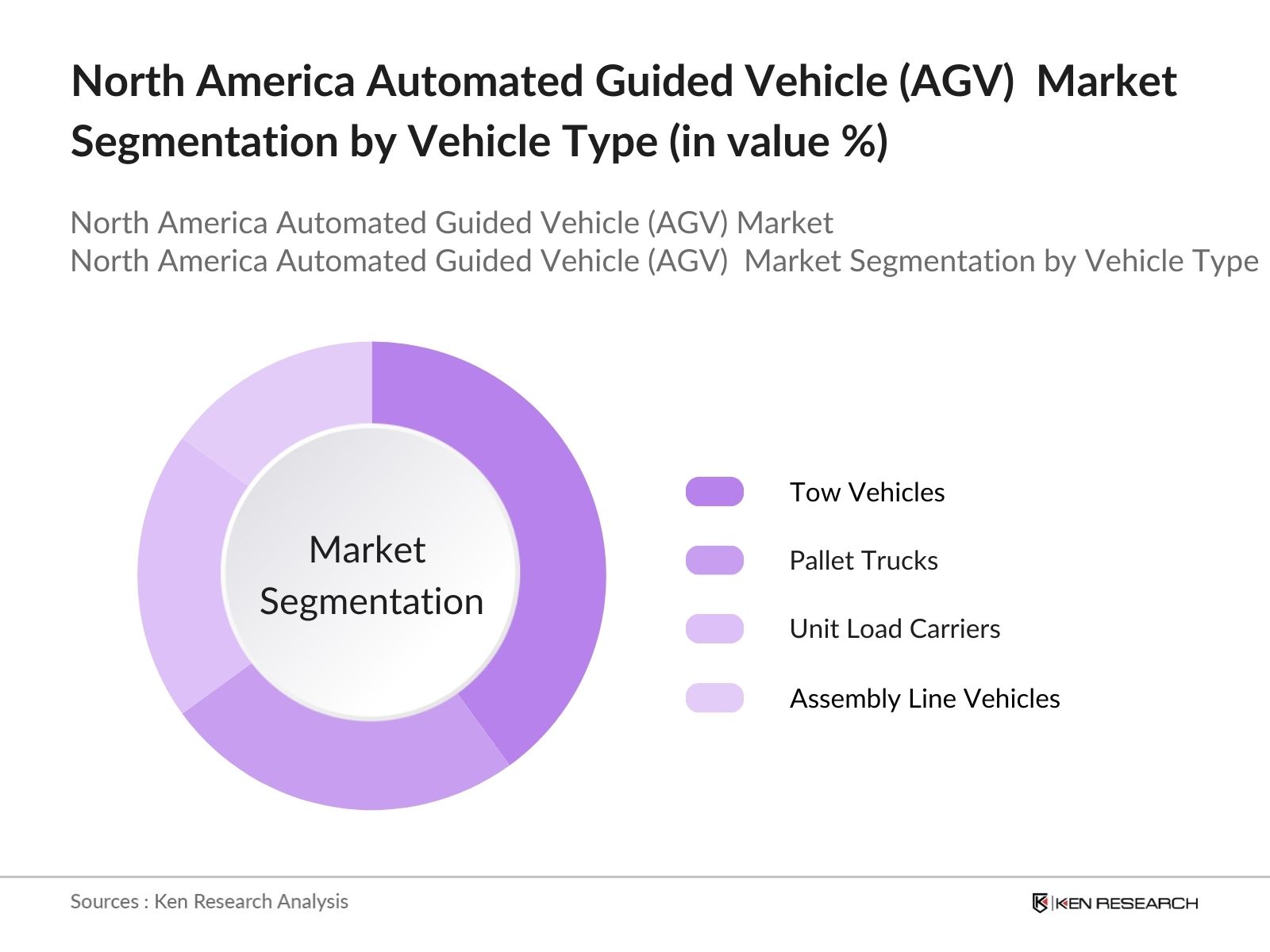
- By Vehicle Type: The North America AGV market is segmented by vehicle type into tow vehicles, pallet trucks, unit load carriers, and assembly line vehicles. Tow vehicles dominate the market, driven by their widespread use in warehouses and manufacturing facilities for moving heavy loads over long distances. These vehicles are highly versatile, reducing labor needs while improving efficiency in material handling operations. Their integration with advanced navigation technologies also makes them highly attractive for industries seeking to improve operational efficiencies.
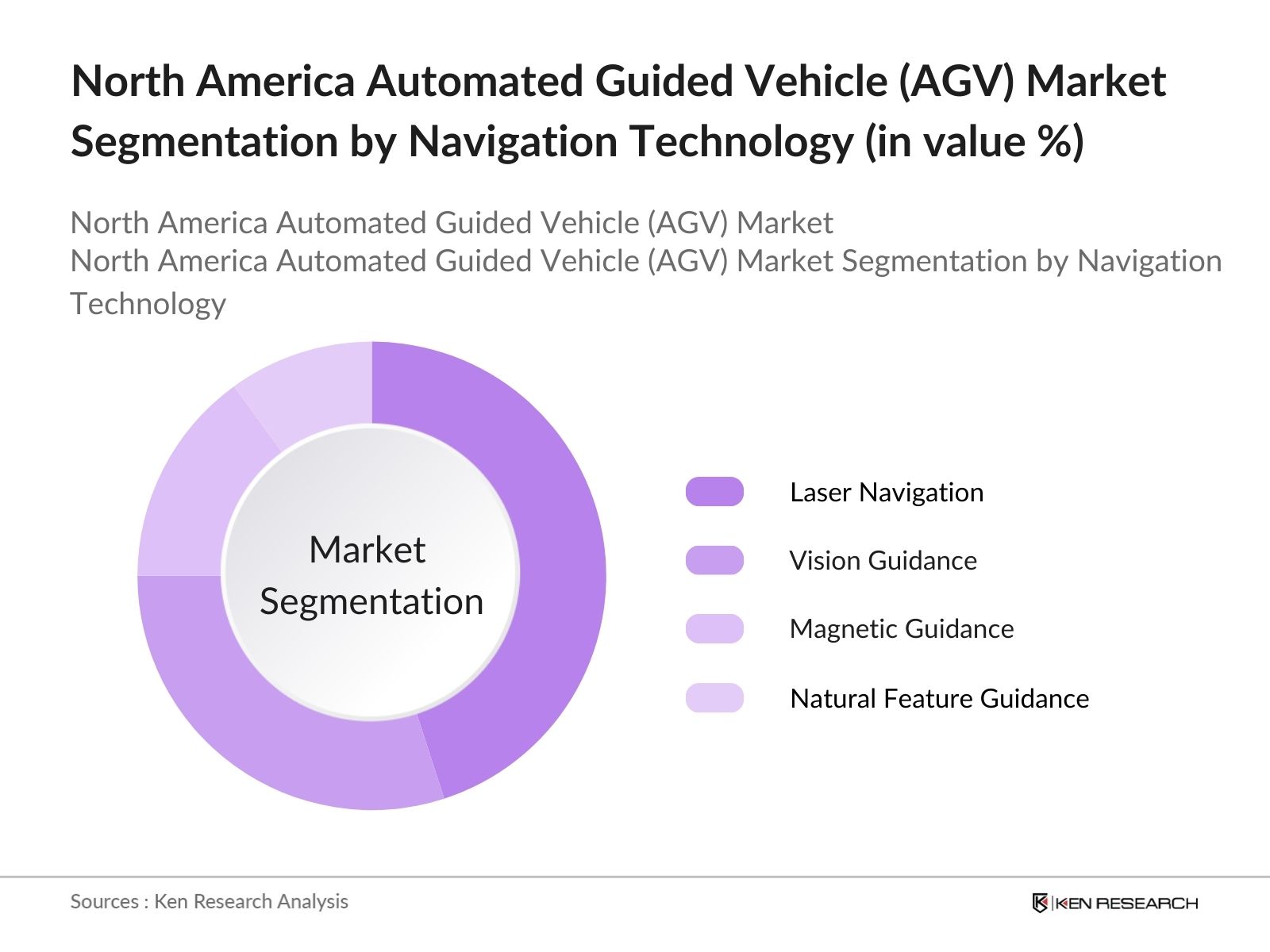
- By Navigation Technology: The market is segmented by navigation technology into laser navigation, vision guidance, magnetic guidance, and natural feature guidance. Laser navigation holds the largest share due to its accuracy and reliability in guiding AGVs in complex industrial environments. This technology is particularly favored in industries like automotive and electronics where precision and safety are paramount. The growing demand for AGVs with laser navigation systems is further driven by its scalability and flexibility in multi-path routes and obstacle avoidance.
North America Automated Guided Vehicle (AGV) Market Competitive Landscape
The North America AGV market is highly competitive, with key players continuously innovating to gain a competitive edge. The market is dominated by global and regional players that have strong product portfolios, advanced technologies, and a broad customer base. Companies are focusing on strategic mergers and acquisitions, product development, and expansion into new industrial sectors to maintain their market positions.
|
Company Name |
Establishment Year |
Headquarters |
No. of Employees |
Revenue |
Product Innovation |
R&D Investments |
Global Presence |
|
Toyota Industries Corporation |
1926 |
Japan |
- |
- |
- |
- |
- |
|
Kion Group AG |
2006 |
Germany |
- |
- |
- |
- |
- |
|
Daifuku Co., Ltd. |
1937 |
Japan |
- |
- |
- |
- |
- |
|
JBT Corporation |
1884 |
USA |
- |
- |
- |
- |
- |
|
Seegrid Corporation |
2003 |
USA |
- |
- |
- |
- |
- |
North America Automated Guided Vehicle (AGV) Market Analysis
Growth Drivers
- Increasing Industrial Automation: The adoption of automated guided vehicles (AGVs) in North America is rising due to increased industrial automation in manufacturing sectors like automotive and electronics. In 2022, the U.S. industrial sector contributed $3.8 trillion to the GDP, indicating the scale of automation adoption. This demand for automation is further supported by the U.S. governments focus on re-shoring manufacturing jobs, driving up demand for AGV technology across industries such as automotive and aerospace.
- Demand for Enhanced Operational Efficiency: Operational efficiency remains a top priority in sectors such as warehousing, logistics, and manufacturing. AGVs play a crucial role in reducing transit time, improving load handling, and increasing throughput in warehouses. In 2022, companies leased a net total of756.8 million square feetof industrial space, reflecting a robust activity level despite a reported decline of 18% from the previous year. This expansion is tightly linked with the adoption of AGVs to enhance automation capabilities in e-commerce and distribution.
- Rising E-commerce and Warehousing Needs: E-commerce sales in the U.S. grew to $1 trillion in 2023, causing exponential growth in warehousing demand. AGVs are increasingly being deployed in e-commerce distribution centers to manage inventory, order fulfillment, and transportation of goods. The surge in online orders, coupled with rising labor shortages in the warehousing sector, is pushing businesses to invest in AGVs to maintain productivity.
Challenges
- High Initial Costs and Maintenance: The cost of implementing AGVs, particularly for small and medium enterprises (SMEs), remains a challenge due to high initial capital investments. The average cost of an AGV unit is estimated between $50,000 and $150,000, depending on the complexity of the system. Maintenance expenses add to the financial burden, as specialized technicians are required.
- Integration with Existing Infrastructure: The integration of AGVs with existing infrastructure poses challenges for industries, especially in legacy facilities where automation systems are outdated. Complexities in software synchronization, floor planning, and safety protocol compliance are common. The European Agency for Safety and Health at Work (EU-OSHA) has launched research programs to explore the implications of digitalization in occupational safety, which includes examining how automation interacts with current workplace setups.
North America Automated Guided Vehicle (AGV) Market Future Outlook
North America Automated Guided Vehicle market is expected to witness significant growth, driven by advancements in artificial intelligence, robotics, and the rising demand for automation in logistics and manufacturing. With increasing e-commerce activities, industries are likely to further embrace AGVs to streamline their material handling processes, reduce human errors, and increase efficiency. Additionally, technological integration with AI and IoT will provide AGVs with enhanced functionalities such as real-time decision-making, further driving the market forward.
Market Opportunities
- Growing Demand for Smart Factories: The demand for smart factories is on the rise in North America, driven by technological advancements in AI and IoT The smart manufacturing market in the U.S. was estimated to be between$273.16 billionand$297.20 billionin 2023, reflecting a robust growth trajectory driven by advancements in technology and increased automation efforts. The shift towards Industry 4.0 is also supported by government initiatives like the Manufacturing USA program, which promotes smart manufacturing practices.
- AGV Integration with AI and IoT Technologies: AGVs are increasingly being integrated with AI and IoT technologies, enabling more precise navigation and communication within automated environments. This technological synergy is key for industries focusing on predictive maintenance and operational intelligence. A 2023 report by the U.S. Department of Commerce noted that over 65% of manufacturing firms are incorporating AI-driven systems, indicating a large market opportunity for AGVs equipped with AI-based navigation and IoT sensors.
Scope of the Report
|
Segment |
Sub-Segments |
|
Vehicle Type |
Tow Vehicles Pallet Trucks Unit Load Carriers Assembly Line Vehicles |
|
Navigation Technology |
Laser Navigation Vision Guidance Magnetic Guidance Natural Feature Guidance |
|
Application |
Manufacturing Logistics and Warehousing Healthcare Food & Beverage |
|
Industry Vertical |
Automotive Retail and E-commerce Pharmaceuticals Electronics |
|
Region |
United States Canada Mexico |
Products
Key Target Audience
Automotive Manufacturers
Logistics & Warehousing Companies
Retail and E-Commerce Companies
Food and Beverage Manufacturers
Pharmaceutical Companies
Government and Regulatory Bodies (OSHA, FMCSA)
Investors and Venture Capitalist Firms
Robotics and Automation Technology Providers
Companies
Players Mentioned in the Report
Toyota Industries Corporation
Kion Group AG
Daifuku Co., Ltd.
JBT Corporation
Seegrid Corporation
Murata Machinery, Ltd.
Kollmorgen Corporation
E&K Automation GmbH
Swisslog Holding AG
AGVE Group
Table of Contents
1. North America Automated Guided Vehicle Market Overview
1.1 Definition and Scope
1.2 Market Taxonomy
1.3 Market Growth Rate
1.4 Market Segmentation Overview
2. North America Automated Guided Vehicle Market Size (In USD Bn)
2.1 Historical Market Size
2.2 Year-On-Year Growth Analysis
2.3 Key Market Developments and Milestones
3. North America Automated Guided Vehicle Market Analysis
3.1 Growth Drivers (Increased Adoption in Manufacturing, E-commerce Growth, Labor Shortages)
3.1.1 Increasing Industrial Automation
3.1.2 Demand for Enhanced Operational Efficiency
3.1.3 Rising E-commerce and Warehousing Needs
3.2 Market Challenges (High Capital Investment, Integration Complexities)
3.2.1 High Initial Costs and Maintenance
3.2.2 Need for Skilled Workforce for Maintenance
3.2.3 Integration with Existing Infrastructure
3.3 Opportunities (Technological Advancements, Expansion into New Industries)
3.3.1 Growing Demand for Smart Factories
3.3.2 AGV Integration with AI and IoT Technologies
3.3.3 Increased Use in Healthcare and Food & Beverage Industries
3.4 Trends (Adoption of AI, IoT Integration)
3.4.1 AI-Driven AGV Navigation Systems
3.4.2 Autonomous Material Handling Robots
3.4.3 Increased Customization in AGV Design
3.5 Government Regulation (Safety Standards, AGV Certifications)
3.5.1 Occupational Safety and Health Administration (OSHA) Regulations
3.5.2 Federal Motor Carrier Safety Administration (FMCSA) Guidelines
3.5.3 Certification Standards for AGVs (ISO 3691-4)
3.6 SWOT Analysis
3.7 Stakeholder Ecosystem
3.8 Porters Five Forces
3.9 Competitive Ecosystem
4. North America Automated Guided Vehicle Market Segmentation
4.1 By Vehicle Type (In Value %)
4.1.1 Tow Vehicles
4.1.2 Pallet Trucks
4.1.3 Unit Load Carriers
4.1.4 Assembly Line Vehicles
4.2 By Navigation Technology (In Value %)
4.2.1 Laser Navigation
4.2.2 Vision Guidance
4.2.3 Magnetic Guidance
4.2.4 Natural Feature Guidance
4.3 By Application (In Value %)
4.3.1 Manufacturing
4.3.2 Logistics and Warehousing
4.3.3 Healthcare
4.3.4 Food & Beverage
4.4 By Industry Vertical (In Value %)
4.4.1 Automotive
4.4.2 Retail and E-commerce
4.4.3 Pharmaceuticals
4.4.4 Electronics
4.5 By Region (In Value %)
4.5.1 United States
4.5.2 Canada
4.5.3 Mexico
5. North America Automated Guided Vehicle Market Competitive Analysis
5.1 Detailed Profiles of Major Companies
5.1.1 Toyota Industries Corporation
5.1.2 Kion Group AG
5.1.3 Daifuku Co., Ltd.
5.1.4 JBT Corporation
5.1.5 Hyster-Yale Materials Handling, Inc.
5.1.6 Seegrid Corporation
5.1.7 Murata Machinery, Ltd.
5.1.8 Kollmorgen Corporation
5.1.9 E&K Automation GmbH
5.1.10 Swisslog Holding AG
5.2 Cross Comparison Parameters (Revenue, Headquarters, Inception Year, Market Share, No. of Employees, Product Innovation, Strategic Partnerships, Market Presence)
5.3 Market Share Analysis
5.4 Strategic Initiatives
5.5 Mergers And Acquisitions
5.6 Investment Analysis
5.7 Venture Capital Funding
5.8 Private Equity Investments
6. North America Automated Guided Vehicle Market Regulatory Framework
6.1 Compliance with OSHA Standards
6.2 Federal and Regional Certification Processes
6.3 Industry-Specific AGV Regulations
7. North America Automated Guided Vehicle Future Market Size (In USD Bn)
7.1 Future Market Size Projections
7.2 Key Factors Driving Future Market Growth
8. North America Automated Guided Vehicle Future Market Segmentation
8.1 By Vehicle Type (In Value %)
8.2 By Navigation Technology (In Value %)
8.3 By Application (In Value %)
8.4 By Industry Vertical (In Value %)
8.5 By Region (In Value %)
9. North America Automated Guided Vehicle Market Analysts Recommendations
9.1 TAM/SAM/SOM Analysis
9.2 Customer Cohort Analysis
9.3 Marketing Initiatives
9.4 White Space Opportunity Analysis
Research Methodology
Step 1: Identification of Key Variables
The initial step involved mapping the ecosystem of the North America Automated Guided Vehicle market by identifying critical variables such as industry verticals, market segments, and key competitors. This phase was executed through extensive secondary research, drawing upon proprietary databases, industry reports, and expert insights.
Step 2: Market Analysis and Construction
Historical data for AGV adoption, navigation technology usage, and vehicle type deployment was analyzed to construct a comprehensive market outlook. The data was cross-referenced with industry reports and real-time analytics to ensure accuracy in demand and revenue estimations.
Step 3: Hypothesis Validation and Expert Consultation
Industry experts from AGV manufacturing companies and logistics firms were consulted to validate hypotheses concerning market growth, challenges, and emerging trends. These insights were collected through structured interviews, with responses contributing to the accuracy of the final market analysis.
Step 4: Research Synthesis and Final Output
The data was synthesized into the final report, incorporating both bottom-up and top-down market estimation approaches. Primary research insights were cross-referenced with statistical models to verify the forecast and validate future growth predictions.
Frequently Asked Questions
01. How big is the North America Automated Guided Vehicle market?
The North America Automated Guided Vehicle market is valued at USD 1 billion. This growth is propelled by the increasing adoption of automation technologies in industries like manufacturing, logistics, and warehousing, which are leveraging AGVs to improve operational efficiency and reduce labor costs.
02. What are the challenges in the North America Automated Guided Vehicle market?
The key challenges in North America Automated Guided Vehicle Market include the high initial capital investment required for AGV systems, difficulties in integrating AGVs with existing infrastructure, and the need for skilled workers to maintain and operate these systems effectively. Additionally, technological limitations in navigation and guidance systems can create operational inefficiencies.
03. Who are the major players in the North America Automated Guided Vehicle market?
Major players in North America Automated Guided Vehicle market include Toyota Industries Corporation, Kion Group AG, Daifuku Co., Ltd., JBT Corporation, and Seegrid Corporation. These companies dominate the market due to their extensive product portfolios, strong R&D capabilities, and wide global presence.
04. What are the growth drivers of the North America Automated Guided Vehicle market?
Growth in the North America AGV market is driven by the rise of e-commerce, increasing industrial automation, and advancements in AI and robotics. Companies are increasingly turning to AGVs to reduce labor costs, enhance efficiency, and improve material handling operations.
05. What are the dominant vehicle types in the North America AGV market?
Tow vehicles and pallet trucks dominate the North America AGV market. Tow vehicles, in particular, hold the largest market share due to their versatility and ability to transport heavy loads efficiently across long distances within warehouses and manufacturing plants.
Why Buy From Us?

What makes us stand out is that our consultants follows Robust, Refine and Result (RRR) methodology. i.e. Robust for clear definitions, approaches and sanity checking, Refine for differentiating respondents facts and opinions and Result for presenting data with story

We have set a benchmark in the industry by offering our clients with syndicated and customized market research reports featuring coverage of entire market as well as meticulous research and analyst insights.

While we don't replace traditional research, we flip the method upside down. Our dual approach of Top Bottom & Bottom Top ensures quality deliverable by not just verifying company fundamentals but also looking at the sector and macroeconomic factors.

With one step in the future, our research team constantly tries to show you the bigger picture. We help with some of the tough questions you may encounter along the way: How is the industry positioned? Best marketing channel? KPI's of competitors? By aligning every element, we help maximize success.

Our report gives you instant access to the answers and sources that other companies might choose to hide. We elaborate each steps of research methodology we have used and showcase you the sample size to earn your trust.

If you need any support, we are here! We pride ourselves on universe strength, data quality, and quick, friendly, and professional service.