
North America Automotive Air Filters Market Outlook to 2030
Region:Global
Author(s):Shambhavi
Product Code:KROD4451
Region:Global
Author(s):Shambhavi
Product Code:KROD4451
December 2024
94
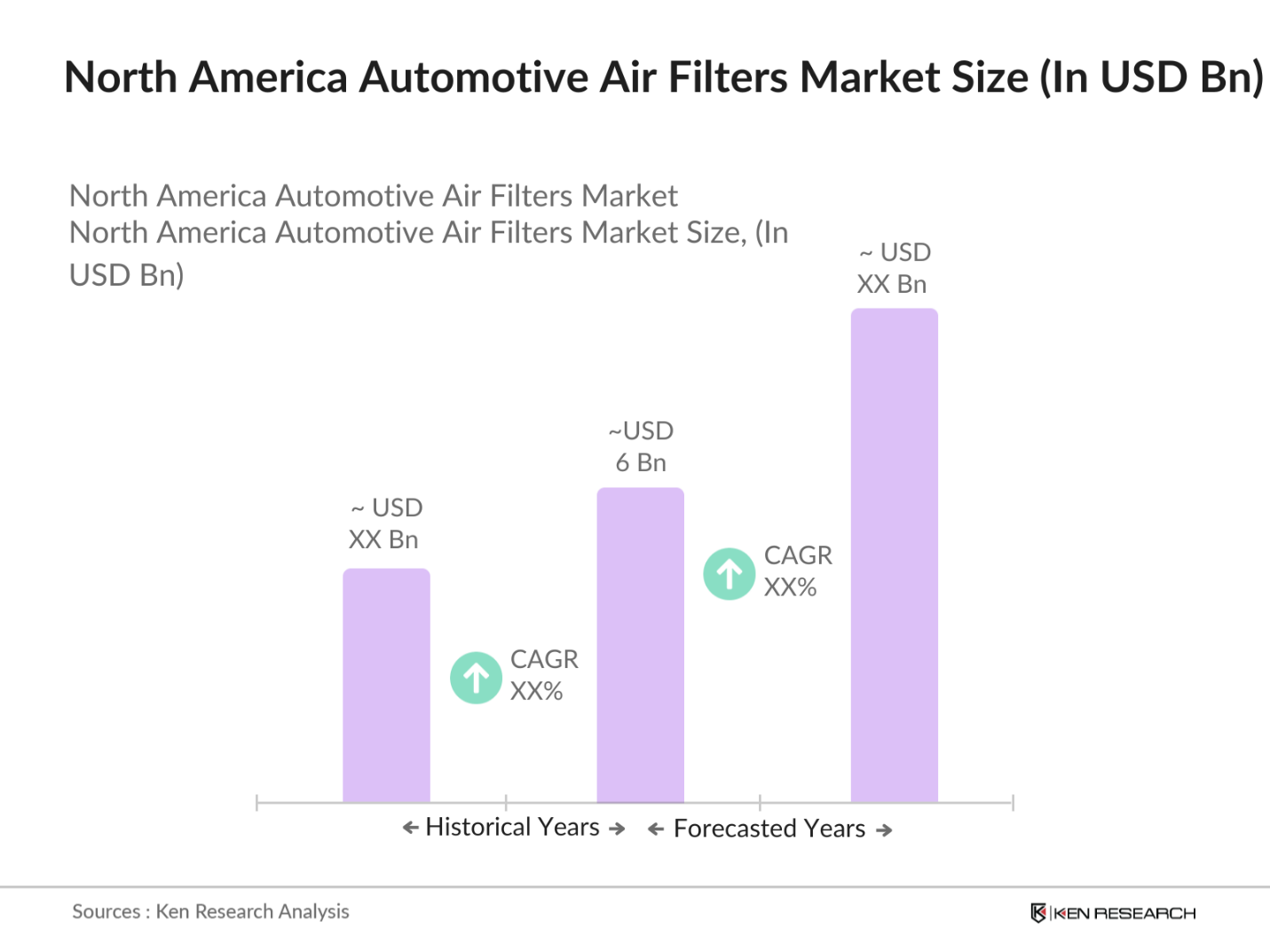
North America Automotive Air Filters Market Overview
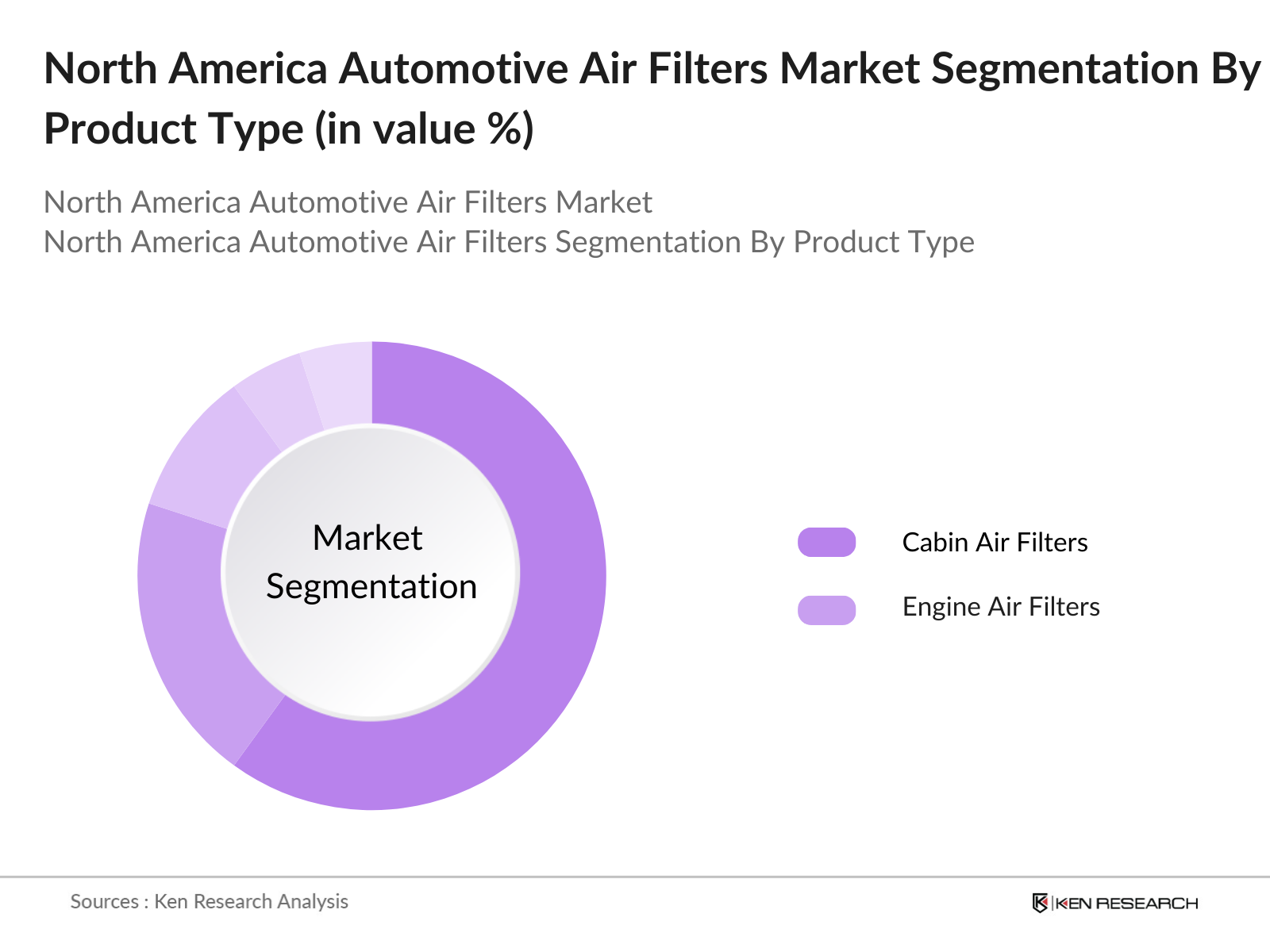
North America Automotive Air Filters Market Segmentation
By Product Type: The North America automotive air filters market is segmented by product type into Cabin Air Filters and Engine Air Filters. Cabin air filters hold a significant market share under product type, driven by consumer awareness regarding indoor air quality and health. These filters help eliminate pollutants like pollen, dust, and other airborne contaminants within the vehicle cabin, enhancing passenger comfort. The demand for cabin air filters is particularly high in urban regions where pollution levels are elevated, further driving the need for effective air filtration systems.
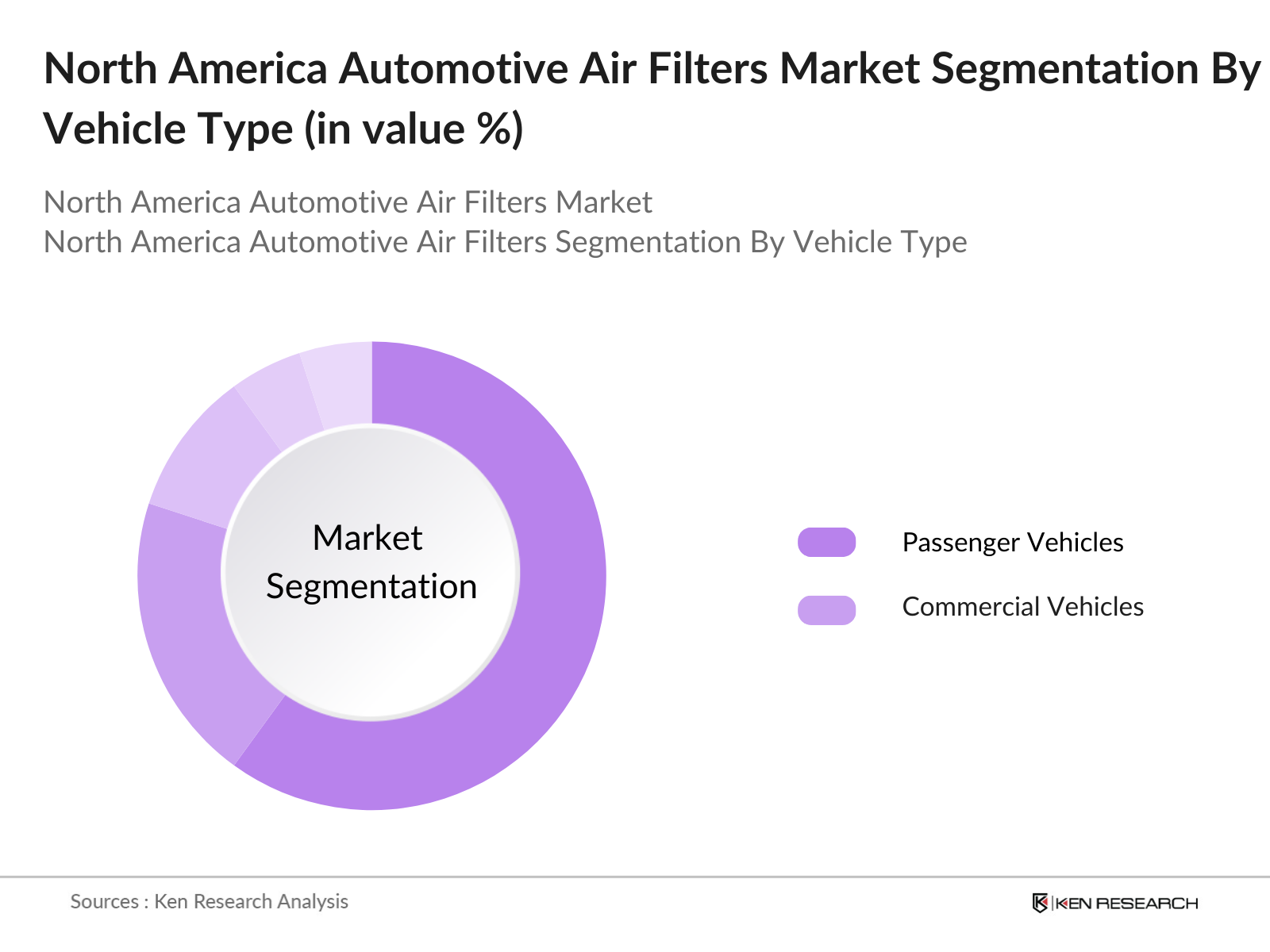
By Vehicle Type: The North America automotive air filters market is further segmented by vehicle type into Passenger Vehicles and Commercial Vehicles. Passenger vehicles hold a dominant share within this segment due to the increasing use of private vehicles and rising consumer demand for comfort and clean air. The higher volume of passenger vehicles on the road and greater emphasis on air quality in enclosed spaces contribute to this segment's leading position in the market. Demand for luxury cars, which often come with premium air filtration systems, also fuels growth.
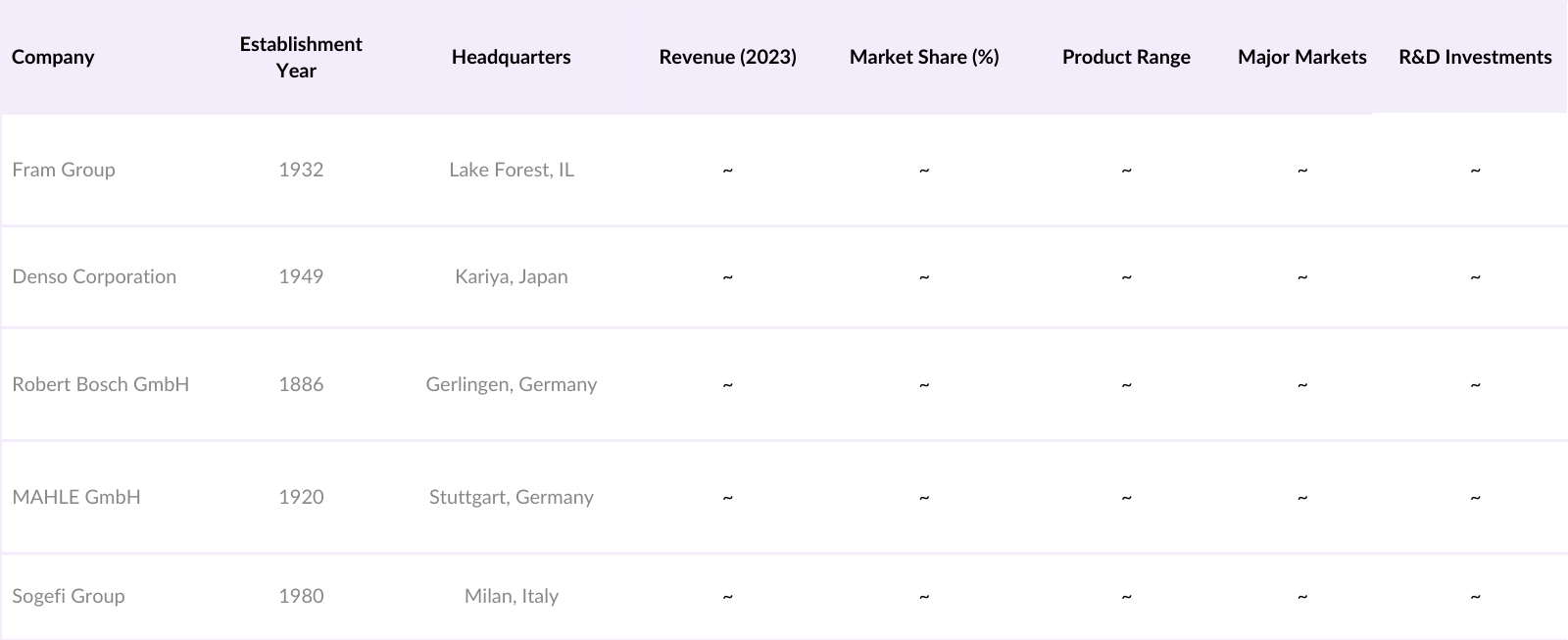
North America Automotive Air Filters Market Competitive Landscape
The North America automotive air filters market is dominated by a few major players who significantly influence market trends and product innovation. Key players include Fram Group, Denso Corporation, Robert Bosch GmbH, and others who provide a wide array of air filtration products suited to various automotive applications. These companies have a strong distribution network and advanced R&D capabilities, making them prominent in the competitive landscape.
North America Automotive Air Filters Market
Growth Drivers
Challenges
North America Automotive Air Filters Future Outlook
The North America automotive air filters market is poised for significant growth over the next five years. This expansion is expected to be driven by the tightening of emission regulations, advancements in filtration technology, and the increasing focus on health-conscious consumer preferences. The growing popularity of electric vehicles, which often require specialized filtration solutions for both cabin and engine components, is likely to open new avenues within the market. Industry players are anticipated to invest in R&D to meet the evolving standards, fostering innovation and sustainable growth.
Market Opportunities
|
Segment |
Sub-segments |
|
Product Type |
Cabin Air Filters |
|
Vehicle Type |
Passenger Cars |
|
Distribution Channel |
OEMs |
|
Material |
Paper-based Filters |
|
Region |
United States |
Key Target Audience
Players mentioned in the report
1.1. Definition and Scope
1.2. Market Taxonomy
1.3. Market Growth Rate
1.4. Market Segmentation Overview
2.1. Historical Market Size
2.2. Year-On-Year Growth Analysis
2.3. Key Market Developments and Milestones
3.1. Growth Drivers
3.1.1. Increasing Vehicle Production
3.1.2. Rising Environmental Regulations
3.1.3. Technological Advancements in Filtration
3.1.4. Growing Consumer Awareness
3.2. Market Challenges
3.2.1. High Raw Material Costs
3.2.2. Supply Chain Disruptions
3.2.3. Intense Competition
3.3. Opportunities
3.3.1. Expansion in Electric Vehicles
3.3.2. Innovations in Filter Materials
3.3.3. Aftermarket Growth
3.4. Trends
3.4.1. Adoption of Smart Filters
3.4.2. Integration with IoT Devices
3.4.3. Sustainable and Eco-friendly Filters
3.5. Government Regulation
3.5.1. Emission Standards Compliance
3.5.2. Incentives for Green Technologies
3.5.3. Safety Regulations
3.5.4. Trade Policies Impacting Imports and Exports
3.6. SWOT Analysis
3.7. Stakeholder Ecosystem
3.8. Porters Five Forces
3.9. Competition Ecosystem
4.1. By Product Type (In Value %)
4.1.1. Cabin Air Filters
4.1.2. Engine Air Filters
4.1.3. Transmission Air Filters
4.2. By Vehicle Type (In Value %)
4.2.1. Passenger Cars
4.2.2. Commercial Vehicles
4.2.3. Electric Vehicles
4.3. By Distribution Channel (In Value %)
4.3.1. OEMs
4.3.2. Aftermarket
4.4. By Material (In Value %)
4.4.1. Paper-based Filters
4.4.2. Synthetic Fiber Filters
4.4.3. Combination Filters
4.5. By Region (In Value %)
4.5.1. United States
4.5.2. Canada
4.5.3. Mexico
4.5.4. Rest of North America
5.1. Detailed Profiles of Major Companies
5.1.1. Donaldson Company, Inc.
5.1.2. Mann+Hummel Group
5.1.3. Bosch Group
5.1.4. ACDelco
5.1.5. Fram Group
5.1.6. WIX Filters
5.1.7. Hengst SE
5.1.8. Mahle GmbH
5.1.9. K&N Engineering, Inc.
5.1.10. Purflux Inc.
5.1.11. Hengst Automotive Filters
5.1.12. Wurth Group
5.1.13. Cummins Inc.
5.1.14. Baldwin Filters
5.1.15. AAF Flanders
5.2. Cross Comparison Parameters (Number of Employees, Headquarters, Inception Year, Revenue, R&D Expenditure, Production Capacity, Geographic Presence, Product Portfolio)
5.3. Market Share Analysis
5.4. Strategic Initiatives
5.5. Mergers and Acquisitions
5.6. Investment Analysis
5.7. Venture Capital Funding
5.8. Government Grants
5.9. Private Equity Investments
6.1. Emission Standards
6.2. Safety Compliance Requirements
6.3. Certification Processes
6.4. Trade Regulations
7.1. Future Market Size Projections
7.2. Key Factors Driving Future Market Growth
8.1. By Product Type (In Value %)
8.2. By Vehicle Type (In Value %)
8.3. By Distribution Channel (In Value %)
8.4. By Material (In Value %)
8.5. By Region (In Value %)
9.1. TAM/SAM/SOM Analysis
9.2. Customer Cohort Analysis
9.3. Marketing Initiatives
9.4. White Space Opportunity Analysis
Disclaimer Contact Us
The initial step involves mapping the automotive air filter ecosystem, identifying key stakeholders such as manufacturers, OEMs, and regulatory bodies. Data collection includes both secondary and proprietary sources, focusing on essential market variables.
Historical data related to air filter penetration and market dynamics is analyzed. Market trends are assessed to determine the adoption rate across different vehicle types and regions, ensuring accuracy in revenue projections.
Market assumptions are validated through interviews with industry experts. These consultations help refine the analysis by providing practical insights on production costs, demand patterns, and technological innovations.
The final analysis is synthesized to provide a cohesive market report. Engagement with air filter manufacturers allows for further validation, ensuring a reliable and comprehensive understanding of the North America automotive air filters market.

What makes us stand out is that our consultants follows Robust, Refine and Result (RRR) methodology. i.e. Robust for clear definitions, approaches and sanity checking, Refine for differentiating respondents facts and opinions and Result for presenting data with story

We have set a benchmark in the industry by offering our clients with syndicated and customized market research reports featuring coverage of entire market as well as meticulous research and analyst insights.

While we don't replace traditional research, we flip the method upside down. Our dual approach of Top Bottom & Bottom Top ensures quality deliverable by not just verifying company fundamentals but also looking at the sector and macroeconomic factors.

With one step in the future, our research team constantly tries to show you the bigger picture. We help with some of the tough questions you may encounter along the way: How is the industry positioned? Best marketing channel? KPI's of competitors? By aligning every element, we help maximize success.

Our report gives you instant access to the answers and sources that other companies might choose to hide. We elaborate each steps of research methodology we have used and showcase you the sample size to earn your trust.

If you need any support, we are here! We pride ourselves on universe strength, data quality, and quick, friendly, and professional service.