















North America Automotive Seat Market Outlook to 2030
Region:North America
Author(s):Shubham Kashyap
Product Code:KROD4523
December 2024
83
About the Report
North America Automotive Seat Market Overview
- The North America automotive seat market is poised for moderate growth, currently valued at USD 1.20 Bn, driven by increased automobile production, rising consumer preference for advanced seating technologies, and growing demand for electric and luxury vehicles. The automotive seating industry is evolving with innovations in comfort, safety, and customization, spurred by consumer demand for ergonomic and adjustable seating solutions. The use of lightweight materials and smart technologies in seat designs is becoming a significant trend in the North American market.
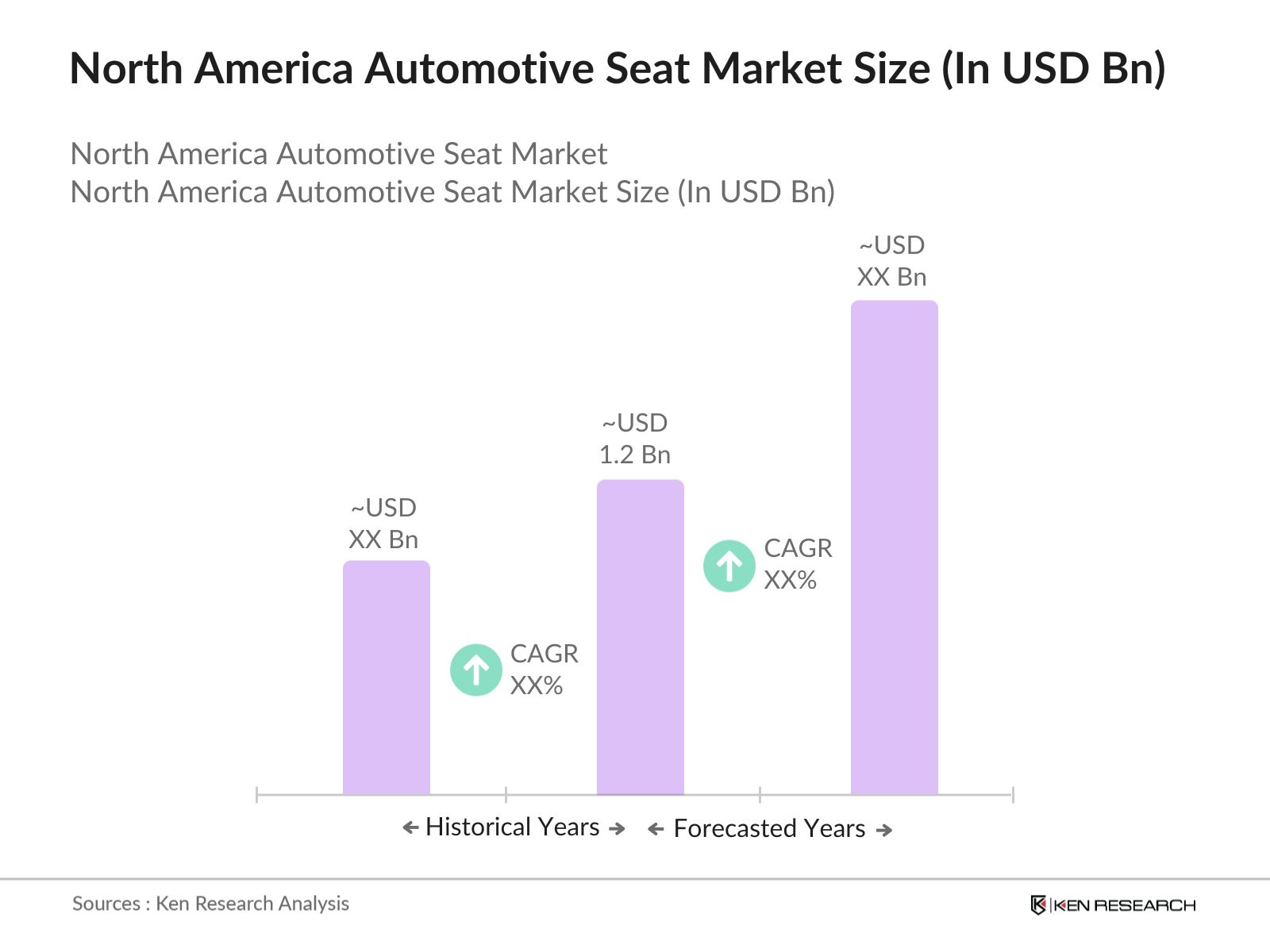
- The United States and Canada are key players in the North American automotive seat market, supported by a strong automotive manufacturing base and high consumer demand for premium vehicles. Major automotive hubs like Michigan and Ontario continue to lead the market in terms of production capacity, with the presence of global automakers and seat manufacturers contributing to the market's stability.
- Regulatory standards for automotive seats, particularly in terms of safety and environmental compliance, are critical for market participants. The National Highway Traffic Safety Administration (NHTSA) in the United States and Transport Canada ensure that automotive seating systems adhere to stringent crash test standards, material safety, and emission controls. Compliance with these standards is vital for manufacturers to maintain market competitiveness.
North America Automotive Seat Market Segmentation
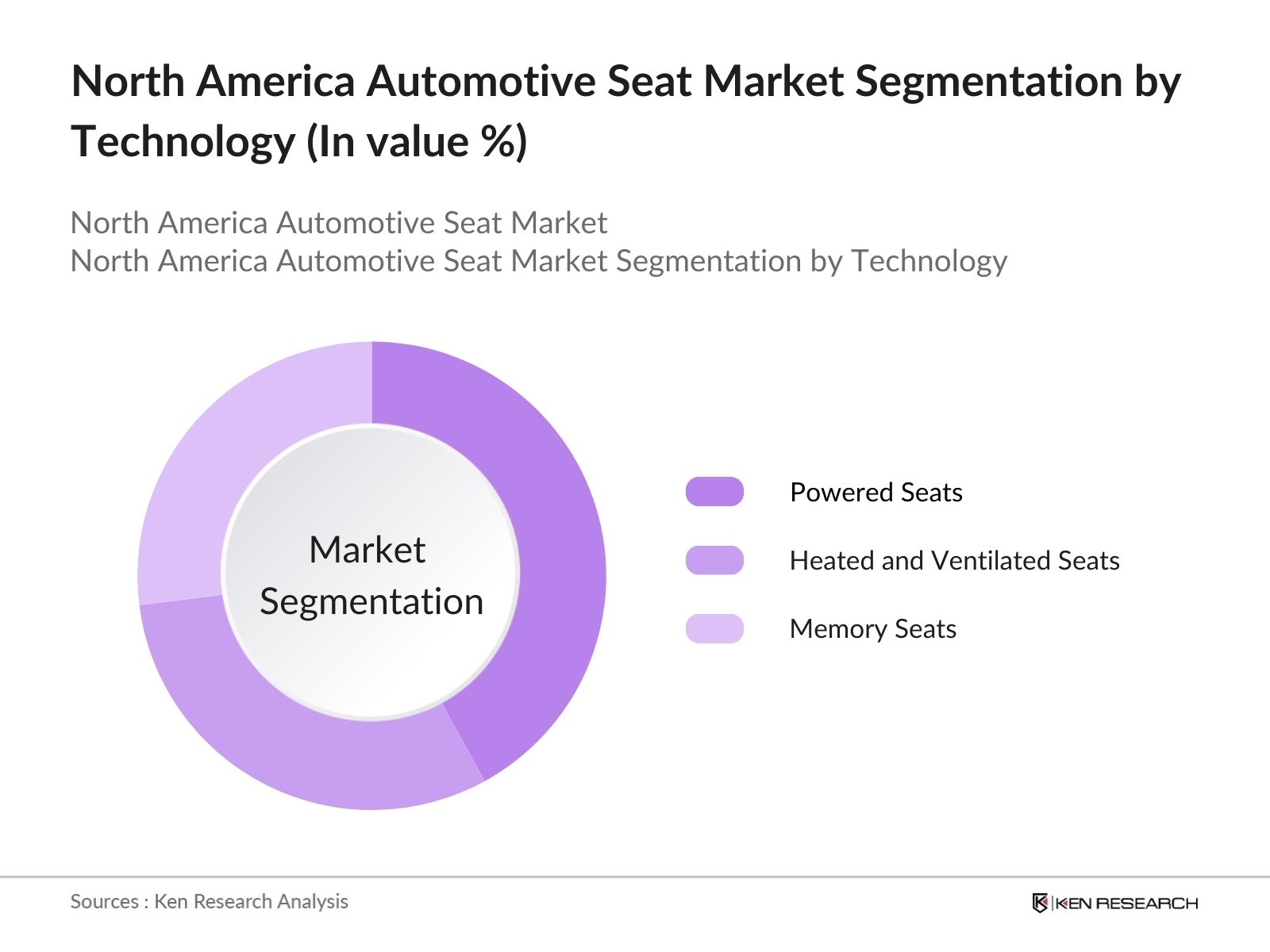
- By Technology: The market is segmented into powered seats, heated and ventilated seats, and memory seats. Powered seats dominated the market, driven by rising demand for convenience features in mid- to high-end vehicles. As consumer preferences shift towards greater comfort and customization, memory seats, which can store preferred seating positions, are gaining traction. Heated and ventilated seats are also seeing increased adoption, particularly in colder and warmer regions across North America, respectively.
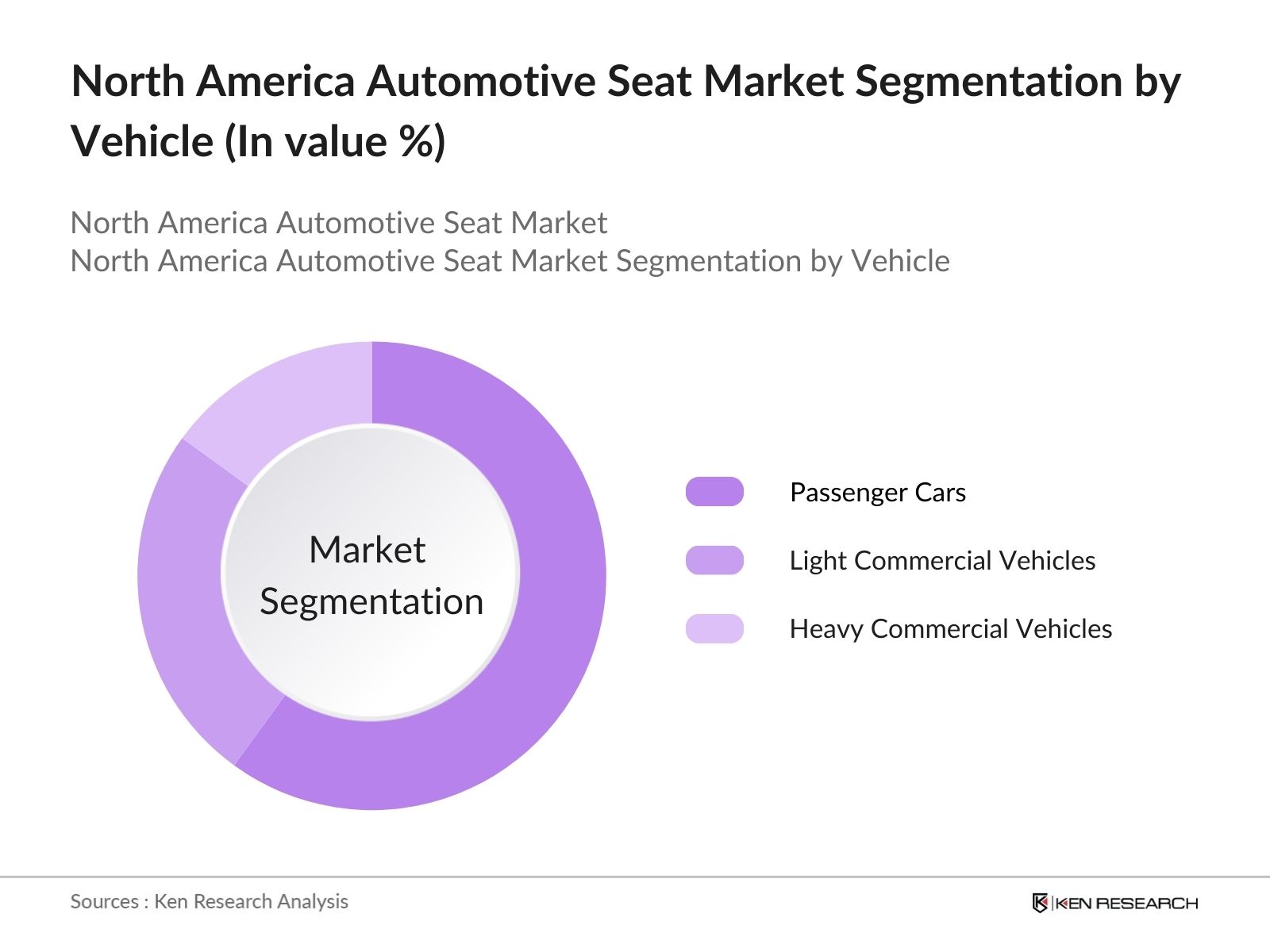
- By Vehicle Type: The market is further segmented into passenger cars, light commercial vehicles, and heavy commercial vehicles. Passenger cars accounted for the largest market share in 2023 due to the high demand for ergonomic and technologically advanced seats in the premium and electric vehicle segments. The growing trend of customization in luxury vehicles and increased production of electric vehicles (EVs) in North America are key contributors to this segments growth. Additionally, light commercial vehicles are seeing increased adoption of comfort features, as businesses prioritize driver satisfaction and safety.
North America Automotive Seat Market Competitive Landscape
The North America automotive seat market is highly competitive, with several key players dominating the market. Major companies are focusing on product innovation, sustainability, and collaborations with automotive manufacturers to maintain their competitive edge. These companies are investing heavily in research and development to create seats that are lighter, more comfortable, and technologically advanced, including smart seats with health-monitoring features.
|
Company Name |
Establishment Year |
Headquarters |
Revenue |
Market Innovation |
Major Contracts |
No. of Employees |
R&D Expenditure |
Product Portfolio |
|
Adient plc |
2016 |
|||||||
|
Lear Corporation |
1917 |
|||||||
|
Faurecia |
1997 |
|||||||
|
Magna International |
1957 |
|||||||
|
Toyota Boshoku |
1918 |
North America Automotive Seat Market Analysis
Growth Drivers
- Increased Adoption of Electric and Autonomous Vehicles: The growth of electric vehicles (EVs) in North America is pushing the automotive seat market toward lightweight, energy-efficient solutions. In 2023, the U.S. electric vehicle market recorded sales of 1.4 million units, a 52% increase over 2022, highlighting the need for energy-efficient components like lightweight seating systems. Electric vehicles rely on reducing overall vehicle weight to optimize battery range, driving the demand for lighter seats made from materials like carbon fiber and aluminum. These lightweight seats enhance fuel efficiency, aligning with government regulations promoting energy conservation in the automotive sectorancements in Automotive Seating Technologies.
- Technological Advancements in Seat Manufacturing: Advances in automotive seating technologies are rapidly reshaping consumer expectations for comfort and convenience. In 2023, a noteworthy portion of new vehicles sold in the U.S. featured heated seats, and ventilated seats with cooling capabilities. Smart seat integration, including posture correction and fatigue monitoring, has become increasingly popular, especially in luxury vehicle segments. The ongoing integration of IoT (Internet of Things) technology in seats aligns with North America's growing preference for intelligent, tech-savvy automotive solutions. These smart features enhance user experience while meeting the safety and comfort demands set by regulatory bodies.
- Rising Demand for Luxury and Premium Vehicles: North American consumers continue to prioritize comfort and customization in vehicle interiors, with luxury automotive seats gaining popularity. In 2023, U.S. luxury vehicle sales rose to 2.3 million units, up from 2.1 million in 2022, driving demand for ergonomic designs and customizable features such as adjustable lumbar support and massage functionality. These enhancements cater to a growing market for premium vehicles, which are known for their focus on passenger comfort. Manufacturers are increasingly responding to this demand by incorporating tailored seating options, contributing to a competitive automotive market .
Challenges
- High Costs of Advanced Seating Technologies: The integration of advanced seating technologies remains a significant challenge for automotive seat manufacturers. Memory seats, powered adjustments, and the use of smart fabrics are highly desirable features for consumers, yet they contribute to increased production costs for automakers. The development and installation of these sophisticated systems places financial pressures on manufacturers striving to offer technologically advanced products while maintaining price competitiveness. The high costs associated with these technologies create barriers for widespread adoption, as manufacturers must balance innovation with affordability in a highly competitive market.
- Stringent Environmental and Safety Regulations: Automotive seat manufacturers must adhere to strict safety regulations in North America, particularly those set by the National Highway Traffic Safety Administration (NHTSA) in the U.S. and Transport Canada. These regulations mandate rigorous testing for crashworthiness, material safety, and durability. While essential for consumer protection, these compliance processes are both costly and time-consuming. Manufacturers must invest heavily in testing and certification to meet these stringent standards, which can create financial challenges, especially for companies focused on innovation. Adhering to these regulations adds complexity to the production process while maintaining legal and safety requirements.
North America Automotive Seat Market Future Outlook
The North America automotive seat market is expected to experience moderate growth over the next five years, supported by advancements in seating technologies, the rise of electric and autonomous vehicles, and increasing demand for comfort and safety features. Seat manufacturers are likely to focus on lightweight designs and smart technologies to meet evolving consumer preferences.
The market will also benefit from the expanding electric vehicle (EV) segment, which requires innovative, energy-efficient seating solutions. The adoption of smart seats with health monitoring capabilities and posture correction features is also expected to drive demand. However, challenges such as high production costs and stringent regulatory requirements may limit market growth in certain vehicle segments.
Future Market Opportunities
- Adoption of Lightweight Materials: As the automotive industry increasingly shifts toward energy efficiency, the use of lightweight materials such as carbon fiber and aluminum in seat manufacturing presents a significant opportunity. In 2023, carbon fiber materials were used in the production of thousands of vehicles in North America, highlighting the industry's commitment to weight reduction. These materials not only improve fuel efficiency but also enhance vehicle performance and safety, making them an attractive option for both traditional and electric vehicles. The increasing adoption of lightweight seats aligns with federal regulations aimed at reducing emissions and promoting sustainability.
- Rising Popularity of Autonomous Vehicles: The advent of autonomous vehicles is revolutionizing automotive seating design, creating opportunities for more innovative and versatile seating solutions. By 2023, over 2,000 autonomous vehicles were being tested across North America, primarily in the U.S. and Canada. As autonomous technology advances, seating configurations are expected to evolve to support more flexible, interactive cabin environments. Seats may become rotatable, reclinable, and equipped with enhanced comfort features, catering to passengers who no longer need to focus on driving. This shift opens the door for seat manufacturers to explore new design possibilities and address the changing needs of autonomous vehicle users.
Scope of the Report
|
By Technology |
Conventional Seats Powered Seats Heated and Ventilated Seats Memory Seats |
|
By Vehicle Type |
Passenger Cars Light Commercial Vehicles Heavy Commercial Vehicles |
|
By Material |
Leather Fabric Synthetic Materials Composite Materials |
|
By Component |
Seat Frames Foam Pads Electronic Components Seat Covers |
|
By Region |
USA Canada Mexico |
Products
Key Target Audience
Automotive Manufacturers
Investors and Venture Capitalist Firms
Government and Regulatory Bodies (NHTSA, Transport Canada)
Electric Vehicle Manufacturers
Automotive Component Suppliers
Research and Development Institutes
Automotive OEMs
Sustainable Material Suppliers
Banks and Financial Institutions
Companies
Major Players Mentioned in the Report
Adient plc
Lear Corporation
Faurecia
Magna International
Toyota Boshoku Corporation
TS Tech Co. Ltd.
RECARO Automotive
Grammer AG
NHK Spring Co., Ltd.
Brose Fahrzeugteile GmbH
Gentherm Inc.
Johnson Controls
Tachi-S Co., Ltd.
Bridgewater Interiors LLC
Isringhausen GmbH & Co. KG
Table of Contents
1. North America Automotive Seat Market Overview
1.1. Definition and Scope
1.2. Market Taxonomy
1.3. Market Growth Rate
1.4. Market Segmentation Overview
2. North America Automotive Seat Market Size (In USD Bn)
2.1. Historical Market Size
2.2. Year-On-Year Growth Analysis
2.3. Key Market Developments and Milestones
3. North America Automotive Seat Market Analysis
3.1. Growth Drivers
3.1.1. Increasing Adoption of Electric Vehicles (Demand for lightweight and energy-efficient seats)
3.1.2. Advancements in Automotive Seating Technologies (Integration of smart seats with sensors, heating, cooling, etc.)
3.1.3. Rising Demand for Luxury and Comfort Features (Customization, ergonomic designs)
3.1.4. Expanding Automotive Manufacturing in North America (Increased production capacities in the U.S. and Canada)
3.2. Market Challenges
3.2.1. High Costs of Advanced Seating Technologies (Memory seats, powered adjustments, smart fabrics)
3.2.2. Regulatory Compliance (Adhering to U.S. NHTSA standards and Canadian safety regulations)
3.2.3. Fluctuations in Raw Material Prices (Steel, leather, and composite materials)
3.2.4. Supply Chain Disruptions (Impact on material availability and delivery timelines)
3.3. Opportunities
3.3.1. Adoption of Lightweight Materials (Carbon fiber, aluminum for energy-efficient seats)
3.3.2. Rising Popularity of Autonomous Vehicles (Opportunity for more innovative seating solutions)
3.3.3. Customization and Aftermarket Seat Upgrades (Growth in personalized automotive seating solutions)
3.3.4. Expansion in Electric Vehicle Production (Increased need for advanced, lighter seats in EVs)
3.4. Trends
3.4.1. Smart Seats with Health Monitoring Features (Sensors for posture, fatigue detection)
3.4.2. Use of Sustainable Materials (Recycled materials, eco-friendly fabric innovations)
3.4.3. Increased Integration of Heating and Cooling Systems in Seats (Comfort features becoming standard)
3.4.4. Adoption of Modular Seating Systems (Ease of customization for different models and markets)
3.5. Government Regulation
3.5.1. NHTSA Safety Standards for Automotive Seats (Crash test compliance, material safety)
3.5.2. Transport Canada Regulations (Emission controls, safety testing)
3.5.3. Environmental Standards (Material usage, recycling requirements)
3.5.4. Compliance with Sustainable Manufacturing Practices (Energy efficiency in production)
3.6. SWOT Analysis
3.7. Stakeholder Ecosystem
3.8. Porters Five Forces
3.9. Competition Ecosystem
4. North America Automotive Seat Market Segmentation
4.1. By Technology (In Value %)
4.1.1. Conventional Seats
4.1.2. Powered Seats
4.1.3. Heated and Ventilated Seats
4.1.4. Memory Seats
4.2. By Vehicle Type (In Value %)
4.2.1. Passenger Cars
4.2.2. Light Commercial Vehicles
4.2.3. Heavy Commercial Vehicles
4.3. By Material (In Value %)
4.3.1. Leather
4.3.2. Fabric
4.3.3. Synthetic Materials
4.3.4. Composite Materials
4.4. By Component (In Value %)
4.4.1. Seat Frames
4.4.2. Foam Pads
4.4.3. Electronic Components
4.4.4. Seat Covers
4.5. By Region (In Value %)
4.5.1. USA
4.5.2. Canada
4.5.3 Mexico
5. North America Automotive Seat Market Competitive Analysis
5.1 Detailed Profiles of Major Companies
5.1.1. Adient plc
5.1.2. Lear Corporation
5.1.3. Faurecia
5.1.4. Magna International
5.1.5. Toyota Boshoku
5.1.6. RECARO Automotive
5.1.7. TS TECH Co. Ltd.
5.1.8. Grammer AG
5.1.9. NHK Spring Co., Ltd.
5.1.10. Johnson Controls
5.1.11. Tachi-S Co., Ltd.
5.1.12. Brose Fahrzeugteile GmbH
5.1.13. Gentherm Inc.
5.1.14. Bridgewater Interiors LLC
5.1.15. Isringhausen GmbH & Co. KG
5.2 Cross Comparison Parameters (No. of Employees, Headquarters, Inception Year, Revenue, Product Portfolio, Major Contracts, R&D Expenditure, Market Innovation)
5.3. Market Share Analysis
5.4. Strategic Initiatives
5.5. Mergers And Acquisitions
5.6. Investment Analysis
5.7. Venture Capital Funding
5.8. Government Grants
5.9. Private Equity Investments
6. North America Automotive Seat Market Regulatory Framework
6.1. Safety and Compliance Standards
6.2. Certification Processes
6.3. Environmental Regulations
6.4. Automotive Seat Recycling Policies
7. North America Automotive Seat Future Market Size (In USD Bn)
7.1. Future Market Size Projections
7.2. Key Factors Driving Future Market Growth
8. North America Automotive Seat Future Market Segmentation
8.1. By Technology (In Value %)
8.2. By Vehicle Type (In Value %)
8.3. By Material (In Value %)
8.4. By Component (In Value %)
8.5. By Region (In Value %)
9. North America Automotive Seat Market Analysts Recommendations
9.1. TAM/SAM/SOM Analysis
9.2. Customer Cohort Analysis
9.3. Marketing Initiatives
9.4. White Space Opportunity Analysis
Research Methodology
Step 1: Identification of Key Variables
The first step in the research involves identifying critical variables influencing the North America automotive seat market. Extensive desk research is conducted using secondary sources such as industry reports, proprietary databases, and company filings. The key objective is to understand the ecosystem and stakeholder dynamics that shape market trends.
Step 2: Market Analysis and Construction
The next step involves a detailed analysis of the market using historical data. Key metrics such as automotive production rates, EV adoption, and seat technology advancements are analyzed. This phase also includes evaluating seat manufacturing capacity and the supply-demand balance in North America.
Step 3: Hypothesis Validation and Expert Consultation
Market hypotheses are developed and validated through primary interviews with key industry stakeholders. Consultations with automotive seat manufacturers and suppliers provide insights into operational and financial metrics, which help to refine and validate the data gathered during the desk research.
Step 4: Research Synthesis and Final Output
The final phase focuses on synthesizing research findings and producing a detailed market report. Insights from multiple data sources are combined to provide a comprehensive analysis of market trends, competitive dynamics, and future growth prospects. This ensures a well-rounded understanding of the market.
Frequently Asked Questions
01 How big is the North America Automotive Seat Market?
The North America automotive seat market is valued at USD 1.20 billion, driven by advancements in seating technologies, the rise of electric vehicles, and increasing consumer demand for comfort features in automobiles.
02 What are the challenges in the North America Automotive Seat Market?
Challenges in the North America automotive seat market include the high cost of advanced seating technologies, stringent safety and environmental regulations, and supply chain disruptions affecting material availability and production timelines.
03 Who are the major players in the North America Automotive Seat Market?
Key players in the North America automotive seat market include Adient plc, Lear Corporation, Faurecia, Magna International, and Toyota Boshoku Corporation. These companies dominate due to their strong product portfolios, focus on innovation, and partnerships with leading automakers.
04 What are the growth drivers of the North America Automotive Seat Market?
The North America automotive seat market is driven by the growing adoption of electric vehicles, advancements in smart seat technologies, and rising consumer demand for luxury and customizable seating options.
Why Buy From Us?

What makes us stand out is that our consultants follows Robust, Refine and Result (RRR) methodology. i.e. Robust for clear definitions, approaches and sanity checking, Refine for differentiating respondents facts and opinions and Result for presenting data with story

We have set a benchmark in the industry by offering our clients with syndicated and customized market research reports featuring coverage of entire market as well as meticulous research and analyst insights.

While we don't replace traditional research, we flip the method upside down. Our dual approach of Top Bottom & Bottom Top ensures quality deliverable by not just verifying company fundamentals but also looking at the sector and macroeconomic factors.

With one step in the future, our research team constantly tries to show you the bigger picture. We help with some of the tough questions you may encounter along the way: How is the industry positioned? Best marketing channel? KPI's of competitors? By aligning every element, we help maximize success.

Our report gives you instant access to the answers and sources that other companies might choose to hide. We elaborate each steps of research methodology we have used and showcase you the sample size to earn your trust.

If you need any support, we are here! We pride ourselves on universe strength, data quality, and quick, friendly, and professional service.