
North America Aviation Market Outlook to 2030
Region:North America
Author(s):Shreya Garg
Product Code:KROD10226
November 2024
85
About the Report
North America Aviation Market Overview
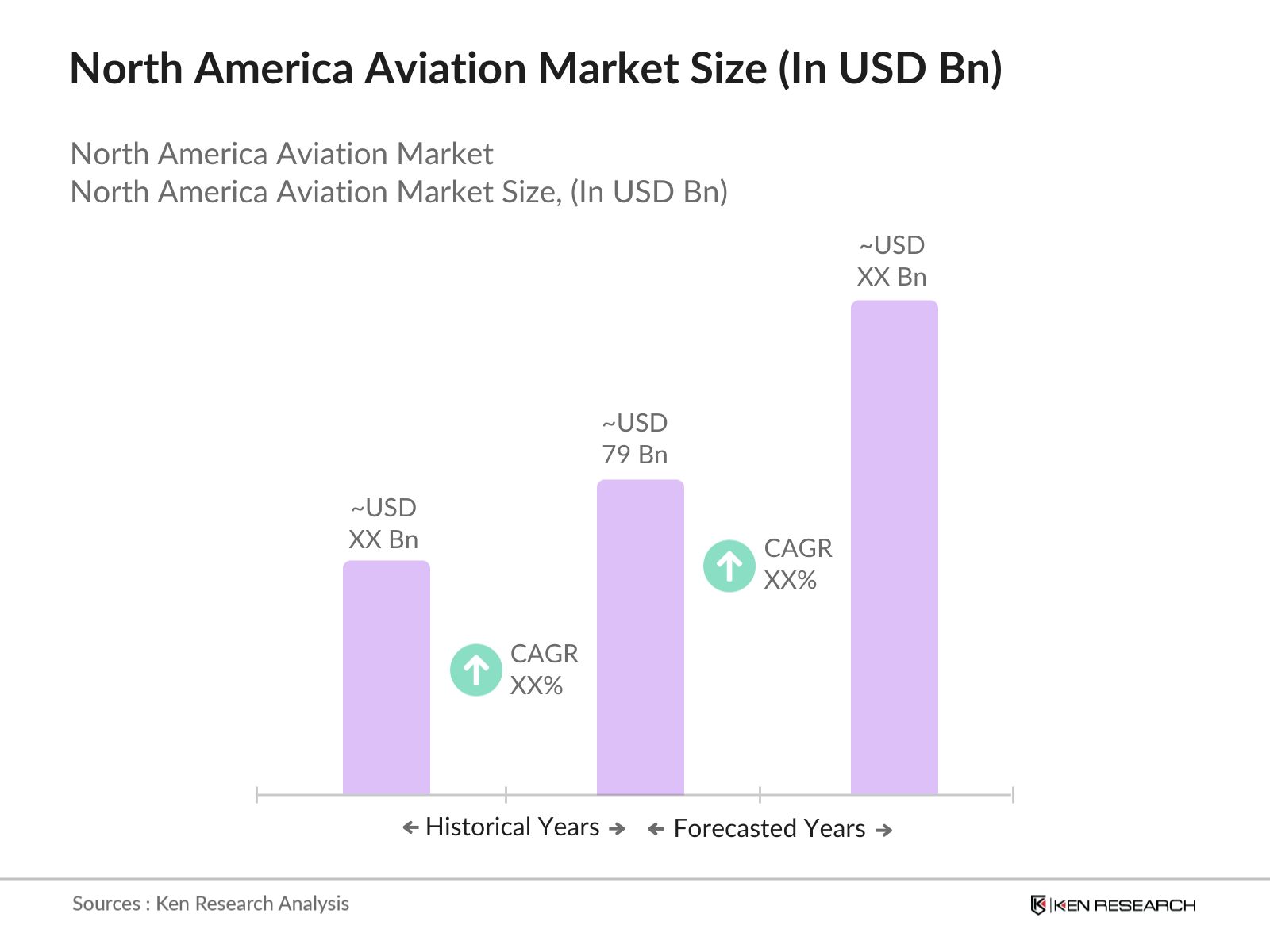
- The North America Aviation Market is valued at USD 79 billion, based on a five-year historical analysis. The market is primarily driven by rising passenger numbers, advancements in aircraft technology, and a growing demand for air cargo services. The increase in disposable income and the growing demand for faster travel have also played a pivotal role in market growth. Additionally, government investment in infrastructure, such as airport expansions and technological upgrades, has further fueled this expansion.
- The aviation market in North America is dominated by cities like New York, Chicago, and Los Angeles, along with major hubs in Canada such as Toronto and Vancouver. These cities host some of the busiest airports in the world, driven by their large populations, extensive business activities, and strategic geographic locations that serve as both international and domestic transit points. Their dominance is supported by advanced airport infrastructure, efficient management, and strong government support.
- The FAA continues to enforce stringent safety and emissions standards to ensure that U.S. airlines comply with global aviation norms. In 2023, the FAA imposed new regulations mandating the reduction of CO2 emissions by 10% for all commercial aircraft operating in U.S. airspace. The agency also implemented stricter safety protocols following an increase in air traffic incidents, requiring airlines to enhance pilot training and aircraft inspection procedures. Compliance with these mandates is essential for continued market operation.
North America Aviation Market Segmentation
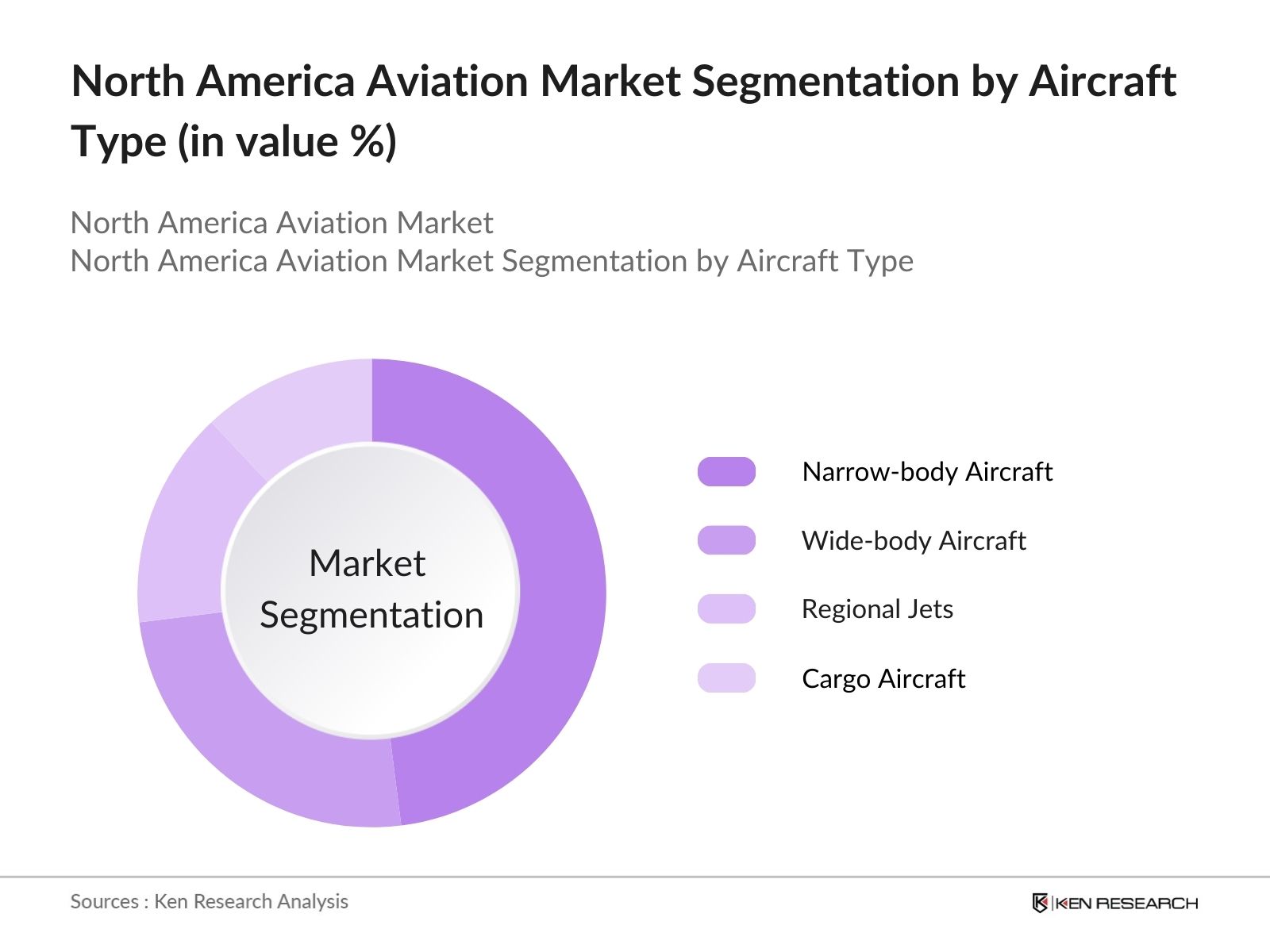
By Aircraft Type: The market is segmented by aircraft type into narrow-body aircraft, wide-body aircraft, regional jets, and cargo aircraft. Narrow-body aircraft dominate the market share under this segment. Their dominance is due to their suitability for domestic and short-to-medium-haul routes, which account for a significant portion of flights within North America. Major airlines like Delta and American Airlines heavily invest in these aircraft, taking advantage of their fuel efficiency and ability to handle high passenger volumes on frequently traveled routes.
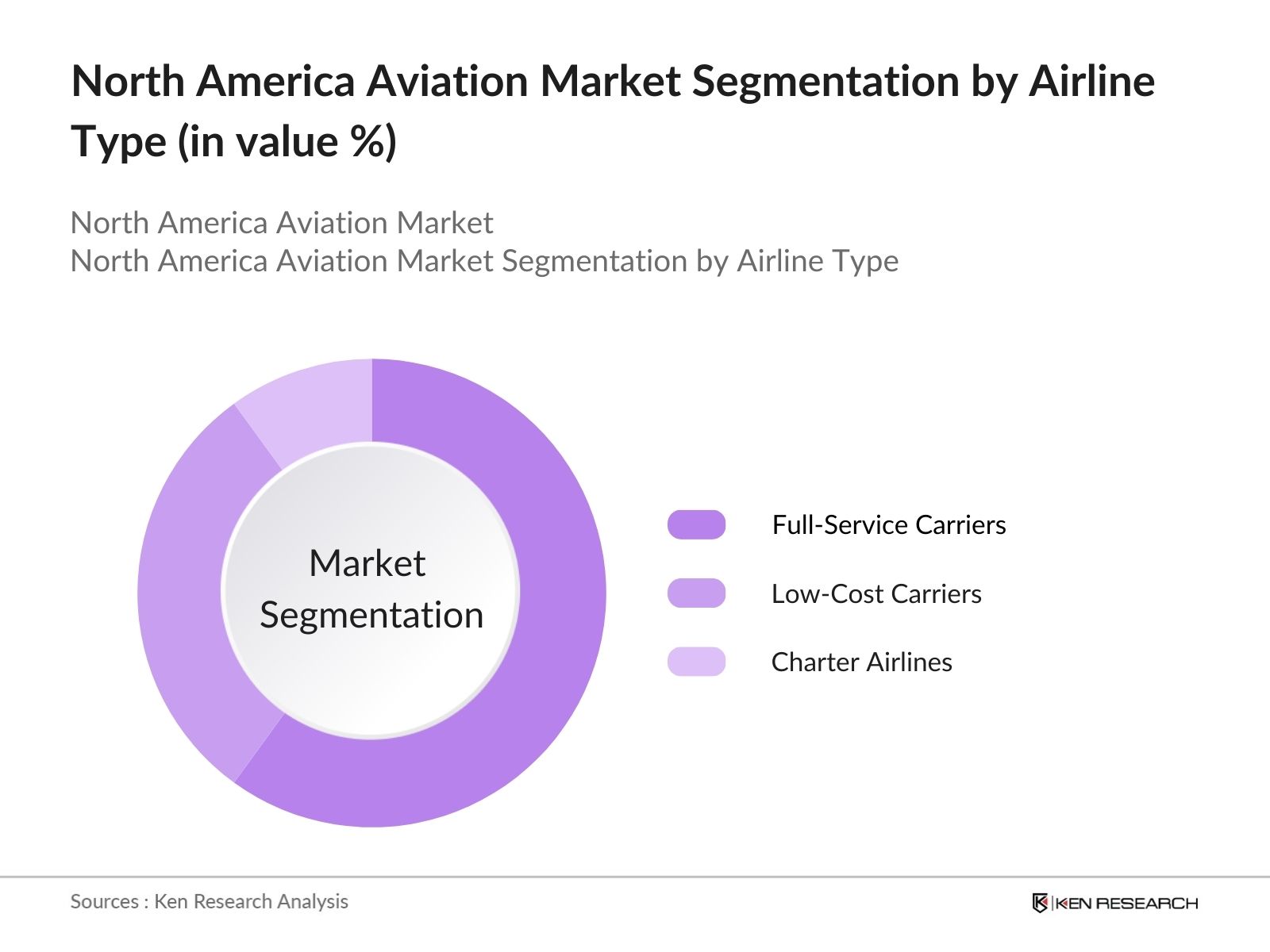
By Airline Type: The market is segmented by airline type into full-service carriers, low-cost carriers (LCCs), and charter airlines. Full-service carriers maintain the dominant market share under this segment. Full-service airlines such as United Airlines and Delta Airlines lead the market because of their comprehensive range of services, including in-flight meals, baggage handling, and long-haul international routes. These carriers also benefit from established loyalty programs and a broader customer base, particularly among business travelers.
North America Aviation Market Competitive Landscape
The North American aviation market is highly consolidated, with a few major players controlling a significant share of the market. The market's competitive landscape is shaped by large manufacturers, such as Boeing and Airbus, and major airlines, including Delta Air Lines and Southwest Airlines. The consolidation in the market underscores the significant role of key players in shaping pricing strategies, service offerings, and market growth trajectories.
|
Company Name |
Year of Establishment |
Headquarters |
Fleet Size |
Number of Routes |
Revenue (USD Bn) |
Employees |
Market Focus |
Strategic Partnerships |
Technology Adoption |
|
Boeing |
1916 |
Chicago, Illinois, USA |
|||||||
|
Delta Air Lines |
1924 |
Atlanta, Georgia, USA |
|||||||
|
Airbus |
1970 |
Toulouse, France |
|||||||
|
Southwest Airlines |
1967 |
Dallas, Texas, USA |
|||||||
|
Lockheed Martin |
1995 |
Bethesda, Maryland, USA |
North America Aviation Industry Analysis
Growth Drivers
- Rising Passenger Traffic: The North American aviation market has experienced a surge in passenger traffic in recent years, largely due to increased demand for both domestic and international travel. According to the Bureau of Transportation Statistics, the U.S. saw over 850 million passengers in 2023, with regional air traffic expected to grow further. This trend is supported by rising disposable incomes, a recovering tourism sector post-pandemic, and increased business travel. The Federal Aviation Administration (FAA) reports that U.S. airports managed over 10 million flights in 2022, indicating strong market demand.
- Technological Advancements: Technological advancements continue to drive the North American aviation market, with next-generation aircraft contributing to fuel efficiency and operational cost reduction. Boeing reported that its 737 MAX fleet clocked over 500,000 flight hours in 2023, reducing fuel consumption by 15% compared to previous models. Smart airport initiatives are also expanding, with over 70% of major U.S. airports now incorporating automation technologies like self-check-in kiosks and biometric boarding systems, according to the FAA. These innovations are aimed at enhancing passenger experience and reducing airport congestion.
- Government Infrastructure Initiatives: The U.S. government has committed substantial funds to airport development programs to accommodate rising air traffic and improve infrastructure. The FAAs Airport Improvement Program (AIP) allocated over $3 billion in 2023 to modernize over 400 airports across the U.S. Additionally, the Infrastructure Investment and Jobs Act has earmarked $25 billion for aviation projects over five years. This financial backing is crucial for upgrading runways, terminals, and air traffic management systems, ensuring smoother operations and increased airport capacity.
Market Challenges
- Regulatory Hurdles: The North American aviation market faces significant regulatory challenges, particularly with stringent FAA regulations. Air traffic control modernization, part of the NextGen program, aims to replace radar-based systems with satellite-based tracking, but its implementation has been delayed. In 2023, only 75% of the planned NextGen upgrades were completed, limiting the benefits of reduced flight delays and fuel consumption. The FAA mandates also require airlines to adhere to strict safety and emissions standards, which can increase operational costs.
- Fuel Price Volatility: Fuel price volatility remains a critical challenge for the aviation sector in North America. In 2023, jet fuel prices fluctuated between $3.00 and $4.20 per gallon, according to the U.S. Energy Information Administration (EIA). Given that fuel costs account for 30% of airline operating expenses, these fluctuations strain profitability. Many airlines have attempted to hedge against fuel price volatility by signing long-term contracts, but price instability remains a significant financial risk.
North America Aviation Market Future Outlook
Over the next five years, the North American aviation market is expected to witness steady growth, driven by ongoing technological advancements in aircraft manufacturing, increased demand for air travel, and government initiatives aimed at modernizing air traffic control and airport infrastructure. Environmental regulations, such as reducing carbon emissions, will also push the industry toward sustainable aviation fuels and electric aircraft development. Additionally, the rise of autonomous and remotely piloted aircraft systems will likely revolutionize commercial aviation, reshaping both passenger and cargo air services.
Future Market Opportunities
- Rise in Low-Cost Carriers: The increasing penetration of low-cost carriers (LCCs) presents a major opportunity in the North American aviation market. In 2023, LCCs such as Southwest Airlines and Spirit Airlines accounted for 45% of domestic air travel, capturing a significant share of the market. Their ability to offer competitive pricing has attracted budget-conscious travelers, driving increased passenger volumes. The U.S. Department of Transportation reports that LCCs served over 400 million passengers in 2023, reflecting their growing market influence.
- Emerging Sustainable Aviation Solutions: Sustainable aviation solutions are rapidly emerging as a transformative opportunity in the North American aviation market. The FAAs Sustainable Aviation Fuels (SAF) program has set a target of producing 3 billion gallons of SAF annually by 2030. In 2023, U.S. airlines conducted over 450 flights powered by biofuels, marking a 40% increase from 2022. Additionally, the development of electric aircraft is gaining traction, with over $1 billion invested in research and development for zero-emission planes by U.S. companies in 2023.
Scope of the Report
|
By Aircraft Type |
Narrow-body Aircraft Wide-body Aircraft Regional Jets Cargo Aircraft |
|
By Airline Type |
Full-Service Carriers Low-Cost Carriers (LCC) Charter Airlines |
|
By Application |
Commercial Aviation Military Aviation General Aviation |
|
By Technology |
Autonomous Aircraft Systems Electric Propulsion Systems Satellite-Based Communication |
|
By Region |
United States Canada Mexico |
Products
Key Target Audience
Airline Operators
Aircraft Manufacturers
Airport Authorities
Aviation Service Providers
Investor and Venture Capitalist Firms
Government and Regulatory Bodies (FAA, Transport Canada)
Maintenance, Repair, and Overhaul (MRO) Providers
Cargo Logistics Companies
Companies
Major Players
Boeing
Airbus
Delta Air Lines
Southwest Airlines
Lockheed Martin
United Airlines
Raytheon Technologies
American Airlines
Bombardier
Embraer
Northrop Grumman
Spirit AeroSystems
Alaska Airlines
Textron Aviation
General Electric Aviation
Table of Contents
1. North America Aviation Market Overview
1.1. Definition and Scope
1.2. Market Taxonomy
1.3. Market Growth Rate (Fleet Size, Passenger Traffic, Aircraft Utilization)
1.4. Market Segmentation Overview
2. North America Aviation Market Size (In USD Bn)
2.1. Historical Market Size
2.2. Year-On-Year Growth Analysis
2.3. Key Market Developments and Milestones (Airport Expansions, Airline Network Growth)
3. North America Aviation Market Analysis
3.1. Growth Drivers
3.1.1. Rising Passenger Traffic (Regional Air Traffic Data)
3.1.2. Technological Advancements (Next-Generation Aircraft, Smart Airports)
3.1.3. Government Infrastructure Initiatives (Airport Development Programs)
3.1.4. Increasing Freight Demand (Cargo Traffic and Capacity)
3.2. Market Challenges
3.2.1. Regulatory Hurdles (FAA Regulations, Air Traffic Control Modernization)
3.2.2. Fuel Price Volatility
3.2.3. Skilled Workforce Shortage (Pilots, Technicians)
3.3. Opportunities
3.3.1. Rise in Low-Cost Carriers (LCC Penetration, Airline Market Share)
3.3.2. Emerging Sustainable Aviation Solutions (Biofuels, Electric Aircraft)
3.3.3. Expansion in Regional Connectivity (New Routes, Hub Development)
3.4. Trends
3.4.1. Growth of Smart Airports (Automation, AI in Passenger Processing)
3.4.2. Integration of IoT in Aviation Maintenance (Predictive Maintenance, Connected Fleets)
3.4.3. Adoption of Advanced Avionics and Digital Solutions (Cockpit Systems, Digital Twins)
3.5. Government Regulation
3.5.1. FAA Mandates on Safety and Emissions (Compliance Standards)
3.5.2. Airport Funding Programs (Federal Grants for Modernization)
3.5.3. Air Traffic Management Initiatives (NextGen, ADS-B Implementation)
3.6. SWOT Analysis
3.7. Stakeholder Ecosystem (Airlines, Airports, MROs, Technology Providers)
3.8. Porters Five Forces (Industry Rivalry, Bargaining Power of Suppliers and Buyers, Threat of Substitutes)
3.9. Competitive Landscape and Ecosystem
4. North America Aviation Market Segmentation
4.1. By Aircraft Type (In Value %)
4.1.1. Narrow-body Aircraft
4.1.2. Wide-body Aircraft
4.1.3. Regional Jets
4.1.4. Cargo Aircraft
4.2. By Airline Type (In Value %)
4.2.1. Full-Service Carriers
4.2.2. Low-Cost Carriers (LCC)
4.2.3. Charter Airlines
4.3. By Application (In Value %)
4.3.1. Commercial Aviation
4.3.2. Military Aviation
4.3.3. General Aviation
4.4. By Technology (In Value %)
4.4.1. Autonomous Aircraft Systems
4.4.2. Electric Propulsion Systems
4.4.3. Satellite-Based Communication
4.5. By Region (In Value %)
4.5.1. United States
4.5.2. Canada
4.5.3. Mexico
5. North America Aviation Market Competitive Analysis
5.1. Detailed Profiles of Major Companies
5.1.1. The Boeing Company
5.1.2. Lockheed Martin Corporation
5.1.3. Raytheon Technologies Corporation
5.1.4. Northrop Grumman Corporation
5.1.5. General Electric Aviation
5.1.6. Bombardier Inc.
5.1.7. Airbus SE
5.1.8. Textron Aviation
5.1.9. Embraer SA
5.1.10. Safran Group
5.1.11. Rolls-Royce Holdings PLC
5.1.12. Spirit AeroSystems
5.1.13. Collins Aerospace
5.1.14. Delta Air Lines
5.1.15. Southwest Airlines Co.
5.2. Cross Comparison Parameters
(Fleet Size, Revenue, Net Profit, Employee Count, Service Routes, Market Share, Strategic Partnerships, Technology Adoption)
5.3. Market Share Analysis
5.4. Strategic Initiatives (Partnerships, New Routes, Fleet Expansion)
5.5. Mergers And Acquisitions
5.6. Investment Analysis
5.7. Venture Capital Funding
5.8. Government Grants
5.9. Private Equity Investments
6. North America Aviation Market Regulatory Framework
6.1. Environmental Standards (Emission Regulations, Noise Abatement)
6.2. Compliance Requirements (FAA, ICAO Standards)
6.3. Certification Processes
7. North America Aviation Future Market Size (In USD Bn)
7.1. Future Market Size Projections
7.2. Key Factors Driving Future Market Growth (Fleet Modernization, Increasing Air Travel Demand)
8. North America Aviation Future Market Segmentation
8.1. By Aircraft Type (In Value %)
8.2. By Airline Type (In Value %)
8.3. By Application (In Value %)
8.4. By Technology (In Value %)
8.5. By Region (In Value %)
9. North America Aviation Market Analysts Recommendations
9.1. TAM/SAM/SOM Analysis
9.2. Customer Cohort Analysis
9.3. Marketing Initiatives
9.4. White Space Opportunity Analysis
Disclaimer
Contact Us
Research Methodology
Step 1: Identification of Key Variables
The initial phase involves constructing an ecosystem map encompassing all major stakeholders within the North American Aviation Market. Extensive desk research, combined with secondary and proprietary databases, was employed to gather comprehensive industry-level information, with the primary objective of identifying critical variables influencing market dynamics.
Step 2: Market Analysis and Construction
This phase compiled and analyzed historical data pertaining to the aviation market, including market penetration rates, the ratio of routes to carriers, and revenue generation. An evaluation of service quality statistics was also conducted to ensure the reliability and accuracy of revenue estimates.
Step 3: Hypothesis Validation and Expert Consultation
Market hypotheses were developed and validated through computer-assisted telephone interviews (CATIs) with industry experts from airlines, aircraft manufacturers, and airport operators. These consultations provided valuable operational and financial insights to refine and corroborate the market data.
Step 4: Research Synthesis and Final Output
The final phase involved direct engagement with major airline operators to acquire insights into product segments, sales performance, customer preferences, and other relevant factors. This interaction verified and complemented the statistics derived from the bottom-up approach, ensuring a comprehensive and validated analysis of the aviation market.
Frequently Asked Questions
01. How big is the North America Aviation Market?
The North America aviation market is valued at USD 79 billion, driven by increasing passenger numbers, significant technological advancements in aircraft, and strong government support for infrastructure development.
02. What are the challenges in the North America Aviation Market?
Challenges in the North America aviation market include regulatory hurdles, high fuel prices, and a shortage of skilled workforce such as pilots and technicians. Additionally, the rise of environmental regulations puts pressure on aviation companies to adopt greener technologies.
03. Who are the major players in the North America Aviation Market?
Key players in the North America aviation market include Boeing, Airbus, Delta Air Lines, Southwest Airlines, and Lockheed Martin. These companies dominate due to their extensive fleets, technological advancements, and strategic partnerships.
04. What are the growth drivers of the North America Aviation Market?
The North America aviation market is propelled by the rising demand for faster travel, increasing air cargo requirements, and government investments in airport infrastructure modernization. The growing middle class and disposable incomes also contribute to passenger traffic growth.
05. What trends are shaping the future of the North America Aviation Market?
Key trends in the North America aviation market include the rise of sustainable aviation fuel, the introduction of electric and autonomous aircraft, and the use of IoT for predictive maintenance in aviation fleets. Additionally, the development of smart airports is transforming the passenger experience.
Why Buy From Us?

What makes us stand out is that our consultants follows Robust, Refine and Result (RRR) methodology. i.e. Robust for clear definitions, approaches and sanity checking, Refine for differentiating respondents facts and opinions and Result for presenting data with story

We have set a benchmark in the industry by offering our clients with syndicated and customized market research reports featuring coverage of entire market as well as meticulous research and analyst insights.

While we don't replace traditional research, we flip the method upside down. Our dual approach of Top Bottom & Bottom Top ensures quality deliverable by not just verifying company fundamentals but also looking at the sector and macroeconomic factors.

With one step in the future, our research team constantly tries to show you the bigger picture. We help with some of the tough questions you may encounter along the way: How is the industry positioned? Best marketing channel? KPI's of competitors? By aligning every element, we help maximize success.

Our report gives you instant access to the answers and sources that other companies might choose to hide. We elaborate each steps of research methodology we have used and showcase you the sample size to earn your trust.

If you need any support, we are here! We pride ourselves on universe strength, data quality, and quick, friendly, and professional service.